
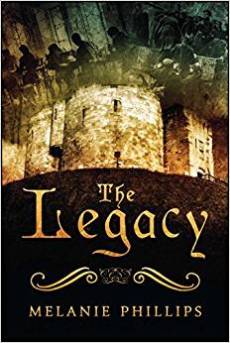
 The Legacy, a first novel by the bold British journalist Melanie Phillips, is a page-turner involving layering mysteries. The mysteries interweave through time to the present day, in a story set in England, America, and Israel.
But The Legacy is more importantly a novel of ideas. My novels, too, are novels of ideas, with characters that care about today’s culture, about moral choice, about faith and family, about the survival of the free world.
There are far too few novelists brave enough today to write novels of ideas and write them well. Such courage means ostracism by the mainstream (read leftist) media, for such novels encourage thoughtful debate. They ask questions and search for answers, which is not appreciated by the left. I applaud Ms. Phillips’ honesty and courage.
In The Legacy, the central idea behind the characters and plot is the question of Jewish identity, not only in the history of persecution and dispersion, but Jewish political positioning in media and politics with regard to Israel and British antisemitism.
The main character, Russell Woolfe, is a TV producer who has absorbed without thinking leftist propaganda. He shuns his Jewish family in his desire to be part of modern culture. We enter his world as he faces the death of his father, and with this death he must face the death of his own history, the legacy of the Jewish people.
I have often wondered why many Jewish liberals are anti-Israel, the only western democracy in the region and a vital ally to our own Judeo-Christian foundations. I am perplexed as to why many of these unliberal liberals discourage and intimidate free speech on college campuses, and why they shun the voice of religion in the public square. It makes little sense that they enforce the tyranny of political correctness in the arts – in publishing, news media, and movies. These are trends that can only hurt the Jewish people, and all of us.
I found some answers in Andrew Klavan’s memoir, The Great Good Thing, in which he recounts his conversion to Christianity. He explains the nature of his Jewish upbringing in America. His immigrant parents desired to become Americans, to merge into the culture, and to lose, in time, their Jewishness, become “secular Jews.” To them, this was the way to succeed and, above all, survive. This was the way to calm the fears of deportation, that knock on the door in the night. And so the next generation denied their religious roots and their roots as a people, a chosen people of God. They wanted to meld into the great American melting pot.
As I read Ms. Phillips’ novel, I could see some of these themes emerge. Russell Woolfe has followed a similar path, separating himself from his family and his legacy. But slowly events unfold (involving a physical legacy) that shock him into the truth of his identity.
What are the roots of antisemitism? One root is envy. History tells us that the Christian bans on “usury” (loans at interest) by the medieval world opened the field of banking and finance to Jews. Through the years, Jews became wealthy and powerful. Wealth and power attract envy and hatred. Antisemitism surges, fueled by avarice. The chosen people of God learned to survive, with God’s help.
In our own time, the West seems to be committing suicide. As the crucible of freedom and individual rights, of equality under the law, of government by the people for the people, the Western world must survive. The hordes, having been stopped at Vienna on September 11, 1683, are once again at the gates of the West, most significantly in their attack on another September 11 (no coincidence). And like a Greek tragedy, hidden in the Trojan horse of liberal blindness, they are within our gates, owning our literature. And so we destroy ourselves with our own self-hatred. Our children have not been taught our legacy of freedom. Our schools malign and shame our history.
Russell Woolfe’s journey through these pages opens his eyes. Is he too late? The left, made up of many talented Jewish writers and producers, must take their blinders off, if democracy, and all that it means, is to survive this onslaught from within and without.
Kudos, Ms. Phillips! You have told the truth in journalism, and now you have told the truth in a novel of ideas. Thank you for your contribution to our legacy of freedom.
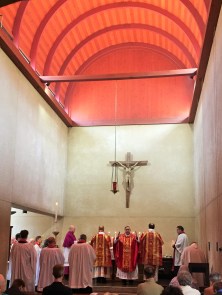 I recently had the blessing of taking part in our annual Anglican synod, a gathering of clergy and laity that meets to discuss and decide many issues relating to this part of the family of God, the Body of Christ.
 Christine Sunderland
 Christine Sunderland