Monthly Archives: October 2020

October Journal in a Pandemic Year, Feast of Christ the King, Trinity 20

CHRIST THE KING 2

In many of our Anglican parishes we celebrate the Feast of Christ the King today (some celebrate at the end of November, following the new Roman rite from 1970.) Today kingship is one more form of authority frowned upon. And yet, as Bob Dylan sang in 1979, in “Gotta Serve Somebody”:

“You’re gonna have to serve somebody.
Well, it may be the devil or it may be the Lord,
But you’re gonna have to serve somebody.”

Dylan recognized that we all must make this choice whether we admit to it or not. Many make the choice by default.

Today many serve themselves, their own passions, their own wills, their possessions. As Christians we recognize we can choose whom we serve. For all must recognize an authority, whether they realize this or not. Christians have the blessed fortune to serve Christ the King, the God of ultimate love, the Creator of the world and the Creator of each one of us.

To recognize that we must choose whom or what we serve releases us from many worries. For when we choose our King, we choose the path on which we are to walk – His path – and the rest falls into place.

But the Devil lurks like a lion, ready to pounce, ready to tempt and distract. He desires our allegiance. Will we serve him?

We live in a world today that observes a darker and lower allegiance, a power that feeds on us, on our needs and desires, destroying us with lies. We are told that we do not need a king. We do not need authorities that tell us how to live. We are told to seek our own desires and be ruled by them. We are told to feel good, to follow whatever “makes you happy.”
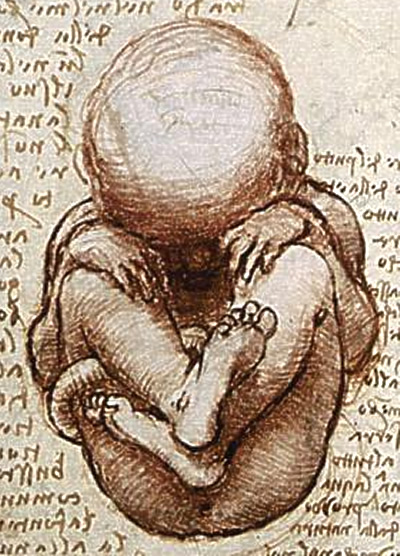
Views_of_a_Foetus_in_the_Womb_detail

And yet as Christians we know happiness can only come from the King who created us. Happiness can only come when we become what He designed us to be.

The mob violence in our burning cities, the gender confusion that mutilates children, the desire to throw out rules of behavior and live as we wish, the genocide of the unborn – all of these trends in our world today enslave those who claim truth is relative, goodness is relative, all perspectives are relative.

As Christians we know that Christ the King gives mankind ways to live since the world began. These ways, encoded in the Ten Commandments, the Beatitudes, the law of love, of faith, hope, and charity, we know informed the founding of our nation. Now, as our people depart from allegiance to Christ the King and His law of love, our nation and world fragment into millions of identities, devolving into tribal wars, and sinking into the abyss of chaos.

As Christians we know this world is only the beginning of something far better, more beautiful, more glorious to come, a nurturing time in which we grow fuller, more complete, whole. As T.S. Eliot wrote in “Four Quartets, The Dry Salvages”:

“These are only hints and guesses,/ Hints followed by guesses;/ And the rest is prayer, observance, discipline, /Thought and action. /The hint half guessed, the gift half understood, /Is Incarnation.”

We are part of this Incarnation, for we are made in the divine image, in the flesh, incarnate. We have choices. We can choose to create or we can choose to destroy. We can hide our light or we can shine our light. We can seek our Creator and listen to His voice, those hints followed by guesses. We can observe His law of love and discipline our souls and bodies with prayer, thought, and action. For today we see through a window dimly but tomorrow will clearly, having grown into our fullness.
Advent St. J

We gotta serve somebody. If not Christ the King, then who knows what dark forces (including our own egos and passions) will command our path in this life.

It is easy to listen to the wrong powers that be. It is easy to choose ease and self and even withdrawal into hidden corners. It is not always clear which choice to make in a given moment. And so we pray. We immerse ourselves in the gifts half understood – scripture and sacrament and song. We keep Sundays holy. We honor our parents (and other authorities). We try not to lie, kill, covet, cheat. We repent and are washed cleaned by the blood of the Lamb.

And the hint half guessed is Christ the King himself. The hint half guessed is the Incarnation of our Creator who lived among us, died, and rose to life. The hint half guessed is all there before us – in the glory of song and the poetry of prayer and the humility of dependence upon our God of love, our heavenly Father.

For in the end, we need not worry. We are care-less, free of care. We fight the good fight, run the race. At the end of the day, we place our cares and worries at the feet of the King. We place our sufferings in his hands. And it is through these wounds that we climb the ladder to Heaven. It is through these wounds that we are welcomed by His side. It is through these wounds that His hand finds ours, pulls us up, and enfolds us in his arms.

For we have chosen whom we will serve – the God of all Creation, the God of Love, Christ the King.

October Journal in a Pandemic Year, Feast of St. Luke, Trinity 19

img_4645I’ve spent a good deal of time this year sheltering with my icons.

Saints, Apostles, Holy Events, Our Lord Jesus, the Holy Family, the Holy Trinity, all cover my walls in my home office, a veritable cloud of witnesses to the love of God.

And when I sing the Gloria in Excelsis Deo and the Creed, even the Our Father, along with my virtual chapel congregations during a Sunday Holy Liturgy, I let my eye rest on these golden images. They comfort, strengthen, enable. They pull me into their stories as I sing the words of the stories.

For that is what the Creator does, he shines golden light on his Creation, making each of us shine too, shining light in turn on others and other created matter.

RESOURCE_TemplateLike my hermit on Angel Mountain, I am called through these doors into another world, a more real world, one that makes the ordinary world of matter more real too. Unlike the wraiths from Hell in C.S. Lewis’ The Great Divorce, where they find upon their visit to Heaven they cannot walk on the too real grass with their flimsy see-through spirits. They have not been made real enough to partake of this greater reality. As I recall, the blades of grass are like knife blades, hurting the feet of these flimsy creatures.
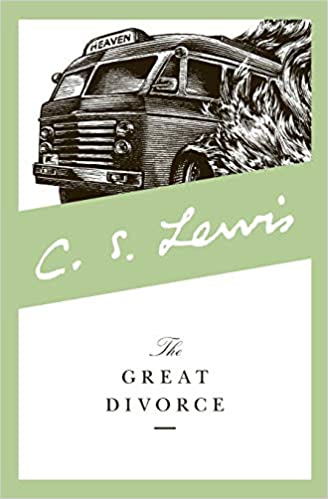
The Great Divorce CoverDo we want to experience life more fully, see colors more vividly, love with greater selflessness? We can if we become Christians and allow God to remold our souls, and often, bodies.
Our journey to Heaven as we travel through Earthly time, heading for Eternity, is a journey that prepares us for this greater Reality. We are weak and frail, but Christ feeds us and strengthens us.

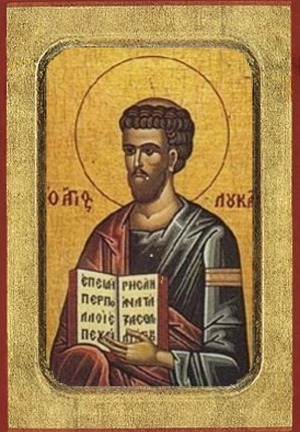
LUKEToday is St. Luke’s Day, and we recall and celebrate the evangelist who wrote the third Gospel. We heard about him today in our virtual sermons, but what I think of most of the time in regards to Luke is the Christmas narrative in Chapter 2. It is said that Luke received the account from Mary herself, and that he painted her image several times.

“And it came to pass in those days, that there went out a decree from Caesar Augustus that all the world should be taxed…” Christmas after Christmas, the children lined up in the narthex of our local parish, dressed in robes and sandals and head scarves, carrying stuffed lambs, arranging glittery sashes over white smocks with matching halo crowns. They would process up the aisle to the chancel in their turn, first the prophets prophesying, then Mary and Joseph journeying to Bethlehem, then lo and behold, a child is born and placed in the straw manger basket. Angels enter, carrying a giant bright star that leads shepherds and kings to the stable-cave.

In our tradition we use the classic King James translation, and the narrators speak the words to the congregation with great joy and reverence as though offering words of gold, poetic beauties, on this cold Sunday, days after the winter solstice. And all the while, the congregation sings well known carols, welcoming the little players in this giant pageant.

And so I am fond of Luke who traveled with Paul, preaching the Gospel, as described in his book, Acts of the Apostles.

rom_16-rome2006

Tradition holds that Luke painted an icon of Mary holding her Holy Child, and of the three images surviving, one is in the Basilica of Mary Maggiore in Rome. We have visited often. There is a side chapel in the transept, home to this image which rests high above the altar. The great Marian shrine is one of the historic pilgrimage churches, and when we entered the giant space, we often heard singing coming from this side chapel. We would follow the song – usually an Ave Maria as well as other tunes – stepping silently up the central aisle, turning left at the transept and peering into the side img_4647chapel, full of pilgrims. We would enter, kneel in the back, and say a silent prayer of thanksgiving. The pilgrims were most often from other countries, and often from America, school children and choirs that have laced their Rome journey with a necklace of spontaneous song. It was a great privilege to experience this again and again.
There is a second image that Luke painted that is said to be in Bologna, and I believe a third in Constantinople (Istanbul), said to have been lost. The one in Bologna is in its own shrine outside the city on a hill, and I recall a colonnaded walkway that connected the shrine and the city. Each year a procession formed and winded its way to the shrine, singing. We were never able to be part of this, but the image is encouraging and lingers in my memory.

One of our preachers this morning said that St. Luke is credited with painting the Our Lady of Vladimir image of Mary as well as the Black Madonna of Czestochowa.

So Luke is artist and author, one that sought to celebrate this great intersection of time and eternity.

prayerThe Church has been given a magnificent patrimony in both faith and art, gifts that make reality more real. For by expanding our sight into another dimension, through words and image, we become closer reflections of the Divine. We are made in the image of God – every one of us. And we are pulled into this Divine Image by our own creation, by partaking of the sacraments, by breathing the Holy Spirit into our lungs as we breathe the name of Jesus, by sharing with others made in His image how beautiful each person is.

candleWe are in a time of great national peril, a time when these gifts may be threatened, a time when we may have to celebrate our Lord of Eternity in a hidden chapel tomb as the first Christians did. I hope and pray this is not the case. Today is a time to speak and to warn, to fall on our knees before God in chapel or procession, virtual or physical, and pray for our country and the Western tradition that guards its faith and freedoms.

We must not be muzzled by masks – by lies masked as truth, by hate masked as love. St. Luke wrote and painted and encouraged the telling of this great good news, nothing less than the story of our redemption. Thank you, St. Luke.

October Journal in a Pandemic Year, Trinity 18

I am pleased to report that I am on page 663 (of 980 pages) of Andrew Roberts’ excellent doorstopper, Churchill: Walking with Destiny. While the details of World War II (battles, etc.) are more difficult for me to follow, the personalities and how they interacted at the time to literally save Western Civilization has been fascinating: Winston Churchill above all, but many others as well.

Thinking about history, the question is often asked, “How do we know what is true, and what isn’t?” or “How do we study/write history?” “What are primary and secondary sources?” “What authorities make this true?” And Pilate’s famous one, “What is truth?”

I asked and considered these questions in several of my novels, in particular, The Magdalene Mystery, which searches for the narratives surrounding Mary Magdalen, and tries to discern the truth, if there is one. How historians have “done” history over the last century is a part of the equation, for methods have changed considerably. New Testament history – the Gospel accounts of Mary Magdalene and what she saw and didn’t see at Christ’s tomb on that first Easter morning – have been questioned. And yet, as I researched how we know what we know, the more I understood how these accounts were written and read and copied over the centuries to become our testament of redemption. And yet the naysayers, the destroyers of objective truth, won over public opinion and destroyed our people’s faith in the salvific acts of Jesus Christ two thousand years ago.

In truth, some modern intellectuals, particularly on the Left, consider truth an impossibility and at best a subjective opinion. Again, the history of history and historians is also a subject of The Magdalene Mystery. For it is remarkable how truth is considered dead, along, I suppose, with faith.

I still believe in objective truth. Granted each person sees it slightly differently, but we should all seek it fully and not be afraid of discovering it to the best of our knowledge at that moment in time. Hence, the choice of go-to authorities is important for the average person, since most of us cannot be authorities on everything.

Facts and fictions are tossed about today in a media circus of entertainment. We as readers and viewers have been reduced to observers in the stands, wondering if it is worth voting for anything or anybody. We fear speaking out or questioning, so that only one side controls the conversation. In the case of speech in our world today, might makes right, not democratic or constitutional.

And so as I read about Winston Churchill, and his many heroic deeds, I am supremely grateful to Andrew Roberts. Mr. Roberts’ words ring true. He shows where Churchill goes astray, misses the mark, creates the wrong impression, is, in fact, human and full of foibles. But he also shows how this man, with all his faults, was a man walking fearlessly with his destiny. He stood alone most of the time, always seeking how he could save Britain, and by saving Britain, save the United States and the free world.

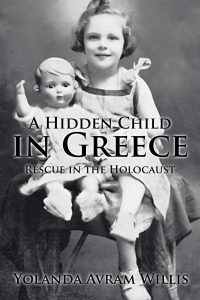
I am currently reading about early 1941 and, having researched the invasion of Greece by Italy and Germany as backstory to a character in Angel Mountain, I recognize overlapping moments in my memory where truth resides. The Nazi invasion of Crete in the spring, where my Elizabeth Levin (6) with her little brother (2) were hiding with their families in the mountains, was a moment I describe in the novel. The character of Elizabeth is based on a true account (I heartily recommend), a memoir by Yolanda Avram Willis, A Hidden Child in Greece, Rescue in the Holocaust.

At the time, the Nazi landing on the beaches of Crete was considered a great defeat for the Allies, but it turned out to be a great victory, for it delayed the invasion of Russia for six weeks, just enough time for a particularly cold winter to set in, one that spelled victory for the Allies.

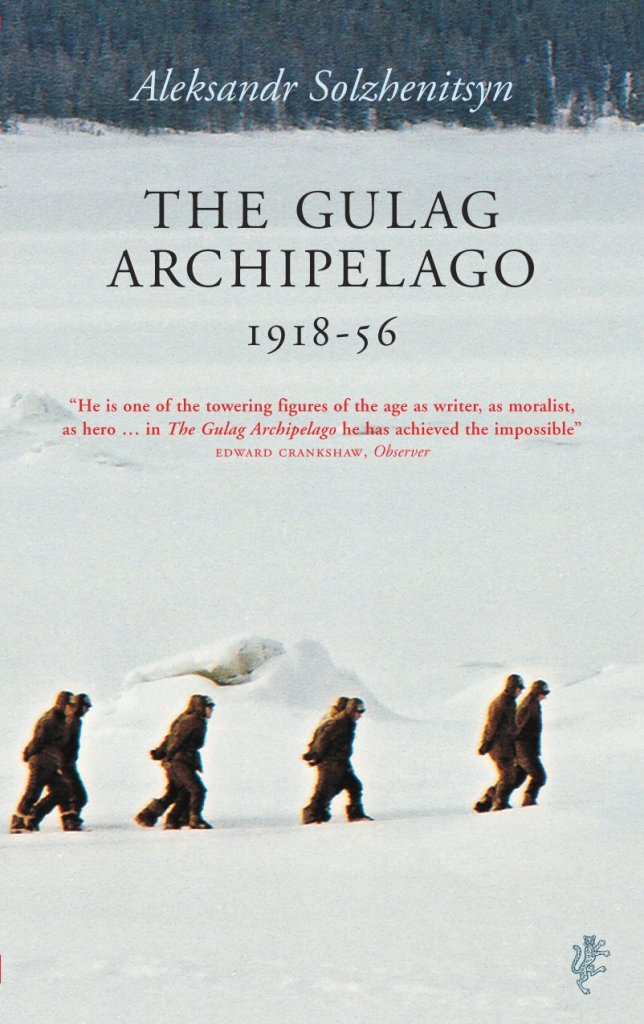
And so today, in the midst of many warring factions in the West, we see history torn down, erased, cancelled. Truth is said to be lies and lies said to be truth. The past is weaponized, and we are left in a dangerous void of meaning. We must pray for discernment, for totalitarian regimes are fond of erasing history. This we know from history, and there are a few of us left who studied history. He who controls the “narrative”, the past, controls the present and the future, according to Communist dictators. Many have written eyewitness accounts of this, and the mass killings that ensue, should anyone be left to read a true account. An excellent account of the Communist gulags and the suppression of truth can be found in the works by Aleksandr Solzhenitsyn.

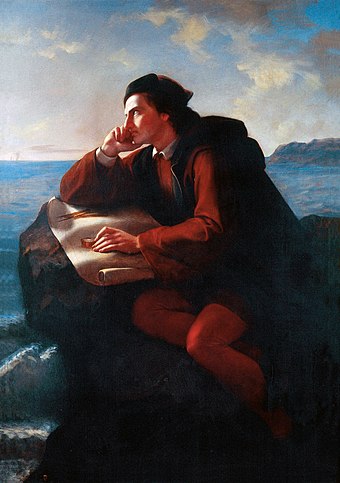
Even so, we still have reliable authorities, those who tell true history. And as we celebrate Columbus Day tomorrow, it is good to seek authorities that tell true American history. I found one such article in the Epoch Times, a paper I trust, which I am looking forward to reading in celebration of America’s discovery.

We still have libraries and books and pages to be turned, words to be read. We still have heroes and saints and sages. This may be our time, our world, our destiny. This may be the time in which we are called to tell the truth and to walk with those who seek it.

The Inspiration of Christopher Columbus by José María Obregón, 1856

October Journal in a Pandemic Year, Feast of St. Francis of Assisi

Today is the Feast of St. Francis of Assisi, the beggar who traveled the roads of Italy, preaching and healing, who kissed a leper on his face. He was both humble and joyous, and he understood he must be pierced by the love of God in the flesh to fully love. He died at age forty-two, nearly blind, and bleeding from the wounds of Christ, the “stigmata” received on the mountain called La Verna. He is a saint of the flesh, of the body, of God’s immense love.

I have come to appreciate the human face and its remarkable ability to communicate. While noses are for breathing (definitely a good and essential part of the face), mouths are for speaking, and for subtle expressions that I have taken for granted over the years.

Because now I can’t see them, masked as they are. Mouths are essential as well, but since they expel and inhale dangerous viral globules, they risk spreading and receiving infection. Sneezing and coughing are discouraged, although I had thought they were always discouraged. Good to be reminded, I suppose, not to sneeze or cough on anyone.

I confess that I have always hated telephones. Hearing a person’s voice to me is not enough. I hold the instrument to my ear or tap the speakerphone, and I try to fathom what the face at the other end of the line, the other side of the Cloud, is trying to tell me. And of course this can be remedied by Skype or FaceTime or Zoom, I do realize.

I visited some family members not part of my “pod” yesterday and left greatly disturbed by the necessary masks. This time it wasn’t that I couldn’t breathe (which is true, I tend to panic) since they were kind enough to allow me not to wear my mask, and we were “distancing”, and I am healthy in spite of being over seventy and deemed by the powers that be to be vulnerable. This time my disturbance was over having to speak to eyes looking at me over the mask. It was surreal, as if they weren’t there, but not quite.

I heard their vocal expressions and nuances and laughter and I could see their eyes crinkle and widen and smile oddly. But I left their home frustrated, feeling I had been robbed of something essential to my well-being, my communication face-to-face. I had been robbed of something intrinsically human, and also, I am beginning to think, divinely ordained to express love. I longed to really see them as our Creator intended, and I couldn’t really see them.

My recent ACFW blog post speaks a bit about this, the uses of the face, the need for Christian writers to reflect God’s face in their writing. I’m glad God doesn’t wear a mask, but breathes his Holy Spirit here among us, stirring us up with joy. And we have God the Son too, a face replicated by icons through the centuries, a face we have come to pray to, a face that is full of love and concern, if perhaps sometimes demanding and stern, as is proper in a well-ordered creation, a created order that loves one another.

And in spite of all the furor over mask-wearing, there has been (as of this writing) no evidence that the practice makes any difference, except that it curtails those who might sneeze upon you or cough upon you, in which case you have made the foolish decision (or loving decision) to be too close to a very ill-mannered person, and might need to think that through in future choices you make, at least if you are deemed vulnerable by the powers that be.

One way or another, the State has taken away our responsibility for our behavior, our ability to choose to love on our own, to make the decision to stay home if we are sick, or to sneeze or cough our globules into a sleeve (as we used to do).

In our faith tradition, in our liturgy and afterwards, we have many moments when we are close to one another, sharing the Eucharistic cup, eating of the Eucharistic bread, kneeling side by side before the tabernacle. In the past we would shake hands, hug, touch a shoulder in tenderness, encouragement, or sympathy. When I had a cough, a didn’t cough on others. If I was sick, I stayed home. Now I’m always home, by decree.

I hope we can return to normalcy, to loving one another again, but I’m not sure about that in California. We shall see. Many are fleeing the state and for many reasons. Government control over faces might be a breaking point at some time. It’s just about my breaking point (and I worry about the children in this world of separation, this world of isolation and unlove).

But, then again, there is today’s Epistle, Paul’s call for “lowliness and meekness and long-suffering in the unity of the Spirit in the bond of peace—one body, and one Spirit, even as ye are called in one hope of your calling; one Lord, one faith, one baptism, one God and Father of all, who is above all, and through all, and in you all” (Ephesians 4:1+). Paul calls himself “the prisoner of the Lord.” So I shall embrace my facelessness as best I can, in increased humility and most of all in love, and become a “prisoner of the Lord” too.

At least among Christians, there is only one body, the Body of Christ, the Church, as one of our preachers said this morning. In this painful separation from one another, and the fueled divisions of our politics of hate, this is Good News. We are not separate from one another. We are not faceless. We are one body, His Body. Until the New Heaven and Earth. Until we see Our Lord face-to-face, with our redeemed faces.

And just as described in my recent novel, Angel Mountain, we will sing with all our might, one of the hymns that our Berkeley chapel chose for today, “Holy, Holy, Holy, Lord God Almighty,” based on Revelation’s song of the angels. We will sing with the angels and the saints and all those who have gone before us, those who have died during this pandemic, those who have died before this pandemic, all those family and friends we long to see once again. We will sing with St. Francis.

For we will see their redeemed faces, full of Christ’s glory. And we too will be redeemed, full of Christ’s glory.