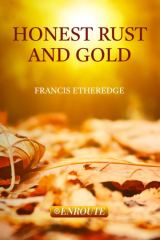
 Honest Rust and Gold, a Second Collection of Prose and Poetry (St. Louis, MO: En Route Books and Media, 2020, 233 pp) by Francis Etheredge
Reviewed by Christine Sunderland
Francis Etheredge has gifted us with a second volume of prose and poetry in Honest Rust and Gold, a collection that flows easily between pieces, between chapters, and between sections: “Before,” “Awareness,” “Technological Leaping,” “Grace,” “The Sacraments,” “Writing,” and “After.”
To be honest, we are rusty creatures, you and I, and we need polishing. We want to shine like gold, and we cannot do this on our own. But if we enter these pages of grace, we will leave awakened and changed, polished by our Creator.
Honest Rust and Gold journeys into the action of God upon us and within us, seeing all of life – of creation itself – as sacramental, the holiness of matter and meaning and the union of the two, for “matter is itself meaningful – if for no other reason than it bears the trace of its Maker” (30). It is in our lackings, our emptiness, our failures in living and being as we are meant to live and be, our rustiness and wretchedness, our sufferings – it is here, in this space – that God meets us. These things, our imperfections and failures, open the door to His action of grace. He is able to enter and reside in our rooms of meaningful matter, recreating us in His own image of Love, for “Love loves begetting/ new beginnings or it is not love;/…and Love would not/ Love in us/ if Love did not first love us.” (105)
But in order for God to recreate us, we must be honest and take stock of our sins and sufferings, honest about where we have gone astray, honest about the rust. We do this sacramentally through Confession (“like the excavation of a well”) (131) and Baptism and Eucharist, allowing our immersion in the love of God. We must also ask for help, for the Creator created “creatures of choice/ instead of being cast/ into an irrevocable mould/ of being unable to invoke/ His limitless help” (32). For we are immersed in our “sufferings, disappointments, failures, griefs and the everyday pressures…” (127). We must redirect our immersions into the mercy of God:
“Are we immersed in the mystery of the mercy of God who looks at what we have done with our lives and makes a work of art from it; indeed, are we able or not to glorify God as the Great Recycler – Who takes the rubbish of sin and transforms our life into a blessing greater than the regret of rubbishing it?” (127)
And so we are baptized in sacred waters and words, “dying and rising of Jesus Christ:/ a bath in which bathing is a descent into the cross’ crucifixion of sin.” (italics mine) (128)
There are times when we must be brought into awareness of our emptiness, our insufficiencies. There are times when we need “the sting of the serpent (Numbers 21:4-9) to wake up to the gratuitousness of what we are given.” (69)
Etheredge is doing his part, thankfully, to wake us up to the reality of our own existence, the reality of our fallen nature, the reality of our need for God, the reality of God’s love for us and his desire to enter our hearts and recreate us. But we must see, and we must ask. We must be “beggars before the Lord.”
Honest Rust and Gold richly weaves prose and poetry to give us phrases to ponder: “scrolling down the/ screen is treading time” (82); “God meets us where we are, loves us as we are, and takes us where we cannot go without Him” (italics mine) (97); “difficulties are there to develop us… because our weakness is the opportunity God needs to make His strength’s home in us” (101).
And so much more: “Although Christmas seems to be for the children, the reality of life frequently helps me to see that I need a savior.” (113)
Indeed, we need a savior, as so vividly seen in the world today, with death surrounding us. It is a time for renewal, Etheredge urges, for the Good Shepherd is working among us, “supplanting the ugliness of a disfigured humanity with the beauty of beholding through grace the transformation of it.” (143)
Grace is here to be seen and heard, if we have eyes to see and ears to hear. Etheredge wonders if his words will reach readers, if all his efforts are in vain. Writers often think this, especially those of us who may espouse unpopular beliefs. And we often don’t know how many readers are reading our words, or buying our books, or touched in any way by our writings. Christian writers, however, know it isn’t why we are called to write. For if one reader is touched and changed, if one reader opens his or her heart to God, that one reader will seed the future. The seed will root and flower and produce fruit. God will recreate our world with this one seed.
And so, the sufferings of all are offered to the glory of the Creator as “Words Torn from Tears/ wrought and wrung from sufferings/ and pierced, in places,/ admixed with lightning gifts/ of jeweled graces.” (156)
I, for one, have been touched and changed, to be sure, by these golden, jeweled words. I hope and pray that these poems and meditations reach a wide audience and awaken our world to the love and grace of God among us, for “no one is beyond the reach of God.”
“And even if we are tempted to refuse the outstretched hand of the Lord, may His love prevail over the withdrawal of our hand, grasping us firmly on board the boat bound for heaven… through the prayers/still to be prayed./ Amen.” (229)
I’m looking forward to the boat bound for heaven, to reaching for Christ’s outstretched hand, to be touched and healed, to be made whole, to be pulled into the safety of the ark, pulled from the stormy seas.
Thank you, Francis Etheredge, for this volume of grace. I look forward to the third, Within Reach of You (St. Louis, MO: En Route Books and Media, 2021)
 Francis Etheredge is a Catholic theologian, writer, and speaker, living in England. He is married, with eight children, plus three in heaven. Mr. Etheredge holds a BA Div, an MA in Catholic Theology, a PGC in Biblical Studies, a PGC in Higher Education, and an MA in Marriage and Family. He is author of 11 books on Amazon:
Amazon UK
Amazon US Visit Francis Etheredge at Linked-In for book news and blog posts.

Christine Sunderland serves as Managing Editor for American Church Union Publishing. She is the author of seven award-winning novels about faith and family, freedom of speech and religion, and the importance of history and human dignity. She lives in the San Francisco Bay Area with her husband and a white longhair cat named Angel.


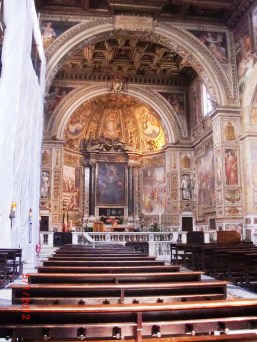
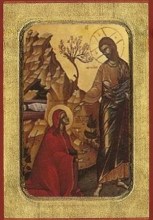
 In our pilgrimage to God with God, we rejoice in each step through time, each minute, hour, day, and year that pulls us toward our own moment of seeing God face to face. This pilgrimage is ours to own as Christians, as witnesses to the daily revelations that unfold before us, as witnesses to the revelations that unfolded over two thousand years ago on a hill outside Jerusalem and in the empty tomb discovered by Mary Magdalene in the early dawn of the first Easter. We are, as Christians, witnesses to life itself, the source, the Creator himself.
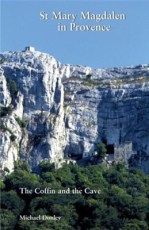
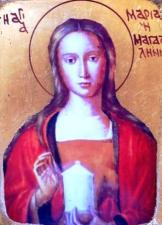 It is a curious thing that there is a sense in which my novels have become my children who have left home for the wide world, traveling to distant readers, into various hearts and minds, with varying welcomes. Authors can’t see their work objectively, and must steer around blind emotional attachments as self-extensions, rather like one’s own progeny. And so I was thrilled this week to sign a contract for the re-issue of one of my earlier novels, The Magdalene Mystery, with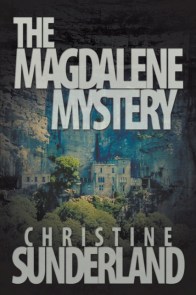
 Two endorsements were from scholars in their own right who were kind enough to read my drafts and make valuable suggestions:
 Angel Mountain by Christine Sunderland (Eugene, Oregon: Resource Publications, 2020, 267 pages)
 Francis Etheredge, Catholic husband, father of 11, 3 of whom he hopes are in heaven, author of 11 books on Amazon, and 2 maybe 3 more due in 2022:
 Christine Sunderland
 Christine Sunderland