
 It snowed on Thursday night, blanketing Mount Diablo here in the Bay Area. Somehow, it seemed a good way to begin Lent, ashes to ashes, dust to dust. The snow will melt, to be sure, just as our bodies will decompose when we make the great crossing into Heaven.
Thursday night our beloved Archbishop entered Eternity after a long battle with cancer. No wonder the world around our house became frozen and cold. He is no longer with us.
 Archbishop Upham was in the right place at the right time for those of us who are part of the Anglican Province of Christ the King. God does this again and again, creating individuals with unique talents that, when offered to him, are key players in the battle of good and evil in our world. I have seen so many instances of this occurring, mostly unnoticed, but as I age I notice more and more. Patterns weave into greater tapestries of meaning and sense.
Our Archbishop was a quiet and thoughtful priest with an inner strength that was almost palpable, characteristics that inspired trust in what he said and did. He became a full time priest after a career in music education and happened to be at the right place and the right time to steer our Anglican ark into calmer waters, having been tossed about in recent storms. He was solid and he was faithful. He listened to God and tried to do God’s will. He understood, as one does if one prays, right from wrong, truth versus lies. He had a vision of how things should be and he wasn’t afraid to witness to that vision.
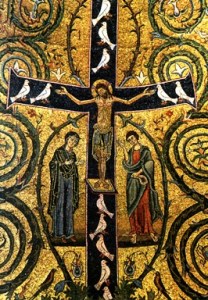
 Archbishop Upham had many talents, but one I loved was his singing voice, a deep melodic sound that, when he visited our university chapel in Berkeley, resounded through the vaulted space, soared above the altar and touched the medieval crucifix suspended above.
It is a curious thing that the afternoon of the day he died I was corresponding with the bishop who was looking after him in Raleigh, North Carolina, about adding a name to our seminary email list, a request that had just come into my mailbox. I ended my email to our bishop/registrar with, please give Archbishop Upham my love. I hope he did. A few hours later John Upham left us, released from his earthly pain and sorrow and struggles. He knows now how we all loved him.
And here, in California, it snowed on the mountain that night, in honor of Archbishop Upham’s life and witness.
Perhaps this is the music of the mountain I am writing about in my novel-in-progress. Perhaps we are the music of the mountain, the voice of love, the deep resonating assurance of God’s love for us. We harmonize together, creating a symphony of sound that could not be sung alone.
What is music? It’s the perfect ratio that brings beauty into our ears, rhythm into our step and beat into our heart. We are musical creatures, you and I, chords joined together to create something larger than any one of us could create.
 Our Archbishop knew this, and as he directed his choir of bishops sitting on the Council of Bishops, they saw they could make music too. And so those of us in the pews hear the notes and make them our own. We sing in unison the great and profound words of our musical tradition, telling the story, singing the story of God’s love for us. We face the altar, singing to the Real Presence of Christ, as his Body the Church, and as his Bride.
It seems right that our Archbishop died on the other side of Ash Wednesday. We pick up where he left off, sing the tune he was singing. We join our voices as we travel the road through Lent to the Passion and to Easter. It is a stony road through this season of late winter and early spring, with these lengthening days, and we must learn to avoid the sharp edges, as we sing the words of penance and rebirth.
It is raining now, a steady cold rain greening our hills. As I return to The Music on the Mountain I shall give thanks for the music in my heart, soul, and mind, the harmony of love. For love turns ash into green grass, death into life. It is love that sings to us, calling us to be faithful, to be brave, to witness to who we are and who we are meant to be. It is love that tells us, in the last days, fear not, all is grace.
 I’m pleased to announce that American Christian Fiction Writers (ACFW) published my post today,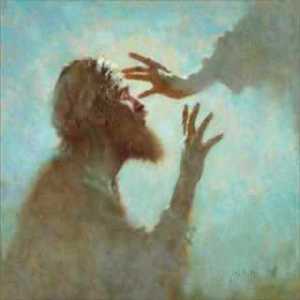
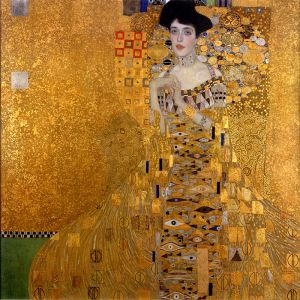 I became intrigued with Vienna when a friend gave me a calendar of Gustav Klimt’s paintings. Klimt was an Austrian symbolist painter (1862-1918). The story of his painting of the Viennese Jewish socialite Adele Bloch-Bauer (1881-1925), “The Lady in Gold,” using icon-style gold leaf, ushered me into fin-de-siecle Vienna, a time of the great literary and music salons. I was intrigued, particularly since I would be including in my novel a Holocaust story. Would this be the tale I would tell? There were many to choose from.
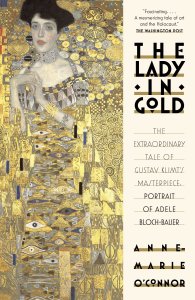 So I read the book that tells the tale of Adele by Anne-Marie O’Connor (The Lady in Gold: The Extraordinary Tale of Gustav Klimt’s Masterpiece, New York: Vintage, 2012). I then saw the movie based on this story of the fight for ownership of the painting (featuring Helen Mirren), involving a dispute between Adele’s heirs and the Austrian government, finally settled by the U.S. Supreme Court. I wasn’t as interested in the court case and effort to recover Nazi stolen art as I was with the early chapters in the book describing Viennese society at the turn of the nineteenth century, with the rise of industry and banking. Adele’s father was head of one of the largest banks in the Hapsburg Empire and head of the Orient Express. Her husband is Ferdinand Bauer, a sugar-beet baron. They were significant patrons of the arts. She was an early feminist, desiring to be educated as men were (!). She posed for the well-known painter Klimt, and reigned over the grand salons in her palace.
 The Gospel lesson today was the healing of the blind man on the road to Jerusalem. He is healed because of his faith: “Receive thy sight,” Jesus says. “Thy faith hath saved thee.” (Luke 18: 31+, BCP 123). This third Sunday of Pre-Lent, as we prepare to receive the ashen cross on our foreheads this Wednesday, as we begin our own journey to Jerusalem, our own passion, our own healing and salvation, following Christ’s footsteps to the Cross – as we prepare to step alongside him, we pray to see the truth of our world and our own souls. Heal us, we cry, have mercy upon us, that we may see. We are told by our censors to be silent, to not cause a disturbance, just as the blind man was told. But we, like him, speak out, crying to Our Lord that our world may see, may be awakened.
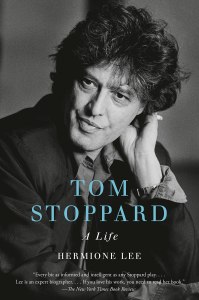 And so, the question remains. Will I be using this Viennese story in my novel-in-progress, the story of why a few escaped because they could see, and why most were murdered because they refused to see? I placed the research in a pile of other stories, keeping the Lady in Gold in my sight. Then I read about “Leopoldstadt,” the brilliant play by Tom Stoppard. An excellent review can be found in
 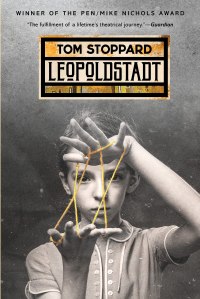 The play opened in London in 2020 and recently in New York. It takes place in a drawing room in a grand palais in Vienna and we see how the families portrayed didn’t see, we see how easily blinded one can become. I’m looking forward to reading the script. Another pathway beckons… but yes, I think the experience of the Jewish community in Vienna will be one of my backstories. Leopoldstadt, the Jewish quarter in Vienna produced much of the West’s civilization, and somehow mirrors today’s challenges in eerie and frightening ways.
 At St. Joseph’s Collegiate Chapel in Berkeley this morning, we entered the second Sunday of Pre-Lent, and I was struck by the light shafting through the clerestory windows upon the crucifix, a reminder to have ears to hear, eyes to see.
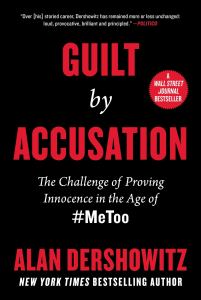 It has been remarked by many how silent the Christian churches and Jewish synagogues are today, in terms of standing up to some of the totalitarian trends gathering speed.
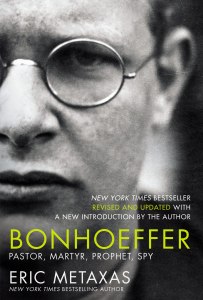 The parallels are frightening. The self-censoring is everywhere. Where are the St. Pauls of our era? Where is the good soil that bears good fruit?
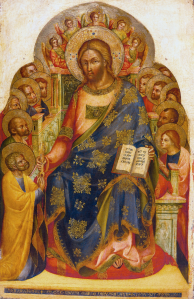 And so I take great heart in hearing the litany of abuse Paul suffered and Our Lord’s parable fully explained, in case we wanted to censor the meaning. It’s all about hearing the word and believing, then with “an honest and good heart, having heard the word, keep it, and bring forth fruit with patience.”
 Today is Septuagesima Sunday, the beginning of “Pre-Lent,” the first of three Sundays before Ash Wednesday.
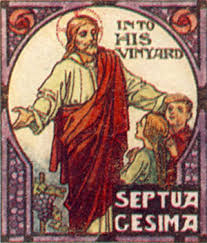 The parable is also about envy, as our preacher pointed out this morning. A right and ordered attitude, formed by an informed conscience, educated in the pew and at the altar rail, tells us not to be envious. Indeed, one of the Ten Commandments given to Moses is, “Thou shalt not covet.” Envy of course is desire to be like someone else; covetousness is the desire to have what they have. Close cousins, to be sure.
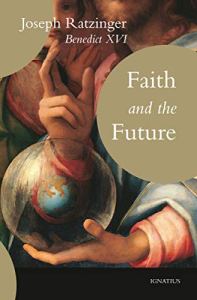 And so both lessons today are about time and how to see ourselves in this space granted, this time in which we have been placed. The times seem tumultuous to many of us, and it may very well be that we are witnessing a great shift in the world order, as well as a diminishing role for the Church. As Joseph Ratzinger (later Benedict XVI) wrote in 1970 in his profoundly prophetic Faith and the Future (San Francisco: Ignatius Press, 2009) the Church will become smaller and more spiritual, and this faithful flock will offer something new to men and women who have forgotten God and in their loneliness “feel the whole horror of their poverty.” We are seeing this played out today.
 Christine Sunderland
 Christine Sunderland