
 As the political rhetoric heats up in our country, it is so good to be present for an hour in a holy place, to rest from the “talking heads” newscasters, and appreciate being surrounded by Eternity, as we sing and pray and kneel and listen. The rest and renewal sends me out into the real world again, driving home on the freeway, dodging the weaving racecars, wondering if this will be the day of my entering Eternity, not merely visiting Heaven in a Berkeley chapel.
Today is a Sunday rich in celebration, to be sure. I learned about Barnabas, the traveling companion of Paul, who filled the role of helper and mediator with the other disciples, bringing Barnabas to them, a quieter role than the disciples we have all heard of. And as I listened to the lessons I could envision the scene in a new way, for we have been watching “The Chosen” TV series, a remarkable dramatization of the disciples chosen by Christ.
 The series shows the real-life world in which these events occurred: the poverty, the challenges of walking the hills and setting up camp, the rivalries and battling egos natural to any group living in such close quarters. The Pharisees and the Sadducees. The lepers, the blind, the lame. There is much drama to portray, and they do it well. There are times when the filming can be too dark, without enough light to see who is speaking, but that seems to be the film fashion today. The Jewish characters have accents as well, adding to the difficulty in understanding the scene, but we have managed to become used to the way of speaking.
What has occurred to me today is how the episodes have given me such a gift, a rich background that comes to mind when I hear Scripture read. I can see it better now, Barnabas going to find Saul, Barnabas bringing Saul back to the others, Barnabas saying, Saul’s different now, do not be afraid.
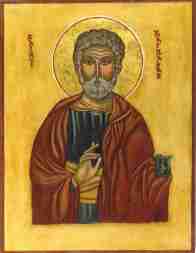 For of course Saul persecuted the Christians in those early days, and his terrible deeds were known and justly feared. He was there at the stoning of Steven. But Barnabas linked the feared Pharisee with the frightened followers, mediated them, and with the addition of Saul, who becomes Paul, the first great Christian theologian is given voice. The Church owes Barnabas a great debt of gratitude, for Paul understood what had happened when the Nazarene lived and died and rose again; he understood the events within the framework of Greek philosophy, for he was Greek.
The story of Barnabas made me appreciate those of us who help, who assist, who clean up, who listen and watch for the next moment when we are nudged by the Spirit to do what must be done in that unique time and place we find ourselves. We are not famous. We do not bow to applause. We worry too much, to be sure, worry if we are in the right place at the right time and if we interpreted the spiritual nudge correctly.
But not to worry, as my bishop of blessed memory often said, usually in Russian (another story). Nothing is lost. All is gained. We need only be faithful, tithing, confessing, attending, singing, praying, listening and watching always. Like the young women in the parable, we keep our lamps trim, to be ready not only for the return of Our Lord, but what Our Lord desires of us now, today.
And over time, a pattern emerges, and we can see that we are a part of the pattern. We are threads among many, but together we weave a beautiful cloak of many colors for the world to wear. We give as we have received. And what have we received? Love.
And Christ himself. Each Sunday Eucharist. With every morning and evening prayer. And in the Gospel for today, the Feast of St. Barnabas the Apostle, Christ speaks to us today:
 The Gospel. St. John xv. 12.
“THIS is my commandment, That ye love one another, as I have loved you. Greater love hath no man than this, that a man lay down his life for his friends. Ye are my friends, if ye do whatsoever command you. Henceforth I call you not servants; for the servant knoweth not what his lord doeth: but I have called you friends; for all things that I have heard of my Father I have made known unto you. Ye have not chosen me, but I have chosen you, and ordained you, that ye should go and bring forth fruit… ” (BCP 241)
And so we leave our little chapel, fortified with the love of God, a love that will enliven our week until we return next Sunday to be enlivened once more.
Deos gratias.
 Christine Sunderland
 Christine Sunderland