
 I’ve been thinking about home, having just discovered a beautiful book series called The Theology of Home by Carrie Gress and Noelle Mering. What is home? Home on earth is where our family is or was, where we feel (felt) safe and loved. Home is where we are seen as the individual we see in ourselves, our strengths and weaknesses, our habits and ways of living and speaking. Home is not a house as the real estate folks insist. Home is a gathering of a family who loves us unconditionally (ideally).
My mother-in-law was not raised in a normal home. She was moved from foster care to foster care, at one point sleeping in a bath tub. Yet she valued home for she yearned for it and created, I believe, a home for her sons and husband in the 1930’s and 1940’s. She extended her home to her church home and her school home with volunteer work and leadership. She was a devout Methodist, and she knew about home from her Lord, whom she would meet when she returned to her heavenly home.
 I recently saw “Fahrenheit 451” (the remake, 2018) in which home and family are enemies of the state. Several images have stayed with me, ways of speaking truth to a dying culture, warning us that we are on a path away from our heritage of freedom, a crooked path we need to make straight, one taking us away from our nation’s home, the founding principles and documents (creeds, essentially) that form our cultural home of freedom.
The story is set in a world in which the written word must be destroyed. Books are burned, movies are burned, anything offering ideas or debate or history is burned, and speech of this nature is against the law. The rationale given is that these books that allow people to think, especially to argue, destroy the peace and happiness of humanity. We are much better off, it is decided, if we don’t think at all. There is a daily dose of eye drops that aids this tranquility, so that every citizen can find the peace (and by inference, happiness) they so desire.
Peace. We all want peace, right? But at what price? Many already drug themselves to deaden their emotions, to feel less pain, to avoid suffering at all costs.
The alternative, allowing people to speak, to write, to debate, is fraught with challenges. Thus, in democracies or republics where we are all given a voice (in theory), rules must be followed, respect maintained, and at the end of the day debaters shake hands. In peace. A framework, the Founders believed was important – checks and balances on the powers of government, free elections, and goodwill, so that there is a just, even-handed, playing field for all.
 It appears we must be dependent upon individual goodwill, an honor system. Manners, customs, traditions that birth goodwill must be nurtured and taught to the next generation. Rules of behavior are learned from a young age in the school of the family, for we learn by living together in close proximity. We learn to love one another, not necessarily like one another, a difficult thing to do, from our parents, and our grandparents. We learn that love means sacrifice and possible suffering, for love is a gift given to the beloved, the gift of oneself, one’s time, one’s care. It is the gift of coming home.
When the family is attacked, we lose God’s way of teaching us how to live together, how to be civil.
And without civility, we cannot speak to one another. We cannot write contrary thoughts. Without respect for all persons, if not all viewpoints, we find ourselves at war with one another, rather than at peace.
And so this movie is about a world that has given up on civility between speakers and thus must silence speech of any serious or profound nature. But there is an underground world of booklovers who seek to save the many conversations between reader and writer since the first scratches discovered on the walls of caves. These secret librarians do more than save the books, however. They memorize their contents.
Memory is the handmaiden of history, for memory holds close these alternative views, these alternative actions that populate the past – the disagreements, the wars, the cultures who defended the right to write and the sanctity of speech. Memory reminds us what happens when freedom is lost, when mankind is silenced, when gatherings are disbanded. We do not have to reinvent the wheel, as they say, or more to the point, reinvent civilization, reinvent the home.
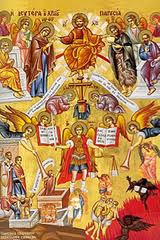 Today we see a conscious effort to divide the family and families of faith found born in churches. These institutions nurture personal choice, personal responsibility, and personal civility with a litany of vices and virtues. The list is clear and forms a path to civility and freedom of speech:
The Theological (theos=God) Virtues
- Faith: Belief in God and His love for us.
- Hope: Belief that God will work out all things for good.
- Charity (Love): Love of God and of our fellow men.
The Cardinal (Important) Virtues
- Justice: Being fair to others.
- Prudence: Thinking before acting.
- Temperance: Not over-eating or over-drinking.
- Fortitude: Courage and endurance
The Ten Commandments etched in stone on Mount Sinai give us a way to love one another, civilly. The Church and the family provide methods to confess one’s vices, to repent, and to be forgiven by the supreme justice of all, God the Father, and to cultivate the virtues. The architecture of peace lies in this tradition, a Judeo-Christian tradition that teaches us how to honor all mankind, born and unborn.
This is no small thing. This is not something to ignore or toss out or silence.

 And so, in my novel, The Music of the Mountain, I explore some of these challenges in our world today, as I have done in The Fire Trail (2016) and Angel Mountain (2020). Our world is close to the book burning described by Ray Bradbury. We have allowed the shunning and firing of those who say the wrong words. We look away, as they did in Hitler’s Germany in the 1930’s. Our nation is moving closer and closer to silencing by force.
In the film, each person in the underground book world has memorized a book. In some sense, he or she has become the book, embodying the book. Just so, we must not forget virtues and vices and their importance to our lives of freedom. We must not forget the creeds, the psalms, the Scriptures that light the path for all humanity. We must learn these rituals and hymns and responses by heart, to be engrafted upon our hearts.
We must not forget how to love one another, how to form families, how to bear children, and how to gather together in faith communities.
We must not forget that we are words, spoken words, created in the image of God, our ultimate home.
 Christine Sunderland
 Christine Sunderland