
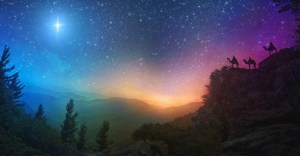
 We are in the midst of Christmastide, the twelve days of Christmas, spanning Christmas Day to the Feast of the Epiphany, January 6. During this holy time that turns the corner of the old year and slips into the new, we try and make sense of the stupendous events of Christmas.
Christmas reminds us, as we act it all out in our lives, that God became man and lived among us. How could this be? He loves us so.
 And so the Church sings the glories of Heaven meeting Earth, tells the story of Incarnation, humility, and majesty. Each stroke of the painting, each phrase of the poem, each note and word of the carol, relives the story so that we will not forget, for we must not forget.
Familiarity has bred forgetfulness, however, and we say words by rote, sing songs without thought, observe holiday rituals from hollow habit together or alone. Other gods have replaced the God of Abraham, Isaac, and Jacob. Other imperatives have replaced the laws of the Creator of the Universe. Sirens pull us away from truth, away from the glories of Christmas.
And so we look for the star that will bring us to where we want to be. We follow the star to Bethlehem, to Nazareth, to the child that will change the world with love.
But as we follow the star, we step through the twelve days of Christmas, recalling saints who knew the Lord of all, Stephen the first martyr, John the great evangelist. Then, abruptly, we halt in midweek to remember The Holy Innocents, the slaughter of the children, 2 and younger, by Herod, searching for Jesus. It is a shock. Not all was silent and not all was holy when the Son of God came to Earth. The light of life entered the dark of death. For us.
Recalling the loss of these innocents, our journey through Christmastide takes us by surprise. The shock and the brutality of these true events in history, revealing the true nature of mankind, the true mourning of Rachel weeping for her children, brings us face to face with the dark, the reason the Christ Child was born, our need for a Savior.
 We look back to October 7, 2023, another slaughter of innocents, and we mourn anew. We look toward January and recall the slaughter of the unborn, claiming 100 million lives in the course of five decades of death, and so many generations lost. We have slaughtered our future and armed the present with danger. We have become Rachel weeping for our children.
And so, having allowed such holocausts we have opened the door to suicide, addiction, and violence, to silencing and censoring, to lies believed and truth denied.
Yet those of us who believe in the Child of Bethlehem are immune from the dark, from death. We have been vaccinated by God-in-flesh, Jesus Christ. With Christ we are born again and again, as we repent again and again, so that when he knocks, we open the door of our hearts once more. We see the star and in its light we see the path through the dark of the world. We know our destination; we know the Way, the Truth, and the Life. We cry to Our Lord, on our knees, to save us from these sins, to save our people, to save our families, to lead us out of the wilderness of death. We cannot do this alone. We need our God with us, in us.
 We sing our songs, and we harken to angels singing with us around the creche, these twelve days of Christmas. The magi are coming from afar bearing gifts, for they see the light too. We join together in the Church, Christ’s bride, and form a rosary of prayer and petition and offering.
In the dark of winter on this last day of the year, we step into time, telling the Story of Glory, the story of Love Incarnate, the story to redeem all stories, as we birth the savior in the creche of our hearts.
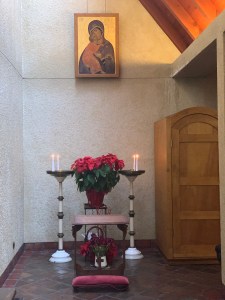
 It is an unusual year when Christmas Eve falls on the Fourth Sunday in Advent. What is one to do? St. Joseph’s Chapel in Berkeley combined the services, beginning with penitential Advent with purple vestments and segueing into Christmas Eve, Feast of the Nativity, with white vestments. Within these two services, we sang carols with gusto. We ended up with 2 Epistles and 2 Gospels and one Mass. It was all quite remarkable, and allowed our small congregation – a university chapel during winter break – to celebrate appropriately. And it was a visual feast, even changing out the wreathe candles burning brightly alongside our creche. We essentially sanctified the chapel, adorning it in real time with our liturgies, voices, and prayers. We sculpted a work of art, of living art, which is what we were celebrating, the birth of the greatest of all living creations, God’s son incarnate, coming among us, to love us and to save us from ourselves, sin, and death, and to declare victory over all to bring us with Him to Heaven, to life immortal in glorious majesty.
 Our preacher made an important point, that we must practice humility to enjoy life in glorious majesty, just as Our Lord did, coming as he did into such a setting, homeless, fraught with enemies, and yet bearing our burdens, our own Lamb of God taking away the sins of the world.
As the pageantry danced around us, I thought how we were in a new dark age, or darkening one at least, one mirroring Medieval times and earlier. For not only has Christianity been marginalized and threatened, but the general populace is slowly becoming illiterate. Reading and writing has been replaced by images and screens. Sure we can load our phones with books, but that is a temporary measure I sense. Videos are so entertaining, why look at a Kindle page?
Our preacher made an important point, that we must practice humility to enjoy life in glorious majesty, just as Our Lord did, coming as he did into such a setting, homeless, fraught with enemies, and yet bearing our burdens, our own Lamb of God taking away the sins of the world.
As the pageantry danced around us, I thought how we were in a new dark age, or darkening one at least, one mirroring Medieval times and earlier. For not only has Christianity been marginalized and threatened, but the general populace is slowly becoming illiterate. Reading and writing has been replaced by images and screens. Sure we can load our phones with books, but that is a temporary measure I sense. Videos are so entertaining, why look at a Kindle page?
 And so how was Christianity taught in the Medieval world? The world of an illiterate populace? Through images – stained glass and sculpture – and through song – hymns and ballads. Memory capacity must have been greater than ours today with no touch screens. And so in our Anglican rite we continue those practices, mostly from habit and love of beauty. We memorize Scripture and Creeds and responses in the Mass. We memorize and recite the General Confession, cleaning out our hearts and minds before becoming one with Our Lord in the Eucharist. We sing hymns, from books with stanzas printed on pages and notes that tell us when to go up and when to go down, how long to hold a note, and even suggestions at the top of the page, like “with spirit” for “The First Noel,” or “with marked rhythm” for “Good Christian Men Rejoice,” or “steadily, in moderate time” for “Silent Night.” But we don’t need those instructions, for the songs are so familiar, thank Heaven, that we live the songs as we sing them, and the Chapel delights in being painted by our voices.
The Medieval world and on for many centuries was an illiterate one. Clergy were trained in Latin, but the populace was illiterate. And not knowing Latin, the liturgies were in themselves in a foreign tongue. Bit through the years, with repetition of the oral traditions and with familiar music and with stained glass stories marching up and down the outer walls, the people became educated in terms of their immortal souls and how to love one another.
Of course mankind never gets it right, with the falling back and moving forward and the darkness devouring the light, until the day comes once again and the light allows us to see once again.
And so how was Christianity taught in the Medieval world? The world of an illiterate populace? Through images – stained glass and sculpture – and through song – hymns and ballads. Memory capacity must have been greater than ours today with no touch screens. And so in our Anglican rite we continue those practices, mostly from habit and love of beauty. We memorize Scripture and Creeds and responses in the Mass. We memorize and recite the General Confession, cleaning out our hearts and minds before becoming one with Our Lord in the Eucharist. We sing hymns, from books with stanzas printed on pages and notes that tell us when to go up and when to go down, how long to hold a note, and even suggestions at the top of the page, like “with spirit” for “The First Noel,” or “with marked rhythm” for “Good Christian Men Rejoice,” or “steadily, in moderate time” for “Silent Night.” But we don’t need those instructions, for the songs are so familiar, thank Heaven, that we live the songs as we sing them, and the Chapel delights in being painted by our voices.
The Medieval world and on for many centuries was an illiterate one. Clergy were trained in Latin, but the populace was illiterate. And not knowing Latin, the liturgies were in themselves in a foreign tongue. Bit through the years, with repetition of the oral traditions and with familiar music and with stained glass stories marching up and down the outer walls, the people became educated in terms of their immortal souls and how to love one another.
Of course mankind never gets it right, with the falling back and moving forward and the darkness devouring the light, until the day comes once again and the light allows us to see once again.
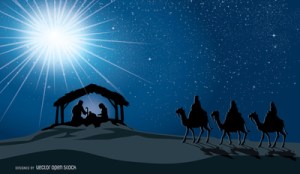
 So embrace Christmas, the greatest story ever told, and sing the song that angels sang to the shepherds, that the wise men heard from the star in the night sky. Give thanks for the symbols and the signs that we must continue to teach, so that when the last blog post is shut down for lack of readers, we will be able to hear God singing to us.
He calls us tonight, this holy night, to come and see him in Bethlehem, the place of bread, where he enters our world in our flesh, so that we can come and see him in church and in the hearts of others who love him.
It is a silent night, a holy night, for all is calm and all is bright. Advent is over for the advent of Christ is here, the coming of the Lord of Lords to save us from the dark.
Merry Christmas to all!
So embrace Christmas, the greatest story ever told, and sing the song that angels sang to the shepherds, that the wise men heard from the star in the night sky. Give thanks for the symbols and the signs that we must continue to teach, so that when the last blog post is shut down for lack of readers, we will be able to hear God singing to us.
He calls us tonight, this holy night, to come and see him in Bethlehem, the place of bread, where he enters our world in our flesh, so that we can come and see him in church and in the hearts of others who love him.
It is a silent night, a holy night, for all is calm and all is bright. Advent is over for the advent of Christ is here, the coming of the Lord of Lords to save us from the dark.
Merry Christmas to all! It has not always been obvious to me that Christmas trees were more Christian than pagan. They are a Germanic tradition, popularized by Queen Victoria (from one of the German states) in nineteenth-century England. To be sure, the lights festooned through the branches (originally real candles) create a magical sense of another world, one we long for but cannot see. But I wanted more of the Good News of Christmas, so I often placed a creche at the base or nearby, thinking surely this is the true meaning of Christmas.
 So in a sense the tree, once decorated (don’t forget the lights), reaches for Heaven, the star on top pulling us higher. We gaze into the branches of our pasts, hoping to understand who we are today and who we will become on our journey into tomorrow. We play carols as we look into the depths of the fir and think about the true meaning of Christmas, the Incarnation of the Son of God come among us.
 We are told by theologians that the tree reappears on Golgotha, that hill outside Jerusalem, many years later. It is on the wood of a tree that Christ Jesus cancels the Fall, raising us up with him in his resurrection. And so on Good Friday we meditate upon the wood of the cross, thinking of Eden and the wood of that other tree with its forbidden fruit. Mary becomes the new Eve, crushing the serpent at her feet.
 And as I hear the words sung by a choir of faithful, It came upon a midnight clear, that glorious song of old…, or perhaps Silent night, holy night…, I will know I have one foot in Heaven already. Perhaps it is the first rung of a wooden ladder that Jacob saw in his dream.
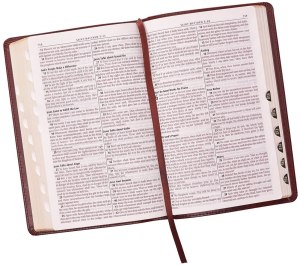 “BLESSED Lord, who hast caused all holy Scriptures to be written for our learning; Grant that we may in such wise hear them, read, mark, learn, and inwardly digest them, that by patience and comfort of thy holy Word, we may embrace, and ever hold fast, the blessed hope of everlasting life, which thou hast given us in our Saviour Jesus Christ. Amen.” (Collect for the Second Sunday in Advent, BCP 1928, p. 92)
 Words have always fascinated me, ever since I learned to read. I recall by the age of ten I was reading Dickens along with Nancy Drew, and devouring library books brought home weekly, piled high (we were limited to ten at a time). I recall the delight I felt in anticipation of all those words and what those words would bring me, where they would take me.
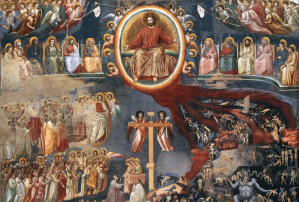 Our Lord goes on to describe his Second Coming in a cloud with power and glory. He is warning us of the advent of the last days and to watch and wait and pay attention to the signs all around us, to be ready.
 And he will teach us to love, to love one another, should we turn to him to read, mark, learn, and inwardly digest his words of life.
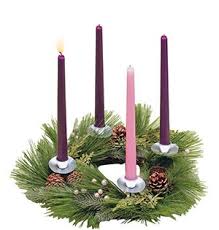 Every Advent I re-memorize the prayer – the Collect – prayed daily in the prayer offices of the Church, including the four Sundays in Advent:
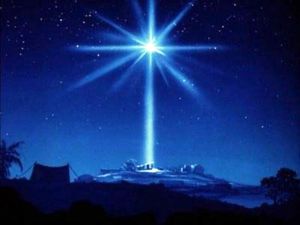 We live in a dark world, and in Advent we pray to see light, to see the star that will lead us to Bethlehem. That star is there for all to see who are not blind. It is bright with the love of God and the love of mankind. It is our beacon of hope in a world of despair.
 Christine Sunderland
 Christine Sunderland