
 I have become fascinated with the accounts of “Near-Death Experiences,” when a person dies and returns to life, having witnessed something resembling a route to Heaven, or Paradise itself. I have been reading a curated summary of findings over the last few decades in Imagine Heaven by John Burke, mentioned in earlier blog posts. I say curated, because he claims (and it appears so) to discuss only those accounts that have greater credibility, i.e., from doctors or others that would not have a reason to make these up. There are many common threads and many differences as well. There are children’s accounts that can only be truthful. There are atheists’ accounts that completely cure their unbelief, conversions that change them forever.
 The interest has led me to a website, International Association for Near Death Studies (IANDS) and their YouTube channel that collects these stories. In browsing through this wealth of information, I soon appreciated the curated version of John Burke, for their are millions. While I don’t think some are exaggerating or even lying (for whatever reason), some simply seem more about the life of the person telling it (video queens and kings, etc.) than the experience in Heaven or traveling there.
At the end of the day, and perhaps as I near the end of my life (no, I’m not sick, just 76), I have become greatly reassured that I will be taken in hand immediately, literally holding the hand of Our Lord or guided by his angels, so that there is no fear of losing one’s way or falling or disappearing… there is no fear at all, only delight and wonderment.
 Through it all, and I am continuing the study (plot alert in terms of this blog…), I had a question I wanted answered. I finally found the answer(s). The question was, what about sin in Heaven? If we have free will, and we are told we must be free in order to love God and our fellows, then do we have it in Heaven? And if we do, what keeps us from sinning again? What protects us from other sinners? The problem of freedom and love was a nagging one. I found a good answer on an online site called “GotQuestions.org” a Christian (probably Protestant) compendium of answers by knowledgeable pastors and scholars, with Scriptural backing. The answer was enough for me not to worry about it, making perfect sense. (Hint – it’s all about sanctification here on Earth). Check it out.
 I had been thinking about judgment as well. The NDE’ers (as they are called) speak of a “life review” but not so much a judgment. I came to the conclusion that it might be that we judge our own misdeeds as we see the review. We repent. For us to be sorry, of course, will require that we have educated consciences, know right from wrong, know the commandments, and then be humble enough to admit/confess, and say those key words, “I’m sorry.” With every sorry, the slate is cleaned and we become sanctified, able to live in Heaven with others who desire love and peace the worship of God Almighty.
That “life review” reminds me of the early accounts of “seeing my life pass before me”, always a curious description of dying. Why, I often wondered, did the brain and the memory paint such a picture at the end? Now I know. It’s way more than the brain and the memory. It’s God leading us to Heaven. He reaches for our hand. Our Lord Jesus says, “Fear not. Welcome home. Enter into the glory of Paradise.”
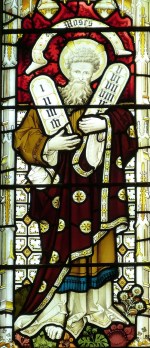
 For we will be transformed and transfigured, just as Christ was on Mount Tabor with Elijah and Moses in today’s Gospel (Luke 9:28+, BCP 248) with the light and love of God. We will enter that “cloud,” be filled with Christ’s love, and be carried to a better world that awaits us. In the meantime on Earth, we experience a taste of that transfiguration when we worship together, when we sing and praise God. For in time we are transformed, sanctified, made ready for our final journey outside of time.
I did work a bit on my novel this week, The Music of the Mountain. Alas, my characters are still sorting books in the basement of St. Joseph’s Seminary, but fear not, they are getting to know one another and working hard to save the written word and Western Civilization. In the process, I considered my recent heavenly research, and may include a near death experience in the second half. We will call Part 1, Earth, and Part 2, Heaven. But which experience will I recount and make a part of my professor’s life in these pages? That remains to be seen. Probably a bit of many. A collage. Just like my characters, combinations of many friends I have come to know and love.
Fear not! Life is good. God is good. All is grace! Be transformed so you will be transfigured, and we will one day gather by the river that runs by the throne of God. Get thee to church and begin (or resume) your journey now.
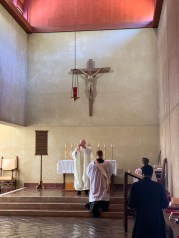 Each year during the summer our Berkeley seminary, St. Joseph of Arimathea Anglican Theological College, offers a residential session for the online program to supplement the online program during the year. During this week or weeks at the end of July the deacons and postulants, as well as local clergy, laity, and students auditing, gather to worship in our chapel for Morning Prayer, Noon Mass, and Evening Prayer. The liturgies are open to the public. The seminarians live on the premises, encouraging a sense of monastic collegiality, and take classes mornings and afternoons.
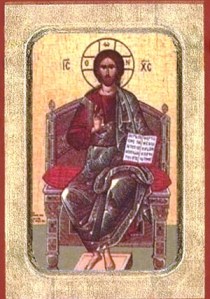 In these reflections this morning, I was able to hear the hard words of Christ. There are many “difficult” sayings, and most are buried in our fear of encountering the truth. But we must hear the truth (especially at the age of 76). This particular passage is found in Matthew 7:15+ where he warns about fruit and fires.
 For when we worship regularly, I have found, we learn to love, or we at least learn more about how to love, through word and sacrament and the fellowship of the Family of God. We learn the importance of marriage and family and children. We learn more about who God the Father is. We bask in his love.
 Okay, I admit it. I’m winging it.
 Alongside the daily dose of writing, I have been reading Imagine Heaven by John Burke, a consideration of the many Near-Death Experiences over the last decades, how these witness accounts compare and contrast. The common threads, of course, are most intriguing, and above all, I have been fascinated by the industriousness of Heaven. Who knew?
 Also there are pets we have loved. I’ve often thought that love was the key, but evidently there are all kinds of beasts, lions lying down by lambs. Yay, my many cats will welcome me!
 Returning to my reading: Imagine Heaven describes a reality that is intensely glorious, like Earth but fuller and more real. Some of the descriptions from the NDE’ers recalled C.S. Lewis’ description of the grass in Heaven as being too sharp and real for the shades from Hell to walk on, for these souls were too insubstantial, filmy. The saints – those of us (hopefully) who have grown more and more real in our lifetimes – are solid and can walk on the grass.
 So with the writing I entered a new world here on Earth, one of infinite variety and wonder-ment and exquisite beauty. For I have also found that finding the word to describe something makes it more real as well. Why is that? We are words, ourselves, words spoken by the Creator at our conception. “In the beginning was the Word…” and that Word spoke others that spoke us into existence. We are the notes that make up the music of the mountains that touch Heaven.
 Ah, the power of the novelist!
 The setting is post pandemic and lockdowns (January, 2023), and the residence and chapel have been closed due to riots and vandalism and fires. The Berkeley DEI Squad (Diversity, Equity, and Inclusion) has raided the upstairs library shelves and burned the “racist” white men’s studies of theology, ecclesiology, and history, not to mention music binders, literature classics, and much more, all titles on their list, with echoes of Ray Bradbury’s Fahrenheit 451. Bibles and prayer books were at the top, naturally.
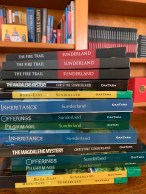 Many of my novels feature books and booklists and authors and libraries, for they offer a rich source of ideas about the human condition. Who are we? Why are we? Where are we? How and what are we? The refrain is constant today, as statues topple and schools are renamed, as fear locks down thought, as the virus of Communism blows through our towns, our schools, our homes, infecting hearts and minds. (But not souls.)
 For the conservatives are now the revolutionaries, according to many. It is an odd place to be, one that causes acute discomfort, like shoes that don’t fit. Conservatives are not, by definition, proponents of change. They conserve the good, the true, and the beautiful. But it appears that the Left has taken control of the nation (major institutions) which makes the Right the protestors, those with the barricades and flags. Alas. We really just want peace, freedom, and the pursuit of happiness. Simple stuff?
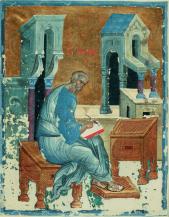 But in the meantime, they must act quickly and quietly to save the hard copies that they can find. The Internet libraries have been cleansed of so-called hate speech. It is time for them to act. For they know that without history, without words, without memory, without these exercises of the mind, a people cannot survive. Without books and words and literacy, we become slaves to the tribal chief who commands the most power. In many ways we are already there.
 It appears that I am writing the story as I go… so am quite interested in how it all turns out. No plot spoiler here (!): I have no idea. I listen and watch and pray. I think one of the characters should undergo an NDE (Near-Death Experience). But which one? I’m leaning toward Dr. Norton, the agnostic (atheist?) Professor of Philosophy and Ethics.
 It has been many years since my birthday fell on a Sunday as well as a Sunday when we were home and not traveling. And so it seemed fitting that I give thanks to God in our Berkeley Chapel for my life on Earth at age 76 and consider my life in Heaven (who doesn’t?).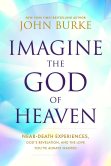
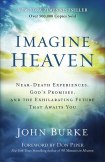 Mr. Burke’s 2015 book, Imagine Heaven, Near-Death Experiences, God’s Promises, and the Exhilarating Future That Awaits You (Baker, 2015) is on my reading stack. After that I’ll go for his release this fall, Imagine the God of Heaven, Near-Death Experiences, God’s Revelation, and the Love You’ve Always Wanted (Tyndale, 2023).
 I was blessed throughout my lifetime, in so many ways, but most of all in the joy of conversion at age twenty by C.S. Lewis’s Mere Christianity, in which he walked me through my agnostic thinking to reasonable conclusions. He demonstrated, to my severe reason, that not only does God exist but that the Christian God exists. Once you arrive there, there’s no going back. One can only step through a forest of discovery and delight, learning and praying and receiving Christ in the Eucharist. There is only choosing this path, desiring to be the creature your Creator means you to be, and with each breath, enjoying his company and conversation along the way.
 We are mirrors, I suppose, reflecting the love of our Creator, and not only reflecting that inexpressible love, but holding it within our flesh, becoming that love, incarnating love in our hearts, minds, and souls.
 I grew up in the 1950’s pledging allegiance to the United States of America every morning in school, hand over heart, facing a large flag permanently hanging in each classroom. I’m grateful. My parents instilled a respect for the police as well. They often said we lived in the greatest nation on earth and we should be thankful to have been born here.
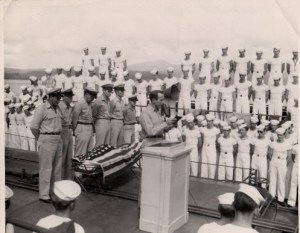 These attitudes added to our sense of community and nation. Without these common beliefs, what do we have? Without a common language what is America? Without borders and traditions and history can a nation survive? With each man or woman who has shed blood to protect America, we are bonded again, closer than before. We share common suffering in such defense. We are grateful to those who died to make or keep us free.
 These aspects came to mind naturally since Tuesday is Independence Day, the Fourth of July, the day we recall with gratitude the signing of the Declaration of Independence in 1776: “We hold these truths to be self-evident, that all men are created equal, that they are endowed by their Creator with certain unalienable rights, that among these are life, liberty and the pursuit of Happiness.”
 The Fourth of July, one of the few holidays not moved to Monday, respects the dating of this vital document. That we continue to celebrate it with barbecues, flags, parades, and even fireworks, is a good sign. That we don’t fully understand what we are celebrating is concerning.
 We are a free nation, celebrating free speech, freedom of religion, freedom of opinion, freedom of assembly. Hopefully, we will correct some of our wrong turns and steer a course into the future that will buttress these “civic” virtues.
 These are Judeo-Christian values that continue to live in this land. We shelter the homeless, feed the hungry, heal the sick. At least we try to. And where we do not succeed, we feel guilty. A healthy Judeo-Christian guilt.
 We have had a number of changes in our Anglican Province of Christ the King recently, reminding me of the power of change, the movement of the hands of time and the fulfillment of human destiny.
 We traditional Anglicans, living lives of faith and practice as best we can, pleasing, we hope, to Our Lord, have structures that curate change carefully, modestly, sagely. We have bishops (the Episcopate) who shepherd the clergy, and clergy who shepherd us, the laity. We have councils and synods and elections and canons and by-laws. We have committees and boards and prayer groups. We have vestries and altar guilds and women’s associations. We have a great foundation going back to the Apostles that allows us to read the map and see the crossroads and make the choices necessary in our world today. And we have inspiring music, penetrating words, poetic chants, and… friendly coffee hours. We have riches that go beyond measure.
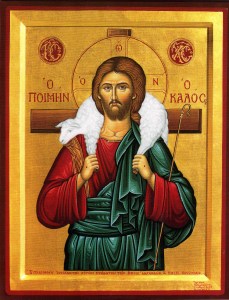 And so we welcome a new Vicar to St. Joseph’s Chapel, as well as a new Rector, who is our newly elected Archbishop (it’s the Archbishop’s Chapel). We have a new shepherd who must look out for sheep that stray and return them to the fold, return them to joy.
 Today’s Epistle lesson (Peter 5:5+) was written by St. Peter, our brave apostle who jumps into the sea and swims ashore, who follows Jesus to his crucifixion, denying him and then repenting, who tries to walk on water but begins to sink, who witnesses the empty tomb, who leads the others in building the Church. Peter has been many times lost and many times found, so that he knows what he speaks of when he says “Humble yourselves therefore under the mighty hand of God, that he may exalt you in due time: casting all your care upon him; for he careth for you. Be sober, be vigilant; because your adversary the devil, as a roaring lion, walketh about, seeking whom he may devour… ” And on Thursday we celebrate the Feast of St. Peter and St. Paul.
 Today is Father’s Day, a day when we celebrate our fathers, if we can. But many are fatherless these days; many never had a father growing up; many have missed something important, a father in the home.
 Through it all the Church has preached the vital importance of families, the vital importance of fathers present.
 As the political rhetoric heats up in our country, it is so good to be present for an hour in a holy place, to rest from the “talking heads” newscasters, and appreciate being surrounded by Eternity, as we sing and pray and kneel and listen. The rest and renewal sends me out into the real world again, driving home on the freeway, dodging the weaving racecars, wondering if this will be the day of my entering Eternity, not merely visiting Heaven in a Berkeley chapel.
 The series shows the real-life world in which these events occurred: the poverty, the challenges of walking the hills and setting up camp, the rivalries and battling egos natural to any group living in such close quarters. The Pharisees and the Sadducees. The lepers, the blind, the lame. There is much drama to portray, and they do it well. There are times when the filming can be too dark, without enough light to see who is speaking, but that seems to be the film fashion today. The Jewish characters have accents as well, adding to the difficulty in understanding the scene, but we have managed to become used to the way of speaking.
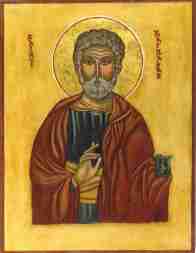 For of course Saul persecuted the Christians in those early days, and his terrible deeds were known and justly feared. He was there at the stoning of Steven. But Barnabas linked the feared Pharisee with the frightened followers, mediated them, and with the addition of Saul, who becomes Paul, the first great Christian theologian is given voice. The Church owes Barnabas a great debt of gratitude, for Paul understood what had happened when the Nazarene lived and died and rose again; he understood the events within the framework of Greek philosophy, for he was Greek.
 The Gospel. St. John xv. 12.
  I always look forward to Trinity Sunday, since we usually sing the majestic, awe-inspiring “Holy, Holy, Holy,” one of my favorite hymns, but I didn’t expect (although should have) “St. Patrick’s Breastplate,” another hymn to the Holy Trinity, a powerful hymn, robust, and commanding. To have these two hymns, accompanied by the magnificent melodic and thundering organ playing six feet behind us! I thought we might soar into the heavens: our little chapel burst with song.
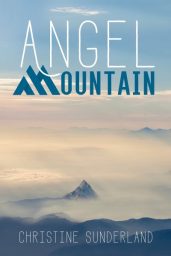 I wrote of “Holy, Holy, Holy” in my latest novel, Angel Mountain (Wipf and Stock, 2020). Toward the end of the story (plot spoiler!) Abram the hermit finds himself in Heaven, and the great vision of St. John on the Island of Patmos is described, the vision that became the Book of Revelation (some call it the Apocalypse) in Holy Scriptures. In his vision, John describes the angels and saints worshiping before the throne of God.
 So of course our Epistle for today was Revelation 4:1+, reflected in the hymn and the creed (BCP 186). And the Gospel, too, considers what it means to believe the Creed. In this scene with Christ Jesus and the Pharisee Nicodemus, their conversation explores being born again of the Spirit (John 3:1+, BCP 187). For Christ says, “Except a man be born again, he cannot see the kingdom of God… except a man be born of water and of the Spirit, he cannot enter into the kingdom of God.” Christ has come to Earth and a new world has been born among men. We are invited to enter, to come and see, to glimpse Heaven from Earth.
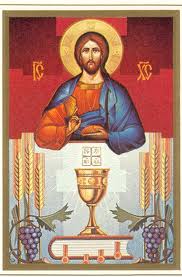 In this sense we are born again in every Eucharist, every song, and every prayer. “For in him we live, and move, and have our being… For we are also his offspring.” (Acts 17:28). For the space of an hour of worship, we live inside this golden reflection of Heaven, fed by God the Father, God the Son, and God the Holy Spirit.
 Christine Sunderland
 Christine Sunderland