December Journal

 
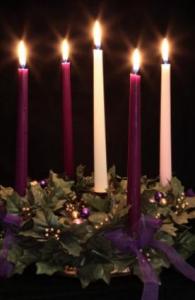
It is a precious time of preparation for the coming – the advent – of God incarnate as Jesus Christ. It is a quiet time of thought, prayer, worship, and song. We reflect and remember with carols and cards the love we bear one another, a love planted in our hearts by Our Lord himself, a sacred love, a suffering love.
 
It is that love that unites Heaven and Earth, traveling through matter and spirit, through bread and wine, and through each of us in thought, word, and deed.
 
We know we do not love enough. We know we fall short here on Earth in this time of training – schooling – for Heaven. We cry to the Lord, “Clean me, make a new spirit within me, dwell in my heart and give me new life.”
 
And in Advent we are reminded he answers us, through Scripture and Sacrament. He comes, this Emmanuel of ours, he comes to us as a baby in a manger, wrapped in sleep, as one song says. He will be born soon to be among us, and he will reside in our hearts.
 
I have found memory to be a wonderful thing, but memory verses even better, and memory prayers the best of all. For prayers committed to mind and heart and lips can be summoned again and again until the Lord of all Creation walks alongside me, with me, close. Prayers are a conversation, not merely a statement of reality and belief. Prayers say, come, come close and talk with me, walk with me. My usual source is the 1928 Book of Common Prayer Collects for the season and the week, and over the years the Advent prayer is revisited:
 
ADVENT SEASON
The First Sunday in Advent.
The Collect.
“ALMIGHTY God, give us grace that we may cast away the works of darkness, and put upon us the
armour of light, now in the time of this mortal life, in which thy Son Jesus Christ came to visit us
in great humility; that in the last day, when he shall come again in his glorious majesty to judge both the quick and the dead, we may rise to the life immortal, through him who liveth and reigneth with thee and the Holy Ghost, now and ever. Amen.”
This Collect is to be repeated every day, after the other Collects in Advent, until Christmas Day.
(BCP p.90)
 
We are, as Dorothy Sayers said, attending the school of charity, the school of love. We must educate our consciences with virtue lessons and sermons and Bible verses. We must train our wills in the art of right and wrong, the commandments given to us by Our Lord through the ages. Then, when we see God face to face we will not be burned, but will see our lives and know what to repent. For only repentance will harvest forgiveness, and only forgiveness – cleansing – will open the doors of Paradise.
 
Our Lord respects our free will. He cannot force us. That is the nature of love. We have the freedom to choose our final destination. And so, in my aging season, I recently adapted the traditional “Jesus Prayer”, to invite Christ to be with me, to talk to me. The more I say this prayer, this “asking” for his presence, stepping through my day, the more I marvel. Ideas pop into my head. Reminders touch me tenderly. And my mind is (mostly) free from worry – for I trust His presence as long as I ask him to be with me:
 
Jesus, My Lord, I thee adore.
Teach me to love thee more and more.
and I end every prayer with,
Let thy will be done in my life.
 

Today, Rose Sunday, we remember Heaven, and we remember the fiat of Mary – “Let it be unto me according to thy will.” And so it was – she was visited by God the Holy Spirit, and Jesus, God the Son, was conceived. She was given a protector in Joseph, and they traveled to Bethlehem, a long and arduous journey, praying again and again, “Let it be according to thy will.” 
 
For it is only when we say yes, fiat, that God can work his marvelous miracles in our lives. We just remember to say yes again and again… and again.
 
Thanks be to God for his gift of life and love, his coming to dwell with us, in us, today, every minute and second. Come Lord Jesus, come. Shine the bright lights of Christmas, Christ-mass, into our hearts. Enter in and show us our sin.
 
Thanks be to God.
 
+++
 
Considering virtues and schooling ourselves, my post, “Visible Virtues: Judging Justice” was published this last week by American Christian Fiction Writers, about how Christian fiction considers how to live out the moral law, revealing argument and judging justice. Thank you ACFW!


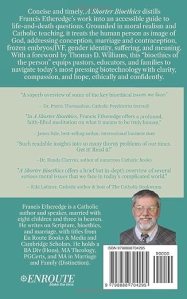
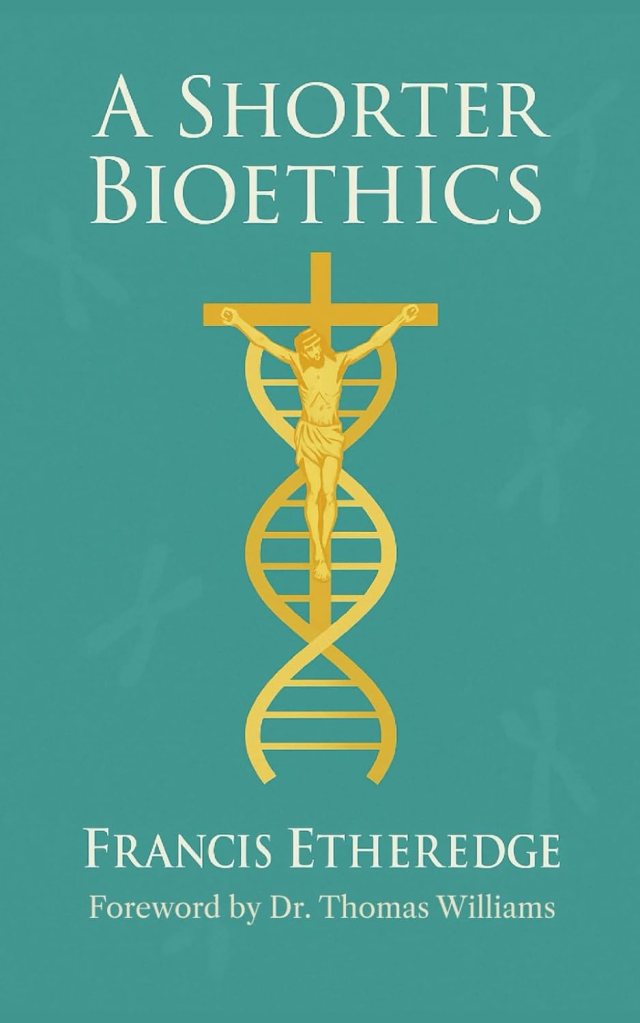
Endorsement: A Shorter BioEthics by Francis Etheredge

I have long been an admirer of the work of the British bioethicist and theologian, the incomparable Francis Etheredge. Here is his latest, a volume I am proud to endorse:

+++

Endorsement: A Shorter BioEthics by Francis Etheredge (Enroute Books and Media: September 2025), 76 pages

Bioethicist Francis Etheredge has distilled the themes and arguments of his earlier works into a heartfelt defense of life, human dignity, and personal identity.

He asks the hard questions, forcing us to face the reality of our humanity: Who are we and why are we here? He answers with logic and precision, for we are persons in relationship with one another and with our Creator – the Holy Trinity – God the Father, God the Son, and God the Holy Spirit.

He goes further, anticipating our doubts, asking why we need to bring God into the debate – revealing there must be a first cause if we are to enter the mystery of human identity. And so, while Francis Etheredge clearly owns a Christian perspective, he explains why this is the best argument, as he blends the love of God, reason and evidence, truth and love, into a definition of our humanity.

As he leads us further into the miracle of life, he considers marriage, conception, gender identity, and family. He faces the reality of fertilization, frozen embryos, and the responsibility we share for the lives of these innocent children. In the midst of today’s silencing of debate, he speaks truth, inspiring us to have respectful conversations and educate the next generation to think critically about these heart-rending realities.

A Shorter BioEthics is a stunning work, accessible, courageous, and caring. He asks us to join him on this journey into the light to discover who we are and who we are meant to be. There can be no greater question and no greater answer.

I highly recommend this excellent guide through the dark woods of our time!

Christine Sunderland, Anglo-Catholic Novelist, Octave of All Saints, 2025

To purchase: Amazon

October Journal, Feast of Christ the King

I visited St. Peter’s Oakland yesterday on the Patronal Feast Day of our Anglican Province of Christ the King. Canon Weber’s sermon clarified issues facing our culture today, and I have reprinted it with his permission. Thank you, Canon Weber:

+++

Sermon for the Feast of Christ the King, October 26, 2025; Canon Matthew Weber, preaching at St. Peter’s Anglican Church, Oakland, CA

Jesus answered, My kingdom is not of this world. 

In the name of the Father, and of the Son, and of the Holy Ghost.  Amen.

Today we celebrate the feast of Our Lord Jesus Christ, King.  This feast is especially important to our parish because we are part of a jurisdiction known as the Province of Christ the King; today is, therefore, our provincial feast of title (if there is such a thing).  And as you probably have gathered, on any given feast of the liturgical year, the proper texts—that is, the texts which belong to that feast—express something of the nature of the feast, whether it be the celebration of a particular saint, an aspect of God’s being, or a mystery of the faith.

Today’s lessons seem, at first glance, curious.  We start with an epistle which sings of the glory of Christ’s mighty works : deliverance from the power of darkness, redemption, forgiveness of sins.  Christ is the firstborn of creation, the image of the invisible God, by whom and for whom all was created, the head of the Church, the great Reconciler.  I could preach a whole sermon on what just one of those things implies—and I’ve left out a few components of Paul’s impressive list.

The Epistle sets us up to expect an even more grandiose Gospel—perhaps Jesus prophesying his coming again in glory, perhaps some other regal or epiphanic image.  But instead of the vision which we might expect, of the Son of Man coming in glory from the clouds with the Heavenly Host, we get a brief glimpse of Jesus’ interrogation by Pilate before his crucifixion–not a very triumphant or rousing image, by any means.  Pilate wants to know whether Jesus has actually claimed to be King of the Jews, because–for whatever reason–Pilate is reluctant to condemn him.  He doesn’t look or act like the bandits (terrorists might be a better word) that he usually sees charged with sedition, and wants to be sure that the Temple party aren’t just setting up a rabbi they don’t like for the Romans to deal with.  So he asks him, very specifically, whether he is in fact King of the Jews, and Jesus dodges the question, finally saying the most surprising thing : his kingdom is not of this world.  

And yet, at this very moment we have Christians who are focused on creating a Christian kingdom (or government of some sort) in this world.  Based on the teachings of Reformed theologians like R.J. Rushdoony, Gary North, and Greg Bahnsen, we have pastors and politicians who are quite sure that establishing a Christian theocracy will bring about Christ’s goal of “teach[ing] all nations, and baptizing them in the name of the Father, and of the Son, and of the Holy Ghost.”  Just look at the wickedness of the world today, they say; people commit heinous sins, and the governments of the world rubber-stamp it.  The Church is divided, often against itself.  The West, once shaped by Christianity, is in the process of discarding it as a culture.  I can see how the idea of establishing an avowedly Christian government, with laws to prohibit all the sins that our secular government currently allows, can be attractive to anyone who is dismayed by the state of the world.  Just get Christians elected to positions of secular power and get them started on changing the Constitution and the laws, and everything will fall into place.  Right?

What could go wrong?

Well, as you may have guessed, I think quite a lot could go wrong; but that’s the least of it.  I find that there are several objections that could be made, and the first is this: If political dominion were the goal of the Church, wouldn’t the life of our Lord and his Apostles have looked rather different?  If Jesus had wanted political power, why did he scold Peter and tell him to put his sword away when he attacked the Roman soldier?  If the ministers of the Church were meant to be secular rulers, why did the Apostles scatter to the ends of the globe to preach the Gospel and suffer martyrdom for it?  Why was it that martyrdom was considered the holiest possible death for a Christian in those early days?  And let’s not forget what Jesus says in today’s Gospel, which I quoted for you at the beginning of this sermon: “My kingdom is not of this world.”  So by the witness of Scripture and the early Church, this idea would seem to fail.

Following upon that point, it is true that the Church held an immense amount of political power beginning in late antiquity, and throughout the Middle Ages.  Here the record of history shows us dozens, if not hundreds, of unedifying examples of Christian princes making bloody war on other Christian princes, and going back to ancient history we see that Israel, which had direct access to God and received the Law as though from His own hand, falling into pagan practices again and again.  Their hotline to the Almighty didn’t prevent them from being corrupted.  And we can adduce numerous examples from history as to the disasters that occur when the Church and the State attempt to march in lockstep: the Eastern Roman Empire, which for all its Christianity could not prevent the Iconoclast heresy from taking power; the English crown, which swung like a crazed pendulum between various forms of Catholicism and Protestantism throughout the 16th and 17th centuries (and which now has all but abandoned the faith); and right here in North America, the Massachusetts Bay Colony, in which a person who overslept on Sunday morning might find himself flogged in public for neglecting divine service.  All these arrangements eventually collapsed under their own weight or succumbed to the inevitable tensions between the Church’s ideal and the State’s reality, and in every case both Church and State suffered for it.  Through the lens of history, we must conclude that this is a failed idea.

And then too, there are practical problems.  Whose Christianity becomes the state religion?  Reformed?  Catholic?  Baptist?  What kind of Baptist?  Free-Will, Reformed, Regular, Independent Fundamental, and so on?  Here again, the adoption of any particular distinctive form of the Christian religion will force the government to persecute members of dissenting faiths—because if dissent is tolerated, then the slow sink into indifference will be all but assured.  And these dissenters will quite likely outnumber the conformists, which is a problem of its own.  

Another possible practical problem: how will this Christian government deal with commerce?  There is much that occurs in the world of business which may be legal, but is hardly moral.  How will a Christian government make this distinction?  Will it also tolerate sharp practice in business, risking the taint of corruption in the newly-Christian state?  And in a global economy, what will such a government do about trade with countries like China, which persecutes Christians and is involved in active genocide against the Uighur people?  How could our Christian government continue to trade with a country that commits such evil?  And so we see that for practical and moral reasons, this idea fails again.

Lastly, and I think most importantly: Does passing laws to enforce Christian behavior make people more holy?  Does it contribute to their sanctification?  I think not.  It is crucial to salvation that we be free to make the choice.  And being free to make the right choice entails also being free to make the wrong choices!  If we coerce people into joining the Church, we become just like those of other religions that we criticize for spreading the word by means of the sword.  So it seems to me that from the perspective of mission, this idea fails miserably.

It must seem terribly attractive to simply seize the reins of power and compel everyone to behave the way they ought, to actualize the Kingdom of God on earth.  But Christianity in this world is over and against; joining it with the powers that be weakens it and forces it into compromise with the demands of politics, which  will inevitably corrupt the ideal.  We know that Jesus will return at the end of all things, to judge the world and to institute his Kingdom.  We cannot make this happen according to our desires or our schedule; God cannot be compelled by our actions.  That would be, not religion, but magic—and magic is forbidden to us.  Our work here on earth is to love God and to love our neighbor: nothing more and nothing less.  That is a life’s work which I have yet to perfect, and I suspect the same is true of most Christians—so what is most important is that we keep at that, and trust in God’s mercy and love to supply what we cannot: so that at the King’s return, when he shall come to judge the quick and the dead, he will find us all ready.

In the name of the Father, and of the Son, and of the Holy Ghost.  Amen.

September Journal, Thirteenth Sunday after Trinity

Once again, we mourn for America, for her freedoms, for her free speech. It appears that speech isn’t free, that we must earn it, or pray or pay for it, or simply do all we can, peacefully with words, to protect it.

We mourn Charlie Kirk, a true patriot, assassinated on the eve of September 11, the devastating attack on our country, that bombing of the World Trade Center and Washington D.C. by radical Islamist terrorists. The Texas flood and the lost children, the murder of children praying in school in Minneapolis, and the Ukrainian immigrant murdered on a train, have formed a chain of sorrow running through these summer days. We mourn. We cry. Our hearts are breaking.

As I wrote in my last post on this site, Christians look to Christ to bring us into that glorious liberty as children of God. And in this fallen and broken world, we live that liberty with love and learning, educating those who do not know, comforting those who mourn alongside. So we are the lucky ones, the believers in this loving God of life. We are the ones to heal our nation and the world. And so we must not be silent. We must use our words to give witness to life, the life embraced and enfleshed in the Judeo-Christian tradition of the West.

For Christ was the Word made flesh and dwelt among us and we beheld his glory, the glory of the Father. He was and is the light in our darkness. We must be his light in the world.

Just like Charlie Kirk.

And so, my quarterly contribution to American Christian Fiction Writers was published on Nine-Eleven, Thursday, Patriot’s Day, the third in a series on the Virtues, Visible Virtues: Prayerful Prudence. I dedicated this to Charlie and his family.

Each of us is a word made flesh, a word created by God the Father, the Son, and the Holy Spirit, at the moment of conception. On this thirteenth week of the Trinity season, we are strengthened by the Holy Trinity, feeding us and nurturing us with word and sacrament through Christ’s bride, the Church.

We give thanks for the life of Charlie Kirk, and we mourn his passing, a great loss. And we pray for the healing of our country.

For Our Country
ALMIGHTY God, who hast given us this good land for
our heritage; We humbly beseech thee that we may
always prove ourselves a people mindful of thy favour and
glad to do thy will. Bless our land with honourable industry,
sound learning, and pure manners. Save us from violence,
discord, and confusion; from pride and arrogancy, and from
every evil way. Defend our liberties, and fashion into one
united people the multitudes brought hither out of many
kindreds and tongues. Endue with the spirit of wisdom
those to whom in thy Name we entrust the authority of
government, that there may be justice and peace at home,
and that, through obedience to thy law, we may show forth
thy praise among the nations of the earth. In the time of
prosperity, fill our hearts with thankfulness, and in the day
of trouble, suffer not our trust in thee to fail; all which we
ask through Jesus Christ our Lord. Amen.
1928 Book of Common Prayer, 36

July Journal, Fourth Sunday after Trinity

It is a curious thing, I often think, that mankind, in his overweening pride, believes he can conquer nature, whether it be outside or inside. The natural world seems an unnatural world.

And so, when disasters happen, especially when children are lost, we cry out, “Why?” Like St. Paul in today’s letter to the church in Rome, we “groaneth and travaileth in pain together… groaning within ourselves…” (Romans 8:18+)

We have, it appears, an irrational hope and expectation that is dashed when children are lost, when innocents suffer, when plague and famine kill, when the unborn are slaughtered, when human holocausts rage.

The real question is, why do we ask “Why?” Why do we have this hope and expectation that things should be different than they are?

Light and dark. Joy and sorrow. Life and death. Truth and lies.

When I consider the Texas floods I groan within. When I consider the slaughter of the unborn I groan within. When I think of those lost in the Nine-Eleven terror I groan within. And so many other times of pain and suffering in this life throughout our world.

But I know, and I am so very glad and grateful to believe in that certain knowledge, that, as St. Paul writes, “the sufferings of this present time are not worthy to be compared with the glory which shall be revealed in us… because [we] shall be delivered from the bondage of corruption into the glorious liberty of the children of God.” The glorious liberty – yes, yes, yes.

We are children of God, and we shall be reunited with those lost. This is not a vain promise, but the act of God himself on a hill outside Jerusalem. And we must remember that it was Herod who slaughtered the innocents. Yet we ask, “But why? Why must this be?”

We know why – because of Adam and Eve and the Garden of Eden. Because of a snake and fruit and disobedience and lies. Because of banishment from that garden, that paradise. And so we live and work and grow old and ill and feel death’s sting until we go home to Paradise and our bodies are redeemed from the bondage of corruption.

We have all had our share of tragedy and heartbreak, sin and death. We have all been a part of this saga of suffering. We want to cast blame, find a scapegoat. But when we confess our own failings, hourly, daily, we are not so quick to condemn. We clean out our hearts, scour them with the love of God and the bright light of Christ, that glorious rule of love. And when we are clean, the door opens and Our Lord returns. He now resides in our hearts – and there is no greater joy, no greater life, no greater truth than opening our hearts to the Love of God. It is a healing love, one that helps with our groaning and grief.

There was something diabolic about the Texas flood, this slaughter of innocents. It happened in the dark, while they were sleeping. It happened on the Fourth of July, our celebration of life and liberty. It happened to Christian campers, trusting and loving.

And yet, the stories of heroism, those who saved others, are resurrecting those lives lost, reminding us that these innocents are in Paradise and Love lives on in our country.

Still, we groan and grieve. We look to Christ to redeem this time and in the meantime, this mean-time in which we live outside the garden, we play our part in the redemption of the world, celebrating the Judeo-Christian promise of the West – freedom, faith, and family. And our children.

_______

Congratulations to the ten winners of the Goodreads Giveaway for Angel Mountain (Wipf and Stock, 2020) in celebration of Western Civilization and the Judeo-Christian tradition of life and liberty.

June Journal, First Sunday after Trinity

There are times when truth hits forcefully (gob-smacks? or perhaps God-smacks?), as though you always knew it but had buried it and now it appeared like a long lost coin or memory or friend. God’s truth is like that. The Trinity is like that. Love is like that.

Our Bishop Morse of blessed memory often said that the Trinity – the remarkable union of God the Father, God the Son, and God the Holy Spirit – is the love between the three persons of God. It was a confusing idea for me until recently when I thought about our parish churches.

For it is the Trinity that lives in our churches (or should). God the Holy Spirit welcomes folks into his home. Through an usher, He opens the door, greets us warmly, hands us a bulletin, and leads us to our pew. He will inspire us, fill us with his spirit, as we pray and sing together. God the Father presides as Host of the banquet, insuring order and peace through ceremony and ritual. God the Son awaits on the altar – that banquet table – in the species of bread and wine.

It is this Love that we enter as we step into a church. And as we settle in, we are aware of great beauty – the beauty of an organ playing a Bach preludethe beauty of flaming candles on a linen-draped altar, the beauty of cleanliness suffused with old incense, the beauty of symmetry, the space pointing and leading to the Lord of Lords and away from the self of self, you and I. We know, dwelling in this house for an hour, the beauty of holiness. We know love. We know the Holy Trinity.

The beauty of holiness. What is that? Amazingly, such beauty is by design and not difficult to create with the help of imagining first impressions as the stranger becomes our sister or brother. It is Worship 101, my compilation fron fifty-seven years of Anglican Eucharists in many parishes with many Families of God, my dear brothers and sisters:

  1. The porch and front doors must invite, be in good shape, with clear and attractive signage nearby. In this way the church family introduces who they are and what they offer, good information for the visitor.
  2. The entry or narthex also welcomes, is clean and orderly, and provides information and direction.
  3. Greeters and ushers welcome the visitor personally, creating a human bond with strangers entering a sacred space. The usher is the visitor’s first contact and must be Christlike in caring and concern as folks find refuge from the secular without, entering the sacred within. The bulletin he offers contains the service with hymns and prayers as well as welcoming words, inviting all to stay for coffee.
  4. The interior’s first impression: what we hear, what we see. The organ plays preludes to settle the mind in beauty, to prepare a quiet mind to worship; the sanctuary is alight with candles lit on the altar, a Sanctus lamp burns before the tabernacle; the hushed holiness is tangible.
  5. The space is clean and tidy – brochures, hymnals, and prayerbooks neatly placed in the pews, readily available.
  6. The Family of God is on time: the church is open and all is ready at least 15 minutes before the scheduled liturgy so we may prepare our hearts and minds for worship and to receive visitors. The service begins promptly unless there is an exception for good reason. The visitor’s time is precious. The church must respect that. He will judge this family of God in many ways, some clear, some not. He may not bother to return. Most do not. We are marketing the Family of God and we must think of first impressions.
  7. The Family of God sings and prays together, involved in the Work of the Liturgy, standing to sing, kneeling to pray, sitting to listen to instruction (exception is the Holy Gospel, when we stand). We contribute our voices in prayer and song. The words we say and sing together teach us about God and Man, Salvation and Love.
  8. Sermons are concise and well crafted (ten minutes); they are scriptural and doctrinally sound. Announcements reveal our family life together – invitations to coffee after the service extend our hospitality; practical matters as to receiving the Holy Eucharist are explained. Can all receive? How do I receive? What is the custom here? Can I just receive a blessing? How?
  9. The Holy Eucharist is intoned by the priest with reverence, without drama and exaggeration, but heartfelt, each word a call upon Almighty God; it is not a recitation, but the celebrant says the words as if for the first time, standing on holy ground, the burning bush on the altar. He faces the altar representing us in the pews, offering the Holy Mass for us, his Family of God.

With these guidelines we create beauty – ordered beauty. We also create love – the love of family, the Family of God, the Bride of Christ, the Church. Within this love we meet our salvation, now and in Eternity.

Governor Arnold Schwarzenegger recently said that immigrating is like being invited into someone’s home. I arrive on time. I knock or ring the bell to let them know I am present, having been invited. The host opens the door (freely). I cross the threshold – the border – and enter the home, this personal space. They are the host. I am their guest. I follow custom and courtesy, respecting their rules. I wear proper garments. I take the seat shown to me. I bring gifts to show my gratitude – my time, my talent, my treasure.

The host has worked to prepare for my arrival – cleaned the house, welcomed me warmly, ushered me to a place of comfort, rest, and nourishment.

Just so, when I cross the threshold of a church and enter into this beauty of holiness, I experience hospitality and know I have come home. For the church connects our two homes – Earth and Heaven. It is a bridge, or path, or tunnel. It is the outspread arms of Christ welcoming me. I leave Earth behind when I cross the threshold. I step up the aisle toward Heaven in the tabernacle on the altar. In the next hour I will dwell in God and He in me. I will be changed.

The Family of God loves the stranger and opens the doors early, just in case. As mentioned, the organist begins early. The healing beauty of music pours out the doors onto the porch and pavement, calling all to come and see.
At one time – before the locking of churches – I could drop in unannounced like a beloved family member. I could step through the doors and enter a hushed and holy place and dwell for a time in the love of the Holy Trinity. I might be alone for a time in this peaceful beauty, a precious time in the quiet, kneeling before Christ in the tabernacle, signified by a red lamp burning. The silence quiets me, surrounding me with prayers of the faithful through the years – my soul family – in this space and time. I open a prayerbook, turn the pages, pray the prayers and psalms, and thus add my own heart’s desires to the weave of time past and time future, now contained in time present.

If we are faithful with the basics of being good hosts and welcoming the stranger (Liturgy 101) we may not see a great difference in growth or it may be slow and steady. But we will know we have laid the foundation to build upon in our parish life. We know we have done what is required. We must not neglect these routines of caretaking or we will grow inward, become a closed funeral society, a family perhaps but not a Family of God. We will become blind and deaf and mute.

And so we keep the faith by practicing faithfulness in all these little things, making a home for the Holy Trinity in our neighborhood, a home where He can be Host and welcome the stranger.

In that spirit of welcome, I’m pleased to announce another Goodreads Giveaway, this time my seventh novel, Angel Mountain (Wipf and Stock, 2020), in celebration of Western Civilization, libraries, and literature. For more information visit Goodreads Giveaways.

May Journal, Memorial Day

Today, Memorial Day, we celebrate Western Civilization and those brave men and women who fought and died to defend our freedoms, our way of life embracing the moral code of Christianity and Judaism. We honor you and we thank you! We will never forget the sacrifices you made for us. Your courage and fortitude are an example to our children and our grandchildren.

And so today I’m pleased to announce that American Christian Fiction Writers has published my post, Visible Virtues: Fearless Fortitude, the second in a four-part series on the Cardinal Virtues, encouraging Christian novelists to tell tales of virtue and create heroes with fortitude who embody the Judeo-Christian ethos, the foundation of Western Civilization.

Fortitude can be found in my own novels (not sure how much I have, but I try), and my sixth novel, The Fire Trail, has now been sent to the ten winners of my recent Goodreads Giveaway. Nearly four thousand readers entered over the thirty day period ending on May 23. As many might recall, this story involves our current cultural threats, the line between barbarism and civilization, and the definition of peace and freedom in our world today. Where is America heading? Set in 2014, the signs were ominous and the need for a cultural renewal in America was urgent. Many today are heeding that call, and throughout the West revivals of faith and freedom are lighting the way. Will the world heed the light or choose the dark?

Today is also a time of population implosion with a spiraling birth rate, and many predict a doomsday scenario given the “birth dearth” recognized, albeit belatedly. Can we turn this depopulation crisis around? Catherine Pakaluk addresses this question from an interesting point of view in her new book, Hannah’s Children: The Women Quietly Defying the Birth Dearth. In this clear analysis (the author holds a doctorate in Economics and is the mother of eight) she considers the motivations of women who have large families, five children or more. The results are stunning – for these mothers are quietly testifying to the joy of giving life and nurturing that life. They see birth as the greatest event of all time (which it is, I would think) and one which they want to be a part of as often as possible, this birthing life. They choose this way of living, indeed, this path of loving shared with children and spouses in the social construct we call the family, the cornerstone of the Judeo-Christian tradition.

I believe it was the Anglican mystic, Evelyn Underhill (highly recommended), who wrote that the family is the school of charity (love), where we learn to love one another unconditionally, to resolve conflicts and encourage civility, to be selfless and not selfish, to finally enter the wide world as adults, graduates of this remarkable school, the family.

And of course these adults carry with them the virtues of that school of love, virtues taught and embodied by their parents in this first social community, the family. They become responsible citizens of a larger community, the town, the state, the nation. They hold the virtues close to their hearts, reinforced by Church and Synagogue – the theological virtues of faith, hope, and charity (love), the cardinal virtues of temperance, fortitude, prudence, and justice. They honor the Ten Commandments, the social contract that allows peace and freedom to flourish. They have learned to try and love their neighbor and care for the poor, to celebrate mercy and the sanctity of human life, regardless of race or creed, including the unborn and the aged. These things, these first things, they have been taught in their families, and in the family of God, the Church and Temple.

I give thanks for Catherine Pakaluk and all those who give witness to a better way of living, one tried and true, ordained by our Creator, God Almighty. I give thanks for those men and women who give witness to this way of life and who died protecting it. I give thanks for our national memory, for this Memorial Day when we celebrate these first things, these virtuous things, these living things.

Memorial Day reminds us to remember and to never forget.

April Journal, First Sunday after Easter

I recently discovered a remarkable network of Christian homeschool mothers across the country who have created home libraries, encouraging one another with their collections of books that teach children our history and our faith through classics past and present. They are seeding a literary Renaissance of reading and art in our land. To begin the journey with them, visit Plumfield Moms and see where the path takes you. They offer book reviews, podcasts, and a newsletter called Shelf Notes.

Indeed, in this first week of Eastertide, I have been thinking about renewal, rebirth, resurrection. Every minute we live our lives on this good Earth, we breathe in resurrection, for life itself is a kind of miraculous renewal. There is also a dying, to be sure, the cells aging, the skin sagging, the hair graying. But within, we prepare for new life upon death, so that we will recognize Our Lord at the gates of the New Jerusalem. But more importantly, we desire Him to recognize us, to see us as His own.

My novel-in-submission (currently with Histria Books), The Music of the Mountain, touches on these themes, a moving through time into greater time, from the mortal to the immortal, from life to death to life. As Christians, we believe our life on Earth is a growing, renewing work of our Creator’s grace upon us. All we need do is say yes. All we need do is reflect on our hours and days and confess our failings, to be changed with Christ’s forgiveness and be reborn.

This is how we grow our souls, and the classical canon of literature, augmented by some modern works, teaches the difference between virtue and vice. We must learn this important difference, and so the Church gives us lists of the goods to embrace and the evils to shun. Indeed, in our baptisms, where we begin our journey, we are grafted onto and into the Body of Christ. We vow to renounce evil and choose good. From this moment, we will spend our lifetimes being reborn, regenerated, resurrected.

And so it was with great joy that my little novel-manuscript received another endorsement this last week, this week of resurrection, this one from Kimberly Begg of the Clare Boothe Luce Center, whose work I greatly admire:

“Christine Sunderland’s The Music of the Mountain is a haunting and intriguing novel about freedom, friendship, and faith—that is as much a warning as it is a harbinger of hope. Set in an alternate world burdened by 21st century government overreach, the story is a stirring reminder that truth, courage, and love can endure even in the darkest times—and Western Civilization is worth saving.”

– Kimberly Begg, president of the Clare Boothe Luce Center for Conservative Women

Yes, Western Civilization is worth saving. We live in times that question this obvious truth, a time of illiteracy, short attention spans, and moral chaos. We can redeem the time. Western Civilization, birthed by our Judeo-Christian ethos and kept alive by Irish monks scribbling in candlelight on parchment, preserved our world of freedom. This fusion of Jerusalem, Athens, and Rome, teaches us how to live with one another, so that we might grow in grace as a nation under God.

America is the cornerstone of this cherished civilization, nurtured since her founding 250 years ago. In honor of this anniversary, I am offering a Goodreads Giveaway, ten copies of The Fire Trail, my novel of freedom and faith that considers the border between barbarism and civilization.

And so seeds are sown – through words on the pages of good books. Our country, our culture, will see a literary renaissance. She will rise from the ashes, reborn, resurrected, just as each one of us will rise too.

Goodreads Giveaway Now Live

I’m pleased to announce in celebration of the 250th anniversary of America, I am offering ten copies of The Fire Trail in a Goodreads Giveaway. Enter to win over the next 30 days a copy of this award-winning novel about faith and freedom set near UC Berkeley.

April Journal, Palm Sunday

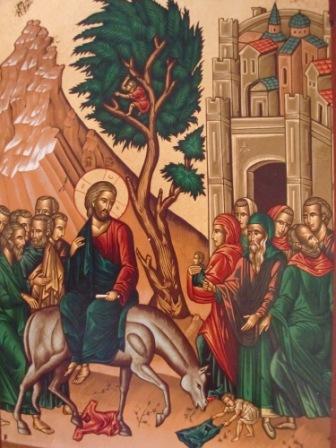
With each passing year, I have found that Palm Sunday touches me deeply, body and soul. As Christ enters through the gates of Jerusalem to fulfill the Old Testament prophecies, riding on the foal of an ass, the crowds gather along the way, strewing palm branches to honor him.

The glory of Palm Sunday is that we ride with him, through our own gates into the city of Jerusalem, for we believe his promises.

And with each passing year, I wonder at the Gospel for today. It is not Matthew’s account of Christ’s entry (which we heard on the First Sunday in Advent), but Matthew’s account of Christ’s trial and crucifixion.

But instead of hearing about the entry into Jerusalem today, we act out the story, waving our palms and processing around the church, singing “All glory, laud, and honor/ To thee, Redeemer, King!/ To whom the lips of children/ Made sweet hosannas ring!” Often, the procession follows the cross into the neighborhood, then returns to the church’s closed front door. The leader knocks, and the door is opened. We enter.

We sing the good news of salvation, that our King has come, as prophesied (Zechariah 9:9). Salvation? Saved from what? From the effects of sin, death. We ride with our King who holds us close on our own journey on Earth, so that we may enter the gates of the New Jerusalem in Heaven. Today we acted out our own life journey in time.

It has been said that Christian time is linear time, comprising past, present, and future. We do not go in circles, or stay in one place. We are not reincarnated. We were and are created to create, to use the gifts given by our Creator to magnify beauty, truth, and goodness. We learn in time what virtues to don and what sins to deny. We learn what is lawful and what is not lawful, what is moral and what is immoral, in God’s sight. In this way we travel the path to Jerusalem. In this way, when we knock on the gates, they will open for us.

We are told the way is narrow, and we must be small to enter, and I’ve often thought this is a clue to the necessary need for humility, to see outside ourselves, to not be drowned in the quicksand of self and pride. For if we cannot see outside our own personal universe, we are blind to the love of God. So we confess where we have sinned, are absolved, and are redeemed. We return to the path of humility for we have repented.

And in the end, at the closing of our days, it will be the love of God that opens the gates. It will be the love of God that teaches us the path to take. It will be the love of God that reveals his love shining through others, or not, revealing how each one of us is infinitely unique and beloved by him. This is what Christians celebrate, as they ride with Jesus the Christ, the Messiah, through the gates of Jerusalem, singing songs of praise.

This coming Holy Week and the victory of Easter resurrection are the heart of Christianity, and to observe these days as the Church has done for centuries, is to hear the other Gospel accounts, those written by Mark (Monday and Tuesday), Luke (Wednesday and Thursday), and John (Friday).

Today we enter the gates of Holy Week, humbly alongside Our Lord. We journey with him in his last days on Earth, to understand better who he is and who we are. There will be moneychanger tables overturned. There will be a last Seder supper in which the passing over of death in Egypt is remembered, and Christ becomes the fourth cup, offering himself in the bread and wine. There will be anguish in the Garden of Gethsemane, betrayal, trial, and the Way of the Cross. There will be crucifixion, death, and burial in Joseph of Arimathea’s tomb.

The women will weep and the disciples will scatter, but as foretold, there will be resurrection on Easter morning.

And we will rise too. With him.