
 We are preparing for our yearly Anglican Synod at the end of April, which will be held here in the Bay Area after two years in Chico and Redding. It will be good to see old friends and make new ones, and be able to attend some of the local events. Our Diocese of the Western States will share the synod with our neighboring diocese, the Diocese of the Southwestern States, which means seeing more old friends from out of state and meeting more new ones.
Our own St. Joseph’s Collegiate Chapel and Seminary in Berkeley will be co-hosting the synod with our Clayton parish, St. Martin of Tours. On Tuesday, April 25, St. Joseph’s is having an Open House with Mass, lunch, history tours, videos, and items from our archives, ending with Solemn Evensong. The Open House is a prelude to the beginning of the Synod on Wednesday and is open to all who are interested.
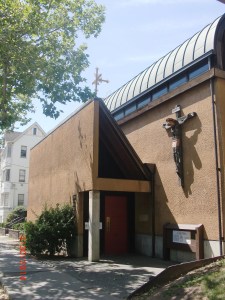 In preparing a booklet that speaks to the history of the seminary and the Berkeley location, one block from UCB, I have pulled out files from our archives, journeying back to 1960 when a certain Fr. Robert Morse, Episcopal Chaplain at Cal, desired to build a student chapel for corporate worship. A trusting priest, he thought he had the support of his bishop, but not so. Bishop James Pike wanted to derail the project for the local parishes saw the young chaplain as competition. Yet somehow, our faithful Fr. Morse did not give up. He patiently, over the next fourteen years, listened to that still small voice he heard in his prayers, and finally saw the chapel rise from the corner of Durant and Bowditch in 1974. Along the way, I wonder why he didn’t give into despair, but continued on, one step at a time, faithfully. He listened and he waited on God, as individuals appeared in his life who would make all the difference.
In the process of researching this story, it occurred to me once again how unique each one of us is, with unique talents and temptations, no two alike. How can that be? Scientists studying Evolution and Intelligent Design call the genetic code one of “infinite complexity.” It is this complexity that puts the lie to evolutionary theory as being the only path of human development. We are far too complicated and evolution far too simple. We were designed by an intelligent creator and, one might add, designed by a loving creator.
When I am in a group, be it my Curves ladies who exercise with me on machines in a circle, or be it my friendly faithful on folding chairs in church, or be it simply a line of folks at the Post Office, I like to watch each person and delight in their differences, their uniqueness. For we are not robots, no matter the ChatGBT artificial intelligence tool, and each one of us is beautifully intricate, with our own purpose designed by our loving creator. Those who study history know this – the uncanny ability of one person to make a difference, to be in the right place at the right time to enact another chapter in humanity’s timeline, hopefully a chapter of grace.
 As a friend at Curves said to me one day, “Everyone has a story. I like to know the story.” Simple and profound. This particular lady has the most beautiful smile I have ever encountered, with curious eyes, and a sweet way of tilting her head as she listens. Yes, listening is a great talent too. I am trying to do more listening and less talking, for when I do, I get to inhabit another’s story for a time. I am never disappointed. It is true I do like to chat, perhaps too much, and I try to resist the temptation and listen, riding the wave of infinite complexity that is on offer in the other.
And so, I wonder in awe, at the many little moments of decision that Fr. Morse made in the early sixties, finally maneuvering to the safer waters of the early seventies, one day at a time. He must have been a good listener, waiting on God, desiring God’s will. For he was led to the right individuals that would protect not only his priestly vocation, but his vision of the chapel on the corner of Durant and Bowditch. He was listening, and he was led. I can see him now, listening to me babble, his thoughtful face absorbing my words and solving my problems of the moment. He would nod, his eyes growing large in recognition of a shared thought or discovery. He was transparent, trusting.
Looking back, as historians do from their high perch of the present, it all seems logical and inevitable. But when I imagine myself in his position, when I imagine what it was like when he realized he had misguided and nearly prosecuted by the Diocese of California, despair would surely have nipped at my heels. To be sure, Fr. Morse was only human, as they say. But I believe he laid his temptations, his worries and his fears, at the foot of the Cross, went back to listening to God, and patiently and prayerfully pondered the next step.
 Not knowing what the next moment will hold, or the next day, or the next year, can be frightening. And yet with Our Lord in charge of our lives it can be exhilarating. We must follow the Cross, for all is grace, and nothing is lost. Everything counts. Our failures, our missteps, our wrong turns are all redeemed. He picks us up and dusts us off and sends us out once again into the world of infinitely complex human beings, our brothers and sisters, our parents and our children, each creation glorifying the creator. Then we bask in the light of his love.
And we remember to listen. For each one of us is making history in our own time, step by step, prayer by prayer.
 They say that joy is different from happiness, but it seems to me they are close cousins at least. Happiness grows into joy. Joy is the crowning of happiness. When you are joyful, you are happy. But when you are happy, you are not necessarily joyful.
 We entered the cold and dark chapel, and I turned on the lights and the heat, lit the candles beneath the Madonna and Child icon. We took our seats. Our organist had arrived and was playing something encouraging, an energetic and charming prelude. Our sexton/cantor waited to begin the chant. Soon our priest, preceded by two Cal Crew residents who served as acolytes, began to intone the litany. They stepped slowly up the aisle, praying “Lord have mercy,” carrying torches alight. We joined in the responses.
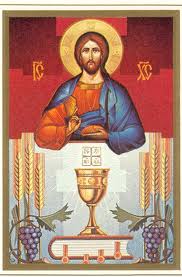 Perhaps it was the sudden thundering downpour on the roof and our warm safety inside; perhaps it was the Lenten purples – the tented tabernacle, the vestments. Perhaps it was the fire flaming from the candles and the sweet Madonna with her Child in the back cradling us as her own. Perhaps it was the Sacrifice of the Mass celebrated by our elderly priest, and the General Confession and Absolution. Perhaps it was when we stepped to the altar to receive the Real Presence of Christ in the Eucharist, as the cantor chanted the Psalms.
 Perhaps, too, joy came into the space created by my lack of expectations. I went to Mass because it was the right thing to do, not because I desired to go. I had many excuses, but all were banished. And so, when we least expect it, we are bathed in light. We simply need to pay attention to creed and commitment, to do our little part as a member of the Family of God, the Body of Christ. Then we are surprised by joy, as C.S. Lewis wrote.
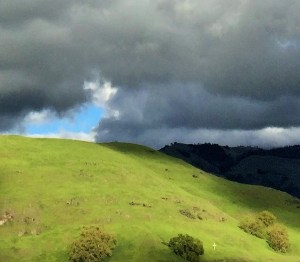 There is something about a cold clear day, washed with a night’s rain rattling the drainpipes in the roof, that speaks of winter facing spring. Today was such a day, as the clouds parted for our journey into Berkeley to St. Joseph’s Collegiate Chapel for Lent 2. We entered the space, still cold from the night, but feeling the heater pumping up through the side vents. Soon it was warm, and amidst swirling incense and sacred words, we gathered together to ask the Lord’s blessing upon us, as we travel to Easter and Resurrection Day. We few, happy few as it were, rode the melodies of the morning, confessing, chanting, celebrating, and receiving the Real Presence one more Sunday on this good Earth.
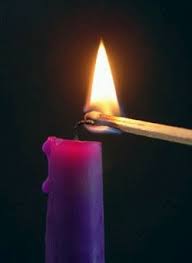 Then I considered my life and the last year and all those who have gone before me into Eternity. There was Shelley, Scott, Beth, and John. And others… I cannot recall, but it seems like so many. There were little deaths too, little losses, where hope seemed unredeemed, where truth was difficult to face. And yet there were moments resurrected, moments of grace, where wounds were healed, sight restored, paths once unknown now known.
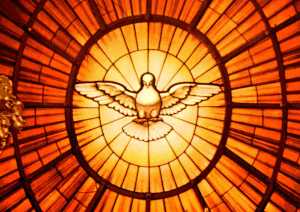 And so, as we prayed the prayers and sang the songs and listened to our Cantor’s amber voice sanctify the moments, the organ holding time in each note, soaring over and around us and up to the clerestory windows – as all these graces danced within and among us, weaving us together, we were healed, made whole, holy, for another week in Earth time, until Lent 3.
 It snowed on Thursday night, blanketing Mount Diablo here in the Bay Area. Somehow, it seemed a good way to begin Lent, ashes to ashes, dust to dust. The snow will melt, to be sure, just as our bodies will decompose when we make the great crossing into Heaven.
  Archbishop Upham had many talents, but one I loved was his singing voice, a deep melodic sound that, when he visited our university chapel in Berkeley, resounded through the vaulted space, soared above the altar and touched the medieval crucifix suspended above.
 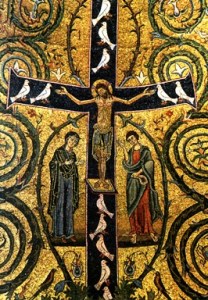 Our Archbishop knew this, and as he directed his choir of bishops sitting on the Council of Bishops, they saw they could make music too. And so those of us in the pews hear the notes and make them our own. We sing in unison the great and profound words of our musical tradition, telling the story, singing the story of God’s love for us. We face the altar, singing to the Real Presence of Christ, as his Body the Church, and as his Bride.
 I’m pleased to announce that American Christian Fiction Writers (ACFW) published my post today,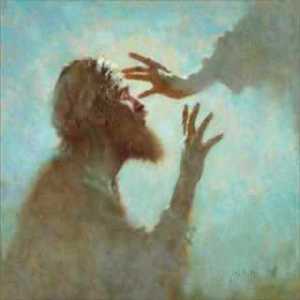
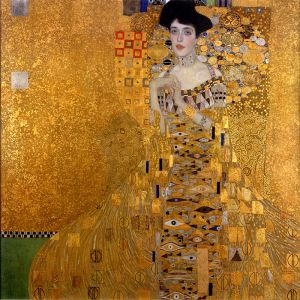 I became intrigued with Vienna when a friend gave me a calendar of Gustav Klimt’s paintings. Klimt was an Austrian symbolist painter (1862-1918). The story of his painting of the Viennese Jewish socialite Adele Bloch-Bauer (1881-1925), “The Lady in Gold,” using icon-style gold leaf, ushered me into fin-de-siecle Vienna, a time of the great literary and music salons. I was intrigued, particularly since I would be including in my novel a Holocaust story. Would this be the tale I would tell? There were many to choose from.
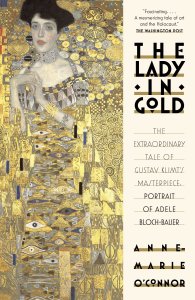 So I read the book that tells the tale of Adele by Anne-Marie O’Connor (The Lady in Gold: The Extraordinary Tale of Gustav Klimt’s Masterpiece, New York: Vintage, 2012). I then saw the movie based on this story of the fight for ownership of the painting (featuring Helen Mirren), involving a dispute between Adele’s heirs and the Austrian government, finally settled by the U.S. Supreme Court. I wasn’t as interested in the court case and effort to recover Nazi stolen art as I was with the early chapters in the book describing Viennese society at the turn of the nineteenth century, with the rise of industry and banking. Adele’s father was head of one of the largest banks in the Hapsburg Empire and head of the Orient Express. Her husband is Ferdinand Bauer, a sugar-beet baron. They were significant patrons of the arts. She was an early feminist, desiring to be educated as men were (!). She posed for the well-known painter Klimt, and reigned over the grand salons in her palace.
 The Gospel lesson today was the healing of the blind man on the road to Jerusalem. He is healed because of his faith: “Receive thy sight,” Jesus says. “Thy faith hath saved thee.” (Luke 18: 31+, BCP 123). This third Sunday of Pre-Lent, as we prepare to receive the ashen cross on our foreheads this Wednesday, as we begin our own journey to Jerusalem, our own passion, our own healing and salvation, following Christ’s footsteps to the Cross – as we prepare to step alongside him, we pray to see the truth of our world and our own souls. Heal us, we cry, have mercy upon us, that we may see. We are told by our censors to be silent, to not cause a disturbance, just as the blind man was told. But we, like him, speak out, crying to Our Lord that our world may see, may be awakened.
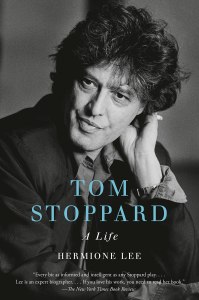 And so, the question remains. Will I be using this Viennese story in my novel-in-progress, the story of why a few escaped because they could see, and why most were murdered because they refused to see? I placed the research in a pile of other stories, keeping the Lady in Gold in my sight. Then I read about “Leopoldstadt,” the brilliant play by Tom Stoppard. An excellent review can be found in
 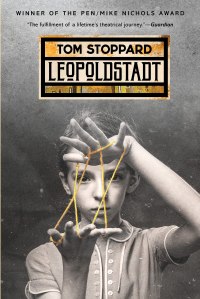 The play opened in London in 2020 and recently in New York. It takes place in a drawing room in a grand palais in Vienna and we see how the families portrayed didn’t see, we see how easily blinded one can become. I’m looking forward to reading the script. Another pathway beckons… but yes, I think the experience of the Jewish community in Vienna will be one of my backstories. Leopoldstadt, the Jewish quarter in Vienna produced much of the West’s civilization, and somehow mirrors today’s challenges in eerie and frightening ways.
 At St. Joseph’s Collegiate Chapel in Berkeley this morning, we entered the second Sunday of Pre-Lent, and I was struck by the light shafting through the clerestory windows upon the crucifix, a reminder to have ears to hear, eyes to see.
 It has been remarked by many how silent the Christian churches and Jewish synagogues are today, in terms of standing up to some of the totalitarian trends gathering speed.
 The parallels are frightening. The self-censoring is everywhere. Where are the St. Pauls of our era? Where is the good soil that bears good fruit?
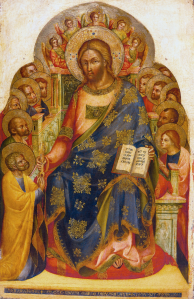 And so I take great heart in hearing the litany of abuse Paul suffered and Our Lord’s parable fully explained, in case we wanted to censor the meaning. It’s all about hearing the word and believing, then with “an honest and good heart, having heard the word, keep it, and bring forth fruit with patience.”
 Today is Septuagesima Sunday, the beginning of “Pre-Lent,” the first of three Sundays before Ash Wednesday.
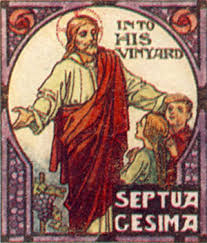 The parable is also about envy, as our preacher pointed out this morning. A right and ordered attitude, formed by an informed conscience, educated in the pew and at the altar rail, tells us not to be envious. Indeed, one of the Ten Commandments given to Moses is, “Thou shalt not covet.” Envy of course is desire to be like someone else; covetousness is the desire to have what they have. Close cousins, to be sure.
 And so both lessons today are about time and how to see ourselves in this space granted, this time in which we have been placed. The times seem tumultuous to many of us, and it may very well be that we are witnessing a great shift in the world order, as well as a diminishing role for the Church. As Joseph Ratzinger (later Benedict XVI) wrote in 1970 in his profoundly prophetic Faith and the Future (San Francisco: Ignatius Press, 2009) the Church will become smaller and more spiritual, and this faithful flock will offer something new to men and women who have forgotten God and in their loneliness “feel the whole horror of their poverty.” We are seeing this played out today.
 January is the month of Life conquering Death. It begins with resolutions to change, to be better, to do this, to not do that. For some it is a “dry month,” purging alcohol toxins from the system and hopefully purging bad habits as well. We all want to live, not die, to savor every minute of the life we have been given. We have emerged from a time of holiday gatherings and festivities, of giving and receiving, of singing to the baby in the manger, “silent night, holy night, all is calm, all is bright…” We have considered the miracle and mystery of Christmas, God incarnate, come to save us from ourselves.
 As I putter along with my novel-in-progress, The Music of the Mountain, my decision to set it in January 2023 has produced some interesting discoveries about this month in our present day. The Feast of Epiphany led me to light and dark, vision, seeing, knowing. That the January 6 protest in Washington D.C. was on this day has struck me with some force since the event happened. Coincidence? Don’t know. I try to look at all sides, and make up my own mind about truth and lies. This rally, to my mind, was a demand to delay the counting of the electoral votes until further investigation could be made. It was not an effort to overturn the election, but to question certain electors and to re-certify them to everyone’s satisfaction. There appears to be clear evidence there were FBI instigators in the crowd, urging them on. No protestors used firearms, and the only death was one of the protesters at the hands of the police (will there be justice for Ashley Babbitt?). Nothing burned down. One thing for sure, these rather foolhardy trespassers wanted more light shed on what happened over the previous year 2020 in terms of the election. Numerous irregularities needed bright sunlight. News stories were buried that needed to be aired in the light of day. Questions needed answers. We are still unraveling what happened, two/three years later.
 And so folks marched for Life in Washington D.C. on Friday, in San Francisco on Saturday (crowd estimated at 30,000), and in cities across the country over the weekend. Sunday the 22nd was the anniversary of Roe v. Wade, coinciding with the Third Sunday in Epiphanytide, recalling Jesus’ first miracle, turning water into wine at the wedding in Cana, a moment when Christ celebrates marriage and the joy of family and friends, and of course, children.
 I was reminded of this anniversary by my friends in Kentucky who run
 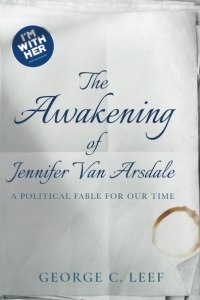 It’s been a week of awakenings, epiphanies, which is appropriate given my review of The Awakening of Jennifer Arsdale by George Leef was published yesterday on the
 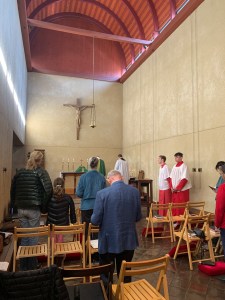 So over the week, details began to emerge, confirmed by others with whom I conversed about the storyline. Pieces fell into place. And again this morning, on this bright sunlit morning, sitting on my folding chair and gazing at the medieval crucifix over the altar with its tented tabernacle and up to the vaulted dome and its slanting rays of sun (sun!), I had two more epiphany ideas for the story, ideas that will create a stronger foundational structure for the novel.
 My second epiphany I had this morning regards my youngest character, Molly MacRae, who desires to teach children real history, true American History, in a school she will run, either online or in person. I’m thinking she will have regular reflections on fairy tales told in her childhood. Once upon a time, not so far away, lived a princess… Princesses are out of favor in our world of dumbing down and persecuting merit or rank. Molly is concerned and knows she has a princess heart if only she can find her prince.
 The fourth character, my Ethics Professor, will have a past of suffering. How she has suffered – what she has done that becomes to her unforgivable – will be visited as a story within a story, slowly, tenderly, with great care not to open the wounds too wide, too suddenly.
 Christine Sunderland
 Christine Sunderland