
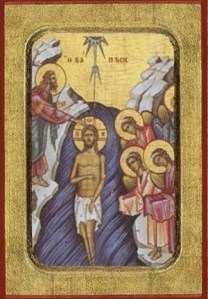
 We are all epiphanies, manifestations of our loving God, and just as Christ was baptized by John (today’s Gospel), just as the Holy Spirit came upon Christ as he rose from the waters, just as Heaven touched Earth and God the Father spoke his words of love, just so we too are bathed by the Heavens and touched by the Holy Spirit. Just so we hear the voice of God our Heavenly Father.
It continues to rain and flood in the Bay Area, but in spite of the power outages and closed roads we are grateful for the watering of our hills. You can see the green grass drinking the rain, quenched. And we are told that our drought might be over, at least it would be if we had built enough reservoirs and didn’t let the excess run into the sea. Evidently there are environmental concerns in Sacramento that worry about a fish.
Epiphanies. With these epiphanies, these drops from the Heavens, I build my characters that will live inside my next novel, The Music of the Mountain, layering them with unique personal histories so that I can get to know them and understand how they will react when when the page is turned. The foundations must be solid and extensive for each one, just as we have our own histories too, making each one of us unique, each one an epiphany.
The novel is about history in a way, or rather its importance, and the devastating consequences of erasing our past, be it national or personal. For we are today the choices we have made in the past. We have our own foundations, given to us by our loving Creator. To cherish our pasts, warts and all, sins and all, joys and fears and sufferings – all of it – is to cherish our Creator. As my bishop of blessed memory often said, “Nothing is lost, nothing is wasted.” And I have come to see that each moment in our time on earth counts in the divine realm of Eternity. Each moment counts in the accounting of each one of us.
 And so we repent, clean out our hearts of all the bad choices, the sins. We bathe in the baptismal waters of rebirth, daily, moment by moment. In this way we are continually renewed, our sick insides healed and healthy once again. We can breathe once more, deeply, breathe the name of Jesus and know that God is with us.
So who will be inhabiting these pages of my novel to come?
Molly MacRae is a young woman, 25, grade school teacher, American History, who leaves her job because of the false history she is required to teach. She desires to go back to school, possibly Hillsdale, to earn a Masters in Education, and set up an online school. She is Evangelical.
Winston Adams is a young man, 30, a journalist, who is fired for telling the truth. He went with the political program, silencing stories, promoting false narratives, until he had had enough. He told the truth. He was soon out of a job, but now he considers honest ways of earning a living, perhaps even starting his own newspaper or journal. He is a Catholic.
Fr. Thomas Adams is Winston’s grandfather, 80, who is Anglican vicar of the now boarded up university chapel, south campus. After the riots and the lockdowns and his own bout with the pandemic, he returns to the property now in ruins, no longer open. He lives in the abandoned student residence next door and plays the organ in the chapel. He prays.
Dr. Patricia Norton, 50, has been fired from her prestigious university position as Professor of Philosophy and Ethics, for refusing the vaccine and masking requirements, which she maintained were unethical demands. She is agnostic. She lives in the old Villa Tilifos at the base of Angel Mountain (from my last novel). She bought the spacious house for back taxes, since the owners had not returned after leaving on an extensive pilgrimage to pray for the world.
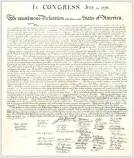 All four characters notice a disturbing trend: large sections of the Internet have been erased, books have disappeared, and libraries have empty shelves, where the Classics once resided, alongside great literature, history, all supporting and defining Western Civilization. American founding documents can no longer be found, but have been replaced by less “offensive” materials. Theology and philosophy shelves are bare. My valiant heroes set out on a mission to retrieve the physical copies that still exist and put them somewhere safe, at least for the time being.
Fr. Adams shows them his hidden basement, a musty, dark place full of books not yet found. They begin their Great Work of Freedom in this space…
 And somehow it all leads back to Angel Mountain… where they can hear music, familiar chords, dancing with one another. What is the music? It leads them to where they must go, these melodies of meaning, chords christening a new world to be born, formed on the foundations of the Old World.
Of course all of the above may be tweaked by more epiphanies, more reaching for the Heavens, more sudden sight, seeing the way it must be, how Love moves among us, creating us to love one another as we rise from the waters of Baptism.
 We were startled to wake up to the New Year with a two-day power outage. Portent? Sign? Who knows?
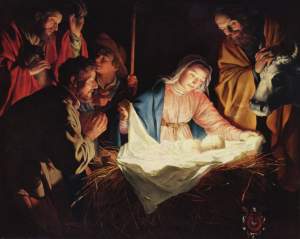 The words spilled from my heart through my fingers onto the page just as they are doing now. This, I believe, is a miracle in itself, that Our Lord continues to shine the light of Heaven upon Earth, through each one of us, if we desire it. Eternity enters time and we glimpse starlight. When we look up into the night sky, we see stars forming perfect patterns, mathematical ratios singing the music of the spheres, and we realize the glory of our loving God surrounds us. Nature may not be so loving, with winds and floods storming our land, but there is an order behind it all, and we know by the light of Christmas that it is a loving order. We are the renegade ones. We are the rebellious children who worship idols. We are the shepherds and we are the magi in the cave on that dark, light-filled night. Our fear becomes wonder. We fall to our knees in penitence and worship. And a little child born to us over two thousand years ago in real time, in real history, forgives us from his manger-throne.
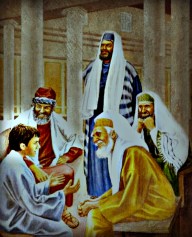 The Church celebrates Epiphanytide for six Sundays this year, the number varying with the date of Easter which is set by a cosmic calendar of the moon’s appearance (“the first Sunday after the full Moon that occurs after the spring Equinox” and relating to Passover.) Each Sunday the Scripture lessons will shine a light on the manifestations of Christ to the world. Today we are told by St. Paul in the Epistle to be “transformed by the renewing of your mind, that ye may prove what is that good, and acceptable and perfect, will of God” (Romans 12:1+, BCP 110). And the Gospel story tells of the boy Jesus in the temple, “sitting in the midst of the doctors, both hearing them, and asking them questions” (Luke 2:41+, BCP 110). In this Epiphany, the boy Jesus reveals who He is, for he says to his worried parents, “I must be about my Father’s business”.
  I’m pleased to announce that American Christian Fiction Writers (ACFW) has published my post, “
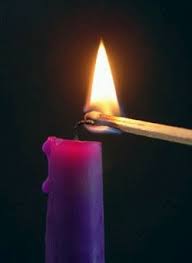 Mary and Joseph must be on their way to Bethlehem now. Soon, soon, they will seek shelter, knowing the Child Jesus would soon come into this world, their world, a world of poverty and danger. The Holy Family, created in that miraculous moment when Mary conceived the Son of God, know little about their future, but enough to do God’s will in their life in each moment lived.
 My husband and I have had the grace to be a part of the Anglican Province of Christ the King for over forty years and within the same parish for that time as well. Trust me, there have been many squabbles witnessed and many sides taken and much wringing of hands over this or over that, by us as well as everyone else, but there’s been lots of love too, just as in any close family. I was thinking today, sitting in the nave of St. Peter’s Oakland and watching the traditional “Living Creche” performed in the chancel before the altar and tabernacle (home of the Real Presence of Christ), beneath the statue of Christ Crucified and the tall flaming candles at his feet, that these good people of our parish of every age and ethnicity and talent are truly my sisters and brothers. When I arrived at St. Peter’s in 1977 I was only thirty with a young son, and most of the congregation I considered to be my mothers and fathers, uncles and aunts, and even grandparents. Today, it seems (suddenly!) I am in the grandparent role, and I think of these faithful Christians gathered in church as my grandchildren, children, and sisters and bothers and cousins.
 In the meantime, we journey to church with our families to worship Christ with our parish family. We learn to love as we are meant to love. Our advent is Mary’s advent for she is our Mother. In this way, Mary and Joseph lead us through the sufferings of the world, and in this month of counted days we await in the quiet of the night Our Lord’s coming to us on Christmas morning. It is a silent night for in such silence the music of the spheres may be heard, as all creation sings to the glory of God.
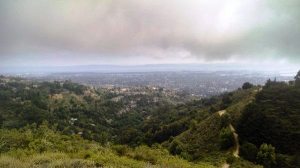 My husband and I are in our “gentle” years, the years leading to the great passage out of time into eternity. There are moments when I sense that I stand upon a great height, not the pinnacle of the mountain but close, and look over a landscape of friends and family, those I have known on Earth. It’s a sweeping vista also of time passed, and within the vista are rivers of rhyme and reason, suffering and love, heartache and joy. There are forests of fir, deep and dark and green, and paths through the trees to the light at the end. There are deserts, so dry as to parch the throat with the desire to drink, but there are also lakes of pure water, filled by falls of tumbling foam from rocky gorges, waters so fresh and so quenching I know I can drink with pleasure and certainty that these are living waters of life.
 I’m also thinking now how a Christmas tree is like a person, with dated ornaments from the past assembled in the greenery, bobbing a bit as the cat tries her luck with a raised paw. The few new ornaments added each year pulled us into the present, and as I hooked the loop on the edge of the satin, braided ball from a London shop and found a branch to house it, I appreciated the past as a glorious gift from our Heavenly Father.
 And He continues to give the gift of Himself, again and again, on altars in chapels, in words said in bedtime prayers and morning Psalms. I now see that as we give to one another, whether it be a card or a greeting, we partake in the Father’s gift to us in Bethlehem. We dress our Christmas trees in sparkle and time and love, and the tree smiles back all twinkly, singing, “Merry Christmas to you, too!” and “Thanks for inviting me!”
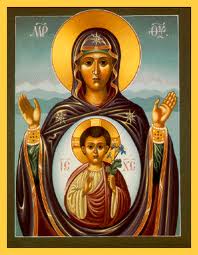 We have entered the Church’s New Year, and as in January’s New Year, we begin December’s Advent with penitential prescriptions. Instead of making resolutions (usually fitness), we clean out our hearts. Both beginnings call us to change for the better, to repent and resolve. In so doing in this season of Advent, we prepare ourselves for the greatest of all festivals, the Nativity of Jesus Christ, Christ-Mass.
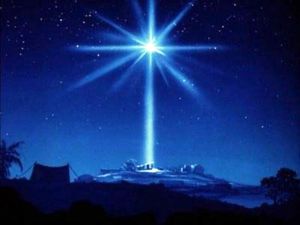 s we journey we sing carols that tell of these magnificent acts of God. The poetry and the rhyme, the melody and the meanings, invite us to journey with Mary and Joseph. With the bright stars and the glorious angels we too pay homage to the King of Kings born in a manger on Christmas Day. With these hymn-stories we become part of the re-creation of the world. We live inside these love-songs. We dwell there, in the Bethlehem manger, where the shepherds bow to the newborn King, where the magi from afar bring gifts to honor His priesthood, His kingship, and lastly, His death that will redeem the world with resurrection.
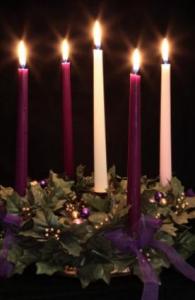 We dance the dance of life through the year, so that we may vanquish the dirge of death. We journey with Mary who carries the Christ Child in her womb, and as we celebrate the Holy Child within her, we celebrate all children, born and unborn. We celebrate all mothers and fathers who trust in their Creator to bring them through the rough times, so that they can fully enjoy the good times, the truly God-times.
 Unfolding a Post-Roe World, by Francis Etheredge (to be published soon by En Route Books and Media, St. Louis, MO, 2022).
 The Supreme Court found no right to abortion in the U.S. Constitution and thus referred these decisions to the States. And so we ask, “Is there a right to life of the unborn in the U.S. Constitution?” We wait to see, as cases in progress argue yes, based on the 14th Amendment and its historical interpretations. For if the embryo is defined as a “person” from the moment of fertilization, with all rights and protections, then the following phrase in the 14th Amendment would be binding:
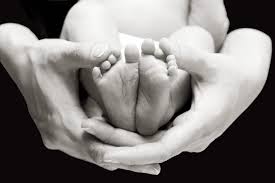 The author adds depth with his poignant and powerful poetry, reflecting his own suffering in the loss of a child through abortion, humbly witnessing to his own tragedies. Thus, he prays that those who see the pre-born as blobs of tissue reconsider and embrace a future of life and love and inclusion. He offers them sight when they are blind.
 One testimony comes from the late Mother Teresa who cared for the poor in the slums of Calcutta:
 Mr. Etheredge calls for the world community to grant human rights to the next generation:
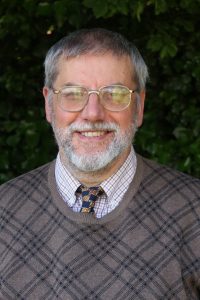 Francis Etheredge, Catholic husband, father of eleven, three of whom are in Heaven, is author of thirteen books on
  Christine Sunderland
  We had a cold spell in the Bay Area this last week and suddenly our trees turned burnt orange, fiery blazes of glory in the valleys around our house. The seasons change, bursting with life, throwing off death, preparing in time for winter’s sleep, and spring’s awakening. We on Earth move in time too, humanity seeking and seeing and learning each day more about who we are, what it is to be human, our light and our darkness, even our own manifestations of holiness.
  As well as if a manor of thy friend’s
 As Christians we pray to Christ our King to have mercy upon us for not doing enough to help others see the unborn are human beings with rights to life. We pray and protest and lobby. We establish clinics and support centers. We provide adoption services. As ultrasound images tear hearts, opening them to love, many women choose life. They never regret it.
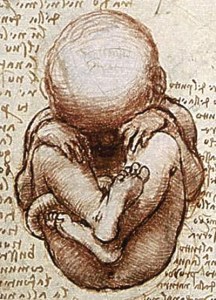 America leads the world. What we do to the least of ours, our most innocent and vulnerable humans, is noticed. Our inhumane treatment of the unborn is noticed by other cultures, other countries. Eventually, should we continue on this dark path, we shall find we are being treated the same way, crushed by powerful forces.
  Americans cast votes on Tuesday. Whom we elect to office and what laws we support, will affect the protection or destruction of our children, will give or deny them the human rights they deserve. These unborn, allowed to live, protected by law, will be the new generation that heals America. Already, many lives have been saved in states that chose life. Many are being saved each day, each hour, each minute. Let’s save them all. Let’s role back the tyranny, push away the principalities and powers of darkness. Let’s vote for life for each of these vulnerable innocents.
 Today is the Feast of Christ the King. And so as I sat in our Berkeley chapel this morning listening to the sermon (framed by glorious hymns and thundering organ), I could see Christ the King on the throne of glory, beckoning and bleeding and blessing us all. He was great and became small, so Scripture and Song tell us, entering our world, taking on our flesh and with our flesh our sufferings. As I listened to our preacher, I gazed upon the tabernacle on the altar where Our Lord’s Real Presence is found in the elements of bread and wine. The King of all creation loves us so he comes among us, becomes one with us, if we desire his glory to live within us.
 I’ve been stunned lately by the glories of the natural world – the light on the shimmering leaves of the olive tree outside my window, the wild turkeys in the front garden with their brilliantly colored fanned feathers. The tiny birds that dart through the air in a delightful chase, the perky salamander that explores my garden and entrances my cat. The world is of infinite complexity, as scientists have discovered in the last few decades, studying through a high powered lens the double helix of the genome and its ability to change in infinitesimal ways, reflecting an Intelligent Designer after all, and an actively Intelligent Designer. Creation sings to its Creator, in the dappled sun lighting our days, the stars rolled out over the night sky, the moon with its curious dance around us as we circle the sun. Earth rolls through the universe, in a pattern of life and death, of the great and the small, of the high and the low, immanence and eminence. My cat with her long golden hair and giant eyes and loving heart. Her purr as she sits in my lap now listening to my heartbeat. Nothing is ordinary; nothing is average; nothing is less than extraordinary, however small or silent or sleeping. Or suffering.
 My desk clock is ticking, a quiet chant marking my afternoon. Time, as mysterious as it is to those of us who are still living within its boundaries, offers more variety, for we know there will be no two seconds alike. Each minute is different in our past, present, and future. Our dance is freedom bound by time, but a dance of ongoing creativity and newness, no step choreographed. Our dance is unique to each one of us as well, expressing our own person made in the image of our Creator.
 Here we are, ordinary mortals, itty bitty souls in the pageant of the universe. Yet this King loves us so. He reaches to touch us and make us whole, holy. We reach to touch Him. We are healed and our tininess becomes starry and bright and beautiful. Love fills us with wonder and gratitude. Such gifts. Such splendor.
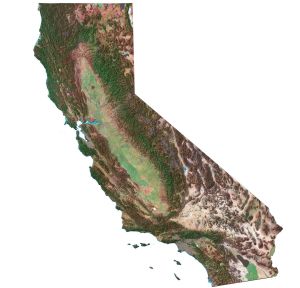 California will become a killing sanctuary state, inviting women from pro-life states to come and have the “procedure” done in this pro-death state. Procedure?
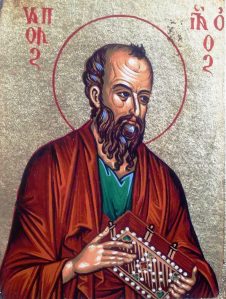 “being alienated from the life of God through the ignorance that is in them, because of the blindness of their heart… ye have not so learned Christ; if so be that ye have heard him, and have been taught by him, as the truth is in Jesus: that ye put off concerning the former conversation the old man…and be renewed in the spirit of your mind; and that ye put on the new man, which after God is created in righteousness and true holiness… Let no corrupt communication proceed out of your mouth, but that which is good to the use of edifying, that it may minister grace unto the hearers. And grieve not the holy Spirit of God… Let all bitterness, and wrath, and anger, and clamour, and evil speaking, be put away from you, with all malice…” Ephesians 4:17 (italics mine), BCP p. 216.
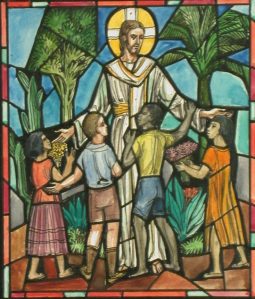 Putting off the old man by renewing our spirit enables us to put on the new man.
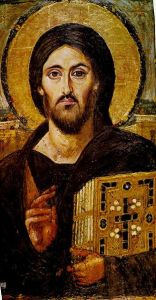 And so we pray for our nation and our peoples, our many beautiful races and languages and talents. We pray that all may learn Christ and see Love incarnate all around. We pray that all children be welcomed to this world, be given the chance of life and love. As someone wrote recently, the right to life of the unborn trumps the right of the mother to choose her child’s death, unless a choice must be made between the child and the life (not health) of the mother.
 Christine Sunderland
 Christine Sunderland