
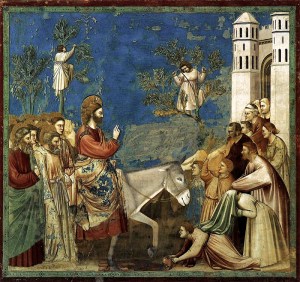
Entry into Jerusalem, Giotto
Today is the First Sunday in Advent, the first day of the Christian Year, our New Year’s Day.
I often wondered why the Gospel appointed for the First Sunday in Advent (Matthew 21:1+) recounts Christ entering Jerusalem. This is the Palm Sunday story, not the Bethlehem story, I often thought. Christ enters through the gates, the people welcoming him with palms and hosannas. Why does this Gospel usher in Advent, the prelude to Christmas, when it seems the prelude to Easter?
I gazed this morning upon the Advent wreath and the four candles in the greenery, tapers representing death, judgement, heaven, and hell, the “four last things” we experience. The Church reminds us of these great events in Advent, the season of preparation for Christmas, the season in which we look forward to the Son of God born among us, incarnate love, in our flesh. Today we are reminded of our death, next Sunday our judgement, and the last two Sundays, heaven and hell. Death will usher in judgement, and the judgement will bring heaven or hell. It will be, and is, and ever shall be, our choice, our free choice, for love is defined by free will, freedom to choose.
And so as I consider the itinerant preacher, Jesus of Nazareth, riding on a donkey toward the gates of Jerusalem, I know he is riding toward the gates of my heart. He enters Jerusalem and judges, overthrowing the tables of the money-changers in the temple. He enters my heart and judges, overthrowing the tables of my sins. For we too are temples, incarnate houses of the divine, or would like to be. Christ cries, “My house shall be called the house of prayer; yet ye have made it a den of thieves.” Just so, my heart must be purged of the thieves of time and love, the thieves whispering lies and encouraging greed, distracting me from my true end, God.
Christ enters Jerusalem. Christ enters our hearts. And Jesus Christ enters our world, born in a manger. Advent means coming, the coming of Christ, his entering through the gates of time into our world. The immortal breaks through the boundaries of the mortal. To do this he must take on flesh, become one of us. How does this happen? It happens through love, the sacrificial, suffering, immense love of God.
Advent calls us to focus on death and judgement so that we may fully live today and in eternity. Advent cries, “Wake up! Your time is limited, do not waste it.” Love one another. And how do we learn to love? We welcome God into our hearts and lives, for God is Love.
Many preachers rant against the festivities and trappings of Christmas as being too materialistic. But we are material creatures, and we celebrate with matter, with material goods that reflect the joy of the season. The Advent wreath of greens tells of the tree of life that brings light. The wreath is the crown of thorns become a crown of light, eternity seen in the circle and life living in the branches. We decorate a fir tree, bringing it in from the cold outside and into the warm inside, placing it in the center of our homes and hearts, stringing glittery bits through the dark foliage, hanging bright shiny ornaments that dangle and dance, that hold our memories, setting a star on top, leading us to the manger in Bethlehem. We gather around the tree, warmed by its light, and we are touched by eternity, transcendence. It is the tree of life that will become our salvation on Good Friday.
And what about the gates of our hearts? We are more than money-changers. We are called to love, to give, in this holy season. We consider others and their needs when we choose our gifts, and we wrap each one to sing our love, with ribbons and bows and glossy paper. We share meals with friends and family, and bake cookies with children and grandchildren. We set out a crèche, a stable, and place Mary and Joseph, the angels, the shepherds and the wise men around the manger that cradles the Holy Child. We sing Silent Night and The First Noel and Hark the Herald Angels Sing. We tell the story again and again, as we draw closer to Christmas Day. We tell the story of God with us, Emmanuel.
In America we celebrate our freedom to worship whomever and whatever we choose. Christians can choose to worship the triune God, the Father, the Son, and the Holy Spirit. They can choose to gather together in church, to love God in prayer and song, to call him to come among us. We are blessed to have this choice in a violent world growing more and more hostile to freedom of worship. We must not waste the time or take it for granted. We must embrace what we are given, with joy and gratitude.
This morning in church we lit one candle, one lone flame to welcome Christ into our hearts this magnificent season. This flame will light the second candle next Sunday, and the third the following Sunday, and the fourth the last Sunday before Christmas Day. In this time of Advent, of the waiting for the coming of the Holy Child to be born, we are given the rich rituals of the season to lighten our darkness, so that we can see where we are going.
On this first Sunday in Advent we sang, “O come, O come, Emmanuel…”, calling the Messiah into our world, opening our gates to the Son of God. The hymn is a haunting cry in the wilderness for help, a confession of need, an admission of guilt, and a wail for mercy. Our country and our world cry for him to come, to become incarnate among us, within us.
I looked to the altar and the tabernacle holding the Real Presence of Christ. I thought of his Last Supper and his commandment to love one another and to re-member him in the Eucharist until he returns in judgement. And this we did, consecrating bread and wine into Body and Blood as he commanded. As we knelt and received our communions, we entered Love and Love entered us.
Death, judgement, heaven, hell. Come, Lord Jesus, come. Enter our gates. Teach us to love one another.
 orning as I watched the acolytes and clergy process into our collegiate chapel, St. Joseph of Arimathea, I was thankful. Cal is, after all, the home of the Free Speech Movement. There seemed a chance now for our precious freedom of speech and religion to be protected. I had hope that peace and freedom would return to our land. Our country, held hostage by political correctness, crime, and anarchy, was slipping down a dangerous slope into dark muddy waters. Without shared law and order, tyranny rules. Hopefully, the recent election will cause a change of course, just in time.
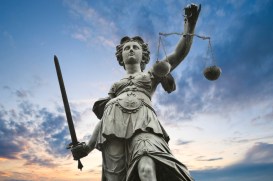 existence of God is made by C.S. Lewis, that human beings have an innate sense of justice, and there must be a source for that intuition. We complain when we think justice is violated, when the agreed-upon rules are broken. We say, “It’s not fair…”
 The winds were high along the Kohala Coast on the Big Island of Hawaii, where we took a few weeks to re-create, rest, read, and reflect. We walked the beach and the sweet stretch of smooth sand was blown by the wind, sliding across the shore. Its unfriendly force pushed us, driving us forward, belying the deep beauty of the blue sea with its dancing whitecaps, belying the cerulean sky cleared of volcanic ash that sometimes drifts from the volcano to the south. This land was a stark reminder that nature does not care about us. Nature will go on long after our footprint has been washed away, or perhaps blown away.
 Ah, another week of the media drowning the airwaves with the noise of distraction. Another week of the media appealing to our baser natures.
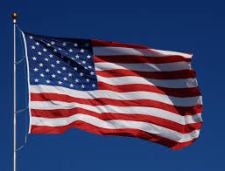 I’m trying to imagine a Clinton presidency or rather a Clinton monarchy. The heir apparent (heiress apparent?), according to the all-knowing press, is the only possible choice for any right minded, clear thinking, compassionate adult. Those who might possibly consider the opposite candidate are clearly out of their mind and unfeeling, according to the heir apparent, her courtiers, her water carriers, and her town criers.
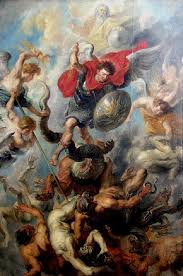 In church this morning we celebrated Michaelmas, the Feast of St. Michael and All Angels, giving thanks for the good angels who conquered the evil ones:
 Much has been written of late, with implied hand-wringing and dire glances, that we have no presidential candidate worthy of the contest, that we may as well give up, that American politics have become a sham. The whining and squirming, the blame game and character assassination, the robust (to put it kindly) reportage on page and screen, has distorted and darkened this election year.
 There are times when words carry so much weight the burden is either overwhelming or empowering.
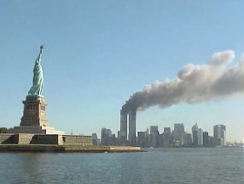 Today, Nine-Eleven-Sixteen, our preacher preached quietly, soberly, his hands folded, his gestures muted, speaking about America’s history from the head of the central aisle. Behind him the marble altar held the veiled tabernacle centered between the flaming candles. The red Sanctus lamp burned, suspended high, and the medieval crucifix rose beyond, victorious. It is the place where we re-member the sacrifice of Christ in the action of the Mass. We bring him among us in the bread and the wine.
 She is speaking, of course, of history, its huge importance to us all, to humanity, and most importantly to Americans. For no other culture enjoys peace and celebrates freedom as we do. Through the centuries since Plato and Aristotle, since Augustine and Bede and Aquinas, since Locke and Paine, Washington, Jefferson, and Franklin, it has been this single culture birthed by Britain that defines America. We have this immense legacy, this strong foundation. But without re-membering, we will crumble. There have other systems in the West, of course, but they have been sporadic attempts fraught with revolution and purges. Only England produced Magna Carta, developed common law, trial by jury, representative rule. America improved upon this new Eden, abolishing monarchies, ensuring freedom of religion, and producing a written constitution.
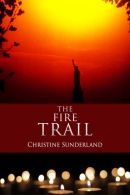 My recent novel, The Fire Trail, a literary suspense set at UC Berkeley, re-members September 11, 2001 in its central chapters. I will be reading from the novel this Saturday at
  Christine Sunderland
 Christine Sunderland