
 Today is Palm Sunday, the beginning of Holy Week leading to Easter. It is a grand, serious, and holy drama in our part of the Body of Christ on earth, played out in liturgy, song, and prayer. We tell the story of Jesus the Christ entering Jerusalem to the cry of Hosannas and the strewing of palm branches as he rides on a donkey through the city gates. Our parishes once acted out this holy week with daily liturgies leading to the Triduum, the three days before Easter. Then on Maundy Thursday we celebrated the Last Supper, when Christ gave the Church the gift of himself in the Holy Eucharist. On Good Friday we mourned as Our Lord was crucified on the cross of Golgotha, the “place of the skull.” On Holy Saturday we prepared for Easter and the transformation of the sanctuary from purple shrouds to white lilies on the altar. Easter Eve was often a celebration of the first Easter morning, candles lighting the dark of the nave. Easter Day was resurrection day when children flowered a white wooden cross at the chancel steps.
Today, with Coronavirus restrictions and fewer numbers of the faithful, we enact a more abbreviated Holy Week. Even so, the liturgies are rich and beautiful, poetry distilled through centuries. We are a joyous people, and our liturgies embrace the transformation of mankind from despair to joy, from suffering to saved, from death to life.
I for one am so very grateful I came to the Faith early in my life so that I could experience these yearly festivals, beckoning me along my path to Heaven. It is a rich and colorful weaving of time and eternity, for with each Eucharist, eternity intersects time. Even today, from home, locked down and attending church virtually, I have experienced such grace, grace that demands immense gratitude. For grace abounds where faith, hope, and love intersect.
 And so it was with particular joy that I realized my great grandfather Nicholas Nelson was a devout believer. I have inherited a number of anniversary mementos, silver with “N to C” engraved in swirling cursive letters. The most cherished of these mementos, however, is a plaque designed by Nicholas for Christine for their fiftieth wedding anniversary. He writes in careful printing, framed by leafy tendrils on parchment:
“The thoughts that fit a long life of happiness together have been said so well over three thousand years ago, that they are the best suited to convey all the meaning in my heart. And they are here repeated.“ (Here he quotes Proverbs 31)
Ending with:
“Golden indeed have been the years now registered by this Golden Wedding Anniversary, May 10, 1942.”
My grandmother’s notation can be seen at the base the frame, telling us her parents were married 56 years and 5 months and had three children: Helen Christine (my grandmother), her sister Armorel, and her brother Gilbert.
I had wondered about Gilbert who died at age 27 in Denver in 1922. In researching my Norwegian ancestors I learned from a news article that he died from appendicitis. An aunt of mine, today young at ninety-four, supplied another bit of story: Gilbert’s mother Christine was so grief stricken that she left Denver for San Francisco in the next few months. Why SF? It turns out that Nicholas’ brother Harry had a candy company there, just as Nicholas had founded one in Denver. Nicholas joined Christine in the year following and they made their way to Los Angeles.
My heart ached for Christine and Nicholas, losing a son at 27 years of age. Life was often threatened in those days, and perhaps more appreciated than today because of those challenges. Children didn’t always survive infancy. Surgery was dangerous. Infection was common. And yet they valued what was precious, life itself, family bonds that strengthened the trials.
And so I pray on this Palm Sunday 2021 that we do not forget our history, be it family or nation or world, that when the darkness settles upon us, shrouding our past, demonizing faith, scattering families, that we keep the light burning, keep waving our palms before Him as He enters the gates of Jerusalem.
 For as we tell this old story of God incarnate two thousand years ago and His great acts of redemption, we remind ourselves and our world that this is an ongoing, present-day story of God incarnate. Each year we process and wave our palms and sing “All glory, laud and honor/ To thee Redeemer, King! /To whom the lips of children/ Made sweet hosannas ring.” (#61) Each year we act out the drama of His crucifixion and resurrection and His offer of salvation from death, His offer of eternal life to each one of us, His beloved children. Death is no more, conquered by the love of God.
In this way, each year we renew our own life in Christ’s life, weaving our story into His and His into ours. Our ancestors understood these magnificent truths of mankind and told the story too.
Just as we do, today, Palm Sunday 2021, as we enter Holy Week.
 It has been said that America is a nation of immigrants. Why did they come here? Why do they continue to come?
 My family immigrated from Norway and I have recently been researching some of the details. Each fact carries within it another question, why this, why that, what caused them to leave and come to America?
 Martha Christine (photo to the left) married Nicholas Nelson in Chicago in 1892. Their three children were born in Chicago in the years following. But at some point they left for Denver. Why? Nicholas, like his brother-in-law Ole Gullicksen (see earlier blog), founded a company in Denver.
 I have cobbled this story from bits and pieces and welcome family members’ corrections. As a novelist I am fascinated by human character, the depth and variety of created humanity, no two persons alike. As a Christian novelist I am fascinated by conscience, formed and informed by Christ. When this fiery spirit resides within, it burns brightly and enlightens our decisions. When this spirit is put out or ignored or denied, choices are made in moral darkness, with only concern for the self.
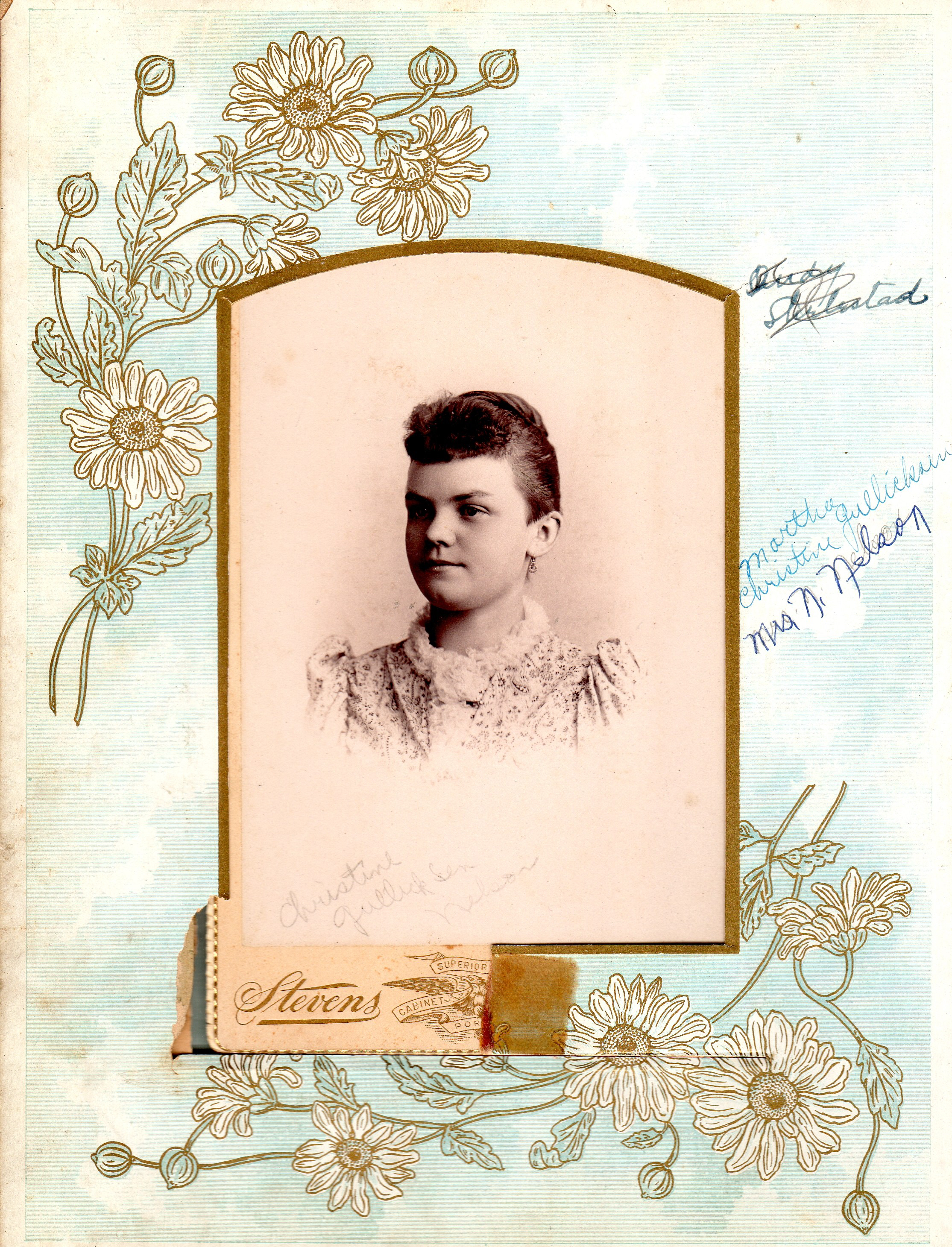 As I was gazing upon some old, framed photos of ancestors on one of my bookshelves and quizzing myself on their names, whether they were the English or Norwegian branch, I noticed some volumes of autobiography near the photo of my great grandmother, Martha Christine (Gullicksen) Nelson. They were slim volumes, about 4” X 6”, hardbound dark blue, and titled Little Masterpieces of Autobiography. The first of four volumes was subtitled Greatest Americans and included Washington, Jefferson, Hamilton, and Lincoln. The volume was edited by George Iles and first published in 1885, but this edition was dated 1925, published by Doubleday, Page and Company in New York. They were part of a collection given to me by my grandmother Helen Christine (Nelson) Martin (1896-1994).
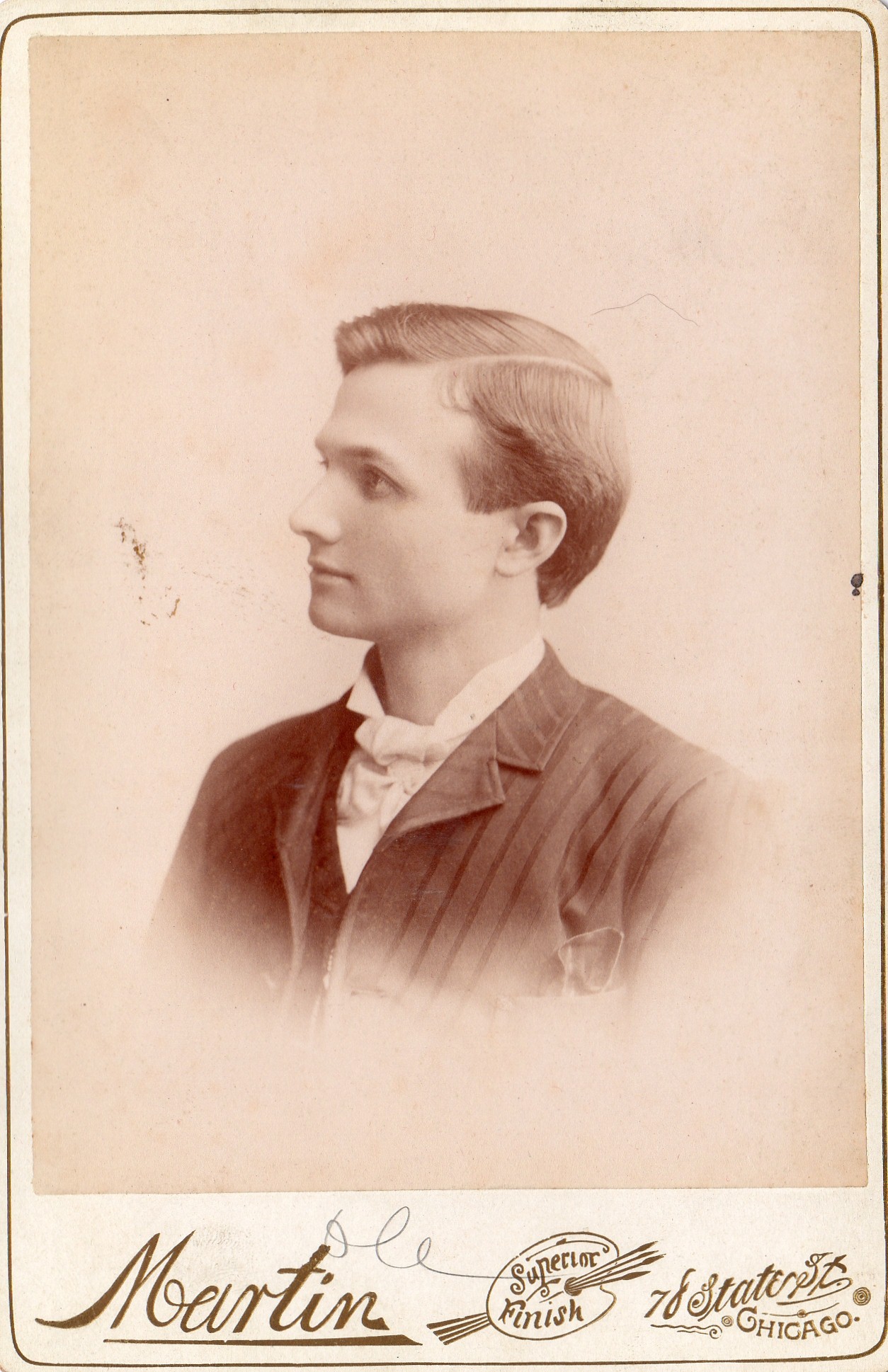 I had heard via family lore that one of these ancestors founded a furniture company in Chicago. I opened an old file where I had placed bits and pieces given to me over the years, notes and jottings penned by my grandmother Helen Christine and my great grandmother, Martha Christine. From these bits I learned that Martha Christine’s brother, Ole Gullicksen (1867-1948), founded the Churchill Cabinet Company in Chicago in 1904.
 Looking at these Norwegians that came before me enriches my life today. I know there are many other strands from other countries that wove together to make me me, and I marvel at God’s intricate and beautiful (if also mysterious) ways. These threads of life continue into the future, and I smiled when I saw that my grandson is attending a college not far from Churchill Street: Wheaton. When I saw Naperville nearby, I recognized it was the location of one of our APCK (Anglican Province of Christ the King) parishes, All Saints.
 In the Gospel reading assigned for today, Our Lord’s words rang especially true: “
 As an Anglican, I have been part of congregations of mixed race and heritage. The Anglican Church, stemming from Britain and her Commonwealth, was and is a universal church, finding its way to Asia, India, Africa, and the Americas. We have members and clergy from all parts of the world. The native culture learned English as well as the Gospel message of salvation, but Bibles were translated into their own language as well. All this continues.
 Christians understand freedom and its importance to practicing their faith of freedom. We have sent missionaries to their martyrdoms for centuries in the name of the faith and in the name of freedom to practice that faith. We understand objective truth and are attuned to slippery lies. We are trained in logic through theology and apologetics (even the Nicene Creed), in language through Holy Scripture, the ultimate Word, and in joy through experience of the holy, the divine, the eternal in sacraments, liturgy, and prayer. We understand the nature of love and its expression, sacrifice. We submit to Love’s demands in the Ten Commandments, the cardinal virtues, the fruits of the spirit, the Beatitudes. Amidst the chaos and suffering of this world, we see a greater good and we look to a greater Love when Christ leads us into the Holy City, the New Jerusalem. We know and grow to fully understand that this life is but a prelude to one of immense joy, but also justice.
 We are told by powerful interests that speech must be controlled. This is not our way. This is not the way of artists, of writers, of painters, of musicians. This is not the way of beauty. This is not the way of celebrating the sanctity of every person made in the image of God.
 Christine Sunderland
 Christine Sunderland