
Inspired by his near-death experience, UK classical poet James Sale journeys with us into Hell, Purgatory, and Heaven, in this epic poem that mirrors Dante’s Divine Comedy, set in the modern world.
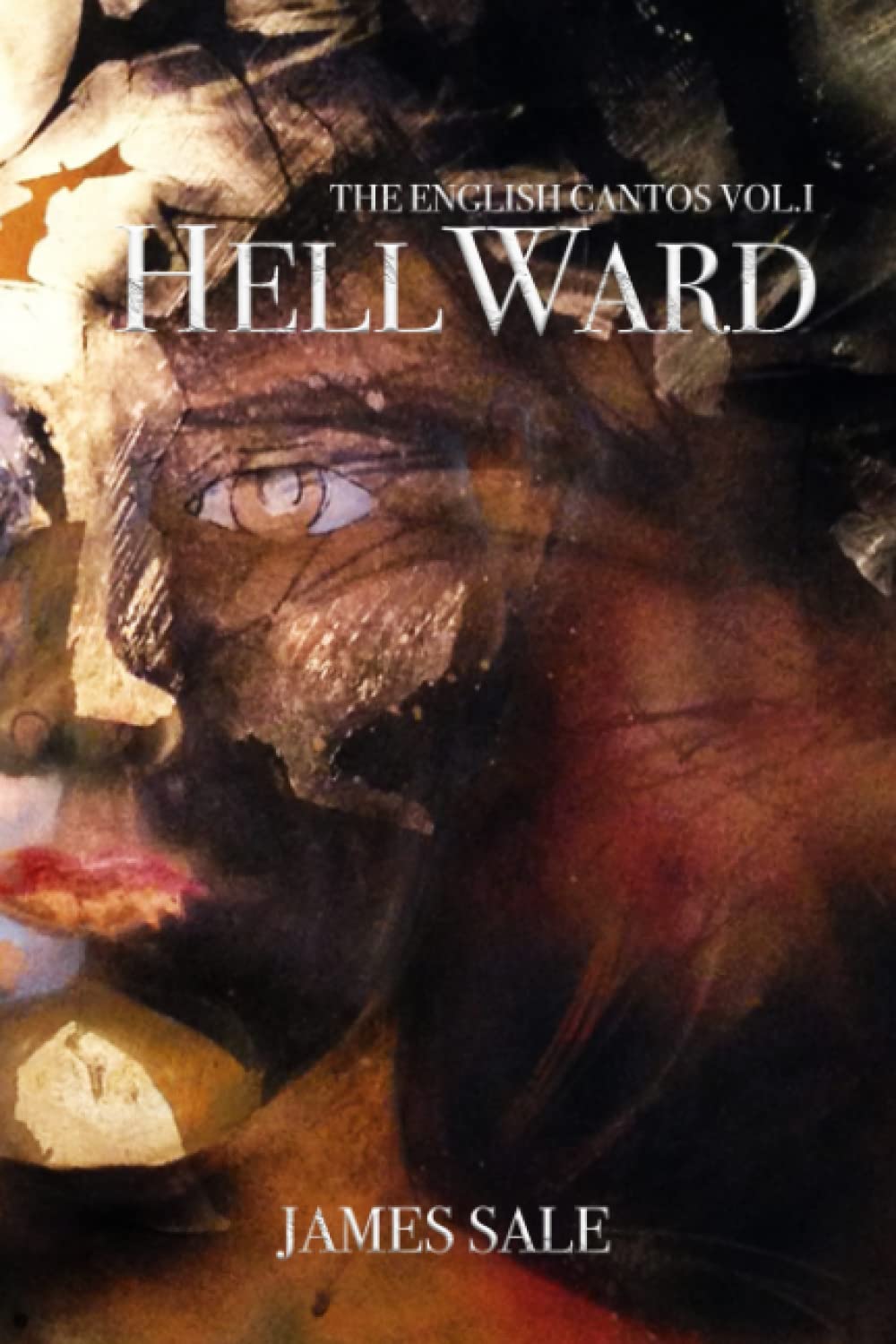
In HellWard (Amazon KDP, 2019), the first of three volumes, we enter the ward-dungeons of Sale’s hospital, encountering friends and family – his mother, a pupil, a boss, a poet friend, then meeting those public figures who influence others through through art, politics, and philosophy, poisoned with pride.
We learn that choices matter, free will matters, and we see what happens when the wrong path is chosen. We spiral downward, deeper and deeper into the wards of Hell.
This epic poem reads like a great adventure, pulling the reader along with rhythm and reason, sound and suspense, self-insight and sudden truths denied or ignored. Sale warns us, look and see, the blind are leading the blind. Do we want to follow?
The tension between love and unlove, between humility and pride, is illustrated graphically, continuous and frightening, as if led to a cliff and pushed, then caught in the freefall motion and wafted up, suddenly saved.
And in the end, we realize we create our own Hell here and now with each choice, so that in death we are given what we have chosen and continue to choose. Our free will is our destiny.
We enter these pages and discover ourselves, woven into words, a tapestry showing us who we are and who we are meant to be, the two being disparate, but also longing for union. Sale has gifted us with a mirror reflecting not only our downward turns but the love of God present, desiring to change us into love, to become what He intended when he created us.
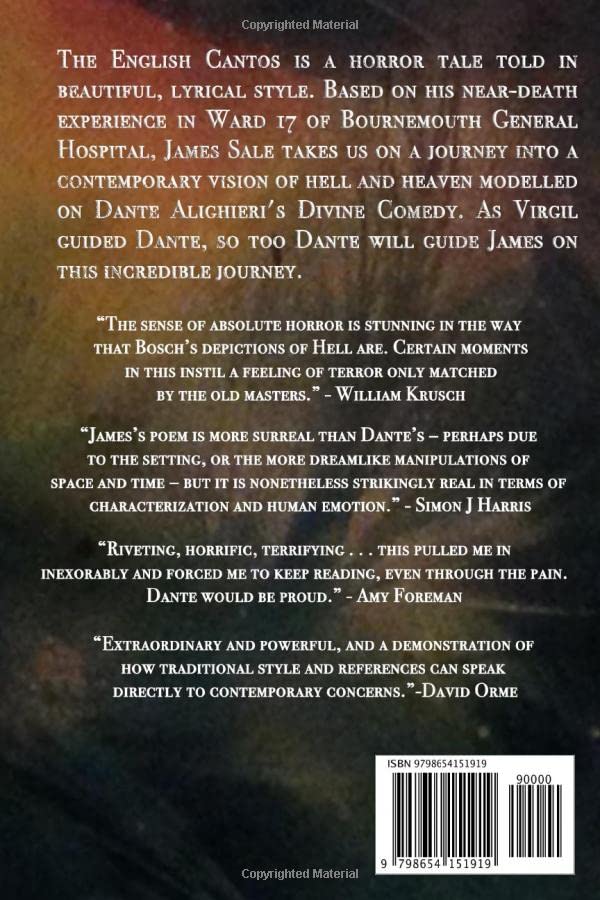
For it is not so much a choosing of Heaven or Hell but of being there already – by the choices we have made and the person we have become. If we desire to be away from God and His light, we continue a choosing we have made all our lives.
A unique, powerful, and life-changing epic poem! Lots to think about and revisit again and again. Open the door and enter, guided not only by James Sale, poet, but Dante himself. Highly recommended! And it would make a great movie…
 Christine Sunderland
