
I have had the remarkable grace to be a member of the Anglican Province of Christ the King since 1977 when I returned home to the Bay Area a single parent with a four-year-old son. Over the years I have become immersed in the lyrical and artistic liturgies of the Anglican Book of Common Prayer, a truly remarkable grace.
Many other Christian denominations share some or most of our dance in time with God our Creator, but as I have learned the steps and the words that go with the steps, I have engrafted Scripture into/onto my soul. Learning these precious words and phrases by heart is like seeding beauty to blossom in my heart. In time, our earthly time, I have grown old and now find myself living in a beautiful poem of truth, goodness, and beauty, all brimming with the immense love of God.
Words are mankind’s way of representing reality and, in turn, communicating that reality to each other. Language through the centuries has been shaped into sentences, paragraphs, and chapters to be placed upon pages or to be sounded with lungs and lips. Words spoken express the true depths of the speaker to the listener. Words allow us to share ideas, passions, instruction, and love. In the sharing trust grows. In the sharing we receive a part of another to be given away another time to someone else who has ears to hear, so that they will have eyes to see.
In this way – this sharing of truth – humanity flourishes, seeking ways to heal the past, to undo the curse of Eden and repent and start anew, to link one another, to banish loneliness, to sanctify the present and solemnize the future. We do this with words.
We also share untruths, increasing separation, distrust, and isolation. Lies are intentional falsities. These lies, regardless of where or when or to whom they belong, slither among us like snakes in the grass, the garden, seeking to devour. They divide. They harm. They kill trust and they kill love.
And so, in this fallen world, we seek authorities we trust to tell the truth. Just so, I found the Anglican Province of Christ the King, and in the finding, found joy, peace, certainty and an authority I could trust to keep me close to Christ, my king.
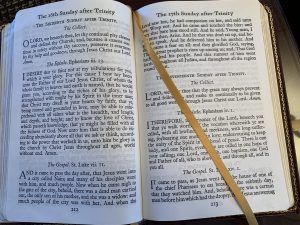 Sunday’s Epistle was one of the most poetically powerful of all Scriptures, a passage that rings true from St. Paul’s heart to my own, traveling from the first century, over two thousand years to my listening ears today. He writes to the church in Ephesus:
“I DESIRE that… [Christ] would grant you… according to the riches of his glory, to be strengthened with might by his Spirit in the inner man; that Christ may dwell in your hearts by faith; that ye, being rooted and grounded in love, may be able to comprehend with all saints what is the breadth, and length, and depth, and height; and to know the love of Christ, which passeth knowledge, that ye might be filled with all the fulness of God.”
The Epistle. Ephesians 3:13+, 1928 Book of Common Prayer, p. 212
The breadth, and length, and depth, and height of Christ’s love is known because we are rooted and grounded in so great a love that it passeth all knowledge. We become filled with the fulness of God.
And this happens in every liturgy. This fulness-filling. A remarkable grace.
Words. Words transform us and link us through the centuries, throughout the world, to be freely given and freely accepted without fear. 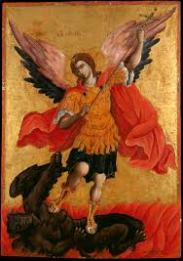 True freedom is free speech without fear.
This last week we celebrated the Feast of St. Michael and All Angels. I believe in angels, for they are in Holy Scripture and confirmed by the Church. St. Michael the Archangel fought the Angel Lucifer (ironic name=light) and threw him out of Heaven (see Revelation 12:7+): “And the great dragon was cast out, that old serpent, called the Devil, and Satan, which deceiveth the whole world: he was cast out into the earth, and his angels were cast out with him.”
Lucifer is the demon of lies. Christ is the Way, the Truth, and the Life. We continue to witness the war waged furiously all about us, this war between truth and lies. But we as Christians have authorities we can trust, the Church and the Word of God: “In the beginning was the Word, and the Word was with God, and the Word was God.”
Words. Ways of meaning. Ways of truth. Ways to the Truth. Ways to live life.
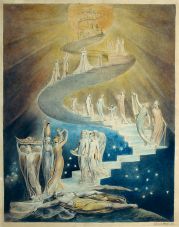
And like Jacob’s dream of the angels on the ladder between Heaven and Earth, so we use words to bridge the space between ourselves and God. We are given the words to use by Our Lord himself, and the prayer is the ladder: “Our Father, who art in Heaven, hallowed be thy name, thy kingdom come, thy will be done, on Earth as it is in Heaven. Give us this day our daily bread. And forgive us our trespasses, as we forgive those who trespass against us. And lead us not into temptation, but deliver us from evil.”
We say this morning and evening and whenever we think of it. We live inside the prayer and the prayer lives inside us. In this way words weave the Word of Life into our souls, into our time on this Earth, and we are given life eternal. Amen.
 A Jewish friend of mine knows all about birds, and she told me this week that she had spotted the seasonal return of the white-crowned sparrow in her garden. She explained that they often return during the ten days between Rosh Hashana, the Jewish New Year, and Yom Kippur, the Day of Atonement.
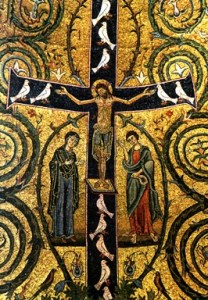 And as St. Paul writes in the Epistle to the Galatians, “God forbid that I should glory, save in the cross of our Lord Jesus Christ, by whom the world is crucified unto me, and I unto the world.” So we offer our lives and all of our worries and needs and yes, our confessed sins, to Our Lord, and he makes sense of them. He returns what we need a thousand fold. As our preacher said, these are returned purified of the sin that was in them. We are at-one with him.
 It is this God-given freedom that allows us to stray and it is this freedom that allows us to admit our wrong turns and like the prodigal son, return home. Western Civilization has been founded upon freedom, this free will to choose, but to repent and atone, and thus relies on these Judeo-Christian values. To abandon this foundation of atonement, as many desire, is to chart a destructive path into the future, to sail into dangerous waters. We pray this will not happen to the West and thus to the world.
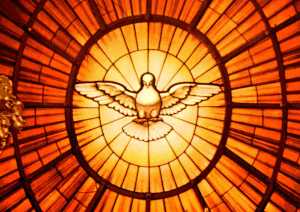
 We gathered for coffee and snacks after Mass this morning, and the chatter flew among us like birds soaring. One thing leads to another, one story to another, and in the sharing of our loves and lives we see the Holy Spirit dancing among us. For we all have sinned and fallen short of the glory of God, and it is this humility and honesty that we share that unites us as the Bride of Christ, the Church. It is this belief in the God of Abraham, in the Holy Trinity, in our Lord Jesus, his death and resurrection, and all that is taught, all the creeds and hymns and prayers, all the sacraments and Scriptures – all of this is part of the Atonement, the at-one-ment with God, giving us many moments of heaven on earth.
 There is something wet outside, coming down from gray skies, straight, then slanted, tapping on my window. Is it rain? How do I know? Do I trust my senses? Do I trust my past that tells me yes, this is rain, and you’ve seen it before. It drops from the skies like that. California doesn’t have enough, we are told, and so it is difficult to believe our senses.
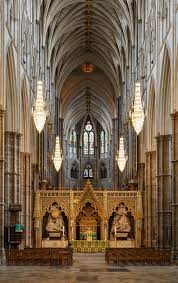 The world has been given a short reprieve from the stifling of debate and the lauding of lies. The world now is watching Great Britain mourn their Queen Elizabeth. A commonwealth of over fifty nations benefited from the virtues she embraced, from the faith she practiced, from her uses of the past to inform the present. Today their leaders and other world leaders are gathering in London. Tomorrow they will pray for the queen’s soul in Westminster Abbey. They will give thanks for her life of authority and her life of truth. There will be processions and hymns and canons saluting. The fanfare reminds us there is more to life than mere matter. There are those we can trust and look up to. There is meaning.
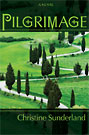 I am one of the blessed ones, graced with belief. I needed reason however, to put the puzzle together, and C. S. Lewis helped with that. Writing my first novel of ideas, Pilgrimage (set in Italy), helped too, for it set out the questions that needed answers. In the writing, the truth emerged. For writing is speech, and speech is love, for thus we meet one another in the pages turned. I continued the conversation in Offerings
 , considering visions and healings in France, and in Inheritance (set in England), praying in the great abbeys and walking through the history of Christianity in the West. These conversations – these paths – revealed the truth of our lives as human beings in this world of time.
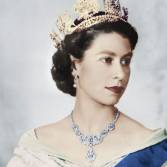 England’s Queen Elizabeth passed into Eternity a few days before America’s memorial of Nine-Eleven, the bombing of the World Trade Center towers on September 11, 2001 in New York. The two events weigh upon my heart and mind in nearly equal measure. Both the good queen and the crumbling towers are icons of Western Civilization; both are signs of a passing age and a loss of innocence, a call to defend freedom in the free world.
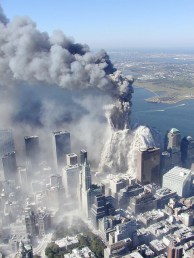 Our World Trade Center was a symbol of our freedom and democracy, our own work ethic, our desire to create and to build, rather than to destroy. The Islamist terrorists chose the towers, for they were iconic symbols of our free world. They also chose Washington D.C. targets, symbols of our nation, of our rule by the people, for the people, through representative government.
 Today those freedoms are once again threatened, not by outsiders, although that may be the case as well, but by our own people in power.
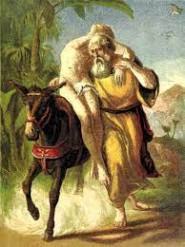 “I am the Truth,” Christ said. And in today’s Gospel we hear the story of the Good Samaritan, the man who cared for the wounded traveler on the side of the road. For we are told to love our neighbor, not only our own family, our own nation, but the family of nations. We are to love one another, care for one another, respect one another. This is the message embodied in Elizabeth, Queen. This is the message embodied in the American founding.
 What is the meaning of life?
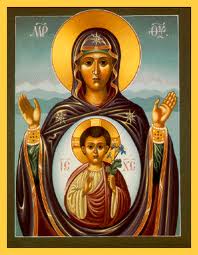 Women were once told, and still are told, that meaning is found only in the workplace. While it is true that meaning is in the work we do, whatever it is, wherever it is, women have a unique work that is their crowning glory, for women give birth to new life. And not only is the woman able to give birth, after carrying the child within her own flesh and feeding that child with her own life-blood, she is given the joyous work of caring for the child after he or she is born. So a mother’s great work is her time in labor, as she labors to birth the child. It is a suffering work of love, and out of the pain will come joy. Soon she will labor in the home and this will become her sacred workplace.
 Such men and such women form the true labor union, the family. Such men and such women need never fear their lives have no purpose or meaning, for if they have indeed formed such a union of labor, formed such a family, they have participated in the grandest of Heaven’s labors – the creation of life, the sustenance of life, the miracle of life.
 And so, while we celebrate the worker, a celebration that is often associated with labor unions, let us not forget the laboring unions nearby, the families, the creating of the future with the creation of new life. Let us labor to not forget what is right and true and beautiful, and right in front of us. Let us celebrate our daily labors of love, our support and comfort for life itself, that union of male and female to create the unborn child in the womb.
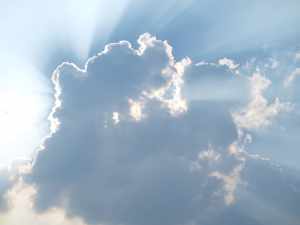 The fog rolled in over the night, but dissipated by early dawn, having blanketed our dry brown grass in the hills around Mount Diablo in the SF Bay Area with moisture. The drop in temperatures was welcome, if seemingly a bit early, and yet the shortening days and longer nights reflect our change of seasons.
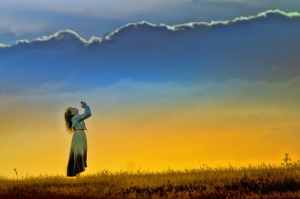 We give thanks for the change of seasons, the changing of days, the marking of time with temperature and light. We give thanks for life, born and unborn, every miraculous moment declaring again the glory of God. We give thanks for growth, for the baby that bursts into the world of oxygen and bright light, meeting that brave new world with a startled cry and a slap on the back. What was it like to leave that warm womb and suddenly be thrust into a such a cold and sterile climate? I don’t recall, but I experienced it to be sure, as did you, as did all of us who were fortunate enough to be born.
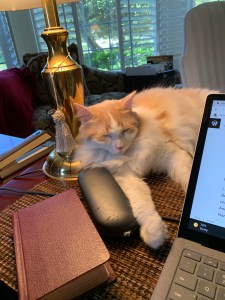 Have I told you about my cat? She lies curled now, on my desk, sleeping. She knows what she knows. And she knows it’s time for a nap. Soon she will hear me bustling in the kitchen, cooking dinner. Soon she will follow the sound of my voice to the kitchen, the sounds of love, the sounds she has grown to know well.
 We suffered a power outage this morning, and once again the fragility of our “grid” and our foundational support systems across America based on electricity became too real, in this third week of August, as we bake through the summer. Threats to our way of life loomed large, not only with energy delivery and fire management here in California, but on many many many levels.
 The Russian collusion hoax sought to destroy a sitting president, by means of his own government agencies and spies. We saw from muted media that the collusion said to occur with Russia was, indeed, fabricated, and those involved committed serious felonies. We saw that it was all a witch hunt, yet those individuals have not been held accountable, but seem to enjoy their fame. What happened to equal justice under the law?
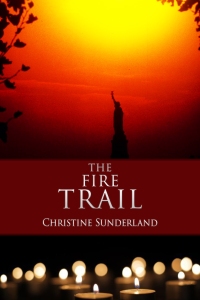 I attended school in a time when we learned to debate issues. We learned to argue both sides, to understand the heart and reasoning of those with whom we disagreed. But it became obvious in 2014, when a conservative speaker met with rioters at UC Berkeley and was forced to leave the hall, things had radically and dangerously changed. Other speakers at other universities were cancelled if they didn’t meet the Left’s approval and narrative. I set my novel, The Fire Trail (eLectio 2016), in the midst of this startling violence.
 Go to YouTube (or Rumble) and watch Victor Davis Hanson, Andrew Klavan, Eric Metaxas, Dinesh D’Souza, and the
  Our power outage is over, and with a high-pitched screech, the system roared back after a four-hour down time. The lights came on, the fridge purred, the AC hummed, my phone charged, my Wi-Fi blinked, and all is right with the world. For now.
 A family friend, Scott Gallagher, died this last week in Durango. He was bicycling home in the early morning dark, when he was hit by a car (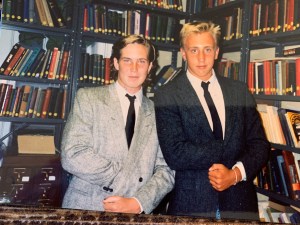
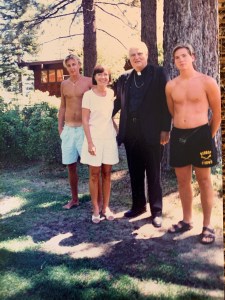 There is a photo of the boys with our Bishop Morse in Tahoe one summer. Another was taken in the Berkeley Seminary Library. I know they went on an Outward Bound adventure at some point but couldn’t find an image of that rugged trip. They loved the outdoors and as adults gravitated to the Rocky Mountains in Colorado, probably among the most rugged of God’s mountains, rising to 14,000 feet. They hiked, skied, snowboarded, and earned enough to get by to snow camp the next day.
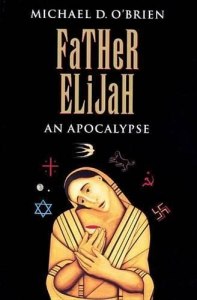 And tomorrow is the Feast of the Assumption of the Virgin Mary, the celebration of her rising bodily into Heaven, rather than her body dying as happens to most of us. It is a lovely belief, not supported by Scripture but by tradition and the many stories of Mary in Ephesus, where she spent her last days, finally in a cave in the mountainside. We visited the site once, where a lovely order of nuns run the shrine that looks down upon the old port of Ephesus and its amphitheater, where St. Paul preached to the goldsmiths (and they didn’t like what he said). Today the port has been renamed Kusadasi and is part of Turkey. In his incredible novel, Father Elijah: An Apocalypse, Michael D. O’Brien, tells the story beautifully.
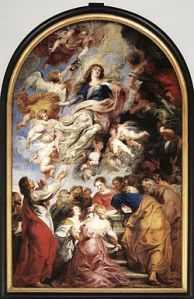 Mary is our mother. She knows what it is to lose a son, a beloved, and probably only, son. She shares our worries and sufferings, the loves and fears of mothers everywhere. She is our humanity in holy form, reaching out to us, knowing as she knew what it is like for a sword to pierce the heart, for a son to die.
 It is a rich time, an unfolding time, a time full of fullness, a time when we pause and wonder at the world about us and how we came to be here, to live each day in beauty, truth, and goodness, to love and esteem one another, each as a child of God.
 What struck me today was the light. The light of God can be blinding, our preacher said today. To look into the face of God – too bright for us, unless we have been transfigured ourselves, unless we have grown through repentance, have chosen the right path through our time on earth. “Fear not,” the angels say when they visit. Shepherds cover their eyes as they look to the heavens to see the choir of angels on the eve of Christ’s birth. The light is so bright, so blinding. So bright to be burning. So bright to be a fire that consumes. And so our path leads us to Heaven, prepares us to choose Heaven. For those on the wrong path will be blinded by the light, burned by the flames.
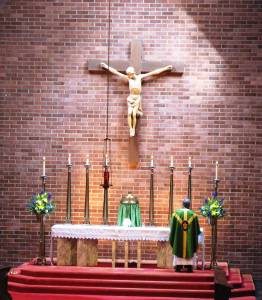 It’s easy. We turn away from the darkness of death and toward the light of life. We turn to the light of Christ found in our local church. We enter the doors and step inside. We learn to lean to the light by sitting alongside others seeking God and the path to Heaven. We learn we are not alone on the path. We learn we are sisters and brothers, children of God. In fact, St. Paul tells us today, we have received “the Spirit of adoption, whereby we cry, Abba, Father… we are the children of God: and if children, then heirs; heirs of God, and joint-heirs with Christ…” (Romans 8:12+)
 Christians experience a miracle many times over in the consecration of bread and wine. But they also receive a miracle many times over in the many becoming one. We who have been divided by race, abilities, genders, beliefs, know this is true. We know this is how we should be – not divided, but undivided, united by the love of God our Creator, united by adoption, united as his children, each unique, each a part of this family of God. We know this is how it should be, how it is meant to be. And we are reminded by Scripture, by song, creed, and prayer, that we are one body before our Father in Heaven. We sing with one voice, Gloria.

 Christine Sunderland
