
 Angel Mountain by Christine Sunderland (Eugene, Oregon: Resource Publications, 2020, 267 pages)
Reviewed by Francis Etheredge
In many ways, although this is only the second novel I have read of this author, it reads as a climax of many threads that, one imagines, have been gathering momentum through Christine Sunderland’s seventy years of life which, with the twists and turns of an exciting write, she has turned into a spiritual thriller, racing through the tensions of our times and, at the same time, pausing in front of the mystery of God and prayer: that striking contrast between upheaval and turmoil and the still point of being still: “Be still and know that I am God” (Psalm 46: 10).
We enter a world rightly worried about the need to remember war, its abuses, the escalation of conflict, the unholy influence of drugs and money, terrorism and its dehumanizing isolation and destructiveness, the experience of refugees, and the many ways that we come to the solid foundations of our lives and of the societies in which we live in discerning the ethical use of reason, science, the great and majestic sweep of culture, civilization and religion. This contemporary scene is embraced, as it were, within the structure of time echoing God’s work of creation and, as the novel develops, so the almost contradictory song of praise rises from one of Sunderland’s most dramatic characters.
We enter this world, then, through a variety of voices who range from the almost deranged terrorist to the prophetic voice of a modern day John the Baptist and a whole range of characters in between, either thinking through their relationship to the Christian Faith or deeply immersed in or connected to it; and, in the course of what unfolds, there is the almost anonymous “hook up” contrasted with the deeply personal engagement and marriage of two of the central characters. In the midst of a volatile situation, whether externally with forest fires and the unpredictable killings of bystanders or the erupting, “internal dialogues”, within her characters, there “enters” an enclave of friendship in the house of a Jewish widow, Elizabeth, who has befriended her housekeeper and husband and the two people who, in time, will meet and be drawn together through a common love of Elizabeth and her brother, Abram.
Abram, who is a late vocation to the Anglican priesthood, and who preaches repentance and baptism before his death in a beautifully colourful Orthodox context of intense iconography, praise, and a radical Christian life. Sunderland’s portrayal of Abram brings out the dramatic nature of conversion and its call to others, drawing out friendships and opening up relationships, literally, between heaven and earth! While, in one sense, one might have objected to such a prayer saturated book, it is so taken up into the life of Abram that it truly shows the “invisible made visible” and a generous embrace of a variety of different expressions of the heart’s awakening to the existence of God who loves us in the death and resurrection of Jesus Christ. One wonders, too, about the author’s ecumenical embrace of different traditions with an almost “interior” unity between them all; and, as such, it is like reading an account with the sense of Ut Unum Sint, That They May All Be One, by St. John Paul II – but without the explicit mention of the pope.
Sunderland touches, too, on the challenge of harnessing the good of genetic science and repudiating its harmful, historical antecedents which, ominously, touch the present; and, it is good to see a brief but intermittent exchange about the credibility of evolutionary theory. Indeed, the need for explicitly critical thinking is evident as one character speaks of the ‘Cambrian explosion, a fossil record with no found links to earlier fossils, a species that simply appeared.’ In other words, within the scale and dynamic of the whole book, it is clear that the ’chance’ (cf. Proverbs, 2: 2) appearance of human life is as foreign to human existence as the passage between atheism to religious belief is intelligent.
In view, then, of our present times, full of the reality and ongoing tension of war, it is definitely consoling to discover an author who sees, simply, the whole: the detail amidst the grand sweep of history – both challenging us to the good use of our freedom and intelligence and encouraging us, in the context of time from time immemorial, to believe in repentance and prayer for the good of all.
Yes; there are echoes of C.S. Lewis’ That Hideous Strength – but a wonderfully exciting drama told wholly on her own terms! Christine Sunderland is both a woman with roots in the living waters (Psalm 1: 3) and a scribe who brings out both the old and the new and shows their harmony in the hands of God (cf. Matthew, 13: 52)!
 Francis Etheredge, Catholic husband, father of 11, 3 of whom he hopes are in heaven, author of 11 books on Amazon, and 2 maybe 3 more due in 2022:
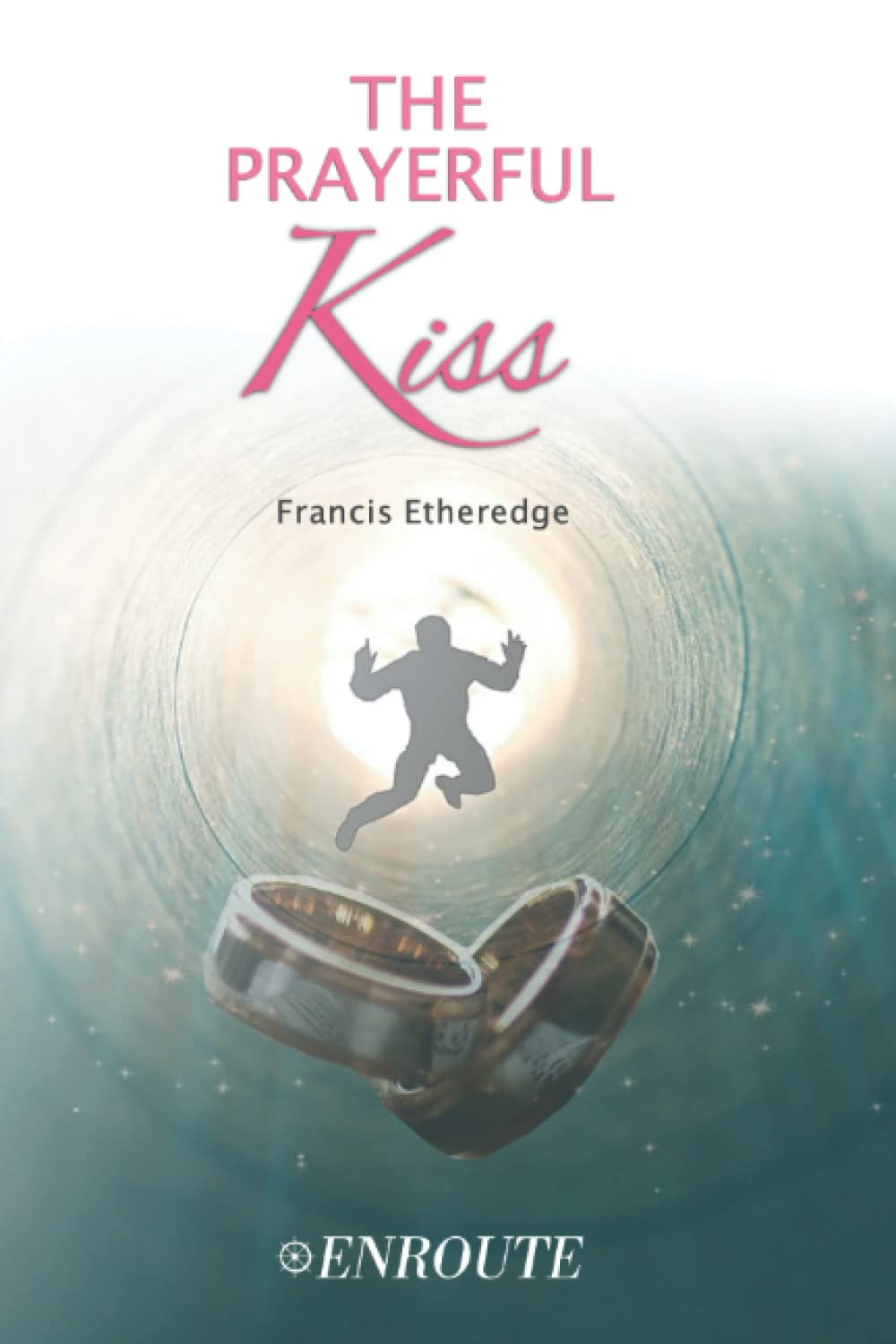 The Prayerful Kiss, A Collection of Prose and Poetry by Francis Etheredge (St. Louis, MO:
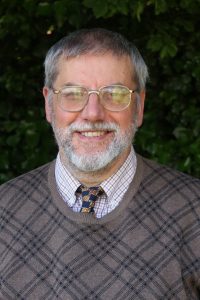 Francis Etheredge is a Catholic theologian, writer, and speaker, living in England. He is married, with eight children, plus three in Heaven. Mr. Etheredge holds a BA Div, an MA in Catholic Theology, a PGC in Biblical Studies, a PGC in Higher Education, and an MA in Marriage and Family. He is author of 11 books on Amazon: visit
  Christine Sunderland is the author of seven award-winning novels about faith and family, freedom of speech and religion, and the importance of history and human dignity, the most recent being
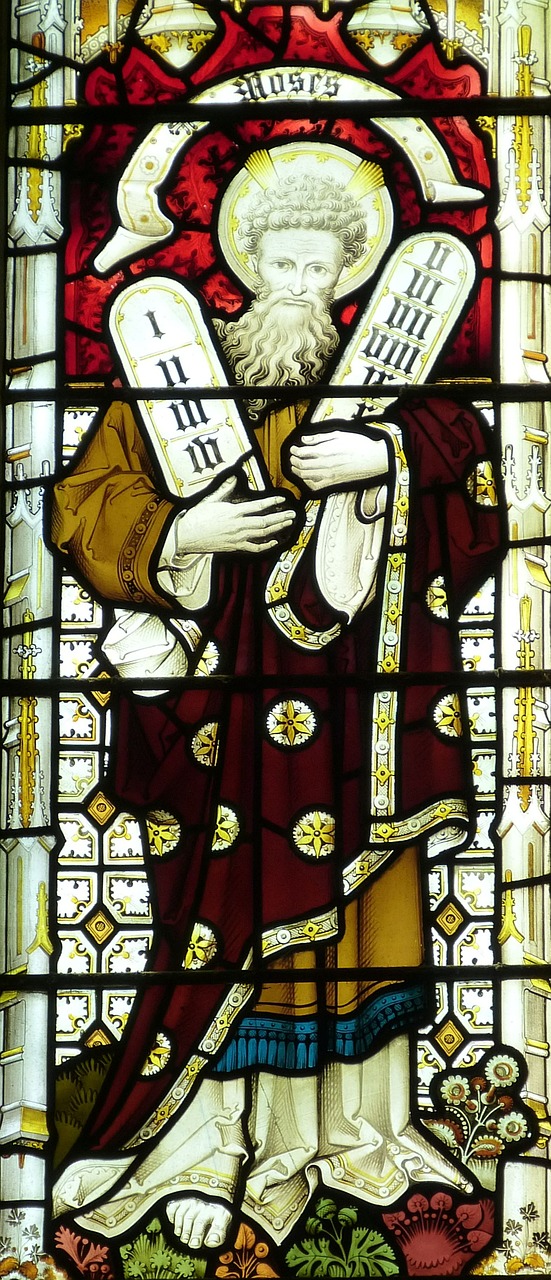 The eighth commandment says to not bear false witness, simplified to do not lie. Moses, another hero, carried the stone tablets burned by God with the Ten Commandments on Mount Sinai. Mankind was given specific moral laws to follow. Since that time, when we follow them, peace and happiness are more likely. When we do not follow them, war and misery prevail. So we teach these laws to our children, these ways to get along together, as a family, as brothers and sisters, as children of God. The first four list our duties to God; the last six list our duties to one another.
 It is a parable about truth and its many expressions. A friend of mine is keen on the power of stories to convey truth in a way simple facts do not. Stories – parables – touch a person’s heart and reside there for a time, hoping to take root. And so we tell stories that reflect the great truths of the human condition and ask the immense questions of existence: what is love? why are we here? what is goodness, truth, beauty? Is there a God? If so, is he a good God? Why do we suffer? Why does God allow suffering if he is good? What are his commandments, his desires for us? Is he really a God of love?
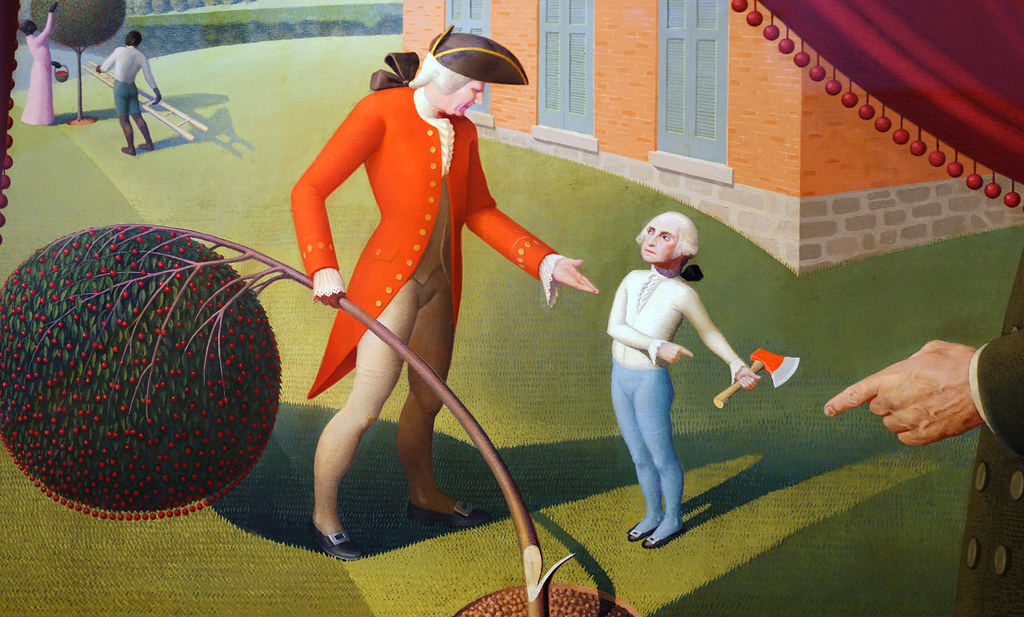
 Presidents’ Day. Hopefully the toppled statues will be righted. Hopefully we will teach our children about our national heroes and how we should behave as good citizens. We will not expect those heroes to be perfect – no one is – in order to be models. But we fly our flag of ideals, the ways we desire to be, the ways and means we desire to honor.
 It seems appropriate to begin Pre-Lent, the three Sundays prior to Ash Wednesday and the beginning of Lent, with Valentine’s Day, a celebration of love. For the entire Christian project is about love, God’s love for us, fallen and selfish as we all are. It is this recognition that forms the foundation of Western Civilization and thus makes the woke squirm uncomfortably.
 We need, as human beings, reason to believe. We need structure and meaning. Today there are many logical arguments to support that step toward faith. Mere Christianity did it for me (C.S. Lewis), but many others have since added to his apology. If one wants to believe, wants to find God, he or she will.
 Today I give thanks to Our Lord Jesus Christ for entering my heart when I opened the door fifty-five years ago at the age of twenty. I was, looking back, heading for depression at the time, the meaningless of existentialism preached in my college classes hanging like a dark fog over me. I believed what they taught, that God was dead, belief a fool’s dream. When I turned back to the crossroads where I had taken a wrong turn, I saw the cross and took a different road. I listened to C.S. Lewis. And I opened the door of my heart.
 Today’s Epistle is one of the most beautiful in all of St. Paul’s letters to the churches. As in many others, he gives us lists, describing how we are to behave, what virtues we are to put on, as though they were garments of grace. We are to let the peace of God rule in our hearts, singing with grace in our hearts to the Lord. As the body of Christ, we bond our perfection with charity, that is, with love. We are to let the words of Christ dwell in us richly in all wisdom:
 There is much here about hearts and love and peace and unity and music and thanksgiving. And yet we are called the elect, “holy and loved,” set apart from the world around us. It is a word that says others will not be with us; others will not have the vision of God.
  Our communities and our nation are divided into these believers and non-believers, nihilists, materialists.
 This is the good news – that if we desire God, we will find him.
 Why is marriage so important to God? Why the ceremony and why the vows? Because marriage will make us happy. Because marriage will provide children and ensure the continuing life of mankind on earth. Because marriage will teach us how to be sacrificial and suffering, how to truly love one another. Because marriage will teach us how to love within the family community so that we can love within the broader community of citizens in towns and states and nations. It all starts with marriage and hopefully family. Marriage is a Christian sacrament, betrayed by the materialism of today. Tares have been sewn amidst the good seed.
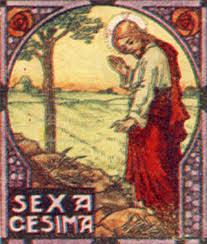
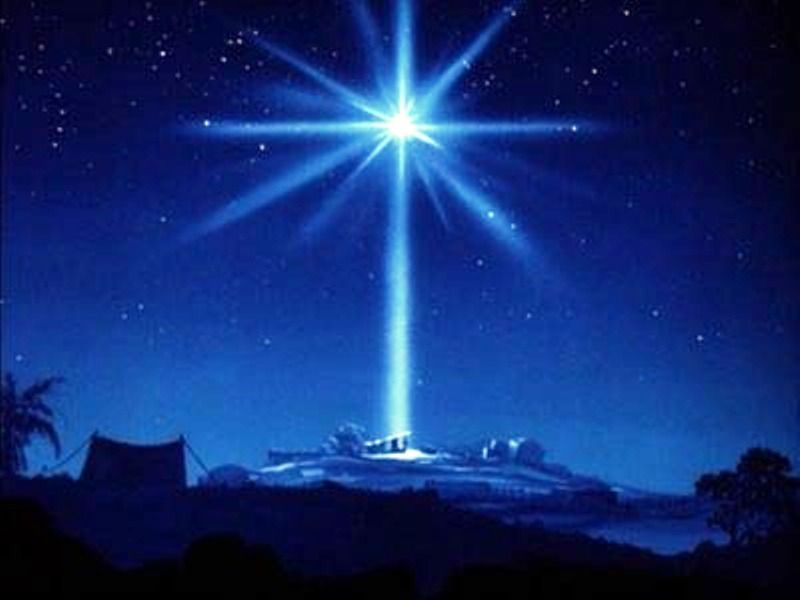 We are in the season of Epiphanytide, the weeks following the Feast of the Epiphany and leading up to “Pre-Lent”, the “Gesima Sundays”: Septuagesima, Sexagesima, and Quinquagesima. These Sundays in turn lead up to Lent proper, which begins Ash Wednesday, March 2, this year. Epiphanytide can be up to six weeks, swinging upon the date of Easter, which depends upon the full moon (!). Yes, we still have holy days and seasons depending upon full moons, reflecting the two thousand years of celebrating the stunning reality that God came to earth, became incarnate, in the flesh, walking among us.
 In this sense, Epiphany proclaims the equal dignity of all men and women, of all human life. Epiphany says, God loves you no matter who or what you are. God wants you for his own, to be with him in Paradise.
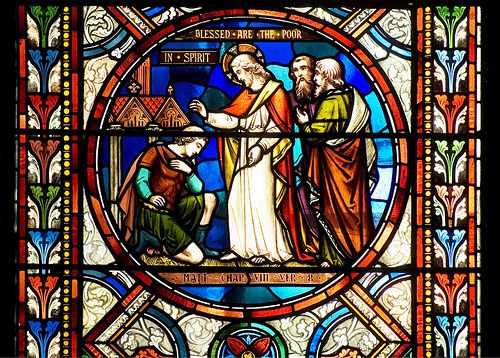 These words are spoken in our liturgy just before receiving the Eucharist, with a slight modification: “Speak the words only and my soul shall be healed.” We repeat these words three times as the celebrant holds up the Host for all to see. Then we line up to receive the Real Presence, the Mystical Presence, of Christ.
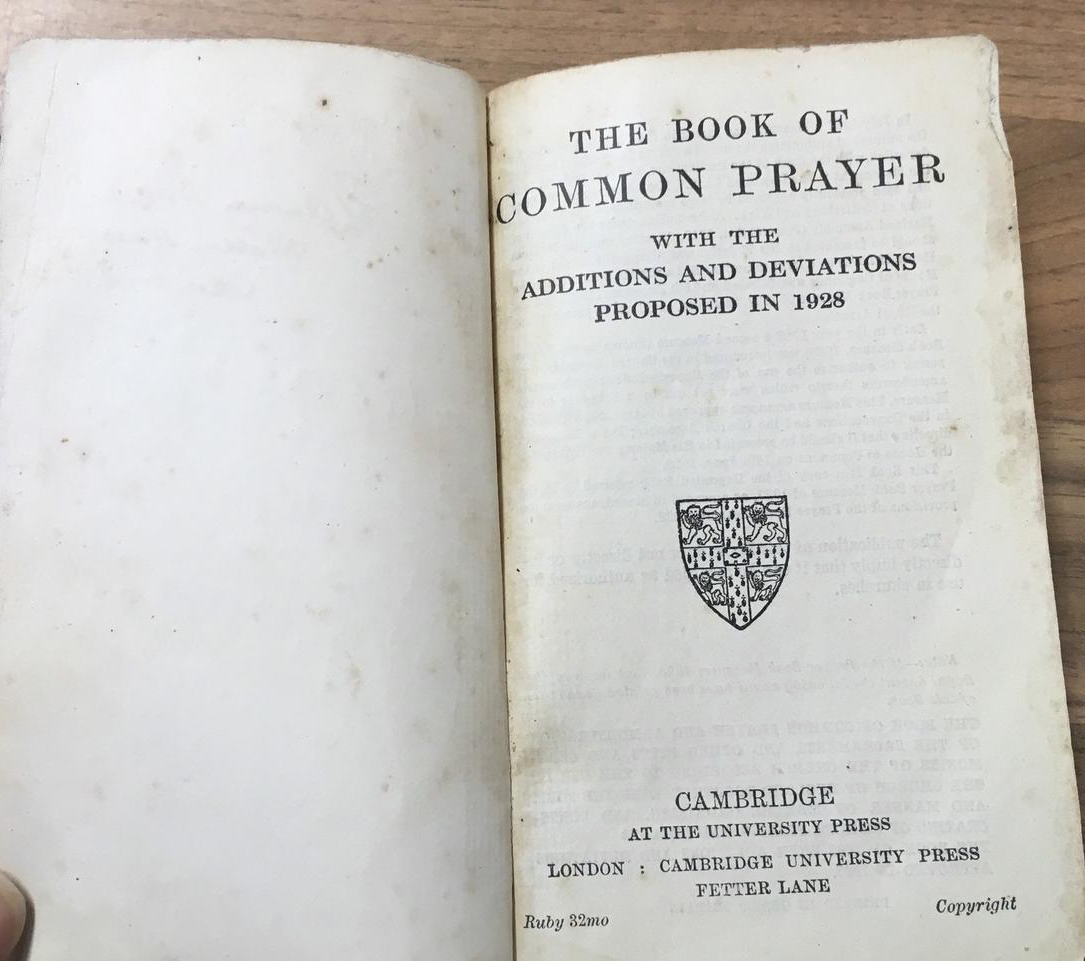 Our 1928 Anglican-Episcopal Book of Common Prayer is full of Holy Scripture like these words of the Centurion. And because we repeat many of the phrases each week, each month, each year, depending upon the season, we write these words on our hearts, we inwardly digest them, as one opening prayer says in Advent. The repetition is useful and beautiful, for not only do we learn and digest, but we speak the words together, in unison, in a kind of starry dance. We in the pews become a choir of angels, bathed in the light of Christ.
 It is this light – these starry epiphanies – that I desire to write about in my next novel. I am currently developing the main characters, those who will inhabit the pages, who will hopefully and faithfully shed light upon our world. I study real people through memoir or biography and create
  There was a mighty rushing wind that whirled around our house this last week. The whoosh was ferocious as though a roaring lion were breathing upon our hillside at the base of Mount Diablo. I thought how nature was not always gentle, kind, and caring about humanity but ran on a course of its own. Our house was in the middle of that course, it seemed. Would we be blown into the sea?
 I believe it was Victor Davis Hanson who wrote (probably in his recent excellent book The Dying Citizen) that with false victimhood (and who is not a victim today?) comes denial of responsibility. Guilt is washed away when you are a victim, or at least guilt is explained or excused.
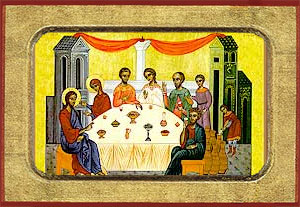 I thought about this, this morning in the Berkeley chapel, that our God is a God of Life. We celebrated the first miracle of Christ, the turning of water into wine at a wedding feast in Cana in Galilee. The simplicity and need of the act touches me. Had Mary seen him do these things before? She says to the servants, “Do whatever he tells you to do.” She says to her son, “They have no more wine.” And so Our Lord remedies the situation, turning 150 gallon vats of water into “the best wine,” as the master of the feast says later.
 The Cana miracle reflects the living God of all creation, for to turn one substance into another is no small thing, yet is a small thing for him. He charges matter with life, with atoms forming substance. We call this a sacrament and, in the sacrament of the Eucharist atoms of bread and wine become charged with his life. They become “the real substance of things unseen.”
 A friend entered Paradise last night. His soul left his weak mortal flesh to rise to Paradise. He was and is a big hearted man, a loving man, a man of faith and purpose. His good humor humored us all, those who worked with him to witness to Christ through the St. Joseph of Arimathea Foundation in Berkeley. Our Board meetings have been virtual the last few years, so we were denied his physical presence and yet he was there on the screen. He was a layman, a businessman, a husband and father, and a faithful (founding) member of St. Thomas’ Anglican Church in San Francisco. He helped found our St. Ann Chapel at Stanford as well.
 I do not know exactly the time sequences, the order of events, in Paradise, for the simple reason we are outside of time, and as creatures bound in earthly time, we cannot envision Eternity. And yet, as my theological grandson mentioned at Christmas, we sleep until the Second Coming of Christ to Earth and the advent of the New Jerusalem. This New Heaven and Earth will be our home and we shall be given our perfected bodies. Wrongs will be righted, paths will be straightened, and Christ shall wipe all tears from our eyes. We shall be reunited with those who have journeyed before us, at least those who desire to be in Paradise, those who believe, those who claim Christ as their savior and redeemer.
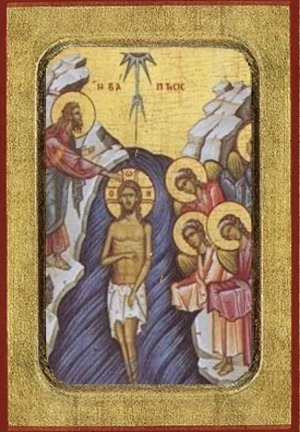 And so this morning as I listened to the Gospel appointed for today, the baptism of Jesus by John, the dove descending, the voice from Heaven saying, “This is my beloved son, in whom I am well pleased,” I thought how my friend entered Eternity and embarked upon this great journey on the eve of the Second Sunday after Epiphany, the eve of the Sunday we celebrate the Baptism of Christ.
 A new year has been marked in the calendars of mankind. Time has been broken into pieces so that we can organize it to form associations with one another through work, play, sickness, health. We set aside times in the future where we promise to be, where we promise to give of our time for that moment, hour, day.
 to prepare. We are warned of waterfalls and cliffs that plunge into the dark abyss.
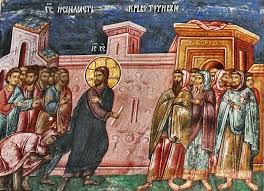 St. Luke tells of a woman who touched the hem of the robe of Jesus. She wanted to be made whole. She reached out, hoping, praying. I reached out too. I wanted to be made whole too, although I didn’t realize it yet.
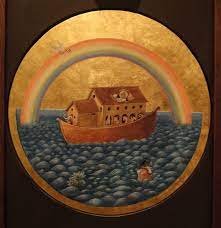 And it gets better each year, this amazing journey. At the age of seventy-four, I have no regrets that I chose this river. For the Church has been my ark, and we have sailed together, I in her womb of life with those who travel with me. We are the family of God, precious in his sight. We are his bride.
 Christine Sunderland
 Christine Sunderland