Category Archives: Uncategorized

May Journal, Ascension Sunday

candleI’ve been memorizing a prayer suggested by our Bishop Hansen. This week I repeated, whenever I had a spare moment: “Lift, O God, any veil from our minds and bring revelation and enlightenment in all things. Amen.” I also repeated last week’s line: “Let all of us, all our children, our children’s children, and our future generations know Christ fully and enter Thy Kingdom now to live with Thee forever.”

I want the words to be engrafted in my memory, for they can be called upon in times of sorrow and doubt. I have found that memorizing, while never an easy discipline, is worth the effort. But I have to recall the words regularly – as one does in the weekly liturgy of the Mass – or they will suffer from lack of watering as seeds thrown upon poor parched soil. For if I water the words with my memory, I am fed in return with a bountiful crop of truth.

Memory ensures that truths we hold are kept alive with each generation. Such truths keep us alive in turn, shining light on darkness and directing our way when choices loom before us.

PLEDGE OF ALLEGIANCEWe memorized many things in school over the years, Kipling and Frost and Shakespeare, but the Pledge of Allegiance seeded and watered belief in our country’s righteousness and freedom.

“I pledge allegiance to the flag of the United States of America, and to the Republic for which it stands, one Nation under God, indivisible, with liberty and justice for all.”

I recall standing and reciting this every day in school in the ‘fifties, hand over heart, from a young age, the entire class turning to face the flag. We sat in rows then, like a fleet set sail for a common destination. Today students often sit in “pods,” or small groups, and with this move, the teacher becomes less the focus, less the authority, and more of a coordinator and equal.

They were small changes, it seemed, yet with vast implications. Instead of seeing ourselves as empty vessels to be filled with knowledge, we were taught how to find it on our own. Truth slipped into opinion. Self-esteem was paramount, and discipline disdained.

My classmates and I grew up knowing that America was a good country, not perfect, but good in terms of her ideals. My co-pledgers then and earlier, defended our nation – and the West – in Europe, the South Pacific, Korea, Vietnam, the Middle East. They gave their lives, or were willing to, to protect “liberty and justice for all.”

lady-justiceTomorrow we remember those who died defending us in these wars. We observe “Memorial Day,” a day of remembering. And in honoring their sacrifice, we remember who we are, that we are a nation worth defending. We are a nation of equality (not equity) under the law. And we are a nation of laws, rules we all agree on.

What would become of a sports game where rules could be ignored? The rules are put in place for a reason, so that all can share in the game in a peaceful manner.

Just so, laws that are unenforced, or enforced unequally depending on race or power or influence, deny citizens the equal chance to play the glorious game of America. In time, without law and order, it seems a waste of time to even try to compete. Why should one try when others cut in line, when others are favored? In time, allegiance to country and allegiance to this greater good, fades, and anger leads to depression.

But some of us remember a time when remembering was a good. We remember a time, re-member or put together again in our minds, when history, the story of the past, was considered vital to a culture enduring another generation. We learned where we had come from so that we could know where we should go. Our country, we learned, was founded by pilgrims desiring religious freedom. Our country, we learned, was birthed in the chaotic meetings of minds to agree upon principles, principles that would be declared worth fighting King George, worth dying for. Our declaration declared that

“We hold these truths to be self-evident, that all men are created equal, that they are endowed by their Creator with certain unalienable Rights, that among these are Life, Liberty and the pursuit of Happiness.”

As school children, we learned these self-evident truths, writing these truths on our hearts.

And so today, we thank those who died for us. We thank those who left family behind and suffered for us. We remember them, for they were candles in the darkness of anarchy and tyranny. They knew without truths we agree upon to be self-evident, truths from our Creator, anarchy would ensue, followed by tyranny, a historical lesson for anyone who desires to learn from the past.

ASCENSION ICON (2)This week I will add the third verse to my memory prayer:

3. May Thy Holy Spirit cover and protect us daily, with mighty angels and the prayers of saints.

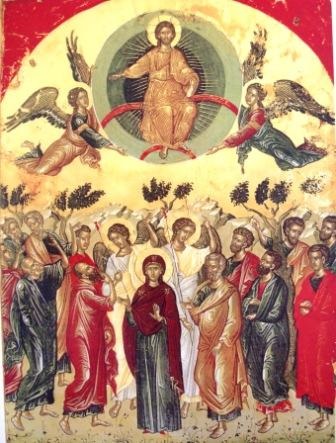
Today is Ascension Sunday, when we celebrate Christ’s bodily ascension to Heaven, after his many appearances on Earth in his resurrected body. Jesus leaves his devoted disciples, we are told, so that he can send his Holy Spirit to strengthen and comfort, to free from sin, to guide and protect. And so it happened. The Western world – Western Civilization – was born of Christianity, sculpted in the Judeo-Classical world, leading humanity toward love and law and equality, to freedom of worship, finally sending the Pilgrims to our shores.

MEMORIAL DAY FREE IMAGEFor we are a nation under God, protected by his Holy Spirit, with angels and saints. Never in the history of man has there been a nation like America. Never has their been a more resilient people than Americans. And never has there been such a light shining on such a hill, a beacon of truth to the world.

May America continue to welcome those who share her ideals, those who remember who she is, and those who will defend her.

May we always pledge our allegiance to America, to liberty and justice, under God.

May Journal, Fifth Sunday after Easter, Rogation Sunday

HARVESTRogation means asking. Traditionally, Rogation Sunday called for prayers for the harvest, and thus we associate this time not only with prayer, but the natural world and its bounty. Rogation is a short season, lasting these next few days, ending on Wednesday.

The Church prays for priestly vocations so that souls may be harvested as well.

For we as Christians have been seeded in good ground, the ground of the Church, the ground of Christ, the first fruits of our world. We grow and mature and we flour, then we bear fruit to be harvested.

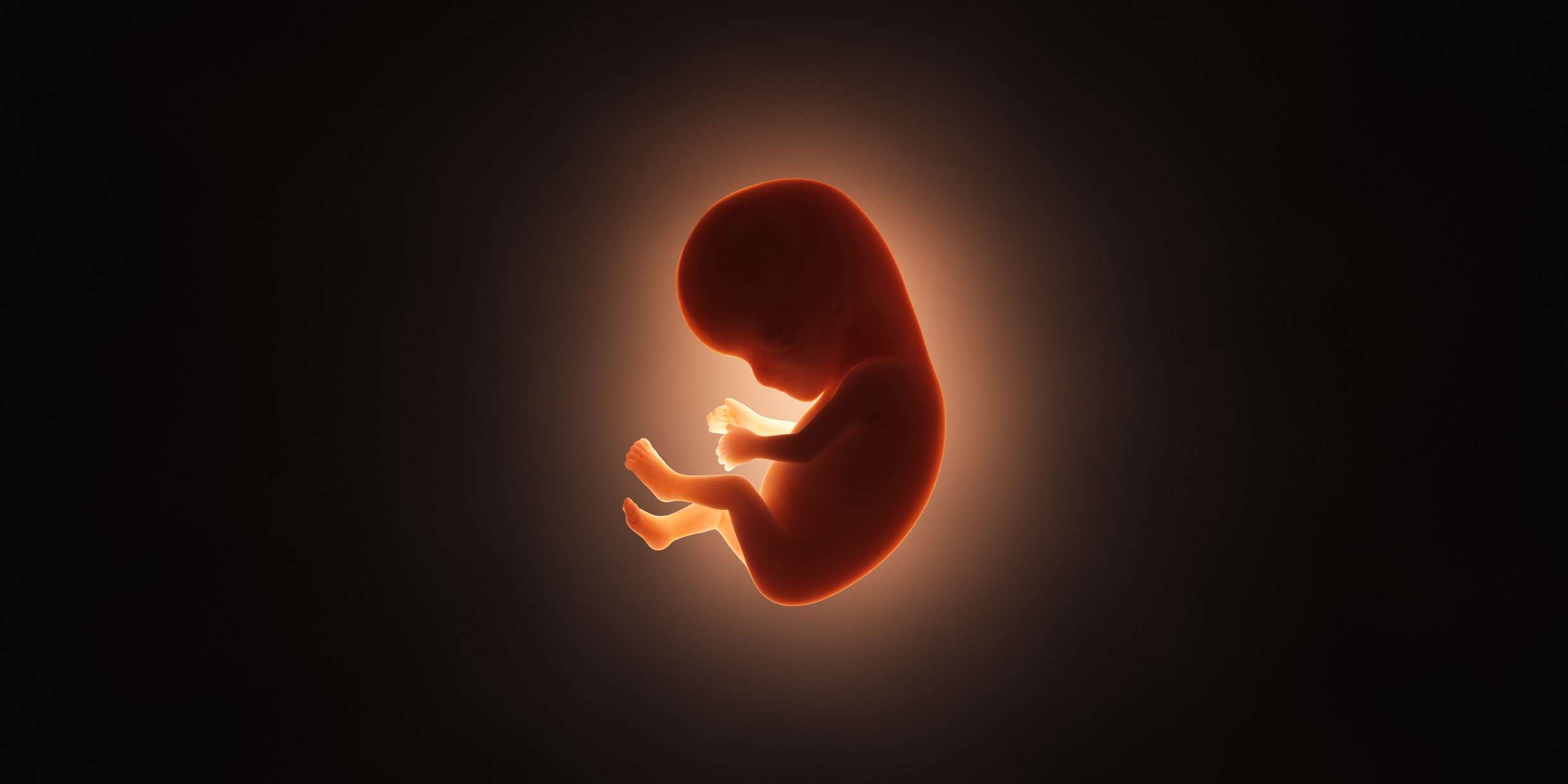
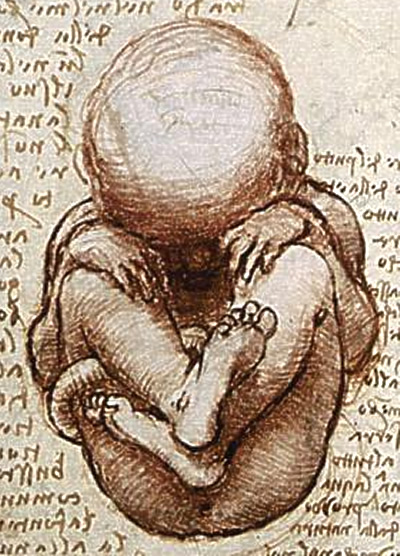
Human EmbryoThere was a time when I was an embryo, a union of sperm and egg, and at the moment of conception at fertilization, I became ensouled by God. This union of two to become one and even three, is one of the greatest transformations in the history of man. Its miraculous occurrence, so numerous, is taken for granted. And yet I, like many, grew hourly, daily, weekly, in the womb, fed by my mother, listening to her heartbeat and the swish of the pool in which I swam.

Then I was born, bursting from the darkness and warmth of my mother’s body, into the bright light of our world, breathing the breath of life.

I grew in the light, the seed of life maturing into an infant and into a child and into a youth. The world around me helped me grow, the many faces of family and community and country. They looked out for me, protected me with law and liberty, and sent me into the wide world to seed my own family.

And so I did, with some rough fits and starts, with failures and successes, with sorrows and joys. I gave birth to a son, an embryo allowed to live within me, fed by me, my flesh and my love and my spirit. My son grew to be a man who seeded a son and a daughter. These events were nurtured by our second family, the Church. For the Church continued the feeding and the growing and the protection promised by Christ. The Church picked me up when I fell down and healed my wounds of body and soul. The Church loved me through my living and my life.

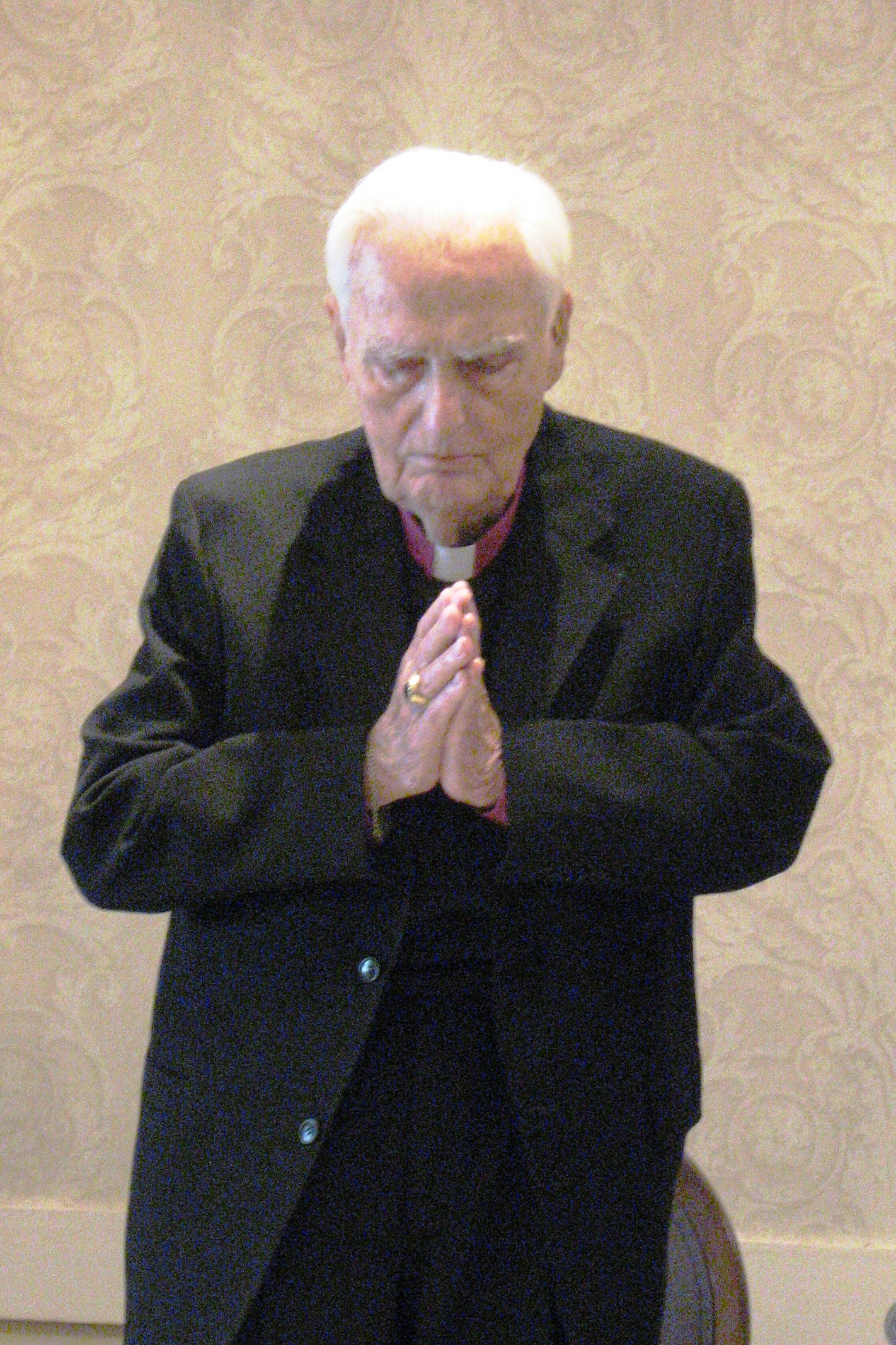
ABP MORSE 2012To be human is to be wounded. To love is to be scarred. But we are rewarded by the knowledge of Christ, and we become surrounded and filled with his mysterious glory, his glorious mysteries. To be human, we learn, is to love as God loves us, his own.

And so we pray this day for many things, but we pray, above all, “Thy will be done.”

And we pray, “Show me thy will.”

A friend posted a prayer online, an asking, a petition to God, for all of us to offer. I am working on memorizing it, for I find if I can write the lines on my heart, engraft the words onto my soul, the prayer becomes food to enrich my days. We shall see how far I can travel this road of joy.

Here is the part I think I have down:

  1. “Let all of us, all our children, our children’s children, and all our future generations, know Christ fully and enter into Thy kingdom now to live with thee forever. Amen.”

The rest of the prayer goes like this:

  1. Lift, O God, any veil from our minds, and bring us revelation and enlightenment in all things. Amen
  2. May Thy Holy Spirit cover and protect us daily, with mighty angels and the prayers of saints. Amen
  3. Send godly people into our paths, examples of life in Christ, sharing with us the joys of true faith. Amen
  4. Defeat all that exalts itself against the knowledge of Thee, with all pride and rebellion, witchcraft, sexual deviance, and worldliness, increasing all that exalts Thee in each of our lives daily. Amen
  5. Drive ungodly thoughts and evil habits from us, and let only good and profitable thoughts and behaviors remain. Amen
  6. Bind Satan and prevent him from taking us captive through deceitful lies, and may the truth of God prevail to set us free forever. Amen
  7. Give us to wear the full armor of God: Thy Truth, Thy righteousness, Thy peaceful Gospel, Thy Salvation, Thy Faith, Thy Spirit and Thy Word in each and over every facet of our lives: may we stand in Thee and prevail, to Thy glory O God, through Jesus Christ our Lord. Amen.

birdI want to know Christ fully. I want to know his voice. I want to share with others this knowledge, to plant more seeds in fertile soil, to grow to the light, to be birthed into the sunshine, to be watered by the skies and inspired by the Holy Spirit as he breathes upon us. To fly.

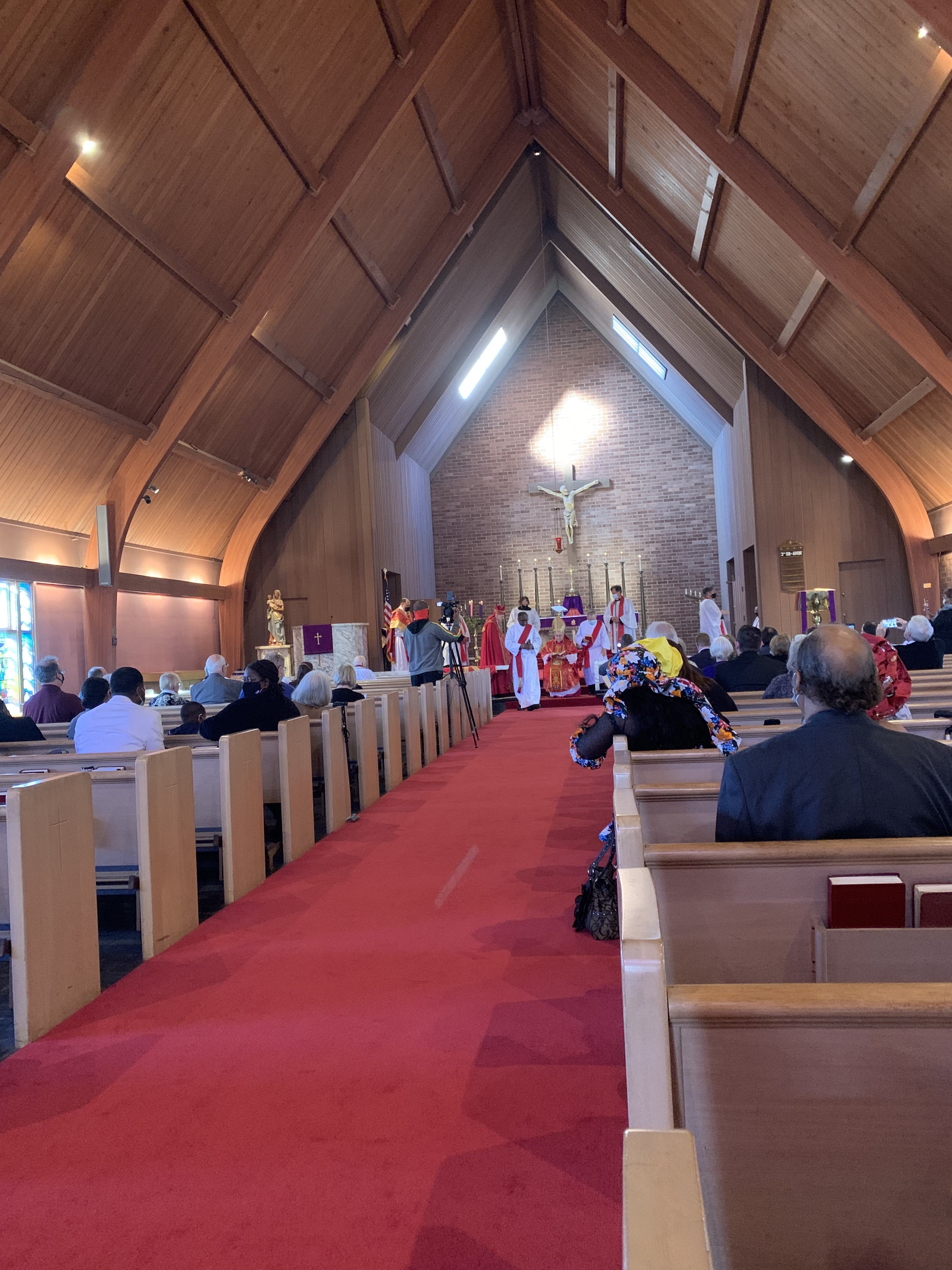
And I have found that in church, sitting in a pew in the marvel-ous ark that protects me as I sail through this world of time, I am shown Christ more fully. I am with others who share this hunger for God, others kneeling alongside and in front of me and behind me, others who will receive the Real Presence of Christ at the altar rail with me, others who will share their joy later as we chat, then step out into the world together.

I am not alone. None of us need be alone. We have Christ and we have his Church. We have such a bountiful harvest all around us, life beginning in the womb, souls ensouled at the moment of conception, babies born into the light of day. We have been given so much, we must share much too, and we must protect and feed that which we have been given.

“Be ye doers of the word, ” St. James tells us in the Epistle today, (St. James 1:22), “and not hearers only, deceiving your own selves.” And in the Gospel, Christ promises, “Whatsoever ye shall ask the Father in my name, he will give it you.” (St. John 16:23)

woman-praising-on-god-illustrationAnd so we ask the Father in the name of the Son, to protect our little seedlings that are growing toward the light in the dark womb, sheltered by their mothers. We ask, “Thy will be done.” We ask, “Show me thy will.”

We must protect precious life from death, at every stage; we must pray for our unborn children in these Rogation days, this season of asking. We must pray for our children and our children’s children and our future generations, that we may enter the kingdom to dwell with Christ forever. Amen.

May Journal, Fourth Sunday after Easter

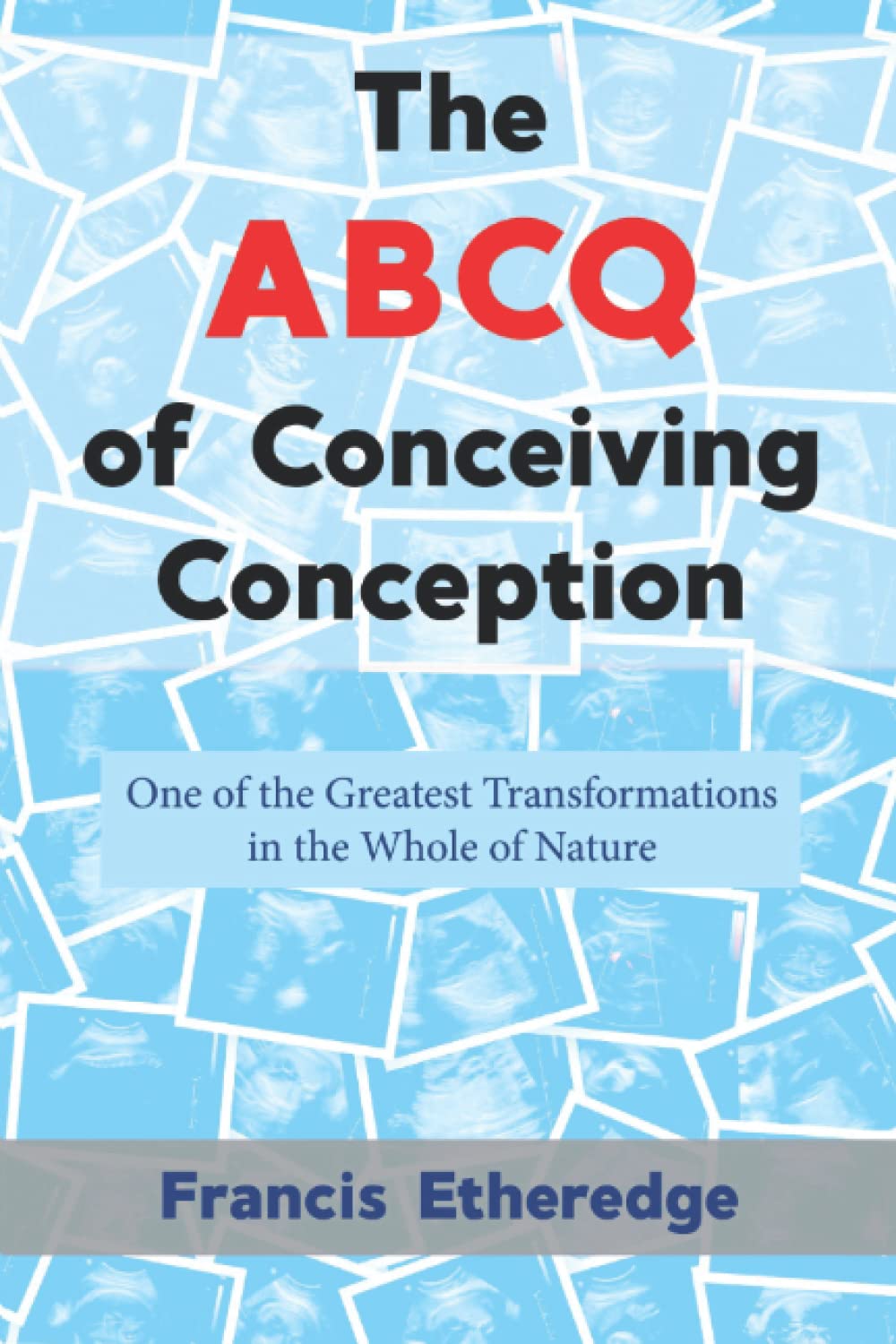
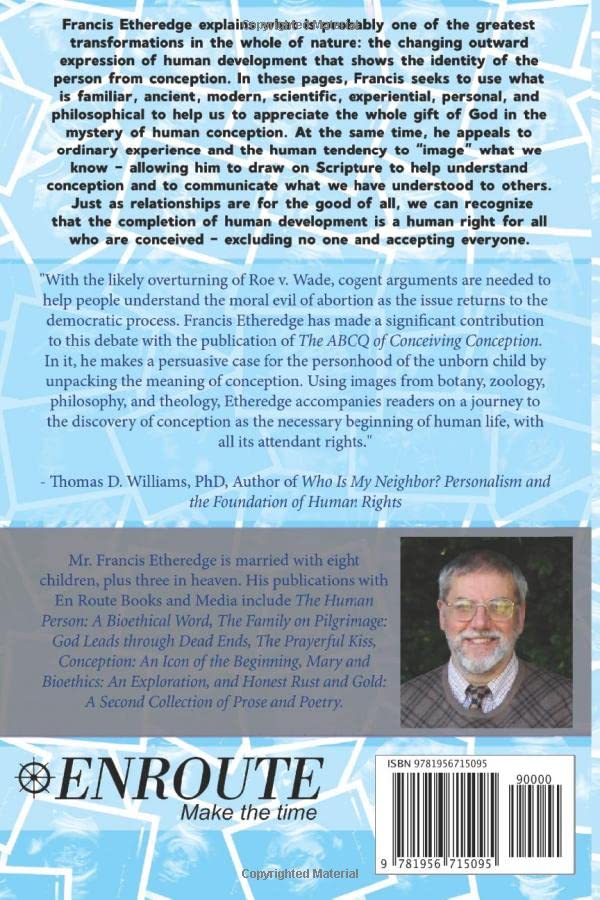
ABCQ FRONT COVERI am reading Francis Etheredge’s latest book, just released by En Route Books and Media, the ABCQ of Conceiving Conception. While I needed no argument to know when conception occurs, at the moment of fertilization, it is valuable to have a philosopher’s scholarship to back up my natural instinct and common sense conclusions. I hope to review this title in the near future.

He speaks of beginnings. What is, had a beginning, by definition of existence. All human life is sacred, he claims, from conception to death, for all human life reflects the Creator, God.

Bioethics and its demands upon human reason are insisting we take a closer look, reach for a deeper understanding of human life’s beginnings. With the scientific tools we have today, we know more, we see more. We see movement in the womb, reflecting life. ABCQ BACK COVERWe see reality in all of its mystery and glory. Some of us are blind, choosing not to see. But we must not turn away from this reality. We must face the ultrasound images, as loving, responsible, men and women. After all, we have been given our own gift of life. We are accountable. We will be judged accordingly.

The Supreme Court of the United States will be weighing in on allowing citizens to vote on the legality of abortion, considering this new scientific information detailing the living embryo, the living baby in the womb. When Roe v. Wade was decided in 1973, allowing this right to kill our unborn children, we didn’t have such tools. Times change and knowledge advances and today we must allow citizens to weigh in on these vital decisions of life and death. Abortion will not be outlawed with a reversal of the Roe decision, but it will be a matter for voters to decide at the state level, rather than unelected judges at the federal. This, after all, is what freedom means, what elections mean, what our republic is all about, or should be. We should all have a say in this.

I was recently introduced (through Francis Etheredge) to another bioethicist, Dr. Monique Robles, a pediatric critical care physician in Colorado. She blogs about these scientific/medical issues at Human Dignity Speaks. Not only is her website a beautiful one, but she speaks with authority, with not only facts but from her own experience. Her data is mined from her work as an Associate Scholar with the Charlotte Lozier Institute, Science and Statistics for Life, another site highly recommended.

These connections, all occurring so close to Mother’s Day, in May, Mary’s month, point to the work of the Holy Spirit connecting us once again, forming networks of Christians who see it is time to connect, re-enforcing one another, encouraging one another, and sharing the engrafted Word we have been given, to choose life.

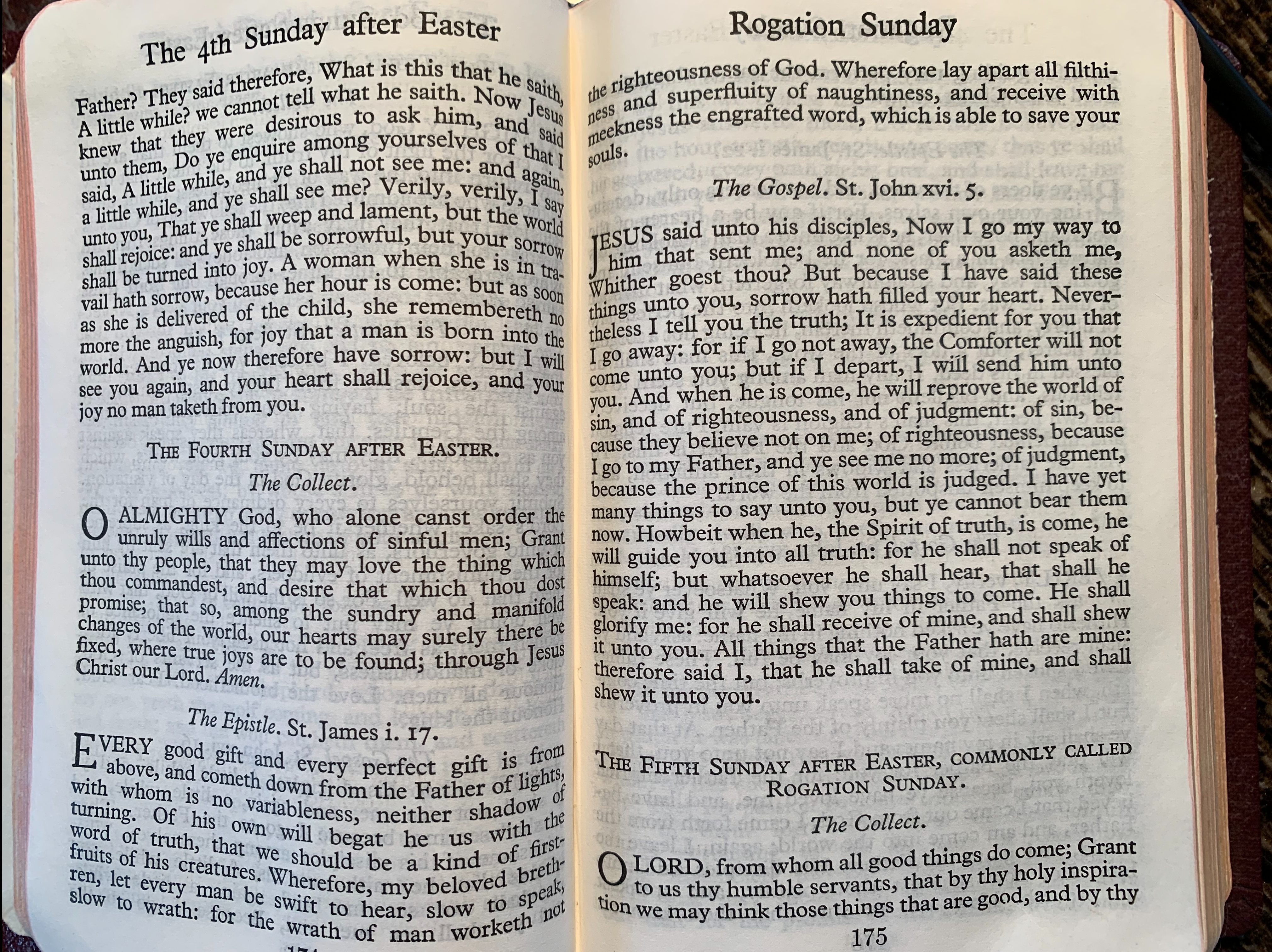
IMG_5144And so I smiled this morning when I heard the lovely Epistle by James (1:17+):

“Every good gift and every perfect gift is from above, and cometh down from the Father of lights, with whom is no variableness, neither shadow of turning. Of his own will begat he us with the word of truth, that we should be a kind of first-fruits of his creatures.”

So we were created with the Word of Truth, the engrafted word, “which is able to save your souls.”

And Christ in the Gospel of John speaks with loving care to his disciples (John 16:5+). This is the risen Christ, the Jesus Christ who appeared to his frightened followers in the locked room, who showed his wounds to Thomas in proof, who appeared to the two in Emmaus at the breaking of the bread, who joined the disciples on the shore after helping them with their catch of fish and told Peter, “feed my sheep.” This is the Christ who must teach us slowly and lovingly each day, carry us on his shoulders the next bit of path, protect us from the beasts seeking to devour us. This Christ tenderly explains he must leave his disciples once again, so that the Holy Spirit of Truth will come to them and guide them into all truth.

Views_of_a_Foetus_in_the_Womb_detailWe are to be gifts to one another, good and perfect, if we are to allow the Holy Spirit to work among us, connecting us, fortifying us, filling us with the knowledge of God and his love. For it is the love of God that creates that miniscule embryo; it is the love of God that recreates each one of us; it is his Word expressed in Christ that we engraft upon our souls, that we feed upon in the Eucharist.

Looking back over the last few weeks, I see so many good and perfect gifts given to us. We must share them with others. We must breathe life into our world of death, engrafting Christ upon our souls.

May Journal, Third Sunday after Easter, Mother’s Day

Advent 2It is a truth once universally acknowledged that mothers deserve praise. They carry us in their bodies for nine months, beginning the nurturing that will last through adulthood and beyond. They give birth, a remarkable feat we take for granted. They nurse and cleanse and cuddle and teach. They sing and comfort and discipline and protect. They love us. They reflect and deflect the world out there, good or ill.

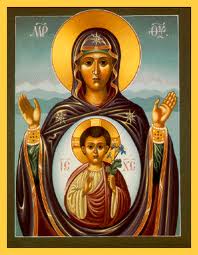
May is Mary’s month. We honor Our Lady Mary, Mother of Jesus, Son of God and Savior of the world. We have painted her portrait and gilded her image and lit candles before her as we pray for intercession, for help here on Earth, help with our own mothering, our own families. 

Not all mothers are good and kind and loving. Not all mothers have or desire the gift of mothering, but one hopes they might try. Some mothers abandon their children; some curse them; some abort their babies before they take their first breath. Some mothers, as their children grow to adulthood, scorn their choices and beliefs. Some mothers call these choices and beliefs deplorable, following the siren songs of the times.

marriage and familyIt was my fortune to have a good mother who raised my sister and I in an intact family, with our father present in our lives. We had a childhood of pleasant memories: swing sets and slides and tree forts; piano lessons; baking oatmeal cookies; riding the bus to school and returning home to a mother who created a stable and safe homelife. There were lots of books and reading to one another and singing together. I am grateful.

There are also women who are good mothers, who mother, who aren’t biological mothers. I found this to be true in parish life. As a single parent with a four-year-old son these older women mothered us, at a time when my own mother was unavailable. The church breathed life into our fragmented family. The women embraced us. We were not alone.

Today, I recall these women: Elizabeth, Willa, Janet, Lucille, Cathy, Kay, and many more. Most have passed into Eternity, and it is my turn to mother those younger than I in our parish. It is my turn to offer concern and care and prayers for these adopted children of mine in the family of God. It is my turn to love the next generation, to mentor, to show the way to Eternity.

These many mothers, all the women of the Church, Mary’s beloved, offer answers to life’s perplexities in their soft embraces and welcoming smiles. They open hearts to God, to His Son, allowing the Holy Spirit to work within the parish family as we pray, sing, and say the holy words learned by heart, words residing in our hearts. We sing and speak as one voice, in this, His, creation, the Church, the Bride of Christ.

IMG_5007The Church is also Mother Church. She embraces her children, protecting them from storms outside and fortifying them to re-enter the tempestuous world. The Church an ark, a boat sailing through the world in and through time. The ark carries its precious cargo, its faithful, within, as a mother carries new life in her womb. The Church is a mother, creating a safe and loving home.

In our world today families fragment as mothers no longer mother. Fathers father and flee, leaving mothers to parent alone. Mothers and fathers, upon conceiving children, often abort them, with little understanding as to what they have done, taken a human life, a tiny innocent baby.

candleAnd so we celebrate mothers, mothers who truly mother us all, with their example and their devotion, with their selfless sacrifice and their love. We celebrate those who choose life, who understand the immense honor of carrying life within, bearing and birthing, caring and nurturing. To be a mother is a great joy, for love is unconditionally promised and greatly rewarded. We birth the new generation, the future of mankind. We nurture these children, raise them up if they fall, so that they desire to choose life and not death, to fill them, full-fill them, with the love and life and light of God, as they travel the way to Eternity.

May Journal: Second Sunday after Easter, Good Shepherd Sunday

Christ the Good ShepherdToday is Good Shepherd Sunday, the Second Sunday after Easter. We listened to a comforting Gospel, John 10:11+, for Our Lord says he knows his sheep and his sheep know his voice. He will lay down his life for us. He will gather us into one fold one day. And there are sheep not of this fold that shall be gathered. And “there shall be one flock, and one shepherd.”

One wonders naturally who the other sheep are, and perhaps they are the People of Israel, or other Christians, or pagans on the way to becoming Christian. Perhaps we, you and I, are the other sheep.

And so we listen for his voice. How will we know our good Shepherd’s voice? Through Scripture, Sacrament, and song; through other Christians; through regular worship in church; through prayer and practice. We desire to immerse ourselves and our souls in this wellspring of Word, His voice.

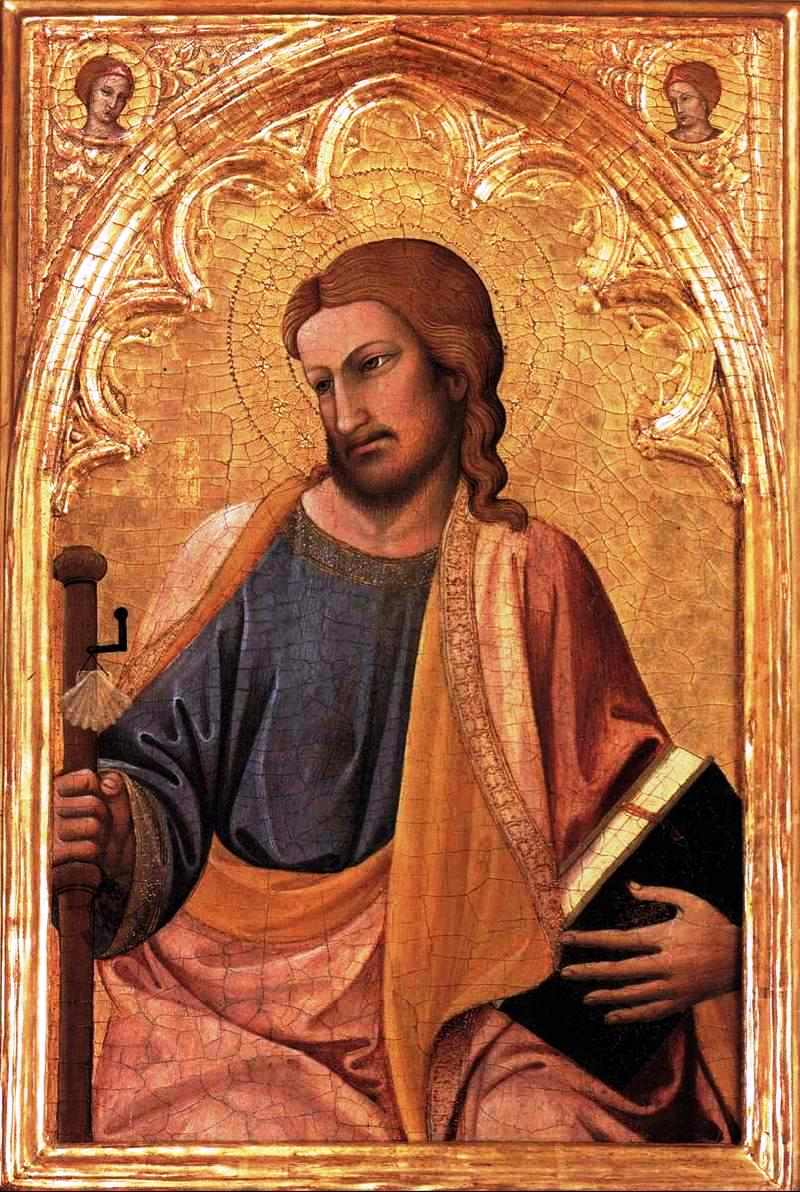
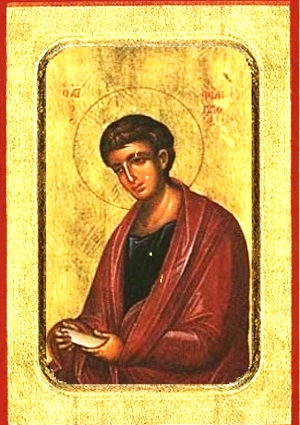
Today, May 1, is also the Feast Day of St. James and St. Philip.

James ApostleJames tells us in his epistle (James 1:1+) today that we must be unwavering, for the double-minded man is unstable, “for he that wavereth is like a wave of the sea driven with the wind and tossed.” The command is clear, if a bit stern, and in itself, unwavering and single-minded. And so we pray for faith, abundant and unwavering faith, in these times of turmoil.

PHILIP APOSTLE.edPhilip is mentioned in the Gospel for this feast day, May 1 (John 14:1+). It is Philip whose faith wavers, or perhaps he simply can’t grasp the truth in front of him. Christ is explaining about Heaven, and the “many mansions.” He tells us He is the Way, the Truth, and the Life (in answer to doubting Thomas), the only way to the Father. Philip says, “Lord, show us the Father.” Jesus asks why Philip still does not recognize his divinity: “I am in the Father, and the Father in me,” he explains patiently, and his voice is full of love for his children.

So many of us waver, unseeing, unbelieving what is right in front of our eyes. Our minds are a bit scattered and fragmented by our world and its daily challenges. Louder voices claim our attention. And so we pray for sight – insight – that we may recognize Christ, when the time comes for our Shepherd to bring us home.

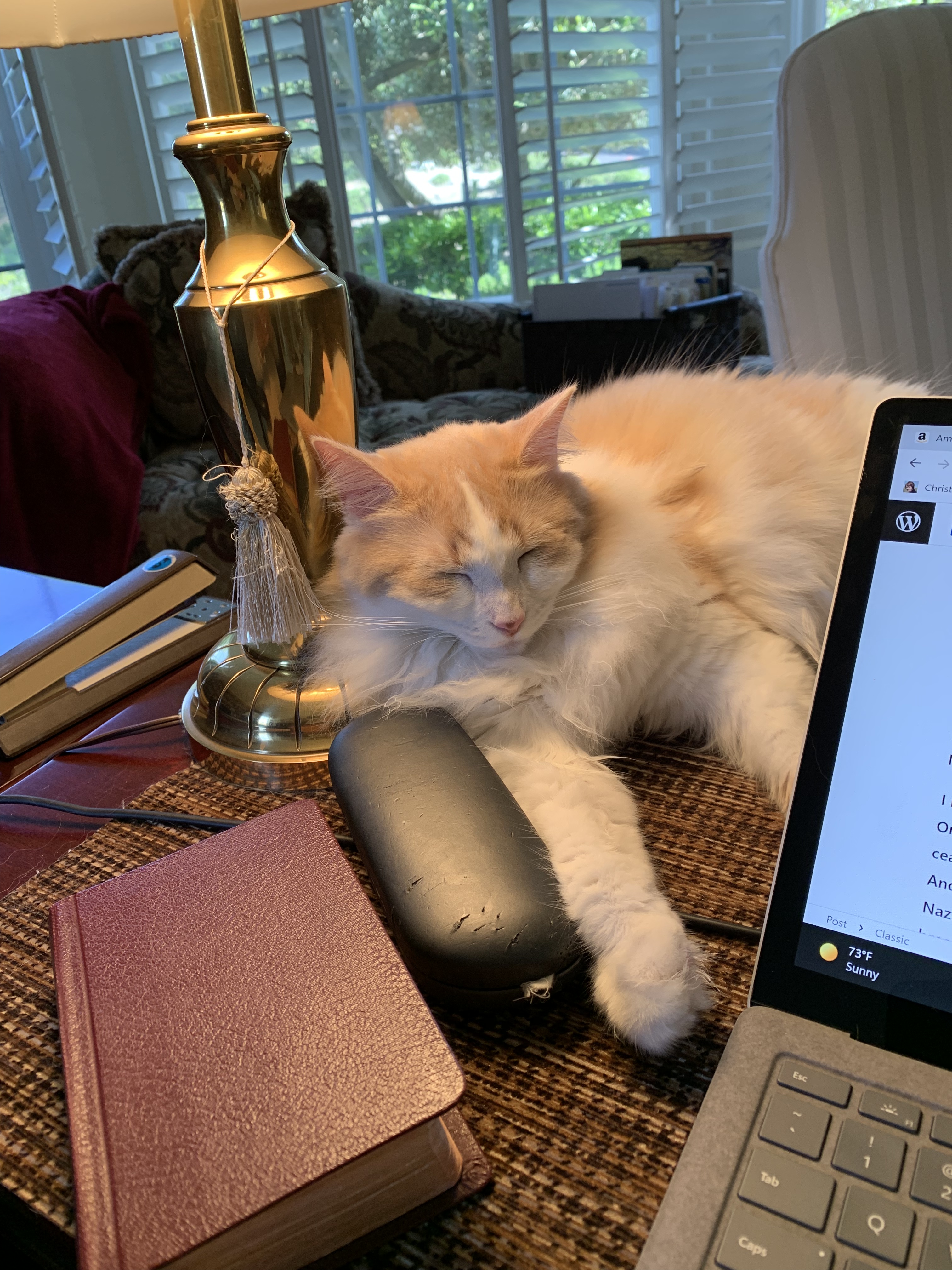
IMG_5135The afternoon sun is glancing off the silvery olive tree outside my window. A breeze is stirring an oak tree beyond and the wild green grasses sloping to the valley below await their yearly trimming, for we live in fire country. I look around. What else have I missed today? My cat has curled up behind the warmth of my laptop, her head resting on my glasses case (she had been resting on Bishop Morse’s prayer book, until I opened it to read.)

61Qpp9BZDOLI recently reviewed Francis Etheredge’s collection of prose and prayers, Within Reach of You (Enroute), in this space. One gift given in this book is the vision of being in God’s presence at all times, by praying without ceasing, or even having this intent. For Mr. Etheredge writes that simply the intent to pray opens a space for God to enter and dwell with us. And so I pray the Jesus prayer as often as I can remember, breathing the Name in and out as Father Seraphim and Vicki of Nazareth House in Kentucky taught me. I have adopted this habit over the years, breathing the Name, and now I realize that this opens the space for Our Lord to be present. This places us within reach of Him and He within reach of us. I find this immensely comforting and gratifying and joy-inspiring, all brought to me by an British theologian (with a family of ten) and my Kentucky hermits (with the whole world their family).

How simple it is to unite the Holy Name to my breathing. I cannot live without either.

For we are creatures of flesh but also mind and spirit, and the three are one, in you and me. It is true these will separate at the moment of death, but they will also be reunited, later in Eternity, in holy perfection.

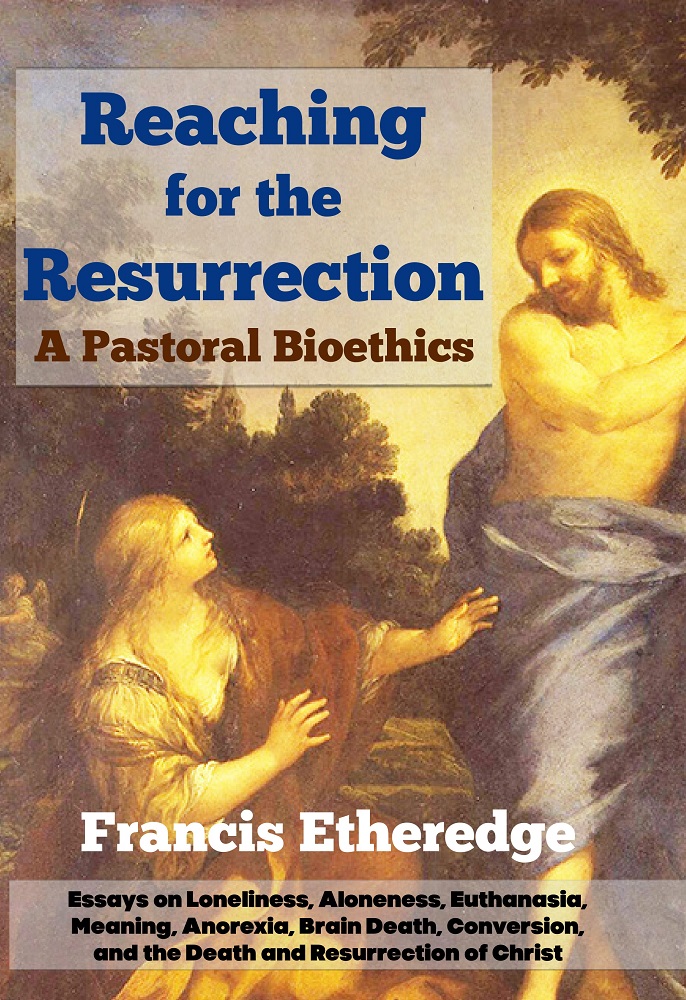
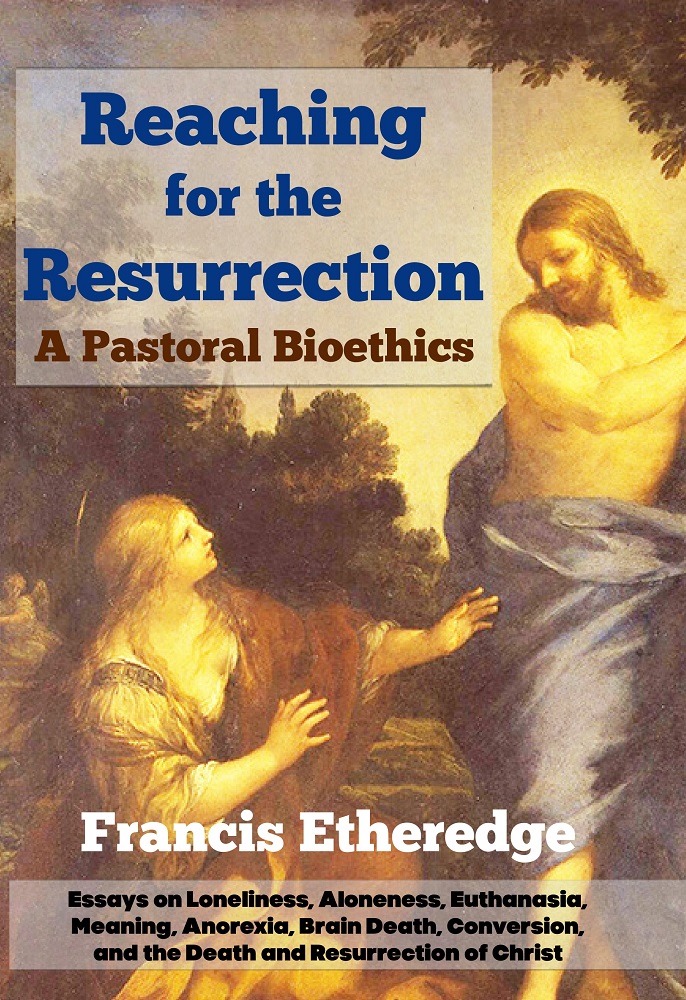
Reaching-for-the-Resurrection-Web-Cover-050122I recently read an early copy of Mr. Etheredge’s new book, soon to be published, Reaching for the Resurrection: A Pastoral Bioethics, to provide an endorsement. He writes about this very idea, that we are one person – body, mind, and spirit. But our materialist world seeks to divide our human person, resulting in loneliness, anorexia, suicide, abortion, and euthanasia. The materialist says this is all we are, mere matter; there is no meaning to life; there is no purpose.

It is up to us – Christians listening to Christ, hearing the Shepherd’s voice – to counter these materialist claims, to give meaning to lives of despair, purpose to pain, and salvation to souls who cannot walk on water, cannot reach Christ’s outstretched hand. They are wavering and unbalanced.

There is a lovely prayer I sing to my cat Angel when we turn out the light each night. Actually, I sing it to Our Lord. It is written by Fernando Ortega, and I hope he doesn’t mind my sharing a bit of it with you:

“Jesus, King of Angels, Heaven’s light/ Shine Your face upon this house tonight./ Let no evil come into my dreams./ Light of Heaven, keep me in your peace.

With all my heart I love You, sovereign Lord./ Tomorrow let me love you even more!/ And rise to speak the goodness of Your Name,/ Until I close my eyes and sleep again.

Jesus, King of Angels, Heaven’s light/ Hold my hand and keep me through this night.”

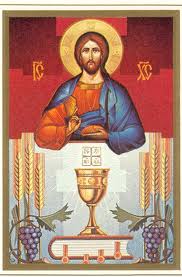
Eucharist Corpus ChristiTo know the voice (and the song) of Our Lord we must hear it often, interweaving the many graces given to us, all around us, the many Christians who help us hear him. Take these simple baby steps: go to church, minimum weekly, better more often; read the Gospels; read other Christians who witness to Christ; immerse yourself in the Eucharist, being fed by Christ’s Real Presence in the Mass, a beautiful poetic prayer, a medley of Scripture and song that opens a space for God to dwell within you (and me).

I think I am more like Philip than James, and I pray that if I keep asking, keep breathing his Holy Name, Christ will be with me always, even until the end of the earth.

Deo Gratias.

Praying into the Presence of God

61Qpp9BZDOLWithin Reach of You: A Book of Prose and Prayers by Francis Etheredge (St. Louis, MO: En Route Books and Media, 2021, 260 pp.)

Reviewed by Christine Sunderland

When do prayers become poems and poems become prayers? When they are addressed to God who is present and listening. In Francis Etheredge’s third volume of his trilogy of prose, poetry, and prayer, he turns prayer into poetry and poetry into prayer, shining light onto words as pathways into the presence of God. As in the previous two volumes, he introduces the prayers with meditations.

In Mr. Etheredge’s first volume in this trilogy, The Prayerful Kiss, he writes of his personal journey from sinner to saved, and in this search for meaning and forgiveness, somewhat like the prodigal son, he meets God (or God meets him?) and is reborn, now seeing all life as sacred. In the second collection in the trilogy, Honest Rust and Gold, he journeys deeper into the action of God’s grace upon us and within us, recreating us through the sacraments of the Church as we are baptized in Christ’s love.

In this third volume, Within Reach of You: A Book of Prose and Prayers, prayer becomes poetic, as it weaves the eternal into the mortal, life into death. Prayer becomes the true desire of poetry, to reach for God and touch the holy, reaching for words that describe the indescribable, that explain the unexplainable, through metaphor and image. For we live within the created order, a sacred but fallen world, just as we are sacred but fallen. We must use words to touch the sacred, to sing of glory to our fallen world.

Thus, we reach for Christ in these prayers, entering a holy space. As seen in the cover image, we reach for the Host, the Real Presence of Christ in the Eucharist, offered to us, within our reach. The title is two-way, perhaps: Christ is within our reach, and we are within the reach of Christ, through prayer, through sacraments, through the Church. This intimate touch is personal, for, like Moses, we stand before a burning bush, one that does not burn up or burn us, but gives us light to see, enlightening us, loving us. In this light, we see our way forward:

“What is Prayer? Prayer is immediate because God is present…. Prayer is personal – because it arises out of each person’s life; and prayer is communal because we pray with all who pray for all who need prayers… we are speaking to one who listens; and, whether we use words or not there is prayer in the intention to pray. Prayer is challenging because it may not be answered as we ask…. Prayer is for the smallest need and the greatest common good. Prayer excludes no one and includes everyone…  prayer makes it possible for us to accompany both the living and the dead into the presence of God.” (xxviii-xxix) (italics mine)

And so the trilogy moves from a personal pilgrimage into faith, to faithful participation in Christ’s Church, and lastly to praying for the world, past and present and future, the living and the dead, the communion of mankind, as we can only pray when we are in that space in reach of God.

Prayer, we see, is rooted in our daily life, in our family life, in our parish life, in our community life, and in the suffering life of the world. Prayer gives “flesh to the daily, ordinary or extraordinary situations out of which prayer arises” (6). In this sense we pray without ceasing, placing us always in God’s presence: “He is present to all that we do” (31). He works daily miracles in our lives. We need only reach for him, watching and praying, and, in a sense, allow him the space to work his will in us, “making possible the impossible” (34). In Mr. Etheredge’s prayer-poem “Pilgrimage,” he prays, “You know how your word passed through my life to the core/ Of what I wanted: ‘I come to give you life and life to the full’” (cf. Jn 10: 10) (35). Indeed, we are full, fulfilled, fulsome when we are in the presence of God.

Rooted in the real world, prayer can be simply “blessing God for the splashes of life” (41) that we see all around us. It is true, I have found, that simply giving thanks opens that space for God to reach us. And there are always reasons to give thanks – for life, for breath, for each day given, for my cat (!), for my family, for… Christ himself amidst the splashing life all around me. Indeed, I give thanks for being in reach of God, he in us and we in him.

Mr. Etheredge soon moves beyond the natural world rooted in family and the earthy Earth, to the universe. We see how faith and reason blend, supporting one another, reflecting the creation and the Creator: “Who knows how the universe goes, whirling and twirling and/ Curving through elliptical twists and turns, burning here and/ Freezing there, gaseous and solid, but solidly dynamic and moving,/ Cascading and still, still as staying in one place while moving… ” (51)

With these profound echoes of T. S. Eliot, we journey into the creative Word of God reaching and touching us, in time, in Scripture, in history, in people in our midst. All these Words of God speak to those who witness with their words, witness to the manifold works of God in our world and in our hearts: 

“Take us as we are, where we are, with whom we are and open our 

Lives to your word, mingling your word with our lives, like the 

Mingling of water and the Holy Spirit through which you come to 

Dwell in us, opening up the wells of salvation sunk in the union

 Of our Savior, Jesus Christ, with each one of us, when the word 

Became flesh (Jn 1: 14) and entered the whole of human history 

Taking my history and yours and making of it the history of salvation (56).” (italics mine)

In this precious collection of prayer-poems we pray for our wayward culture, today’s culture of death. It is a culture that must be baptized by the Holy Spirit, to assert good over evil, truth over falsehood, love over hatred. And so, we pray, come Holy Spirit, bathe our culture with Christ’s love and all life, from conception to grave. We pray that we humans humanize our race by embracing our beginnings at conception, cherishing our unborn: “There must be in the heart of all a desire to improve the life of the nation; indeed, to be a part of progressing the welfare of all. For, without peace, who can build? Without truth, who knows what is happening and what needs to be done? Without love, what good will there be for any of us?” (218) (italics mine)

In prayer, God grows within us: “The presence of God, then, while always and everywhere true, is at the same time like a seed-to-be-perceived and, therefore, grows through prayer, the life of the Church and our enfolded, unfolded living of it. So, while our weakness may increase, it only increases to magnify the power of the Lord and our hope in Him” (251). (italics mine) 

And so much more…

Within Reach of You places you and me in God’s presence. For when poetry becomes prayer, we are given a great gift: not only the vision of God, but a personal God, a present God. Our beginnings and endings and beginnings again as we enter eternal life are found and founded in the love of God the Father, God the Son, and God the Holy Spirit, in this world without end. Amen.
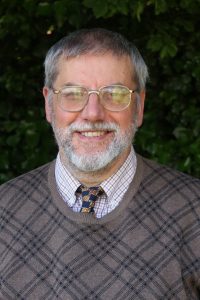
francis.etheredge-200x300

Francis Etheredge is a Catholic theologian, writer, and speaker, living in England. He is married, with eight children, plus three in heaven. Mr. Etheredge holds a BA Div, an MA in Catholic Theology, a PGC in Biblical Studies, a PGC in Higher Education, and an MA in Marriage and Family. He is author of 11 books on Amazon:

Amazon UK

Amazon US   

Visit Francis Etheredge at Linked-In for book news and blog posts.

PRESS PIC small

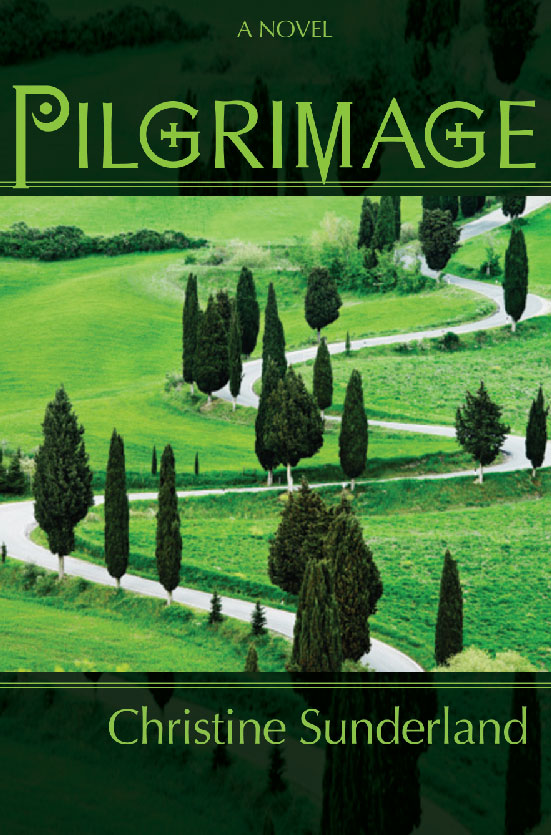
Christine Sunderland serves as Managing Editor for American Church Union Publishing. She is the author of seven award-winning novels about faith and family, freedom of speech and religion, and the importance of history and human dignity. She lives in the San Francisco Bay Area with her husband and an incredible white longhair cat named Angel.

April Journal, Easter Sunday: Resurrection

RESURRECTION (3)Christ is risen, he is risen indeed!

He has conquered death, raised the dead, and will raise us too. We reach for his hand, and he carries us up, now and at the end of time on Earth, our time and all time. In his death, is our life; in his life, our death dies. We need only reach for him, touch his wounds, say yes, Lord, I believe. Yes, Lord, take me with you. I am yours. Remember me in Paradise. Remember me now and forever. Hold me close until the morning breaks, when dawn lightens our world of worry and war.

Easter, and the weeks preceding, give us hope. They remind us, in the re-enacting of these events, of the great drama of salvation. This life, we see, is a prelude to our true life to come, a preface, a hint of the eternal joy Our Lord promises.

Last Sunday, Palm Sunday, we entered the gates of Jerusalem, alongside Our Lord on an unridden colt, a pristine colt we are told in one Holy Scripture account. We waved our palms, following the procession out the side door, through the parking lot, along Bowditch, turning at Durant and assembling before the red chapel door. Our good priest knocked on the closed door, re-enacting the entry of Our Lord into the holy city. We entered, to tell the story of the great events that were soon to come.

Resurrection Of Jesus Empty Tomb drawing image in Vector cliparts category at pixy.orgAnd so today, after re-enacting the drama of Holy Week – Maundy Thursday and the institution of the Holy Eucharist at the Last Supper, the Good Friday arrest, trial, and crucifixion of Our Lord on a hill outside the gates, the deathly silence of Holy Saturday and the evening lighting of the paschal candle, the world waiting for rebirth, for resurrection – we find Mary Magdalene discovering the empty tomb and meeting the resurrected Lord of Life.

Throughout the week we read the witness accounts of these events again and again in the Gospel readings appointed for each day. It is a kind of “harmony” of the Gospels, a side by side, day by day vision of the personal testimonies of St. Matthew, St. Peter (told by St. Mark), St. Paul (told by St. Luke), and St. John. Each emphasizes a unique witness, as would be natural, yet all re-affirm the key events that would change the world forever: the crucifixion, death, and resurrection of the Son of God.

IMG_5132Easter holds hope within it. Dawn breaks on an early spring morning, and we assemble in church to sing well-known Easter hymns, flower a white cross, drape a white mantel over the now visible crucifix above the altar. Gone are the purple shrouds of Passiontide, those weeks leading to this moment of joy. We too bare our souls, removing the shrouds of death and despair, as we don the garments of life and joy.

There is a tradition of baptism on Easter Eve. Just so we are rebaptized with every Eucharist and every Easter. We recall this glorious gift of salvation every Sunday, but Easter is the glory of all glories.

Our fallen world needs hope, will always need hope. Christ gives this hope, seeding his love in our hearts. He waters the seed and it grows within us, if we desire it. In time, the Creator recreates us, again and again. He loves to create, this Lord of Life, create us as we are meant to be and become. We sense this, even those who say they don’t believe, through pride and self-delusion. We all sense there is more to life than mere matter, that mere matter isn’t mere, but holy in itself, created by the Creator, the Lord of all.

And so we say, “Christ is risen, he is risen indeed!”

April Journal: Palm Sunday

Palm Sunday2Today is Palm Sunday, a major festival in the Christian year. It recalls and celebrates Christ’s humble and glorious entrance into Jerusalem on a colt, to begin the week leading to Maundy Thursday, Good Friday, and Easter Sunday. As Jesus entered the gates of the city, the “multitudes” waved palms in greeting. They spread their garments and branches before him, to honor him. They expected an earthly king but were given a suffering savior.

Just so, all creation is sacramentally intertwined with the story of birth, death, and resurrection. As Christian writers we do the same: we create living sacraments called books. Our books contain pages that contain words, outward and visible signs of inner and spiritual graces. Sacraments make the invisible visible, revealing God to man, Creator to creation, linking us. Our linked and inked words on paper or screen enliven people and places and events, for they are realized in our imaginations, making them visible.

Keeping these miraculous truths in mind, we infuse our earthy words with heaven. We raise a Jacob’s ladder for our readers to climb, so that they experience God in our pages, with settings mirroring heavenly truths. In a sense, each rung the reader climbs is a chapter leading to truth about Man and God.

And thus, while the actions of my characters inform the plot – a spiritual struggle leading to a climax and resolution, hope-full of grace – the places in which they find themselves reflect bits of heaven too. The details of the natural world are vividly portrayed in their drama and beauty, reflecting light or darkness, dawn or twilight. Leaves shimmer, paths beckon, thunder rumbles, lightning strikes, waters pour from cliffs and the heavens. We smell and see, touch and taste, and hear a melody from afar, just as Mary Magdalene did on that first Easter morning as she ran to the tomb, bearing sweet oils to anoint her Lord’s body.

9781602901261-Perfect.inddWho was Mary Magdalene? I recently signed a contract with En Route Books and Media to re-issue one of my out-of-print titles, The Magdalene Mystery, originally published by OakTara in 2013. The story involves a young woman, Kelly Roberts, who searches for the historical Mary Magdalene on a quest devised by Kelly’s late godfather, a bequest meant to pull her deeper into her faith through first-century history and Gospel accounts. What did Mary Magdalene see on that first Easter morning? How do we know these accounts are true? How do we know history is true, especially claims of resurrection from the dead? Are there true reasons to believe?

My characters explore these questions in a journey threaded with suspense and intrigue. They set out for Rome, where they search for clues in basilicas, going back in time to early manuscripts and ancient cloisters. They begin to piece together the puzzle of perception, pulling the past into the present, so that it touches our hearts and minds today. Just so, the present reaches to the past to make this happen. This touching and linking reflects our own reaching to touch Christ and be made whole, just as it reflects his reaching to us as the Good Shepherd.

La Sainte-Baume-provence2010

The second half of the novel is set in southern Provence, with visits to Marseille, Saint Maximin, and the Sainte Baume Sanctuary. The great Sainte Baume massif which straddles the coastline is home to a grotto where it is said Mary Magdalene spent her last days. The grotto is a sacramental setting, for a chapel has been created in the cave, with dripping rock walls embracing altar and pews and flaming candles. The natural world has been tamed by the spiritual, just as man tames passion with spirit, body with soul.

There is a path that leads to the La Sainte Baume grotto, about a forty-minute walk through the forest. It has become a pilgrimage for many. A pathway is also a sacramental setting, for it reflects our own journey through life, from birth to death and new life in Christ. We journey in time, reaching to touch eternity.

Grotto 3-provence2010

Sacramental settings help the author to invite the holy among us. We reach for heaven, rooted on earth. The reader glimpses the created order, our place in it, and God’s actions among us. The Cross, rooted in earth, touches heaven. The horizontal beam embraces mankind. We reach for the Cross as Christ reaches for us.

View from Grotto Chapel-provence2010The eternal shafts its light upon earth, streaming through windows onto stone altars, and our readers reach, like the Magdalene, for the pouring light, to see the risen Christ in the garden. In our pages our readers wave palms and sing hosannas. They too can join the entry into Jerusalem. They too can step through the gates of the holy city. They too can sing, “Hosanna to the son of David: Blessed is he that cometh in the name of the Lord; Hosanna in the highest.” (Matthew 21:9, KJV)

Many Threads Makes a Strong Cord: New Review by Francis Etheredge of The Magdalene Mystery

9781602901261-Perfect.indd

Many Threads Makes a Strong Cord

Review of The Magdalene Mystery by Christine Sunderland, forthcoming from St. Louis, MO: En Route Books and Media, 2022.

Reviewed by Francis Etheredge, April 5, 2022

While the following biblical text is about the danger of encountering a threatening individual alone or, more positively, the benefit of doing so in the company of others, ‘A threefold cord is not quickly broken’ (Eccles 4: 12), it can nevertheless apply at a number of levels to The Magdalene Mystery by Christine Sunderland.

A story, then, that weaves the vulnerable, whether layman or woman, the scholarly, whether honest or unscrupulous, those that follow, whether helpfully or drawn in to doing harm, with an almost liturgical recitation of the Christian Creed as the story progresses through numerous, intriguingly interconnected places and people – is advancing the biblical and streetwise wisdom of not “travelling” alone – but choosing your company well! Indeed, in what can be an anonymous and easily disguised forum for abuse of various kinds, the internet itself needs that open and companionable use to protect even those who are using it to do good; and, again, combating misuse is more about openness and collaboration than the “lone ranger” mentality so advocated in fiction generally.

The book takes us through a series of introductions, indicating each person’s complexity but not necessarily telling all until there is an unexpected twist which takes us into how the dreadful past reaches into the present – just as the magnificent and holy splendour of those who have gone before us can still encourage, inspire and even enable us to hope beyond our debilitating fears. The characters, then, are enthralling and varied people, as well as “unwanted” – not unwanted because of being rejected but because of being unwilling to be drawn out of the heart’s unholy preoccupations. Indeed, it is at once the challenge of the novelist to draw close to the heart of the character but, even where necessary, not to be drawn too far into the details of what does not need to be described; Christine Sunderland, then, does come uncomfortably close to her nemesis but, at the same time, avoids turning too far down the drain.

On the one hand, Jesus Christ said: ‘you will die in your sins unless you believe that I am he’ (John 8: 24). On the other hand, St. John Vianney, hearing the desperate plea of a woman’s prayer about the outcome of her husband’s suicide, answered that “I tell you he is saved. He is in Purgatory, and you must pray for him. Between the parapet of the bridge and the water he had time to make an act of contrition” (p. 122 of Ralph Weimann’s, Bioethical Challenges at the end of Life). The conflict between good and evil, at times played out within a character as between characters yet raises a good number of questions. Does revenge blind? Does escaping detection isolate a person even when they seem to be surrounded by others? Are there limits to the possibility of repentance such that, in the time it takes to die, would it be repugnant, impractical or even implausible to let a person reject their own wrongdoing? What if we consider a person from the point of view of God – does the figure of Mary Magdalene, the forgiven, freed and generous woman of the Gospel, raise the possibility of a different outcome beyond what we inevitably think a person deserves?

Even if, in the course of the book, there are dominating events there is also a golden thread which both entails being led to make discoveries, whether of evidence, personal culpability or faith or their interrelationship with one another, which lights somewhat like a faith flare-trail, taking us out of danger but still requiring our active participation in recognizing where we are at any particular moment and, just as importantly, where we are being led. But perhaps the danger we face is not just a consequence of our own singular, sinful ways, but the possibility of a “victim” mentality “justifying” any kind of action – because of what was done to us. Or, conversely, hiding ourselves so successfully that we do not realize that we are degenerating, somewhat like a living corpse, precisely because what is so well hidden is no longer in the fresh air! Alternatively, drawing on both faith and reason, reason and faith, we can begin to see the evidence of the need for faith and facts upon which faith is founded and, as they come together, see more and more clearly the answer to which they both point. Even so, is the journey of faith through the Apostle’s Creed too simple an account of meeting salvation in Jesus Christ? Or, alternatively, is it a beginning which, like the life of Mary Magdalene, can go to unknown depths of beauty’s radiance? What about evangelization, announcing the Good News that Jesus Christ is our Saviour and Lord of all that afflicts us? But does it always have to be a preacher that announces the love of God to us – cannot it be in that intimate, interior dialogue between God and each one of us that benefits, as well, from the word of witness from those to whom He has drawn close, that that closeness may help others come close to Him?

In between the diverse elements of the book so far, there is also a dialogue about the value of research and the university as an actual place of learning; indeed, if there are fake trails so there are also fact-finding trails too, which may not exactly coincide with “institutional learning” but may be more about the raw school of investigative trails through the past’s presence among us. On the one hand, however, it could be argued that good, principled research will find its way into the academic halls of residence and influence those who can benefit from that; but, on the other hand, has the novel become a way of arguing in the marketplace, like the philosophers of old, to advance a reformation of learning to a wider audience? Is the very presence of the Catholic Church as an arbiter of good practice, a haven for the learned who have come to love God and their fellow human beings, and a sanctuary for those who need it, a place too perfect in view of the reality of human sinfulness? But, again, is the living inheritance of Mary Magdalene’s past a reproach, as it were, that the healing of Christ is to be sought more than the perfection of appearances; indeed, is she a permanent reminder that Christ came for those that need the doctor (cf. Mark 2: 17) – not those who are so unable to recognize their own reality that they cannot see the need to seek Him?

francis.etheredge-200x300Returning to the theme of threads, with which this review began, there are several story threads that make a thoroughly woven account on a variety of different levels and, just as with the knotted back of a piece of embroidery, we do not see the whole clearly until turning over the last page and getting, as it were, the beauty of the whole design! A richly rewarding read from a closely observing writer!

Francis Etheredge, Catholic husband, father of 11, 3 of whom he hopes are  in heaven, author of 12 books on Amazon 2 more due in 2022: https://www.amazon.co.uk/Books-Francis-Etheredge/s?rh=n%3A266239%2Cp_27%3AFrancis+Etheredge

April Journal: Passion Sunday, Fifth in Lent

ABP MORSE 2012My late Bishop Morse of blessed memory often said that “Passion” in the context of Passion Sunday is the combination of love and suffering. The root is pati (Latin), meaning suffering or enduring. It is curious that today’s meaning retained the idea of love that is found in the Passion of Christ. The lives of the early Christian martyrs were called passio. In the Middle Ages there were Passion Plays depicting these last two weeks of Jesus’ sufferings before his crucifixion. So Christ suffered out of love for us, and this abundant love is good to recall as we enter today the Way of the Cross, leading to Palm Sunday and Holy Week and Easter.

Christianity infuses the sufferings we experience with love, giving them meaning and purpose. As Christians we offer our sufferings to Our Lord to be one with his own on Good Friday. Our fallen world is full of suffering. If you live long enough you will see it all around you and will most likely experience it yourself. My bishop also often said that to love is to suffer. While at first that seemed strange to me (I was too young to understand), I now sense what he meant. For true love, both brotherly and marital, is the sacrifice of self for another’s good. When we give to our brothers and sisters a portion of our worldly possessions through tithing or time or charity, we do so at a sacrifice to ourselves. If we don’t experience this, we aren’t giving (loving) enough. (And that was another saying of Bishop Morse, “I always confess that I have not loved enough.”)

We are told by the Church to “offer it up.” Offer our pain to Christ in the moment, and he redeems it. I have found this to be true again and again.

440px-Giotto_-_Scrovegni_-_-31-_-_Kiss_of_JudasThere are times when we are betrayed just as Our Lord was betrayed by one of his disciples, and even ironically with a kiss. It is a double suffering, it seems, when a friend or loved one betrays your trust in them. When they gossip about you or even slander you. I try and watch my tongue (funny phrase) and not be guilty of this easy sin as often as I am tempted. When betrayal occurs by a clergyman, be they pastor, deacon, priest, or bishop as has happened since beginnings of the Church, the suffering is acute. I understand the pain of those who have come forward to testify past sexual abuse by clergymen, for the trust placed in them is often God-like, absolute, and the abuse of this trust is as bad as the actual abuse if not worse. Often, these victims never darken the door of a church again and live lives of silent and bitter judgment. They have been twice maimed. And such betrayal is a betrayal of the entire Body of Christ as well.

Someone once said that power corrupts and absolute power corrupts absolutely. Teachers and clergy and those in elected office, given a forum of adoration, are often tempted to corruption. Somehow they think it is their due right. They are proud and think they are invulnerable, above the law of both God and man. I have known bishops who were saints (Bishop Morse of blessed memory above) and others who were something far less, for these latter betrayed the entire Body of Christ, the Bride of Christ, the Church.

Mankind is a fallen race, yet even in the fallenness, owns this great expectation to be perfect.

This dichotomy – our dark souls and our bright ideals – is redeemed on the Cross of Christ. We have good reason to believe in Jesus Christ and his resurrection from the dead. We have good reason to believe in a loving and living God. For the demands of perfection we place upon others and ourselves to a lesser extent are the living presence of something divine, something super-human, supernatural. Where did we get this strange idea of how we should be? When we live in a manner reflecting how we should not be?

Christ the Good ShepherdBetrayal. Our Lord will be betrayed. We know the story well. And so I look into my own heart. How have I betrayed him? But he gives me a way out – confession, repentance, and absolution through his Church. The Good Shepherd brings me back into the fold, calling my name. He finds me wandering on a cliff-face, lost, so near the edge, and he carries me home on his shoulders. If I suffer, he suffers with me. He is good, and he is a shepherd. He loves us. But we must repent.

Our world is burning, and with it Western Civilization, and with the collapse of the West, the threat to religious freedom becomes real.

In the meantime, we worship in church as often as we can, so that we may have the Word imprinted deep in our hearts, that we may come to see what is truth and what is a lie, so that we may be true to who we are created to be and become. We receive the Real Presence of Christ into our bodies so that our sick souls may be healed, then clothed in his bright holiness, so that we may love as we are meant to love.

Each time, we leave the church renewed. We are able now, with this nourishing supper never to be our last, to re-enter the world of passion, of suffering love.