
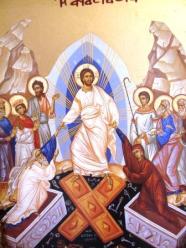
 Christ is risen, he is risen indeed!
He has conquered death, raised the dead, and will raise us too. We reach for his hand, and he carries us up, now and at the end of time on Earth, our time and all time. In his death, is our life; in his life, our death dies. We need only reach for him, touch his wounds, say yes, Lord, I believe. Yes, Lord, take me with you. I am yours. Remember me in Paradise. Remember me now and forever. Hold me close until the morning breaks, when dawn lightens our world of worry and war.
Easter, and the weeks preceding, give us hope. They remind us, in the re-enacting of these events, of the great drama of salvation. This life, we see, is a prelude to our true life to come, a preface, a hint of the eternal joy Our Lord promises.
Last Sunday, Palm Sunday, we entered the gates of Jerusalem, alongside Our Lord on an unridden colt, a pristine colt we are told in one Holy Scripture account. We waved our palms, following the procession out the side door, through the parking lot, along Bowditch, turning at Durant and assembling before the red chapel door. Our good priest knocked on the closed door, re-enacting the entry of Our Lord into the holy city. We entered, to tell the story of the great events that were soon to come.
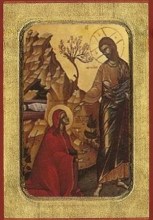
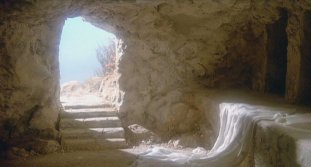 And so today, after re-enacting the drama of Holy Week – Maundy Thursday and the institution of the Holy Eucharist at the Last Supper, the Good Friday arrest, trial, and crucifixion of Our Lord on a hill outside the gates, the deathly silence of Holy Saturday and the evening lighting of the paschal candle, the world waiting for rebirth, for resurrection – we find Mary Magdalene discovering the empty tomb and meeting the resurrected Lord of Life.
Throughout the week we read the witness accounts of these events again and again in the Gospel readings appointed for each day. It is a kind of “harmony” of the Gospels, a side by side, day by day vision of the personal testimonies of St. Matthew, St. Peter (told by St. Mark), St. Paul (told by St. Luke), and St. John. Each emphasizes a unique witness, as would be natural, yet all re-affirm the key events that would change the world forever: the crucifixion, death, and resurrection of the Son of God.
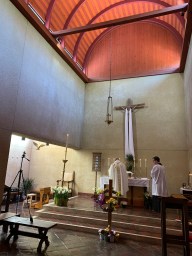 Easter holds hope within it. Dawn breaks on an early spring morning, and we assemble in church to sing well-known Easter hymns, flower a white cross, drape a white mantel over the now visible crucifix above the altar. Gone are the purple shrouds of Passiontide, those weeks leading to this moment of joy. We too bare our souls, removing the shrouds of death and despair, as we don the garments of life and joy.
There is a tradition of baptism on Easter Eve. Just so we are rebaptized with every Eucharist and every Easter. We recall this glorious gift of salvation every Sunday, but Easter is the glory of all glories.
Our fallen world needs hope, will always need hope. Christ gives this hope, seeding his love in our hearts. He waters the seed and it grows within us, if we desire it. In time, the Creator recreates us, again and again. He loves to create, this Lord of Life, create us as we are meant to be and become. We sense this, even those who say they don’t believe, through pride and self-delusion. We all sense there is more to life than mere matter, that mere matter isn’t mere, but holy in itself, created by the Creator, the Lord of all.
And so we say, “Christ is risen, he is risen indeed!”
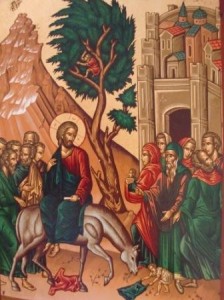 Today is Palm Sunday, a major festival in the Christian year. It recalls and celebrates Christ’s humble and glorious entrance into Jerusalem on a colt, to begin the week leading to Maundy Thursday, Good Friday, and Easter Sunday. As Jesus entered the gates of the city, the “multitudes” waved palms in greeting. They spread their garments and branches before him, to honor him. They expected an earthly king but were given a suffering savior.
 Who was Mary Magdalene? I recently signed a contract with

 The eternal shafts its light upon earth, streaming through windows onto stone altars, and our readers reach, like the Magdalene, for the pouring light, to see the risen Christ in the garden. In our pages our readers wave palms and sing hosannas. They too can join the entry into Jerusalem. They too can step through the gates of the holy city. They too can sing, “Hosanna to the son of David: Blessed is he that cometh in the name of the Lord; Hosanna in the highest.” (Matthew 21:9, KJV)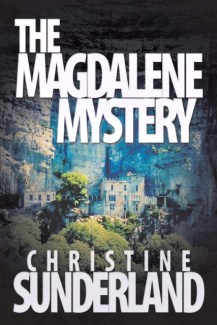
 Returning to the theme of threads, with which this review began, there are several story threads that make a thoroughly woven account on a variety of different levels and, just as with the knotted back of a piece of embroidery, we do not see the whole clearly until turning over the last page and getting, as it were, the beauty of the whole design! A richly rewarding read from a closely observing writer!
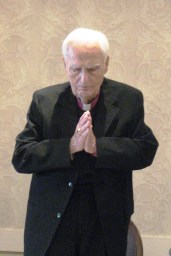 My late Bishop Morse of blessed memory often said that “Passion” in the context of Passion Sunday is the combination of love and suffering. The root is pati (Latin), meaning suffering or enduring. It is curious that today’s meaning retained the idea of love that is found in the Passion of Christ. The lives of the early Christian martyrs were called passio. In the Middle Ages there were Passion Plays depicting these last two weeks of Jesus’ sufferings before his crucifixion. So Christ suffered out of love for us, and this abundant love is good to recall as we enter today the Way of the Cross, leading to Palm Sunday and Holy Week and Easter.
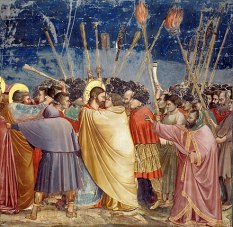 There are times when we are betrayed just as Our Lord was betrayed by one of his disciples, and even ironically with a kiss. It is a double suffering, it seems, when a friend or loved one betrays your trust in them. When they gossip about you or even slander you. I try and watch my tongue (funny phrase) and not be guilty of this easy sin as often as I am tempted. When betrayal occurs by a clergyman, be they pastor, deacon, priest, or bishop as has happened since beginnings of the Church, the suffering is acute. I understand the pain of those who have come forward to testify past sexual abuse by clergymen, for the trust placed in them is often God-like, absolute, and the abuse of this trust is as bad as the actual abuse if not worse. Often, these victims never darken the door of a church again and live lives of silent and bitter judgment. They have been twice maimed. And such betrayal is a betrayal of the entire Body of Christ as well.
 Betrayal. Our Lord will be betrayed. We know the story well. And so I look into my own heart. How have I betrayed him? But he gives me a way out – confession, repentance, and absolution through his Church. The Good Shepherd brings me back into the fold, calling my name. He finds me wandering on a cliff-face, lost, so near the edge, and he carries me home on his shoulders. If I suffer, he suffers with me. He is good, and he is a shepherd. He loves us. But we must repent.
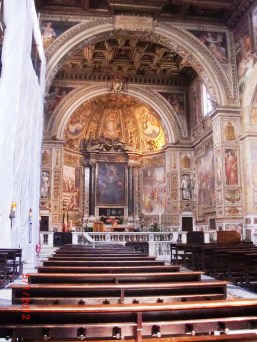
 In our pilgrimage to God with God, we rejoice in each step through time, each minute, hour, day, and year that pulls us toward our own moment of seeing God face to face. This pilgrimage is ours to own as Christians, as witnesses to the daily revelations that unfold before us, as witnesses to the revelations that unfolded over two thousand years ago on a hill outside Jerusalem and in the empty tomb discovered by Mary Magdalene in the early dawn of the first Easter. We are, as Christians, witnesses to life itself, the source, the Creator himself.
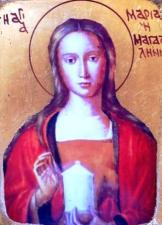 It is a curious thing that there is a sense in which my novels have become my children who have left home for the wide world, traveling to distant readers, into various hearts and minds, with varying welcomes. Authors can’t see their work objectively, and must steer around blind emotional attachments as self-extensions, rather like one’s own progeny. And so I was thrilled this week to sign a contract for the re-issue of one of my earlier novels, The Magdalene Mystery, with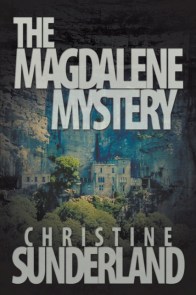
 Two endorsements were from scholars in their own right who were kind enough to read my drafts and make valuable suggestions:
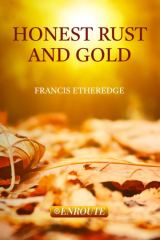 Honest Rust and Gold, a Second Collection of Prose and Poetry (St. Louis, MO: En Route Books and Media, 2020, 233 pp) by Francis Etheredge
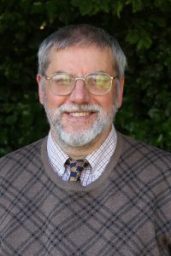 Francis Etheredge is a Catholic theologian, writer, and speaker, living in England. He is married, with eight children, plus three in heaven. Mr. Etheredge holds a BA Div, an MA in Catholic Theology, a PGC in Biblical Studies, a PGC in Higher Education, and an MA in Marriage and Family. He is author of 11 books on Amazon:
 Angel Mountain by Christine Sunderland (Eugene, Oregon: Resource Publications, 2020, 267 pages)
 Francis Etheredge, Catholic husband, father of 11, 3 of whom he hopes are in heaven, author of 11 books on Amazon, and 2 maybe 3 more due in 2022:
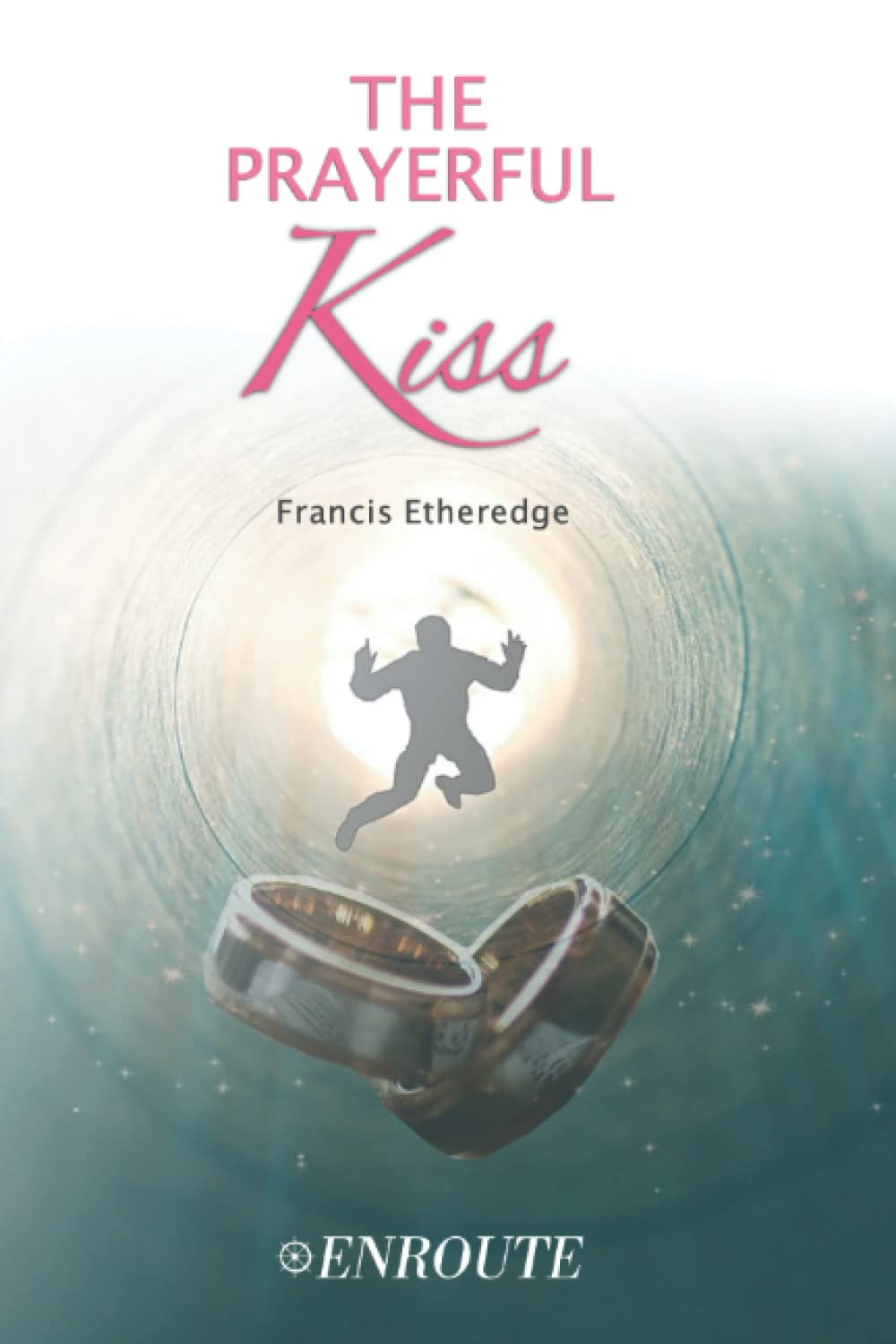 The Prayerful Kiss, A Collection of Prose and Poetry by Francis Etheredge (St. Louis, MO:
 Francis Etheredge is a Catholic theologian, writer, and speaker, living in England. He is married, with eight children, plus three in Heaven. Mr. Etheredge holds a BA Div, an MA in Catholic Theology, a PGC in Biblical Studies, a PGC in Higher Education, and an MA in Marriage and Family. He is author of 11 books on Amazon: visit
  Christine Sunderland is the author of seven award-winning novels about faith and family, freedom of speech and religion, and the importance of history and human dignity, the most recent being
 Christine Sunderland
