
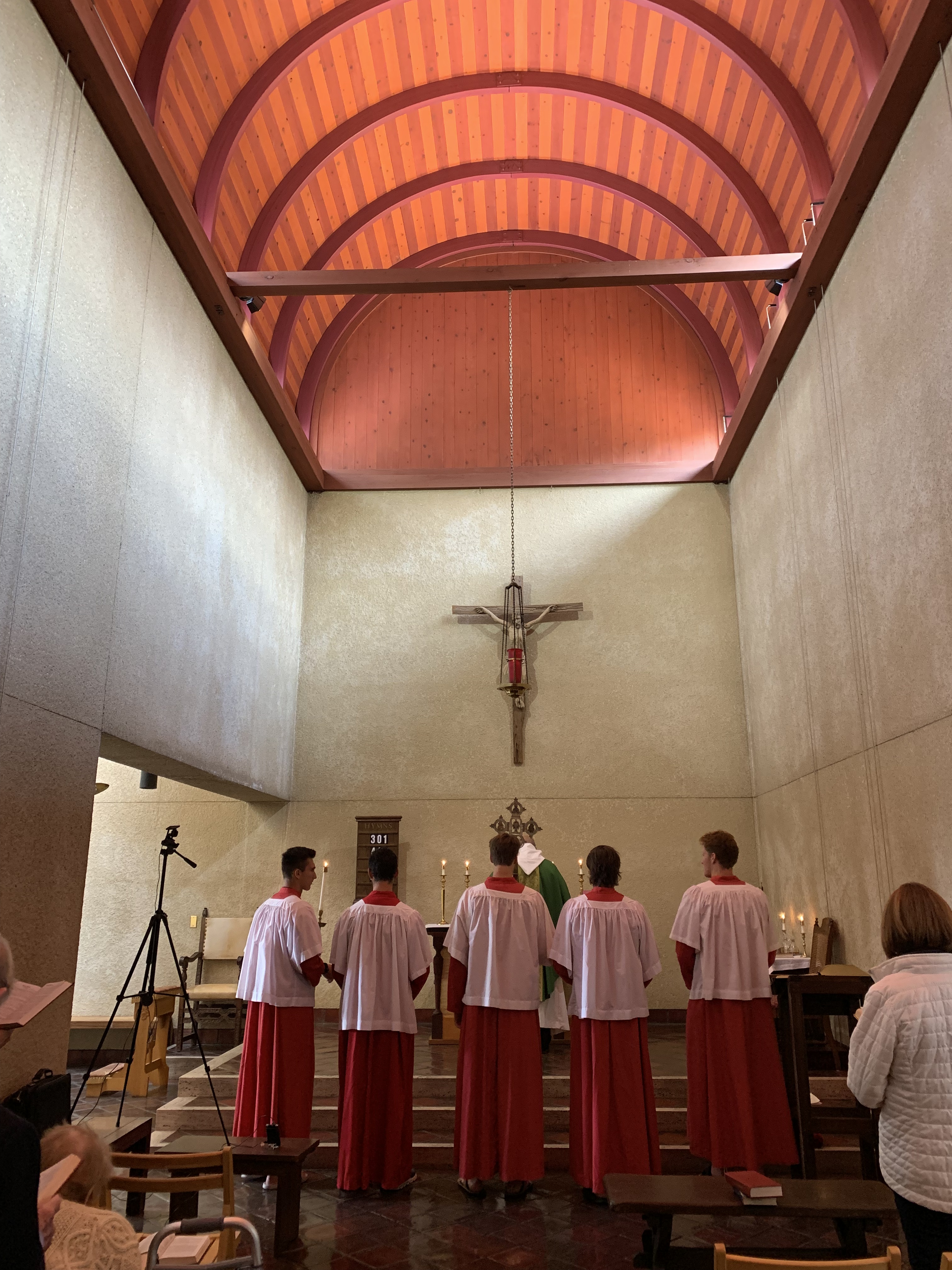
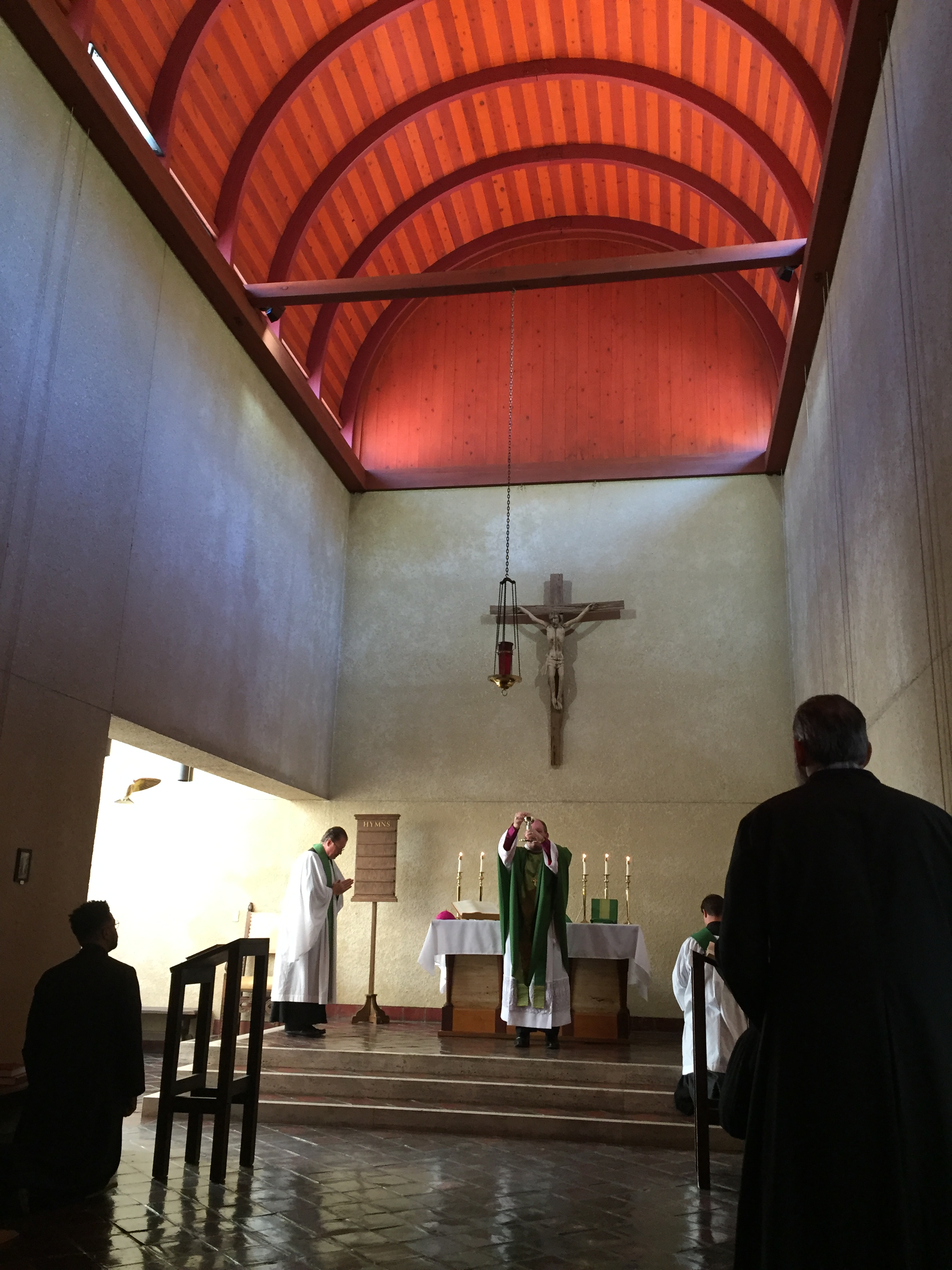
 I was glad this morning to see all well at our Berkeley Chapel. Our streaming online was set to start, and the hymns listed on the hymn board were some of my favorites. The organist was playing a piece that filled the space with joy as we awaited the dramatic procession in from outside. Five of the 14 Cal Rowing Crew who are residents on the property would be assisting our Dean of Seminary, Fr. Napier, and as all the pieces of the hour fell into place, I sighed my thanksgivings: thanksgivings for the place, the people, the freedom to worship in this holy chapel, unique and precious.
My week had begun with a fire alarm. It was a false alarm, but frightening and earsplitting just the same. It occurred in this Berkeley student residence on Sunday after Mass (last Sunday) as I was closing the office downstairs. Being that close to an alarm like that is something I will not easily forget. I can still hear it ringing in my ears.
It made me think about alarms, disaster alarms, that warn us of impending danger to body or soul, or both since it is difficult, in this world at least, to separate the two without serious harm. Pain is an alarm that something is wrong with our body or soul (physical pain or mental). Fever and swelling tell us that the body is reacting to an infection that could do further damage. Guilt and remorse tell us we have some confessing to do, some forgiving or being forgiven. Our conscience, formed from a young age, becomes our judge in these vital matters, so it is vital that our consciences are formed rightly, with a wholesome fear of God and a love of his law.
How we grow through life, from the womb to the tomb as they say, makes all the difference. Which path do we choose to take, and which laws do we ask God to write on our hearts?
The false fire alarm, I learned today, was caused by spilled milk in a fridge that sat on the floor above the basement where a smoke detector was. Upon investigation (with most certainly a hefty fine) we learned that the milk had gone through the fridge base, through the flooring, and had pooled around the detector.
We have so many false alarms today that ring our world with noise and harangue. We are alarmed by so many fears, from pandemic to vaccines to masks to terrorism to World War III, and even alarmed by the climate when it changes. Some of these are false and some not. We must figure it out. We must seek out authorities we trust to separate truth from lies, to form our souls, to point the right way to take in the midst of the dark forest. (Hint: mainstream news is not a trustworthy authority.)
Elders must teach the young, embracing the role of mentor. The young must seek out elders, embracing the role of student.
I have found our clergy to be a mixed group like any group formed from fallen humans. But within that group I have found elders that could teach me as well as parish laity. Some, through time, merely set an example for me in the way they lived their lives. Some preached, and I could tell when it rang true and when it was rang false. I prayed and continue to pray for discernment, minute by minute, to use the count of my days as wisely as possible, with a mind to know the mind of Christ.
 One of my favorite podcasts is Andrew Klavan on The Daily Wire. He mentioned this last week that the first Christians called themselves followers of the Way. For Christ called himself the Way, the Truth, and the Life. And so Christ is the way we must go, forgoing all others, listening to his words of love, life, and, yes, law. We do this in the Church, through many ways – music, poetry, prayer, the song and dance of the liturgy – ways that lead into Christ, and he into us. There is no other way to life eternal, no other way to joy eternal, no other way to love eternal.
Through Christ’s bride, the Church, we are mentored by a trusted authority. We learn who we are: past, present, and meant to be. We learn how to learn. We are clothed in the habit of habit, good habits, that texture our souls, weaving fine golden thread into our unique God-created character. We learn how to love, how to be struck by the glorious differences between each one of us, how to raise up each one of us in joy.
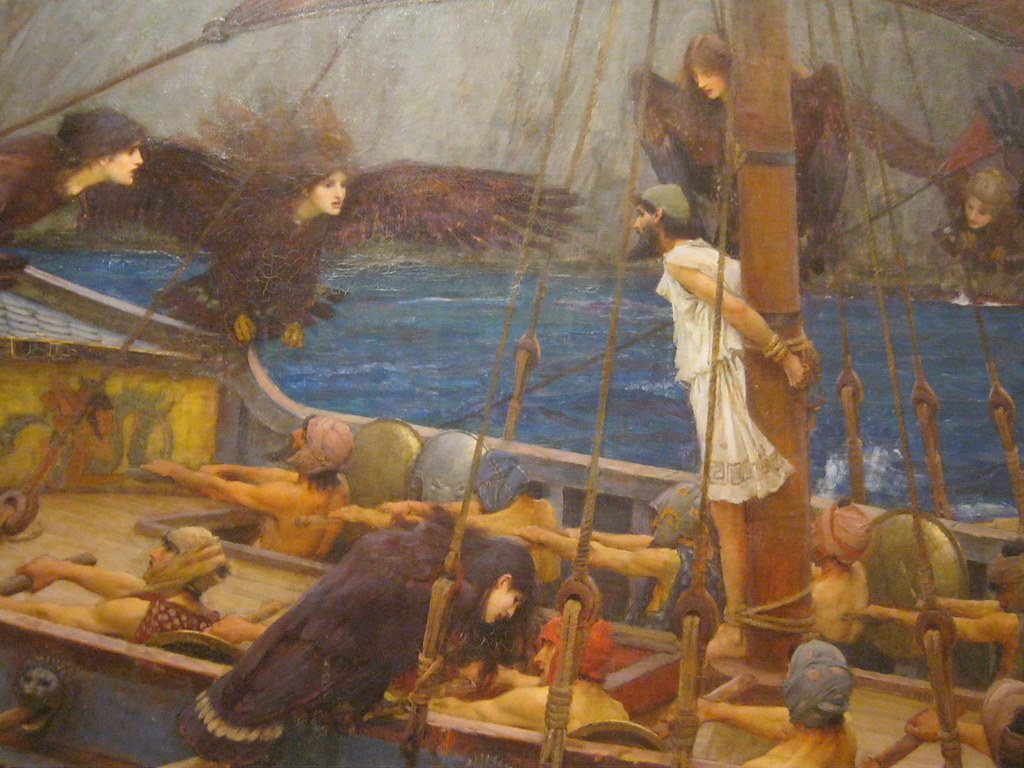 I read recently that Homer’s Odyssey had been cancelled for some woke reason as part of a high school curriculum. One of the striking images in this classical work is the image of Odysseus tied to the mast of a ship, his ears plugged, in an effort to not listen to the sirens calling him from a distant shore. As I recall (and it must have been over fifty years ago that I read it) they are tempting him away from is purpose, sailing true and straight for home. And so we have the siren songs of today – the many distractions, some serious, some silly, that call us away from using our time well, away from the way we should be going, sailing straight and true for heaven. They are false alarms in the truest sense.
But even so some some alarms are good for us, warning us. Many alarms are going off in our world today, and many should be heeded, even at this late hour in the fall of the republic of America. Many alarms are symptoms of a serious illness in our culture, a Narcissism (again a classical allusion) trapping our people in childhood. We become tribal and petty and barbarian. We no longer celebrate our diversity, but brand one another as the other, as the enemy. We no longer see creation as a reflection of the Creator, as a magnificent tapestry of love. We no longer see that we are all children of God, all children in the family of God.
I am glad that, for the most part, I am able to spot false alarms, hear the tinny sound of their sirens. I am glad I can find rest and refreshment in this holy chapel on a Sunday morning, that I can dance with the organ and sing with the angels, that I can fall on my knees in penitence and worship, that I can be fed by Christ himself, that I have such a lovely parish family I love, my brothers and sisters in Christ, my children and parents in Christ. I am glad that I can be re-formed, reborn in the image of God.
There is nothing better than that. Nothing truer. Nothing that will silence the sirens ringing in our ears. At least for a time, an hour a week, a block from UC Berkeley.
St. Joseph of Arimathea Collegiate Anglican Chapel offers Mass weekly at 11:30 on Sundays. All welcome.
 I’ve been thinking how time layers us with its seconds, minutes, and hours. As we journey through this pilgrimage of time on earth we are layered with our choices, our loves, our sins, our virtues. Each one of us is unique and uniquely loved by God our creator. Each one of us is a fine painting, a charming concerto, a sculpture carved in the image of God. Each one of us is a one-of-a-kind work of art.
 And so I am a slightly different person each day, as another brushstroke has defined the texture of my canvas. I know more than I did, and this knowledge adds to my daily growth.
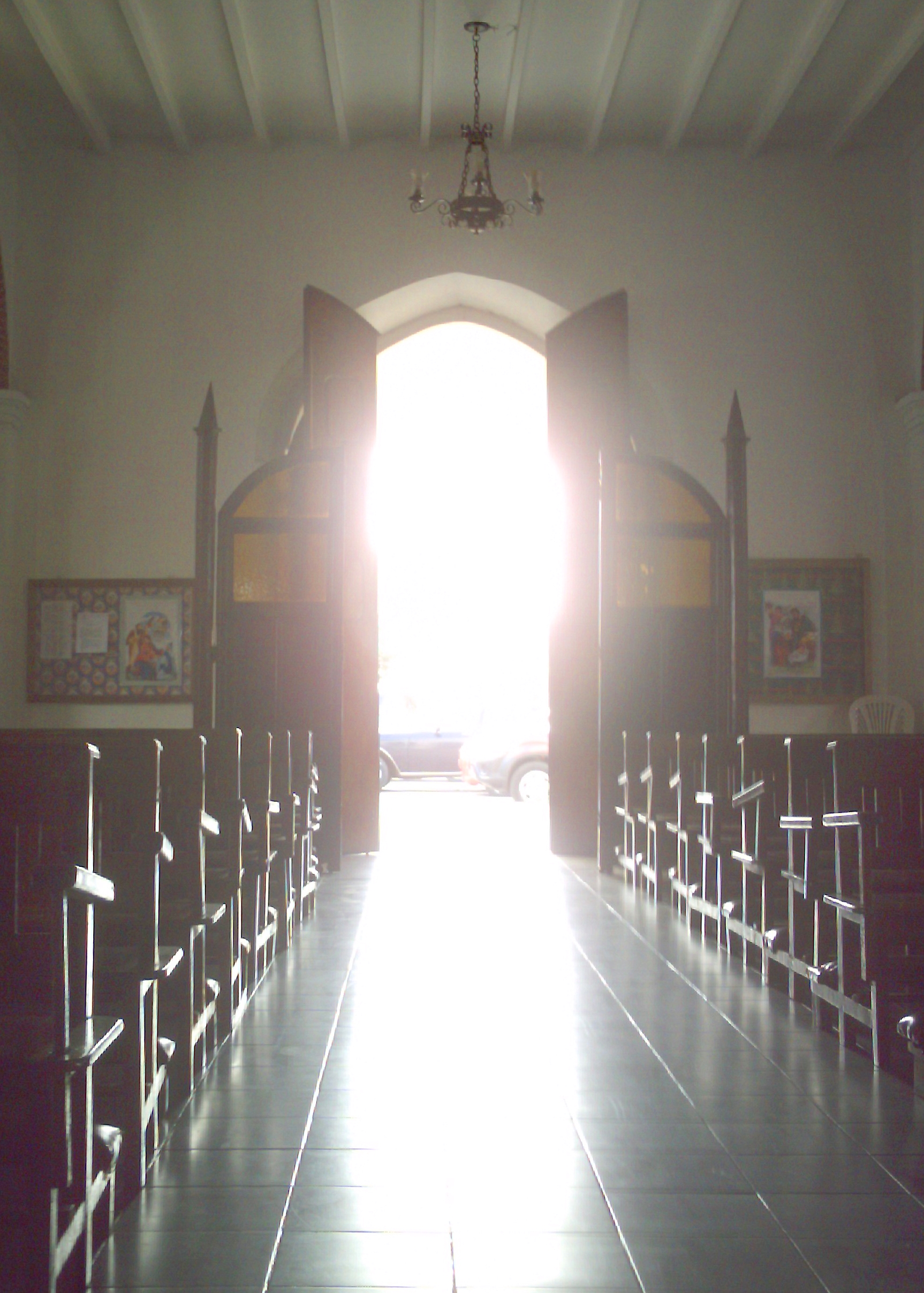 The Church opens a door to that journey of joy. It opens the door onto the porch outside, onto the sidewalk, saying, come and see, come and see… Come and be painted by the Master of Creation. The Church opens the door to the tabernacle, the Holy of Holies, saying, come and be fed by the Master of Life. With these layers, these brush strokes upon our souls, we open our hearts to one another. We join together, layered by Christ, brothers and sisters, the parish family.
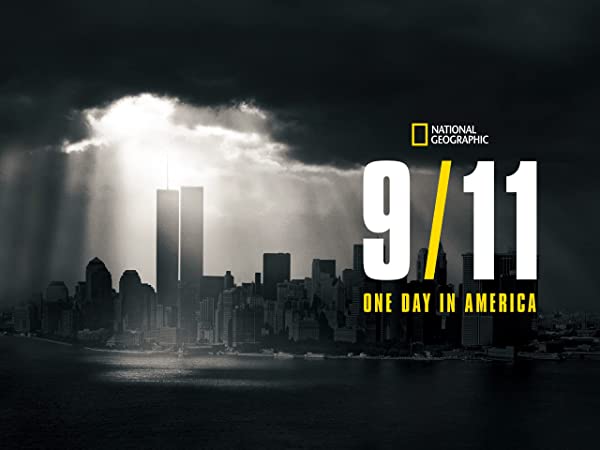 Anniversaries of past events serve our memory, for good or for ill. Some are recurring celebrations: birthdays, weddings, graduations. Some are firsts: first word, first tooth, first concert, first kiss, first…. And some are recurring memorials of past tragedies or sorrows: Pearl Harbor, terrorist attacks, Nine-Eleven. We remember these annual events so that we will not forget.
  Where was I on Nine-Eleven when the first reports came through on the television? I was at home, and I saw the newscast as we made breakfast, for 8:45 a.m. in New York City is 5:45 a.m. in the San Francisco Bay Area. We were stunned, as was the nation, and then we feared we were now at war once again.
 This seems to be happening all over again as we shamefully exit Afghanistan and defund not only our police but our military. We are ripe for another attack upon our soil. What will it take for us to truly wake up and not just be woke? Or, when will the woke awake? The pandemic has diverted our attention and nearly blinded us to reality. We live in a fallen world, and while many hold utopian visions of the goodness of all mankind, these visions are not rooted in reality. America alone offers freedom to the world. Other Western nations have become too weak to offer anything but dreams and platitudes. Soon America will be too weak as well. The Taliban et al do not desire to have a seat in the world order of united nations. This is not their goal. They want a world theocracy governed by Sharia law.
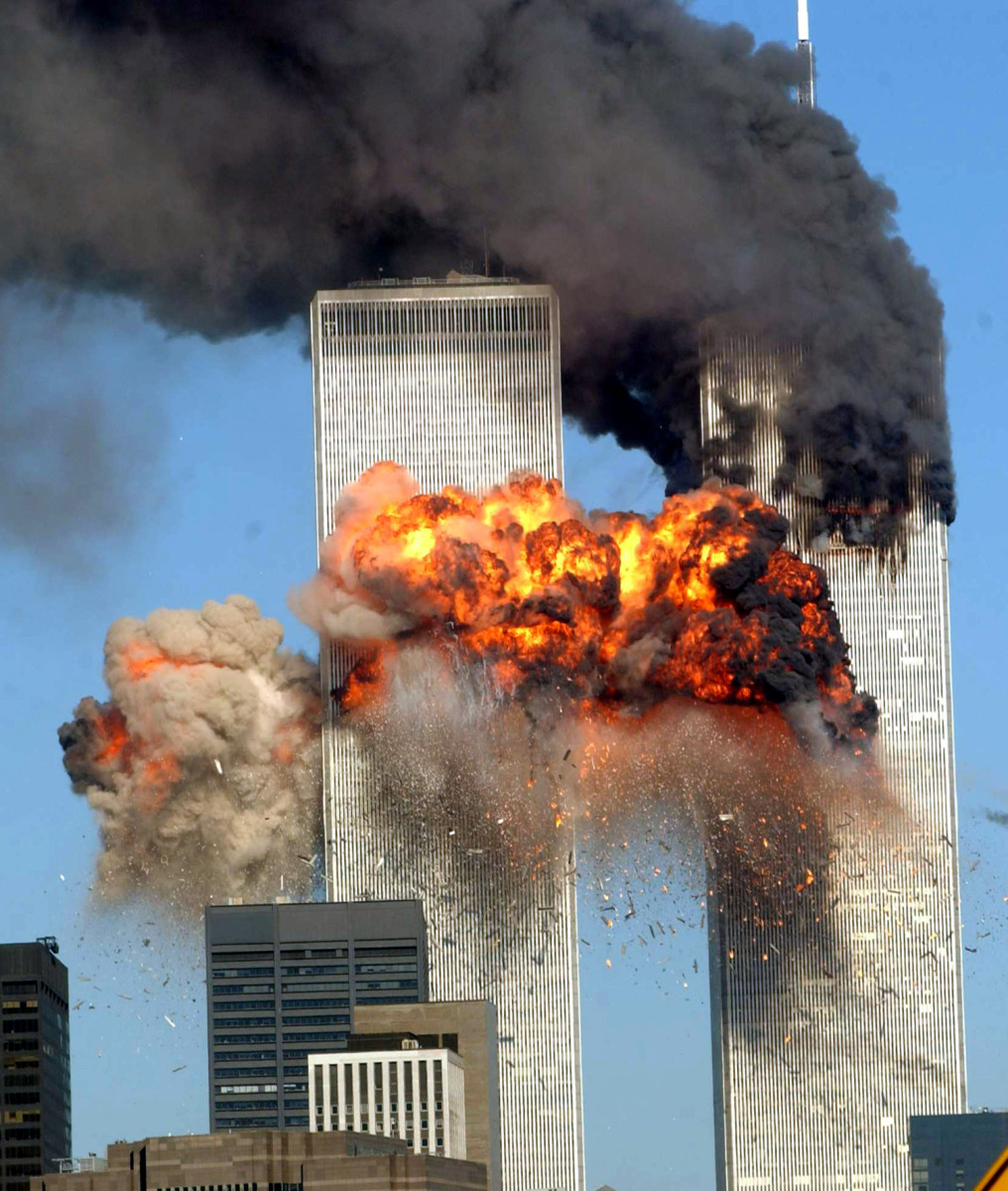
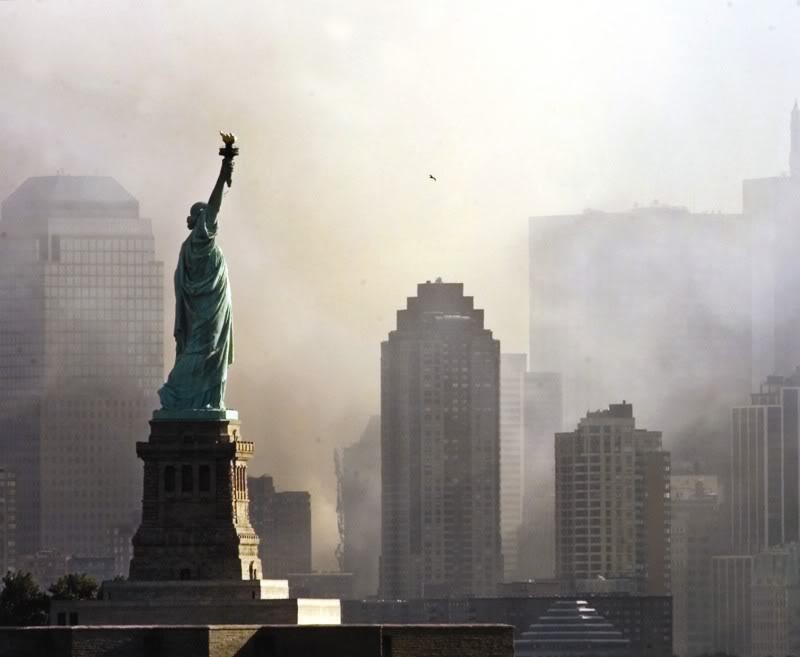
 With the images of the planes hitting the towers, of the explosions and black smoke billowing into the crystal blue sky over Manhattan, of the people jumping to their deaths to avoid burning, of the collapse of the tower into a giant heap of ash and rubble that ate the air of Lower Manhattan, home of world trade and finance – with these horrific images running through my memory – I was glad to spend a few hours in our Berkeley chapel this morning. I was glad to sing and pray together with my brothers and sisters. I was glad to let the thundering organ notes pour over me, fortifying me. I was glad to hear the Gospel lesson about the lilies of the field that neither sow nor reap, and that our Heavenly Father cares for them. I was glad to be reminded not to worry too much about tomorrow. And of course Our Lord was not saying to sleep through the days but to be heartened, for in the end, all things will work to the glory of God. We still need to be perfect, still need to repent, and still need to learn better ways of loving one another. We still need to be faithful, watching and vigilant.
 On that same Thursday, about the time that Zachary Aguilar began his run and Anna Aguilar made tea, Jessica Thierry decided she would not return Zachary’s calls from Monday, Tuesday, and Wednesday. She wanted to concentrate on her thesis, and she set to work. She spread out her papers and photos on the counter. She turned on her laptop and checked the national news.
 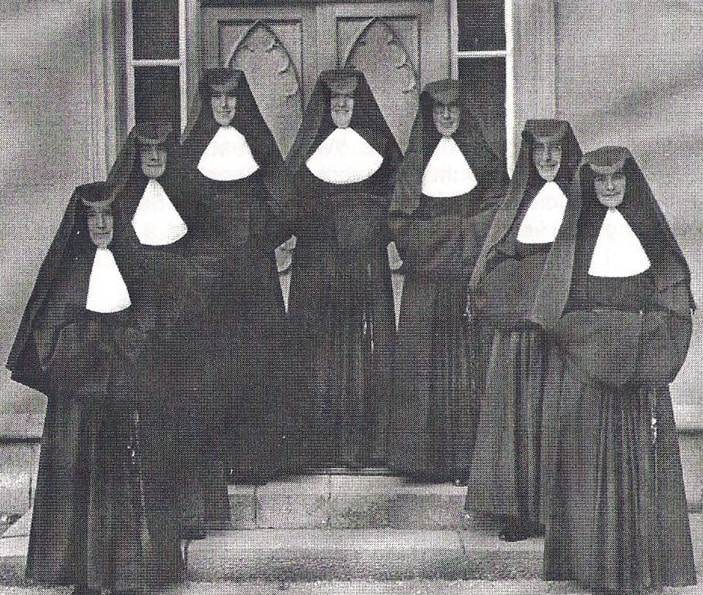 The presence of religious institutions in the late nineteenth century were key to the development of the city of Berkeley, and thus give good reason for government support today. I shall argue this through examination of the work of the Presentation Sisters in the nineteenth and twentieth centuries and its impact on the community of Berkeley. I shall consider the change in the community with the erosion of such religious institutions, changes seen in education, medical care, and public safety, areas of vital interest to city, state, and federal governments.
 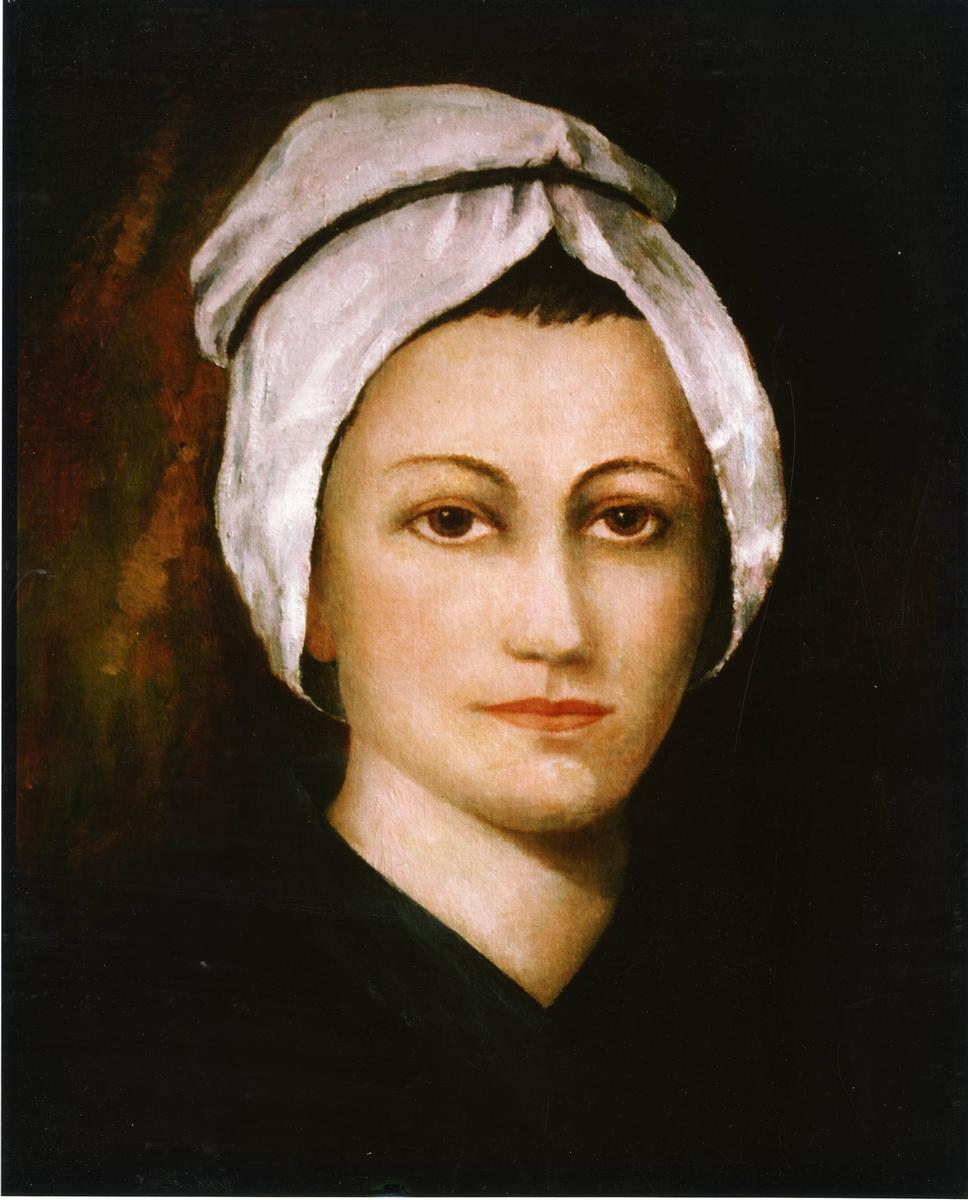 The Foundress
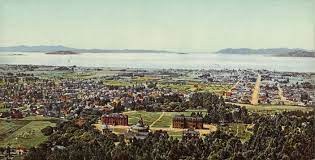
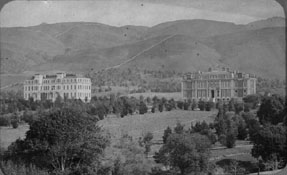 In 1866 the private College of California in Oakland, led by Congregational minister Henry Durant, taught a classical core curriculum modeled on Yale and Harvard. The trustees decided on a new site alongside Strawberry Creek in the foothills of the Contra Costa Range.
 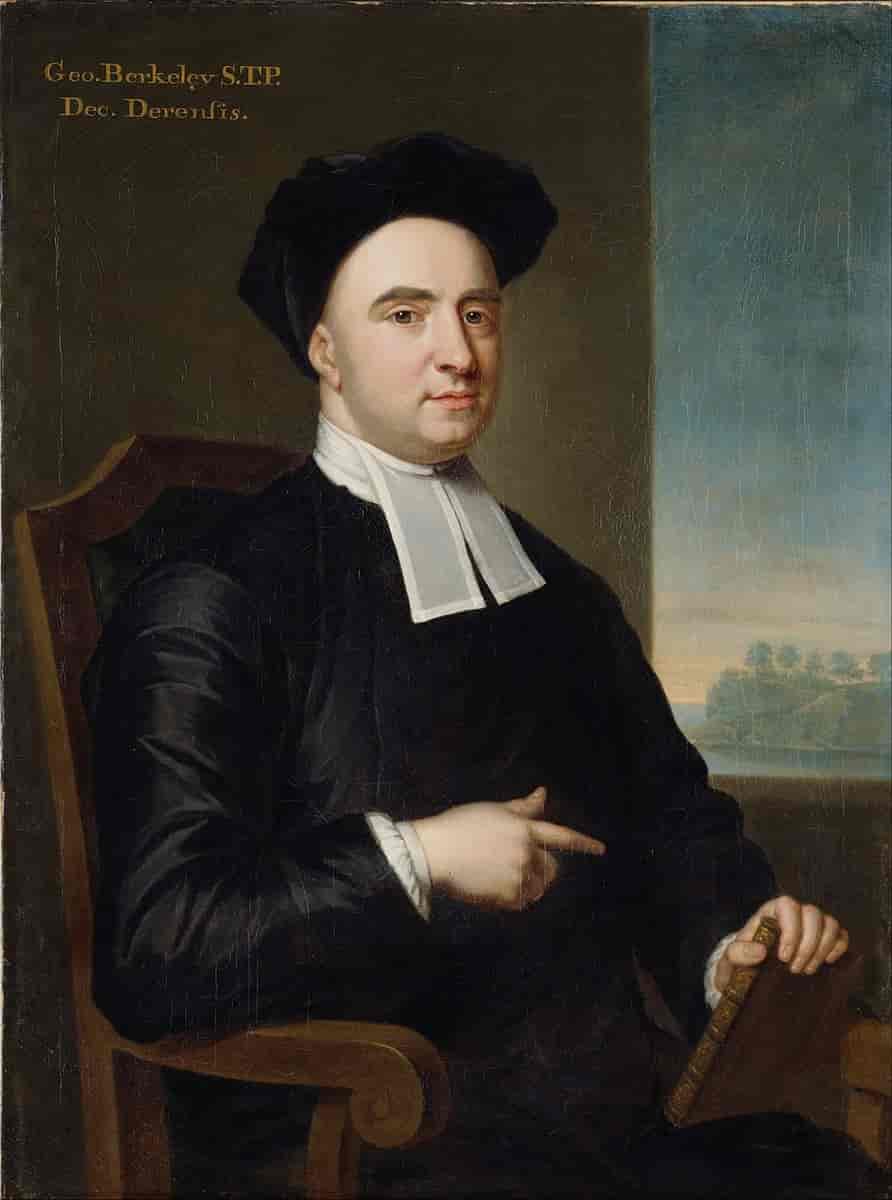 Bishop Berkeley (1685-1753) had spent four years in New England and had written a poem, “The Prospect of Planting Arts and Learning in America,” the last stanza being:
  While much has been said about the negative aspects of British colonialism, it cannot be denied that wherever the empire found itself, it worked untiringly to better the population to the degree it knew how. And the British heritage, the heritage of the West, is one of learning, law, and charity, seeds planted by Christianity. It is a legacy of freedom that flowers throughout the world on every continent among all races and is no longer unique to the Western world, but characteristic of the “Anglosphere.”
  A sudden silence fell over them like a pall as they stepped slowly and carefully down the gravel path through the gardens, hearing only the sounds of their footfall and the caws of unseen birds high in the pines. Pausing, they looked out to the pale sky spread over Comerford House. When Anna spoke, Father Nate could barely hear her. “I was making breakfast when I heard,” she said. “Where were you on Nine-Eleven, Father?”
 “Louise Casparian, Nicholas’ wife.” Anna grew silent, and Father Nate could see an array of emotions pass over her face. She waited for him to speak. “She died that morning,” he said, focusing on a pale pink rose in the garden. “She was visiting a cousin at her office in New York at the Trade Center. They never had a chance.”
 “Six grand pillars?”
  They crossed the lawn to the French doors. He wanted Anna to understand what it means to be a refugee, to emigrate to America. “Anna, our grandparents fled the Armenian genocide of 1915 in Turkey, where their own parents—our great-grandparents—were murdered. They worked hard when they came to this country. They farmed near Fresno, living in a refugee community. Nicholas and I grew up during World War Two. We were raised to deeply value liberty—the freedom to think, speak, and worship as we choose. We loved America. We loved the culture of the Western world. We didn’t have much, but we had America. We were Americans.”
  Father Nate picked up a towel and reached for a cup. “This Fire Trail killer is a victim of our not enforcing the law. We’ve grown lax because many don’t believe in the source of our laws. Nicholas sometimes quotes Jefferson: ‘Can the liberties of a nation be secure when we have removed a conviction that these liberties are the gift of God?’ The words are etched into the Jefferson memorial in Washington, D.C.”
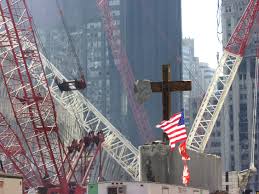
 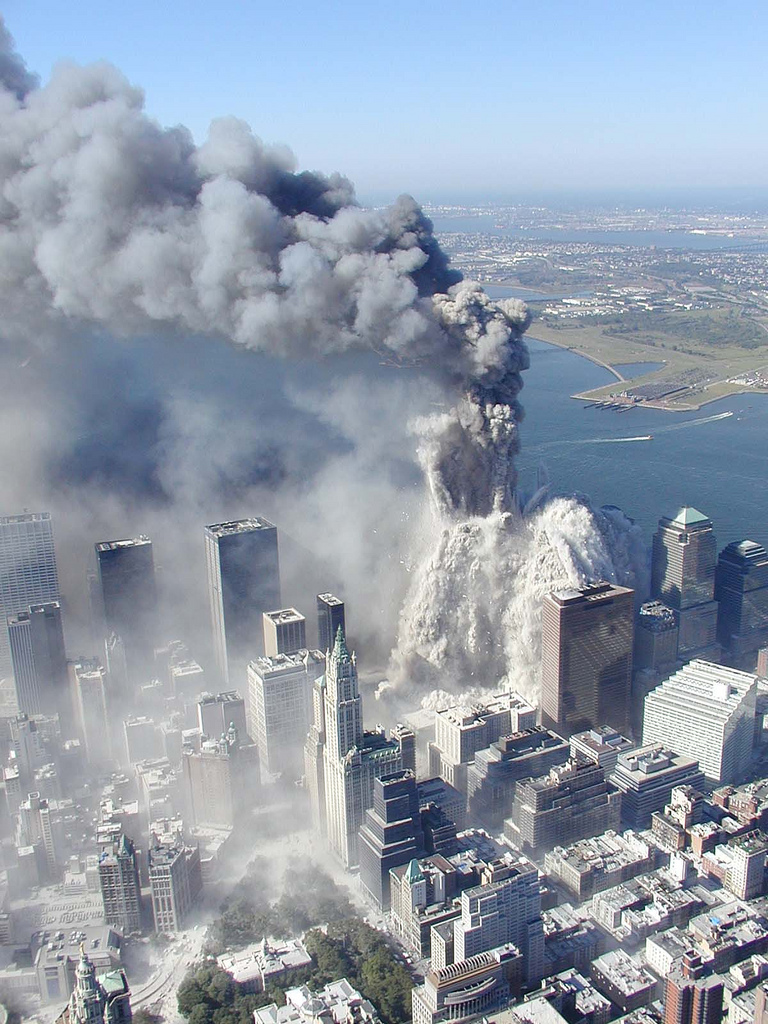 The first TV bulletin had been nearly unbelievable. The voices of the reporters moved from pragmatic concern to astonishment to horror at what they were seeing, and then saying, as they described the planes diving into the towers. Today, thirteen years later, Anna could see it so clearly: the black smoke of the first plane and the fiery explosion of the second. It was, she recalled, when the second plane hit, that she, along with a stunned nation watching, concluded this was not an accident. The United States was under attack. But who would do such a thing? Later, she learned, four passenger airliners had been hijacked by nineteen terrorists who had turned the planes into suicide bombs.
 The kettle whistled. Anna turned off the burner, the flame died, and she poured boiling water over tea leaves in the pewter teapot. Leaving the tea to steep, she moved from the kitchen into the foyer and crossed to the music room. From there she could see the San Francisco skyline, its misty shape still visible, still intact. Comerford’s porch flag flew at half-mast, and she watched the heavy canvas ripple in the growing damp, its stars and stripes waving as though holding the past and the future in its weave.
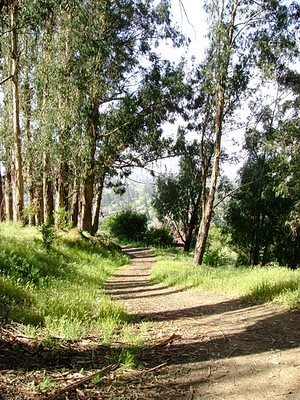 “On Thursday, September 11, close to four p.m., Zachary parked his car at the trailhead where the East Bay hills bordered Berkeley. It was the anniversary of a horrific day of national tragedy, and he needed to see the silvery bay, the San Francisco skyline, and the Golden Gate. He wanted to think. His mind and heart were a jumble. He needed to sort things out.
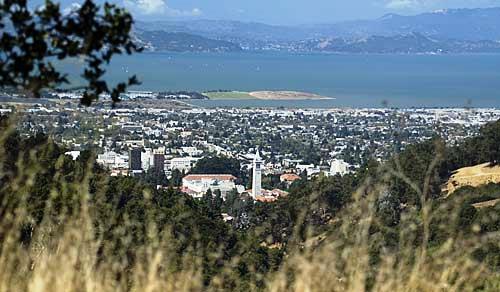 He could stare at the city and figure out his life, what to do next, as he had done many times over the years. The long bench was welcome, and he sprawled on it, pulling out his water bottle. The San Francisco skyline and the Golden Gate glistened in the encroaching mist. Berkeley dipped low and shadowy toward the shoreline.
 Nine-eleven. Zachary stood and stared at the skyline, imagining the planes attacking San Francisco as they had attacked New York. He had seen the images on television year after year, and each time was astonished that others would hate America like that, hate their freedom. Such hate and such tyranny were so opposed to the innate human desire for love and transcendence. Those terrorists chose the bestial way, the way of the jungle, the way of illiteracy and babble, the way of chaos and death.
 I came across an essay by John Horvat at the Imaginative Conservative site, called
  the work of Americans and protect their rights. We honor our workers and the contributions of each and every American to this great land of liberty. We honor work by honoring the virtue of self-discipline, responsibility, and perseverance.
 And so we prayed for them with The Litany (1928 Book of Common Prayer, 54+) this morning in our Berkeley chapel. We dedicated our prayer to those trapped in Afghanistan and those who lost their lives. As we chanted the responses to the many supplications I was thankful for the poetry of these ancient lines, said in unison as a chorus, many voices becoming one, creating a work of art of its own in our haunting barrel-vaulted chapel, unique to the moment and setting:
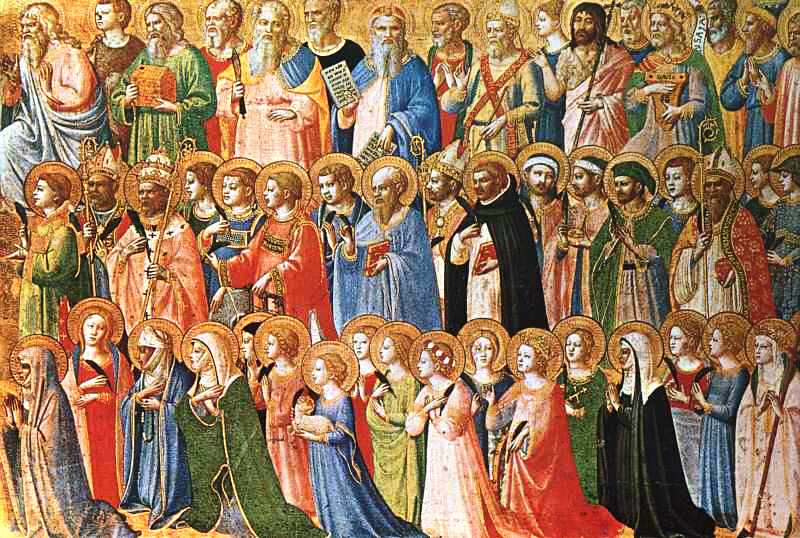 And so breathing the name of Jesus is healing. The Lord God Eternal enters me with each breath. I inspire and am inspired. And I received the Eucharist today, the Real Presence absorbed into my flesh.
 The fall of Kabul to the Taliban shocked the world this last week, and the images of desperate Americans and Afghans trying to escape Afghanistan have been seared into our memory. I pray for them, for their safe passage, and for all those immigrants who desire to come to America.
 I hope to feature a few immigration themes in my next novel, picking up on some of the themes in Angel Mountain (Wipf and Stock, 2020). The hermit living in the mountain’s caves and his sister living in the foothills are Jewish refugee immigrants who hid from Hitler’s Holocaust in Greece during World War II. They understand freedom. They understand the miracle of America. They do not forget how blessed they are to make it to this country, to survive. In my new novel, Return to Angel Mountain (working title), at least one character will embody the immigrant experience.
 And so I prayed this morning in our Berkeley chapel for the Americans and others who value freedom, who are trapped behind enemy lines, whether in the Near East or the Far East.
  Christine Sunderland
