
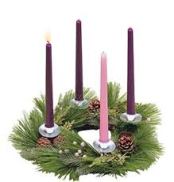
 Every Advent I re-memorize the prayer – the Collect – prayed daily in the prayer offices of the Church, including the four Sundays in Advent:
“ALMIGHTY God, give us grace that we may cast away the works of darkness, and put upon us the armour of light, now in the time of this mortal life, in which thy Son Jesus Christ came to visit us in great humility; that in the last day, when he shall come again in his glorious majesty to judge both the quick and the dead, we may rise to the life immortal, through him who liveth and reigneth with thee and the Holy Ghost, now and ever. Amen.” 1928 Book of Common Prayer, p.90, Thomas Cranmer, 1489-1556, Archbishop of Canterbury in the reign of Henry VIII.
And so I will set up my Advent wreathe tonight, this First Sunday in Advent, and light that first candle.
Advent is a fascinating season, a season of preparation for the greatest of all events in the world, the birth of Christ, and yet it is full of “great humility.” How do you combine the two, greatness and humbleness? To be sure, mankind has turned any remnants of humility into pride, and the festivities often neglect the true festival, the coming of the Son of God, to give life to our world of death.
In this sense, then, Advent has been betrayed by misuse and buried in the attic of our childhoods, so I approach these few weeks quietly and with deepening wonder. For the weeks of Advent are serious ones – with themes of Death, Judgment, Heaven, and Hell to help us face the reality of our lives, of life itself. We consider death, an event that we will all encounter; we learn of judgment, an accounting of our life; we are given hope that our penitence will rebirth our souls and send us to Heaven rather than Hell.
Christians today don’t like to speak of Hell. And yet we see bits of it all around us. We see the darkness in the butchery of children in the recent October 7 attacks, in the transgender kidnappings, in the lives of the unborn snuffed out.
We see the darkness of Hell in the silencing of Heaven, with attacks on God’s chosen people, on houses of worship, on academic speech.
 We live in a dark world, and in Advent we pray to see light, to see the star that will lead us to Bethlehem. That star is there for all to see who are not blind. It is bright with the love of God and the love of mankind. It is our beacon of hope in a world of despair.
And so we follow the star through the season of Advent, learning our Advent Collect to say each day, to add to our morning and evening Our Father who art in Heaven… We want the words on the tip of our tongue, so that we can hold them in our hearts forever.
We look forward to God the Son’s glorious majesty in the world to come, to the Judgment, and to Heaven’s gates opening to us, when we rise to the life immortal. We pray for grace to cast away the works of darkness and put on the armor of light.
And so we journey to Bethlehem, to the cave stable, to Mary and Joseph, to the Christ Child in the manger, our only hope of Heaven and our true Light of Life, giving thanks for God’s great acts of salvation among us.
Deo Gratias.
 The ordering of chaos has long been a goal of mankind, and long been my own goal, to be sure.
 When Christianity, rooted in Judaism, influenced art, music was musical. Notes painted pictures and meaningful moments. They told stories of heartbreak and heroism, of lives lived in beauty, truth, and goodness. Some of this continues today, in spite of the disorder of atheism and agnosticism, but it remains rooted in Christ and his salvific actions for mankind, a divine order ordained in Eden and destroyed by the Fall of Man, a divine order redeemed and made whole should mankind choose life over death, hope over despair, love over hate, truth over lies.
 Each one of us is a work of art reflecting and portraying our God of love and his marvelous marvels in time and eternity, living out our divine diversity in all of its beauty and goodness and truth.
 I have learned that the journey cannot be made alone, but must be with others, as prescribed by Christ, that it is a path of continual repentance, absolution, and renewal, that the deeper you go into the love of God in his Church, the deeper you go into beauty and goodness, that the joy of communion with others and with Christ himself in the Eucharist, the greatest of all prayers, is contagious, spreading from one Christian to another, so that when you hear the Psalmist sing, make a joyful noise unto the Lord, you know what he is singing about and you can sing along.
 We are stirred up for we enter the season of Advent soon, a season that ushers in Christmas and that miraculous season of giving, of music, of harmony, of love. We are stirred up to prepare for Our Lord’s birth and all that that means for each one of us, when this magnificent God of love took our flesh, became incarnate. Such incarnation incarnates each one of us with Christ himself, his spirit, his love.
 It’s turned cold here in the Bay Area, with some rain during the week. We live on the edge of turning seasons, a turning of the natural world and a turning of the spiritual world. We rotate with time, as it pulls us ever forward, having spent the past, now spending the present, and soon to spend the future.
 For time disappears behind us as if we are traveling on a path through the woods, speeding on a highway that parts the trees, and we glance back furtively to see what we have left behind.
 We open our hearts to our Creator and invite him in. Come into my heart, dearest Lord Jesus. Come in and live there, plant seeds of life, turn my decay into glory.
 We give thanks. We give thanks for those who sailed from distant shores in search of peace, fleeing persecution or poverty or penury. We give thanks for those who offered their time and talent to make this country better, to make this country safer, to make this country the way that the God of Abraham desires it to be. The list is a long one and growing longer – all the men and women over four hundred years who gave themselves to freedom, by responding responsibly to the call to be all that you can be.
 We give thanks for the children and the fathers and mothers who raise them to be in awe of their birth and what the talents given to them in this remarkable country. We see our sons and daughters grow in love and wisdom, feeding on our lessons of life, of lives lived in the past, of deeds done through the years, of the need to plant seeds in fertile soil to reap a good harvest.
 We tell the stories of The Little Red Hen, of Chicken Little, of The Boy Who Cried Wolf so that our children learn to value industriousness, truth about skies falling (or not), and sounding false alarms. We heard these stories, and many many more, and we pass them on to our children.
 Yesterday was Veterans Day, a national celebration in which we salute those men and women who have defended our country to keep the peace. In many ways, the Armed Services are our national border, for they protect us from harm, protect our homes, our communities, our nation. They salute the flag with their lives, and thus embody freedom. They risk all so that we may be free.
 My last novel, Angel Mountain, is set in the days between Veterans Day and Thanksgiving, 2018. Those days in California were days of fires and earthquakes, shooters and riots, but we had not yet experienced lockdowns and deadly viruses. Even so, the times called for reflection on the big questions, including, is the world coming to an end? Since then, with the compounding horrors at home and abroad, we continue to ask this, along with life’s meaning, death’s meaning, and so we look to Christ and his coming among us.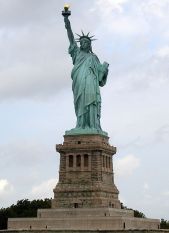
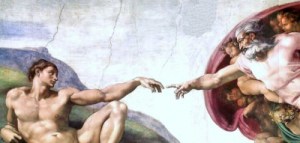 And most of all, we honor those who risk their lives to protect ours, so that we can continue to salute the dignity of all persons, each one made in the image of God, the God of Abraham, Isaac, and Jacob, the God who loves us so, the God who died and rose again, the God that sets us free.
 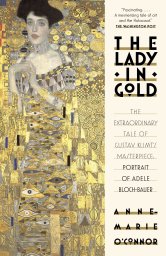 I have been revisiting the backstory of one of my characters in Music of the Mountain, recalling a Holocaust escape from Vienna in August of 1938, based on the true story of Maria Altmann, niece of Adele Bloch-Bauer, whose tale is told in The Lady in Gold by Anne-Marie O’Connor. Some readers may recall the movie with Helen Mirren portraying the recovery of paintings stolen by the Nazis when they annexed Austria in the spring of 1938.
 We in America can also appreciate these cautionary tales of being blind to the reality around us. The terrible attacks of October 7 will not be forgotten and may open our eyes, although it is a horrible price to pay to see the truth. Many of the policies of the Left are no longer “Liberal” but racist regarding minority classes, but most ironically, racist regarding Jews, who have been some of the Left’s largest contributors. We shall see how re-alignments form in the next few years.
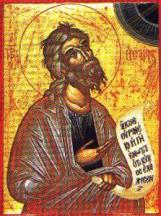 How true. World War II recalls this truth, including the horrendous and controversial bombing of Japan. September 11, 2001 recalls this truth, including our own war on terrorists abroad and the domestic tracking of our citizens. Today’s vulnerability recalls this truth, as open borders invite terrorists into America, our communities, our homes. There are people that mean us harm. Wake up from woke, America.
 There are times when I sense we are entering a new Dark Age, for the signs speak for themselves – the rise of tyranny, lies, and prosecutions of the innocent, terror attacks instilling fear and horror, demanding war as self-defense. Evil masquerades as good, lies are said to be true, and children are maimed by school authorities. These are dark times.
 And then there is today, the Feast of Christ the King, a celebration of the victory of life over death, light over darkness. We celebrate the Lamb of God who becomes Christ the King on his throne in glory. We celebrate this victory that outshines all defeats, all darkness. We look to Him to quell the demons of fear that maim and butcher the innocent. We look to Him to pull us from the precipice and bring us home on His shoulders, to cure our blindness and heal our deafness and give voice to the humble and meek. Only Christ the King can redeem our world of death and darkness.
 Today, our Anglican Province of Christ the King celebrates their patronal festival. In this world, we hold on to our King, grateful to have preserved the Episcopate, the line of bishops going back to St. John the Evangelist in the first century, the apostle of love. Some of us were in Denver on January 28, 1978 (our good Dean Napier carried the Christ the King banner) and witnessed the consecration of Robert Sherwood Morse to preserve this episcopacy through the centuries. From there our band of truth-tellers welcomed others, so that matters of faith and practice could continue unbroken. These matters were credal ones, issues of belief in key doctrines, or truths, but the one that cannot be denied is the Resurrection of Our Lord, for all else depends on this. Once you believe in the resurrection (and there is plenty of evidence to believe), you have to ask, what does this mean to me, that the Son of God came to earth to love me so? You have to ask, how will I live my life now that I have come to see so clearly? The Resurrection changes everything.
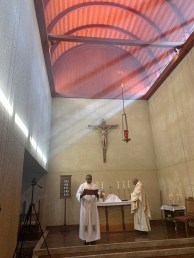 And so in our little chapel in Berkeley, I gave thanks for the love and light of Christ the King, and when the Gospel was sung by our good priest, sunlight shafted through the high windows, enshrining the chancel. It was a vision of love, of knowing, of seeing the truth of Christ, that goodness conquers evil, love conquers hate, and the victory is ours in the precious name of Our Lord Jesus.
 It’s raining!
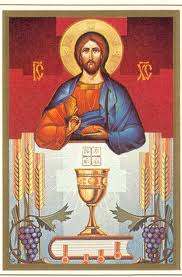 Our preacher is not interpreting these answers on his own, thankfully. He has over two thousand years of Church teaching, Church debate, Church conclusions. He has his own life-time on earth so far, his learning from others in this time, his humility in terms of that learning. But the good news is that there are answers to our many questions. There are answers to who we are, what we are, where we are, where we are going, why and how. And we too, pray for humility as we listen to others and join in their song of God, join in their dance of beauty, as bread and wine welcome the Real Presence of Christ.
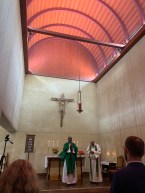 And so, like so much of Holy Scripture, we learn it is about our hearts, our deepest desires, how we decide to live our lives. It is about what we do when we are invited. And as we choose to attend the feast on a Sunday morning in a chapel in Berkeley, we take part as we should – singing, confessing, praying, opening our hearts to mystery and miracle at the Eucharistic table.
 And we turn to our neighbor and see them in a new way. We see our family members in new ways. With each turning and seeing, doors are opened in our souls, doors we didn’t even know were there.
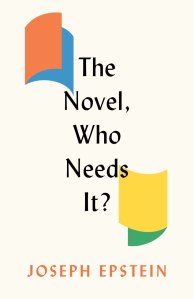 I have been reading Joseph Epstein’s curious book, The Novel, Who Needs It? I have often asked the same question, given my fascination with writing novels with ideas, and have hopes of learning from this most distinguished man of letters.
 Who writes novels of ideas today, or in the last fifty years? Who writes these and still is published? They may make one think, and that is challenging for many, especially if the thoughts “trigger” negative feelings.
 It turns out that Joseph Epstein, whose writing I greatly enjoy, as essayist and culture defender (not warrior), while he has written numerous short stories but has never written a novel, and I wish he would write one so I can learn from him. But critics often don’t write in the genre they criticize.

 And so we are back to the loving and demanding God of Abraham, the God of the Jews and the Christians. We need to listen to him so that we can make sense of this world in which we find ourselves. We need to listen to the law and be held
 accountable, for one day we will face judgment whether we believe in judgment or not.
 ions, question some of these debates, and in the end, I, along with my characters, will be accused of preaching and teaching. So be it.
 Victor Davis Hanson recently wisely observed that working on his farm balanced mental work with physical work to leave him more whole, or words to that effect. There is truth to this, that all mind or all body makes for a lopsided individual. We have been created with both, and perhaps it is also true that one influences the other, even corrects or directs the other, in some miraculous complementarity.
 We are curious creatures, you and I, made in the image of God Almighty. Little mortals, made immortal in his image. We sense this from a deep place within, the heart or the soul or the mind. We sense we are made for something else, and our yearning for happiness and beauty and goodness and justice is planted in this place within. Our yearning for something that is fleeting in this earthly world gives us the hints and guesses that grounds T.S. Eliot in his magnificent Four Quartets.
 It is a dance with life, I suppose. And I’m glad to be dancing, listening and learning the tune the stars sing, to one day follow the song through the galaxies to the heavenly city of Jerusalem, to dance with our Lord of love, our creator and redeemer.
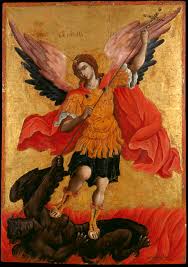 Friday was the Feast of St. Michael and All Angels. I find angels to be special gifts we are given. They are messengers, guardians, and protectors. It is easy to forget that they are all around us. I firmly believe that I have my own guardian angel that prompts me, protects me, and encourages me.
 And so in this rich passage, we see the beginnings and the endings, so that we understand our gift of salvation in the endings, either of our earthly life or the end-times of Earth. Either way, we are welcomed by Christ into his Kingdom. We are welcomed to the great feast, the supper of the Lamb, the Heavenly table. We are invited to be a guest, to make merry with many others who have said yes to Christ, yes to his invitation.
 For Christ gave humanity entrance to the Garden of Eden and we have chosen to remain in the jungle of death. We have chosen to look the other way, passing by the wounded man on the side of the road, wanting only to be left alone. We must speak the truth, that men are men and women are women, that parents have the right to raise their children and determine their education, that abortion can only be an option when the life (not just the health) of the mother is at stake. We must call genocide by its name, and all holocausts by their deeds. We must defend the defenseless, execute our laws, respect justice meted out equally. We must respect all persons, unite and not divide, for everyone is made in the image of God.
 Christine Sunderland
