Tag Archives: Christianity

March Journal, Second Sunday in Lent

It’s been cold and rainy here in the Bay Area, at least cold by California standards. Wind chill. Woke to snow on Mount Diablo the other morning. Rather like our souls, feeling the cold and rain and wind of the world battering our Lenten journey.

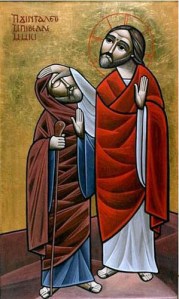
We are called to sanctification, says Saint Paul to the Thessalonians in our Epistle today, and Lent helps us with that. We clean out our hearts and our habits and all the mess that we have made of our lives. We scour with honesty, disinfect with courage, and peek at what we have left. We repent of our pride and our unlove and our breaking the commandments without care. We desire to be made new, to be healed and made whole, by the greatest miracle worker of all, Christ Jesus, who in today’s Gospel, heals the daughter of the Canaanite woman who is “grievously vexed with a devil.” He does it from afar, because the woman believes, is faithful. (Matthew 15:21+)

We too, want that healing. We too, want to have that kind of faith.

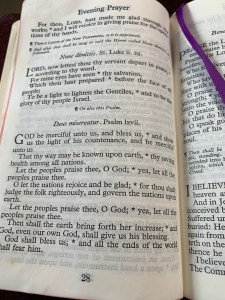
And so with great difficulty I have tried to memorize my psalm, but the words slip away, so I placed it in my phone with easy access, banishing my excuses or at lease embarrassing them. “God be merciful unto us, and bless us, and show us the light of his countenance and be merciful unto us.” (Psalms 67)

Mercy, blessing, and light. Like the burning bush, perhaps. Light radiating from his face toward us, love enlightened. Sacrificial love, the kind of love we are to practice. Forgive my unlove, Lord. Teach me to love.

But can we love with a cluttered soul? We must clean things up.

I visited our Berkeley chapel this morning and afterwards looked into the basement of Morse House next door where we store things, all kinds of things (don’t ask). It needs cleaning out, sorting, reboxing. There were files that needed tending, histories that needed recording and saving for future generations.

I thought my soul must look like that if the light of the Father’s countenance were to shine upon it. Things forgotten, things undone, things done that shouldn’t have been done. And so I pray for the light to see the damage, the minutes, hours, days and years of living, all packed into memory files that need opening and scouring.

I have found that weekly Eucharists help with this, feedings to strengthen my soul. The Church is like a spiritual gym and must be enjoyed weekly if not more often. We have been given the great gift of Christ among us, solving our sufferings, leading us with the light of His countenance. In the Mass we confess our failings and receive absolution. We are clean when we step to the altar and receive Christ himself in the mystery of the bread and wine.

Thinking now of this morning, and the amazing contrasts between the ordered space of the chapel and the disordered space of the basement and the wailing wind outside, I am thankful for the good clergy we have, the faithful friends who worship alongside me, and the organ that sends notes of glory into the russet dome above, sent aloft with our soaring songs.

I am thankful for a moment of brilliant light that revealed who we are, children of the Father, the Son, and the Holy Ghost.

“God be merciful unto us, and bless us, and show us the light of his countenance, and be merciful unto us…”

March Journal, Quinquagesima Sunday

My novel, The Music of the Mountain, has received another endorsement, this one from the admirable writer in England, Francis Etheredge, bioethicist and theologian:

“In what is very nearly a dystopian novel, Christine Sunderland takes a much closer look at a person who encounters baptism. In this, the second of her books about a semi-mysterious mountain, she takes up the previous theme of hope amidst destructive trends in society. There are four people at the heart of the book. And, by contrast with an illegitimate, authoritarian, withering of justified dissent, these four are very much at the beating heart of both preserving and advancing a renewal from above.

So, the outer circumstances of the novel are as impenetrably destructive, as the inner group are personally engaged in the intimate struggle to love in the truth. At one point, while we know how each of the four have been affected by the cultural crisis in which they live, there is a pointed encounter between those living the inner life and those seeking to puncture it as abruptly, aggressively, and intimidatingly, as they are unjustified in doing so.

The book is about two men and two women, almost entailing the possibility of a double love story which, in a certain way, is unexpectedly but beautifully concluded. The elderly man, a widowed Anglo-Catholic priest  assists, like an emergency doctor, at the late but timely coming to Christ of an almost atheist, but probably agnostic professor of ethics who is wholly taken up into Christ. While the young man and woman, clearly taking a two stepped kiss to courtship, are equally traced through their first meeting to marriage and a family, albeit the latter is viewed from on High.

Just as the dialogue between those who love is intimately unfolding, just so there is an equally, painful incapacity to even talk, in those who execute the mandate to burn good books. Christine Sunderland’s novel expresses, in the likely reader’s tears, the very contrast between being open to the mystery of life and being hardened by the dictates of an impenitent hatred of what is good, true and beautiful.”

Endorsed by Francis Etheredge, Catholic married layman, father of 11, 3 of whom he hopes are in heaven, whose latest book is Transgenderism: A Question of Identityhttps://enroutebooksandmedia.com/transgenderism/.

Reading and writing and speech itself are gifts given by our God of love, part of the miracle of being human and made in His image. They are graces, mysterious and real, that express who we are and who we are meant to be. They sculpt and carve greater truths through metaphor, symbol, story, and character. And, at the end of the day, they tell us what love is by showing us love, dramatizing love, making love real.

Just so, today’s Epistle is the stunning ode to love that St. Paul writes to the Church in Corinth (I Corinthians 13+): “Though I speak with the tongues of men and of angels, and have not charity, I am become as sounding brass, or a tinkling cymbal…” This poetic chapter describes the nature of love (charity), what it is and what it isn’t, with words that paint images to help us see: “For now we see through a glass, darkly; but then face to face: now I know in part; but then shall I know even as also I am known…”

Sight is again repeated in the Gospel story of Christ healing a blind man. For that is what we are, blind, feeling our way through life, reaching for God, for Eternity, for Love. We know this intuitively but we must act upon it, sculpt our own souls with Christ himself.

And so we clean out our hearts, confess our sins, receive absolution, and step into Lent to rise on Easter Day. In this way we become part of the music, part of the hymn of love, speaking the words and singing the notes that pull us heavenward. In this way we learn to love as we are meant to love, and we become part of the mystery as we enter the miracle and see Him face to face. We are no longer blind, but can see.

January Journal, First Sunday after Epiphany

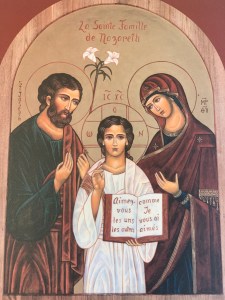
Holy Family of Nazareth, Denise Gosselin Gravel, Iconographer

This year, Epiphanytide, swinging on the date of Easter, a moveable feast, runs a full five weeks. The longest it can be is six weeks, so we are close to hearing all of the lessons appointed for this season of light. Today, the first Sunday after January 6, Epiphany, the Gospel lesson reveals another revealing of the Christ Child, who he is and why it matters.

The story is told by Saint Luke, thought to have been particularly close to Mary, and thus this writer also gives us the main narrative of Christ’s birth. It touches me, as a mother, for we forever worry about our children. My son is fifty-two, and when I learned there were raging fires in Los Angeles on the day his plane was due to arrive from Bangkok (Wednesday) I doubled, no tripled, my worrying. The plane arrived safely and one day I will find out what he saw in those skies, but for now I am grateful he made his connection home to Denver, albeit in the middle of the night. It is moments like these that make me grateful for cell phones, messaging, and even FaceBook. How did we ever manage without instant communication?

But returning to the story in today’s Gospel, about the boy Jesus in the Temple. We are told he is twelve years old and goes missing, at least his parents cannot find him. When they do, they fuss over him asking what was he thinking going off like that. (Sounds familiar.) And of course he replies that he was about his “Father’s business.”

An epiphany. A light shines on Jesus and who he really is.

The story produced other epiphanies in my little brain. He was born a baby, a human baby, and would have grown as we all grow, learning from our environment. He must have absorbed the lessons of the local synagogue, the readings, the conversations, as he grew up, for he needed to know these things, the history and rituals of his people, their prophets, their challenges. And so he is drawn to the temple in Jerusalem when they visit for the Passover feast. Luke writes that they had gone there every year (!) as was the custom. And yet we only have this one account of Jesus questioning the rabbis.

Given the choices all writers make, I have often thought the Gospel accounts were carefully curated. When there is a feeding of five thousand, this is only one account of many feedings we do not hear about. The healings too are probably too numerous to list, both of soul and of body. How many did Christ the Lord raise from the dead?

And just so, Mary and Joseph most likely were challenged with the boy Jesus and his remarkable parentage and his ways of learning, led by his Heavenly Father, guided by the Holy Spirit. This was their twelfth Jerusalem Passover, but Jesus is now of an age – a precocious age as mothers know – when his mental and physical growth take new turns. We call it adolescence. They called it becoming a man.

Today we ponder our time on Earth, Jesus’s time on Earth, and the accounts we are given, so carefully and prayerfully written “for our learning.” We are told in the Collect for Advent II to “inwardly digest” the Word, Holy Scripture. For indeed, these accounts, historical accounts, are food for our souls. Scripture tells us what is important in life, what is good and what is bad. Scripture, and those who interpret these Holy Words for us, gives meaning to our time, meaning to our individual lives. These words set us on the right path, shining a light in the dark forest of our days.

I for one am glad and grateful, for with every lesson, new epiphanies reveal more glory here and now and then in Heaven and eternity. What we don’t know, what we don’t understand, doesn’t matter. What matters is in the pages of this book called the Holy Bible. What matters is what we do about these matters in our own lives.

Are we part of a church community, one that welcomes us on board to sail the seas of our time? For community is one of the pillars found in Holy Scripture – community that teaches us, feeds us, leads us through the rough waters. It is the church family that gives us the songs to sing, the prayers to pray, the eucharists to strengthen our hearts and souls.

The answers to life’s questions are here for the taking. We need only trust and obey as the old hymn goes. Looking for happiness? Trust and obey, for there’s no other way, to be happy in Jesus, but to trust and obey.

One of my grandchildren said she couldn’t find a church she liked. I suppose she thought there was a perfect one, just for her, as if she were at a buffet table, trying each dish. Alas, I told her, every church community is fallen, for it is made up of fallen men and women just like you and me. Find one close by and attend regularly. Be slow to judge and quick to forgive.

For without being a member of the community we call the Bride of Christ, the Church, we will die a slow death from spiritual starvation. We need to be fed, and this is where Christ is, feeding his sheep, caring for you and me. Don’t go it alone, or even imagine it is possible. Hermits are few and far between.

If you want to experience epiphanies of heart and soul, walk through those doors, take a seat, and sing with all your might. Pray prayers of repentance, prayers of petition, and prayers of thanksgiving. Listen and learn from the lessons read and the sermons preached. And do these glorious things with others, your new brothers and sisters, mothers and fathers, grandmothers and grandfathers. One day you will be in their shoes, and you will be given parish children, grandchildren, in your church family. One day you will open the doors for those outside who want to come inside, in from the cold, the damp, and the dark of our world.

One day you will see them from Heaven and you will hear the words, “Well done, thou good and faithful servant. Welcome home.” You will turn and see the Master, the one who questioned the rabbis in the temple and set our worlds in motion. And you will know the ultimate epiphany, Christ himself.

January Journal, Second Sunday after Christmas

My novel in progress, The Music of the Mountain, is set in the month of January 2023. It is a dark and stormy month, a time of short days and long nights. And yet January is a month of epiphanies, of new beginnings, of seeing what we didn’t see before. An epiphany is a sudden thought, a conclusion, an answer. January unveils these day by day, week by week.

But most of all, being the first month of the new year, time itself commands attention. What have we done or left undone in the past year? What do we regret? What would we do differently if we had the year to do over again? We make resolutions to be better.

It is unfashionable to admit fault, to judge oneself, to admit we are not all we should be. We are told that judgment is judged to be unkind, and above all, we must be kind to ourselves, looking for excuses, reasons why we didn’t love enough, circumstances that would send the judge and jury home for good.

Falling short of the mark hurts.

And so during Mass this morning I was glad to be reminded of my failings in the General Confession and the Absolution following. It is a crucial, cross-bearing reality, that we are human beings subject to moral law who will face God’s judgment one day, like it or not. I for one need reminding in this world of no fault, grievance, and victimhood.

And so we acknowledged and bewailed our manifold sins and wickedness we have committed by thought, word, and deed, provoking God’s wrath and indignation. We repent and are sorry. The burden is intolerable… we call on God for forgiveness.

It is good to be reminded of reality. It is good to repent on a regular basis after holding oneself up to the bright light of Heaven. In this way, we choose the best path to take in the new year. In this way we see ourselves as we are, not as we imagine, and allow God to carve away the darkness and bathe us in his light.

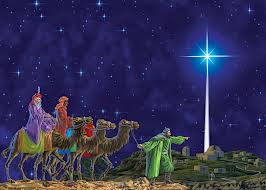
Today is the twelfth day of Christmas; tomorrow is the Feast of the Epiphany of the Lord. Epiphany, of course, is when the Magi or Wise Men arrive in Bethlehem, bringing gifts to the Christ Child. Epiphany, then, is the good news sung to the rest of the world, not just the shepherds and the holy family. We are included in this epiphany of light; we travel to the creche and kneel and worship too. We bring our gifts – ourselves. We too have followed the star in the heavens, wondering where it will lead. Could something so grand and cosmic as a star in the night sky shine upon the meager manger in Bethlehem? And yet angels appeared to the shepherds, the great choir singing to the lowly herders.

Christmas tells how the little becomes large, how flesh houses spirit. God becomes tiny and humble; kings follow a star and kneel before him.

To find answers to the human condition, the whys and the wherefores, look to the manger bed and see who kneels before the Christ Child. If kings and shepherds kneel, we can too. If they see, we can see too.

January is the month of the Holy Name of Jesus, so that we give the baby in the manger a holy glory by intoning his name, breathing the name, calling his name.

January is the month of life granted through this Holy Child, but it is also the month of death decreed with the slaughter of our own innocents through abortion. For half a century this month proclaims our grief, prays our petitions as we walk for life all across this nation.

The star is bright in the night sky as we embark on this year in time. We divide our time into months and days and hours, stepping through the squares on our calendars, trying to pay attention to each precious, passing minute. It is too much for our ashen earthiness, and so we take an hour on a Sunday to bundle the time into meaningful notes, and sing a melody of penitence, absolution, eucharistic feeding, and by the end of the hour we see epiphanies meant only for you and me.

We go to church for an hour each Sunday and kneel alongside the people of God, the bride of Christ. For in that humility, epiphanies are born, and we see again. We see the path laid out for us, at least for the next day and week, as we step into the woods of time, marking another year.

December Journal, Fourth Sunday in Advent

There is the silent hush of valley fog enshrouding our house today. The mute world waits, hoping for a sign. A sign of what? A sign of life, life everlasting, before and to come. A sign that we are more than flesh, more than animals on the hunt to survive.

I have long found it interesting that the Jewish world before Christ knew who humankind was and is, knew their identity and mission expressed in rituals and rules. They knew they were made in the image of God, their Creator. Just so, they treasured life, children, families. When they erred, their God called them back to Him and set them on the path to life.

The Greco-Roman world also knew that humankind was not mere flesh, but owned a spirit, a soul.

And so Jesus, the Son of God incarnate, was born into the Roman world, a Jew in the messianic lineage of David. The time was ripe for the two cultures to merge, for the Roman world gave the life-changing message of Christ the forum to broadcast the good news, the gospel. It is in the Roman Mediterranean basin that the first Christian churches would be planted, secretly in homes, then building upon the graves of the martyrs, celebrating eucharists over holy bones.

When Jesus was born in Bethlehem of Judea He synthesized these worlds, baptizing Rome with Jerusalem, and opening Heaven to all mankind. 

Today’s gospel tells of John the Baptist who prepares the way for Christ’s birth, life, death, and life. The great followings that John attracted would shift to Jesus of Nazareth, as our preacher pointed out today. The Baptist prepared the way. And what did he say that prepared the world for the Savior? What could he possibly say that would be enough? Repent, he said, make his way straight. And with baptism, each follower said yes, I will change and I will make the crooked straight in my life.

And so the way was prepared in the hearts of many.

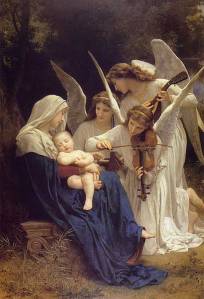
William-Adolphe Bouguereau (1825-1905), Song of Angels (1881)

Just so Advent prepares each one of us to receive the Lord of Lords, to kneel with the shepherds and bring gifts with the kings, to fly with the angels into the starry night of Christmas, Christ’s Mass.

Christmas, full of giving and singing and sharing for a brief time, gives us a taste of glory, the glory of the angels, the glory of life itself, the glory in a newborn baby.

Christmas says you needn’t be great or rich or powerful. In fact, it is better if you are lowly, poor, and powerless. Christmas says look at the baby and sing to him. Thank him. Love him. Invite him into your heart.

As Christina Rosetti wrote in her lovely Christmas sonnet, “What can I give him? I give him my heart.”

May we all experience the glory of the love of God this week, this sacred and holy time, when Christ Jesus came among us, bringing us life here and now, and forever in Eternity.

Come Lord Jesus, come.

Praying into the Presence of God

61Qpp9BZDOLWithin Reach of You: A Book of Prose and Prayers by Francis Etheredge (St. Louis, MO: En Route Books and Media, 2021, 260 pp.)

Reviewed by Christine Sunderland

When do prayers become poems and poems become prayers? When they are addressed to God who is present and listening. In Francis Etheredge’s third volume of his trilogy of prose, poetry, and prayer, he turns prayer into poetry and poetry into prayer, shining light onto words as pathways into the presence of God. As in the previous two volumes, he introduces the prayers with meditations.

In Mr. Etheredge’s first volume in this trilogy, The Prayerful Kiss, he writes of his personal journey from sinner to saved, and in this search for meaning and forgiveness, somewhat like the prodigal son, he meets God (or God meets him?) and is reborn, now seeing all life as sacred. In the second collection in the trilogy, Honest Rust and Gold, he journeys deeper into the action of God’s grace upon us and within us, recreating us through the sacraments of the Church as we are baptized in Christ’s love.

In this third volume, Within Reach of You: A Book of Prose and Prayers, prayer becomes poetic, as it weaves the eternal into the mortal, life into death. Prayer becomes the true desire of poetry, to reach for God and touch the holy, reaching for words that describe the indescribable, that explain the unexplainable, through metaphor and image. For we live within the created order, a sacred but fallen world, just as we are sacred but fallen. We must use words to touch the sacred, to sing of glory to our fallen world.

Thus, we reach for Christ in these prayers, entering a holy space. As seen in the cover image, we reach for the Host, the Real Presence of Christ in the Eucharist, offered to us, within our reach. The title is two-way, perhaps: Christ is within our reach, and we are within the reach of Christ, through prayer, through sacraments, through the Church. This intimate touch is personal, for, like Moses, we stand before a burning bush, one that does not burn up or burn us, but gives us light to see, enlightening us, loving us. In this light, we see our way forward:

“What is Prayer? Prayer is immediate because God is present…. Prayer is personal – because it arises out of each person’s life; and prayer is communal because we pray with all who pray for all who need prayers… we are speaking to one who listens; and, whether we use words or not there is prayer in the intention to pray. Prayer is challenging because it may not be answered as we ask…. Prayer is for the smallest need and the greatest common good. Prayer excludes no one and includes everyone…  prayer makes it possible for us to accompany both the living and the dead into the presence of God.” (xxviii-xxix) (italics mine)

And so the trilogy moves from a personal pilgrimage into faith, to faithful participation in Christ’s Church, and lastly to praying for the world, past and present and future, the living and the dead, the communion of mankind, as we can only pray when we are in that space in reach of God.

Prayer, we see, is rooted in our daily life, in our family life, in our parish life, in our community life, and in the suffering life of the world. Prayer gives “flesh to the daily, ordinary or extraordinary situations out of which prayer arises” (6). In this sense we pray without ceasing, placing us always in God’s presence: “He is present to all that we do” (31). He works daily miracles in our lives. We need only reach for him, watching and praying, and, in a sense, allow him the space to work his will in us, “making possible the impossible” (34). In Mr. Etheredge’s prayer-poem “Pilgrimage,” he prays, “You know how your word passed through my life to the core/ Of what I wanted: ‘I come to give you life and life to the full’” (cf. Jn 10: 10) (35). Indeed, we are full, fulfilled, fulsome when we are in the presence of God.

Rooted in the real world, prayer can be simply “blessing God for the splashes of life” (41) that we see all around us. It is true, I have found, that simply giving thanks opens that space for God to reach us. And there are always reasons to give thanks – for life, for breath, for each day given, for my cat (!), for my family, for… Christ himself amidst the splashing life all around me. Indeed, I give thanks for being in reach of God, he in us and we in him.

Mr. Etheredge soon moves beyond the natural world rooted in family and the earthy Earth, to the universe. We see how faith and reason blend, supporting one another, reflecting the creation and the Creator: “Who knows how the universe goes, whirling and twirling and/ Curving through elliptical twists and turns, burning here and/ Freezing there, gaseous and solid, but solidly dynamic and moving,/ Cascading and still, still as staying in one place while moving… ” (51)

With these profound echoes of T. S. Eliot, we journey into the creative Word of God reaching and touching us, in time, in Scripture, in history, in people in our midst. All these Words of God speak to those who witness with their words, witness to the manifold works of God in our world and in our hearts: 

“Take us as we are, where we are, with whom we are and open our 

Lives to your word, mingling your word with our lives, like the 

Mingling of water and the Holy Spirit through which you come to 

Dwell in us, opening up the wells of salvation sunk in the union

 Of our Savior, Jesus Christ, with each one of us, when the word 

Became flesh (Jn 1: 14) and entered the whole of human history 

Taking my history and yours and making of it the history of salvation (56).” (italics mine)

In this precious collection of prayer-poems we pray for our wayward culture, today’s culture of death. It is a culture that must be baptized by the Holy Spirit, to assert good over evil, truth over falsehood, love over hatred. And so, we pray, come Holy Spirit, bathe our culture with Christ’s love and all life, from conception to grave. We pray that we humans humanize our race by embracing our beginnings at conception, cherishing our unborn: “There must be in the heart of all a desire to improve the life of the nation; indeed, to be a part of progressing the welfare of all. For, without peace, who can build? Without truth, who knows what is happening and what needs to be done? Without love, what good will there be for any of us?” (218) (italics mine)

In prayer, God grows within us: “The presence of God, then, while always and everywhere true, is at the same time like a seed-to-be-perceived and, therefore, grows through prayer, the life of the Church and our enfolded, unfolded living of it. So, while our weakness may increase, it only increases to magnify the power of the Lord and our hope in Him” (251). (italics mine) 

And so much more…

Within Reach of You places you and me in God’s presence. For when poetry becomes prayer, we are given a great gift: not only the vision of God, but a personal God, a present God. Our beginnings and endings and beginnings again as we enter eternal life are found and founded in the love of God the Father, God the Son, and God the Holy Spirit, in this world without end. Amen.
francis.etheredge-200x300

Francis Etheredge is a Catholic theologian, writer, and speaker, living in England. He is married, with eight children, plus three in heaven. Mr. Etheredge holds a BA Div, an MA in Catholic Theology, a PGC in Biblical Studies, a PGC in Higher Education, and an MA in Marriage and Family. He is author of 11 books on Amazon:

Amazon UK

Amazon US   

Visit Francis Etheredge at Linked-In for book news and blog posts.

PRESS PIC small

Christine Sunderland serves as Managing Editor for American Church Union Publishing. She is the author of seven award-winning novels about faith and family, freedom of speech and religion, and the importance of history and human dignity. She lives in the San Francisco Bay Area with her husband and an incredible white longhair cat named Angel.

April Journal, Easter Sunday: Resurrection

RESURRECTION (3)Christ is risen, he is risen indeed!

He has conquered death, raised the dead, and will raise us too. We reach for his hand, and he carries us up, now and at the end of time on Earth, our time and all time. In his death, is our life; in his life, our death dies. We need only reach for him, touch his wounds, say yes, Lord, I believe. Yes, Lord, take me with you. I am yours. Remember me in Paradise. Remember me now and forever. Hold me close until the morning breaks, when dawn lightens our world of worry and war.

Easter, and the weeks preceding, give us hope. They remind us, in the re-enacting of these events, of the great drama of salvation. This life, we see, is a prelude to our true life to come, a preface, a hint of the eternal joy Our Lord promises.

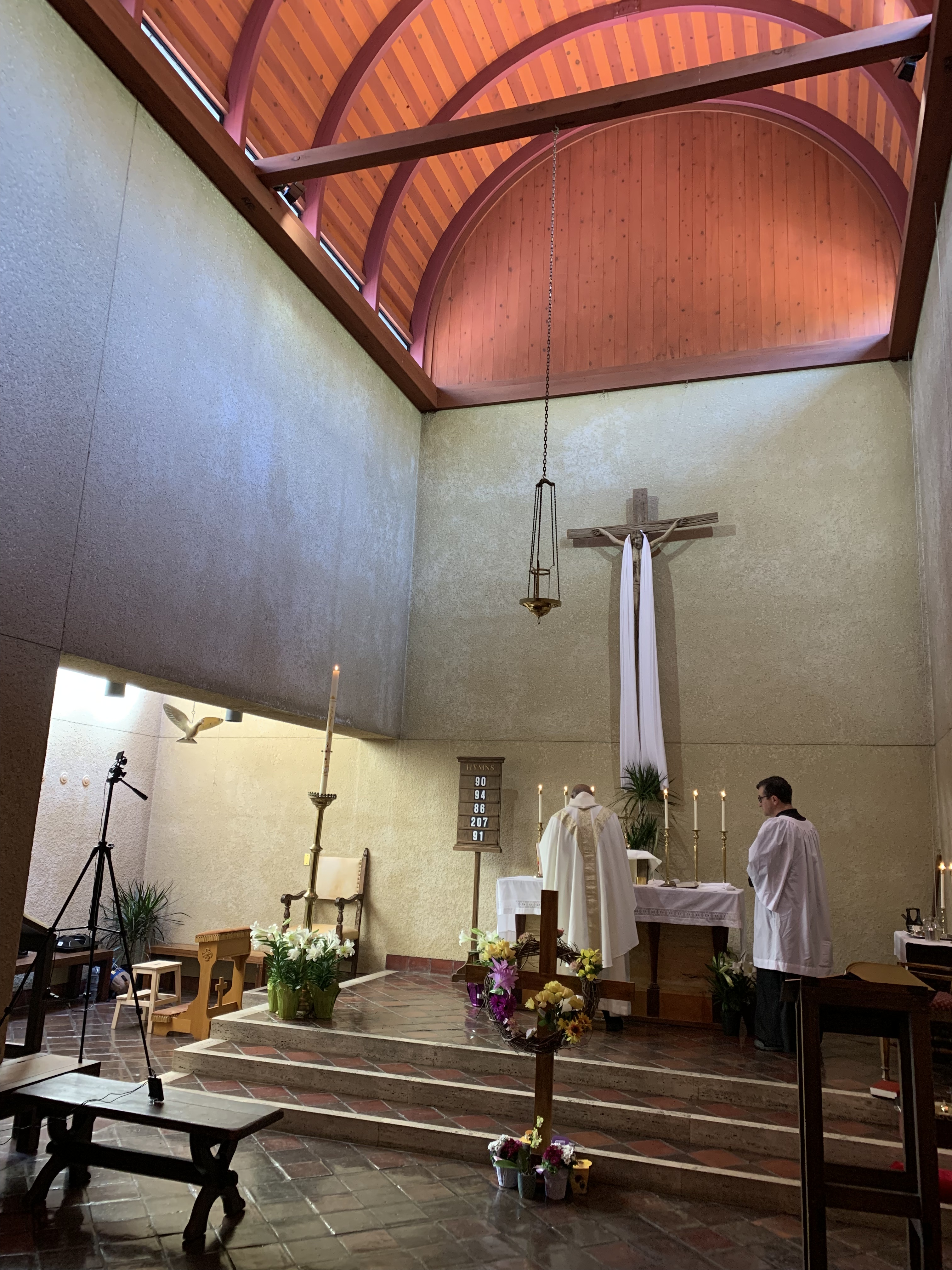
Last Sunday, Palm Sunday, we entered the gates of Jerusalem, alongside Our Lord on an unridden colt, a pristine colt we are told in one Holy Scripture account. We waved our palms, following the procession out the side door, through the parking lot, along Bowditch, turning at Durant and assembling before the red chapel door. Our good priest knocked on the closed door, re-enacting the entry of Our Lord into the holy city. We entered, to tell the story of the great events that were soon to come.

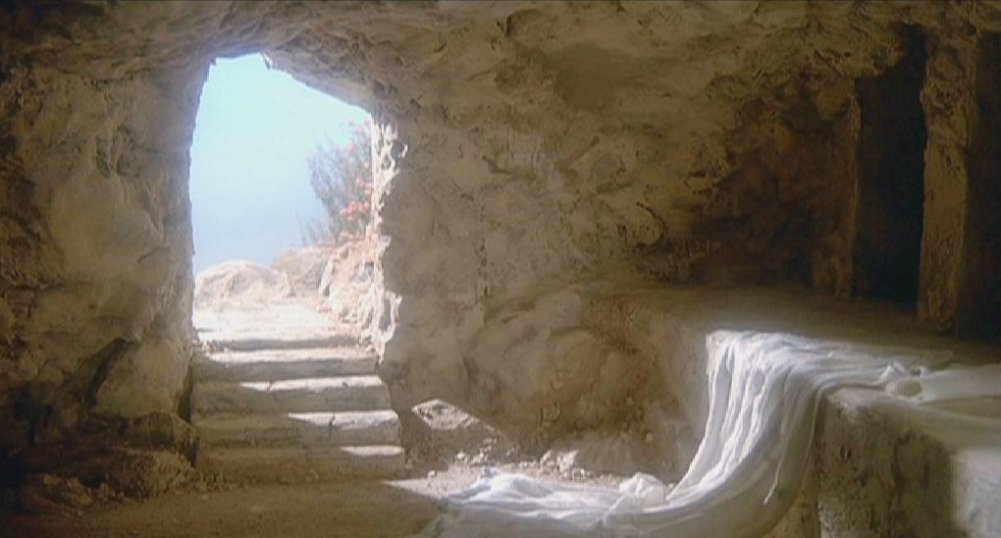
Resurrection Of Jesus Empty Tomb drawing image in Vector cliparts category at pixy.orgAnd so today, after re-enacting the drama of Holy Week – Maundy Thursday and the institution of the Holy Eucharist at the Last Supper, the Good Friday arrest, trial, and crucifixion of Our Lord on a hill outside the gates, the deathly silence of Holy Saturday and the evening lighting of the paschal candle, the world waiting for rebirth, for resurrection – we find Mary Magdalene discovering the empty tomb and meeting the resurrected Lord of Life.
Throughout the week we read the witness accounts of these events again and again in the Gospel readings appointed for each day. It is a kind of “harmony” of the Gospels, a side by side, day by day vision of the personal testimonies of St. Matthew, St. Peter (told by St. Mark), St. Paul (told by St. Luke), and St. John. Each emphasizes a unique witness, as would be natural, yet all re-affirm the key events that would change the world forever: the crucifixion, death, and resurrection of the Son of God.

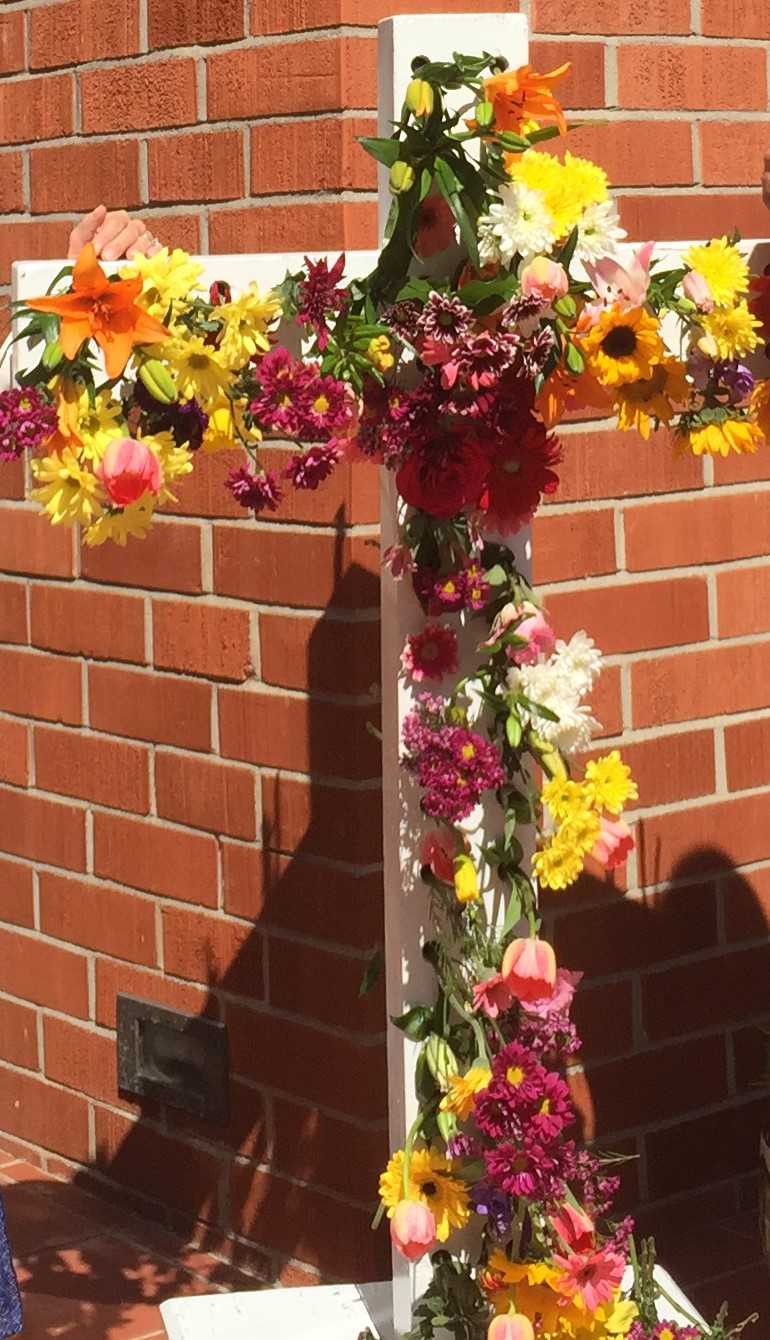
IMG_5132Easter holds hope within it. Dawn breaks on an early spring morning, and we assemble in church to sing well-known Easter hymns, flower a white cross, drape a white mantel over the now visible crucifix above the altar. Gone are the purple shrouds of Passiontide, those weeks leading to this moment of joy. We too bare our souls, removing the shrouds of death and despair, as we don the garments of life and joy.

There is a tradition of baptism on Easter Eve. Just so we are rebaptized with every Eucharist and every Easter. We recall this glorious gift of salvation every Sunday, but Easter is the glory of all glories.

Our fallen world needs hope, will always need hope. Christ gives this hope, seeding his love in our hearts. He waters the seed and it grows within us, if we desire it. In time, the Creator recreates us, again and again. He loves to create, this Lord of Life, create us as we are meant to be and become. We sense this, even those who say they don’t believe, through pride and self-delusion. We all sense there is more to life than mere matter, that mere matter isn’t mere, but holy in itself, created by the Creator, the Lord of all.

And so we say, “Christ is risen, he is risen indeed!”

Easter Lilies

Easter LiliesIt is a rich and glorious season, this time of Eastertide. 
As I plucked wilting blossoms off my Easter lilies near our front door I inhaled the sweetness of those remaining, taking care to avoid the staining powder of the yellow stamens. I then attended the roses that once sat on my dining table and now are over the kitchen sink. Five buds are left with shorter stems clustered together in a small pitcher between sculpted figures of Mary Magdalene and an angel. As I gaze at these reminders of the season, and especially of Easter Day, I wonder at it all.

The season of Eastertide, the fifty days linking Easter and Pentecost, provide a joyful time of quiet reflection on the meaning of the Resurrection. The immense implications of this historical event, when eternity intersected time, continues to stun me. And the scripture readings assigned for these days reflect as well, considering the meaning of this new world that was created by the empty tomb.

And indeed a new world was created with the death and resurrection of Christ. It is a revolution changing everything. In one of his first resurrection appearances to the disciples Jesus gently explains what has happened. As our preacher said this morning, Christ appears to them in an upper room where the doors have been locked. He has passed through material barriers to be in their midst. He has power over the world of matter in which we live. Is he a ghost? A vision?

St. John’s eyewitness account describes how Christ points to his wounds in his hands and his side as proof he is no ghost or vision. The disciples can see and touch him. He has a material body of flesh and blood. He is real. And yet he has the power to pass through matter.

In much the same way he seeks to enter our hearts, our own bodily chambers, to dwell in us. How does he do this? He gives the apostles power to forgive sins by breathing his spirit upon them. From this time on, the apostles, who give life to the Church, act for God in the forgiveness of sins. Why?

Christ desires clean-swept hearts, hearts of light that have expelled the dark. He can only enter a heart that is full of light, enlightened, clean of sin.

It is a profound mystery and yet it is profoundly simple, just as each of us is a profound mystery and yet profoundly simple. All creation teems with intricate complexity yet delightful simplicity. The day turns to night. The rain falls on the earth. The sun shines. And the layered meanings and conclusions of learned theologians can be summed in one sentence: God is love.

Just as I pluck the dying trumpet blossoms with their staining stamens, I pluck out my own selfishness, greed, envy, pride, my own staining sin. I trundle to Mass and confess. I repent and am forgiven. I can now enter the open doors of the Eucharist through prayer and praise, Creed and Scripture, to meet Christ in the bread and the wine. He enters my body, heart, and soul. I am given life and light and joy, having partaken of the divine.

All this Christ Jesus taught and showed in his life on earth, as he walked among us. The week before his death he gave us the Holy Supper and showed how he would return among us again and again with each Eucharist. After his resurrection, he gave us the Church and the way to forgiveness. After his ascension he gave us his Holy Spirit to strengthen, to comfort us. All told, Christ Jesus gave us himself, the only path to Heaven – the Way, the Truth, and the Life for, as St. John writes in today’s Epistle,

 “And this is the record, that God hath given to us eternal life, and this life is in his Son. He that hath the Son hath life; and he that hath not the Son of God hath not life.” (I John 5:4)

Flowered by Christ

Easter St. Peter's  with family (2)We have a lovely tradition in our local parish church. The Sunday School children and staff “Flower the Cross.” Shortly before the sermon in our Anglican liturgy, during the “sermon hymn,” we process up the central aisle carrying flowers to the chancel steps where a thick white cross, about six feet tall awaits us. The cross has deep holes that penetrate the beams and we insert the stems into the holes. Soon the white cross is covered in brilliant color.

This year as I helped small hands reach for the cross to add another flower, I thought how each of us was like those flowers and stems and bits of green. We each had our own colors and characteristics and we carried them to the cross. We each had our own talents and treasures and we offered them to the cross. We each had our own joys and sorrows and we slipped them into the deep holes of that wooden cross.

The white cross welcomed us, pulling us into its wood, and in some way we became part of that cross of Christ. And with the flowering we were flowered too, changed, reborn into new life.

For Easter celebrates new life, not only spring and its seeds bursting into blossoms, but our own new resurrected life. For forty days and nights we have been dormant seeds buried in the dark soil of Lent. We waited and we watched and we prayed for this glorious Easter morning when death dies and life lives, rising from the tomb, Christ’s tomb, our own tombs.

There is no point to Christianity if one does not believe in the resurrection of Christ and its revolutionary effect upon us all. In the resurrection, suffering and sorrow change into love and joy. Darkness becomes light, and the words of the psalmist are fulfilled: 

“If I say, peradventure the darkness shall cover me; then shall my night be turned to day. Yea, the darkness is no darkness with thee, but the night is as clear as the day; the darkness and light to thee are both alike.” (139:10-11)

Today we are covered by darkness. We hear of wars and rumors of wars, of new horrors, new terrors. Brussels, Paris, London, San Bernardino, Boston, New York, Fort Hood. Evil robs youth of innocence, prompting massacres in schoolyards or classrooms. Darkness spreads across the face of the earth.

And so we reach for the light in the darkness that enshrouds our world, entombs our people. We look to God, the author of love and life. We look to the only man who claimed to be God, who rose from the dead, the one whom St. John describes as “the true Light that lighteth every man that cometh into the world.” (KJV, 1:9)

Why I believe in the resurrection and its challenge and others do not, I do not understand. For the evidence is there, clear as the light of day. But I suppose one must seek it, desire it, even long for such belief. For believing costs us. Believing means turning toward the light of love and away from the darkness of self. My bishop often said, “all doubt is moral.” I’m not sure if all doubt is moral, but I’m beginning to agree that belief requires a change of heart, an honorable discipline, a code of ethics that challenges us to change our ways. It is sometimes tempting to doubt, when belief accuses and demands our time, talent, and treasure. Demands our hearts and souls and bodies.

And so Easter’s resurrection message is a radical one. It says to our world, as Father James Martin writes in the Wall Street Journal, “Listen!” Listen to what the resurrection means for us! For the resurrection demands that attention be paid to a man who conquered death. Attention must be paid to his words, his deeds, his miracles of healing and feeding and calming storms and walking on water. Attention must be paid to his claims to be God, and to his Church’s claims after his ascension to Heaven. For the Church he founded, a stepchild of the Jewish temple, witnessed to Christ’s life, death, and resurrection, again and again, in word and deed. Christians died tortuous deaths for their belief in Jesus Christ and who he was. They did not invent him. They knew him. And the witness continues.

Today Christians die daily for their belief in this God-made-man. They cannot deny Christ, cannot deny his light, his joy, his glory. They have been changed, reborn. They cannot go back to the darkness of self.

On Easter morning I thought of these things as I handed a flower to one of the children and helped her shove the moist green stem into the deep dry hole, into the wood of the cross. In that moment, she was part of the cross. She stood back and smiled, satisfied, and reached for another. Our baskets empty, we recessed out to the Sunday School.

We had given ourselves to Easter’s resurrection cross, and Christ had returned the gift a thousand fold. The dead wood had been reborn. So had we. For each of us had been flowered by and with Christ.

All Hallows

all saintsHallowe’en comes from the contraction of All Hallows Eve. To hallow is to make holy, and October 31 was (and is) the eve before All Hallows Day, or the All the Holy Ones Day, All Saints, honoring Christian saints. The celebration is followed by Allhallowstide, in which all of the Christian dead are remembered. This coming week churches all over world will remember their dead, their loved ones, calling out their names on All Souls Day and, in this ceremony of love, hallowing them. The evening before, Halloween, sees the last of the unfriendly spirits roaming the night, for they are vanquished by the light of Christ in the morning, and fear is vanquished by joy.

Sometimes fear is good. It is an intuitive instinct that signals danger. Gavin de Becker, an expert who evaluates potential threats to famous people, titled his invaluable book on safety, The Gift of Fear. And in this sense, fear is a gift, a survival signal, a warning that lights the dark.

Children are afraid of the dark. And we should be too. Novelist Jake Halpern writes in the Wall Street Journal about fear of the dark:

“Since the dawn of man, night has been a time when we were in danger, when we were vulnerable – to lions, club-toting men and giant chasms into which we could fall… it was evolutionarily advantageous for us to be afraid of the dark. Those of us who feared the night and cowered from its dangers, survived. Those who went for strolls in the dark ended up as snacks for lions.”

Today with electric light we laugh such fears away. Yet we are ambivalent about fear itself, sometimes denying it, sometimes welcoming it. We flirt with it, tease it, to see what happens when it draws near, for we have banished most survival fears from long ago such as hunger, shelter, wild animals. We are curious, enticed by darkness.

A friend of mine once claimed that she liked the feeling of fear, of being on the edge of danger, secondhand fear experienced in a book or movie. There are many words for this feeling of excitement. We shudder and shiver, chilled to the bone. A frisson gives us goosebumps. A ghost walks over our grave. We are on the edge of our seats, waiting to be safe again. What is the lure? Why flirt with the dark, with falling into the abyss? Are we rehearsing our future? Our death?

Halloween has in many ways become a rehearsal as well, as children (and adults) don costumes and pretend to be someone or something else and venture into the dark. For some the choice is innocent role playing, choosing to be princes and princesses, musicians or athletes. Still, others choose to be witches and goblins. Some choose the light and some the dark. Some choose life and some choose death: skeletons, ghosts, and grim reapers, desiring to scare.

Our nation too seems on the edge of darkness, in the dusk of its day, playing dangerous games with life and death, slaughtering generations of unborn innocents. We survivors look away, pass on the other side of the road, just as we do in the world theater of wars and rumors of wars, withdrawing and allowing the dark to swallow the light, whether in Moscow or Tehran or the borderlands of the West.

Light and darkness, life and death. The line between them is not often clear, sometimes smudged into dusk and dawn. And so it is in our hearts, where good sheds light and evil darkens.

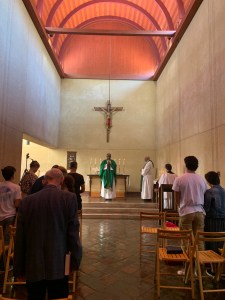
And so I’m grateful that the dark of All Hallows’ Eve is banished by the light of All Hallows’ Day and the light of Sunday resurrection. This morning I gazed upon six thick white candles on the stone altar of St. Joseph’s Chapel near U.C. Berkeley. The candles flamed brightly, the fiery wicks drinking in the air above, flickering their tips toward heaven. A roughly carved crucifix rose above the tabernacle, beyond the suspended Sanctus light. We stood and turned toward the entry as five student acolytes processed in, carrying torches and crucifix, followed by the white-robed clergy. The organ bellowed through the vaulted domed space and echoed over the russet-tiled floor as we joined in songs of praise to God for his saints.

Halloween would not exist if it were not for All Saints, the holy-day that gives the costumed evening its name. After the night of darkness, a weak sun broke through this morning and bathed our world in light. We sang as one people, giving thanks for those men and women who chose the light and turned away from the dark. Martyred for their choice, and today still being martyred, we honor them. History has known a world without Christ, a world of impenetrable darkness, one rightly feared. We peer through the dusk of our days, keeping our candles lit, sharing the love of God, the light of Christ, looking to the morning of resurrection.