

There are times when truth hits forcefully (gob-smacks? or perhaps God-smacks?), as though you always knew it but had buried it and now it appeared like a long lost coin or memory or friend. God’s truth is like that. The Trinity is like that. Love is like that.
Our Bishop Morse of blessed memory often said that the Trinity – the remarkable union of God the Father, God the Son, and God the Holy Spirit – is the love between the three persons of God. It was a confusing idea for me until recently when I thought about our parish churches.
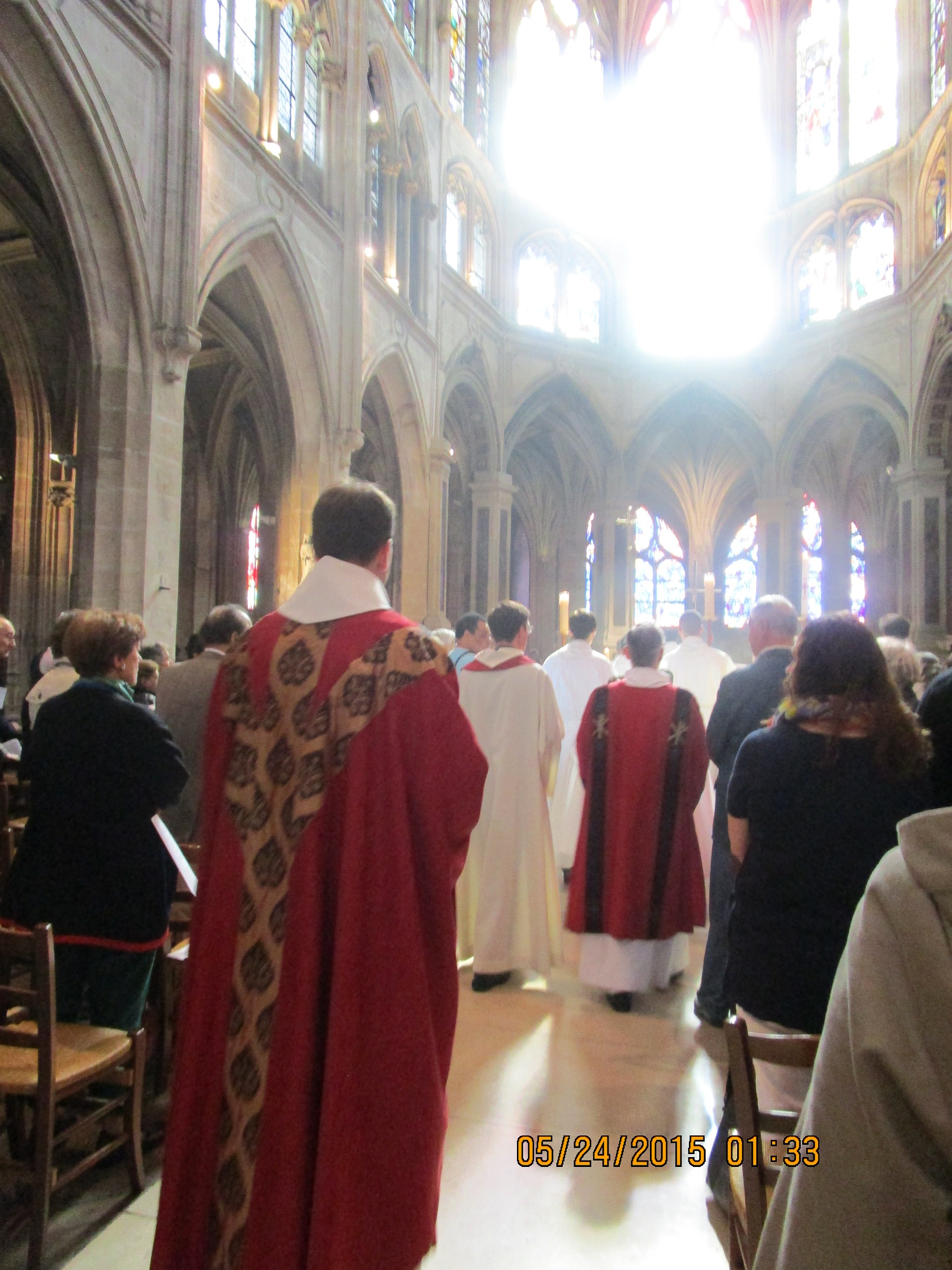
For it is the Trinity that lives in our churches (or should). God the Holy Spirit welcomes folks into his home. Through an usher, He opens the door, greets us warmly, hands us a bulletin, and leads us to our pew. He will inspire us, fill us with his spirit, as we pray and sing together. God the Father presides as Host of the banquet, insuring order and peace through ceremony and ritual. God the Son awaits on the altar – that banquet table – in the species of bread and wine.
It is this Love that we enter as we step into a church. And as we settle in, we are aware of great beauty – the beauty of an organ playing a Bach prelude, the beauty of flaming candles on a linen-draped altar, the beauty of cleanliness suffused with old incense, the beauty of symmetry, the space pointing and leading to the Lord of Lords and away from the self of self, you and I. We know, dwelling in this house for an hour, the beauty of holiness. We know love. We know the Holy Trinity.

The beauty of holiness. What is that? Amazingly, such beauty is by design and not difficult to create with the help of imagining first impressions as the stranger becomes our sister or brother. It is Worship 101, my compilation fron fifty-seven years of Anglican Eucharists in many parishes with many Families of God, my dear brothers and sisters:
- The porch and front doors must invite, be in good shape, with clear and attractive signage nearby. In this way the church family introduces who they are and what they offer, good information for the visitor.
- The entry or narthex also welcomes, is clean and orderly, and provides information and direction.
- Greeters and ushers welcome the visitor personally, creating a human bond with strangers entering a sacred space. The usher is the visitor’s first contact and must be Christlike in caring and concern as folks find refuge from the secular without, entering the sacred within. The bulletin he offers contains the service with hymns and prayers as well as welcoming words, inviting all to stay for coffee.
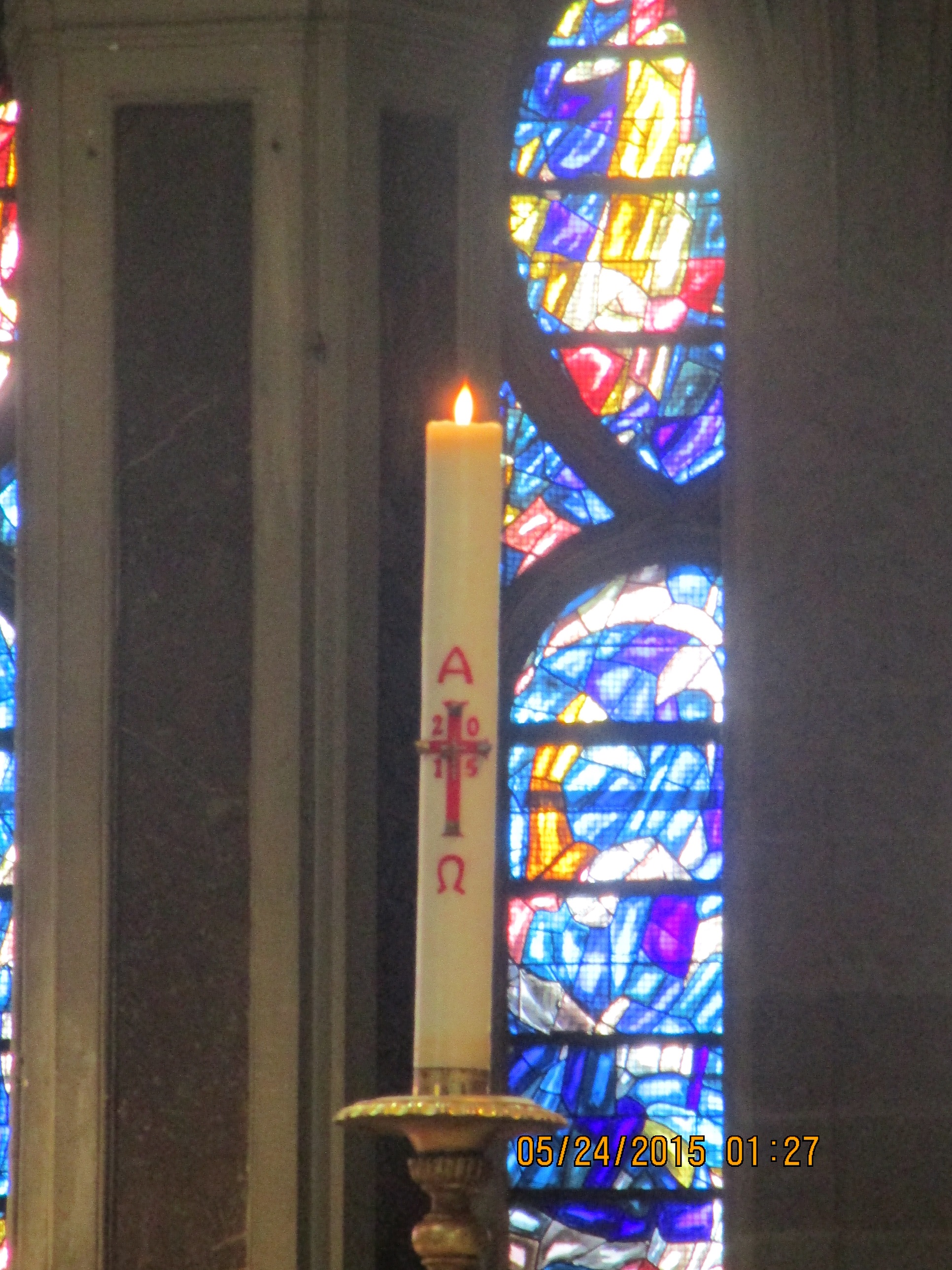
- The interior’s first impression: what we hear, what we see. The organ plays preludes to settle the mind in beauty, to prepare a quiet mind to worship; the sanctuary is alight with candles lit on the altar, a Sanctus lamp burns before the tabernacle; the hushed holiness is tangible.
- The space is clean and tidy – brochures, hymnals, and prayerbooks neatly placed in the pews, readily available.
- The Family of God is on time: the church is open and all is ready at least 15 minutes before the scheduled liturgy so we may prepare our hearts and minds for worship and to receive visitors. The service begins promptly unless there is an exception for good reason. The visitor’s time is precious. The church must respect that. He will judge this family of God in many ways, some clear, some not. He may not bother to return. Most do not. We are marketing the Family of God and we must think of first impressions.
- The Family of God sings and prays together, involved in the Work of the Liturgy, standing to sing, kneeling to pray, sitting to listen to instruction (exception is the Holy Gospel, when we stand). We contribute our voices in prayer and song. The words we say and sing together teach us about God and Man, Salvation and Love.
- Sermons are concise and well crafted (ten minutes); they are scriptural and doctrinally sound. Announcements reveal our family life together – invitations to coffee after the service extend our hospitality; practical matters as to receiving the Holy Eucharist are explained. Can all receive? How do I receive? What is the custom here? Can I just receive a blessing? How?
- The Holy Eucharist is intoned by the priest with reverence, without drama and exaggeration, but heartfelt, each word a call upon Almighty God; it is not a recitation, but the celebrant says the words as if for the first time, standing on holy ground, the burning bush on the altar. He faces the altar representing us in the pews, offering the Holy Mass for us, his Family of God.
With these guidelines we create beauty – ordered beauty. We also create love – the love of family, the Family of God, the Bride of Christ, the Church. Within this love we meet our salvation, now and in Eternity.
Governor Arnold Schwarzenegger recently said that immigrating is like being invited into someone’s home. I arrive on time. I knock or ring the bell to let them know I am present, having been invited. The host opens the door (freely). I cross the threshold – the border – and enter the home, this personal space. They are the host. I am their guest. I follow custom and courtesy, respecting their rules. I wear proper garments. I take the seat shown to me. I bring gifts to show my gratitude – my time, my talent, my treasure.
The host has worked to prepare for my arrival – cleaned the house, welcomed me warmly, ushered me to a place of comfort, rest, and nourishment.
Just so, when I cross the threshold of a church and enter into this beauty of holiness, I experience hospitality and know I have come home. For the church connects our two homes – Earth and Heaven. It is a bridge, or path, or tunnel. It is the outspread arms of Christ welcoming me. I leave Earth behind when I cross the threshold. I step up the aisle toward Heaven in the tabernacle on the altar. In the next hour I will dwell in God and He in me. I will be changed.

The Family of God loves the stranger and opens the doors early, just in case. As mentioned, the organist begins early. The healing beauty of music pours out the doors onto the porch and pavement, calling all to come and see.
At one time – before the locking of churches – I could drop in unannounced like a beloved family member. I could step through the doors and enter a hushed and holy place and dwell for a time in the love of the Holy Trinity. I might be alone for a time in this peaceful beauty, a precious time in the quiet, kneeling before Christ in the tabernacle, signified by a red lamp burning. The silence quiets me, surrounding me with prayers of the faithful through the years – my soul family – in this space and time. I open a prayerbook, turn the pages, pray the prayers and psalms, and thus add my own heart’s desires to the weave of time past and time future, now contained in time present.
If we are faithful with the basics of being good hosts and welcoming the stranger (Liturgy 101) we may not see a great difference in growth or it may be slow and steady. But we will know we have laid the foundation to build upon in our parish life. We know we have done what is required. We must not neglect these routines of caretaking or we will grow inward, become a closed funeral society, a family perhaps but not a Family of God. We will become blind and deaf and mute.
And so we keep the faith by practicing faithfulness in all these little things, making a home for the Holy Trinity in our neighborhood, a home where He can be Host and welcome the stranger.

In that spirit of welcome, I’m pleased to announce another Goodreads Giveaway, this time my seventh novel, Angel Mountain (Wipf and Stock, 2020), in celebration of Western Civilization, libraries, and literature. For more information visit Goodreads Giveaways.


 Christine Sunderland
 Christine Sunderland