

Monthly Archives: January 2016

Touching Love

Writing2I have been given the remarkable opportunity to look through boxes containing the sermons of the late Archbishop Morse, to possibly be published by the American Church Union. They were written on loose sheets on lined yellow legal pads. Some were jotted on hotel stationery. Some had their own colorful pocket folders, faded and spotted with time, water, and tea, and some were bunched with others by topic. Many were written in purple ink, his favorite, earlier ones in black ballpoint. There were even some typed from his seminary days, with notes in the margins from homiletics professors.

I hadn’t expected to find such treasures since he usually preached without notes.

I soon sorted them into seasons of the Church Year, but many sermons could have been preached anytime anywhere, and often were, as noted by his wife in the top corners in her neatly penciled script: date, feast date, parish. Some were added to, so that a sermon from 1961 lived on in 2006, having journeyed through half a dozen congregations, each time changed slightly according to hearers and season.

I began to type, words of hope, words of mystery and miracle, words of love. There was always a sense of happy wonder at the works of God among men and in his own heart and life.

At St. Thomas Anglican Church in San Francisco on February 18, 1990, Sexagesima Sunday (today’s Sunday in the Church calendar), he preached something like this: 

“We are in that wonderful three-week period of preparation for Lent, defined in the Prayer Book as the Pre-Lenten Season. These three Sundays are a period of reflection, and expectation for the severity of Ash Wednesday, the 40 days of Lent, Passiontide, and Holy Week. They are sort of hinges on the door that swings between the joyful mysteries of the Epiphany and the sorrow and suffering of Lent – the recalling of the passion and the death of Jesus Christ.”

Hinges on the door swinging between seasons. He was a poet. And, it occurs to me as I type his words, and now these words, that we are all poets searching for meaning, reaching for words to describe our human existence, to understand who we are. That is what poetry does, in the end, for it uses intense imagery to evoke sensory perceptions that will help us make sense of life. Christians have found such ways and such words in Sunday worship and so live poetic lives. We pray, and with prayer we use words to meet and touch the infinite, eternity, the source of all love, indeed, Love itself. We pour water in baptism to fill the reborn with God’s Spirit. We consecrate bread and wine to fill us with Christ in the Eucharist. We fill the finite – our own flesh – with the infinite. And we do this through the consecration of matter.

Sacramental Christians do not separate spirit and matter. The union of soul and body is the profound sacrament of Creation. In Michelangelo’s painting on the ceiling of the Sistine Chapel, the hand of God touches Adam, filling him with life, the life of His Word, God the Son, the Christ, the Logos. All creation reflects this sacramental action of love.

It is a beautiful day in the Bay Area today, this middle Sunday in Pre-Lent. This creation around us is windswept and cold, the air washed by last week’s rain. Puffy white clouds slip through pale blue skies, winter skies hoping for spring. The green hills reflect the glory of God, for they are indeed his creation, just as we are.

The Church Year reflects the natural year in many ways. The date of Easter follows the vernal (spring) equinox (nearly equal days and nights), for the Jewish Passover was celebrated on the first full moon following the vernal equinox, and it is recorded that the death and resurrection of Christ occurred following Passover. And so our days lengthen, become Lenten, moving toward that date of the Sunday after the first full moon following the vernal equinox, March 27, 2016, Easter, Resurrection Day.

The door of the season opens to preparation, penance, and hope. We scour our hearts and invite Almighty God in to dwell. We sing and we dance the liturgies of the Church to unite matter and spirit, time and eternity. Soon we hear the song, feel the rhythm, the poetry of words made flesh.

My calloused fingertips have been hard at work, carrying words and throwing them onto the keyboard, words that scurry across the screen and, I understand, rest in a memory chip or megabyte, to be invited one day to re-appear on screen and paper.

And so the bishop’s purple ink on the yellow papers, water marked and parched and smudged, moves from his fingers to mine, from his heart to yours. This seems right, for the recurring theme I have found so far in these joyful sermons is Love. That God is Love. That is why the Christian life is so love-ly, so full of love, so full of joy, of color, of music, of beauty, and of truth.

Christians, if they are faithful, touch Love itself.

Americans for Life

voteThey marched in freezing temperatures with a blizzard fast approaching. Washington D.C. was closed down – transportation systems crippled. There were fewer valiant witnesses to the Pro-Life plea than in previous years, yet their hearts burned with the love of life and of God. 
And it was perhaps the fire within them that I saw in the photos of the tens of thousands gathered in our nation’s capitol, to march to the steps of the Supreme Court. In the dark of winter they carried their flaming hearts, lighting the way, reminding the world to see what we have done and are doing to our nation. 

It is difficult to see in a storm, and a blizzard is blinding. But these valiant marchers represented the majority of Americans who do not believe abortion on demand should be the law of the land. They represented the forty-three million unborn children murdered, a massive genocide. Their crime, these little ones? Wanting to live. 

I am thankful these protesters gave witness. Abortion is like the elephant in the room, only it is an elephant in our nation, avoided, not spoken of in polite society. Those of us who can see the elephant can no longer turn away and pretend it’s not there. We cannot say that taking innocent human life is a choice, a right, in a civilized world. Recently it seems that our laws protect those who break them, yet do not protect the innocent, the least of us, the most vulnerable, the unborn. 

There will be a judgment one day, a day when each of us will stand before God in His brilliant all-seeing light. We shall answer for our lives. We will be judged, essentially, on how well we have loved one another, on whether we loved life more than death, loved others more than ourselves. God does win in the end, and he is a loving God, desiring us to love, commanding us to love. 

The annual March for Life is held on or near January 22, the day of the 1973 Supreme Court ruling, Roe v. Wade. It is a wintry time, when light is less. But the days are lengthening, and soon we will enter the Lenten Season to prepare our hearts for Easter. Lent means lengthening, a stretching of the light to shrink the dark. And so our nation, in the cold of winter, tries to see a way forward in today’s blizzard of choice. Our nation needs to lengthen the light and shrink the dark.

January 22 borders deep winter and early spring. In the Church we have been celebrating Epiphany, a starry season of light and seeing, of manifestations of God become man, when Eternity intersected Time. Epiphanytide is short this year, two Sundays, so that today we suddenly find ourselves in Pre-Lent, three Sundays before Ash Wednesday. We prepare our hearts for Easter, and in the discipline of fast, prayer, and sacrifice, we shed light on our own lives so that we can repent and move toward the light of God’s love once again, so that we can truly see the resurrected Christ and partake of his resurrection. During Lent we confess our unlove, the selfishness that hardens our own hearts, and that hardens the heart of America. 

Our nation, in this election year, is also called to choose light over darkness, life over death. Our country is called to repent, to change. As we cast our votes we become part of our culture, be it one of life or death, and we become responsible for its law. Each of us will one day account for the vote we cast, the part we played in creating those laws. As a conservative in California, my vote doesn’t seem to make a difference in the electoral system. But I know it does. God counts my vote, and it lessens my culpability in the ongoing genocide of our next generation, a genocide that averages a million babies a year, forty-three million lives in the last forty-three years. 

We hear that women want to “own” their bodies. They want to fulfill their dreams. Such ownership of another person is slavery. Dreams are not fulfilled through such ownership. Such dreams, built on such a lie, are nightmares. President Lincoln and Dr. King knew this. Such nightmares lead to suicide; such lies will kill America.

We must pray for our country, for this lie lives in our law. It is said the tide is turning, that eighty percent of Americans now favor restrictions on abortion; two-thirds of those are “pro-choice.” As we enter this time of choosing our leaders let us choose those who will work to redeem our culture, so that America can once again be a beacon of light to a darkening world. 

As we step into Lent, we must pray for light and life. We must fan the flames of love in order to see our way to Easter.

Wonderful Words

birdIt’s been a week of words, words, words, and more words. 
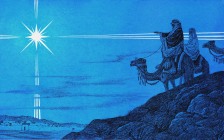
Some words were heated such as those between Mr. Trump and Mr. Cruz in the Republican debates. Some words were measured and thoughtful, such as those of Mr. Carson and earlier Ms. Fiorina in those same debates on Thursday. If words had trajectories, the former words were missiles launched; the latter words were birds circling and weaving.

I’ve been thinking about words and their power, particularly this last week of Epiphanytide when the Church celebrates the Word made incarnate in Bethlehem, Christ manifested to us, the world, the Word alight in the darkness. 

Words continue to light the dark, to beam bright epiphanies into despair and loss and confusion. Words comfort and heal and explain and judge. They forgive. They love.

The Bible is called the Word of God, and I’m glad the Gideons still supply hotels with free copies in nightstand drawers. The Gideons, a society of Christian businessman formed in 1899, has distributed over two billion copies of the Bible in two hundred countries in one hundred languages, today printing eighty million copies a year. Lately I’ve noticed the Bibles sitting alongside the Book of Mormon and sometimes the Teaching of Buddha. I wondered about the rarity of the Koran in these rooms but understand there is a concern about disrespect. One imam said that Muslims don’t need a copy of the Koran for they have memorized the first chapter, prayed five times a day.

It is good there are other faiths represented in these nightstands. Inclusivity protects the Bibles from the charge of exclusivity when guests complain of religion in their room. Americans are a freedom-loving people. We believe in freedom of religion, freedom of speech, freedom of thought and conscience. It is why we debate conscientious issues before choosing our president. It is why we fearlessly use heated words, or words launched like missiles across a stage toward our opponent, missiles targeting other words.

I enjoy the politically incorrect Republican debates. They show that America still has a pulse, her arteries are flowing, her heart beating, in her celebration of free expression. Some pundits have complained there are too many candidates in the field, but I laud the number. Let us encourage this multi-faceted discussion and be proud of the raucous, boisterous conversation. Let us appreciate the talented and articulate candidates who give of their time, talent, and treasure, of varying gender and generation, race and ethnicity. This is America at its best. This is how we elect our governors.

And we use words, words, words. Let them fly through the air, circle and weave, and come home to roost in our hearts and minds. Let the words win and lose, as they become forged in debate, fired by truth.

Lots of words. I’ve been sorting our late bishop’s words, his sermons, scrutinizing the yellow lined pages, the brown parched sheets, scraps from hotel stationery scrawled with words, handwritten, prescient ideas pressed onto paper, words written in the purple ink the bishop favored. Staples or  clips join some pages, linking sermons back to 1951, his year of ordination to the priesthood. I’ve come to see an order in the pages, and the words, how they fall naturally into Church Year seasons and feast days within those seasons. There are also speeches given at dedications, ordinations, baptisms, synods, pilgrimages, retreats, and funerals. Dates, places, and occasions are recorded in the pale pencil script of his loving wife. 

Hundreds, thousands, hundreds of thousands of words. “He was a mystic,” a friend said recently. But then, all sacramental Christians are mystical by definition, for we believe in the mystical and mysterious action of the Holy Spirit among us in this hard world of matter. We believe in the mystical change in the bread and wine as the Word once again becomes flesh and dwells not only among us but within us in the Eucharist. We believe in the Spirit mystically flowing through the waters of Baptism and the oils of Unction and the words of absolution given by a priest to a penitent in Confession. The Spirit mystically weaves into the vows of bride and groom as they say committing words before a priest who, in the name of the Body of Christ, blesses their marriage, and the Spirit works mystically through the hands of a bishop in Ordination and Confirmation. 

As I study our bishop’s words, his purple script on yellow paper, I pray that God will enter my mind and heart and speak to me just as he entered my bishop’s mind and heart and spoke to him, that I might share these words bridging heaven and earth, spirit and flesh. One day, God willing, the words will flow onto pages bound into a book to be held and read, words that will instill the greater Word.

This last week, before the political words and the sorting of the words on the yellow lined pages, I sent off my review of Michael D. O’Brien’s Elijah in Jerusalem to CatholicFiction.net. In this end-times novel, Bishop Elijah confronts the Antichrist in Jerusalem. Like his namesake, the Prophet Elijah, Bishop Elijah listens for the still small voice of God. I too am listening for it, hoping to hear those huge words spoken by the little voice, whispering in the stillness of heart and soul. I often observed my bishop listening, listening to all of us with our many words and opinions, hopes and fears, but also listening to something else, someone else, trying to catch the quiet voice that wove among us as well. 

With the many threats at home and abroad, threats to freedom and faith, to liberty and law, let us celebrate free and faithful words, expressions of who we are and who we are meant to be, as Americans, as believers in God who became the Word made flesh.

All the Difference

star of bethlehem.jpgThomas Sowell of the Hoover Institution recently wrote about political lies of the last few years: 
“Lies are a wall between us and reality… Reality does not disappear because we don’t see it. It just hits us like a ton of bricks when we least expect it.”

Lies encourage us to deny reality, to “put our heads in the sand” and thus are dangerous. To say the Benghazi terrorist attacks (2012) were a demonstration over an inflammatory video, is a lie told to calm fear. But it invites complacency and so emboldens terrorists, both domestic and international. We have mourned lives lost in subsequent attacks because of this lie. This lie ensured the election of the current president, and a wall rose between our national defense and reality. 

And so too, as individuals, we might choose to believe lies for reasons of comfort. But such lies are dangerous as well, inviting greater suffering and confusion when reality “hits like a ton of bricks.” 

Reality has a way of eventually hitting us, and so too, belief in God and the claims of Christ are worthy of examination as to their truth, their reality. “What difference does it make?” many say, imbibing the lie of our culture that all beliefs are equal, all faiths equally true. While all believers are worthy of respect, how can all faiths be equally true, when one denies the claims of another? Alas, it makes a great deal of difference what a person believes. Living a true life means seeking the truth, embracing reality, sorting fact from fiction and avoiding the ton of bricks. One of the greatest lies of our age is that there is no truth. The truth exists apart from us, whether or not we can grasp it at any particular moment. 

I have long suspected the lie of “closure” in regards to mourning. Stephen J. Forman, a cancer doctor, writes in the Wall Street Journal “how the loss of a loved one is a part of each person’s life forever…. the reality is that closure is a myth.” Grief changes over time, but grief is woven into the weave of our souls, giving us greater compassion, understanding, and empathy. It makes us “wise” or “deep” or simply “good.” Suffering and grief helps us see. To remember at sudden moments, even with tears, those whom we have lost is a good thing, not one to be suppressed: 

“The danger of the idea of closure is that it heightens aloneness, by giving us a false expectation that these experiences should and will at some point end. They won’t… To deny (memories) is to deny precious moments of love, fellowship, gratitude and inspiration… To close the memory does not sustain the healing or help in proceeding with life. Such echoes from the past are voices in the present and are sometimes warmly felt.” 

This can be said of nations as well. To close echoes from the past is to deny who we are, forged by the past in this moment in time. To live only in the present is to force closure on the past, to live a lie, to disavow our nature. Our history is our life story, our identity as Americans. It is a cloak we cannot afford to shed, one our nation must wear in order to survive. 

To find closure after terrorism may for a time ease our national life. We pretend it didn’t happen and we carry on. But it is a lie to say it makes no difference. Of course it makes a difference. Those who died for our country must remind us continually what is real, what is true and what is false in our national narrative, how we face our future and defend our freedoms. 

Children long for boundaries. They beg for limits so that they can see the truth about their world, what is good and what is bad. Good parenting sets limits and teaches the truth, the reality, of forbidden territory. In this way they become responsible adults, for they have learned what is real. They can search for truth and face it. 

And so as we worshiped in church this morning on this First Sunday after Epiphany I gazed at our bishop’s chair, empty. He left us for Heaven, and now, seven months after his parting, his wife has joined him. As I looked upon the chair, I was gifted with a flashing memory of the bishop and his wife, as I knelt on the russet tiles, in the filtered light streaming from clerestory windows, in the singing together the Creed, the Gloria, the Our Father. The bishop and his wife were epiphanies that graced my life and I knew that they would continue to grace my life through the opening of my memory, the refusal of memory’s closure. Their lives were woven into mine, as mine was into theirs, through love, through the grace of God. I consider those memories, even in the depths of loss, to be precious piercings of my heart. These epiphanies, these openings, reweave my heart and soul, adding to the texture. I do not desire or need closure. 

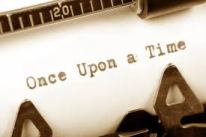
In the Church, the Feast of Epiphany celebrates the coming of the Wise Men from the East who brought the Christ Child gifts. Epiphany means manifestation, the revealing of God in human form in Jesus in Bethlehem. With Epiphany, Christ is now manifested to the world, not just to Israel, not just to God’s chosen ones. The Wise Men follow a star so that the heavens as well take part in this epiphany, this revealing of God. They follow the star to a stable, a hillside cave. The universe shines a beam of light onto a newborn baby in the hay. The Magi, scientists of their time who studied the heavens, kneel before this child. They bring him gold for his kingship, frankincense for his divinity, and myrrh for his burial. After this epiphany in their lives, they will never be the same. 

And we will never be the same. Like the Magi, we kneel before Our Lord in our local church. We gather before his tabernacle, his stable, just as the Magi did two thousand years ago. We pray that we be made worthy to receive him through confession and absolution. As we pray, we are changed by the prayer itself, for we enter moments of epiphany, dwelling in time woven with eternity, knowing that God himself is with us and within us. 

To kneel before the manger or before the altar, experiencing such love, and to say it didn’t happen is to deny reality. It is to lie about the greatest truth of all, the greatest reality of all, God dwelling among us. For if God loves us and lives among us and within us, it makes all the difference to our own lives, and to all the world. We can now look truth in the face, even search for it boldly, knowing that we will be wiser, like the Magi on that holy night two thousand years ago. Our lives will never be about closure, but about opening. We will travel, epiphany by epiphany, into the open heart of God.


Word Made Flesh

Writing ImageI am polishing The Fire Trail for final submission to my publisher. It is an appropriate effort to take on in the holy seasons of Advent and Christmas, seasons in which the Word, the expression of God in human flesh, is anticipated and fulfilled.

Our own words, our bits and scraps of language we sew together to somehow make sense of our lives, express our own selves as well, words spoken and words written. Our words are an extension of who we are.

As a kind of preface to the story of Christmas, Scripture relates the story of Elizabeth and Zachariah. She is old and barren, but the Angel Gabriel announces to her husband Zachariah, a priest in the temple, that she will bear a son and his name will be called John. Zachariah doubts the angel and is struck dumb for nine months, until the birth of John the Baptist.

Zachariah has lost his ability to express himself. And so the first infancy narrative – the story of Elizabeth and Zachariah and the Angel Gabriel – is a story of wordlessness. Incapacity to express. Silence. Much like our world today, as Christianity’s public expression is silenced.

But this silence and wordlessness in early Advent is slowly filled with words during the days and weeks to come, as we wait for the birth of the Word, the light shining in the darkness, returning our speech. We hear prophecy of the coming, prophecy that will be fulfilled. We hear words of hope, of healing, of penitence, of forgiveness, of joy, of love, of glory to come. Words ride on the melodies of carols as we tell the story of the birth of the Son of God, the Word, in song and praise.

Words find home in symbol and sacrament as we live inside the rituals of Christmas – the Advent wreathe and candles, the evergreen tree alight with decorations holding symbols of the Word made flesh, the crèche figures worshiping a baby in a manger, stars and angels and heavenly hosts praising God. It is a rich season in which all of these expressions of the inexpressible – God become man, his great love for us – jostle for our attention. Bells jingle and carolers sing the Good News, Our Lord has come, Emmanuel, God with us. The words of the prophets are fulfilled! Ring the bells! It came upon a midnight clear… Away in the manger… Hark the herald angels sing… Joy to the world… Silent night…  

All art serves this story of the Word among us. Paintings, sculpture, drama, every means of man’s expression tells the story. Even the commercialization of Christ’s birth urges us to give not only of our treasure but of our time and our love. We are prompted to think of others – how can we share Christmas with them? What would they like to be given? We make gift lists, expressions of our desire to love one another better.

And children make their own lists. Saint Nicholas in his many forms is still red and jolly and bearded and all-knowing. He is, in, many respects, a child’s early vision of God the Father, a loving powerful being who gives gifts. When a child hands Santa his list, she is practicing a prayer of petition, a precursor to intercessory prayer, confession, and praise. While there seems to be some debate about store windows and the words Merry Christmas, children still wait in line to meet Saint Nicholas, who listens and notes their petitions. And as children lose their faith in Santa, they are given faith in their Father in Heaven, the greatest gift of all. Santa Claus is real.

And so with my little novel I add my own words to the many already on paper and screen, my attempt to express the deepest desires of mankind, how we are meant to live and love, how our broken hearts may be healed. In today’s Epistle for the Second Sunday after Christmas, Isaiah prophesizes the coming of the Word made flesh:

“The Spirit of the Lord God is upon me; because the Lord hath anointed me to preach good tidings unto the meek; he hath sent me to bind up the brokenhearted… to comfort all that mourn… to give unto them the oil of joy for mourning, the garment of praise for the spirit of heaviness; that they might be called trees of righteousness, the planting of the Lord, that he might be glorified.”

For indeed, hearts are broken and we mourn our dead throughout the world. We desperately need good tidings for all peoples. We cannot afford today, like Zachariah, to be silenced by doubt. We must express the Good News, use our words to tell the good tidings, without fear. My characters, in different degrees and ways, search for those good tidings. They have been hurt and desire healing. They search for truth, beauty, and goodness, and they crave their heart’s desire.

Each year Christian culture celebrates Christmas, the birth of Christ, the Son of God, and in the very celebration we find the Word living. In our words Our Lord lives, for he is the first Word blown over the waters of creation, separating the heavens and the earth. He is the logos, and he lives within each of us, prompting us to love as he loves. He is the expression of life sent from Heaven to Earth on a miraculous night two thousand years ago.

It is satisfying to read in Scripture that an old man named Simeon and an old lady named Anna have their prayers answered, their hearts’ desires fulfilled when they see the baby Jesus, their messiah. In our Office of Evening Prayer, we repeat Simeon’s words in the Nunc Dimittis: “Lord, now lettest thou thy servant depart in peace, according to thy word. For mine eyes have seen thy salvation…” The story of Christmas has been bracketed by Zachariah’s silence and Simeon’s speech still spoken today.

And today’s Collect, the opening prayer for the Second Sunday after Christmas reflects the joy of this holy season:

“Almighty God, who hast poured upon us the new light of thine incarnate Word; Grant that the same light enkindled in our hearts may shine forth in our lives; through Jesus Christ our Lord.”

Amen.