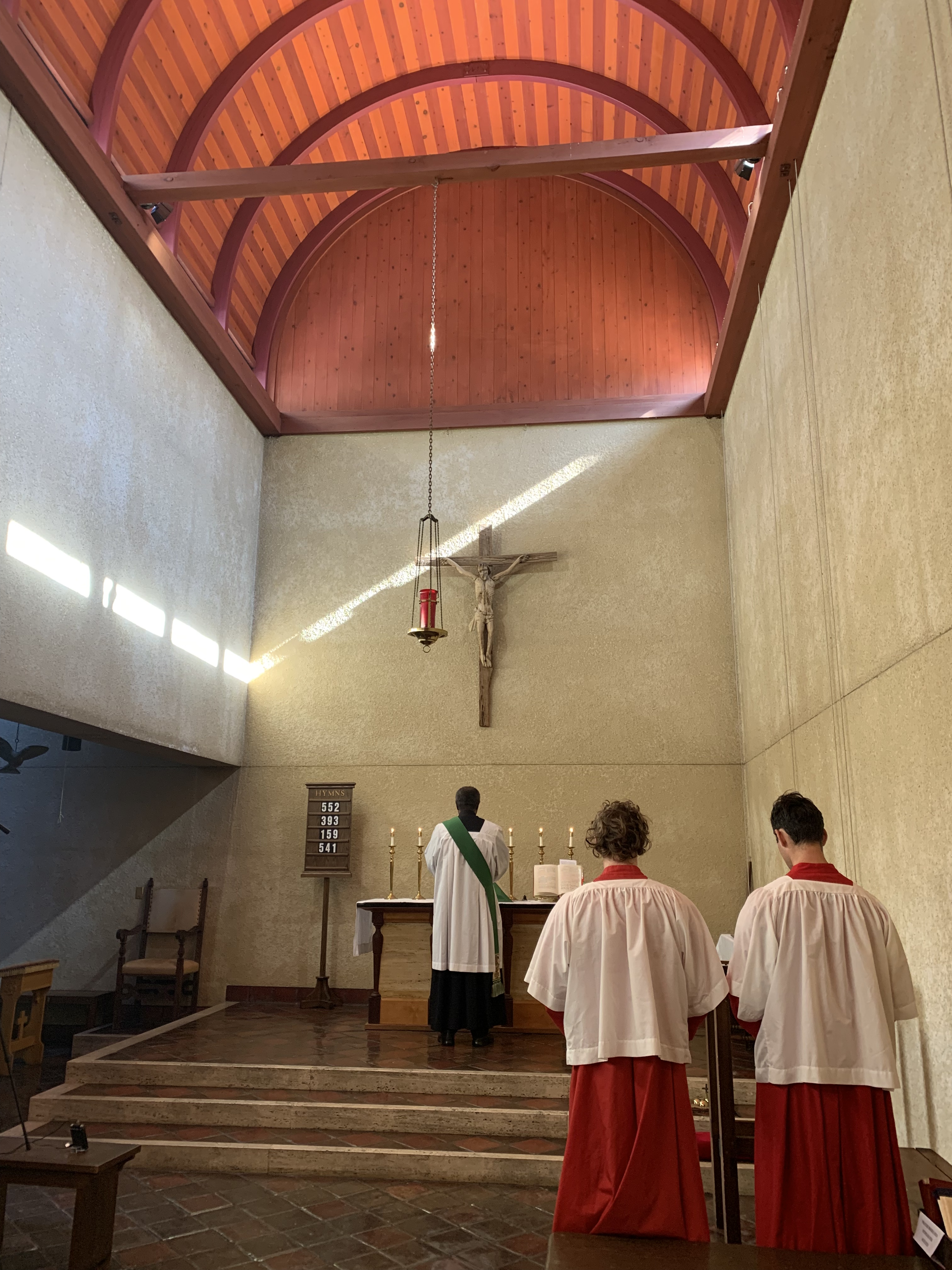
 Today is called “Stir Up” Sunday because of the prayer at the beginning of the liturgy, which “collects” us together as one body in Christ, hence called the Collect for the Day:
Stir up, we beseech thee, O Lord, the wills of thy faithful people; that they, plenteously bringing forth the fruit of good works, may by thee be plenteously rewarded; through Jesus Christ our Lord. Amen. (Book of Common Prayer, 1928, 225)
And we, the good people of St. Joseph’s Chapel in Berkeley, were stirred up, our wills swirling in a golden bowl, stirred by the Holy Spirit, melding into one single will, to glorify God on this bright Sunday morning.
Our deacon celebrated a deacon’s Mass, since our vicar was away. It was good to see Deacon Longsworth, who attended seminary here at St. Joseph’s and returned today, soon to be ordained to the priesthood. This happens from time to time – former students return to visit, to preach, to pray – and we enjoy the reunions, lovely gifts from God suddenly in our midst.
And so, as my will was being stirred up, I wondered if my creativity was too, if soon I would seek a moment to begin my next novel. Many of its parts are living in my brain, camped out, I guess, waiting. Some bits and pieces have left, probably ready to move on.
After Mass I stepped downstairs into the basement of our student residence next door to work for a few minutes weeding the books stored there for the last forty years. It is a project slowly taking shape. The process of the weeding, pulling dusty volumes from dustier racks, considering the title on the spine, and placing in an appropriate pile, has focused my fragmented mind upon books, libraries, and words.
Someone on the political left stated recently that words were a sign of white supremacy. Peggy Noonan in the Wall Street Journal (November 13/14, 2021, “Democrats Need to Face Down the Woke”) recently quoted George Packer in his Atlantic article, “When the Culture War Comes for the Kids”:
“In New York City’s public schools, which Mr. Packer’s children attended, the battleground was ‘identity.’ Grade-school ‘affinity groups’ were formed ‘to discuss issues based on identity – race, sexuality, disability.’ The city was spending millions in ‘antibias’ training for school employees. One slide was titled ‘White Supremacy Culture’ and included such traits as ‘individualism,’ ‘objectivity’ and ‘worship of the written word.’ “
I’ve read that also under the white supremacy label is discipline, responsibility, and achievement. Other identity groups, the Left claims, do not think in these terms and thus students shouldn’t be held to these standards.
What really struck me was “worship of the written word.” Hence, books, libraries, and as we have heard, history. For how is history transmitted from generation to generation? Through words, written and oral. Will these folk let us keep oral words? According to cancel culture, speech is forbidden as well.
 And so as I examined the dusty, faded, spines of these many volumes published over the last fifty+ years, I recalled that such basements full of books might indeed be banned one day. Would libraries be burned down? It was thought a remarkable and fortunate turn of fortune that the great Alexandrian library in North Africa was spared the looting and pillaging of the vandals in the raids of the fifth century. Libraries – of word, print, or mind – exist to share ideas and times, plottings and plannings between people and cultures and ages. Libraries attempt to ensure that we do not make the same mistake as our ancestors did, that we learn from history and not repeat the failures.
Indeed, these very words, my thoughts worked out on a keyboard, appearing on a screen, on a sunny Sunday afternoon after being stirred up in a sacred chapel a block from UC Berkeley, would be banned too.
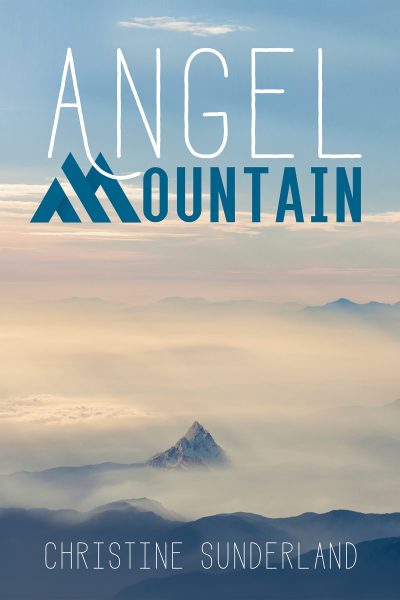 So another idea for a theme in my novel emerged. Deep within the caves of Angel Mountain is the last, lost library. Far down, below ground, and farther down than that… where hidden wellsprings bubble and moisture seeps and drips through sandstone… are the last books of Man, his lost words, forgotten and abandoned and left in the dark during the terrible terror, the silencing of speech, writings, communications. It is a time when we no longer sing the song of humanity to one another, to the next generation. We no longer tell stories to children about life, death, and love. One character recalls church bells, though, and sings the tones as she goes to sleep. Another recalls poetry. Another recalls a mother’s lullaby. But these are deep interior memories, silenced by the great levelling, the equalizing of humanity into a gray stream of sameness.
At some point in the past, one character recalls, the lights went out, electricity fizzled, plugs were pulled, and the world went dark. Along with modern conveniences that depended upon the power grid, the internet shut down, for batteries needed feeding. It didn’t take long, he remembers, only a few weeks, maybe less. Fuel was banned to save the planet from climate change and cars sat still and silent where they were abandoned, or kept as museum pieces. The last-minute hording was ugly, with many dying in the crush of stampedes. Yet the hording didn’t last forever either, just extended the pain.
 Another character recalls that at one time they heard news of other places and events. The news came through screens and phones, generally propelled by those in power in Washington using carefully scripted words. But now, with the silence mandate, which criminalized writing and most other communication as racist and therefore hate speech, and therefore a sign of domestic terrorism, news was broadcast once a month by a town crier, who read a carefully scripted and word-barren paper he unrolled in the village square. Some wondered if he was human, and perhaps he wasn’t, for he sounded like a digital recording from a bygone age. Others listened, but learned little about human affairs in other places.
It was said in hushed voices that at one time art was celebrated – pictures and stories invented by the imagination – but that the mind needed words and images to dream, and the desire to tell or draw or listen slowly disappeared.
But another whispered that Angel Mountain had a secret deep within, far below in the bowels of the earth. It was a secret library. They spoke the word library as if it wereZ precious gold, a gemstone of rare brilliance. What was a library, the young asked. Ah, the elders replied, you wouldn’t believe it if you saw it. What is believe, the young asked. Ah, the elders sighed, something from long ago, something bright and beautiful and full of joy…
And so I pulled books from the metal racks in the basement of St. Joseph’s student residence, Morse House. There were classic paperback novels, yellowing and brown. There were theological tomes from various decades. There were cataloging how-to books, that listed order and numbers and classifications that all librarians abided by. There were large glossy books of places and things with color photographs and few words that delighted the eye and fed dreams of travel. There were hymnals and prayer books and sheet music in binders.
And many others…
And so the libraries of my mind, those collections of images and words and ideas, loves and hates and dreams, were reorganized as I studied the spines and chose the destination of each book. The books and the words of my mind, those phrases and feelings that formed foundations of my life, joined and separated in a kind of dance, or a painting, or a poem.
 The stirring up had stirred me up indeed. And I was grateful, even joyful, that I was a part of Our Lord’s faithful people plenteously bringing forth the fruit of good works, at least trying to bring forth such fruit. The fruit, I knew, lived in our words, in our hearts and minds. The fruit was ripe for the picking.
As I said farewell for the week to the others gathered around a table in the Clergy House in the back, I was grateful for this morning, this last Sunday of the Church Year. I look forward to next Sunday, our New Year’s Day, the First Sunday in Advent. For having been stirred up, I look anew to the season of Advent, the coming of Our Lord as a babe in a cave in the hills outside Bethlehem, surrounded by farm animals, adored by his mother, earthly father, shepherds, angels, and wise men. We shall sing of this with words that resound through the centuries. We shall tell the greatest story of all, the story of Christmas.

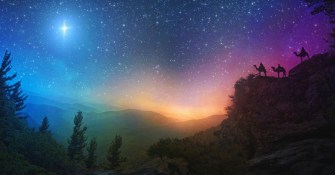 I have always enjoyed the twelve days of Christmas, Christmastide, stretching from Christmas Day, December 25, to Epiphany, January 6, pivoting upon our old year ending and new one beginning.
 His was the light of the world, and the world knew him not. But to those who received him gave he power to become sons of God.
 The true light of the world is the Prince of Peace. He shines a light into our hearts so that we can see our wrongdoings and confess and repent. We then can approach the altar and receive him into ourselves, our souls and bodies.
 I’m not sure when the momentary recognition came. Was it opening the front door to family, welcoming them in from the rain, taking their coats and greeting them with “Merry Christmas”? Or perhaps it was when I took a photo of them sitting alongside one another, chatting and laughing, creating a sweet hum in the room? Or when we all posed in front of the tree for another photo, staged with a tripod and timer and me running into the group to edge in before the camera clicked?
 grandson, age twenty, was a fervent Orthodox Presbyterian, studying to become a pastor. I stood in the middle, the Anglican, the “via media,” and tried to referee flying missiles of absolute belief tossed back and forth, sola scriptura versus authority of Church and Tradition; errancy and inerrancy; translation and human fallibility. When it got a little heated, I would squeeze in a word or two, “but we all believe in the creeds, right? The Nicene? Even the more general Apostles Creed?” which would produce general nodding for a minute, and then they were off again…
 There are those in our current time, a tumultuous and arid time to be sure, who think Christ is calling his sheep in to the safety of his fold. He is knocking on doors of hearts one at a time, before it is too late. He is offering himself one more time, the gift of life, of salvation. Some will not hear the knock for want of listening and growing deafness; some will hear the knock, open the door, only to close it upon the stranger before them or before the empty dark; some will hear the knock, open the door, and welcome the Son of God into their heart’s home.
 I love our traditional Anglican (Elizabethan) liturgy, a true artform, but particularly appreciate the processionals and recessionals experienced at grand moments in our church’s history. Yesterday was such a day, a day of ordinations to the priesthood, a day when clergy from all parts of the Northern California assembled at St. Peter’s Anglican Church in Oakland. In robes of red and gold and white, these clergy entered the nave of the church, processed up the central aisle, stepping grandly on the crimson carpet, up the steps to the chancel and the high altar. We all sang hymn #220,
  And so we sang with one voice… “Come Holy Ghost…” (218). We renewed our own vows: “I bind unto myself today/ The strong Name of the Trinity, by invocation of the same,/ The three in One, and One in Three…”(268) We called upon the Holy Spirit and celebrated our commitment to Christ in the 6th verse of #268:
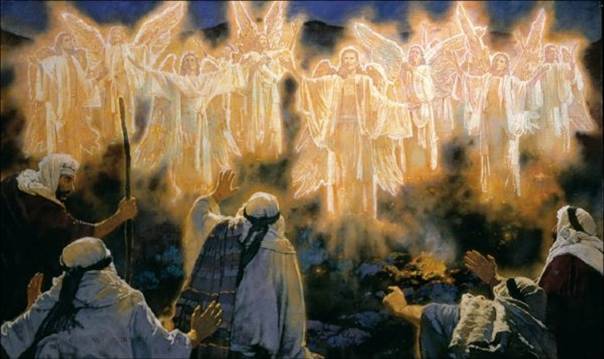 It was a holy time, a time in which Our Lord came among us, intersecting time with eternity. It was a time reflected in the intersection soon to come, our celebration of the Birth of Christ, the Son of God, who came among us two thousand years ago. And today, we can say for sure, he lives and comes among us still.
 An icy rain has dampened the Bay Area today, and occasionally I wondered at the hail upon the windshield driving home from church. Would there be snow on Angel Mountain, aka Mount Diablo? The summit is covered in a thick cloud now, but perhaps later a white blanket shall be seen.
 Advent 3 is called Gaudete (Rejoice) Sunday, named for the introit at the beginning of the Mass, “Rejoice in the Lord always…” It is also called Rose Sunday, a break from penitential purple, a day when the theme is Heaven rather than the earlier Death and Judgment, and the later theme, Hell. We light three candles on our wreathe, two purple and one pink.
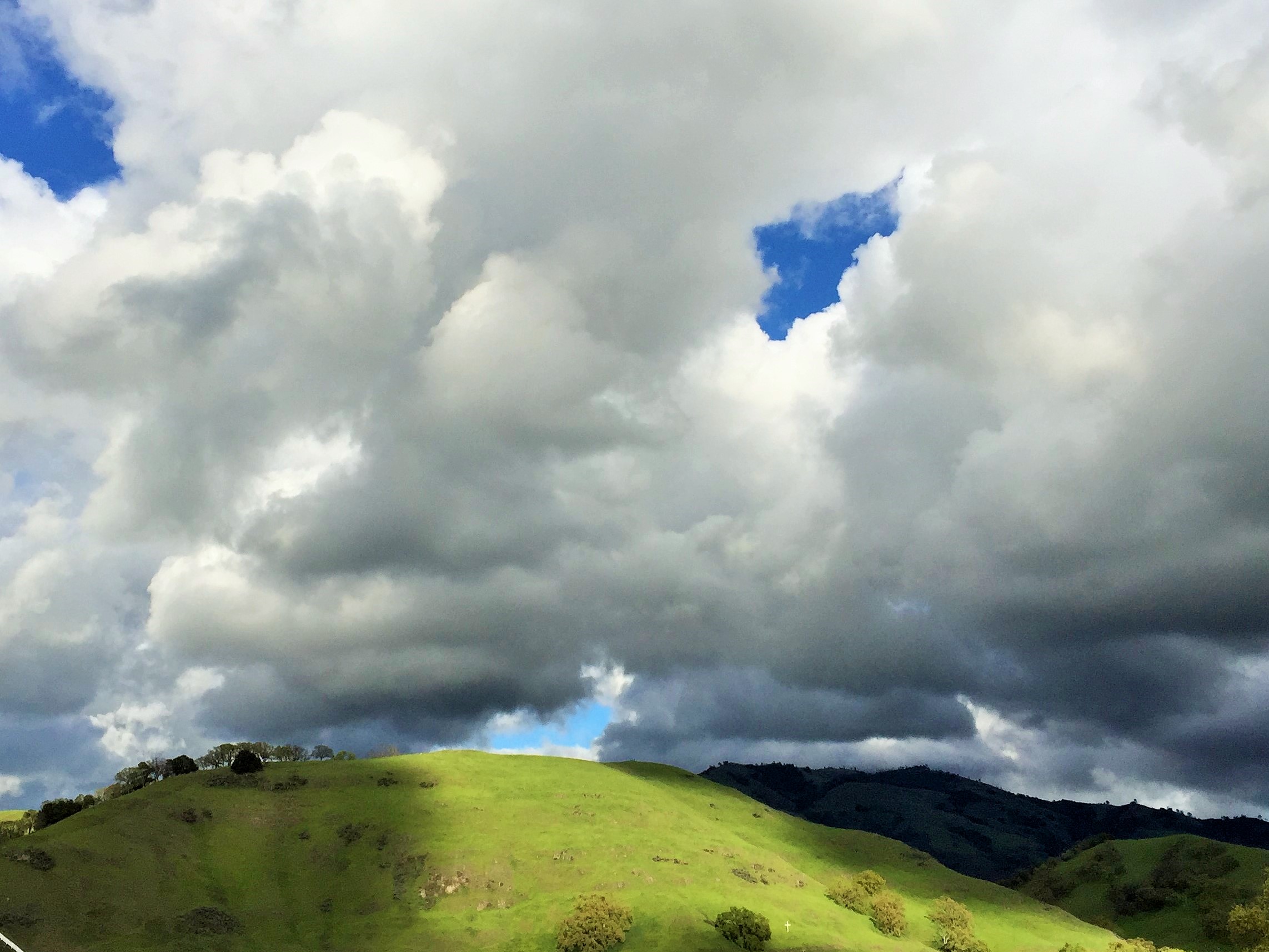 Rose Sunday is a clearing of the skies, a break in the rain, as we glimpse Heaven through the parting clouds. Heaven is real, I am certain, for we sense it all the time as humans on this rolling planet we call Earth. We sense we were made for a better world, and this sense is often called our conscience. Our consciences must be educated, refined, and purified, but our sense of right and wrong, of judgment, has long been a pointer to the existence of God, a moral and loving Father-Creator who desires our good. Heaven is that good manifestly lived in Eternity and punctuated in our own time.
 We worship together on a Sunday, singing and celebrating the glory of Heaven. We say together the familiar words of the Mass, confessing and being absolved, praying for others, praying for our country, praying the consecration of the bread and wine to become the Real Presence of Christ. We stand before the altar, waiting to receive him. We are a row of penitents with the hope of Heaven, and soon we receive Heaven into our bodies. Our thirst is quenched by God.
 It is a curious thing when events collide, or fall into place, or compliment one another, or shed a light upon one another. I have been considering setting my next novel in the season of Advent. The downside is the season is usually too busy to attend to the manuscript first draft. But the remarkable upsides collided today, on this Second Sunday in Advent when the Church considers the final judgments, individual and general.
 So what were the other events that collided with Judgment Day?
 I considered these things in our chapel today, as we heard Christ’s voice in the Gospel lesson:
 There are times when we must trust in God, his purposes, his love. There are times when we are pulled in two directions, or three or four. Many women know this, that they have been granted the greatest gift of all, to bear new human life within their bodies. Yet they also sometimes fear their own lives spinning out of control. Today we are told career comes first. We are told a house and financial stability comes first. We are told we have too many children already. We are scolded that the planet is too crowded. We are told to sleep with anyone and abort children conceived. Men are told they need not marry, need not commit to another. Why bother, the chorus screams, in this culture of self, of me, of un-love.
 I considered today the drama of these times to come, described by Our Lord in the Gospel, and I considered the monumental events of the times today. I recalled those who fought for our peace and freedom, who gave their lives for us to live, breathe, form families, worship in church. They were brave, these men and women who fought for us, who answered the call to arms after Pearl Harbor. They kept us safe. They chose the right, to fight the wrong.
 We are in the winter of our national life, here in America. We have seen our country fight again and again for right action, and the old demons rise again and again to try and trick our people into wrong action. Nothing changes on this earth, at least in terms of good and evil. But we can make a difference with every desire and deed that we own. For nothing is wasted.
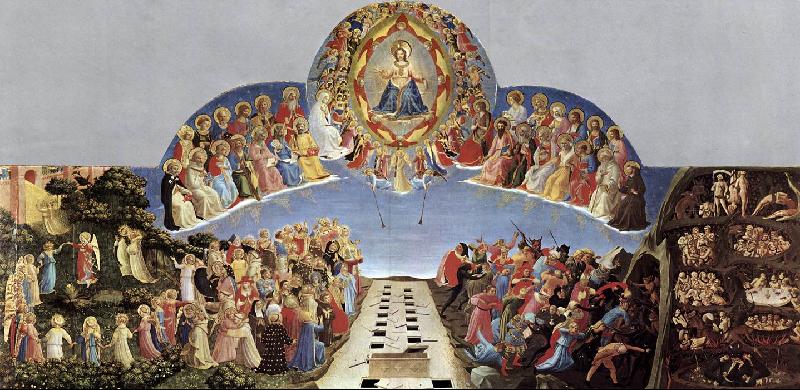 For today we begin to think about judgment, law, and love. Paul writes to the church in Rome in the Epistle (Romans 13:8+) about how the law leads to love. “We owe no man any thing, but to love one another: for he that loveth another hath fulfilled the law.” But there is more; it is not that simple. He goes on to list the commandments, for the commandments are the law of love, commandments against adultery, killing, stealing, lying, and coveting, all which harm others. How do we measure up against this standard given to Moses on Mt. Sinai, burned into tablets of stone?

 A cold breeze pierced the air making way for the sun to light up our green hills in the East Bay, welcome after more light rain this week. For without light, colors fade into grays.
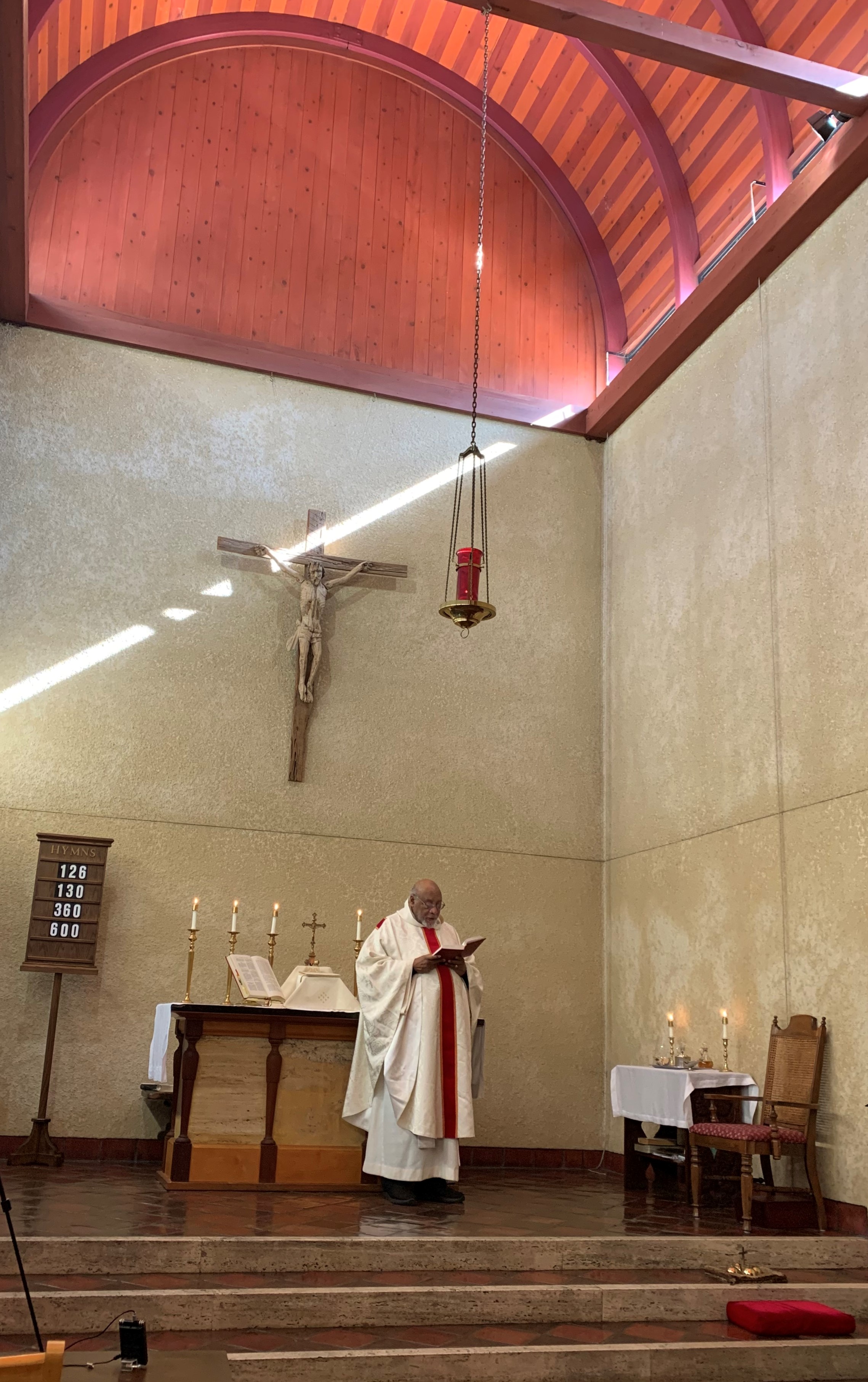 I thought about this and about the light of the saints, their shining a light upon us all, their examples of selflessness and sacrifice, their witness to seeing reality as it truly is – I thought about these things as I worshiped in St. Joseph’s Chapel this morning, and I gave thanks for the testimony of the majestic organ notes that danced into the dome above the white-linen covered altar, above the candles burning bright, above the white tented tabernacle, and above the crucifix itself.
 In our Anglican tradition, at least in the Anglican Province of Christ the King (traditional Episcopal), we celebrate the Feast (Festival) of Christ the King on the last Sunday in October. Others choose the Sunday before Advent, toward the end of November. This being our name day, it is particularly meaningful for us. For Christ is our King indeed – in deed, in Word, and in Spirit.
 But in the darkness of this night we look forward for the dawn of the Feast of All Saints, a glorious, sumptuous celebration of those men and women who have gone before us (and will come after us), who were so filled with the love of God they obeyed his Son, Christ the King. The Catholic Church has named many such saints, and Anglicans reformed the number, simplifying. The names fill the squares on our Ordo Kalendars so we won’t forget: the Apostles and the martyrs who witnessed and died, the Doctors and Fathers of the Church who taught, the evangelists who wrote and preached, the clergy who gave of themselves wholly in holiness, the unsung heroes who fed and sheltered the poor. They populate our kalendars with dates going back over two thousand years.
  These men and women live among us, sanctifying our world. Thus, on Tuesday we celebrate All Souls, remembering those who have gone before us as faithful soul-soldiers. They may not have lived lives totally abandoned to God’s love and purpose, but they believed and they tried, they confessed and they repented. They reached for Our Lord’s hand and walked him, on his path, until the next stumbling and standing upright again, and moving on. All Souls is for the rest the believers, those who have gone before us in time, who followed Christ the King.
 Christine Sunderland
 Christine Sunderland