
 As we watch the fall of the West, the twilight of civilization as we have known it, it is good to remember to breathe the name of Jesus.
I learned this one-word prayer, one-name prayer from my friends in Kentucky who know something about prayer. They pray without ceasing in a hermitage/retreat house called Nazareth House Apostolate. For we are told to pray without ceasing, and breathing the name of Jesus helps us live this joyful command, calling upon the Lord of Hosts to be present here and now.
We are also told to rejoice in the Lord always. For he is the God of Abraham, Isaac, and Jacob, the ancient of days. When Western Christendom fades with a whimper and not a bang (T.S. Eliot) we still have Christ ordering our days, our hours, our minutes. We still rejoice always. As some say, God is in charge. And others remind us to fear not. And my bishop of blessed memory often said, we know how the story ends, at least Christians know, and it is a good and glorious ending.
The bombing at the Kabul airport on Thursday, killing over 200 people, including children, trying to flee Afghanistan, was not unexpected, given the tensions in the radical Muslim world and their hatred for the West, and yet it sent shock waves through the West. The response from President Biden, when he finally addressed the American people late in the day, and by extension, addressed the world, was a weak attempt to placate, sidestepping the crisis he caused by the sudden exodus, preceded by the shameful closure of Bagram Air Force Base in the dark, without notice to our Afghan friends and NATO allies.
 And so we prayed for them with The Litany (1928 Book of Common Prayer, 54+) this morning in our Berkeley chapel. We dedicated our prayer to those trapped in Afghanistan and those who lost their lives. As we chanted the responses to the many supplications I was thankful for the poetry of these ancient lines, said in unison as a chorus, many voices becoming one, creating a work of art of its own in our haunting barrel-vaulted chapel, unique to the moment and setting:
O GOD the Father, Creator of heaven and earth;
Have mercy upon us.
O God the Son, Redeemer of the world;
Have mercy upon us.
O God the Holy Ghost, Sanctifier of the faithful;
Have mercy upon us.
O holy, blessed, and glorious Trinity, one God;
Have mercy upon us.
We prayed for mercy for we prayed for the world. We prayed for the world because we love the world. We take on the suffering of others and ourselves and offer it all to Christ.
As I chanted, I thought how good it was to be a part of this stream of Christ’s body, this artful, beautiful, exquisite liturgy we sing together. There is another time and place for spontaneous prayer, always good. But praying and singing in unison the words of thousands of years with other Christians, uniting those who came before with those who come after us, and those along side us today, is a powerful and joyous cleansing and fortifying. Having the words embedded in heart and mind sculpt a finer heart and mind, a more holy heart and mind. Online services are not the same. How good it was to be there.
I also realized that we must seize every moment, hour, and day to live fully in the love of God. We do not know how long we will have the chance to meet this way. We cannot predict tomorrow. The recent events in Afghanistan brought home the realization that we live in an increasingly shrinking world, and all events effect our fragile existence, no matter who we are.
The smoke from the California wildfires smothers the hills and valleys in the Bay Area. We cannot breathe. It is like a cursed blanket of ash.
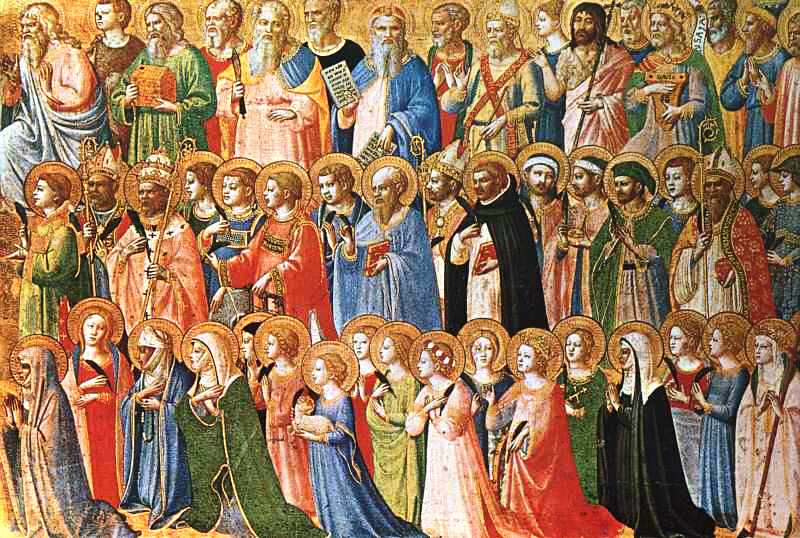 And so breathing the name of Jesus is healing. The Lord God Eternal enters me with each breath. I inspire and am inspired. And I received the Eucharist today, the Real Presence absorbed into my flesh.
I give thanks this afternoon for one more chance to gather together with other Christians, to pray and sing and celebrate together as one born of many: one voice uniting us in this moment in history, one body of believers in this place in this moment, never to be repeated, a moment now the past, never to be the present again.
How many Sundays and how many Eucharists and how many moments of such delight will come to me in my span on earth? I shall take advantage of all I can, remake my poor flesh and my weak soul with the love of God, the food of eternity and life everlasting.
 The fall of Kabul to the Taliban shocked the world this last week, and the images of desperate Americans and Afghans trying to escape Afghanistan have been seared into our memory. I pray for them, for their safe passage, and for all those immigrants who desire to come to America.
 Does America have the nerve and verve to rescue her people trapped behind enemy lines? She has the ability, but does she have the will?
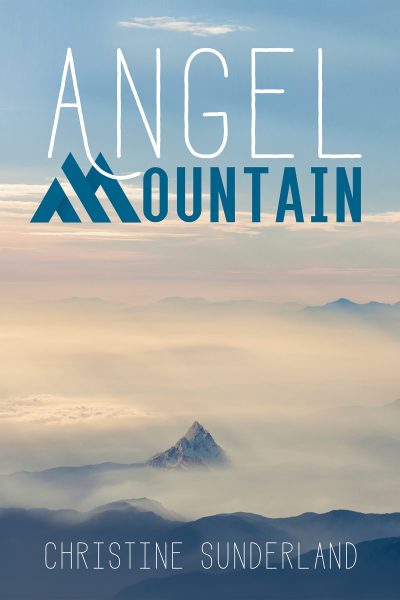 I hope to feature a few immigration themes in my next novel, picking up on some of the themes in Angel Mountain (Wipf and Stock, 2020). The hermit living in the mountain’s caves and his sister living in the foothills are Jewish refugee immigrants who hid from Hitler’s Holocaust in Greece during World War II. They understand freedom. They understand the miracle of America. They do not forget how blessed they are to make it to this country, to survive. In my new novel, Return to Angel Mountain (working title), at least one character will embody the immigrant experience.
 And so I prayed this morning in our Berkeley chapel for the Americans and others who value freedom, who are trapped behind enemy lines, whether in the Near East or the Far East.
 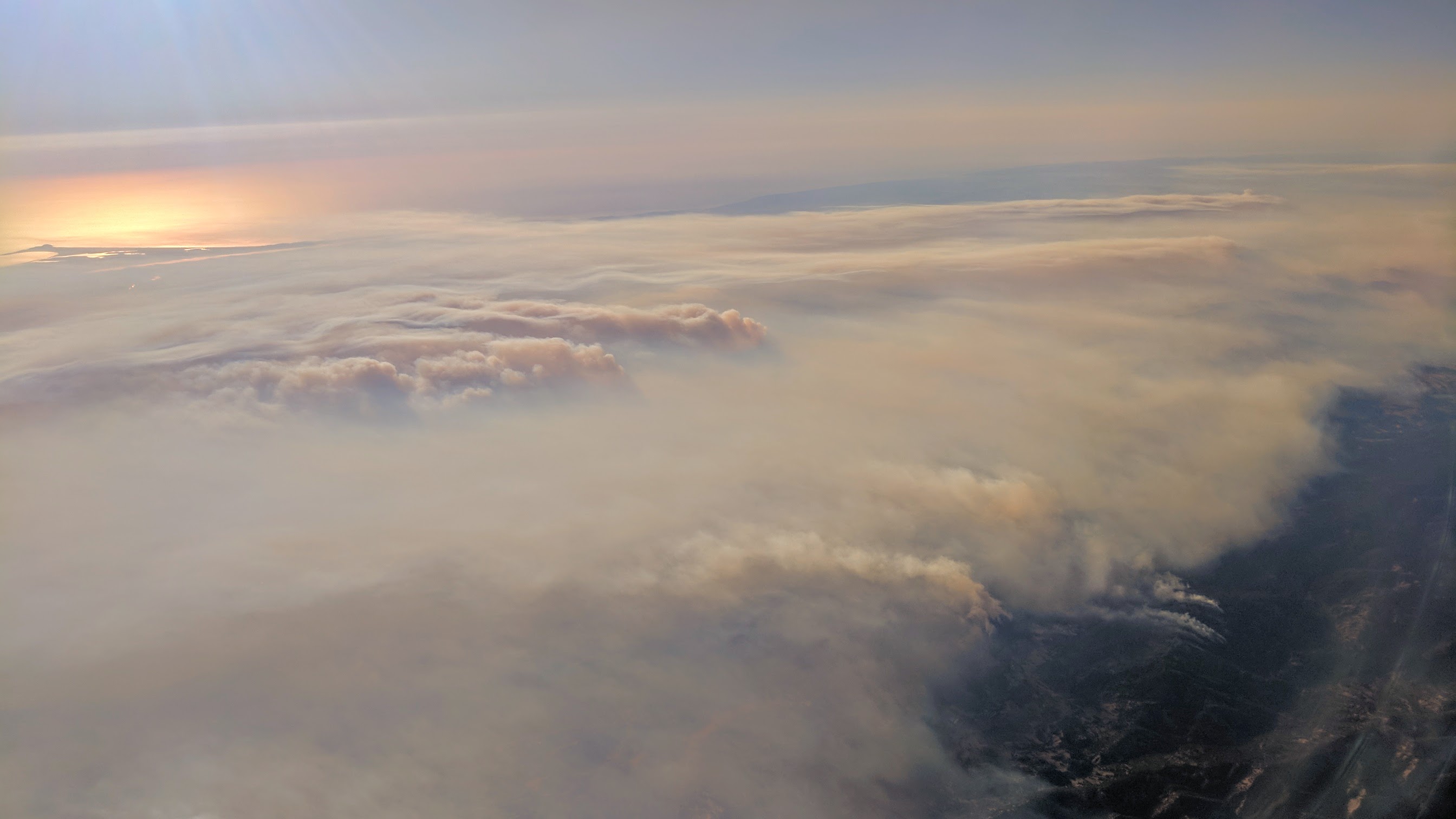 The Bay Area is smoky today, temps burning into the high ninety’s. I was glad, as I smelled the smoke, that I resupplied our evacuation bags this last week. We are entering fire and earthquake season. So far we are safe.
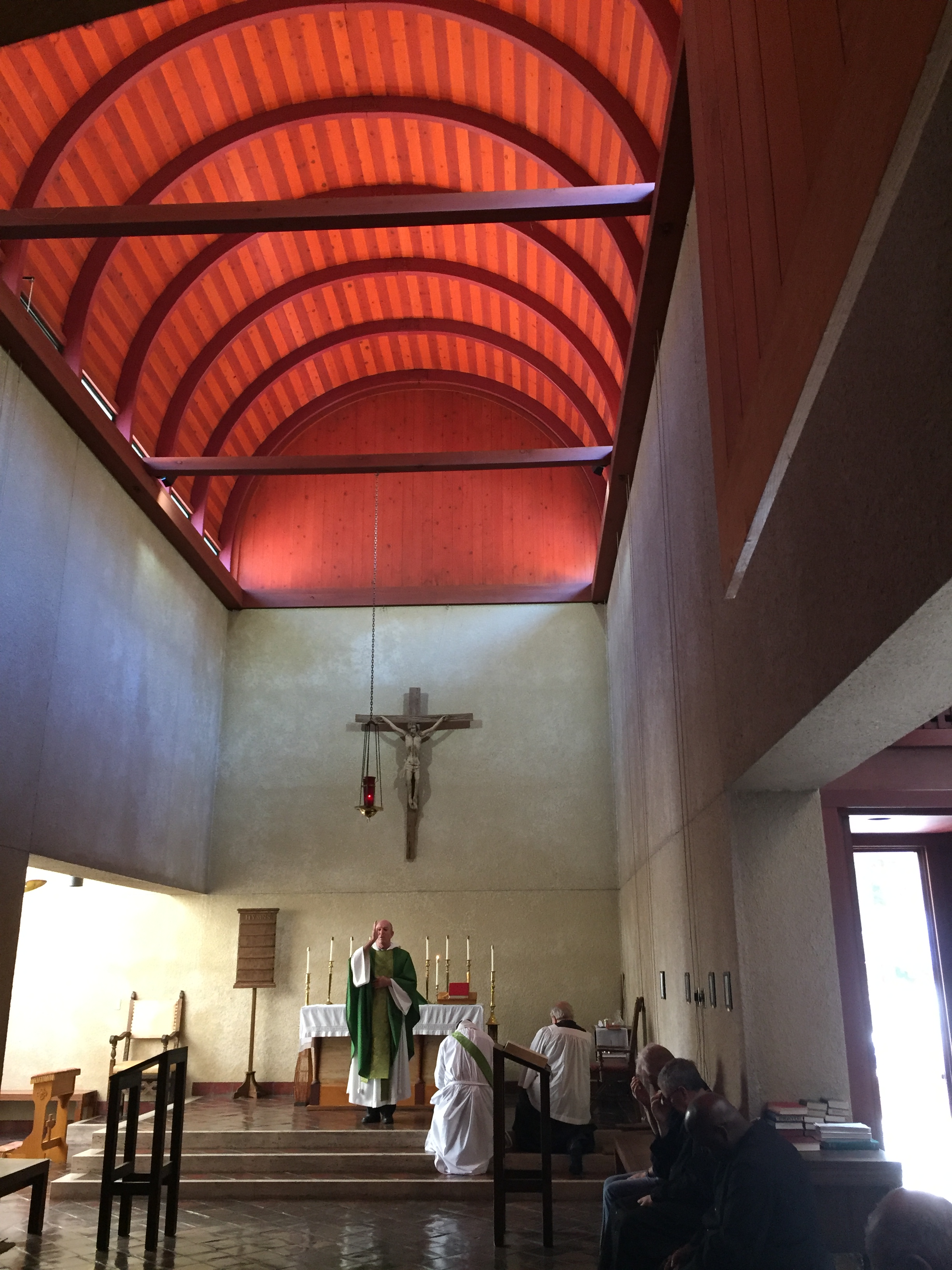 I suppose the Church prepares us for the journey with evacuation essentials. We enrich our minds, souls, and bodies at the altar each Sunday. We sing praises to the Lord of Hosts. We soar with the organ on the wings of hymns into the barrel vault that domes the medieval crucifix and Real Presence in the tabernacle below. We become one with one another in the ancient liturgy commanded by Our Lord Jesus himself at the Last Supper. We leave the chapel, our evacuation bags near to bursting. We are restocked with the essentials, the Eucharist, absolution, healing of body and soul.
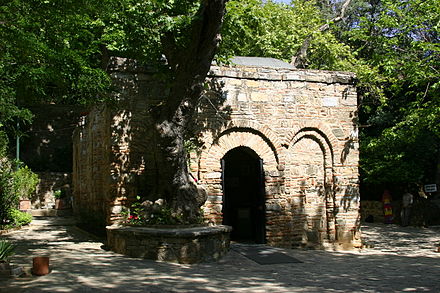 Today is the Feast of the Assumption of Mary, a “pious opinion” doctrine in the Anglican world, meaning you can believe it, or not believe it. I think there are good reasons to believe she fell asleep and was bodily carried into Heaven to be with her son. No group has ever claimed her body, the relics, in a time when they would have done so, eventually. It is said she went to sleep in the hills above the port of Ephesus. We visited the “House of Mary” many years ago, arriving by cruise ship at the port of Kusadasi, Turkey, touring the nearby Ephesus ruins where St. Paul preached (including the arena) and making our way up the hillside to the shrine of Mary. It is believed that the beloved apostle John (Evangelist) looked after her, then lived his life out on the nearby isle of Patmos where he was given the vision of Heaven, the Apocalypse, as written in the Book of Revelation.
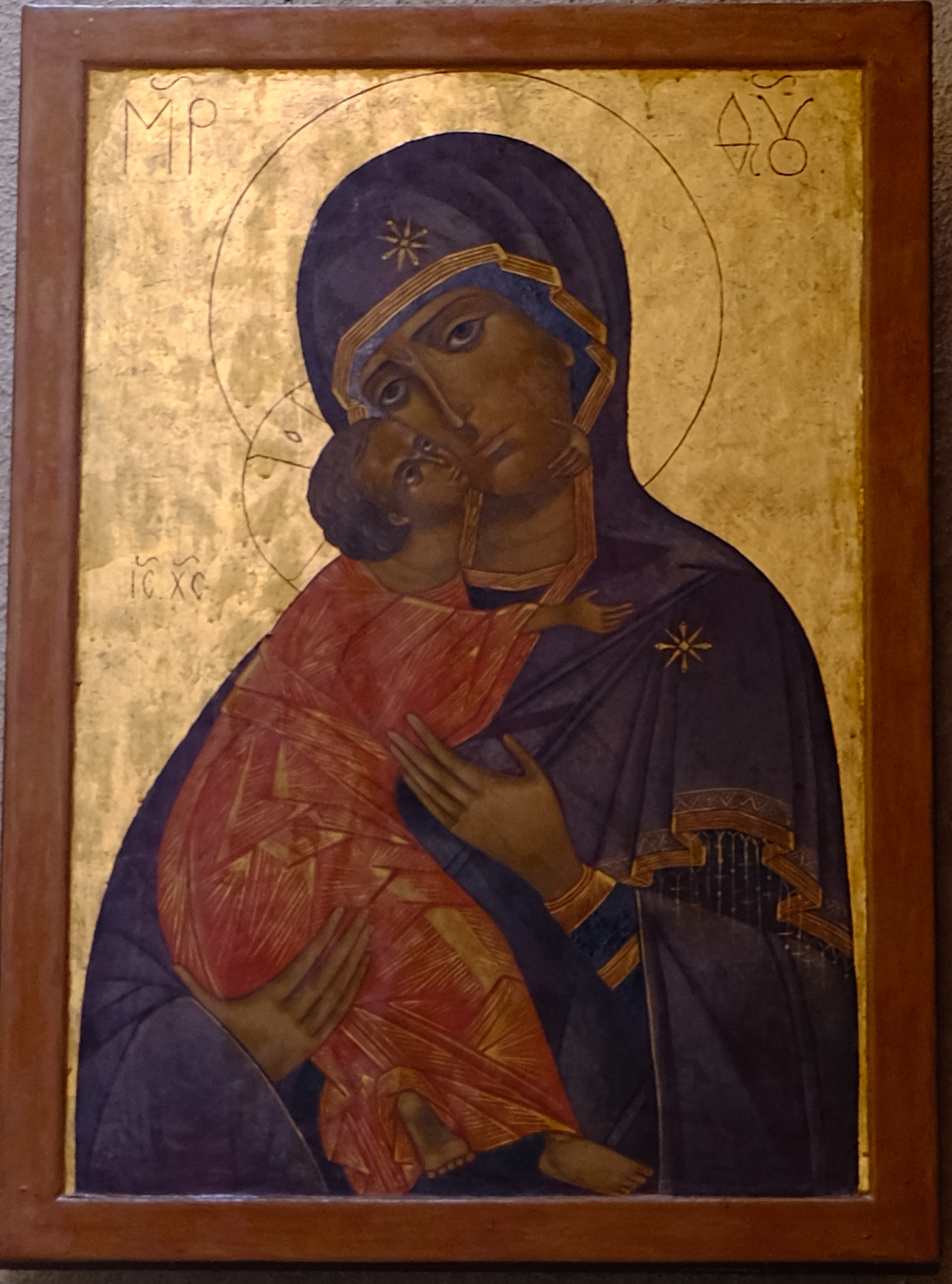 At the conclusion of our liturgy in our Berkeley chapel, we turn and face an icon of Mary, the Theotokas, one donated by a Russian émigré who was a friend of our Bishop Morse in the mid-twentieth century. We repeat the ancient salutation of the Archangel Gabriel to Mary, “Hail, Mary, full of grace, blessed art thou among women, and blessed is the fruit of thy womb, Jesus. Holy Mary, Mother of God, pray for us now and at the hour of our death.”
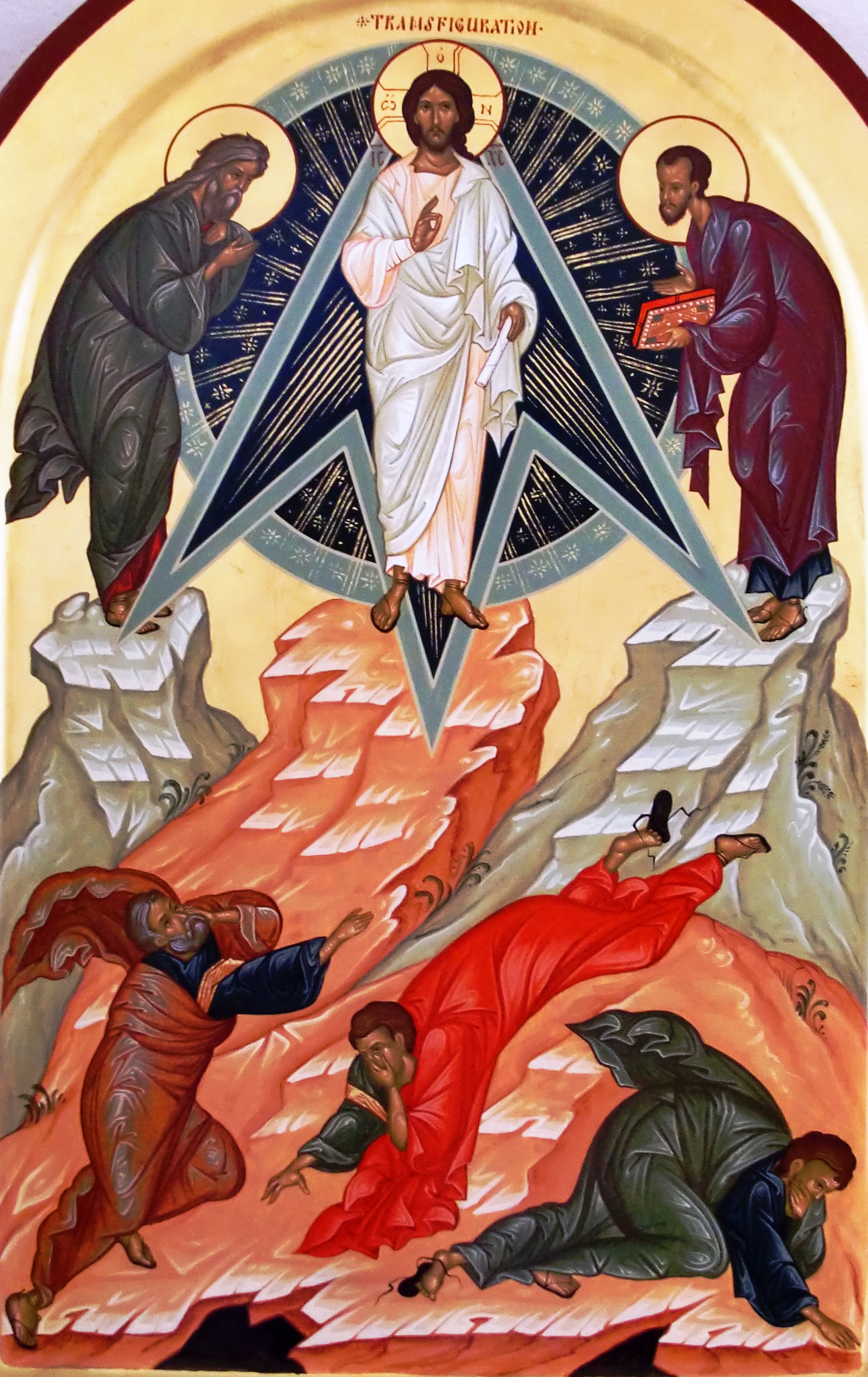 It has been a week of transfiguration.
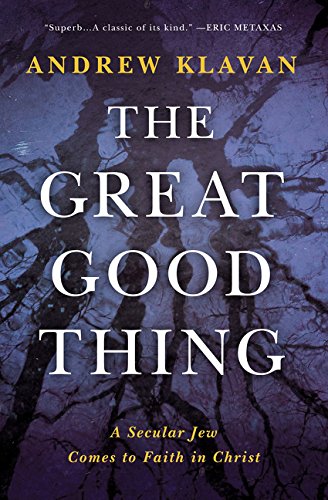 As a secular Jew converted to Christianity (recounted in his memoir, The Great Good Thing) Mr. Klavan could not understand the dividing animosity he saw between these various streams of Christianity, at least among those that accepted the creeds. These are merely ways, he explained, of God reaching all of us in our individual uniqueness, our great diversity. I had sensed from time to time, when jealousy and pride puffed up Christian leaders to degrade other ways of believing, that there must be a reason we have so many split factions in the Church, knowing that one day there will be one Church, and divisions would cease. But the reason might be that that one day, when Christ returns, there will be no Church, and divisions will cease, for Christ himself is the Church. We will become one people, believers in Jesus the Christ, joining together in his body. We will experience another great good thing, union in Christ.
 Perhaps it is a truth sometimes acknowledged that when we grow we are transfigured, we are changed. We may have growing pains in the process. Or not. We may feel that we have climbed a mountain and can see our world from its peak in a new light. We may simply feel profoundly rested, at rest, for we have come closer to the heart of our Maker, closer to the vision he had and has of us when he formed us in the womb.
 I’ve been thinking about authorities, as in what authority lies behind a truth told, what proof or evidence witnesses to the truth told. For we must choose carefully today to whom we listen, to whom we rely on to tell the truth. Are they biased? Are they competent? Do they have sufficient knowledge and background to make the statement?
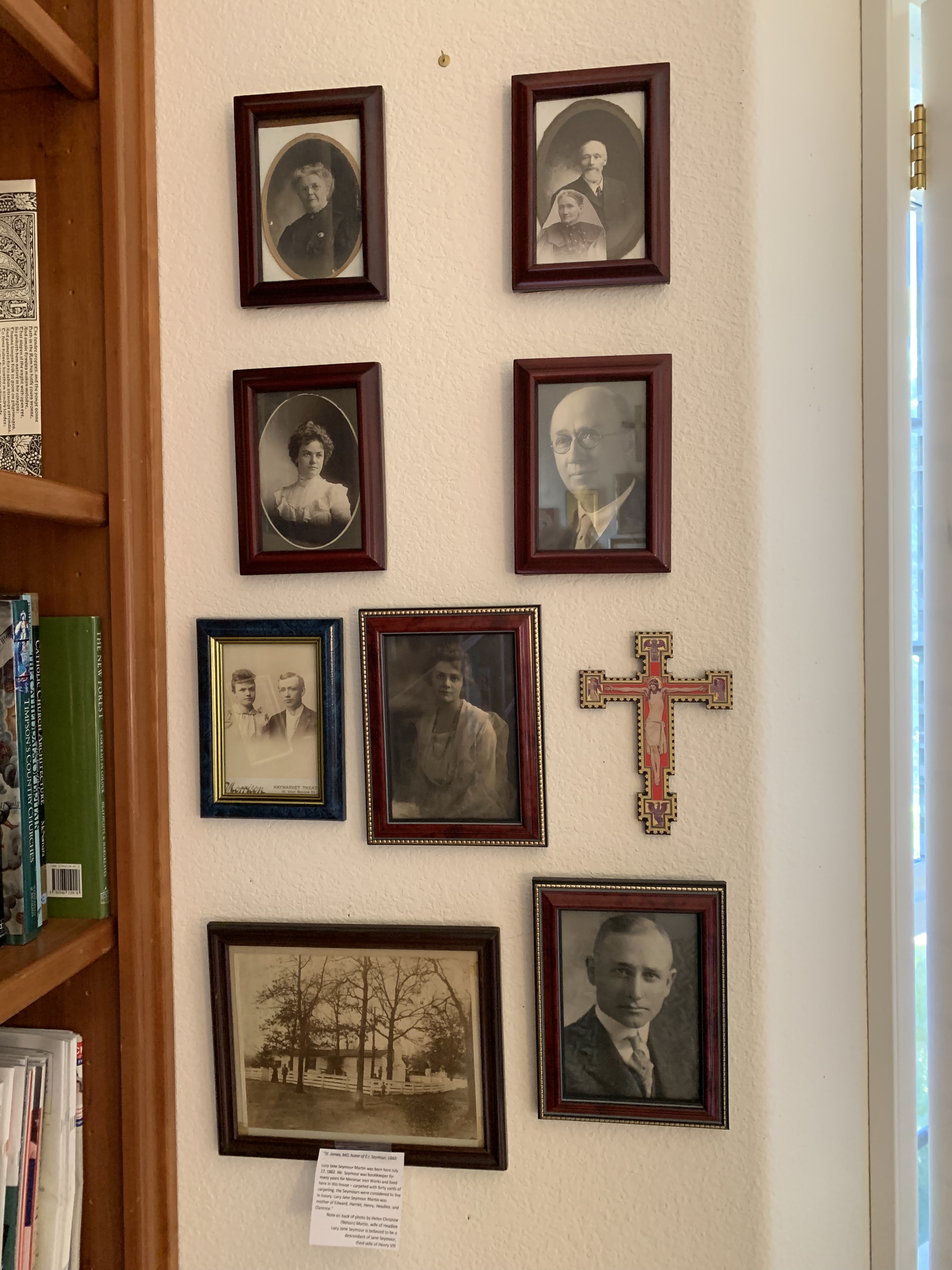 How can we see things as they truly are? I rearranged a few of my icons in my office, moving them from the bookshelves, where they seem to disappear into the many titles, to a blank bit of wall. I did the same with some family photos, moving them also to a white space. I can see them now, and feel they have been given new life. Life is often like that, so muddled with too many details (or emails). We lose our way in the forest of trees.
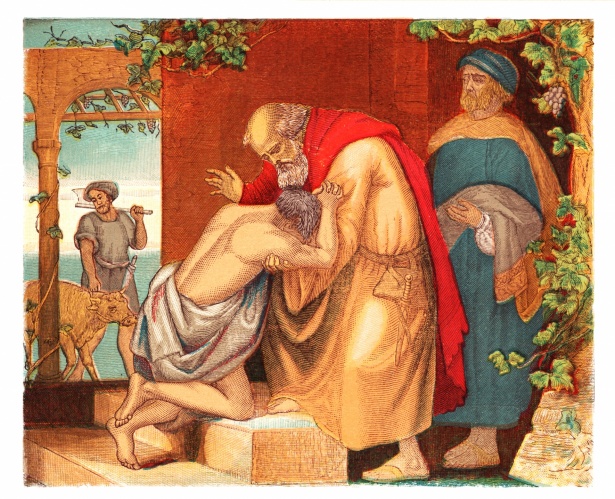 And so I was reassured that God the Father loves us, each one of us, and welcomes us home, even after a dissolute life, even after no-matter-what. We are forgiven when we come home. But we must come home.
 We all want to be able to see, and to see better, more clearly. We want to understand who we are as individuals and as mankind, as humanity. We can only do this if we evaluate our authorities carefully. Whom do we trust to tell the truth about Man, about God, about the Earth and the Heavens? About a rather nasty flu pandemic?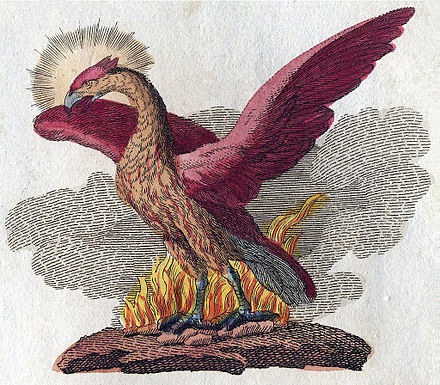
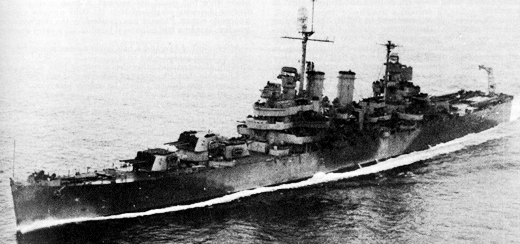 The USS Phoenix, named after the Arizona city, was a light cruiser. Her job was to guard convoys in dangerous waters. She shelled beaches to protect American troops in their amphibious landings. She was attacked by torpedoes and kamikazes, many near misses. In the course of the war, she lost only one man. She was a true phoenix and was nicknamed “Lucky Phoenix.”
 I prayed too, that we remembered to remember the heroes of our nation, at home and at sea, in the air and on the land. I prayed that we remembered to tell these stories to our children so that they would tell their children. In this way they would understand that rising from the ashes happened and can happen again, that they can protect the sanctity of life and all that that means. I prayed for freedom, the freedom for which my father fought and was willing to die, for he knew he would be resurrected too.
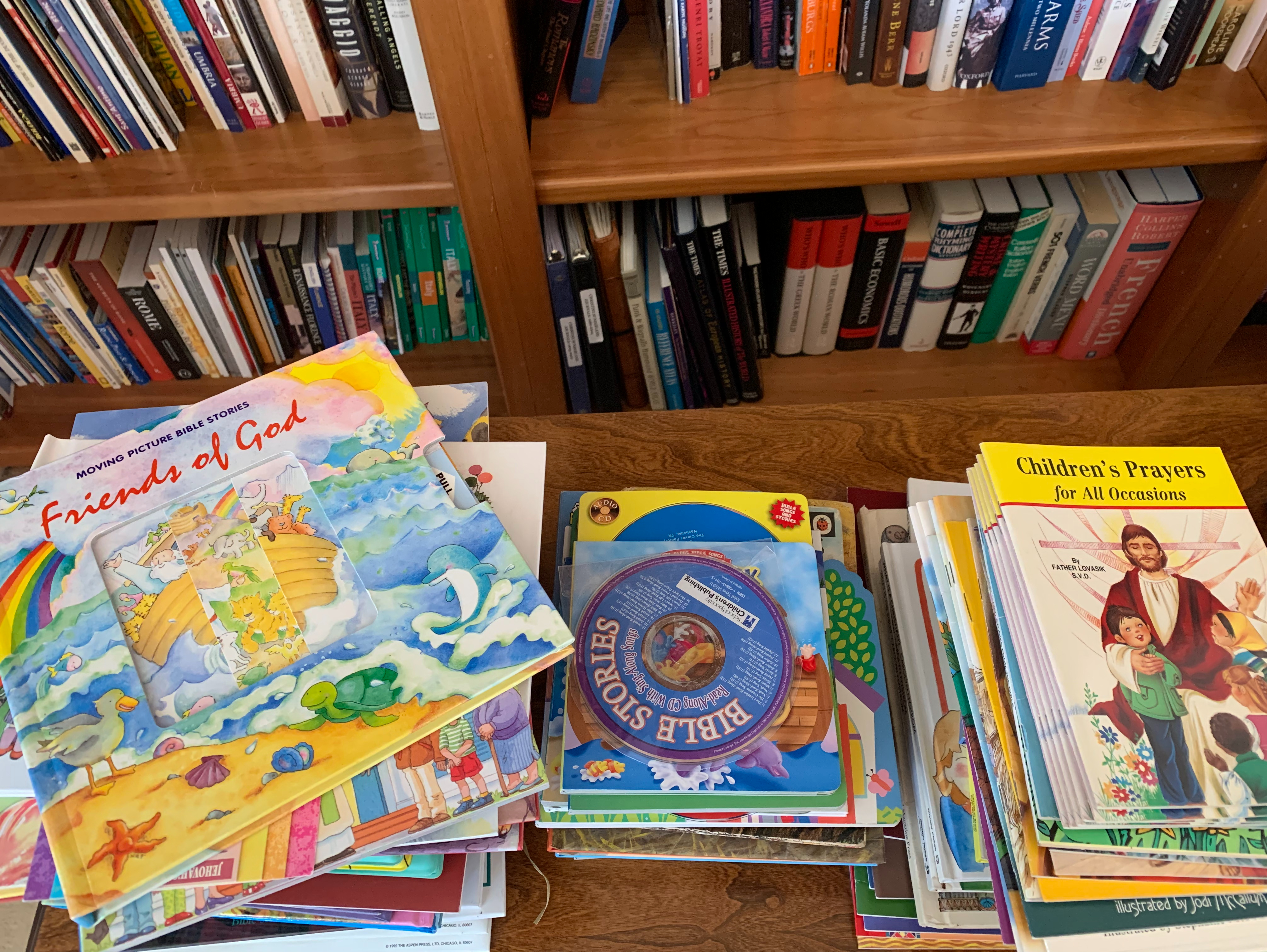 as Sunday School materials. Still, there were children’s books as well, slim shiny covers with happy faces that invited a look inside.

 At home we grew up surrounded by walls of books that informed quiet purposeful pursuits. Our mother was organized, and while not wearing heels and pearls in the kitchen (that I recall), she took pride in her homemaking skills, and we were the beneficiaries of the home she made for us. She took pride in her neat-as-a-pin rooms that graciously opened onto one another, the sofas and the matching draperies, the color schemes carefully considered. Quiet and balance and beauty surrounded us. Our daily schedule was ordered as well, breakfast, school, snack, dinner at 6. Homework and reading and more reading. Piano lessons. Tennis at the public parks. Brownies and Girl Scouts and merit badges sewn on to a wide green band. Sometimes tea in the afternoon, a lesson in manners and pouring and offering and conversation. We listened to music played on long-playing records in the hi-fi cabinet: Mozart, Beethoven, show tunes.
 One day my mother’s cremains will be placed in the stone vault, and one day my own body will be buried in a local Catholic cemetery, Queen of Heaven, awaiting St. Peter at the gates. Both locations are in the same town, Lafayette, where we grew up, one on a hill, one in a valley.
 Christine Sunderland
 Christine Sunderland