
I am pleased to announce that ACFW has published my post today, “Unmasking Righteousness,” about how God speaks truth to his people through the voice of Christian fiction. Thank you, ACFW!

And congratulations ACFW on your beautiful new website!
I am pleased to announce that ACFW has published my post today, “Unmasking Righteousness,” about how God speaks truth to his people through the voice of Christian fiction. Thank you, ACFW!
And congratulations ACFW on your beautiful new website!
Posted in Uncategorized
Rush Limbaugh died on Ash Wednesday this last week. Some said, “He always had good timing.” Perhaps, but we can’t control the timing of our death. I believe it was probably God’s timing.
I was introduced to Mr. Limbaugh’s radio show in the 1990’s when we were having some floor tiling done in our home. The workmen had the radio on. They were listening to Rush.
I listened too, from time to time, intrigued with his straightforward reasoning. He was a bit brash, as entertainers are. He was funny and interesting. I recall he would rustle paper during pauses, as if the paper were impatient. He may have drummed his fingers on the table. He was a master of the dramatic silence, allowing his reasoning to become your reasoning, allowing us all to follow his train of thought. Over the years I tuned in occasionally, in the car, in traffic, driving home from our chapel in Berkeley and wondering what his take on the world was at that point in time.
I was grieved over the various health problems he had. His courage gave us courage. His strength strengthened us. He misspoke from time to time and called people names (not unheard of in talk radio or for that matter any media). But he created a friendship with each one of us that is difficult to describe. I smiled when I heard he was getting married, as though he were a brother. He was funny and full of hyperbole. His station was the EIB station, Excellence In Broadcasting. His talent was “on loan from God.”
As a conservative, he spoke my thoughts, gave order to my logic. He said the things I wanted to say but didn’t have the forum or the opportunity or the courage or simply the words. He was concise. I imagined him rolling his eyes a good deal at some of the goings on in the world of the Left. He was much like Donald Trump. Both men did not “suffer fools gladly,” but saw clearly, saw that to make a log cabin you had to cut down trees. Ronald Reagan, the rough cowboy from Hollywood, was a leader like that as well, but it took hindsight to appreciate his gifts to America and the West.
More recently, with the threats to free speech in the public square, in academia, in church, he saw the direction these trends could take. He warned of the dangers ahead if we continued along this road. Others do this today, following his example, having been inspired by him.
So Rush Limbaugh died on Ash Wednesday in a country that is on fire, bit by bit burning to ash. Ashes to ashes, dust to dust, we say in Lent, and we wear the ashen cross of Christ on our foreheads. We are reminded of our pride, the root of all sin. We are reminded to be humble, to watch and wait and listen, to allow God to rule us within and without.

Cruel and unseemly remarks have surfaced in the media regarding Rush Limbaugh’s death. Even in elitist conservative circles, he was considered beneath their notice, an embarrassment to the way they wished to proceed and be seen. These same elitist influencers, I believe, became spoilers in the presidential election, and I wonder if they reflect on the first hundred days of the new administration. They are responsible for these results.
Elitists are divisive and shunning and brimming with self-pride.
Pride kills. Pride is cancerous, devouring the heart and mind and soul. Pride is secretive, pretending to be something it is not, a destroyer of love. Pride is self-righteous. Pride puffs us up and looks the other way when convenient, recalling Germany in the 1930’s. Pride makes excuses for behavior, for keeping a distance from the working and middle classes. Pride kills the proud like a parasite. Pride is blinded to truth and efficacy and results. Pride lies and creates comforting narratives. Pride spews propaganda and marginalizes undesirable deplorables.
And so these forty days are a time to root out pride. They are days to kneel and reach to touch Christ’s robe to be healed. They are days to grow small, for the way is narrow. They are days to be silent, to listen for the Shepherd’s voice in His word and in His song and in His Church. They are days to empty the ashes of pride into the trash, to make room in our hearts for salvation and for the salvation of the world.
It is a time to take stock, to consider how to better protect and celebrate our country, to consider freedom and its erosion by the proud, the blind, the elites. It is time to come together as believers and as voters and as lovers of America. It is time for races and classes to find common ground as Americans, an exceptional people, to weave a new cloth with language and lore, with symbol and song, with stories of how we worked by the sweat of our brow, tilling the fields, protecting the weak, freeing the slaves, fighting for freedom at home and in the trenches of Europe.

Rush would have wanted that. Rush Limbaugh, rest in peace. May light perpetual shine upon you. Thank you for your courage, your wit, and your steadfastness. Thank you for your love of America and your love of we the people, Americans.
Most of all, thank you for reminding some of us that we are not alone in this great love.
Posted in Uncategorized
My recently released novel, Angel Mountain (Wipf and Stock Publishers), won Finalist in the Inspirational category with Feathered Quill Book Awards. It made me reconsider what exactly it is that inspires people today?
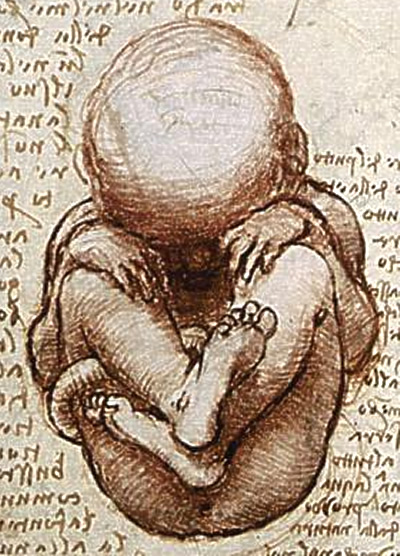
A family friend said to me recently that what folks really want in their lives is meaning. He himself is not religious but finds meaning in his work.
Is work enough to provide meaning to one’s life? Certainly, it does provide meaning or I wouldn’t be typing these words into a document to be placed in my blog to hopefully be read by someone somewhere. I agree with him. But work is ephemeral, not to be trusted to always be available or meaningful.
Is meaning the same as inspiration? Close cousins at least.
Today is Valentine’s Day, a day when I pull out a meaningful card (inspirational?) from my desk and set it on the breakfast table for my husband. He does the same for me, and we share a moment of simple, meaningful, inspirational delight: love.
Today is Quinquagesima Sunday as well, celebrated by the Church since the Middle Ages, the third Sunday in Pre-Lent and the Sunday before Ash Wednesday and Lent’s beginning. It is a day full of meaning as well as inspiration. It is also a day of love, this year coinciding with St. Valentine’s Day, for we listen to the magnificent and poetic words of St. Paul writing about love to the church in Corinth:
“Though I speak with the tongues of men and of angels, and have not charity, I am become as sounding brass, or a tinkling cymbal. And though I have the gift of prophecy, and understand all mysteries, and all knowledge; and though I have all faith, so that I could remove mountains, and have not charity, I am nothing. And though I bestow all my goods to feed the poor, and though I give my body to be burned, and have not charity, it profiteth me nothing. Charity suffereth long, and is kind; charity envieth not; charity vaunteth not itself, is not puffed up, doth not behave itself unseemly, seeketh not her own, is not easily provoked, thinketh no evil; rejoiceth not in iniquity, but rejoiceth in the truth; beareth all things, believeth all things, hopeth all things, endureth all things. Charity never faileth: but whether there be prophecies, they shall fail; whether there be tongues, they shall cease; whether there be knowledge, it shall vanish away. For we know in part, and we prophesy in part. But when that which is perfect is come, then that which is in part shall be done away. When I was a child, I spake as a child, I understood as a child, I thought as a child: but when I became a man, I put away childish things. For now we see through a glass, darkly; but then face to face: now I know in part; but then shall I know even as also I am known. And now abideth faith, hope, charity, these three; but the greatest of these is charity.” (BCP 122-3) 1 Corinthians xiii. 1+
By “charity” Paul means love, and we are told it translates to the love known as agape, the unconditional love of God for man and man for God, considered the highest form of love.
Paul lists this love’s qualities: better than prophecy, knowledge, faith, brotherly love, and martyrdom; it is long suffering, kind, without envy or false pride, unselfish, not bragging, not provoked, thinking good not evil, rejoicing in truth, bearing difficulties with fortitude, believing, hoping, enduring, unfailing.
Angel Mountain was written as a work of love, love of God and love of mankind. In the love of God we find answers to the turmoil of mankind. We see where humanity has strayed, where we have strayed away from true charity. For if we love our fellow man we do not see them in terms of identity groups but as individuals, each one unique and precious. We are all handicapped in some way, in spirit or flesh. But each one of us has unique talents, given and developed by a loving God as we go through life on Earth. Each one of us is given the ability to love one another and celebrate our differences, not bemoan our differences or be divided by them.
This is the love of God, our Creator. And he continues the creation daily, minute by minute. He gives us life and he grants our world more life with the birth of each child. He teaches us to mourn the death of every life, to consider life a precious gift. He teaches us to celebrate all creation and to love all people as he loves them, unconditionally.
Valentine’s Day reminds us of our Christian heritage in this secular world. Valentine (226-269 AD) was a Christian priest who was martyred in the early Church. He practiced charity, the love of God. It is a day reminding us that love is inspirational, holy, revealed to us by Christ and his great acts of redemption on Earth, witnessed to by the saints and martyrs. It is a rich and meaningful day and season.
We move from this celebration of love to Ash Wednesday. What will this season teach us? What does that ashen cross marking our foreheads truly mean? Our humanity, our flesh, our very breath comes from God and goes to God. We are given new bodies as the old ones turn to ash.
Our lives were and are and ever shall be full of meaning, inspired by the love of God our Creator.
Posted in Uncategorized
February 7, 2021: We are pleased to announce that Angel Mountain has won Finalist, Inspirational Category, in the Feathered Quill Book Awards. Thank you, Feathered Quill!

Judges’ comments:
“Covers: front cover – lovely peaceful serene picture that really fits, 10 out of 10.”January 31, 2021:
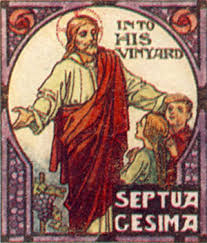
“We enjoyed it very much! I enjoyed the way you would go into detail about the physical appearance and different personalities of your characters. It really brought them to life for me.” Alan, Texas
“I loved how you incorporated very current issues into the story… I learned more about genetics, the perspective of creation from a scientific mind, and a Holocaust survivor’s experience that was new to me… There is a line from Abram’s letter to Elizabeth that I especially appreciated where he writes, ‘But I learned on Earth that the only way to be of earthly good is to be full of Heaven.'” Angela, Texas
Purchase from Amazon. Purchase from Wipf and Stock Publishers. Purchase from Barnes and Noble.
Or order from any bookseller.
All author proceeds given to children’s charities.
Posted in Uncategorized
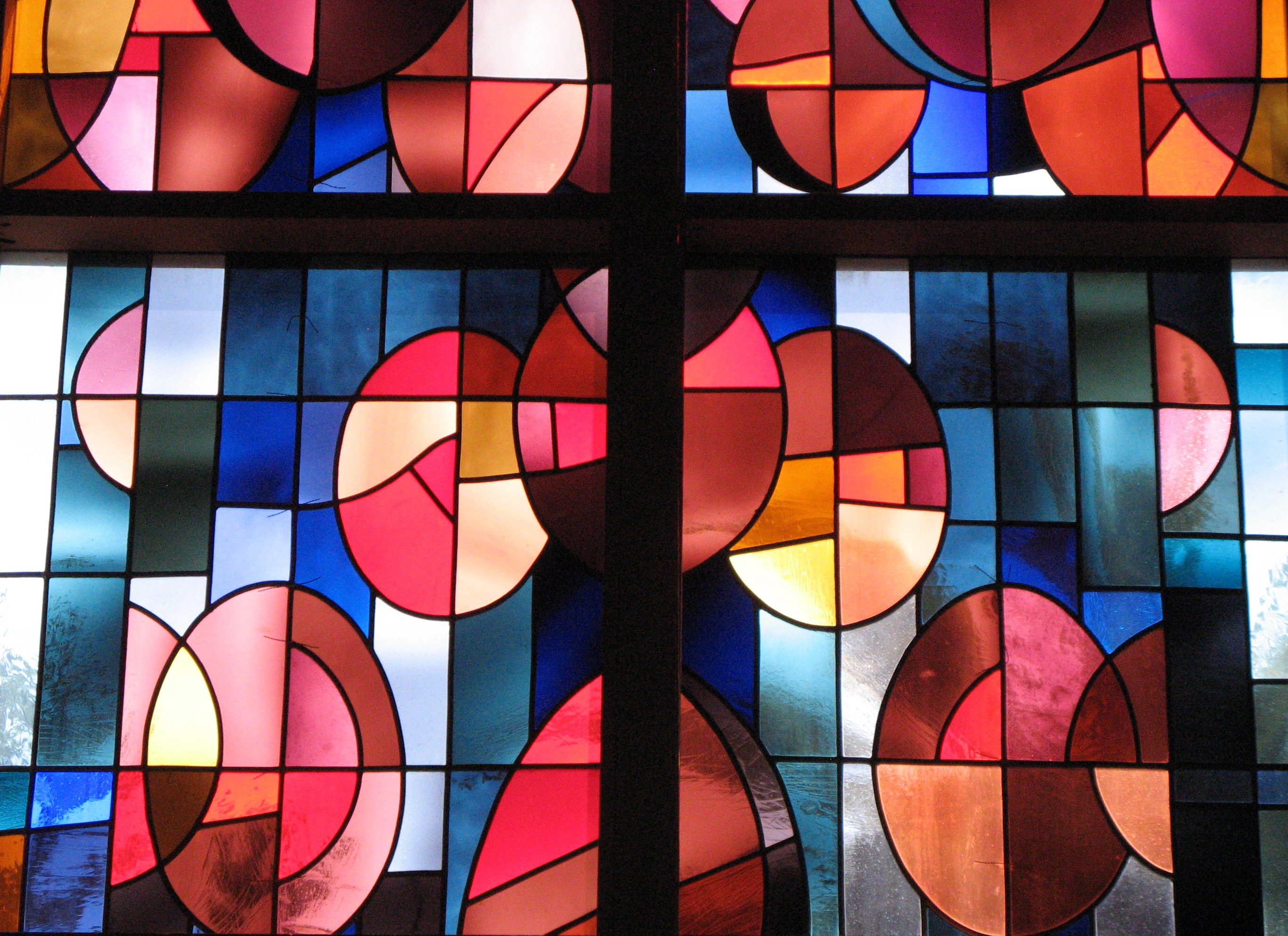
Septuagesima Sunday is the first of the three Sundays of “Pre-Lent.” It is a time to consider our Lenten discipline. What will we forgo and what will we take on? It is a time of subjecting the body to the soul, a time of sacrificing time, gifting our hours to God.
There are as many ways of practicing Lent, of strengthening our souls and bodies, as there are individual persons on Earth. And so each of us looks deep within to clean out the dusty dark places. We confess our brokenness. We seek healing. We seek wholeness, holiness. We ask our Creator, what should I do? What should I deny? Lead me, Lord.
The denying part for me means abstinence from meats and sweets, a rule difficult enough to strengthen me yet not so difficult as to destroy my resolve. And Sundays are feast days, a break from the rule of abstinence.
As to what should I do, take on, I often memorize Scripture, words that nourish in times of famine. And while we are not yet burning books in today’s cancel culture, words are often banned, speech is often silenced, and ideas are often buried or twisted beyond recognition. In some cases, words are criminalized, and speakers are persecuted if not prosecuted.
It is useful for me to have a storehouse of words, sentences, and paragraphs learned by heart, a library of truth safe inside the vaults of my memory. They say memorization is a good exercise for the brain, that it will help us run the race to the finish.
Hymns, so full of Scripture and God’s truth, make memorization easier – allowing us to sing sentences, prompting our memories with melody.
And so, I am grateful for the Liturgy of the Holy Eucharist, for with time, the repetition of these profound doctrines that teach the meaning of our lives, telling us who we are as human beings on this spinning planet, telling us who our Creator is and His great acts of love done for us. These truths teach us how to love one another and live with one another in peace, about rights and wrongs and do’s and don’ts – all of these sacred songs sung to us in the Liturgy – these mean everything.
As I join others in a Sunday liturgy, I am grateful reciting the Creed summarizing our beliefs in the magnificent miracles of God on Earth. I am grateful praying the “Our Father,” the prayer Our Lord Jesus taught us to pray, a prayer moving my thoughts into a humbler sphere, a place of openness and trust and wonder, a sanctuary where I hear God’s voice, spoken to me, to me alone.
For God speaks to each of us individually. He created each one of us as unique beings, never before created and never to be replicated. We are his children, and he speaks to you and me specifically. He calls us by name, the names given in our Baptisms, the names sealing our covenant of love with Him through water and words, conveying his Spirit into our bodies, regenerating our souls.
And as He speaks to each one of us, He invites each of us to work for Him in his vineyard. This work too is unique. As today’s parable tells us in the Gospel reading, as the day is ending Our Lord is still finding laborers to work for Him, to tend to the harvest of his vineyards. At the end of the day he is inviting any and all who come to Him. At the last hour he touches another heart and reaches for another hand, to lead one more of his children into his Kingdom. At the last hour he invites us to do the same.
Where is the Kingdom? It is here and now; it is there and then. We are invited into His glory now and later, for the Kingdom begins when our new life begins in Christ. It continues past bodily death, as we are resurrected into the New Heaven and Earth, when Christ comes again to reign.
I will never fully understand why I said yes to Christ’s invitation into the vineyard of faith fifty-three years ago, at the all-knowing age of twenty. The reasoning of C.S. Lewis fed my mind, and the local Episcopal church entranced my heart with its beauty of word and song. But why, I often wonder, have I been given such joy in my faith, when friends and family pursue the dailiness of life’s duties without such joy, without such faith. I am grateful to Lewis for his labors in the vineyard.I suppose Lewis said yes as well and went on to say yes to the works in the vineyard to which he was assigned.
Many others said yes to God’s invitation to believe, and many churches said yes to God’s liturgies and entrancing beauty. In the late 1960’s the Episcopal parish I visited said yes to beauty and truth. I was unfamiliar with the rites, the responses, the rituals, but I was happy to be there in the midst, like a butterfly pausing inside a rainbow, thirsty for color. I returned again and again and soon I was saying the responses, praying the prayers. Soon I was instructed by a priest who had said yes to the invitation long before I did, and soon the bishop touched my head with the Holy Spirit in the Sacrament of Confirmation, making me a communicating (able to take Communion) member of the flock of the great Shepherd. I was given the faith of the Apostles, handed down through the centuries, living and whole and true.
That Episcopal parish has since shattered, its sheep scattered. Wolves entered in the night as the clergy slept. Some of the faithful escaped the modern heresies, reformed and regrouped as Anglicans. Others were devoured, their assents to Christ forgotten, their faith frozen like the animals in Narnia in the long eternal winter of the White Witch.
But I do digress. Today, all one needs to recall is to keep recalling. All one needs to remember is to re-member the faith, speak the faith, pray the faith unceasingly, and discipline the mind with memory.
National memory is threatened by the wolves of today, and just so memory of Our Lord and his great acts among us is threatened.
We must remember to remember. We must recite our recitations. We are in a dark and cold winter, but we must listen to His commands to do the work we are assigned. It often seems the end of the day, the last hour, but no matter. We seek the work Our Lord gives us to do.

This Lent listen and learn the words by heart. Sing the songs. Discipline time and strengthen hours with Scripture and Liturgy. The day is ending and the night is near. We must assent to joy, pray without ceasing, as we wait for the dawn.
Today, Septuagesima Sunday, listen to His voice, listen for the invitation to work in the vineyard one more hour, one more day, one more year, doing one more labor for His glory.
Posted in Uncategorized
In this season of Epiphany, of manifestation, it is appropriate to consider how we converse with one another in a free country, how we manifest our own epiphanies to one another.
The power of expression reflects our national debate, such as it is. Will free speech be silenced in the wake of wokeness? Will those who disagree with the current propaganda be prosecuted for inciting violence? Time will tell whether there are enough good men and women to save our union. As Ronald Reagan said,
“Freedom is never more than one generation away from extinction. We didn’t pass it to our children in the bloodstream. It must be fought for, protected, and handed on for them to do the same, or one day we will spend our sunset years telling our children and our children’s children what it was once like in the United States where men were free.”
Freedom must be fought for with words as well as wars. Such expression is manifested best in love, in love of words, in love of persons, in love of reasonable argument, in love of, at the end of the day, truth.
Pilate’s famous question, “What is truth?”, is the foundation of modern secular thought. For truth is a phantom, we are told, and it is only feeling and perception that is true. It is a happy thought for the unbeliever, the agnostic or atheist, for judgment cannot occur apart from truth. Ergo, no one sins; ergo, all are absolved. We justify our actions with our background, race, gender, inequality or victimhood. Without God to judge, who are we to judge? today’s relativists opine.
And so, without any objective standard of perception, media in all forms becomes an expression of feeling, not truth or facts. Where journalists once sought to report the facts, they today give their opinion, or a lockstep and prevailing opinion, a politically correct opinion, and masquerade their propaganda as truth.
In this war of words, truth is lost.
And in this war of expression, of dubious manifestation masquerading as fact, I discovered a source of news that has been a great blessing. In addition to the local left-leaning newspaper and a national paper afraid of retaliation, I discovered The Epoch Times. In print and digital formats, this newspaper, in my opinion, “gives the other side,” since there are always at least two sides. The reporting is straight forward, as opposed to opinion pages. In addition to the News, The Epoch Times offers: Opinion, Life & Tradition, Home, Mind & Body. There is a children’s page and there are book reviews. There is a wonderful section on traditional art: great paintings, great architecture, great music.
The Epoch Times has offered a balanced source for news and strengthens those aspects of American culture that need strengthening today: family, faith, education.
Which brings me to an article on the “1776 Commission,” created by former President Trump to ensure America’s school children learn America’s founding principles, teaching them why we consider our country to be the last great hope in the world. This noble effort seeks to teach our unifying principles, that we are a country where freedom and free speech ensure we honor diversity as we embrace our common language, history, and ideals:
“‘The 1776 Commission’s first and last report, despite being banished by the Biden administration, will endure because it upholds the founding principles of the United States,’ the advisory commission’s chairman said.
“The 1776 Commission, appointed by President Donald Trump for two years, was tasked with producing a report on the nation’s founding principles while providing guidance on how the federal government could promote those principles in public education. It is commonly seen as a counter to The New York Times’ 1619 Project, which has been pushed by educators who teach the American story as one that’s based upon racial oppression.”
Just as Christ’s epiphany manifested God in flesh, incarnate, to the world, so we must be epiphanies, manifesting our faith and our country to the world, in spite of those who try to silence us. We must protect free speech by supporting media that speaks truth to powerful elites, offering another side to the news we see opined in mainstream outlets. We must protect speech while we still can.
If we don’t become manifestations, shedding the light of epiphany, free speech in the public square will be cancelled.

So, I thank you, Epoch Times, for your courageous stand in our season of peril. Because of you, we can read vitally important news that is absent, has been erased, from our national debate.
And, dear readers, please support this great endeavor as best you can. It may be the last stand in this erasure of history, memory, freedom, and America herself.
Posted in Uncategorized
It feels like spring in the Bay Area. A few pink blossoms have appeared on a bush outside my window. The olive tree in the front yard shimmers in a silvery light as the sun glances from its gray-green leaves. A light breeze blows. This afternoon our world is domed in blue and the hills are bathed in hints of the green to come.
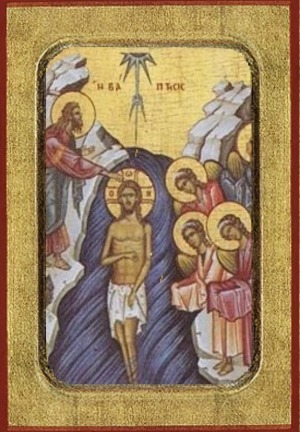
We felt an earthquake the other day (epicenter in Concord), and my desk rattled as the ground moved beneath the house. It was a minor quake, but one reminding me of the shaky nature of life and its seasons. Each minute could be a departure from the known; each second could spin us into another dimension.
The election (and this year of fear-full plague) was like that and the events that surrounded it: the demonizing of peaceful people, the cancellation of words and lives, the rewriting of history as well as the present. Our culture quakes. Our lives are being remade, redirected by a powerful force. In the chaos and confusion, whirled into the swirling events of recent months, we wonder what is happening to our world of law and order, freedom and free speech, simple decency and good will among men.
And yet, in the Gospel lesson appointed for today, the Second Sunday after Epiphany, Christ is baptized, and in this epiphany showing who Jesus of Nazareth was and is, we see the dramatic beauty of all creation. For here, the Son of God, to be one of us, submits his flesh to the pouring of water, to be baptized into humanity itself. The Holy Spirit descends like a dove. A voice from Heaven says, “Thou art my beloved son, in whom I am well pleased.” (Mark 1:1+) Earth opens to Heaven, and God and Man are joined in this sacrament.
And so we are reminded that we are sacraments, sacramental. Humanity is far more than mere matter but carries the divine within. It is this spark of holiness that draws us to beauty, truth, and love, intangibles that at first only hint of Heaven, but in time, reveal Heaven. It is this presence of God within us that gives us eyes to see others as holy creatures too, worthy of respect and love.
Our Christmas kittens, Angel and Gabriel, adopted recently, are growing each day, and she, once scared and shy, is now the aggressor. She dominates Gabriel, and we worry her rough play may hurt him. She jumps and twirls and flies, landing on him and grabbing him with both paws. “Easy,” we say, “not so rough.”
The two of them remind me of the wildness of nature, this wilderness in which we live, both on Earth and in our own flesh. We are called to tame the wildness, this personal and cultural wilderness, to become holy through discipline, respect, and equal justice. We are called to affirm this holiness of life by our words and deeds, our stories and songs. We are called to create and not destroy, to protect life within the womb and life nearing death. We are called to practice a sacramental way, a way of spirit within flesh, a way that proclaims we are the outward and visible signs of an inward and spiritual grace.
In my recent novel, Angel Mountain, I consider the claims of Intelligent Design Theory and its compatibility with Darwinian Evolution. The magnificent intricacies of life hint at a Designer with a purpose. Today science has given us evidence supporting this claim. In mapping the genome in the 1990’s, NIH Director Francis Collins was stunned by the intricacy and beauty of the design, and his conversion began, first to Deism, then to Christianity. Eventually he founded Bio-logos, an online site for the debate between faith and science. The pathway had been prepared by Phillip E. Johnson of UC Berkeley and the Discovery Institute in previous decades, and Dr. Collins adds to the evidence for belief in the Christian God as Creator of all.
And yet, as these marvelous developments stir the winds of a Great Awakening in our time, a great cancelling has sought to erase such speech and debate, another theme of Angel Mountain. A great cancelling is erasing and rewriting history, redefining time, turning truth into lies and lies into truth, and encouraging our animal nature, untamed and wild and bestial. The great cancelling has divided us into tribes at war, returning us to the jungle.
As I watch my kittens rumble around the room, flying and pouncing and biting, I recognize this side of nature, human nature as well. But we are far more, whether our speech is cancelled or not. We are sacramental creatures, meant to love sacramentally, carrying the divine spark, however hidden.
Christians have been baptized into Jesus, and we rise with him from the waters to touch the Heavens. When Earth quakes we cast our eyes to Heaven. When spring lands on leaf and limb, sparkling Earth with light, we know who we are.
We cry to those not yet baptized, “Be reborn today!” We point, like John the Baptist, to the One who is life itself. We point to Our Lord, King of all Creation through the ends of time, to the new Heaven and Earth.
Posted in Uncategorized
In this time of unrest and confusion and lockdowns, I have found the Church to be a godsend, and it is, of course, a literal God-send. For the Church Year has structured my days and months in a time that is seemingly timeless and unstructured, a floating time, streams merging seconds into minutes.
The secular world has crushed time in an overabundance of flu-fear, has voided time of meaning, shuttering weekly worship and other gatherings, social events, sports events, academic events, that not only connect us to one another, teaching us to love, but structure our time into intervals of meaning. In the past we did this, this, and this. In the future we plan to do this, this, and this. These tools of sanity, our mental calendars that divide the immense future into manageable portions, have been taken away. All is chaos. The past is soon erased. The future is unknown.
I have written a good deal about cancel culture in my novels, particularly in the more recent Angel Mountain (Wipf and Stock, April 2020). Today free speech is cancelled if deemed uncomfortable. Debate no longer invites charitable reasoning. Emotion rules the day. Lies reshape perception, incited by emotion, not truth.
And so, I particularly welcomed today’s celebration of Epiphany, the light of truth, the light of God manifesting the divinity of Christ Jesus. It is a piercing light, for honesty is not always agreeable. It is a cleansing light, for confession cleans the soul: Christians are called to scrub their souls regularly, with humility, with the light of truth. We don’t always like what we see, but we emerge cleansed by the blood of the Lamb. Only then can we remain sane.
Truth. Light. The star led the magi to the manger, to the bed of the newborn King of Kings. These wise men fell on their knees and worshiped a baby in a stable, born to peasants, outcasts fleeing a powerful State. Christians today follow that same star in the heavens to the manger of this King of Kings. We too kneel and worship, stunned by the immense love of God our Creator. We too have become outcasts, for not only do we follow the light of the star, the light of truth, but we speak this truth in a time when a powerful State purges truthtellers.
America’s freedom, her democratic system, depends upon a free and honest press, not bought and paid for. Today, the mainstream press, including media of all kinds, is in the pay of powerful political interests, so that it is difficult for citizens to know the truth.
The race riots that began several years ago and resurfaced this summer in Portland, Seattle, and other cities across the nation were instigated by professional thugs, and these same figures reappeared last week, identified and arrested as those leading the break-in of the Capital. In all of these criminal riots, many bystanders were swept into the melee, often because they didn’t fully understand what was happening.
One truth that we must hold to be self-evident is that we cannot exist as a society with double standards of law and order. We are all equal under the law, and those responsible for leading riots should be held accountable. We should deplore all criminal activity, regardless of race, gender, political persuasion.

We need the light of that Epiphany star today in our national discourse, in our academic discourse, in our community discourse. We need to humble ourselves before the manger and admit we are not perfect. We need to listen to one another with respect and love. We need to encourage speech, not silence it. We need to unite, not divide; we need to find common ground as Americans.
And most of all, we need to seek the truth ourselves, not rely on the latest media sound bites, be it newscasts, social media, or Hollywood pundits anointing themselves as authorities. As our churches are shuttered, as the State decrees become suffocating, we can speak truth to power, as some have said.
To speak the truth, we step into the light of the Epiphany star brightening our own journey through time and take comfort from all that the Church gives us. The Church calendar organizes our thoughts and actions. We look back to the birth of Christ, the shepherds and the angels, the magi falling on their knees in worship. We look forward to the three Sundays of Epiphany, then to “Little Lent,” the three Sundays of preparation for Ash Wednesday and Lent, then Lent which prepares us for Easter.
We are given ritual and song that unite us as one body, Christ’s Body, the Body of Christ, and we have access to that community virtually if not in person. The rituals recall and relive and recreate the great truths of God and Man, reminding us of who we are, children of a loving God. The song is our poetry of belief, the harmonious melodies of the Body of Christ. We sing of the angels and the manger and the magnificent moments of Christmas. We sing of the star and of the wise men. We sing of holiness, and sanctity, and love. We sing of all the glory that awaits us in Heaven and all the glory streaming among us – His Body – hinting at what we will soon see, what we will soon become.
We sing of truth, of faith, of hope, and of charity. We will never be silenced. We will never be cancelled.
As we step into the year 2021 in the light of that Epiphany star, we may be forced to choose between good and evil, truth and lies. We may be forced to take a stand, as those lawmakers in Washington last week were forced prematurely to do, forced by criminal mercenaries to choose sides without hearing the truth.
We must armor ourselves with truth, seek the truth, speak the truth. Will we?
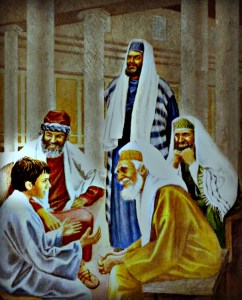
Today’s appointed Gospel was the story of the boy Jesus in the Temple of Jerusalem, asking questions of the priests. He tells his mother Mary that he has been about his Father’s business. This is one of the manifestations of Epiphany, the light revealing who Jesus truly was and is. The next two Sundays will also be manifestations, Jesus’ baptism in the Jordan River by John, and his first miracle, turning water into wine in Cana. The light of truth reveals these historical events, so that we can see, so that we can understand, so that we can believe.
The Epistle today included the beautiful words of St. Paul in his letter to the Romans:
“Present your bodies a living sacrifice, holy, acceptable unto God, which is your reasonable service. And be not conformed to this world, but be transformed by the renewing of your mind, that ye may prove what is that good, and acceptable, and perfect will of God… For as we have many members in one body, and all members have not the same office: so we, being many are one body in Christ, and every one members one of another.” (Romans 12:1+, BCP 110)
As churches are shuttered and we are silenced, we may become living sacrifices. As we present this reasonable service, not conformed to the world of deceit, we may be shunned. For we are transformed by Christ, who renews our minds with the truth of all creation, and we understand more and more what is good, what is acceptable, and what is the perfect will of God.
Within the light of this Epiphany star, within these holy moments of truth, we gather with one another, singing praises for all God has done for us, all that He has given us, all that is good, perfect, and true, for we are one body in Christ, every one members one of another.
This is the truth of the light of Epiphany.
Posted in Uncategorized
It is a truth deeply felt but rarely confessed that goodness is a target for evil, that evil, being nothingness, twists the good, the true, and the beautiful, twists the great gift of the Holy Trinity – God the Father, God the Son, and God the Holy Spirit.
Belief in the Incarnation, the birth of Christ, has been nearly eclipsed over the centuries by belief in the outer trappings of Christmas. How did this happen? How did we forget the holiness of the holiday?
A devil whispered in the believer’s ear, you can have Christmas, the pleasures and parties, and not weigh yourself down by belief. Keep up the doings and goings and shoppings. Foster your desires, not others. Become god. You don’t need faith. Santa Claus, a twisted version of Bishop Nicolaus of Myrna, replaced God. Santa Claus gives gifts, material gifts.
Yes, the believer thinks, keep the manger wrapped, keep the story wrapped, keep the shepherds and the magi wrapped, under wraps. We can feel Christmas without the demands of belief. We will admire the wrappings of the good, the beautiful, and the true without having to face the good, the beautiful, and the true. We need not actually open the real Gift of Christmas – the Incarnation. We can admire and enjoy the wrappings and the trappings without confrontation.
And so parties and pleasures usurped, upstaged, holy liturgies. Greed usurped love. Pride usurped humility. Pleasure usurped joy. Each corruption hinted at what it had once been – the good, the true, and the beautiful. Each corrupted virtue, becoming a vice, eclipsed God’s great act of Love, that majestic intervention in human history to walk among us. The vivid reality of Christmas – Christ’s Mass – Christ’s coming in the flesh, incarnate, the ultimate Eucharistic sacrifice – is replaced with pale echoes, corrupted creatures of darkness.
And in this past year of the pandemic, when holy liturgy, vital and virtual, and the many activities of Christmas, are denied by the State, we become forced to focus on what is left of the holiday. What is left if we cannot hustle and bustle. What remains?
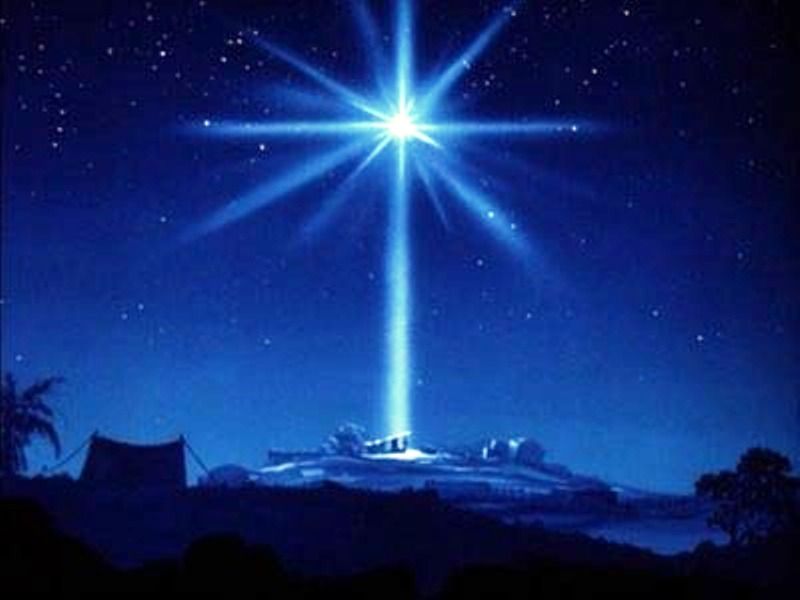
Christmas. True Christmas remains. The manger remains: the Son of God, born to us in a stable, on a bed of straw, under a brilliant star. Angels, shepherds, and magi find their way to Bethlehem. You and I find our way to Bethlehem.

This humble glory is the heart of Christmas, deeply known, but often forgotten. This glory story is witnessed and told through the centuries. It is a simple, breathtaking story that changes us forever.
If we believe.
If we do not believe, if we desire sentiment and not reality, if we settle for pale, pasty imitations over the real thing, if we choose twisted truth over honest truth, corrupted good over genuine good, then we will not know joy and gladness. We will not know love and laughter. We will become pale and pasty, imitations of what we were truly meant to be.
If we believe, we are given all we need and will ever desire. For under the wrappings, behind the decorations, lies the Son of God, the Savior of all mankind, the King of Kings. Deep within the greeting cards, the festive wreathes, and the twinkling trees, is an invitation to each of us.
We are invited into the heart of God, through His Son, Jesus. We are invited to share his divinity by partaking in his Love.
We are invited to celebrate this Jesus, the Savior and Lord of all. For this alone is the true reason for this season of joy. This alone is the good reason for the wrappings and the trappings of Christmas. This alone is the beautiful reason we walk the earth, creatures of His, designed to love as He loves. This alone is truly Christmas.
And so today on this tenth day of Christmas, we follow the star to the stable in Bethlehem. For on the Feast of Epiphany, January 6, we will experience a true, beautiful, and good epiphany – the burning light of Christ offered to us.
It is a new year begun with new life, the new life of Our Lord as he comes home to our hearts and we become changed forever – we become the true, the good, and the beautiful.
Posted in Uncategorized

Merry Christmas!
We have entered the Twelve Days of Christmas, the time spanning the birth of Christ to the arrival of the Magi, the Epiphany of Our Lord on January 6.
I have found that the Christmas festivals of the last three days are often obscured by the rush and bustle of the season. Even adults who no longer believe in the birth of the Son of God yearn to recreate the days when they believed as children. They yearn to yearn for God, to experience mystery and miracle. The secular world, having lost faith, keep the rituals of gift giving, caroling, and the tale of the extraordinary bearded man from the North Pole on a sleigh pulled by reindeer. They keep the recipes and the dinners and the festive gatherings. They want to believe but do not want the moral demands of such belief. They want to be children again and see the world as fabulous.
This season was dampened by the pandemic, hushing it to a hum. My husband and I and our two Christmas kittens celebrated a quiet Christmas (well, they are kittens, so not that quiet). We connected with family by phone and screen rather than in a physical gathering. I wondered in some awe that the events in Bethlehem two thousand years ago could feed us so miraculously and mysteriously and joyously today in a quieter time. We have been forced to step back, breathe, and see differently.
The pandemic lockdowns, at least here in California, meant more virtual church, more contemplation, more singing alone or with one’s immediate sheltered family, and to those living inside the screen, more words read, more glory stories told, and most of all, a sudden quietude that filled the rooms of our home.
At the end of the day, and perhaps all time, we are reminded to remember God. We are called to pay attention to Christmas, Christ-Mass, the celebration of the child born in Bethlehem, He who brought salvation to mankind, and Himself in every Eucharist.
And so, on Thursday evening my husband and I gathered in front of our screens to take part in a virtual Christmas Eve Mass, celebrated at our beloved chapel a block from UC Berkeley. We said the words, sang the songs, and prayed the prayers.
Silent night, holy night / All is calm, all is bright / Round yon virgin mother and child. / Holy infant so tender and mild. / Sleep in heavenly peace. (#33, Joseph Mohr, 1818)
On Friday we gathered before our screens to hear the Holy Liturgy for Christmas Day, sung at our chapel at Stanford.
Hark, the herald angels sing / Glory to the new-born King! / Peace on earth and mercy mild, / God and sinners reconciled! / Joyful, all ye nations, rise, / Join the triumph of the skies; / With the angelic host proclaim / Christ is born in Bethlehem! (#27, Charles Wesley, 1739)
Mary and Joseph sheltered in a hillside cave. Obedient to God, she gave birth to the Savior of the World. We, obedient to God, shelter in our homes, give birth to belief in this Savior of the World. We welcome Him into our hearts, our sheltered hearts. We give him room. In the quietude of this season, we listen to the melody processing through the centuries, into our time, our day and hour and minute, and in these notes of grace we face our Redeemer. We are unmasked by Love; our souls are bare; we prepare for life eternal.
On Saturday, the Feast of St. Stephen, we honor the true cost of discipleship. We read the words in Acts 7, how Deacon Stephen saw the face of God as he was stoned to death, our first Christian martyr. St. Paul, then Saul, watches, as his own transformation begins, for he would soon meet Christ on the road to Damascus and be changed forever.
And today, Sunday, we celebrated the glorious Feast of St. John, Apostle and Evangelist. John saw and wrote that in the beginning of all creation was the Word, and the Word was God. He was the Light in the darkness witnessed by John to be the true Light, and all who believe on his Name would become sons of God. The first verses of John’s gospel are read on Christmas Day (John 1:1-14) and describe who Christ Jesus is: He is the Word who created the world, who was born into that world but unknown by that world. But to those who did know him he empowered them to become sons of God. And the word was made flesh, and dwelt among us, and we beheld his glory, the glory as of the only begotten of the Father), full of grace and truth.
These three days tell the magnificent story of the intersection of time with Eternity. We tell of our Savior’s birth, tell of Stephen the first martyr, and tell of John who teaches what this means for us.
Tomorrow, the fourth day of the twelve days of Christmastide that lead to the Feast of the Epiphany on January 6, we descend into the violent Roman world of the first century. We mourn and recall the slaughter of the Holy Innocents, the murders carried out by Herod to protect his crown.
We recall these historic events because we have witnesses who testified to their truth. Our Bishop Morse of blessed memory often said that Christians are a people of reality. We face the truth of what happened, then and now, both the glory and the tragedy, both life and death. For like Stephen we will be called to suffer for our faith. And like the killing of the firstborn boys under age two by Herod, we will be attacked for our faith. This is the reality of salvation, the reality of Christmas.
We Christians will never stop telling the story of our redemption in Time to live in Eternity, salvation on Earth to live in Heaven. We will never be silenced, even sheltered as we are, for God so loved the world that he gave his only begotten son, that whosoever believeth in Him should not perish, but have everlasting life. (John 3:16)
Deo Gratias.
Posted in Uncategorized