
 Aside from the riots and burnings, the assault on private and public property, the rise in unemployment, bankruptcies, and closures, the students denied education, the poor becoming poorer, sports with no live fans, performing arts with no live audience, the churches with empty pews, the fear engendered by a strange virus, aside from these minor disruptions to daily life (“Other than that, Mrs. Lincoln, how did you enjoy the theater?”), Americans seem to have downshifted into a simpler mode of existence, which may not be a bad thing altogether.
There are silver linings to the storm clouds as they say and blessings to be counted. And Sundays are good days to count blessings and reflect on thanksgivings.
I find myself, elderly and sheltering with my husband, also elderly, having more time each day which I now can restructure. For I hate time lost, time gone, precious minutes of my life not lived fully to the glory of God.
 Having obliged a number of obligations, particularly in regards to my recently released novel, Angel Mountain, I now have a little time. When this occurs—usually on vacation or other “rest” periods—I assign a bit to memorize, either from the 1928 Anglican Book of Common Prayer or Scripture (usually KJV, more poetic). One can never have too many prayers or verses tucked away in one’s little memory bank. And my memory bank is often depleted and bereft… for I don’t pay attention often enough to this simple challenge. So, it being an election year, and a year of clear attacks on our freedoms, recalling the Marxist playbook, I revisited a prayer in the Service of Morning Prayer, “A Collect for Peace.” I have tried this one before and always struggled for some reason, confusing the phrases in a most frustrating manner. So I am giving it another go and taped the words to the back of my phone (naturally, attached to my palm).
Here is where I am:
“O God, who art the author of peace and lover of concord, in whose knowledge standeth our eternal life, whose service is perfect freedom…”
That’s taken a week of glancing at the back of my phone. I’m working now on the next phrase:
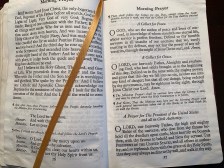 “Defend us thy humble servants in all assaults of our enemies”
Curious, I just noted, we are asking for defense in all assaults not from all assaults. So the assaults will still come, but we will be girded with enough righteousness, with helmets of salvation, swords of truth… to be safe, saved.
The famous phrase in this prayer is “whose service is perfect freedom,” and I have returned to it often because of those words, that, at first, seem to contradict one another. Service, perfection, freedom. How can there be freedom in service? Something to consider in these moments given me, these extra hours.
The sheltering shuttering locking down of our lives has also afforded me an opportunity to attend church virtually. I immediately checked out the larger churches, to see what they were doing and in the process recalled that one can go to any of the world’s great cathedrals and see rituals in glorious settings—in Rome, Paris, London, with the time change of course. But there are such services in the U.S. too. They stream the service and we watch as spectators.
But most of our little Anglican parishes had never stepped into this world of virtual reality in order to claim souls out there in the Cloud, except perhaps for an odd few minutes of video showing a procession for an ordination or other memorable event. This was new territory, and our clergy would have to respond as best they could. Many have been proud they didn’t “do Internet things, or email even, and Facebook… too dangerous.” And I often wondered about that, considering it a missed opportunity. But now it was sink or swim, especially here in California, where the governor has imposed strict restrictions on congregations congregating, although protests and riots appear to be anointed with his approval, no masks required.
But I’m not going down that road, as they say. Instead, I have been watching our parishes to see what they would do, and it brought up some interesting observations.
Many did nothing. But among those who did, the Zoom approach seemed the most popular, where a link was sent to members and others who asked for the invitation to the service. This kept the group private, good for the club atmosphere (coffee hour) but not so good as a public witness, opening the front doors as it were to all passersby, with what would entail “streaming” (can now can be done through Facebook).
Some clergy opted for both, which on reflection, seems the best approach.
Once I was used to seeing my face in one of those squares and devoured advice on camera angles and ways to look better than I really do (this has not been successful, alas), I felt more at home with Zoom.
 But the question of open/closed doors continues to fascinate me. The church is supposed to be making disciples of all nations. Here we were, suddenly in a place in time where folks in all nations were looking for our open digital doors. I know from the Facebook page we have for our UC Berkeley chapel, St. Joseph’s, we have visitors from all over the world. They especially like the short videos of singing and processions, but the altar and the vertical space and the sense of holiness in our chapel seems to draw many to us, folks we have never met, but longed for something we could offer.
The Internet, with all of its downsides (and I won’t go down that road either, not today at least), has brought people together. Especially those we used to call “shut-ins.” Especially those who are lonely, suffering, dying. Anyone can enter this world wide web of singing, dancing, storytelling, funny videos, classes of every description, and on and on. The world has become democratized, the gatekeepers to such knowledge and entertainment no longer relevant. The world has direct access through a simple phone. Who would have guessed?
Another detour I won’t pursue is the policing of this world wide web.
So getting back to the churches and their services and their open or closed doors. It is a characteristic of human beings that we have an inner and an outer life. Inside, outside. Spiritual, physical. Something we are told is united in Christian faith and practice. And parish life can be like that—caring for one another within the parish, caring for those outside the parish. It is always tempting for any group to grow increasingly inward, becoming a club of close friends, a closed society. It becomes difficult for them to open those doors and allow anyone in, to change the happy parish family. And yet, how vital this is, for with closed doors, closed hearts, the mission we have been given is soon forgotten. Soon the closed doors are locked—for safety of course. Soon the Sunday School is silent—quieter that way and less troublesome.
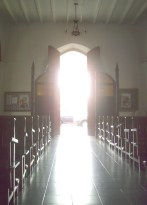 So I am thankful for this remarkable opportunity given to churches to preach the Gospel to all nations from simple screens and keyboards and video cameras, preferably in a physical chancel before a physical altar. I hope more churches do this, and if they have an invitation-only service, that they consider doing a live-streaming as well.
After all, we want the doors to Heaven open to us one day, when we reach the top of Angel Mountain. We want to hear those words, “Well done, good and faithful servant. Here is your perfect freedom. Welcome home.” And we will all stream in, smiling and singing and glorifying God.
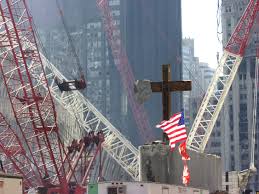
 Some of us search and find, deep within, the light of our own creation, hidden in the Creator. We turn to prayer, joining others on checkerboard screens, inhabiting squares and rectangles, imprisoned by unloving lines, impenetrable borders. Yet we pray together, to our Creator, the one who breathed the breath of life into us as we gulped our first air, as we slipped into the light of His love, leaving behind the dim sheltering womb. We pray to that same Creator of life and love. We pray that we will love one another, still, always, once again.
 We, the faceless ones, no longer cancelled, enter our screens and speak. We touch one another with our words and prayers, our brothers and sisters, our Family of God. We are no longer alone. We remember, from somewhere distant, almost another country, how to love. We cry our creeds into and onto the screens and our words fly through the Cloud to the altar where the priest holds up the bread and the wine and the bell rings to remind us to adore. From our isolation, our sheltered space, we reach to the stone slab of sacrifice to touch the hem of His garment, for if we touch Him, we will become whole, with true faces. We will be healed.
 Our family, the Church, lives still, holding our nation, this ragtag assembly of rugged Americans, tenderly together in her palms, her manger creche, unmasked. She—America—will not be cancelled, erased, pulled into the vortex of the abyss of silence. She—the Church—America’s founding Mother of all—will sing, and she will speak. She will pray, worship, and adore the Father of all. The Church, and all her children, will rebirth our nation in the wellspring of freedom and dignity, fed by love.
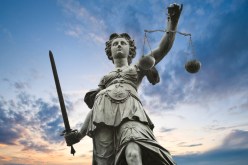 And our nation, America, lives as well, unmasked and singing. She will not be muted. She will not be cancelled. She knows her birthright is born of freedom, is born in truth, borne by the song and dance of time, of past, present, future. She seeks to tell the world again, the old story, the glorious story, that her exceptional, miraculous light still burns on the mountaintop, her light still beckons and protects the huddled masses yearning to breathe free. She embraces her founding, her creation by those created in the Creator’s image, by those who reflect His light and His love for all mankind.

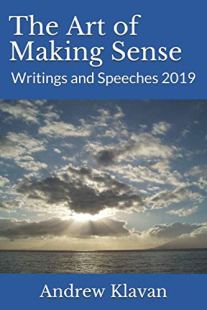 I am reading Andrew Klavan’s The Art of Making Sense, Writings and Speeches 2019. This is not a book about writing to make sense (which I thought at first and probably need), but a book about personal coherency found in a consistency of character, speech, and action. He is speaking of lives that make sense and heroes that make sense, ways of living that make sense. When they don’t make sense, when one part acts in contradiction to another, there is a brokenness, a fissure or fracture of personality. We might call this hypocrisy, for we sense deeply that there is a grand logic to living, to life.



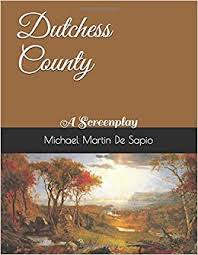 DUTCHESS COUNTY: A SCREENPLAY is a moving, cinematic, meaningful biopic of Washington Irving (1783-1859), credited with being the first American “Man of Letters” and the Father of the American Short Story. We glimpse a pivotal time in American history—pre-Revolution to post-Revolution, the “Age of Reason” to the “Age of Romanticism.” Irving bridges the Old World of Europe and the New World of America. He influenced many of the nineteenth century English great writers—Scott, Dickens, Thackeray—and in America, Longfellow. American literature gained respect (finally, and perhaps grudgingly).
 Christine Sunderland
