
 I had much to be thankful for in church this morning.
Ten days ago I received a phone call that no mother ever wants to receive. Our son, 44, had been seriously hurt in a surfing accident in Costa Rica. He was in a hospital in San Jose, the capitol. Broken vertebrae and discs meant he could not be moved. Surgery would be necessary.
While I have rejoiced often in our son’s love of life, I have just as often feared for his loss of life. What he thinks normal, I deem risky. Needless to say, there have been many scrapes and bruises in his growing up, many warnings that he is, after all, mortal like all of us.
When the word got out about the accident (gotta love Facebook), the prayers rose to the heavens. Angels had been with him, I believe, during the accident itself and those early hours as he lay on the beach in pain. Now hundreds of friends and family members joined the angel chorus of healing and protection. They stormed heaven with prayer.
Yes, angels had been with him when he hit hard-packed sand. One of his spinal discs shattered, and a fragment entered the spinal column, .5 millimeter from the spinal chord, which would have caused paralysis or even death.
The ensuing days of pain were turned into grace by the love of God. Our son said that the love of God poured into him through his friends and family. The love of God answered him when he cried, “Lord, help me,” as he waited for the surgery, his neck brace necessary but strangling. In all of this, Christ strengthened our son in this Cross of suffering. God held him in his palm, so that he could, as he said to me, sing like the Psalmist,
“I waited patiently for the Lord, and he inclined unto me and heard my calling. He brought me also out of the horrible pit, out of the mire and clay, and set my feet upon the rock, and ordered my goings. And he hath put a new song in my mouth, even a thanksgiving unto our God.” (Psalm 40)
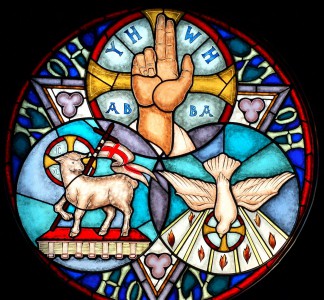
This morning in church, as I listened to our preacher speak of the hand of God reaching out to us, creating us, saving us, parting the seas for us, I smiled. For God reached out to our son as he does to the faithful every day. If we choose, we can grasp that hand. We can hold on tight. But we must be faithful, live a life of faith. Like St. Peter walking on the water toward Christ, we must keep our focus on Christ.
Today our son is home in the U.S., safe and healing, and I continue to be stunned at the many answers to prayer. There will be months of therapy, but he suffered no brain damage, and he is walking short distances. This is because of God’s presence in his life and God’s love pouring out to him through others.
I often think of Michelangelo’s magnificent painting on the ceiling of the Sistine Chapel in Rome. In the Creation scene God’s finger reaches for Adam’s. The touch will give Adam life, and the divine spark will flow from God to his new creation, mankind, Adam.
Christians are a sacramental people. We know God works through us and in us. God took on flesh to be one of us, with us, and he continues this sacramental work of grace, working his will through matter. We need only be faithful, to feel his touch upon us. One way to ensure our faithfulness is to keep Sundays holy, to worship weekly in church. Here we are reminded of God’s commandments. Here we are given the grace to open our hearts to God. When we do this, angels will dwell with us, even when our backs are broken and we lay on a beach in pain. And we will be healed.
As we sang this morning with St. Patrick, “I bind unto my self today/The power of God to hold and lead,/ His eye to watch, his might to stay,/ His ear to hearken to my need” and concluded with his wonderful song-prayer, “Christ be with me, Christ within me, Christ behind me, Christ before me, Christ beneath me, Christ above me, Christ in quiet, Christ in danger, Christ in hearts of all that love me, Christ in mouth of friend and stranger,” (Hymn 268) I knew it all to be true.
Thank you to all the friends and strangers who were the means, the pathway, for God’s love to heal our son. And thanks be to God for his marvelous grace, his new song to sing.
 An icy wind threw hail against my kitchen window earlier this afternoon. A dusting of snow had settled on the top of Mt. Diablo and, as I peered out to the angry weather, a rainbow, barely visible, tried to emerge through mist over the mountain, soon to be gone.
 Time sometimes meets eternity. Or is it rather that eternity intersects time?
 It is a time of rituals and rites of passage for our culture. In this third week of Epiphanytide, when Christians celebrate the manifestation of Christ to all the world, we cast our eye back to the peaceful pastor Martin Luther King who had a dream.
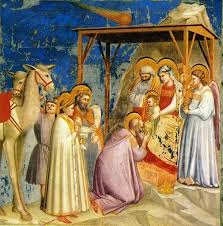 A year has passed. We have marked our time on earth once again with the changing calendar page, the midnight fireworks, the rituals of memory and memory’s children, the now and near, today.
 Our Living Crèche Christmas Pageant cradled our parish this morning in God’s grace.
 We assembled in the first pews after Mass, the cast reflecting our parish in the vast span of ages, 2 to 81. We gathered on this Rose Sunday in Advent to rehearse our Living Crèche Christmas Pageant, to be performed next Sunday, December 18.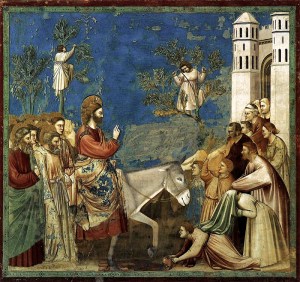
 orning as I watched the acolytes and clergy process into our collegiate chapel, St. Joseph of Arimathea, I was thankful. Cal is, after all, the home of the Free Speech Movement. There seemed a chance now for our precious freedom of speech and religion to be protected. I had hope that peace and freedom would return to our land. Our country, held hostage by political correctness, crime, and anarchy, was slipping down a dangerous slope into dark muddy waters. Without shared law and order, tyranny rules. Hopefully, the recent election will cause a change of course, just in time.
 Christine Sunderland
