
 I’ve been thinking about the word passion. My bishop often said that passion was the union of love and suffering, love and sacrifice, and I often wondered about that. The root is passio, Latin for enduring, suffering. In the first century it came to refer to the suffering of Christ on the Cross. It appears that love became part of the word passion only after Christ’s sacrifice, when this particular suffering became united with the love of God.
The word passion is used in Holy Scripture in the Acts of the Apostles, where St. Luke writes in the first chapter: “to whom also he shewed himself alive after his passion by many infallible proofs, being seen of them forty days, and speaking of the things pertaining to the kingdom of God.”
Over time, passion came to mean extraordinary feeling, a super-human surge of life pulsing through the heart and soul. While for many years it meant emotional romantic love, it also came to mean a strong liking/loving anything – a passion for painting, for food, for music, etc. It is a word that has grown in power. What is your passion? Follow your passion! I admire your passion…
In fact, passion denotes today an enthusiasm that goes to the heart of who we are and who we are meant to be. It is the God-life within us that urges us to be our purest selves, to train our truest talents, to sculpt our souls and senses into the perfection that God intended when He formed us in the womb. We may have left behind the suffering, enduring, or sacrificial meaning of passion, or have we?
When we say someone is passionate about something there is a sense that that person would sacrifice, go to a great length, to work hard, to discipline and deny, to attain or achieve that something. There is an implied focus, the loss of pleasures or lesser passions, to arrive at the goal: long hard practice to kick that ball down the grass to its win; long hard practice to play Beethoven’s concerto; long hard practice to make the perfect soufflé. When we are passionate we desire to achieve the reward. We sacrifice. We suffer.
Love and suffering. Passion.
It is no coincidence that the Epistle for today, the Sunday before Ash Wednesday and the beginning of our journey into Christ’s Passion, is St. Paul’s glorious thirteenth chapter of First Corinthians. Naturally, it is all about love (charity):
“Though I speak with the tongues of men and of angels, and have not charity, I am become as sounding brass, or a tinkling cymbal. And though I have the gift of prophecy, and understand all mysteries, and all knowledge; and though I have all faith, so that I could remove mountains, and have not charity, I am nothing. And though I bestow all my goods to feed the poor, and though I give my body to be burned, and have not charity, it profiteth me nothing.
Charity suffereth long, and is kind; charity envieth not; charity vaunteth not itself, is not puffed up, doth not behave itself unseemly, seeketh not her own, is not easily provoked, thinketh no evil; rejoiceth not in iniquity, but rejoiceth in the truth; beareth all things, believeth all things, hopeth all things, endureth all things. Charity never faileth: but whether there be prophecies, they shall fail; whether there be tongues, they shall cease; whether there be knowledge, it shall vanish away.
For we know in part, and we prophesy in part. But when that which is perfect is come, then that which is in part shall be done away. When I was a child, I spake as a child, I understood as a child, I thought as a child: but when I became a man, I put away childish things. For now we see through a glass, darkly; but then face to face: now I know in part; but then shall I know even as also I am known.
And now abideth faith, hope, charity, these three; but the greatest of these is charity.” KJV
We know only in part what love is, what love demands, what love sacrifices and how it suffers. One day we will see fully. But until then we have Christ’s Passion – His death on the Cross. His resurrection attests to who He is and opens our eyes to the reality, yes, the passion of God’s love. Such love is beyond human understanding, unsearchable in its riches.
And yet we search for love’s riches in the Church, His Body, His Bride. We search and we find, opening the door to His knock, inviting Him in, He who waits on the threshold of our hearts. For He is passionate to be with us and within us, lighting our lives with His brilliance.
When we understand passion, that union of love and suffering, we begin to understand compassion, looking upon the suffering of others with-passion, with the desire to share the suffering, to alleviate it. We begin our own journey of love, into love and its demands, its joy as well as its sacrifice.
And so we approach Ash Wednesday, the beginning of our journey to Jerusalem, our pilgrimage into Lent, into the love of God, into the Passion of Christ, to arrive at Easter and our own resurrections.
 I have been given the remarkable opportunity to look through boxes containing the sermons of the late Archbishop Morse, to possibly be published by the American Church Union. They were written on loose sheets on lined yellow legal pads. Some were jotted on hotel stationery. Some had their own colorful pocket folders, faded and spotted with time, water, and tea, and some were bunched with others by topic. Many were written in purple ink, his favorite, earlier ones in black ballpoint. There were even some typed from his seminary days, with notes in the margins from homiletics professors.
 They marched in freezing temperatures with a blizzard fast approaching. Washington D.C. was closed down – transportation systems crippled. There were fewer valiant witnesses to the Pro-Life plea than in previous years, yet their hearts burned with the love of life and of God.
 It’s been a week of words, words, words, and more words.
 Thomas Sowell of the Hoover Institution recently wrote about political lies of the last few years:
 I am polishing The Fire Trail for final submission to my publisher. It is an appropriate effort to take on in the holy seasons of Advent and Christmas, seasons in which the Word, the expression of God in human flesh, is anticipated and fulfilled.
 It is a season of renewal, a time when we review the old year and make resolutions for the new one. We judge our time, our spending of time, our use or abuse of the year 2015. Each year is a gift. It is a unique segment of our lives, a year we cannot retrieve and a year that will never be repeated. We are given only one chance with our lives, only one chance with the time given.
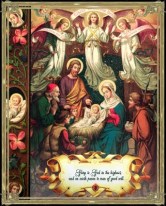 It was cold and windy when we arrived at church this morning for our Living Crèche Christmas Pageant. The Bay Area has had a little rain this weekend, and for this gift from the heavens we are grateful. Still, it was cold, bitingly cold, at least for us softies in California.
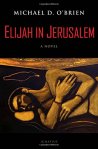 I’ve been rereading for review Michael O’Brien’s Elijah in Jerusalem released in August by Ignatius Press. The story has seamlessly woven into my Advent readings from Isaiah and Revelation which focus on similar themes about the End-Times.
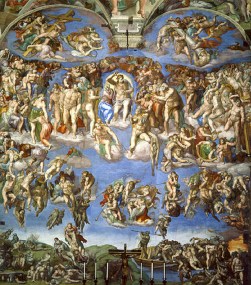 Reflecting on these traditional Advent themes, I searched the Internet to learn more about them. I discovered that many Protestants and Catholics seem to avoid death, judgment, heaven, hell. They prefer the more feel-good themes: hope, peace, joy, love, or waiting themes such as expectation, fulfillment, prophecy, etc.
 Christine Sunderland
 Christine Sunderland