Monthly Archives: September 2015

Incarnations Among Us

Michelangelo CreationThe link between God and man has always been sacred. The glory of the Creator permeates his creation. His life pulses through us, from conception to death, and into eternity. God, our preacher reminded us yesterday, is incarnate within us.

Such incarnation – in the flesh – is the heart of Christianity. This mystery was revealed two thousand years ago, made perfect in God’s incarnation as Jesus the Christ, the Messiah. As St. John writes: 

In the beginning was the Word, and the Word was with God, and the Word was God… All things were made by him; and without him was not any thing made that was made. In him was life; and the life was the light of men. And the light shineth in darkness; and the darkness comprehended it not… And the Word was made flesh, and dwelt among us, (and we beheld his glory, the glory as of the only begotten of the Father,) full of grace and truth.” (KJV)

This moment in history revealed to a barbaric world the innate natural law to honor the dignity of all human beings, regardless of gender, race, handicap, age, born and unborn. To be sure, before Christ, God led his Chosen People to this moment by giving them laws and judgments that taught the same respect, belief, and charity for one another and set them apart from other communities. But when God the Son entered humanity to live among us, he gave us incarnational means, sacramental means, to take part in his divinity through God the Holy Spirit.

The Church through the centuries has worked to make incarnation understood and experienced. Doctrines and dogma explain in words. Sacraments provide incarnate ways for God to enter his creation again and again in human time, hourly, daily, weekly. We receive his body into our body. We pray and praise, and his Spirit weaves among us, entering our hearts and minds. We, the created, are called to converse with our Creator, and he descends upon us, within us, filling us with his life and love. This is incarnation. This God in our own flesh.

Recently, at a concert at St. Peter’s, Oakland, “Bach Vespers, Cantata 199, Mein Herze schwimmt im Blut” with soprano Juliana Snapper and organist Jonathan Dimmock of the San Francisco Symphony, I knew I was experiencing a kind of incarnation. For music c0mposed for the worship of God, as this was composed, is prayerful praise. It links us with God through our hearing and our singing. Johann Sebastian Bach (1685-1750), church organist, wrote this stunning cantata for a Lutheran Evening Prayer service (Vespers), weaving music through Scripture readings and prayers. The audience of varying beliefs sang hymns with the rest of us. The music danced around us, in, and through us.

I have often called for the return of the Judeo-Christian tradition to the public square, not as theocracy but to remind our culture of the roots of our historic belief in human dignity founded on the belief that God indwells in each of us. Here, in the nave of this Oakland church, the public square came to us, for it was a public concert reminding ordinary citizens of the roots of freedom, this God of revelation. It was a powerful moment.

And when I saw Pope Francis address Congress this weekend, the first pope to do so, I was encouraged to see that Christianity had entered the public square for a short hearing. The pope, to be sure, appeals to a broad spectrum. As Peggy Noonan writes, Pope Francis has two sides, a lovable one, preaching the dignity of human life, and a not-so-lovable one, preaching an economic theory long ago discredited as helping the poor, one that hurts the poor. He is a pope, she writes, who “endorses secular political agendas, who castigates capitalism in language that is both imprecise and heavily loaded… he doesn’t, actually, seem to know a lot about capitalism or markets, or even what economic freedom has given – and is giving – his own church.” Indeed, his own Argentina has fallen into poverty through socialist ideology. Hoover Institution economist Thomas Sowell weighed in this week: “The official poverty level in the United States is the upper middle class in Mexico. The much criticized market economy of the United States has done far more for the poor than the ideology of the left.”

But even with the two sides of this lovable Pope Francis, I rejoice in his presence, for he has brought the Church into America’s public square, and many are listening to his words spoken from a loving heart. He has reminded us of our Judeo-Christian roots simply by his white-robed incarnate presence among us, for he represents historic Christianity through the ages. His visit, in this sense, has been a sacramental journey, to America but in time as well, as all true pilgrimages are.

Saturday night, at my fiftieth high school reunion, I saw  schoolmates I had not seen since high school. I tried to match names and faces. I studied the class photos on the wall. And as we linked with one another, searching for recognition and trying to read name tags with our reading glasses, I thought how unique each one of us was, how we had all moved through our given time changed and yet unchanged. Each one of us, created in the image of our Creator, carried his life within, in varying degrees. We are neither God nor gods, but we carry God’s spark within us, and those who had fanned it into a flame with prayer and praise and Scripture and sacrament shone brighter than those who hadn’t. They lit the room with their quiet glow.

Incarnations of God are all around us, in every person we meet. We are born to love and praise God, and this is the good, the wondrous news of salvation. We need not despair, for he is with us if we desire him. But we must desire.

I look forward to more public square incarnations, to the fusing of our culture with the Judeo-Christian belief in a loving God who proclaims the dignity of each one of us, no matter what, no matter who.


Three Great Ladies

500px-Statue_of_Liberty_7

I, like many, have been intrigued with the Carly Fiorina candidacy for President of the United States. Many of us have eagerly waited to see if she was more than a CEO with controversial reviews. In the first debate she was clear, cogent, and compelling. In the second debate this last week she was even more so, with a powerful composure, an admirable knowledge of the world, and an iron will, not unlike our “Iron Lady,” Margaret Thatcher, in England. 

Ms. Fiorina has separated herself from other female candidates over the years, aided by Mr. Trump’s inappropriate comment, by making her presidential bid about merit not gender. Women sighed with relief nationwide. Did you hear it? That universal sigh? At last, we thought, someone who understands.

But what I hadn’t focused on, and probably why as a writer I have come to especially value her candidacy, is Ms. Fiorina’s use of language. She is a poet with an intuitive sense of the power of words, images, and symbols. She understands America’s need for the right phrases at the right times to draw our nation together, to heal our divisions.

Her closing statement, using the images of Lady Justice and Lady Liberty, spoke to Americans’ hopes and dreams, our very identity. It explains why waves of migrants are fleeing to the West with only the shirt on their backs, why thousands make great sacrifices for a glimpse of Lady Liberty in the New York harbor, why they count on Lady Justice for their future. It explains why America is indeed exceptional:

I think what this nation can be and must be can be symbolized by Lady Liberty and Lady Justice.

Lady Liberty stands tall and strong. She is clear eyed and resolute. She doesn’t shield her eyes from the realities of the world, but she faces outward into the world nevertheless as we always must, and she holds her torch high. Because she knows she is a beacon of hope in a very troubled world.

And Lady Justice. Lady Justice holds a sword by her side because she is a fighter, a warrior for the values and the principles that have made this nation great. She holds a scale in her other hand, and with that scale she says all of us are equal in the eyes of God. And so all of us must be equal in the eyes of the government, powerful and powerless alike. And she wears a blindfold. And with that blindfold she is saying to us us that it must be true, it can be true, that in this country in this century it doesn’t matter who you are, it doesn’t matter what you look like, it doesn’t matter how you start, and it doesn’t matter your circumstances. Here in this nation, every American’s life must be filled with the possibilities that come from their God-given gifts, one nation, under God, indivisible, with liberty and justice for all.

Such patriotism is scoffed by liberal academic elites. But after years of these elites governing, years of dangerous sophistication and overweening arrogance, years of enforced political correctness, Americans are disheartened and angry enough to look to someone brave and true. We bolt our doors and fear the dark. Our streets are not safe. Our police are attacked and prevented from enforcing the law, in communities where the law needs enforcing. And we wonder when terrorists, abroad or at home, will next attack.

I recalled Ms. Fiorina’s Lady Liberty when I recently read Rob Greene’s poetic description of the New York harbor statue (“The World is Still Yearning to Be Free,” Wall Street Journal). He writes of Emma Lazarus’s sonnet engraved on a plaque that was placed on the ground floor of the statue in 1893:

The New Colossus

Not like the brazen giant of Greek fame,/With conquering limbs astride from land to land; /Here at our sea-washed, sunset gates shall stand /A mighty woman with a torch, whose flame /Is the imprisoned lightning, and her name /Mother of Exiles. From her beacon-hand /Glows world-wide welcome; her mild eyes command /The air-bridged harbor that twin cities frame. /”Keep, ancient lands, your storied pomp!” cries she /With silent lips. “Give me your tired, your poor, /Your huddled masses yearning to breathe free, /The wretched refuse of your teeming shore. /Send these, the homeless, tempest-tost to me, /I lift my lamp beside the golden door!”

And to this day, we welcome legal immigrants to our shores, as long as they welcome us, as long as they embrace freedom and liberty, justice for all, speak our language, as long as they want to be Americans, unhyphenated, undivided.

The Statue of Liberty, made of copper, was designed by Frederic Auguste Bartholdi, built by Gustave Eiffel, and given to the U.S. by France. Somehow, I would venture to say, our “Eiffel tower” is more powerful (and beautiful) than Paris’s Eiffel Tower. Representing the Roman goddess of liberty, Lady Liberty holds a torch that lights the path to freedom and a tablet of law inscribed with the date of American Independence, July 4, 1776. A prisoner’s broken chain lies at her feet (Wikipedia).

Ms. Lazarus’s poem is titled “The New Colossus,” referring to the Greek Colossus, one of the “Seven Wonders of the Ancient World,” a statue erected on the island of Rhodes in 280 BC marking victory over Cyprus. Our Lady Liberty, the new Colossus, is quite a different creation, a “Mother of Exiles,” a “mighty woman.”

And so is Ms. Fiorina. The tablet that Lady Liberty holds is the law of Lady Justice, blind justice, equal-under-the-law justice. Many Americans have forgotten what that means, as it grows more rare with each day. Many Americans feel they have been exiled from their own country or one day will be.

And so I thank you, Ms. Fiorina, for reminding us of these two great ladies, Liberty and Justice, and for giving us renewed hope in America. I pray that you inform the substance and standards of future presidential debates and that having raised the bar, others must reach higher. I pray that those who belittle excellence, who crave clamor over conversation, that they take note that this is how we want debates to be, this is how we want our leaders to sound, this is how we want to be represented to one another and to the world.

For we Americans have become those masses who are so very tired and poor and huddling and yearning to breathe free. We are exiled, and we want to call America our home once again.

Waking the West

nine-eleven

This last week we recalled the September 11, 2001 attacks on American soil. As we mourned our dead and honored our heroes, waves of migrants fleeing oppression flooded into Western Europe. 800,000 men, women, and children are expected in Germany this year. It is a vast humanitarian crisis caused by Western benevolence.

America’s exceptional roots were planted by Christian Europeans, and the saplings, those thirteen colonies, grew strong, while the parent plant, Europe, declined. Europe has retained its own exceptional ideals of freedom, equality under the law, individual rights, and religious liberty. It even from time to time fought for those rights, that way of life Americans and Europeans have taken for granted.

Sometime after World War II, or perhaps earlier, Europe began to count on the protection of their American ally and ensure cradle-to-grave social programs for their citizens.

But America’s eviscerated military has left them (and us) exposed, leaving the Western way of life undefended. Now that we have become more like Europe in our national deficit, burgeoning state, and slashed military, who will protect us?

Bret Stephens writes in the Wall Street Journal how “We wanted a new liberal order – one with a lot of liberalism and not a lot of order. We wanted to be a generous civilization without doing the things required to be a prosperous one… the result is our metastasizing global disorder… openness is a virtue purchased through strength.” Every parent knows how painful yet necessary it is to practice “tough love.” Benevolence is not always good and often harmful.

Waves of desperate people are fleeing their homelands in the east. They are entering Hungary, Austria, and Germany; they are circling through Iceland and into Oslo. They are fleeing persecution, war, and poverty, looking for a better life. Peggy Noonan quotes the U.N. refugee agency when she says that they are coming from Syria, Afghanistan, Eritrea, Pakistan, Nigeria, Iraq, and Somalia. The majority are Muslim men.

Walter Russell Mead, professor at Bard College, writes in the WSJ of a “Crisis of Two Civilizations,” claiming that the Islamic worlds have tried and failed to create a workable society, so that the victims of the resulting tyrannies are fleeing into what they see as a prosperous and safe Western civilization. But the West no longer knows who it is or where it is going.

The Goths that crossed the Danube and conquered the Roman Empire didn’t find much resistance for the same reason. The Romans had become effete with a weak military. They didn’t know who they were or what to preserve and defend or why.

Professor Mead describes the crisis in Europe and the West:

Increasingly, the contemporary version of Enlightenment liberalism sees itself as fundamentally opposed to the religious, political, and economic foundations of Western society. Liberal values such as free expression, individual self-determination, and a broad array of human rights have become detached in the minds of many from the institutional and civilizational context that shaped them… Too many people in the West interpret pluralism and tolerance in ways that forbid or unrealistically constrain the active defense of these values against illiberal states like Russia or illiberal movements like radical Islam. (italics mine)

The Western world has a right to defend itself, its ideals and way of life, with military might. If nothing else, we must keep that defense at the ready, simply to assure the balance of power and peace in the world. American withdrawal from the mid-eastern theater in the last eight years has been a key factor in this current humanitarian crisis. We share the guilt with European governments who shy away from their own defense.

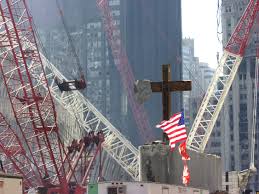
As we remember the Trade Center bombings, the Pentagon attack, and the plane crashing in the Pennsylvania field, those tragic attacks on American soil, we must face the unwelcome fact that the world has become less safe with all of our benevolence. It may be too late to teach our children the roots of freedom, so that they understand who they are and what they must defend, but we must renew our efforts. 

We must encourage policies that ensure prosperity, capitalistic policies that grow the economy, so that we can afford a strong military that will keep the peace with its presence. Some experts say it is too late for Europe to wake up from their dream and rally a defense. Is it too late for America? The answer lies in the next election.

nine-eleven cross

Fair and Free

justice statue

U.C. Berkeley recently unveiled a program to give greater preferment to African-Americans for admittance and for hiring of faculty, citing the Ferguson, Missouri unrest as a reason.

There is, to be sure, an innate human desire for fairness, treating everyone equal. We speak of being “equal under the law,” that regardless of race, religion, and gender we will be treated equally. Whether your hair is pink or blue, your skin is spotted or smooth, you are obese or anorexic, you are young or old, rich or poor, woman or man or something else, dwarf or giant, you will be treated equally (with the exception, of course, of the unborn).

We are wired to demand fairness, even if we are not always successful in our practice of fairness. From age seven, children say, “That’s not fair!” A sense of justice (often without mercy) flowers in childhood. We are born with the idea of fairness.

History is the story, in many ways, of peoples who believed they, or others, were unfairly treated, who demanded fairness through whatever means available – letters to the editor, peaceful protest, less peaceful protest, riots, revolutions. Always, there is the righteous belief that they are right and are seeking “justice.” God is on their side, and if they don’t believe in God, then a residue of Godly fairness inspires them.

After all, we have been made in our Maker’s image. We reflect his great love for us in our desire to love and be loved. We reflect his reason in our belief that we can reason things out, make sense. We reflect his justice with our own deeply held certainty that things should be fair. And lastly we reflect his mercy when we forgive our enemies, when we make amends, when we work to create justice for all, fair play for everyone, when we love one another.

But how do you right wrongs of the past? Christians do so by confessing and forgiving. “Forgive us our trespasses as we forgive those who trespass against us.” We are sorry, we say to our God, we will change, repent. Then we move on, guilt-free to soar as a bird, at peace with ourselves and our neighbors, and with our God.

But what happens with a secular society with historical wrongs like slavery, when we do not believe in a God who will forge a peace between us, who will absolve us? How and when is national guilt forgiven? How long must the culture pay, make amends, before it turns in upon itself? How many reparations, how many preferments in education and employment, how many times must Lady Justice excuse crimes she would not excuse for others? She should be blind, weighing only the evidence.

There comes a time when these affirmative actions become divisive and racist, undoing all they were meant to do, turning upon the majority, and increasing alienation. There comes a time when these actions actually hinder integration.

A nation cannot be absolved by a priest or God. It cannot be forgiven its trespasses as a person can. A nation is left at the mercy of the aggrieved, where and when that group sees the opportunity to extort payment for their grievance. And in the process other minorities watch the rioting and the looting and the burning of their town and country. They become the aggrieved, a recipe for revolution.

It is time to honor fairness to all, a time when the reparations of slavery have put paid to the debt owed. We would hope, as citizens, that our government would sense that time is now and stand strong. We would hope that our educational institutions would as well, that they would honor each student, each admissions or faculty applicant equally, not by race, religion or gender, but by merit.

I was not born with a silver spoon, or a silver anything. I was born into the modest home of a pastor relying on the income from his church and their kindnesses. I never felt aggrieved with my economic status. I worked my way through college and couldn’t afford grad school so got an office job to pay the rent. I’m not saying I wasn’t envious of those who had it easier, but came to see that life wasn’t always fair. I counted my blessings, for, as my mother often reminded me, I had ten fingers and ten toes, two arms and two legs, wasn’t deaf or blind, and was pretty good at jumping rope and reading. So I just needed to do my best and that was good enough.

Sometimes I hear people speak of betrayal or greed or mistreatment and they end with the comment, “It’s just so unfair.” I have known all these things, again and again, and it is indeed unfair. By God’s standard, by our own standards, it isn’t fair. But God is the judge, and I’m glad of that, for he will judge me too.

Ever since Eve ate that forbidden fruit, mankind has acted unfairly, often without mercy. And so God destroyed the Tower of Babel, sent a great flood, and finally, in his mercy, called Abraham out of Ur to be the father of a great nation that would number as the stars. He gave Moses specific commandments to obey. He chose a people who wrestled with him and his challenges, with his justice and his mercy. At last, after all this loving preparation, he send the promised messiah, the Christ, his Son, Emmanuel, God-with-us. This Jesus of Nazareth walked among us, showing by his life, death, and resurrection how we are to love one another, how we are to be just and merciful and fair. He gave us a way forward with his words, his life, and his death, to heal the brokenness, the unfairness, the mercilessness. He gave us a way forward to union with his Father – through his body, the Church.

A Western tradition blossomed from this creed. It struggled with how to be fair in an unfair world, among people who loved imperfectly. The tradition of Judeo-Christian fairness enshrined in common law and courts was formed under monarchies. It birthed democracies. It formed the Western Canon, the foundation of higher education, so that the next generation, our future rulers, our best and brightest, would understand fairness and its child, freedom.

And so today we try to protect this great legacy. Fairness and freedom are ideals, imperfect, but vitally important to our nation and the West. It aggrieves me to see government bow to the extortion of the aggrieved, often for political reasons. Thomas Sowell of Stanford’s Hoover Institution recently called it giving in to bullies:

“No small part of the internal degeneration of American society has been a result of supposedly responsible officials caving in to whatever group is currently in vogue, and allowing them to trample on everyone else’s rights… Politicians who exempt from the law certain groups who have been chosen as mascots undermine the basis for a decent society… The goal of ‘the rule of law and not of men’ has increasingly been abandoned in favor of government picking winners and losers… a path that demoralizes a society, and leads to either a war of each against all or to a backlash of repression and revenge.”

Life is not fair. We must support a “rule of law and not of men” (John Adams). In this election year, it is good to keep this in mind.