
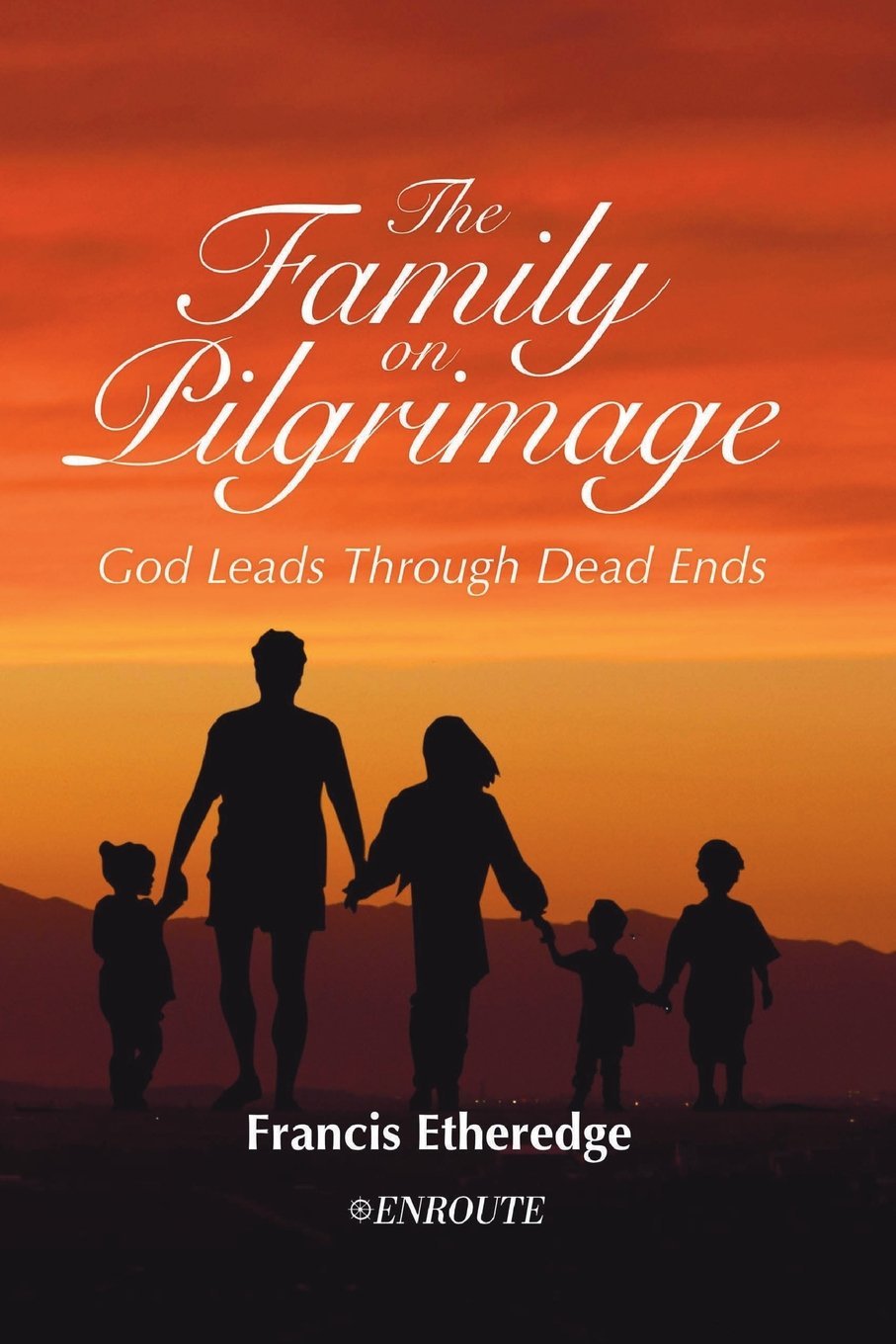
 The Family on Pilgrimage: God Leads Through Dead Ends (St. Louis, MO: En Route Books and Media, 2018) by Francis Etheredge
Reviewed by Christine Sunderland
The Family on Pilgrimage is a many-layered collection of poetry and prose with its own family of contributors, enriching the reader’s pilgrimage through these pages. Indeed, this book is a pilgrimage into pilgrimages, and while it is said that in a pilgrimage one prays with one’s feet, I prayed with my mind, heart, and soul, as images followed one after the other, signposts along the way.
In this sense we travel with the author to many places – Francis Etheredge’s own suffering past, his redemptive present, and by inference his glorious future:
“Indeed, that the whole of humanity is on a vast passage through the vortex of time to eternity; and, if it is possible, I hope that passing from this life involves passing through the utter reaches of the universe to marvel, once more, at the magnificent splendour of creation before, finally, meeting the Creator.” (17)
Francis Etheredge welcomes us into his family, to pray alongside, our feet stepping in time. Thus, the book is a family of pilgrimages, each with its own tenor and tone. This is not to say that there are no real accounts of the Etheredge family on pilgrimage – to Milan, Cracow, Loreto – as well as accounts from his children – Grace, Teresa, and Peter. In these journeys, we experience the challenges of this family of ten, as they trust God for their needs.
Indeed, we trust God to meet our needs along the way too. We ask Him to meet us where we are, and this prayer focuses us on Him. And so, as “God Leads Through Dead Ends,” He transforms the apparent dead ends into living ends that glorify our Creator and fill us with joy. As we seek God, searching for answers and healing, we see that each day is a pilgrimage from dawn to dusk, listening for His voice in His Word. We see more clearly friends and relations and hear their voices. We are drawn into creation, into life, to breathe in and out the Holy Spirit in our own time.
And yet as Christians our starting point goes back to the Old Testament and, “taking a new beginning in Jesus Christ, continues into the present.” (9) We seek big answers to large questions: the who, what, and why of life. What are my talents? What is my vocation, my purpose? What is the meaning of life, my life? We “journey into the mystery of God and His Word” (18), “into the Lord’s presence,” “breaking and sharing the Word and the Word of the Eucharist.” (19)
I have often reflected that in the parish church, we journey from Baptism at the entry font to Confirmation and Eucharist at the altar. At the end of our journey in time, we cross into Eternity, our coffin carried from outside to inside, up the aisle to the Real Presence of Christ in the tabernacle. In this pilgrim requiem, the earthly pilgrimage ends and the heavenly one begins.
Such a pilgrimage reflects the love of God, for “we are part of a great exodus: a passing of people from slavery to freedom: from being estranged from others to being fit for friendship: from an unwillingness to live forgiveness to love’s possibility of the gift of eternal life.” (25)
Thus God recreates us, using the experiences in our pilgrimage on earth in time. Francis Etheredge describes how he searched for his vocation, his marriage and family, but he is not “lamenting what did not happen but, rather… reflecting on what does happen: what the Lord in His wisdom is even now permitting to be possible.” (26) Without these decades of searching he would have been a different person and writer.
The Family on Pilgrimage sanctifies the ordinary with the extra-ordinary, our lives with sanctity. We see this in marriage:
“The reality of conversion is not magic… and moves in a mysterious way amidst the warp and weave of actual lives… there is no doubt that the constant help of word, liturgy and community throw light on the ‘everyday’ nature of the Christian Faith and its being lived; and… exposes the truth that Christ is present in marriage in a way that can only be described as constantly turning water into wine.” (cf. Jn 2:5-1) (163)
In this sense our Christian path becomes an ongoing miracle of turning the water of our lives into the wine of sanctity. We are blind but now we see, for Christ tells us, “Apart from me you can do nothing.” (Jn 15:5) What do we see? The truth of our sin, of our need to change course with His help: “God finds us where we are and takes where we cannot go.”
We are embodied words of God, a part of the history of salvation, from the Creation to the end of time. This is the great mystery of being human, a human being, the mystery of being open to life and thus to marriage and children. We are a part of this history, its past, present, and future, the family of God.
And yet radical reformation is sometimes needed. Like the Prodigal Son, extreme measures wake the sinner to his sin and recreate him, giving him hope in this Creator God who recreates from nothing. For God is ever-patient, ever-returning, and just when we are “beneath the waves and time… suddenly His help is understood…” (63) and we learn we are “sinner[s] in need of a saviour.” (86)
Etheredge speaks of pilgrimages as a time when God commands our full attention, for we are away from the day-to-day distractions of life. I have found this to be true, not only in trips that remove me from my daily life but on a Sunday morning, going to Mass with a pilgrim’s heart, waiting to hear the Word from Him, through the Scripture, through the sermon, through the singing and chants, to hear with my heart what He desires of me, and with this, a further glimpse of who I am meant to be. Just so, a pilgrim may set an hour apart in the evening to pray and listen to God’s voice. It is in the setting apart, the use of our time and attention, that we become pilgrims.
And so in our pilgrimage through life God uses our challenges to complete and recreate each one of us, to become our true selves. It is as if our sufferings are ingredients recreated in glory. We are pilgrims, being drawn through time to eternity, recreated with each step. Every beginning and ending can become bookends for a pilgrim’s prayer, an ongoing invitation to God to be present, to enlighten, to partake in our lives.
Such enlightenment is part of the “vocation of the writer” to speak to today’s culture. As Christ multiplied loaves to feed thousands, He gives writers words to feed thousands, words multiplying when shared. May Etheredge’s words multiply and enlighten our dark, for today our greatest sin is that we are “radically incapable of recognizing the quality of all human beings in the gift of human personhood…”, the right of unborn persons to live.
Pilgrim writers embody words. Just as every life is a growing creation from the moment of conception, with many parts forming the whole, Etheredge cautions that to see ourselves as the potter and not the clay may be a tempting illusion: “What looks to us as a mess and a – wandering all over the place may, in reality, be the indications that our life is being shaped rather more than we are the shaper.” (234) Writers embark on their own pilgrimage, looking to reflect the Maker in their creations, sculpting yet being sculpted.
Yet, Francis Etheredge adds, God gives everyone this creativity through the work they are called to do, and thus writers must ground the truths of God in reality, in the activities of men and women on earth. In this way the family expands into the family of God, the human family in the present day as we step through our lives from conception to death on this earth, and each of us provide the “constant opportunity for God to act in whatever way will bring the good we need.” (243)
And what about the words we choose to use, in writing, in speech? What kind of language will lead us to the true Word? Francis Etheredge closes with this prescient poem:
Bruised or Well-used Words?

When the heart spikes and the tongue spits
words through the bashing impact of pain,
bruised words which disfigure the still discolouring wound,
– bearing the blunt hurt
they bludgeon understanding and aggravate grief.

Left for a while, these prayed,
aggravated insights evict the venom within,
becoming middling words,
like an arrow pulled from the wound,
too fresh to be anything but singularly painful;
and yet, the point pulled,
they start drawing the unforgiving infection:

the rebellion; the protest; and the vengeful bite.

Fiction or fact, there is “within and between”
the truth told in different ways, an exploration,

now in human history,

now in an account that goes to places where the heart,

perhaps too painfully pierced,

is visited more easily by a stranger to the original experience.

But well used words, softly saying what hurts but helps,
alight like butterflies, almost too gently to be noticed,
trailing evidence of passing into thought the word which
opens the heart to the Word within the word,
which knows the words we need
to hear the truth that heals. (245-6)
Deo Gratias.
Francis Etheredge, Catholic husband, father of 11, 3 of whom are in heaven, is author of 13 books on Amazon. Visit him at LinkedIn and En Route Books and Media

Christine Sunderland is author of seven award-winning literary novels about faith, family, and freedom. Her most recent novel is Angel Mountain (Wipf and Stock, 2020) about a Christian hermit living in sandstone caves east of San Francisco.
 Trinity Sunday, the week after Pentecost in the Anglican calendar, merges life and death and life again into God the Father, God the Son, and God the Holy Spirit. This past year we have padded along a pilgrimage path, beginning with Advent and ending with the Trinity season. We followed the birth, life, death, and life again of Our Lord Jesus Christ, as he revealed himself to us, in ways we could better understand God’s threefold nature.
 We call this Baptism, being born of water and the spirit.
 And like John, we are called to share this hope, to encourage this being born again, this “walk in the Spirit.” We are called to gather at the Holy Table each week, to share the Eucharistic meal of life, the Real Presence of Christ. For in this gathering, we know the Spirit flies among us like a dove, like a rushing wind, like the rainbow light that falls through the clerestory windows high above. We sing together, we pray together, and as we do, we are united in the love of the Holy Trinity, this Spirit weaving among us. As we gather, we celebrate life here and life eternal, bathed in the love of God.

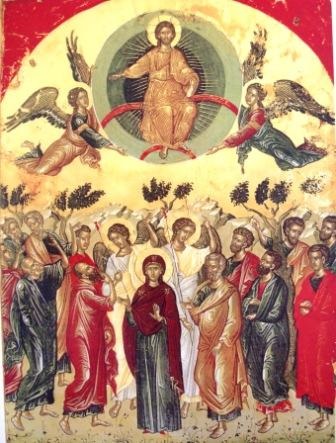
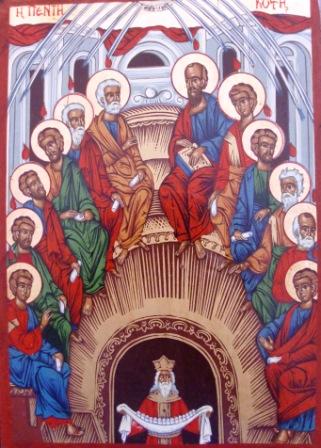 I have long loved the Festival of Pentecost, for it is the coming of the Holy Spirit upon the disciples, the breath of God, like cloven tongues of fire. This coming of the Spirit of God is the creative force of life itself manifesting at this moment in history.
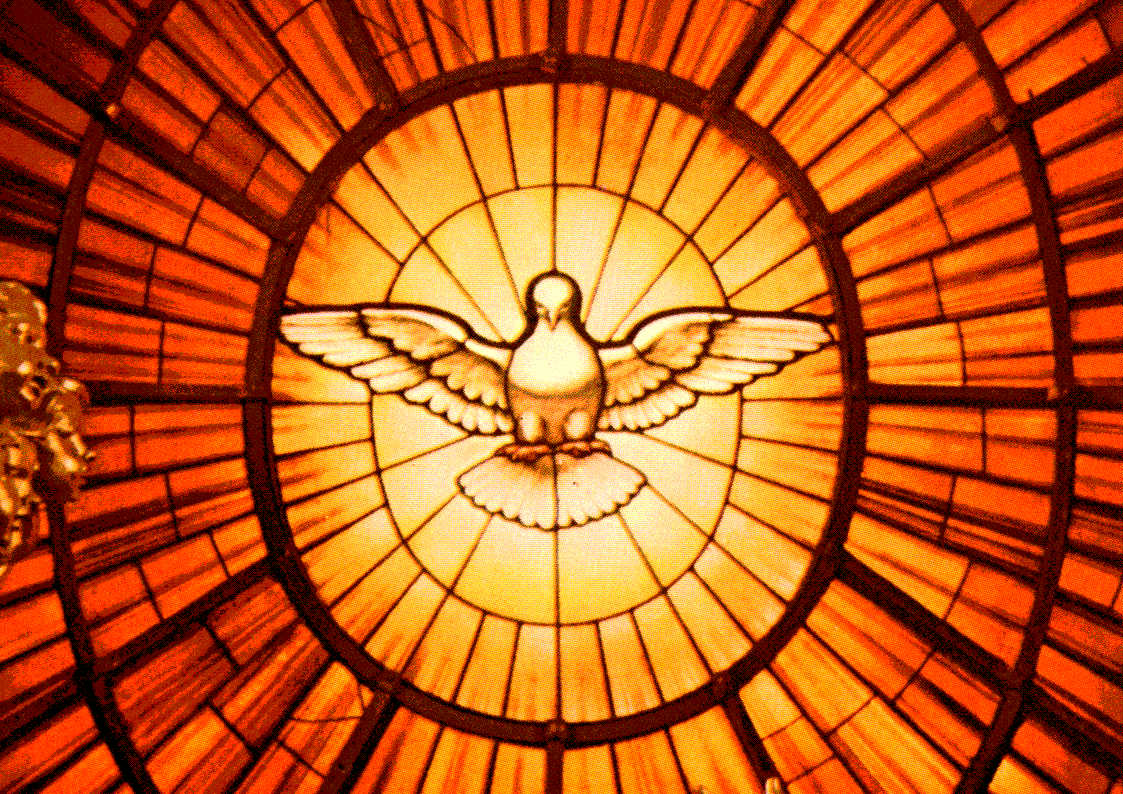 This creative Holy Spirit continues to recreate each of us and our world. Each breath we take, each day we live, is spurred by God’s life within us. We are in-spired, breathed upon, by God. We need only ask.
 It has been said that we are People of the Book, along with Abraham’s other descendants, Jews and Muslims. We bring God among us through our stories, many true history, many parables. And it is in this greater story of man, of humanity, that we learn who we are as God’s children.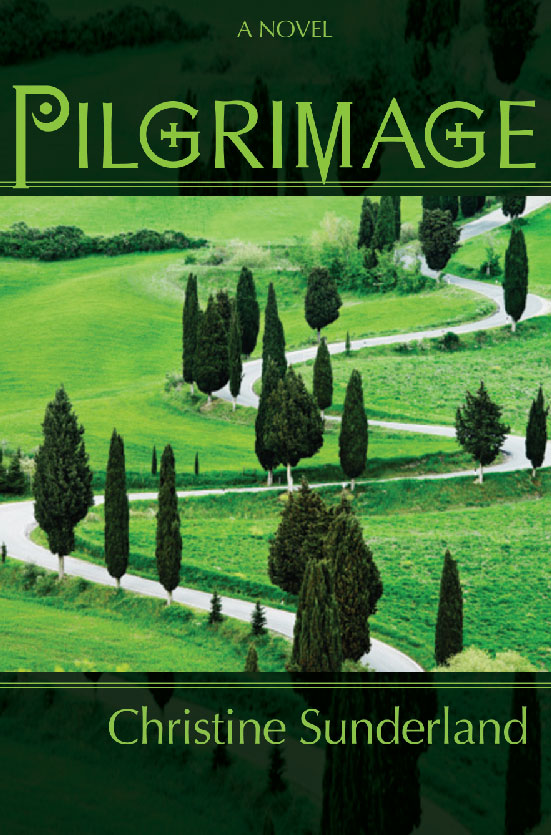
 I’ve been memorizing a prayer suggested by our Bishop Hansen. This week I repeated, whenever I had a spare moment: “Lift, O God, any veil from our minds and bring revelation and enlightenment in all things. Amen.” I also repeated last week’s line: “Let all of us, all our children, our children’s children, and our future generations know Christ fully and enter Thy Kingdom now to live with Thee forever.”
 We memorized many things in school over the years, Kipling and Frost and Shakespeare, but the Pledge of Allegiance seeded and watered belief in our country’s righteousness and freedom.
 Tomorrow we remember those who died defending us in these wars. We observe “Memorial Day,” a day of remembering. And in honoring their sacrifice, we remember who we are, that we are a nation worth defending. We are a nation of equality (not equity) under the law. And we are a nation of laws, rules we all agree on.
 This week I will add the third verse to my memory prayer:
 For we are a nation under God, protected by his Holy Spirit, with angels and saints. Never in the history of man has there been a nation like America. Never has their been a more resilient people than Americans. And never has there been such a light shining on such a hill, a beacon of truth to the world.
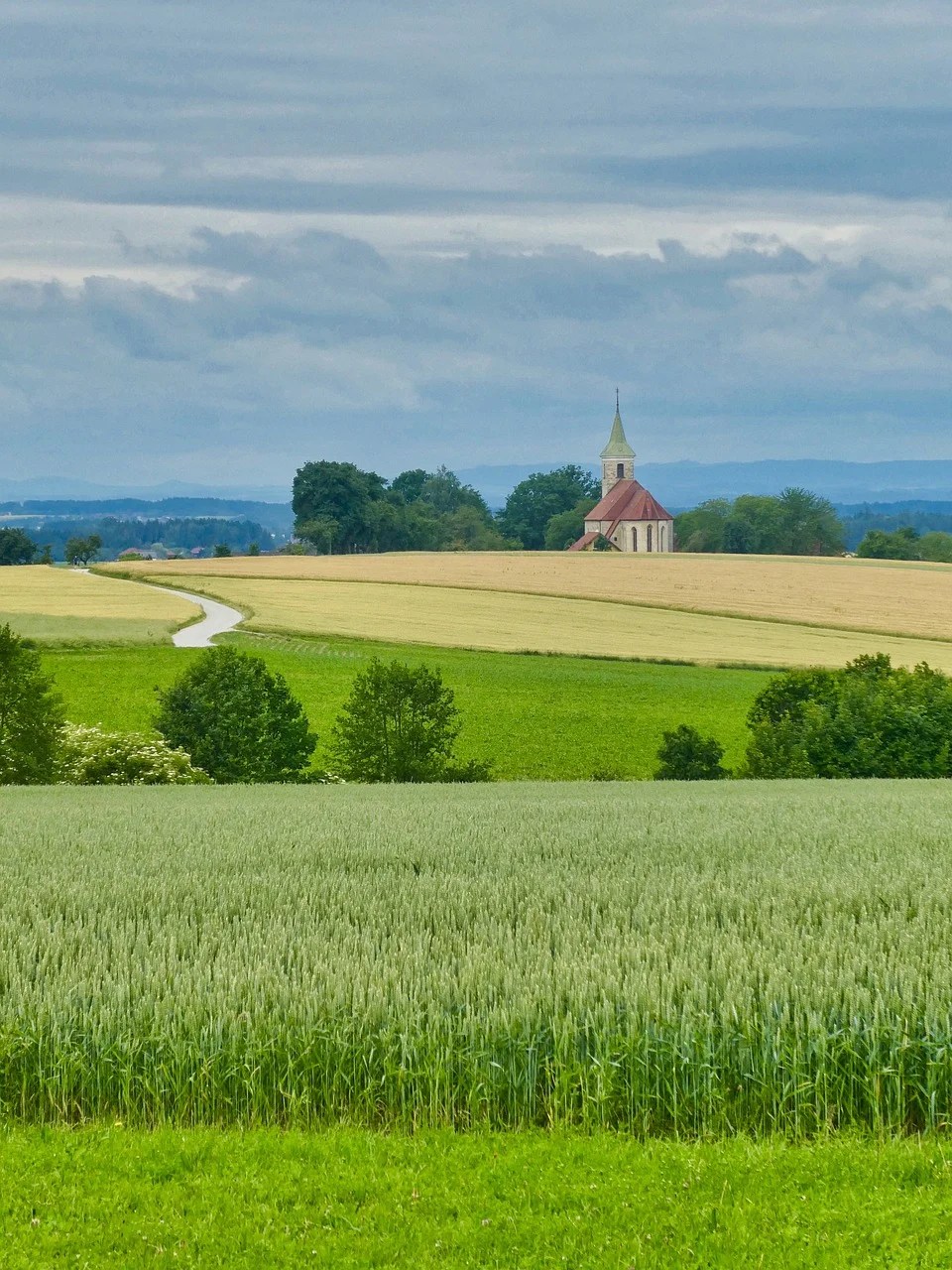 Rogation means asking. Traditionally, Rogation Sunday called for prayers for the harvest, and thus we associate this time not only with prayer, but the natural world and its bounty. Rogation is a short season, lasting these next few days, ending on Wednesday.
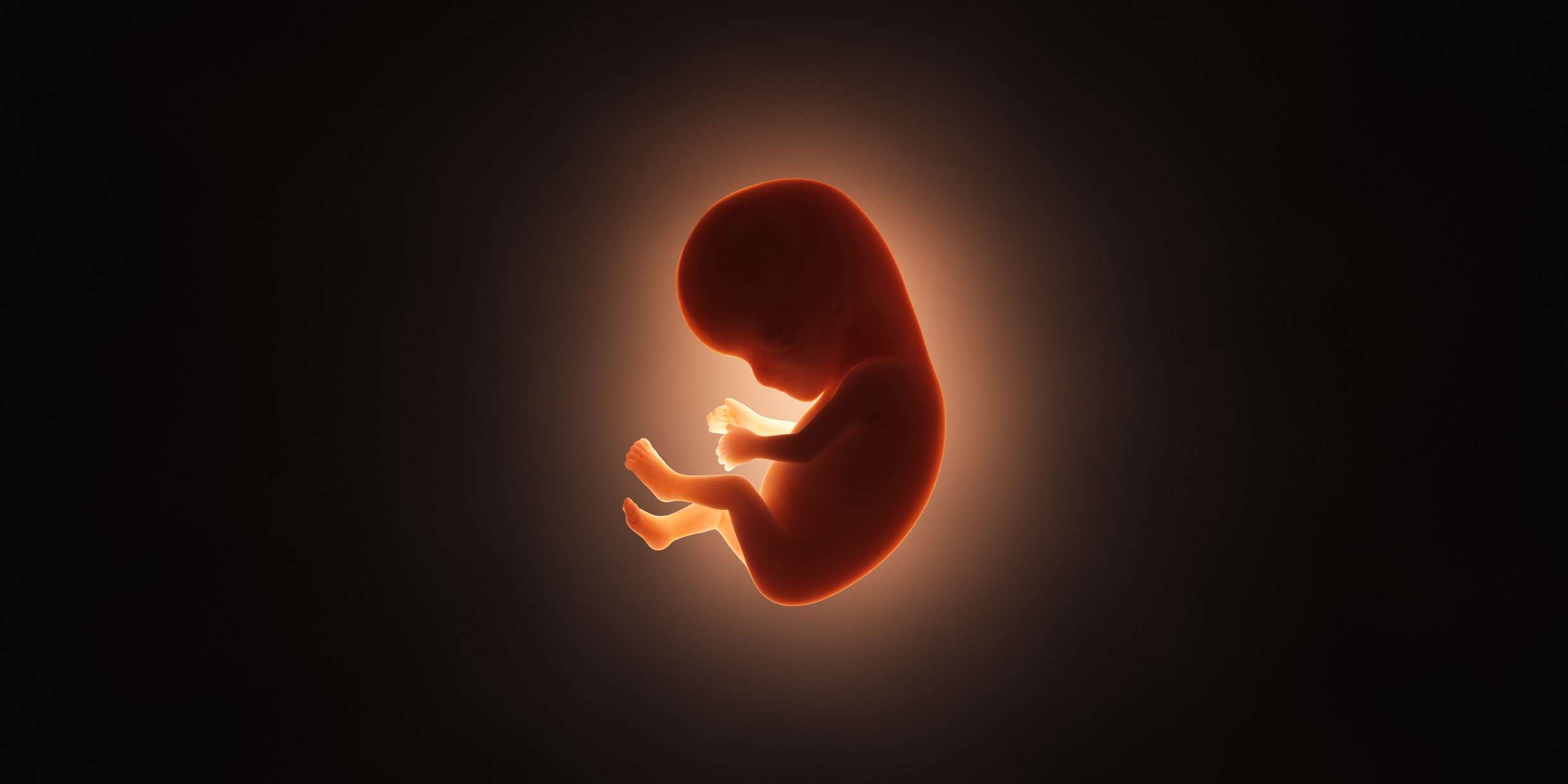 There was a time when I was an embryo, a union of sperm and egg, and at the moment of conception at fertilization, I became ensouled by God. This union of two to become one and even three, is one of the greatest transformations in the history of man. Its miraculous occurrence, so numerous, is taken for granted. And yet I, like many, grew hourly, daily, weekly, in the womb, fed by my mother, listening to her heartbeat and the swish of the pool in which I swam.
 To be human is to be wounded. To love is to be scarred. But we are rewarded by the knowledge of Christ, and we become surrounded and filled with his mysterious glory, his glorious mysteries. To be human, we learn, is to love as God loves us, his own.
 I want to know Christ fully. I want to know his voice. I want to share with others this knowledge, to plant more seeds in fertile soil, to grow to the light, to be birthed into the sunshine, to be watered by the skies and inspired by the Holy Spirit as he breathes upon us. To fly.
 And so we ask the Father in the name of the Son, to protect our little seedlings that are growing toward the light in the dark womb, sheltered by their mothers. We ask, “Thy will be done.” We ask, “Show me thy will.”
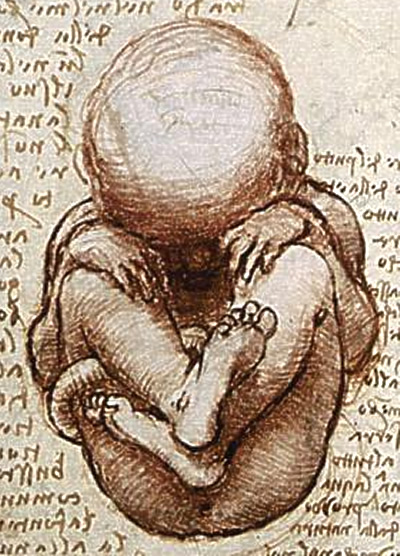
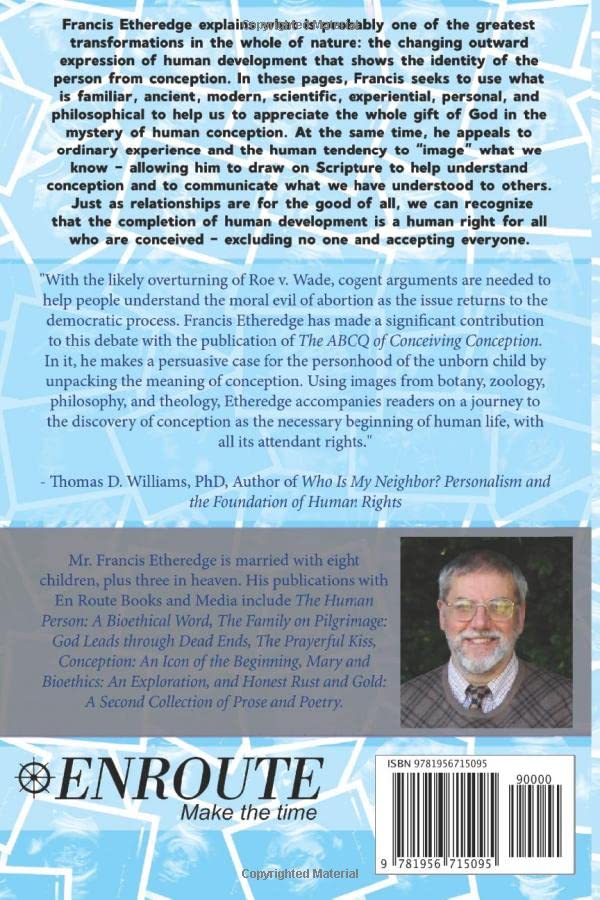 We see reality in all of its mystery and glory. Some of us are blind, choosing not to see. But we must not turn away from this reality. We must face the ultrasound images, as loving, responsible, men and women. After all, we have been given our own gift of life. We are accountable. We will be judged accordingly.
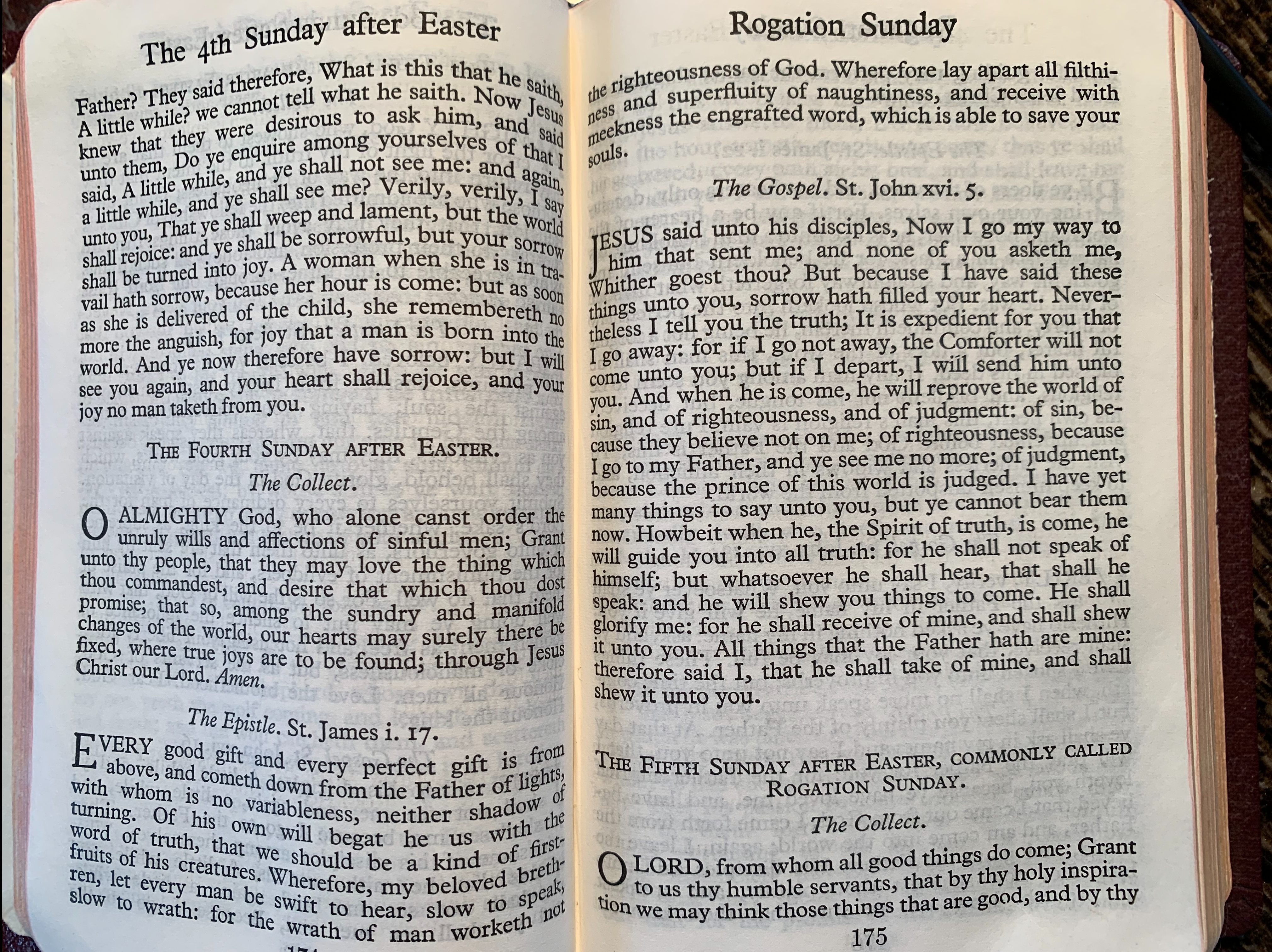 And so I smiled this morning when I heard the lovely Epistle by James (1:17+):
 We are to be gifts to one another, good and perfect, if we are to allow the Holy Spirit to work among us, connecting us, fortifying us, filling us with the knowledge of God and his love. For it is the love of God that creates that miniscule embryo; it is the love of God that recreates each one of us; it is his Word expressed in Christ that we engraft upon our souls, that we feed upon in the Eucharist.
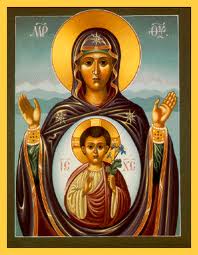 It is a truth once universally acknowledged that mothers deserve praise. They carry us in their bodies for nine months, beginning the nurturing that will last through adulthood and beyond. They give birth, a remarkable feat we take for granted. They nurse and cleanse and cuddle and teach. They sing and comfort and discipline and protect. They love us. They reflect and deflect the world out there, good or ill.
 It was my fortune to have a good mother who raised my sister and I in an intact family, with our father present in our lives. We had a childhood of pleasant memories: swing sets and slides and tree forts; piano lessons; baking oatmeal cookies; riding the bus to school and returning home to a mother who created a stable and safe homelife. There were lots of books and reading to one another and singing together. I am grateful.
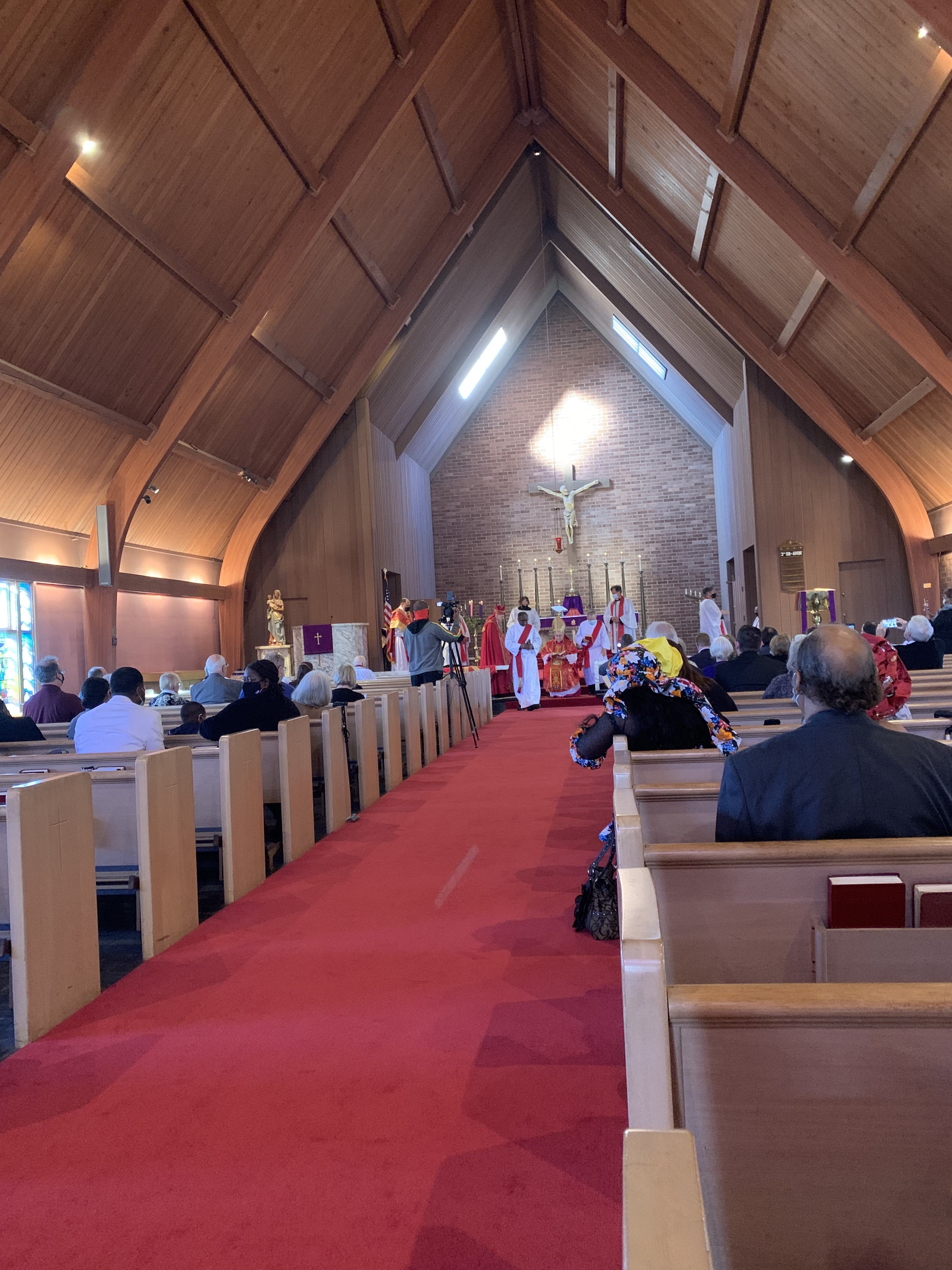 The Church is also Mother Church. She embraces her children, protecting them from storms outside and fortifying them to re-enter the tempestuous world. The Church an ark, a boat sailing through the world in and through time. The ark carries its precious cargo, its faithful, within, as a mother carries new life in her womb. The Church is a mother, creating a safe and loving home.
 Today is Good Shepherd Sunday, the Second Sunday after Easter. We listened to a comforting Gospel, John 10:11+, for Our Lord says he knows his sheep and his sheep know his voice. He will lay down his life for us. He will gather us into one fold one day. And there are sheep not of this fold that shall be gathered. And “there shall be one flock, and one shepherd.”
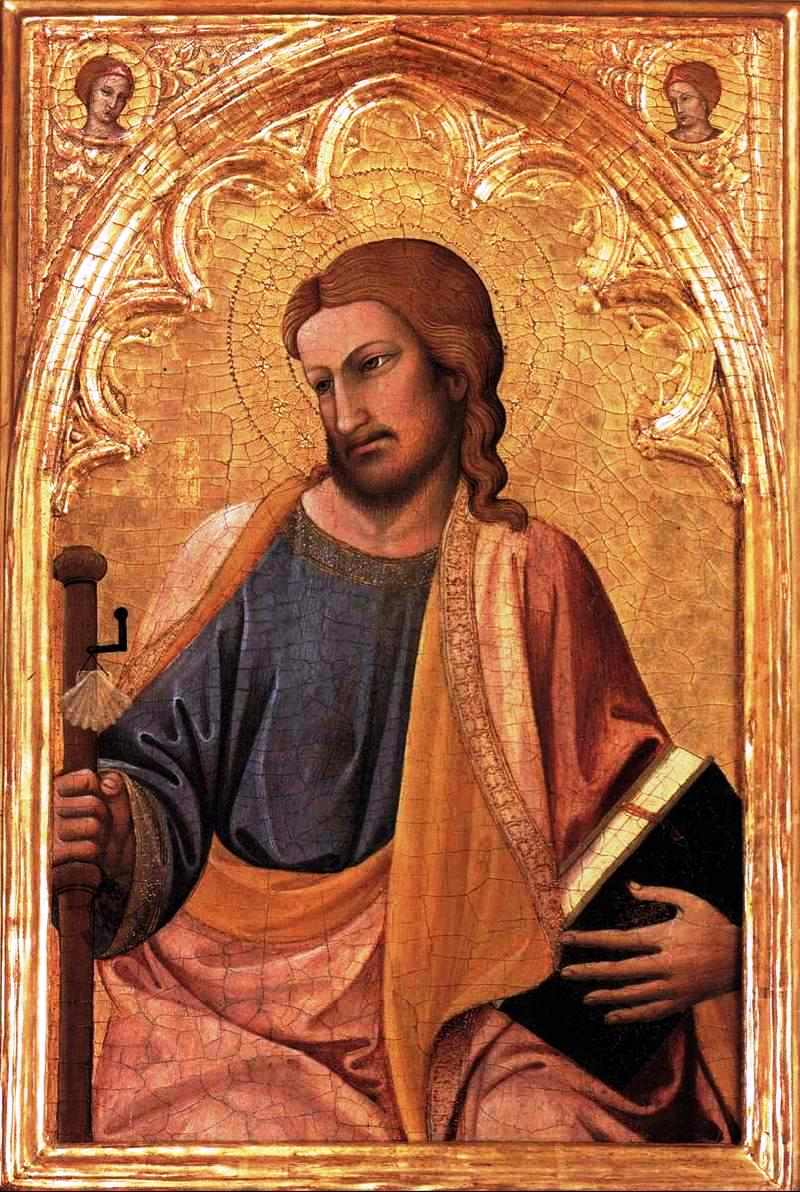 James tells us in his epistle (James 1:1+) today that we must be unwavering, for the double-minded man is unstable, “for he that wavereth is like a wave of the sea driven with the wind and tossed.” The command is clear, if a bit stern, and in itself, unwavering and single-minded. And so we pray for faith, abundant and unwavering faith, in these times of turmoil.
 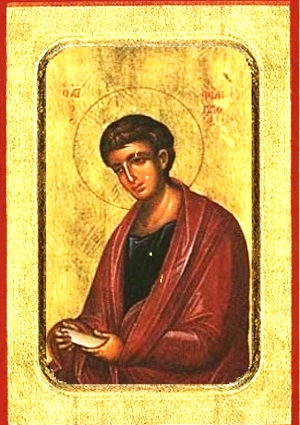 Philip is mentioned in the Gospel for this feast day, May 1 (John 14:1+). It is Philip whose faith wavers, or perhaps he simply can’t grasp the truth in front of him. Christ is explaining about Heaven, and the “many mansions.” He tells us He is the Way, the Truth, and the Life (in answer to doubting Thomas), the only way to the Father. Philip says, “Lord, show us the Father.” Jesus asks why Philip still does not recognize his divinity: “I am in the Father, and the Father in me,” he explains patiently, and his voice is full of love for his children.
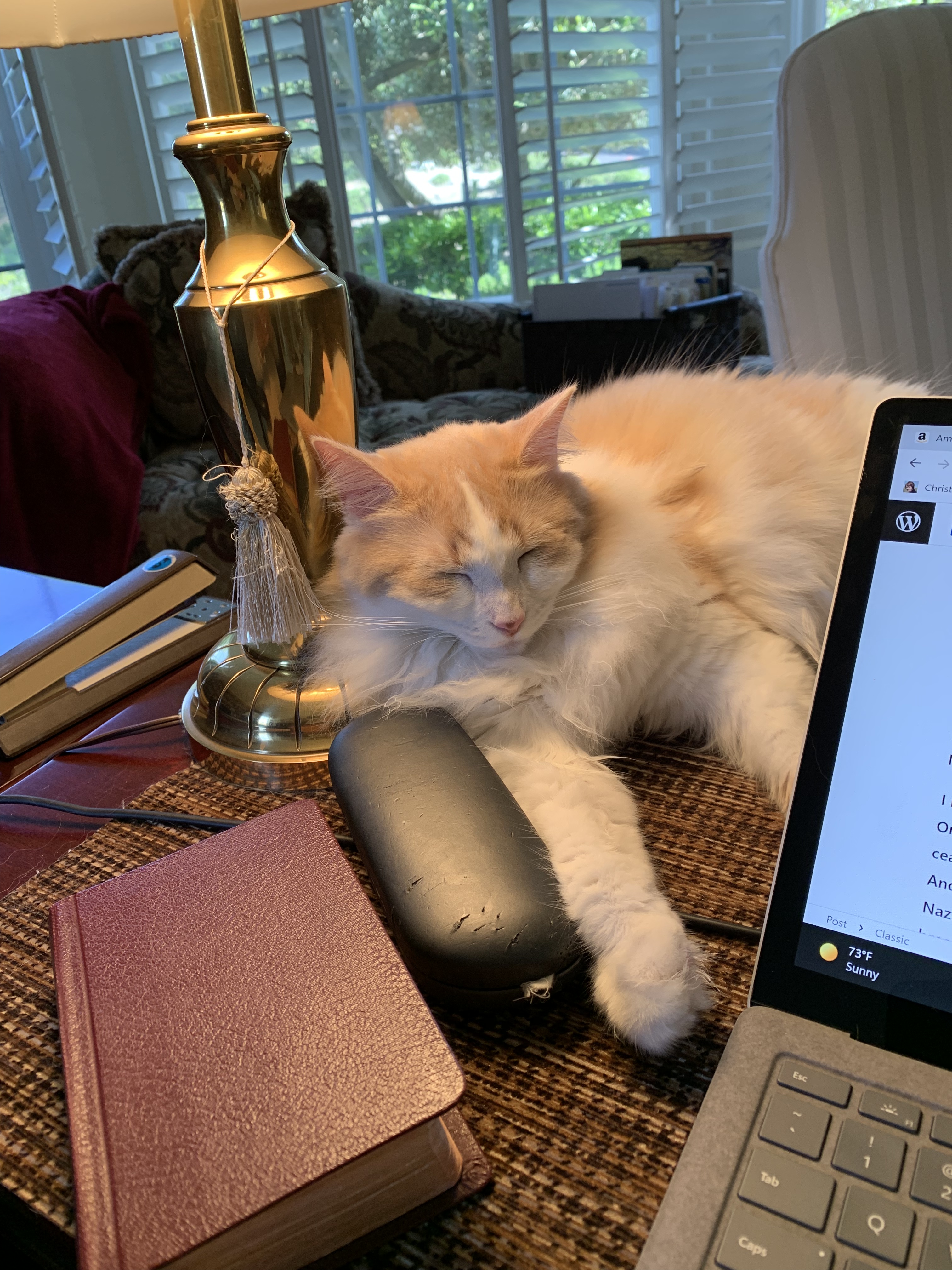 The afternoon sun is glancing off the silvery olive tree outside my window. A breeze is stirring an oak tree beyond and the wild green grasses sloping to the valley below await their yearly trimming, for we live in fire country. I look around. What else have I missed today? My cat has curled up behind the warmth of my laptop, her head resting on my glasses case (she had been resting on Bishop Morse’s prayer book, until I opened it to read.)
 I recently reviewed Francis Etheredge’s collection of prose and prayers, Within Reach of You (Enroute), in this space. One gift given in this book is the vision of being in God’s presence at all times, by praying without ceasing, or even having this intent. For Mr. Etheredge writes that simply the intent to pray opens a space for God to enter and dwell with us. And so I pray the Jesus prayer as often as I can remember, breathing the Name in and out as Father Seraphim and Vicki of Nazareth House in Kentucky taught me. I have adopted this habit over the years, breathing the Name, and now I realize that this opens the space for Our Lord to be present. This places us within reach of Him and He within reach of us. I find this immensely comforting and gratifying and joy-inspiring, all brought to me by an British theologian (with a family of ten) and my Kentucky hermits (with the whole world their family).
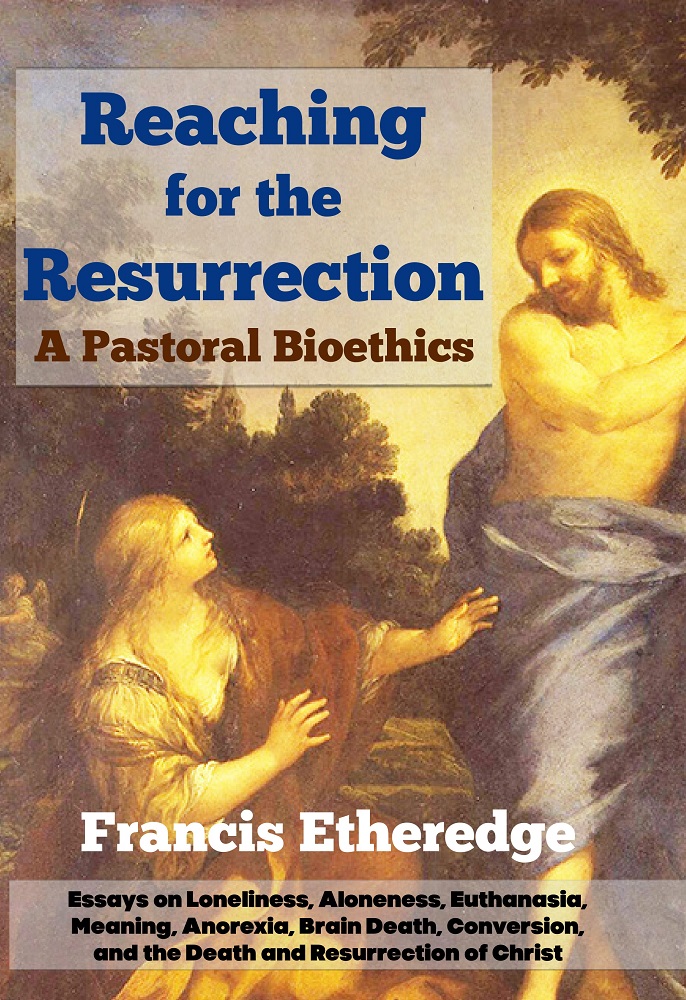
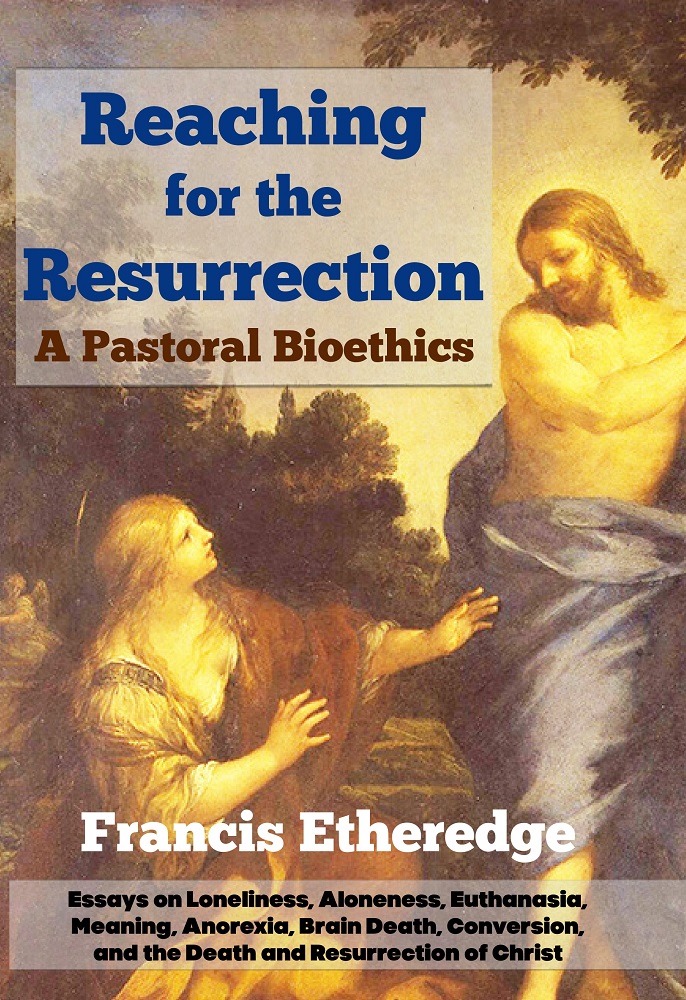 I recently read an early copy of Mr. Etheredge’s new book, soon to be published, Reaching for the Resurrection: A Pastoral Bioethics, to provide an endorsement. He writes about this very idea, that we are one person – body, mind, and spirit. But our materialist world seeks to divide our human person, resulting in loneliness, anorexia, suicide, abortion, and euthanasia. The materialist says this is all we are, mere matter; there is no meaning to life; there is no purpose.
 To know the voice (and the song) of Our Lord we must hear it often, interweaving the many graces given to us, all around us, the many Christians who help us hear him. Take these simple baby steps: go to church, minimum weekly, better more often; read the Gospels; read other Christians who witness to Christ; immerse yourself in the Eucharist, being fed by Christ’s Real Presence in the Mass, a beautiful poetic prayer, a medley of Scripture and song that opens a space for God to dwell within you (and me).
 Christine Sunderland
