On Tax Collectors and Free Speech

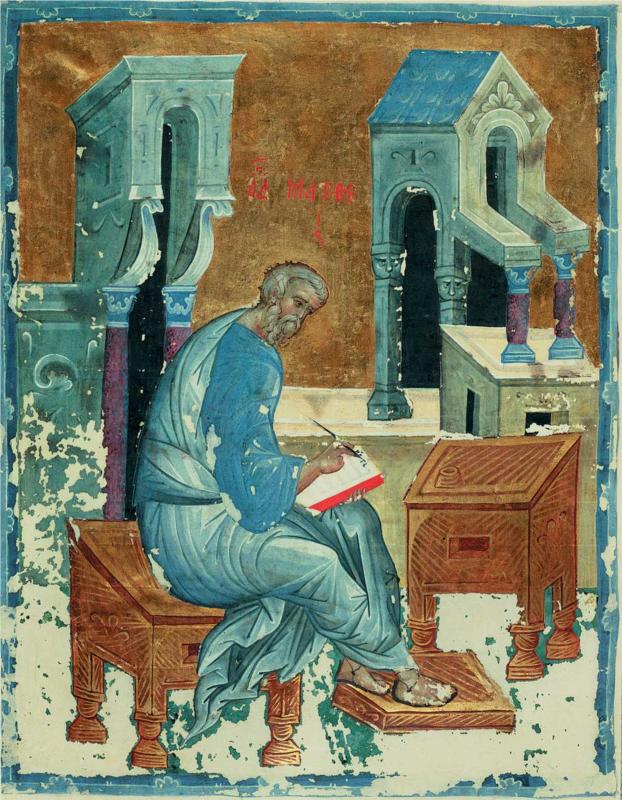
Matthew.EvangelistToday is the Feast of St. Matthew, Apostle. Matthew, also called Levi in Scripture, was a Jewish tax collector. He was one of those who, like most of us, live and work in the secular world. Some compromise their beliefs to do this, or maybe don’t examine too closely their Sunday creed versus the world’s weekday creed. How else could they survive? Some simply turn a blind eye to the world around them, or the world of their temple or church.

In Matthew’s case, he collected more than was owed. The difference was his very living, so he found himself caught in a corrupt system, hated by his own people. Christ pulled him out of this world and into discipleship. When Christ commanded, “Follow me,” he followed. In his case, it meant leaving his other world behind. He didn’t seem to hesitate.

So we too must make this choice in our own lives: how we spend our time, how we vote, what we read, what we say, what we teach our children, what we model to our children. Some of us make radical changes in direction; some continue on the same paths. We compare our lives to lives like Matthew. How do we measure up?

One of the larger issues today is the nature of man and woman. The Judeo-Christian tradition gives clear definitions, and provides models for family life, community life, national life. But with the receding of faith, these definitions have been increasingly challenged, and no where more so than in our institutions of higher learning.

In America, land of the free, we celebrate and enjoy freedom of speech and peaceful assembly, or at least we try to. So we debate these questions openly. We give these questions air to breathe. If we do not, the debate will die and so will our culture.

In researching my current novel-in-progress, The Fire Trail, I learned more about The Anscombe Society, a group begun at Princeton in 2005 promoting chastity outside of marriage, offering a sexual ethos for students. The Stanford Anscombe Society, the student group at Stanford University in Palo Alto, California, defines its mission as follows:

The Stanford Anscombe Society (SAS) is a student group that promotes discussion regarding the roles of the family, marriage, and sexual integrity in the lives of Stanford students both now and after graduation. SAS is neither religiously nor politically affiliated, instead basing our positions on human principles. We hold that the family is the key unit of a stable society, and we define the family as one man and one woman bound together by marriage, along with any children that they might have. SAS defines marriage as a union, until death, between one man and one woman. We promote the idea that sexual integrity is necessary for this family unit to be successful.

This group was denied by the university partial funding for their conference at Stanford last spring. The group was recognized as a student group, but since a “politically correct” minority of students objected, the university bowed to these objections. The Society still had their conference, welcoming all points of view in a civilized, open and respectful debate (see http://www.stanfordanscombe.org/ for videos of speakers and student interviews).

Also, in California, there have been instances where Christian groups have been forced off campus because their leaders were Christian. The court ruling said that all groups on campus must make their membership as well as their leadership be “open to all comers,” i.e. they must allow, for example, an atheist to lead their group. What is wrong with this picture?

The borderlands between the secular and the sacred have always been fraught with danger. But since we do not want to live in a theocracy, nor under a totalitarian regime, we champion freedom of speech, freedom of worship, and open debate. We support communication of belief, or nonbelief, and peaceful assembly.

The fire trail protecting freedom from tyranny is not as wide or protective as it once was. I am so very grateful to The Anscombe Society for speaking out and encouraging open conversation. I am grateful to Elizabeth Anscombe (1919-2001), a British philosopher considered by some to be the greatest in the twentieth century. A professor at Cambridge, she made the case for family values, monogamy, the definition of marriage, arguing and reasoning as a trained philosopher. This is a debate we must not silence; we must not allow irrationality to breach the trail and burn to ash this public conversation.

And I’m grateful for St. Matthew, who, it would appear, did not hesitate to obey his Lord. I am thankful for his Gospel, especially precious at Christmas, for his “good news” is the only account of the wise men bringing their gifts to the Christ Child, a manifestation, or epiphany of the Incarnation to the greater world.

And as I worshiped in my parish church this morning and listened to our own fiery preacher (from a Jewish tradition) describe St. Matthew, I gave thanks once again for my freedom to worship and for our preacher’s freedom to preach. And I once again realized, as I gazed upon the medieval crucifix that hangs over the tabernacle holding the Real Presence of Christ, that all my choices were made easy with the first, the choice to follow the truth, just like that tax collector in Capernaum.

Secret Stairs in Berkeley

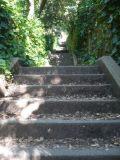
secret stairs 1I’ve been studying a map of Berkeley and the secret stairs of the Berkeley Hills produced by the Berkeley Path Wanderers Association. The characters in my novel-in-progress, The Fire Trail, follow these steps that bridge roads winding into the forests above the university campus, winding up to the Fire Trails.

It is curious how maps organize a broad range of information and yet at the same time help the eye to focus and pinpoint one spot. Maps are like our brains, full of detail, a network of perception of both the past (memory), the present (observation) and the future (plans). Like this shiny unfolded paper that covers my desk, we too are mapped with broad ranges as well as focal points; our brains are miracles of design, epicenters of will and desire.

Novels are stories that connect the dots, draw the lines between moments of intense focus. These moments are often crises producing turning-points. A main crisis propels the major arc of the novel along, as sub-crises propel the chapters, and sometimes even sub-sub-crises propel the scenes. The process is much like walking through Berkeley, coming upon secret stairs that connect the winding roads; sometimes we rise and sometimes we fall.

History is full of these patterns, and these crises often catalyze action, focusing our attention, the attention of our community, the attention of our country, the attention of the world, upon a single incident. The crisis we remembered this week was the horrific bombing of the World Trade Center thirteen years ago on September 11. Our television screens invaded our homes with the shocking news, and although there had been many smaller crises leading up to this one, it was this one that caught our attention, that became America’s and the Western world’s turning point.

We had not been attacked on our own soil since Pearl Harbor in 1941. Our violence since then had been self-inflicted – shootings, riots, demonstrations. Some of us, in our arrogance, tried to deny it was the work of a foreign enemy. How could anyone do this? Each of us recalls, like the day that President Kennedy was shot, where we were and what we were doing when we found out, when we first saw the plumes rising, heard the rumble of the falling towers. It was as though the jets had sliced a knife into our hearts and minds. Our safe and civilized world crumbled; the map of our culture had been ripped apart and was increasingly incomprehensible. Life, liberty and the pursuit of happiness were threatened; our freedom of speech – in word, deed, and worship – was attacked.

They say that the West experienced a similar shock as it counted its dead in the aftermath of World War I, a war we memorialize this year, begun one hundred years ago. Then too, the fire trail was breached, and the flames of barbarism crossed into our peaceful lands, threatening to destroy all that the West had built, over thousands of years since Abraham (then Abram) was called to leave the pagan world of Ur. World War I was a turning point, a catalyst that produced nihilism and despair, Lenin and Hitler and Mao, Nietzsche’s superman and the cold liberal arrogance of academic elite reigning from their own towers, these of ivory.

Church and temple imploded, divided on the path to take. Many of the once-faithful claimed God to be dead, or at least sleeping. Many delighted in such a claim, worshiping themselves and contributing to the anarchy of self-gratification now so fashionable. And so, darkness descended upon the Western world, lit here and there by communities of traditional believers, those who held onto their map, saw the way forward clearly in Scripture, Sacrament, and Creed, and who lit their candles, calling all to come and worship.

There have been three beheadings in the last month, at the last count, and I suppose now the world is watching and counting. We are finally focused. The many lines, the many roads, the many intersections where we weren’t sure which way to turn, have all converged in a single place on our map. Like the World Trade Center bombings, these violent images have stabbed our hearts and minds.

Through it all, the lights lit in our churches and temples burn brightly, calling us together, to gather as one heart and one mind before God. And as I knelt in the pew this morning in St. Joseph’s Chapel in Berkeley, my minutes and days of the week, however scattered, were gathered together in that single hour of worship. In that hour of song and praise and penitence and communion, all that was past was brought into the present and redeemed. All that would come in the future lay in God’s palm, cradled.

The connecting stairs were no longer secret passageways, but right there in beautiful bold print in my Book of Common Prayer. The paths led sensibly through the dark and into the light between the onionskin pages of my tattered Bible. Sin was forgiven, death destroyed. I could turn again, re-pent, re-form, in this weekly turning point. I could face the days ahead of me, the chaos of the world, the burning of the good and the beautiful and the true. For here was the essence, the distillation of the good, the beautiful, and the true. Here was life, for me and for each of us. Here was love that passeth all understanding, love that made sense of all maps.

Crossing the Courtyard

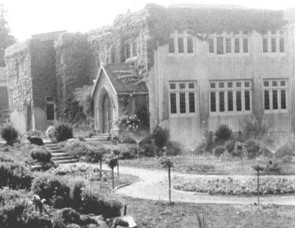
St. Peter's, 1913

St. Peter’s, 1913

Our parish church, St. Peter’s Anglican in Oakland, is building a new courtyard. Over the summer we have entered the church through side doors and back doors. We have peered over broken-down walls and into churned-up soil and rock. Along the way we unearthed our original cornerstone, laid in 1913. Somehow it was buried when a new church was built alongside the old in 1957. 

There has been much discussion, weighing in, rethinking this and deciding on that, in the process of executing the architect’s vision for our courtyard. Are the colors compatible with the existing buildings? Should there be a lych-gate or just a gate? How high will the brick walls be exactly? Did we really have to remove the palm tree? When will it be finished? In time for our organ concert? When will the elevators for the handicapped be done?

There has been much sighing and wringing of hands and raising of brows, then chuckling and open palms and leaving it all to God. Somehow we have weathered the great questions and agreed upon sensible answers. God has been good.

Today, finally, we could see how it all might turn out. Planting beds are marked. The brick wall (not too high) is finished, an inviting border. Soon the patio will be laid. Soon the front doors will be opened, their chains broken, and soon we will once again cross the threshold of our church, leave the secular behind and enter the sacred.

The sun came out this morning as we peered over the low brick wall. The heavy fog that settles upon the Bay Area this time of year had burned away. The earth, its gravity holding our church fast on its rim, was turning slowly, away from summer into autumn in this part of the world, away from winter into spring in other parts. For us here, on this part of the planet, daylight shrinks as the dark of night expands.

I’m glad to have a sacred space hugging the edge of the earth so firmly, and I’m glad to have a courtyard that links the secular with the sacred, that points to the light in the darkness.  Crossing such a space is a preparation, a time to quiet the mind and heart before kneeling in a pew to worship God. It is a time to bridge two worlds – that of God and that of man.

In the end, that is what Christians do, or are called to do. Each of us is a kind of courtyard, a linking and a joining of the secular and the sacred, of earth and heaven. We have experienced the transcendent, God become man, God giving himself to man in the Eucharist, God living within man through Eucharist and Spirit. But we are all only partly finished courtyards, I fear, for each of us has a long way to go for our gardens to flower, for our patios to be solid enough to bear much weight.

But we open our gates, and we invite those outside to come inside, to leave the noise and enter the quiet. We say, come, look and see what we have seen! Come, know the peace of God. Come, be healed. We witness to transcendence, here in our earthy world, an increasingly dangerous and barbaric world.

The Gospel for today was the healing of the man who cannot hear and cannot speak. He was deaf and dumb. Christ charges him and the witnesses to tell no one, but they do anyway, “beyond measure astonished, saying, ‘He hath done all things well: he maketh both the deaf to hear, and the dumb to speak.’ ” I too am beyond measure astonished when I enter our holy space and gaze at the altar and its tented tabernacle resting in its garden of fiery tapers. I too want to tell about it, for my ears have been opened and my tongue loosed. I too have been healed of apathy, despair, depression, heartbreak, fear… to name just a few demons. I too have been forgiven my sins. Once, long ago, I was invited to enter through a gate by someone, like me today, grinning and beckoning from a courtyard, calling me to cross the threshold and enter the church. And once I entered, I knew, from the beauty that engulfed me, that I had left the secular and stepped into the sacred. And I was beyond measure astonished.

Soon our courtyard will be finished. Soon it will invite the halt, the lame, and the blind to enter this holy home of God and be healed. Soon it will witness to the world the incarnation of God, to Emmanuel, God with us. For the 1913 church and the 1957 church are now joined by the 2014 garden court, the child of a century of worship, a century of incense, candles, and song, a century of transcendent beauty.

http://www.saintpetersoakland.com

Traditions and Arrangements

Writing ImageIt is Labor Day, a time to honor work, the working man and woman, those who contribute to our world with their time, talent, and the sweat of their brow. It is appropriately also a time to send our children to school to learn how to do this, how to use their lives productively, how to work and to become responsible for their hours and days. So I turn to one of my many labors, my novel-in-progress, hoping to one day carry it to full term and allow it to breathe.

In creating the back-story for one of my characters, I have revisited the huge topic, Western Civilization: what it is and do we want to preserve it, and if we do, how do we go about it?

I am a saver of cogent words, powerful words in print. I snip bits from newspapers and magazines. I file them, where they sleep until resurrected in a moment like this when I am constructing a novel, drawing the blueprint that will become a huge house of many rooms. I am an architect, I suppose, in the planning stages, building inch by inch, word by word, scribble by scribble. Each room is a character, and they meet from time to time in the house, rub shoulders, touch one another’s minds and hearts and souls with their hopes and fears and regrets. Some rooms are dark, some light, some warm, some cold. They are all under the roof of my little novel, linked by halls and doorways and stairs.

The bits and pieces snipped and saved, ideas that will flow into these rooms are expressed by many ponderers from the English-speaking world. They voice concern, and rightly so, that without the Judeo-Christian underpinning of Western culture, the free world will collapse. One doesn’t have to be religious to worry about this… one merely has to face the reality of such a loss and how it would affect, at the very least, our ideas of liberty, law, and democracy.

Thomas Jefferson’s words decorate his memorial in Washington, D.C.:

“God who gave us life gave us liberty. Can the liberties of a nation be secure when we have removed a conviction that these liberties are the gift of God? Indeed I tremble for my country when I reflect that God is just, that his justice cannot sleep forever.”

Jefferson, a skeptic, is referring to slavery, but these words could have been written today. We all wonder, believers and skeptics, whether our liberties can be secure when we remove the author of the liberties, and when we remove the idea that these freedoms are gifts not rights.

Peggy Noonan writes that there are reasons for traditions and arrangements, some are good, some not so good, ways of doing things learned from experience. These ways have also risen from religious roots. Through the centuries since the birth of Christ, the West, under the influence of the Judeo-Christian social philosophy, has organized life based on the belief that God exists, that he loves and desires us to love, that he made man to be a free, thinking, creative being that would respond to him in turn, freely, thinking, and creatively. Behind the rule of law, behind our institutions of family, church, government, and free press, supporting our right to organize our workers, to gather in peaceful assembly, even behind our table manners and Robert’s Rules of Order, lies the Judeo-Christian definition of man and his purpose. So there are reasons for our traditions and arrangements in the Western world; there are reasons we labor to protect them.

The traditions and arrangements have changed from time to time, tweaked here and there, discarded here and restored there, fought over, around, and within, in word and in deed. Slavery challenges and condemns us, in the Classical world, among African tribes, and on American plantations. Today a child in the womb is seen by some to be owned by the mother, the unborn having no rights. Across the world, children are bought and sold, trafficked for labor, sex, surrogacy. Women are in bondage, jailed, beheaded. Believers are martyred. We see these things, we judge them to be right or wrong, and we labor to change them. So there are times when we need to alter traditions and arrangements to better reflect the Judeo-Christian definition of man and his congress with one another. But without the ideal, the standard by which to judge, how can we decide, act, affect the real world?

It is a conundrum, for our ideals of respect and liberty prevent coerced belief, even if belief may be necessary to uphold that liberty. So folks speak of a public square where we honor these ideals and seek common ground to move forward. They say we must reflect before deserting traditional definitions of marriage and family, that is, a man and a woman raising their own children. These arrangements have held and continue to hold society together. Studies show that the father is more committed, the mother more protected, the child more loved, when this traditional view is encouraged by government representing society. There is less delinquency and fewer single parent households.

I believe in the author of this code of life, this Judeo-Christian God, so it is easy for me to believe in these traditions and arrangements. I believe there will be a judgment (perhaps it’s ongoing) – a reckoning not only I will face but the world as well. We reap what we sow.

But I also pray that those who do not share my belief in that God, consider embracing his traditions and arrangements that have been honed through the centuries. If skeptics value liberty and the rule of law, respect for gender and race, care for the poor and handicapped, the unborn and the aged, if they desire freedom of thought, speech and worship, they would be wise to support the institutions that uphold these Western ideals.

I suppose the world is much like my blueprint for the mansion with the many rooms. Every person is different, unique, but together we have a common humanity. We share the earth and we share a long history. We live under the same roof of suns and moons and stars. We meet in common areas to agree upon traditions and arrangements, but we must build on those of the past, rather than begin anew each time. We nail and we hammer, we add here and pull away there, but we must consider why we do what we do and what we shall lose if we don’t. We must not forget how we arrived at this place, in this time, and why the rooms were decorated and arranged just so, before we tear them down. We must recall, if we are graced with belief, who labored to create this great house, our world, and that he calls us to love one another as he has arranged for us to love.

And it’s good to remember President Jefferson’s words, that our liberties are gifts from God our creator, and be thankful.

On Earthquakes and Apostles

Isola Tiberina.2The earthquake in Napa registered over 6 around 3:20 this morning. I woke and felt the house sway back and forth as though it were tossing in a stormy sea. I wondered if this was it, the time of reckoning, the end of it all. Would the walls collapse? Would the gas water heater explode? The epicenter – Napa – turned out to be a ways away from our town, but close enough that we felt the quake’s strength in our East Bay community. But the quake was a reminder of our human fragility and a reminder of time running out.

We checked for damage and found none apparent, so we trundled off to church to pray for those hurt, to pray for our raging world, to become one with one another and God in the Eucharist, and later to celebrate a parishioner’s birthday (ninety-nine!) with a festive lunch. As I knelt in the oak pew, I recalled today was the Feast of Saint Bartholomew, one of the twelve apostles, thought to be the same as Nathaniel, brought to Christ by the Apostle Phillip. I saw suddenly in my mind his beautiful church in Rome.

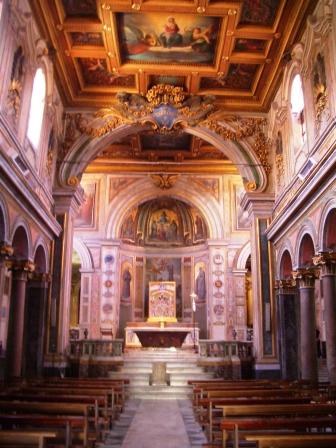
SAN BARTOLOMEO, ROMEIn the middle of the Tiber on an island the shape of a ship stands the ancient church of San Bartolomeo, Saint Bartholomew. I have long loved this church, for its setting amid the rushing waters and leafy banks as well as for its graceful vaults running up side aisles, its colorful apse. But when I enter and pause at the foot of the central aisle to gaze up towards the high altar, I invariably smile.

Altars in Christian churches have been sanctified by the bones of the martyrs since the earliest days when women cleaned the saints’ bodies and buried them outside the walls of Rome. It had long been the custom for pagan Rome to visit their dead and remember them on their anniversaries with outdoor suppers over their graves. The custom continued with the Christian martyrs, a custom that evolved naturally into something more than a memorial meal. For the holy bones seemed to work miracles. So when Christianity became legal, it was natural to build churches over these graves, to celebrate with holy suppers of thanksgiving, Eucharists, and when these sacred relics were threatened by eastern invasions they were brought inside the city walls for safety.

Thus throughout the Christian world altars are sanctified by the relics of the martyrs, relics placed beneath in what is sometimes called a confessio or witness to truth. Saint Bartholomew, Apostle, lies under the altar of San Bartolomeo in Rome on the Tiber Island, in a large boat-shaped reliquary that bears the altar table above it. There is something earthy about this dark sarcophagus in this bright and lofty church, so I often experience a frisson of joy, seeing this union of Heaven and earth, which of course, is the action of the Holy Eucharist in each Mass that will be celebrated on that altar.

Little is known of Saint Bartholomew whom Christ describes as “without guile,” meaning ingenuous, honest. Bartholomew had asked whether anything good could come from Nazareth. He soon had his answer; he recognizes Christ for who he is; he is present at the Ascension. It is said that he preached in India and Armenia, where he was martyred, flayed and crucified upside down. His relics found their way from Armenia to Rome and were placed under the altar of St. Adalberto, now to be called San Bartolomeo.

When we visit San Bartolomeo in Rome we usually come from the Aventine Hill, descending along the stone path from the gardens of Santa Sabina, following the river walk under the plane trees, the waters rushing below. Soon the island comes into view, and we cross an old stone bridge, the Ponte Fabricio, to the Isola Tiberina. In ancient Rome a temple of healing stood here; a hospital remains today. We enter the marbled and gilded Romanesque-Baroque church and, after pausing at the foot of the central aisle to view the the tomb holding the high altar, we visit the side chapels.

In 2000 Pope Jean Paul II dedicated these altars to the martyrs of the 20th and 21st centuries. Each chapel recalls regions and regimes where Christians died for their witness to truth, to Christ: Asia, Oceana, the Near East, Latin America, Africa, Communism, Nazism, Spain and Mexico. The Community of San Egidio, a lay fraternity of men and women who pray for peace and care for the poor in Rome, look after these memorials.

In many ways this church embodies the resurrected church of today, one reborn again and again in the blood of these modern martyrs, one intensely full of the Holy Spirit, of suffering. And as I worshiped in my own parish church in the Bay Area this morning, I thought of this Apostle without Guile, this Apostle of Truth, Saint Bartholomew, who was not afraid to witness to God becoming Man and living among us, dying for us, rising for us, with us. Such a witness, seen in the Basilica of San Bartolomeo on an island awash by the tumbling waters of Rome, is encouraging. We too are awash in such dangerous tides that threaten to flood our parish naves. We too sail in an ark of faith and we too pray for the courage to witness.

pilgrimage_book_coverI set a scene on this island in my first novel, Pilgrimage, and a more dramatic scene on the Ponte Fabricio in my recently released novel, The Magdalene Mystery. Both novels are about truth and healing, about navigating dangerous waters in arks of faThe Magdalene Mysteryith, about allowing the past to inform our present through the lives of saints and martyrs.

Thank you, San Bartolomeo, for being without guile.

http://www.sanbartolomeo.org; http://www.sanegidio.org 

Chateau de la Puisaye, France

Chateau de la Puisaye.compLast week, on the occasion of my niece’s wedding nearby, we stayed at Chateau de la Puisaye, a Napoleon III house set in a large park a mile outside of Verneuil-sur-Avre on the southern Normandy border. Diana and Bruno Costes (she British, he French) have turned the chateau into a country “bed-and-breakfast,” offering five traditionally furnished bedrooms in the main house, a guest cottage, and a studio over the old stables. Our son and his family (children aged nine and eleven) joined us.

One of our rooms on the second floor (Europeans say the first floor), looked out the back onto green grass, a box hedge, and a large kitchen garden, hence called the Chambre du Potager. Decorated in antiques, the light and airy room had a closed fireplace and three tall windows, high ceilings, and a large bath. White wainscoted panels were papered in pink and green floral with complimentary borders and matching draperies. The room is charming, recalling Jane Austen, with polished hardwood floors and oriental carpets. Two more bedrooms faced the front drive and park with tall windows as well, nicely appointed, and two more on the third floor.

Always intrigued by history and the mystery of time, I wondered who had lived here over the centuries. Diana said an elderly lady was the last owner. She mentioned that a tunnel, perhaps no longer evident, once hid Resistance fighters in World War II. Our articulate hostess was certain the house held many secrets and hidden passages, nooks and crannies yet to be discovered. The house had seen so much, both joy and sorrow, I thought, love and hate, birth and death. Foreign armies encamped, reigning terror upon the countryside.

For we were, after all, in Normandy, unhappy witness to centuries of war. Northwest, the landing beaches of World War II stretch alongside the English Channel,  where so many young soldiers were gunned down by the enemy on overlooking cliffs. Today they rest beneath rows of white crosses in a field of green, and I often thought of these young men and the world they protected with their lives, our world. How deceiving peacetime could be, especially in our lovely chateau surrounded by leafy park and night silence and sun and shadow, in rooms of genteel comfort and civilized conversation. How deceiving it all was, not wanting to believe we lived in a rare moment of peace that bridged the times of war. How long would it be before fighting revisited this lovely pastureland of chateaus and sheep and medieval stone?

Of course this area of southern Normandy has seen other wars over the centuries, for Normandy was British for many years, a coveted prize with its ports and pastures. Fortified villages surrounded by deep moats saw much bloodshed in the Hundred Years War that pitted English against French and raged intermittently from 1337 to 1453. Verneuil-sur-Avre was formed from three such villages, with streets that trace the old walls, each community clustering around its church and market.

Much to the delight of my grandchildren, chateau sheep grazed in a distant field, and the children were invited to help herd them to another pasture. Two elderly ponies, a horse, and a donkey grazed in another paddock. Three dogs meandered in and out of the chateau, nuzzling the children and other friendly hands, and two cats could be spotted if one watched carefully. There was a heated swimming pool, put in this last year, anchored at one end by a picturesque stone gatehouse.

The gravel drive curved up to the white façade of the chateau as if curtsying, and mature plane trees shaded broad lawns and white wrought-iron chairs and tables and wooden lounges. We had unseasonable rain and cool temps this last week, but in better weather guests could sip cocktails on the lawn before dinner. I for one enjoyed the drawing rooms.

The entry led to stairs spiraling up to the bedrooms. Guests met in the paneled drawing room to the right of the entry for an aperitif before dinner.  (My grandson played a little Beethoven on the grand piano.) Velvet upholstered chairs and a settee grouped around a working fireplace probably ablaze in winter. The adjoining library housed walls of books with another working fireplace.

In the dining room to the left of the entry, Diana served hot breakfasts with fresh breads and jams, and even dinner (with notice), featuring local foods and French country wines. She was most gracious in preparing several dinners for us over the week we stayed, all delicious.

I particularly appreciated (naturally) the many books that greeted us, and I left my own novels to add to the chateau’s collection. There were hundreds of books in English and French and other languages, out-of-print books, bestsellers, classics, history, crime, romance, art, cooking, landscape. Books were stacked on tables and mantels and overflowed from shelves. They lined the rooms with history, their own history and those stories living inside the leaves, reflecting centuries of writers and readers, but also reflecting a more sophisticated syntax and thought pattern.

I came across a young-adult story with black-and-white illustrations on shiny pages. The printing style reminded me of books I once borrowed and devoured from our local Orinda library when I was young. The title page stated the book was a war printing, using circumscribed ink and paper, for it was dated 1944, London. It appeared to be about a girl’s school with a simple and direct and sweet style. I thought how different today’s young adult novels are, with their dark and often violent themes, their sexually charged language, their despairing and anguished tones. What have we sowed in the hearts and minds of our children and what kind of a culture will we – and they – reap one day? Perhaps we already are reaping what we have sowed.

Tucked among old books on the landing upstairs I found an Anglican Book of Common Prayer with no publication date, but with a Christmas 1915 inscription from the owner’s grandfather. By Christmas 1915, Britain was in the First World War. London bombing commenced in May of that year. The leather-bound prayer book, its tissue pages well thumbed, was no more than two by three inches, and it contained not only Anglican prayers and liturgies, but hymns as well. It looked to be the old 1662 Prayer Book, similar to our 1928 BCP in America, with rites going back to the seventh century monastic offices and the medieval liturgies of Old Sarum.

Diana’s warmth charmed us, encouraging conversation. She treated us like family. As my nine-year-old granddaughter nodded off to sleep under white embroidered linen, she said with a happy smile and a sweet sigh, “Diana is so nice, I just want to move in and help her in the kitchen.” “I know,” I said, “me too,” and I gently turned out the light and kissed her on the forehead.

The skies are broad in this rolling countryside, and while the rain limited our explorations, the changing skies created dramatic canvases of blues and whites and grays. We walked out to the paddocks and followed the gravel paths and drove the lanes through fields of corn waiting for harvest.

Staying at Chateau de la Puisaye was far more than memorable and far more than restful. It was stepping into history and for a short time living there as though we shared the space with hundreds of ancestors. The two hundred years these rooms witnessed seem to have been more ordered times, in spite of candlelight and bedpans and cold rooms heated by fires in hearths. It was a time when social graces tamed our bestial natures and manners orchestrated our gatherings. Conversation linked minds and hearts, and shared meals wove generations together. Civility, that old art of living with one another, was valued over self-esteem, thoughtfulness over thoughtlessness, patience over impulse. Being dependent upon one another for day-to-day needs required selfless sacrifice. It required love.

One cannot turn back the clock, but it is good to be reminded of what we have lost, so that we might plant similar seeds before the the lost is forgotten completely. We flock to these quiet old houses seeking something we cannot name; we mourn a time of gentle, gentile, gentlemen and gentlewomen. Today transfixed by gadgets and toys and bright screens with buttons, we have nearly forgotten how to think, how to reflect (or even dream), how to link generations with words around a table.

Chateau de la Puisaye reminded me how to live gently. The old house said, do not forget. Thank you, Diana and Bruno Costes, for pulling this past into our present and with such grace.

http://www.chateaudelapuisaye.com/

A French Country Wedding

domaine_evis_idx2

We witnessed my niece’s wedding this weekend in the French countryside. 

The wedding was held outdoors at Domain des Evis, a fifteenth-century fortified farmhouse set in the rural landscape of the Perche region, not far from Verneuil-sur-Avre on the Normandy border. The few days before, unseasonable torrential rains poured upon the land, nearly flooding the narrow roads, but a Saturday sun worked its way mightily through dark billowing clouds.

We took our places on benches under the suddenly bright sun and watched the bridesmaids step up the aisle, followed by the bride, arm in arm between her father and her brother. It was a curious blend of old and new, and the secular ceremony, while never mentioning God, spoke of love and commitment and how-we-met. Poems were read and vows exchanged, hearts were touched, and eyes were moist with tears. The wedding reflected the beliefs of the bride and groom, as it surely should, for they are poised on the edge of a dying culture in a France tragically beautiful in its diminished faith.

Later, during the dinner, since they had asked me to speak as my niece’s godmother, I mentioned God who, while not invited to the wedding, was ever-present, loving them anyway:

As godmother I made my own vows for my niece at her baptism, and as her godmother I said a few extra prayers each evening, asking God to bless her. The prayers clearly worked, for she has found her prince charming who is now added to my list of intercessions each evening. And now two families have been united…

Weddings are rites of passage. The philosopher Roger Scruton notes that “rites of passage are the vows that bind generation to generation across the chasm of our appetites.” In this rite of passage we call marriage, family and friends of many generations witness the vows of love between a man and a woman. The vows are made in a public ceremony, before a community that gives assent and approval by their presence. When the bride walks up the aisle, alongside a member or members of her family, the journey through the gathered witnesses reflects her journey from one family into another, as well as the creation of a new family. This is the “giving away” of the bride and as archaic as it may sound in today’s world, it represents a giving over to the groom certain responsibilities, that of loving, protecting, and sheltering the future mother of his children.

The wedding ceremony in our Anglican Book of Common Prayer states that matrimony is a holy estate. Indeed, it is considered one of the seven sacraments, for it is sacred. Matrimony produces life, and all of life is holy, sacred. With marriage comes the blessing of children, and those children will step through their own rites of passage…

I thank my niece and her new husband for sharing this sacred day with us. Love and cherish one another, comfort one another, honor one another. Have and hold one another, for better or worse, richer or poorer, in sickness and health. Be true to one another…

It is curious, I now reflect, that as the Judeo-Christian roots of Western Civilization shrivel, folks cling to these shadowy memories of faith. They hold on to the symbols and ceremonies that speak truth even though they don’t believe in the author of those truths, he who designed our marvel-ous natures, he who created us to love. For without belief in the source of love, the symbols and ceremonies will wither and disappear. How many generations will it take for nihilism to eclipse Christianity? And how many generations will it take for the religions of death to fill the void left behind?

We are entering a new Dark Age, for we take for granted the inheritance bequeathed by Judaism and Christianity, the values that birthed our culture of freedom. It is this heritage of liberty protected by law, rights birthed by responsibility, marriage and family ordained by sacraments, governance authorized by democracy, that has defined the Western world and has given hope to peoples living in poverty and tyranny. It is this Judeo-Christian culture of the West, planted and watered for millennia, that is envied the world over by refugees, regardless of their own beliefs. Immigrants flood our borders for they understand what and who we are. We all know the Western world is not perfect, for it is shaped by humans, but it is our best and brightest hope for the future and for peace.

So on Saturday we heard good words in this elegant and sweetly beautiful marriage ceremony beneath stone towers and alongside dry moats of medieval stone. We saw love blossom, taking root in the garden of marriage whether the lovers believed in the sacrament or not. Their love was watered by the words and the vows and the faux-rituals. One day they will hopefully bear children so that another generation will water the roots of our culture, if they can remember this day and others like it. Perhaps, in the future, they shall recognize the God who loves them so, reflected in the leaves.

I’m glad I was able to attend the wedding of my sister’s daughter, who I held in my arms the first week of her life. I’m glad I was present to see our two families intertwined, one French and one American. My prayer list is longer, and I rejoice in this binding of generations.

With a Song

035“Once we came before God’s presence with a song; now we come before his absence with a sigh.” So writes Anglican philosopher Roger Scruton in his beautifully written memoir, Gentle Regrets. The first reference is, of course, to Psalm 100, O be joyful in the Lord, all ye lands: serve the Lord with gladness, and come before his presence with a song… Dr. Scruton’s second reference, that to sighing, is to the sadness that seems to permeate our culture of unbelief, the most prosperous and “advanced” culture in recorded history.

Psalm 100, also called the Jubilate Deo, is part of our Office of Morning Prayer, in the Book of Common Prayer prayed by Anglicans worldwide for centuries. I wondered, what happens to a person’s attitude toward life if he or she repeats this prayer psalm every morning upon rising? Is there a change in the way he sees the world, or even a gradual restructuring of the soul?

I’ve been thinking about this the last few days, having dipped deeply into Dr. Scruton’s words of wisdom. He rightly values the Prayer Book with its Elizabethan English, so suitable to worship God. We sing the words of these prayers, sometimes in melodies, sometimes in chants, sometimes in our hearts and minds, following the rhythm of the phrases like a dance.

I first crossed the threshold of an Anglican Church (then Episcopalian) in 1966, at the age of 19: St. Matthew’s, Burlingame, California. Raised Presbyterian, turned collegiate agnostic, I was unfamiliar with the ritual, the set prayers, the kneeling, the making of the Sign of the Cross, the processions, the candles, the incense. Yet I felt as though I had entered Heaven. I was sure I had; I was totally smitten. I sat in the back pew and drank in the liturgy like a traveler in the desert. I was thirsty and didn’t know how parched I really was until then, didn’t fully understand what I deeply longed for, but here it was, all around me, the sights, the sounds, the smells of Heaven.  It was as though I was being held in the palm of a loving God, one who had created me in great joy and was so glad I had come home.

I wasn’t instructed and Confirmed until the following year, but in the meantime I entered, knelt, imitated the others. Since many of the prayers were the same each week, and there were Prayer Books in all the pews, I learned the words quickly and was soon part of the miracle happening around me. I learned how to dance with the Church, a universal dance stretching back two thousand years and celebrated all over the world. Since then, I have come to understand the meaning behind the rituals and the prayers, the Scriptures that ordained the words, the actions, the steps in this dance of worship. I came to understand what happened in what was called the great Sacrifice of the Mass, when the wine became blood and the bread became body in the Real Presence of Christ. I understood how the Liturgy of the Word led to this pivotal moment of bell-ringing and happy holiness – the Collects, the Scriptures, the Creed, the Confession and Absolution, the Sermon. And since then, I have traveled deeper and deeper into the mystery of worship and into the heart of God.

So it was with great joy that I discovered this Anglican philosopher who is also in love with the Book of Common Prayer, who “gets it,” as is said today. And he is right when he profoundly observes that our culture, having trouble finding God, has become sad, “morose.” Many no longer sing to the Lord a joyful song with gladness for they have lost him in a kind of slippery sophistry. Instead, they look to one another, and to themselves, to create gods from their own kind, longing for but not finding true worship. The resulting attitude is one of un-thankfulness, of grievance and complaint, of never having enough, of striving, of racing, of consuming, all in hopes of finding. The old adage, “Count your blessings,” is just that, an old adage and rarely practiced. Today curses are counted rather than blessings.

And so it was that this morning when I entered our parish church I was especially thankful for the words of our Prayer Book, the poetry of the prayers and psalms and liturgy, and most of all for the belief that backs and binds it. I addressed some “proofs” for the historicity of the Resurrection in my recent novel, The Magdalene Mystery, arguments of the mind if not the heart. And in the end, if one can argue the Resurrection, the rest falls into place, at least for me. But here, this morning, in my parish church and recently in the words of my new philosopher mentor, I find argument for the heart and soul. Human beings long to sing to God because we know deep down he exists, that he loves us, and that he has provided a path on earth to Heaven, to one day, see him face to face, no longer through a glass darkly. We long to experience what we suspect is waiting for us, true joy.

And as we sang with the children in Sunday School “All Things Bright and Beautiful,” prayed an “Our Father” together, and led them up the central aisle to kneel at the altar rail for their blessing during the Mass, I knew we had taught them well this day. They had experienced the bright and the beautiful, to be sure, when they entered that hushed space, as they padded up the red carpet toward the tabernacle set amid the flaming candles, as the robed clerics drifted by. “God the Father, God the Son, and God the Holy Spirit be upon you, Natalie, this day and always” the priest said, touching her head lightly with blessing. We each made the Sign of the Cross, and with folded hands we processed out, back to the Sunday School, where we made more animals from paper plates.

It is good for us to pray, to develop an attitude of thankfulness for what we have been given, beginning with life itself, another day on this earth. I recommend an “Our Father” followed by the “Jubilate Deo” each morning, even if it’s in the rush of the early hours, driving to work, waiting for the bus, readying the children for school. Say it regularly and your life will be filled with joy, the jubilate of God, and far less sighing. I know mine has.

Hell’s Vestibule

Sayers.Hell.Dante2It seemed appropriate, since the Bay Area is currently gripped by a heat wave, to reread Dante’s The Divine Comedy beginning of course with Hell. I’m using Dorothy Sayers’ translation in verse, and finding it surprisingly readable. I especially appreciate her “Story” summary at the beginning of each Canto, and her “Images” at the end, all most helpful and clear.

It was also appropriate, in this heat wave, to arrive at our local parish church, St. Peter’s Oakland, surrounded by its courtyard demolition. The garden and patio will be lovely, to be sure, when finished, but in the meantime we are negotiating chicken wire fencing that guards churned earth and pavement slabs. We enter the church, not ceremonially up the steps to the open narthex, our normal route across the threshold, leaving the public space to enter the sacred, but through side doors, maneuvering through back hallways.

So between the heat pushing down upon us like a great closing lid and the courtyard disorder, Dante seemed quite at home in my little brain.

Then, to this turmoil was added the Epistle and Gospel for today, taken from the Sixth Sunday after Trinity in our poetic Anglican Book of Common Prayer. The readings seemed to be all about sin and death (St. Paul) and hell and judgment (Our Lord).

We don’t speak of sin, judgment, and hell these days (in polite society, or rather politically correct society), and try to avoid speaking of death. I had forgotten how these Scripture readings appear like sudden flames in high summer, hard words not content to be safely corralled in Advent or Lent later in the year. And these words are so out of fashion. Today’s culture claims there are always reasons for why we harm one another and ourselves, always explanations, always escape from judgment by changing words and banning others from discourse. It is interesting that Christ not only mentions judgment in this passage but Hell as well, and we are to be judged for the simple sin of disrespect, calling someone a fool. “Whosoever shall say to his brother, Thou fool, shall be in danger of hell-fire,” Christ warns in St. Matthew 5.

Such a delicate sin, it would seem, even a lighthearted sin, silly really, part of me secretly says, calling someone a fool whether in thought, word, or deed. Yet on second look, it seems more serious, something spawned by pride, an arrogance that slides subtly into our speech as it takes hold of our hearts, like a snake constricting our love.

For love is the opposite of pride. Love is the sacrifice of self for the other, not the uplifting of self over the other.

Words matter. Today especially. Sin is banished by embarrassment. Judgment deserted. Hell has long been hidden quaintly in fable and fantasy. Or has it? We pretend death does not await us… are we pretending about Hell?

I’m not too far into Dante, but the third Canto places us at the Vestibule of Hell, Hell’s Gateway. Spirits whirl about, distracted, following something here, then there, all the while groaning and shrieking and turning in anguish to keep up. Sound like our world? These are those who, when given the choice of Hell or Heaven, choose to not choose, to remain neutral. They are the undecided, those called by St. Paul “lukewarm,” who are neither for God nor against him. Even Hell spits them out. And so they spend eternity running after the latest thing, just as they did on earth. As Sayers points out, Christian eschatology allows us to choose Heaven or Hell. It would make sense that some choose not to choose. Dante could see our world; his world must have been similarly sophisticated.

I’ve known many people in this vestibule, or headed for it, inside the Church and outside. They slide along in a colorless and unfeeling world by banishing words that are uncomfortable or perhaps too true, too painful, to face. 

As a Christian I am glad to be reminded of hard words, thankful to be forced to face sin and Hell and judgment. The facing makes it far more joyous to be given the antidote to sin and Hell and judgment, an antidote in those same readings of today. And so, St. Paul explains, in one of the most profound and possibly difficult passages in his letters, that we are baptized unto death. He says that when we are baptized our sins die with the “old man,” the sinner in us. And as part of Christ’s body through this baptism, we follow Christ into his own death in this way, but we also follow him into his new resurrected life. He is the Way, the Truth, and the Life.

This is good news indeed, real gospel. These are strong happy joyous words of truth. I would rather know and face my enemy – sin – that old man within me – so that I can die a bit so that I can live a lot. I don’t want to chase the latest idea, blown about by the whirlwinds of pride and arrogance, screaming in anguish and doubt and indecision. I want to know the truth, face life as it is.

The Church helps with this by reminding us, again and again, what is real and what is not, what is true and what is false, through Scripture and Sacrament, through Council and Creed, using words carefully chosen and honed and perfected through two thousand years.

We cross the vestibule and enter, not Hell, but Heaven, every time we enter a Church that holds these words close to her heart.

On Shame and Shakedowns

Writing ImageI just counted the tabs that appear across the top of my computer screen, those websites that I check regularly, and I seem to have fourteen, not counting OakTara (my publisher), Amazon, and Goodreads. Seven are websites I maintain, adding new content on a regular basis, and seven are sites to which I occasionally submit. 

My latest addition is Liberty Island (www.LibertyIslandmag.com), a site supporting conservative fiction authors. I recently posted the first chapter of my novel-in-progress, The Fire Trail. Last night I read a short story that so closely mirrored my own family experience (my husband and I are way outnumbered by vocal leftists), I didn’t know whether to laugh or cry with relief: “Caravaggio’s Isaac” by Scott Steward Smith. The story therapeutically re-enacted some of my own life trauma.

Words matter. Ideas matter. Words and ideas drive and form culture.

I haven’t seen Dinesh D’Souza’s movies yet, but I am looking forward to them. Jay Nordlinger recently wrote about D’Souza in National Review (July 21, 2014), saying that D’Souza contends that “the shaming of America is related to the shakedown of America.” Many liberals, with the power of the media to pummel conservatives, accuse and judge America, exaggerating the dark side of our history and twisting the truth, not telling the full story. They say we steal, we commit genocide, we enslave, we conquer, we degrade. This is the one-sided “narrative” told again and again in our schools and our news outlets and our books and our movies. Many generations have been raised on this self-loathing. Many are ashamed to be Americans.

The dictionary defines “shakedown” as the act of taking or restructuring through threats or deception. Accuse Americans even falsely and they feel guilty, regardless of the injustice of the accusation. When they feel guilty, they open their wallets. They vote the ticket that absolves their guilt, regardless of unwise policy, regardless of harm to our country. Many wealthy find the shaming and shakedown of America agreeable. They feel guilty also, but it is the guilt of the rich, and their guilt is absolved. They use their play money to support those who tell the story they want to hear, regardless of what works to grow our country, protect our country, or advance world peace and prosperity.

So through this shaming, America is deceptively taken and restructured.

And in this restructuring, the creation of a culture without free speech, without the institutions of family and church, will, ironically, eventually silence even the press that now appears to support the shakedown. And they don’t seem to see it coming.

Words matter. Story matters. When an unborn baby is called a fetus it is easier to kill it. It is an it not a he or a her and has no rights greater than the mother’s convenience. Other words make it easier to submit. Her “convenience” becomes an issue of “health.” She is making a “choice.” One could also say a murderer makes a “choice.” But the right to choose resonates with our desire for freedom. It sounds good. Words matter. We feel for the woman with an unplanned pregnancy. It might limit her options in life. That’s one side. But the child might open new worlds to her. That’s the other side we don’t hear. We want to absolve her of her guilt, soon to be grief, by saying it is her “choice.” We are a caring people. The liberals accuse, “For shame, pro-lifers, you do not care enough. You are warring against women.” Warring? When a new life is created and protected? Sounds like pro-lifers are defending women. Shakedown. Threats and deception. Words matter.

We should not be ashamed of America. We aren’t perfect, no nation is, no person is. But we must acknowledge what is good about our country in order to preserve it and water and feed it, in order to survive even flourish in a world that could quite possibly destroy our freedom and our way of life. We must be respectful and honorable, law-abiding, law-giving, law-enforcing. We must practice courtesy, return manners to our discourse, whether personal or national. We must wait our turn, not cut in line, share from love and not coercion. We must care for one another, giving generously to charity. We must encourage creative enterprise, inspire the next generation to use the minds and hearts God has given them to make a better world. We must vote, armed with knowledge of the issues and the candidates. We must be responsible to our nation, to our communities, to our families. We must support religious institutions that provide the myriad of services we take for granted in a democracy, from hospitals to schools to soup kitchens.

And most importantly we must be unashamed to speak, to use words and tell stories while we can, tell the truth about our country, our people, the whole truth and nothing but the truth, so help us God.