
 As American democracy stumbles into the second year of fear and pandemic, we look to stable and true leaders. Thus, Prince Philip’s death has sounded a mournful note in the hearts of many.
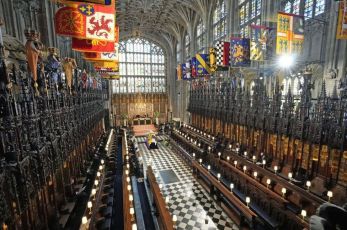
Seeing the Queen sitting alone in the choir of St. George’s Chapel, Windsor, masked and dressed in black, brought home the tragedy.
Philip lived a long life of duty as the Royal Consort to Her Majesty Queen Elizabeth II. Duty is out of fashion today. Someone once said that duty is the discipline of love. Love is not free, freewheeling, or freefalling. Love must be molded by sacrifice and care-full attention to the beloved. Love demands discipline; love demands duty.
I have read that Philip was outspoken. So in his duty and obedience to Elizabeth he did not give up his opinions, his integrity. Within the framework of his position and duties to the people of England and the Commonwealth (and there were many such claims upon him) he grew strong in his own person.
He was a man of faith, we are told. He could do broad Church or high Church Anglican, but the one he preferred was short Church, according to the Bishop Chartres. (Most of us can identify with such a preference.) And so his funeral was a simple one by royal standards, designed by him and subject to those fearful Coronavirus restrictions. He was true to himself in death and life. He was trustworthy.
I have found that being able to trust a person, to rely that they are truthful and supportive and dedicated to the right action, means a great deal. Truth, like duty, has been downgraded today, and undervalued in both public and private spheres. This is a national and international tragedy. For without trust and truth, we are blind.
 And so as I tuned in to our virtual Eucharistic liturgies this morning in our Anglican Province of Christ the King, I thought of Philip and England and the Anglican Church. I thought of the Queen sitting alone in that massive choir in the chancel of St. George’s, waiting, sitting in mahogany stalls lined with white lanterns in the gothic abbey style. I thought of her strength in the face of so many heartbreaks and challenges. And I gave thanks for the pageantry and ceremony her reign ensured and continues to ensure, an ordered beauty of holiness that has been passed down through the centuries, ever since Thomas Cranmer produced our Anglican Book of Common Prayer.
For it is this tradition of ancient liturgy that we as Anglicans in America embrace, an ordered beauty of holiness expressing the inexpressible: the being of God, the love of God, His nature, His sacrifice, His offering Himself to us.
 And today, Good Shepherd Sunday, we heard the powerful Gospel of Saint John, quoting Christ Jesus. Our Lord tells us that He is the Good Shepherd who gives His life for the sheep. He knows us, and we know His voice. He protects us from wolves who scatter us. One day, Our Lord promises, there shall be one flock and one Shepherd, for all those who know His voice will be brought into his fold.
It is good to be strengthened by these words in this time of scattering, sheltering, masking, and fear of one another, distancing ourselves. Hearing these words spoken by different readers before different altars molded these truths into my heart and soul.
And while the image of Christ the Good Shepherd is strengthening and comforting, one of our preachers extended the image by saying we must all take on this nature of Christ. We must become shepherds too, bringing in lost sheep to the fold of the Church. We sometimes treat our fellow faithful as a social club or even unwittingly a burial society, closed and close and comfortable. We must be like the Good Shepherd and look out for the lost and suffering, healing them with the words and liturgies of God made Man, in His Church.
How do we do this? We love our fellow man, in exercise of duty. We tell the truth, we sing the truth, and we hold the truth high for all to see. We are not ashamed of who we are. We do not remain silent in the midst of tyranny and lies. We mentor the next generations. We turn no one away.
We practice the ten commandments, the virtues of faith, hope, and charity, and learn how to do this in weekly, if not daily, reading of Scripture, and with our own Baptisms and Confirmations and Eucharists in the Body of Christ, the Church.
 Our Diocese of the Western States, Anglican Province of Christ the King, will be consecrating a new bishop this week. Bishops carry a crook, or staff, for they are shepherds, looking to bring in the lost, to teach the saved, to be pastors and priests to the clergy in their charge. They watch for wolves who devour and divide. They tell the truth about man and God, about who we are and who we are meant to be. They comfort us with historic, witnessed, creeds and doctrine. They give us opportunities to be shepherds. They teach us how to love as Christ Jesus loves.
And so, Prince Philip was laid to rest. Well done, good and faithful servant. The world will miss you and all that you quietly did and humbly were. Rest in peace until the trumpet sounds and we all shall rise again.
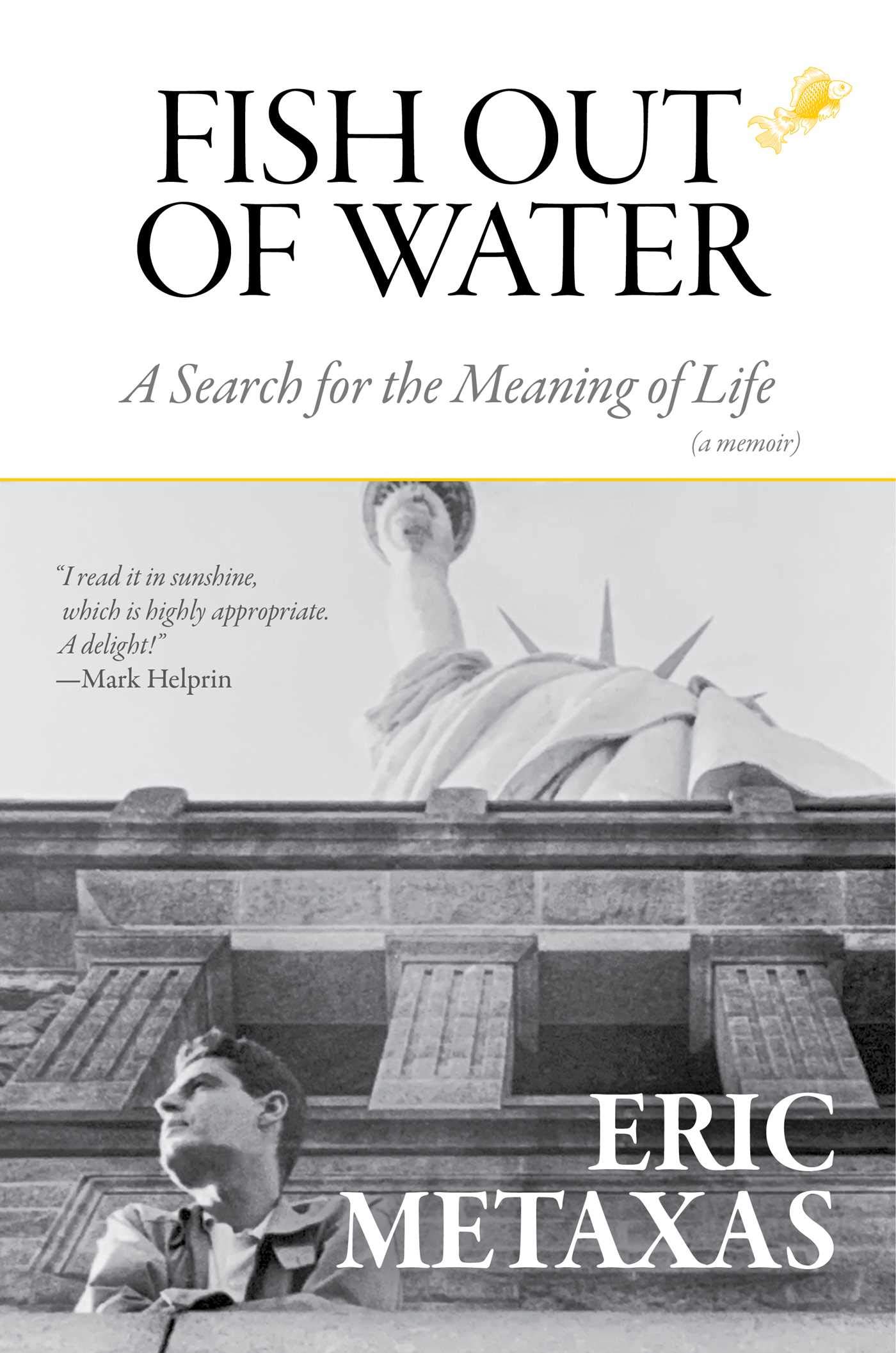 I recently read a remarkable memoir, Fish Out of Water, by Eric Metaxas. It is told in an informal conversational style, full of anecdotes of his growing up in the Greek Orthodox community in Danbury, Connecticut. One of the threads or themes particularly resonated with me.
 With these thoughts running through my memory of the week, this morning’s Gospel sounded a sweet note. For as the resurrected Christ appears to the fearful disciples, he says, “Peace be with you.” This phrase is repeated throughout our eucharistic liturgy. In some Roman Catholic parishes the peace is passed one to another in the pew, with a handshake or a nod (maybe not presently with the pandemic). These words remind us of the great reward of being claimed by Christ and of our claiming Christ: peace.
 The Epistle lesson today was almost harsh. St. John writes, “He that hath the Son hath life; and he that hath not the Son of God hath not life.”

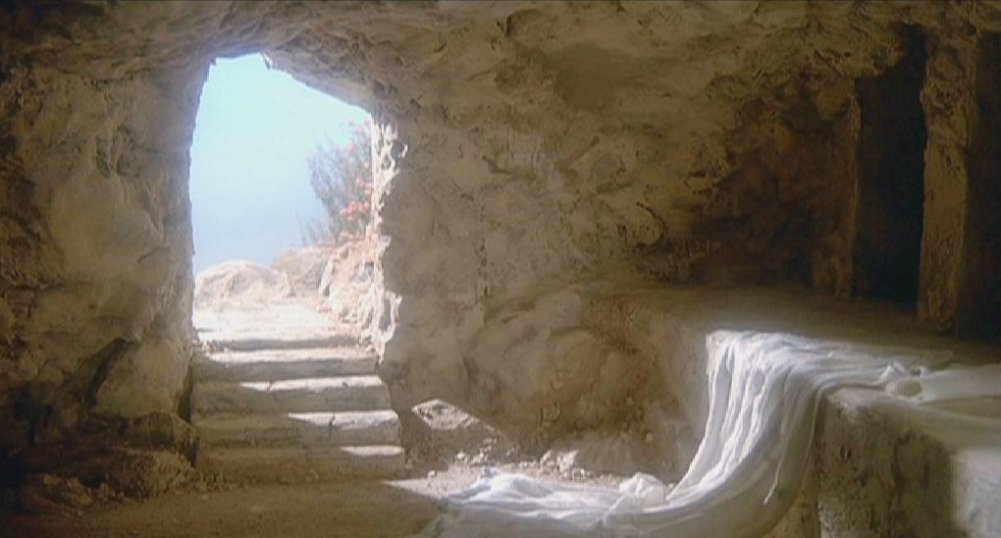 “Christ is risen!” the faithful cry.
 We do not know what to think… and they do not know the Scriptures.
 Today is Palm Sunday, the beginning of Holy Week leading to Easter. It is a grand, serious, and holy drama in our part of the Body of Christ on earth, played out in liturgy, song, and prayer. We tell the story of Jesus the Christ entering Jerusalem to the cry of Hosannas and the strewing of palm branches as he rides on a donkey through the city gates. Our parishes once acted out this holy week with daily liturgies leading to the Triduum, the three days before Easter. Then on Maundy Thursday we celebrated the Last Supper, when Christ gave the Church the gift of himself in the Holy Eucharist. On Good Friday we mourned as Our Lord was crucified on the cross of Golgotha, the “place of the skull.” On Holy Saturday we prepared for Easter and the transformation of the sanctuary from purple shrouds to white lilies on the altar. Easter Eve was often a celebration of the first Easter morning, candles lighting the dark of the nave. Easter Day was resurrection day when children flowered a white wooden cross at the chancel steps.
 And so it was with particular joy that I realized my great grandfather Nicholas Nelson was a devout believer. I have inherited a number of anniversary mementos, silver with “N to C” engraved in swirling cursive letters. The most cherished of these mementos, however, is a plaque designed by Nicholas for Christine for their fiftieth wedding anniversary. He writes in careful printing, framed by leafy tendrils on parchment:
 For as we tell this old story of God incarnate two thousand years ago and His great acts of redemption, we remind ourselves and our world that this is an ongoing, present-day story of God incarnate. Each year we process and wave our palms and sing “All glory, laud and honor/ To thee Redeemer, King! /To whom the lips of children/ Made sweet hosannas ring.” (#61) Each year we act out the drama of His crucifixion and resurrection and His offer of salvation from death, His offer of eternal life to each one of us, His beloved children. Death is no more, conquered by the love of God.
 It has been said that America is a nation of immigrants. Why did they come here? Why do they continue to come?
 My family immigrated from Norway and I have recently been researching some of the details. Each fact carries within it another question, why this, why that, what caused them to leave and come to America?
 Martha Christine (photo to the left) married Nicholas Nelson in Chicago in 1892. Their three children were born in Chicago in the years following. But at some point they left for Denver. Why? Nicholas, like his brother-in-law Ole Gullicksen (see earlier blog), founded a company in Denver.
 I have cobbled this story from bits and pieces and welcome family members’ corrections. As a novelist I am fascinated by human character, the depth and variety of created humanity, no two persons alike. As a Christian novelist I am fascinated by conscience, formed and informed by Christ. When this fiery spirit resides within, it burns brightly and enlightens our decisions. When this spirit is put out or ignored or denied, choices are made in moral darkness, with only concern for the self.
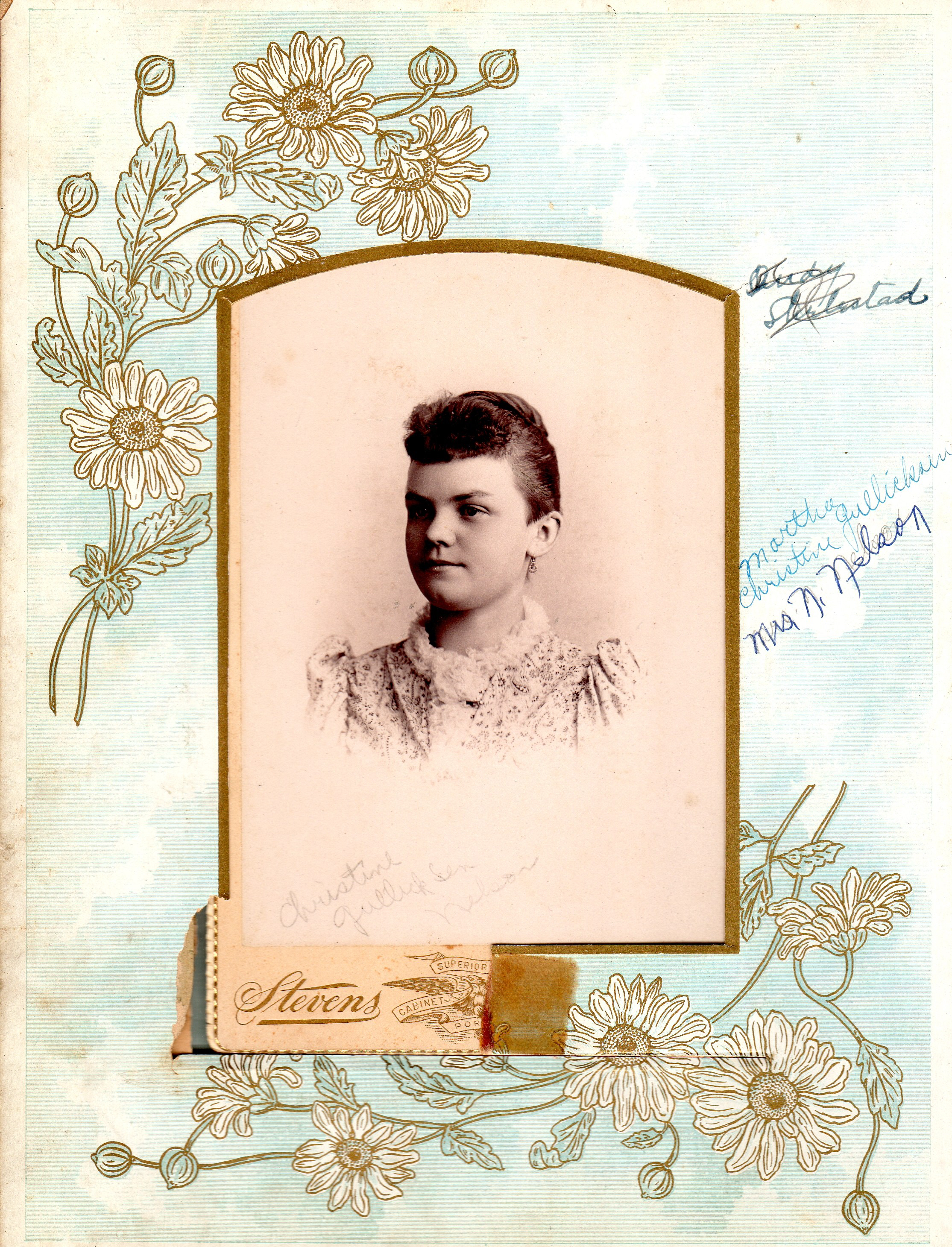 As I was gazing upon some old, framed photos of ancestors on one of my bookshelves and quizzing myself on their names, whether they were the English or Norwegian branch, I noticed some volumes of autobiography near the photo of my great grandmother, Martha Christine (Gullicksen) Nelson. They were slim volumes, about 4” X 6”, hardbound dark blue, and titled Little Masterpieces of Autobiography. The first of four volumes was subtitled Greatest Americans and included Washington, Jefferson, Hamilton, and Lincoln. The volume was edited by George Iles and first published in 1885, but this edition was dated 1925, published by Doubleday, Page and Company in New York. They were part of a collection given to me by my grandmother Helen Christine (Nelson) Martin (1896-1994).
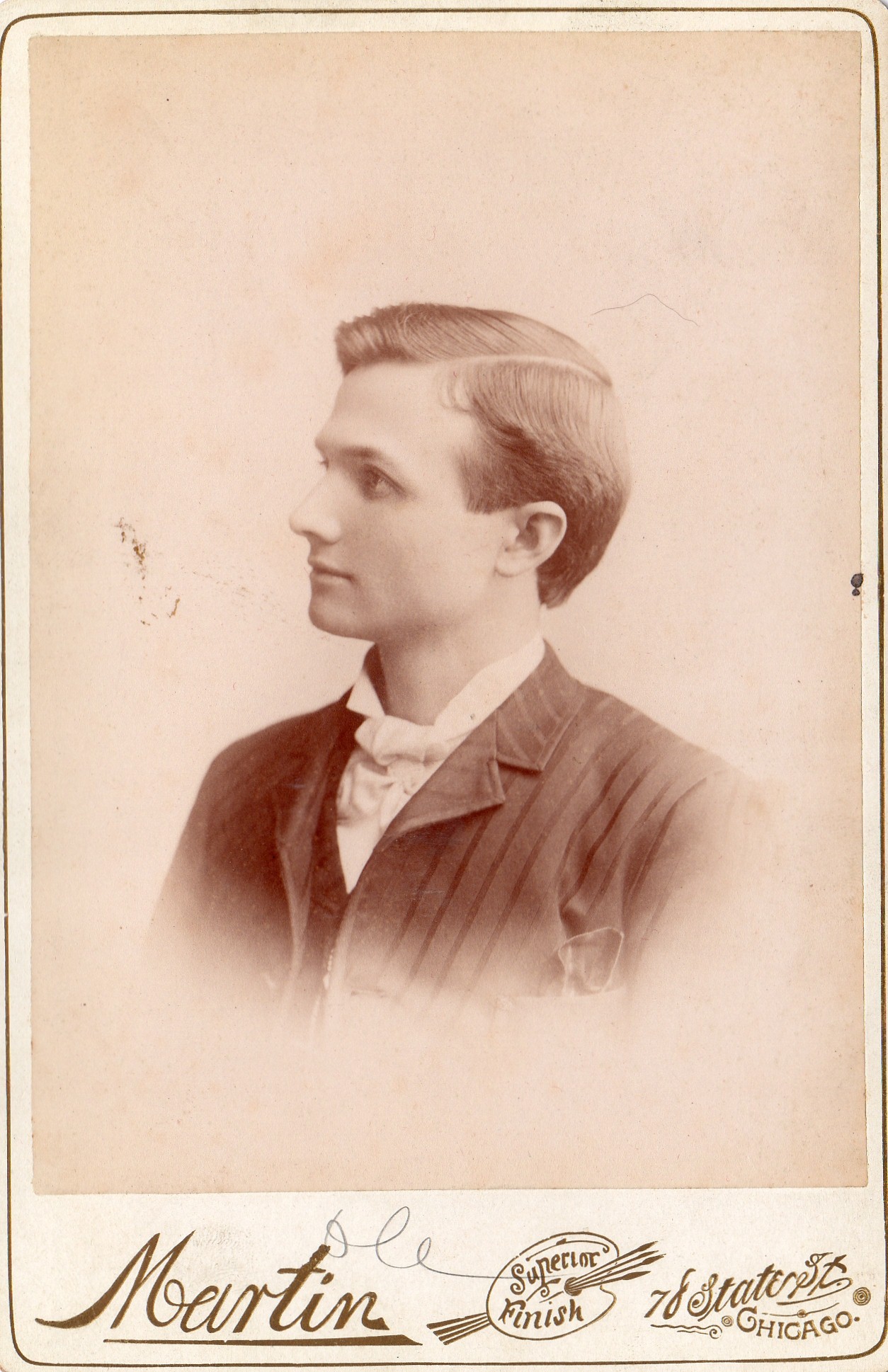 I had heard via family lore that one of these ancestors founded a furniture company in Chicago. I opened an old file where I had placed bits and pieces given to me over the years, notes and jottings penned by my grandmother Helen Christine and my great grandmother, Martha Christine. From these bits I learned that Martha Christine’s brother, Ole Gullicksen (1867-1948), founded the Churchill Cabinet Company in Chicago in 1904.
 Looking at these Norwegians that came before me enriches my life today. I know there are many other strands from other countries that wove together to make me me, and I marvel at God’s intricate and beautiful (if also mysterious) ways. These threads of life continue into the future, and I smiled when I saw that my grandson is attending a college not far from Churchill Street: Wheaton. When I saw Naperville nearby, I recognized it was the location of one of our APCK (Anglican Province of Christ the King) parishes, All Saints.
 In the Gospel reading assigned for today, Our Lord’s words rang especially true: “
 As an Anglican, I have been part of congregations of mixed race and heritage. The Anglican Church, stemming from Britain and her Commonwealth, was and is a universal church, finding its way to Asia, India, Africa, and the Americas. We have members and clergy from all parts of the world. The native culture learned English as well as the Gospel message of salvation, but Bibles were translated into their own language as well. All this continues.
 Christians understand freedom and its importance to practicing their faith of freedom. We have sent missionaries to their martyrdoms for centuries in the name of the faith and in the name of freedom to practice that faith. We understand objective truth and are attuned to slippery lies. We are trained in logic through theology and apologetics (even the Nicene Creed), in language through Holy Scripture, the ultimate Word, and in joy through experience of the holy, the divine, the eternal in sacraments, liturgy, and prayer. We understand the nature of love and its expression, sacrifice. We submit to Love’s demands in the Ten Commandments, the cardinal virtues, the fruits of the spirit, the Beatitudes. Amidst the chaos and suffering of this world, we see a greater good and we look to a greater Love when Christ leads us into the Holy City, the New Jerusalem. We know and grow to fully understand that this life is but a prelude to one of immense joy, but also justice.
 We are told by powerful interests that speech must be controlled. This is not our way. This is not the way of artists, of writers, of painters, of musicians. This is not the way of beauty. This is not the way of celebrating the sanctity of every person made in the image of God.
 It is a curious thing that the most beautiful season in the hills east of San Francisco usually coincides with Lent, a penitential time. The hills surrounding our house are a deep green from February through May, if we have enough rain. By Memorial Day the green grassy slopes dry to a golden brown until next year’s watering.
 In my recently released novel, Angel Mountain, the hermit Abram preaches from the hillside and baptizes in the pond near the white cross. The waterfall pouring into the pond is cold, but the line of penitents grows. Other not so penitent hover on the edges of the crowd, tapping their phones, feeding frenzied social media and calling Abram’s words hate speech. As masked Antifa move toward the hermit, police divert them. Suddenly lightning flashes above the mountain and thunder rumbles. The rain falls, splashing and dispersing the crowd into the day’s darkness.
 Christine Sunderland
