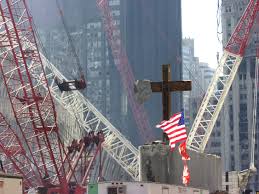
In only a few months Americans have become strangers to one another, divided, masked, fearful, silent, vigilant.
In this election year, this year of a worldwide pandemic, sides have been taken, as though who we are as Americans is no longer our identity. Rather, we are those who scorn and those who fear those who scorn. America’s tears water the earth in grief, the grief of friends now strangers, mourners’ tears mingling with the grief of loneliness.
We have all become strangers, strangled, for we have not been allowed to peaceably assemble. Others—the haters of our country and its history of freedom—have been allowed to assemble, rarely peaceably, but anointed to march and burn and loot, their cause forgotten and buried in slogans and nonspeech growled and grunted, wildebeests slithering to Gomorrah.
We have become strangers, afraid of human touch, human voice, human face. In the face of the faceless a hatred wells within, unquelled, burning, molten. The strangeness of being strangers denies our humanity and erases all that it means to be free, threatening our beloved country, America, land of the free and home of the brave.
We are being erased: mouths and noses erased, voices erased, ears hearing only mindless twitter, hashtagged into group think, mob assent, chattering crows seeking whom to devour, whom to silence, whom to cancel.
There is an evil here, a putrid stream of bile flooding our land with fear, for we may be the next cancellation, the next erasure.
We have been divided by this putrid stream. I wave to you from the riverbank, and you wave back on the opposite shore, silent.
We are masked, and the coverings cover our love. The coverings cover our identities, turning us into copies printed from machines, duplicates. The masks mask our smiles and our frowns, and our words are muffled behind cotton batting and synthetic tissue with elastics binding our ears, ears no longer hearing words cancelled. The masks mask the truth of who we are. In time, we wonder—somewhere deep inside—if we exist at all.
Masked, divided, estranged, strangled. We are in solitary confinement, confined to our shelters, our places, our locked down prisons of space. Our children no longer play in playgrounds, no longer circle, holding hands, less they fall down. Ring around the rosy… atchoo… all fall down.
We fear one another. We fear connecting, embracing. We are vigilant, guarding our six-foot territory, ready to scowl with our eyes, judge the unmasked, fearful of infection bridging our airspace. We are like lepers sent to Molokai, only we self-isolate, governed by the twitters and the violence and the cancellations.
 Some of us search and find, deep within, the light of our own creation, hidden in the Creator. We turn to prayer, joining others on checkerboard screens, inhabiting squares and rectangles, imprisoned by unloving lines, impenetrable borders. Yet we pray together, to our Creator, the one who breathed the breath of life into us as we gulped our first air, as we slipped into the light of His love, leaving behind the dim sheltering womb. We pray to that same Creator of life and love. We pray that we will love one another, still, always, once again.
In these prayers, from these screen squares, we are still, but no longer silent. We pray, hoarsely whispering, voices unused to use, opening our Bibles, Prayer Books, and Hymnals, in the semi-quiet. We pray the prayer the Creator taught us so long ago, Our Father…. We hallow Our Father’s Holy Name, and we pray that His Kingdom comes, that His will be done on Earth as in Heaven, that we not be tempted to hate and cancel and kill one another with words or deeds, or desires of the heart, but that He deliver us from this evil that has no name and no face and no voice. We speak to our Heavenly Father for he loves us, each one of us, and he loves to hear us, to hold our thoughts in his hands, to touch our deepest desires and fiercest fears with his sacred heart. He is our Father and the Church is our Mother and we are cradled by them in this terrible time of tyranny, this masked and faceless time.
 We, the faceless ones, no longer cancelled, enter our screens and speak. We touch one another with our words and prayers, our brothers and sisters, our Family of God. We are no longer alone. We remember, from somewhere distant, almost another country, how to love. We cry our creeds into and onto the screens and our words fly through the Cloud to the altar where the priest holds up the bread and the wine and the bell rings to remind us to adore. From our isolation, our sheltered space, we reach to the stone slab of sacrifice to touch the hem of His garment, for if we touch Him, we will become whole, with true faces. We will be healed.
 Our family, the Church, lives still, holding our nation, this ragtag assembly of rugged Americans, tenderly together in her palms, her manger creche, unmasked. She—America—will not be cancelled, erased, pulled into the vortex of the abyss of silence. She—the Church—America’s founding Mother of all—will sing, and she will speak. She will pray, worship, and adore the Father of all. The Church, and all her children, will rebirth our nation in the wellspring of freedom and dignity, fed by love.
And this too will pass, we are told, and we secretly know this to be true. The terrible tyranny spawned by the virus eating our lungs, the molecules devouring our air, storming our masked faces, spawned by unmasked coughs—or sneezes—this too will pass away when the dragon has eaten his fill, gorging on our bodies and souls. We the unmasked are not really care-less but want to be care-full; we do not want our faces erased with a smothering rectangle papered over our mouths and noses and tied to our ears. We cannot breathe. Our tears have nowhere to go. But this will pass and we will love one another again.
We are left with eyes and ears, like creatures from an another fearful time, blanketed in black, swaddled and wrapped as if owned by another, one who cancels freedoms.
We will not remain masked forever, and we will find that new fears and failures of heart will arise and replace the masks. But in the meantime, in this mean time, this time of meanness, we wave from the other side of the putrid stream bubbling from the volcanic deep. We smile with our eyes and listen with our ears to the muffled cry on the other side of the roiling river. We wave.
Our family, the Church, lives, unmasked and singing. She will not be cancelled or erased or silenced. In the darkest night, in the deepest depth, her children embrace in their prayers together and alone, prayers flying to God the Father, soaring into His Son’s Sacred Heart, meeting one another in all righteousness. We sing as one and as many, glorious sounds of praise, Holy, Holy, Holy, Lord God Almighty, all thy works shall praise thy Name in earth, in sky and sea.
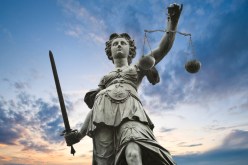 And our nation, America, lives as well, unmasked and singing. She will not be muted. She will not be cancelled. She knows her birthright is born of freedom, is born in truth, borne by the song and dance of time, of past, present, future. She seeks to tell the world again, the old story, the glorious story, that her exceptional, miraculous light still burns on the mountaintop, her light still beckons and protects the huddled masses yearning to breathe free. She embraces her founding, her creation by those created in the Creator’s image, by those who reflect His light and His love for all mankind.

 Congratulations to the ten winners of my recent Goodreads Giveaway! Your books have been ordered. Many thanks to the 1,494 readers who entered for a chance to win a free copy—we hope to have another giveaway in the next year. To be on my direct mailing list for quarterly announcements and updates, please email me: Chris@ChristineSunderland.com.
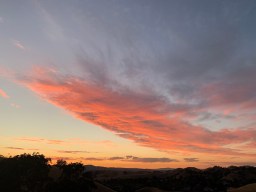 A triple-digit heat wave rolled over our golden hills a few days ago. To open a window or door is to enter an oven.
 My recently released novel, Angel Mountain, speaks of these things, this second coming of Christ and some of these choices that are set before us. Is the world ending? Is the return of the King soon? Our preacher (one of them) said that Jesus Christ will make all things new, that He will reconcile Heaven and Earth, that He will create a new Earth. Come, Lord Jesus, come.
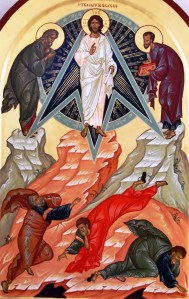 “AND it came to pass about an eight days after these sayings, he took Peter and John and James, and went up into a mountain to pray. And as he prayed, the fashion of his countenance was altered, and his raiment was white and glistering. And, behold, there talked with him two men, which were Moses and Elias: who appeared in glory, and spake of his decease which he should accomplish at Jerusalem. But Peter and they that were with him were heavy with sleep: and when they were awake, they saw his glory, and the two men that stood with him. And it came to pass, as they departed from him, Peter said unto Jesus, Master, it is good for us to be here: and let us make three tabernacles; one for thee, and one for Moses, and one for Elias: not knowing what he said. While he thus spake, there came a cloud, and overshadowed them: and they feared as they entered into the cloud. And there came a voice out of the cloud, saying, This is my beloved Son: hear him. And when the voice was past, Jesus was found alone. And they kept it close, and told no man in those days any of those things which they had seen.”
 My recently released novel, Angel Mountain, is about transfiguration. There are icons in a bright cave that glow with uncreated light. There is the face of a believer transfigured by the joy of faith when he speaks of Christ. There are singers glistering with the melody of hymns and psalms. For all of us are invited into transfiguration. We need only say yes, Lord, transfigure me: let me hear your voice.
 My bishop of blessed memory often said that to love is to suffer. And yet to love is to experience transfiguration inside the suffering, to know joy. It is a curious conundrum, a contradiction, like many in this world of spirit and matter, in this world of Heaven and Earth we do not fully understand. In this world of God the Father, God the Son, and God the Holy Spirit.
 Aside from the riots and burnings, the assault on private and public property, the rise in unemployment, bankruptcies, and closures, the students denied education, the poor becoming poorer, sports with no live fans, performing arts with no live audience, the churches with empty pews, the fear engendered by a strange virus, aside from these minor disruptions to daily life (“Other than that, Mrs. Lincoln, how did you enjoy the theater?”), Americans seem to have downshifted into a simpler mode of existence, which may not be a bad thing altogether.
 Having obliged a number of obligations, particularly in regards to my recently released novel, Angel Mountain, I now have a little time. When this occurs—usually on vacation or other “rest” periods—I assign a bit to memorize, either from the 1928 Anglican Book of Common Prayer or Scripture (usually KJV, more poetic). One can never have too many prayers or verses tucked away in one’s little memory bank. And my memory bank is often depleted and bereft… for I don’t pay attention often enough to this simple challenge. So, it being an election year, and a year of clear attacks on our freedoms, recalling the Marxist playbook, I revisited a prayer in the Service of Morning Prayer, “A Collect for Peace.” I have tried this one before and always struggled for some reason, confusing the phrases in a most frustrating manner. So I am giving it another go and taped the words to the back of my phone (naturally, attached to my palm).
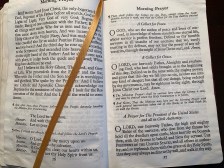 “Defend us thy humble servants in all assaults of our enemies”
 But the question of open/closed doors continues to fascinate me. The church is supposed to be making disciples of all nations. Here we were, suddenly in a place in time where folks in all nations were looking for our open digital doors. I know from the Facebook page we have for our UC Berkeley chapel, St. Joseph’s, we have visitors from all over the world. They especially like the short videos of singing and processions, but the altar and the vertical space and the sense of holiness in our chapel seems to draw many to us, folks we have never met, but longed for something we could offer.
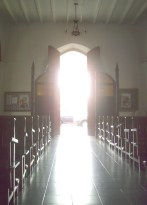 So I am thankful for this remarkable opportunity given to churches to preach the Gospel to all nations from simple screens and keyboards and video cameras, preferably in a physical chancel before a physical altar. I hope more churches do this, and if they have an invitation-only service, that they consider doing a live-streaming as well.
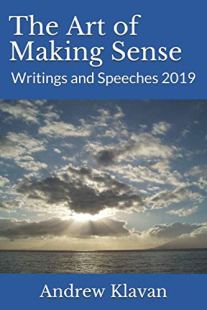 I am reading Andrew Klavan’s The Art of Making Sense, Writings and Speeches 2019. This is not a book about writing to make sense (which I thought at first and probably need), but a book about personal coherency found in a consistency of character, speech, and action. He is speaking of lives that make sense and heroes that make sense, ways of living that make sense. When they don’t make sense, when one part acts in contradiction to another, there is a brokenness, a fissure or fracture of personality. We might call this hypocrisy, for we sense deeply that there is a grand logic to living, to life.

 Christine Sunderland
 Christine Sunderland