Category Archives: Uncategorized

Waking the West

nine-eleven

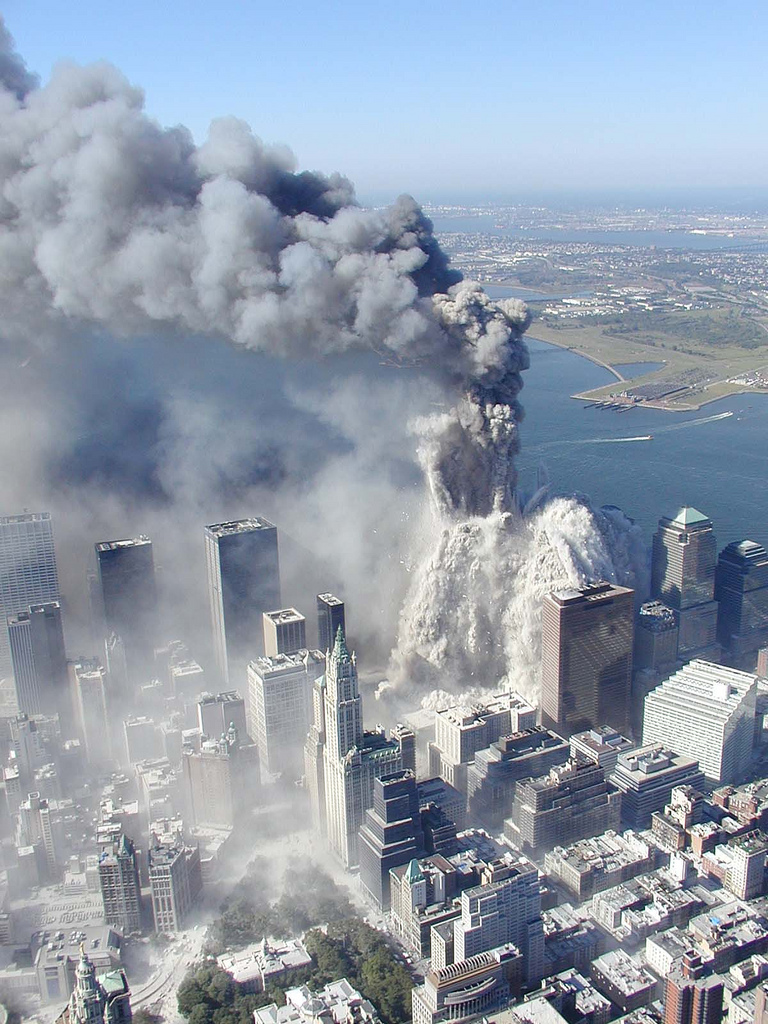
This last week we recalled the September 11, 2001 attacks on American soil. As we mourned our dead and honored our heroes, waves of migrants fleeing oppression flooded into Western Europe. 800,000 men, women, and children are expected in Germany this year. It is a vast humanitarian crisis caused by Western benevolence.

America’s exceptional roots were planted by Christian Europeans, and the saplings, those thirteen colonies, grew strong, while the parent plant, Europe, declined. Europe has retained its own exceptional ideals of freedom, equality under the law, individual rights, and religious liberty. It even from time to time fought for those rights, that way of life Americans and Europeans have taken for granted.

Sometime after World War II, or perhaps earlier, Europe began to count on the protection of their American ally and ensure cradle-to-grave social programs for their citizens.

But America’s eviscerated military has left them (and us) exposed, leaving the Western way of life undefended. Now that we have become more like Europe in our national deficit, burgeoning state, and slashed military, who will protect us?

Bret Stephens writes in the Wall Street Journal how “We wanted a new liberal order – one with a lot of liberalism and not a lot of order. We wanted to be a generous civilization without doing the things required to be a prosperous one… the result is our metastasizing global disorder… openness is a virtue purchased through strength.” Every parent knows how painful yet necessary it is to practice “tough love.” Benevolence is not always good and often harmful.

Waves of desperate people are fleeing their homelands in the east. They are entering Hungary, Austria, and Germany; they are circling through Iceland and into Oslo. They are fleeing persecution, war, and poverty, looking for a better life. Peggy Noonan quotes the U.N. refugee agency when she says that they are coming from Syria, Afghanistan, Eritrea, Pakistan, Nigeria, Iraq, and Somalia. The majority are Muslim men.

Walter Russell Mead, professor at Bard College, writes in the WSJ of a “Crisis of Two Civilizations,” claiming that the Islamic worlds have tried and failed to create a workable society, so that the victims of the resulting tyrannies are fleeing into what they see as a prosperous and safe Western civilization. But the West no longer knows who it is or where it is going.

The Goths that crossed the Danube and conquered the Roman Empire didn’t find much resistance for the same reason. The Romans had become effete with a weak military. They didn’t know who they were or what to preserve and defend or why.

Professor Mead describes the crisis in Europe and the West:

Increasingly, the contemporary version of Enlightenment liberalism sees itself as fundamentally opposed to the religious, political, and economic foundations of Western society. Liberal values such as free expression, individual self-determination, and a broad array of human rights have become detached in the minds of many from the institutional and civilizational context that shaped them… Too many people in the West interpret pluralism and tolerance in ways that forbid or unrealistically constrain the active defense of these values against illiberal states like Russia or illiberal movements like radical Islam. (italics mine)

The Western world has a right to defend itself, its ideals and way of life, with military might. If nothing else, we must keep that defense at the ready, simply to assure the balance of power and peace in the world. American withdrawal from the mid-eastern theater in the last eight years has been a key factor in this current humanitarian crisis. We share the guilt with European governments who shy away from their own defense.

As we remember the Trade Center bombings, the Pentagon attack, and the plane crashing in the Pennsylvania field, those tragic attacks on American soil, we must face the unwelcome fact that the world has become less safe with all of our benevolence. It may be too late to teach our children the roots of freedom, so that they understand who they are and what they must defend, but we must renew our efforts. 

We must encourage policies that ensure prosperity, capitalistic policies that grow the economy, so that we can afford a strong military that will keep the peace with its presence. Some experts say it is too late for Europe to wake up from their dream and rally a defense. Is it too late for America? The answer lies in the next election.

nine-eleven cross

Fair and Free

justice statue

U.C. Berkeley recently unveiled a program to give greater preferment to African-Americans for admittance and for hiring of faculty, citing the Ferguson, Missouri unrest as a reason.

There is, to be sure, an innate human desire for fairness, treating everyone equal. We speak of being “equal under the law,” that regardless of race, religion, and gender we will be treated equally. Whether your hair is pink or blue, your skin is spotted or smooth, you are obese or anorexic, you are young or old, rich or poor, woman or man or something else, dwarf or giant, you will be treated equally (with the exception, of course, of the unborn).

We are wired to demand fairness, even if we are not always successful in our practice of fairness. From age seven, children say, “That’s not fair!” A sense of justice (often without mercy) flowers in childhood. We are born with the idea of fairness.

History is the story, in many ways, of peoples who believed they, or others, were unfairly treated, who demanded fairness through whatever means available – letters to the editor, peaceful protest, less peaceful protest, riots, revolutions. Always, there is the righteous belief that they are right and are seeking “justice.” God is on their side, and if they don’t believe in God, then a residue of Godly fairness inspires them.

After all, we have been made in our Maker’s image. We reflect his great love for us in our desire to love and be loved. We reflect his reason in our belief that we can reason things out, make sense. We reflect his justice with our own deeply held certainty that things should be fair. And lastly we reflect his mercy when we forgive our enemies, when we make amends, when we work to create justice for all, fair play for everyone, when we love one another.

But how do you right wrongs of the past? Christians do so by confessing and forgiving. “Forgive us our trespasses as we forgive those who trespass against us.” We are sorry, we say to our God, we will change, repent. Then we move on, guilt-free to soar as a bird, at peace with ourselves and our neighbors, and with our God.

But what happens with a secular society with historical wrongs like slavery, when we do not believe in a God who will forge a peace between us, who will absolve us? How and when is national guilt forgiven? How long must the culture pay, make amends, before it turns in upon itself? How many reparations, how many preferments in education and employment, how many times must Lady Justice excuse crimes she would not excuse for others? She should be blind, weighing only the evidence.

There comes a time when these affirmative actions become divisive and racist, undoing all they were meant to do, turning upon the majority, and increasing alienation. There comes a time when these actions actually hinder integration.

A nation cannot be absolved by a priest or God. It cannot be forgiven its trespasses as a person can. A nation is left at the mercy of the aggrieved, where and when that group sees the opportunity to extort payment for their grievance. And in the process other minorities watch the rioting and the looting and the burning of their town and country. They become the aggrieved, a recipe for revolution.

It is time to honor fairness to all, a time when the reparations of slavery have put paid to the debt owed. We would hope, as citizens, that our government would sense that time is now and stand strong. We would hope that our educational institutions would as well, that they would honor each student, each admissions or faculty applicant equally, not by race, religion or gender, but by merit.

I was not born with a silver spoon, or a silver anything. I was born into the modest home of a pastor relying on the income from his church and their kindnesses. I never felt aggrieved with my economic status. I worked my way through college and couldn’t afford grad school so got an office job to pay the rent. I’m not saying I wasn’t envious of those who had it easier, but came to see that life wasn’t always fair. I counted my blessings, for, as my mother often reminded me, I had ten fingers and ten toes, two arms and two legs, wasn’t deaf or blind, and was pretty good at jumping rope and reading. So I just needed to do my best and that was good enough.

Sometimes I hear people speak of betrayal or greed or mistreatment and they end with the comment, “It’s just so unfair.” I have known all these things, again and again, and it is indeed unfair. By God’s standard, by our own standards, it isn’t fair. But God is the judge, and I’m glad of that, for he will judge me too.

Ever since Eve ate that forbidden fruit, mankind has acted unfairly, often without mercy. And so God destroyed the Tower of Babel, sent a great flood, and finally, in his mercy, called Abraham out of Ur to be the father of a great nation that would number as the stars. He gave Moses specific commandments to obey. He chose a people who wrestled with him and his challenges, with his justice and his mercy. At last, after all this loving preparation, he send the promised messiah, the Christ, his Son, Emmanuel, God-with-us. This Jesus of Nazareth walked among us, showing by his life, death, and resurrection how we are to love one another, how we are to be just and merciful and fair. He gave us a way forward with his words, his life, and his death, to heal the brokenness, the unfairness, the mercilessness. He gave us a way forward to union with his Father – through his body, the Church.

A Western tradition blossomed from this creed. It struggled with how to be fair in an unfair world, among people who loved imperfectly. The tradition of Judeo-Christian fairness enshrined in common law and courts was formed under monarchies. It birthed democracies. It formed the Western Canon, the foundation of higher education, so that the next generation, our future rulers, our best and brightest, would understand fairness and its child, freedom.

And so today we try to protect this great legacy. Fairness and freedom are ideals, imperfect, but vitally important to our nation and the West. It aggrieves me to see government bow to the extortion of the aggrieved, often for political reasons. Thomas Sowell of Stanford’s Hoover Institution recently called it giving in to bullies:

“No small part of the internal degeneration of American society has been a result of supposedly responsible officials caving in to whatever group is currently in vogue, and allowing them to trample on everyone else’s rights… Politicians who exempt from the law certain groups who have been chosen as mascots undermine the basis for a decent society… The goal of ‘the rule of law and not of men’ has increasingly been abandoned in favor of government picking winners and losers… a path that demoralizes a society, and leads to either a war of each against all or to a backlash of repression and revenge.”

Life is not fair. We must support a “rule of law and not of men” (John Adams). In this election year, it is good to keep this in mind.

Heroes on a Train to Paris

flagAs news came of the heroic actions of three Americans aboard an Amsterdam-Paris train last week, many voiced admiration and relief that yes, heroes still exist in today’s world. Granted two of the men were off-duty military. Still, civilians also braved the danger, risking their lives. We are proud to be Americans once again, proud to do the right thing at the right time, proud to be heroic, risking all. We wonder if, after all, virtue does exist and might even be alive and breathing. Virtue might even be something we should teach our children. Are ideals making a comeback?

Perhaps the antihero of the last fifty years is not such a wise role model.

The antihero has formed today’s sensibilities through the arts, literature, and media. In real life he has banded together with other antiheroes to form collectives, grievance groups quick to take offense and to demand entitlements. In stories, these characters are often morose, turned inward, bored with life, and anti-authority on principle. They are narcissistic, nihilistic, without direction. They do not possess moral qualities once called “virtues.” These victims blame the system and society, never themselves. Publishers have promoted the antihero, finding readers desiring validation.

The intent to produce and market antiheroes is actually a noble one, ironically, even perhaps a heroic one, encouraging one to empathize with the least in our society – those hurt by race, crime, drugs, divorce, poverty. We want our children to care (and rightly),  but we give them dark novels with stories of rape, incest, and pederasty. In time, literature’s antiheroes, instead of becoming nobler and overcoming adversity, became darker, more ignoble. Novels must increase the terror and degradation, so that sexual sadism and violence towards women spans fifty shades of grey, with relative degrees of darkness, legitimizing the prurient experience.

Without ideals, standards of virtue, even right and wrong, the bar of civilized culture plummets. Civilization fragments and spills into a bestial world we call barbarism.

I was thinking about heroes and their welcome return to the public square when I came across Bret Stephens’ lovely column this week in the Wall Street Journal, “The Gifts of a Teacher.” In this tribute to Mrs. Amy Kass, his Literature professor at the University of Chicago, he describes how we have too many choices in our modern world. Mrs. Kass could see this and saw her vocation as one giving structure and direction to the chaos of those choices. In the past society supplemented law, adding morality, manners, and tradition. Today, we have no such rules, or few of them, so that students in those formative years of schooling that should move them from adolescence into adulthood often flail about undirected.

It was Mrs. Kass’s role to provide a framework of living through the great stories of an earlier time. As Mr. Stephens writes, “Jane Austen still offers the best advice on dating. Aristotle still has the last word on friendship.” The stories considered how to ennoble life, what and how to dream, how to grow a great heart and soul. Simply pondering how others answered, “What is the good life?”, a question I recall from my own two years of Western Civilization, is a start.

We need to train our children to be heroes in all walks of life, to be self-sacrificial rather than self-aggrandizing. We used to do this, assuming it was a necessary education for adulthood. Perhaps we should return to the old ways.

There is a morning prayer in our Anglican Book of Common Prayer that speaks of God’s service as “perfect freedom.” God gives us rules, a framework in which to live. He provides a recipe for happiness, rules for the road as it were. When we serve him we follow those rules, or try to. Once we learn the rules (like riding a bike perhaps) we have plenty of freedom, many choices within the frame of God’s law (we can ride all over the place). That is what we call free will: God… whose service is perfect freedom.

Just so, a culture (through government, schools, churches, temples), to survive, must provide a framework of ideals in which we can live our best lives, pursue our greatest happiness. Mr. Stephens describes the problem of choices without limit:

“We can satisfy our desires, but we have trouble recognizing our longings. We can do as we please but find it difficult to figure out what truly pleases us, or what we really ought to do. Limitless choice dissipates the possibility of fully realizing the choices we make, whether in our careers or communities or marriages. There’s always the chance that something (or someplace, or someone) better is lurking around the corner.”

The heroes on the train knew immediately what they needed to do and they did it. I pray that America’s teachers embrace the honorable and heroic role with which they are entrusted, just as Mrs. Kass did, giving students a framework for figuring out life, how to choose what’s right and what’s wrong, what to do and what not to do, when and where. Such an education will put our culture back on track.

Thank you, Mrs. Kass, and thank you, Mr. Stephens. Thank you, National Guard Specialist Alek Skarlatos, Airman First Class Spencer Stone, and Mr. Anthony Sadler. It is good to remember who we are and who we can become.

Inside Story

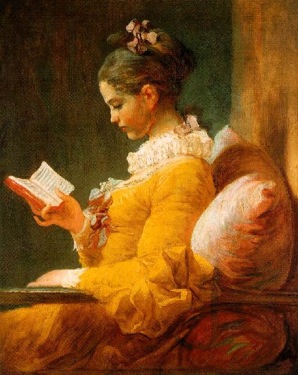
young-woman-readingPerhaps it is the border between summer and fall, those dangling days at August’s end and September’s beginning, that brings to mind the way we crossover, emigrate into a story as we turn the pages or swipe a screen.

A story invites us to cross a border and enter a magical mystical land, a promising, tantalizing world worthy of exploration and delight. It is a private estate, a personal place, intimate, shared at most with one other voice – the author, maybe also a reader reading aloud. A good story creates what John Gardner called “a vivid and continuous dream.” Novelists are urged by their coaches, instructors, and mentors to avoid at all costs waking the reader, pulling her to the surface of the dream. We want to draw her deeper and deeper into the dream of story, into its heart, to feel its heartbeat.

Those who write stories (authors), those who make those stories available (publishers), and those who promote those stories (critics, media), control our culture. So in the twentieth century, in the postwar euphoria of peace and the explosion of pharmaceuticals, with the resulting sexual revolution and its triumph of narcissism over sacrificial love, stories embraced the worldview of self, filling the vacuum left with the fading of faith and the dilution of belief.

Such despair lived in earlier fiction to be sure, but postwar peace and rising living standards pushed the need for God to the boundaries of our culture, banning religion in art and academia. Somewhere in the sixties and seventies Christians lost the culture, primarily, it appears, because they lost their creative voice in the public square. Christians no longer offered “a vivid and continuous dream,” a hopeful story for the present day. The dream had been replaced by a nightmare or, at the least, sleeplessness haunted by ghouls.

Today memories of that good dream are (almost) only memories. Even so, it is never too late to redeem the time, to recognize story’s power. For in a story, particularly one set in the present, we can create a dream not only vivid and continuous, but one we can breathe life into. And only when Christian story writers – novelists for the most part – return, crossing the border into our culture and bringing with them the culture’s rightful inheritance, its faith-full characters and plots of hope, only then, will our public square sing once again.

And so as I watch Christian faith and practice pushed to the borders of society by an overweening Supreme Court or other misguided fiat, I see a clear and present danger to churches and their related institutions (hospitals and schools) as faith is expelled from the public square. It is a world that countenances the selling of baby parts, that traffics in pornography, that is drugged by violence and sexual deviancy. It is a world that silences speech and poisons academia. It is a world that pushes propaganda.

Let us embrace stories of hope, stories that remind us of the definitions of love, marriage, and family, of our humanity, of who we are as creatures of the Creator. Let’s encourage authors to create heroes who challenge us to be brave and selfless, characters we can emulate, and character we can demand from our leaders. Let us call lies lies and truth true when we see and hear them. In such stories we can live for a time, waking from the dream as better men and women, people with a clearer vision.

As Christian writers, let us infuse the goodness and love of Christ into our culture. Let us rebirth our world, through story’s power. Today, we are nearly aliens in our own land, nearing the borders.  It’s not too late for publishers and promoters to lead us back into our nation’s heart. Authors cannot do this alone. All we can do is create the dream, the vivid and continuous dream of heaven, and invite readers in, one at a time, into the magical mystical land of story to turn the page or swipe the screen, to dwell happily for a time.

Civilizing Civilization

booksThis last week I packaged my latest version of The Fire Trail, my sixth novel, and put it in the mail to one of several publishers. It felt like sending a child out into the great wide world. 

Much of my work has revolved around the idea of truth, how we find it, how we recognize it, how we know it’s opposite, falsity. And so the search for what is real and true is a theme of The Fire Trail. It is a search that many have made before me, explorations recorded in the literature of mankind, going back to the first scrolls. 

The mind of man has long journeyed into and through the great questions: What is right and what is wrong? What is love? What is goodness and beauty? How do we live together peaceably, respecting one another’s right to life, liberty, and the pursuit of happiness? We call the result, our effort at creating a civilized culture, a civilization. We have come to realize that man is not born civil or civilized, but must be taught and trained and encouraged in the art of selfless love for his neighbor. He must proffer this hope to his world, offer a way forward. 

With the ebbing of religious faith and thus the ebbing of hope in a future, a tsunami of despair has flooded our culture. We are doomed, many say. So it was with great satisfaction that I noticed this last week several optimists, those hope-sayers, who countered the pessimists, those doomsayers. 

Lord Lawson, Chairman of the Global Warming Foundation, writes encouragingly in his recent review in the Wall Street Journal of Ronald Bailey’s The End of Doom: Environmental Renewal in the Twenty-First Century. He describes Mr. Bailey’s list of current scares: overpopulation, the end of natural resources, global warming, genetic modification. Mr. Bailey challenges such scares by pointing out that global living standards are higher than ever and population trends will actually be reversing; genetically modified grain (a GMO), produced by a better breeding technique, feeds the hungry worldwide; fossil fuels are far better for the poor than wood fires, and the contribution to climate change minimal. These visions of hope have triumphed, he notes, because of free market capitalism. 

Matt Ridley, author of The Rational Optimist: How Prosperity Evolves, weighs in with “The Green Scare Problem” (Wall Street Journal): “Making dire predictions is what environmental groups do for a living… they exaggerate… Pesticides were not causing a cancer epidemic…, acid rain was not devastating German forests…, the ozone hole was not making rabbits and salmon blind.” Remedies for scares can be costly and lethal, particularly in regards to GMOs, climate change, and nuclear power, the current fears. 

The truth is that mankind throughout the Western tradition has been inspired and driven to solve problems as they arise. We have used our minds to help one another live better lives, to survive poverty and cure disease. The fears of doomsayers Paul Ehrlich (over-population) and Al Gore (global warming) are without substance and even harmful with their necessary policies, especially hurting the world’s poor. We have every reason to believe that we may be hopeful about the future, not only of the planet, but of human survival. 

That is, if we continue to be inspired and driven to solve problems, if we continue to search for truth and recognize it when we see and hear it, if we continue to teach the rich tapestry of the history of the Western world to the next generation, that tradition of civilizing inquiry. But with the loss of this “civil” education in high schools and colleges, we may have every reason for unease. With the loss of religious faith – and mystery and wonder – we may have reason to lose faith in mankind. We must equip the next generation with what works and what doesn’t (history) and with inspiration to create (the arts). 

John Agresto writes in the Journal about “The Suicide of the Liberal Arts.” While he recognizes the value of an education that will train the student for the workplace, he believes the student must also be trained to think, to ponder the meaning of life, the pursuit of truth, the definitions of beauty and goodness. The classic liberal arts curricula aimed to do this, to inspire us and “teach us how to marvel.” And when we marvel, we admit we are less than marvel-ous, we are not gods, that we have something to reach for outside ourselves. We become creative. We use our minds to help others. Mr. Agresto writes: 

“Some (literature) holds up mirrors labeled ‘courage’ or ‘friendship’ or ‘smallness of soul’ to see if we can see ourselves there… books… can show us and lead us to examine creativity and desire, love and treachery, giddiness and joy, hope and fear, and facing death… (we) ponder law and justice, the nature of innocence and causes of moral culpability, forms of government and the ordering of societies that can preserve and refine our civilization.”

And so as I handed my weighty manuscript, sleeping in its slick Priority envelope, to the postal clerk, I said goodbye and wished it well. I prayed it would find a home, that it would be midwifed into the world of readers, birthed onto white pages or tablet screens. I prayed that my little novel, a (suspenseful) love story set in Berkeley in September 2014, would be my small offering to our culture of despair, a way forward on a path to a more civilized society, one of truth, beauty, and goodness, and one of safety and sanity.

I prayed that we keep well tended that fire trail protecting civilization from the wilderness.

A Dry Season

hills2It’s a dry season here in the Bay Area. Brown hills holding their gnarly oaks roll east from the Pacific toward the Sierras. “We need rain,” a friend said. “As always,” I said. “Tahoe was down fifteen feet,” someone else told me. “No snow pack I guess,” I lamented.

Man has always battled the natural world, has always been subject to “Mother Nature,” a fickle mother. When we are dry, she doesn’t always give us rain, and we have learned to store water in great basins carved from our mountains and valleys. We do not want to be prodigal with the gift of rain; we must ration it for the future.

And as Joseph instructed the Egyptian pharaoh, we build storehouses for our grain. We use our intellect to breed better crops to feed not just ourselves, but the world. We invent better machinery to deliver food from farm to table. But even so, we can’t control the weather. We still do rain dances; we pray and plan in the full years to be ready for the lean ones. We have savings accounts, or wish we had. We buy insurance or wish we had. “A penny saved is a penny earned.” “See a penny, pick it up, and all the day you’ll have good luck.”

We are little people doing battle with the the great universe. And yet we have these huge egos, believing we can fly close to the sun with waxen wings. We are the boy David facing the cosmic Goliath with a sling and a stone. We are full of hubris, pride that goes before the fall, the Greek nemesis. We want to be our own gods. We do not see our wings melting.

I sometimes wonder how these great contrasts between reality and unreality, between who we are and who we imagine we are, live together in our souls. I suppose such pride can be good, for it propels us forward, encourages us to create as God creates, drives us to better our world and its peoples using a mind that reflects God’s own, made in his image. Somewhere deep inside, beyond politically correct and cool and longing for acceptance, we want to be good and true. There is a kernel of humility in each of us, a mustard seed that we want to water to grow to be fully good.

Christians explain this dynamic between good and evil, humility and pride by pointing to our innate goodness having come from our very creation, being made in God’s image, birthed by his love. We point to our sinfulness – our desire to disobey God – as having come from our fallen nature. Somewhere deep within our human beginnings, deep within the garden we call Eden, so long ago, we made a wrong turn, and that turn led to other wrong turns, which led to others.

The saints are those who try to correct those wrong turns, those who try to re-turn onto the right path. We want to learn from them for they know the way, opening themselves to God through prayer and sacrament. They scour their hearts through confession and repentance, re-turning. They prepare a place for God to live, to dwell within. We tell the stories of the saints to one another and to our children. We tell of saints from the past and the present, yes even some who live among us, so that we might touch the hem of their garment, so that we might learn how to re-turn onto the right path as they have done.

As Christians, we have a way, a path out of the jungle into the light into God himself. When we are thirsty, we have sacramental fountains and scriptural rivers of water and life that make sense of all the dry seasons. We store our water and grain in the heart of the Church, so that we will not thirst or hunger.

We have a way forward as we move among one another, healing and loving as God heals and loves, allowing him to work in and through us. So that the natural world – with its storms or lack of storms, with its heat and its cold, with its lions that devour and bears that maul – is set in perspective. It is a good world, but a not-always-friendly world. Yet its goodness lies at the heart of each seed sprouting to the light. We know this is true. So it is good for us to use our talents as best we can to be good caretakers, producing foods and storing water for a hungry and thirsty world.

We are in the dry season. Fall is coming soon. The leaves will die and turn and drop to the earth in glorious color. We too will die and turn and drop to the earth, our ashen flesh becoming dust, our souls bursting in their own glorious color as they wing to the light. We watch and we pray and we give thanks for it all, for the goodness of even the dry times, for the harvest of God is always plentiful.

The Road Taken

american-flag-2a2So much depends on the road taken, or not taken. 

The last I read that there were twenty-two Republican candidates for president and two Democrats. The year should prove interesting. Let the debates begin. 

And now that the Supreme Court has clearly usurped the legislative function of government in Obergefell v. Hodges, and our future president may appoint judges to this august bench, the election is one that will change the course of our nation for good or ill. 

It is a time to pay attention, and for voters to consider who will keep our country free, who will protect our people from international and domestic terrorists, who will protect the individual from the state and individuals from each other. Who best will honor American ideals, those perfect standards, those road signs that show us our destination, where we want to go, who we want to be, and the road we must take to get there? 

So much depends on the rule of law, our attitude toward that great body of do’s and don’ts codified and built upon past law. Do we respect the commands of government, the demands of the commons for the common good? Do we respect those who enforce those laws: police and courts, juries and justices, attorneys and jailers? Without common law, and without respect for its ordering and its enforcers, we have no future. Without equality under that law, the law that we the people have legislated, we will collapse from within. Like a rotting apple in a barrel, the cancer of lawlessness will spread and devour us. 

So much depends on our care for the poor, those poor in spirit or flesh, our neighbors in city and country. We are called to look after the least of these, for they are a part of our national body, our e pluribus unum, for from many we are one. We must care for each other by supporting those institutions that build hospitals and schools, that open soup kitchens, those saintly groups that brave inner cities to kiss lepers and teach children and bind wounds of the brokenhearted. Government cannot do these things. Churches and temples, and perhaps other private charities, enterprises of love, can best do these things. 

So much depends on integrity, an integral term rarely used today and nearly forgotten. Integrity comes from the Latin integretas, meaning soundness, wholeness, blamelessness, the quality of practicing what one preaches so that one is integrated, without and within. Actions match words. Integers are whole numbers, and integrity is wholeness, wholesomeness, health. Of course no one is perfect in word or deed, but some care more about trying to live lives of integrity than others. They see the ideal, the road that must be taken to get there, the goal for which we must strive. They pay attention to their conscience. They recognize corruption; they can see it taking root like a fast-growing weed. 

So much depends on natural law, that ancient communal sense of right and wrong governing marriage, family, and children, the unborn and the aged, euthanasia and slavery. Civilizations have known the rights and wrongs of how to get along. They have sensed that certain ways, or paths, are better than others to survive as a species, our humanity considered precious. They have been concerned to identify how such ways affect the common good, affect the human heart, affect the conscience. 

Someone once said that the first time a person steals he feels guilty. The second time he steals he finds an excuse to rationalize the theft; the guilt is lessened. The third time he steals, he feels no guilt. His heart has become inured, hardened and his humanity lessened. Perhaps this is reflected in the recent video of the woman discussing the sale of baby body parts while eating a salad. It is all too easy to no longer react humanely to acts of horror. It is all too easy to be proud of what had once been unthinkable. It is all too easy to send the undesirables to a concentration camp. It is all too easy to dismember babies in utero. 

The presidential debates, one of the glories of our democracy, will show us ourselves, who we are and where we should go. We may glimpse integrity or we may see only bravado and corruption. Where we go from here will make a difference in our lives, in the life of every one of us. Let’s pay attention to our candidates, what they say, how they say it, and the ideals they embody. 

So much depends on the road taken.

Celebrating the Seasons

Holy_TrinityI love the Church Year, the seasons of our faith moving from Advent through Trinity,  traveling from December into next year’s November. The story of Christ – birth, death, and life – is reflected in the nine seasons or “tides”: Advent, Christmas, Epiphany, Pre-Lent, Lent, Easter, Ascension, Pentecost, and Trinity. Colors are assigned to these times: purple, white, green, purple, purple, white, red, green.

So when we sing the song in Sunday School with the children, “Advent Tells Us Christ is Near,” I am especially happy, for in the verses we summarize our faith, what God did and does for us, out of his great love.

Songs are poetry set to music, two arts entwined. And poetry is man’s way of expressing truth. Christian truths can never be celebrated enough: that our lives are important, that they have meaning and purpose and direction, that God exists and loves each of us, that he has provided a pathway for us to be with him in eternal glory.

Living the Church Year within the Church gives our faith richness and depth and allows these truths to intersect our real lives, day to day, week to week. We are now in the long green Trinity season, that time that stretches from Trinity Sunday in June to the First Sunday in Advent in December. It is a green season for it is a quiet growing time in the faith, celebrating the parables and healings and miracles of Our Lord as he walked among us.

In Advent we prepare for Christmas, the glorious celebration of the Incarnation. In Epiphany we celebrate the epiphany of Christ, his manifestation or revealing to the world with the visit of the three kings, the wise men, to worship him. In Lent we prepare for Easter, the glorious celebration of the Resurrection of Our Lord. Soon we celebrate his Ascension and the coming of the Holy Ghost upon the disciples, or Pentecost Sunday. Trinity follows soon after, bracketing this seven month life history of the Son of God, and sending us into the green seasons of summer and fall.

Living out the Church Year brings God into our everyday lives so that he truly inhabits our time alongside us. When we are betrayed, slandered, accused falsely, or whatever hurt we may be feeling, whatever abuse or disappointment, we have this ultimate standard of truth to hold onto, Christ himself. And that truth holds us up and keeps us from falling in our journey. And best of all, that truth is love without limits, a God with a sacred heart full of divine mercy.

As Christians, we travel through the Church Year, enriched and protected by the life and love of Christ intersecting our own lives and loves, and so we must in turn enrich our world with these true intersections. It is easy to hold on to our faithful truths, to keep them for ourselves, our own parish, but the light under the bushel will go out without air to breathe. As our world draws away from truth of any kind, and in so doing denies true love as well, we must be the beacon on the hill, the guiding star. We must share this intersection of the eternal in time with our world, our nation, our communities.

As the children sang and raised their arms in joy, as they twirled and clapped and grinned, I realized how simple it all really is to share eternity with time. All I need do is be faithful in prayer, scripture, and sacrament. The road may not always be painless – suffering is a part of love – but it will always end in joy.

So, “Last of all we humbly sing/Glory to our God and King/Glory to the one in three/On the Feast of Trinity.”

Flying High

birdSitting in our backyard recently, sipping after-dinner tea and gazing at the pale sky that settles over our golden California hills on a summer evening, I watched a white bird leave the top of an oak and pause in midair, fluttering his wings. He was “treading” air, as one treads water, in a sense, stationary. He resumed his flight but soon paused again, fluttering his whiteness into the soft light. 

Two or three of these birds visit each year, on the way to somewhere, from somewhere. The flying stuns me, and I marvel at God’s creation, so delicate, so powerful, so smart. We had a cockatiel once that lived a good deal of her life on my shoulder, grooming my ear and stroking my hair with her beak. To see such feathers and eyes and beak, close up is to see our Creator, to see his loving genius, his useful and intelligent beauty. My cat, with her white ruff and black back, her twitching ears and whiskers, her pink nose, her claws protruding from perfect pink pads, is another vision of God’s remarkable creation, the detailed complexity of life. (I’m not so happy with the  house ants I battle in these dry months, so I admit being selective in my love, but even ants have their intricacies.) 

Dorothy L. Sayers wrote of the artist as creator in the same way that God is creator. We have minds that reflect our Maker. Our imaginations fly into new realms, pausing to flutter in the air, creating as God creates every second. To see a newborn is to see God’s beauty and goodness. To feel the kick of a child in the womb is to be a part of the miracle of life, a unique and wondrous collection of cells housing a unique and wondrous soul, one born of God’s own fluttering white vision. How precious we are, each and every one of us, from womb to grave, and how loved we are by he who breathed life into us. 

Someone wrote that we have within us entire ecosystems, and doctors know this as do nurses and others who work with our bodies. The complexity within is staggering in its constant changing, growing, dying, healing. 

Edward Rothstein in his Wall Street Journal review of Philip T. Hoffman’s new book, Why Did Europe Conquer the World, profoundly answers the title’s question. While it is true, as Mr. Hoffman argues, that the West conquered more than 84% of the world because of better weapons, it might be more useful and accurate to consider why they had better weapons and why they wanted to conquer in the first place: 

“Building a better gun requires a grasp of physical principles and a certain flexibility of mind – being able to apply those principles in new ways. Innovation is thus in part a scientific enterprise and a product of the same impulses that shaped the Western Renaissance… explorations… were not undertaken just to attain power and riches; they reflected a desire to illuminate the unknown, to comprehend the universe and map its qualities, to discover not just novelties but fundamental principles.” 

Explorations require innovations. Innovations lead to explorations. The New Horizon spacecraft is presently exploring Pluto and our Solar System. Did we send this craft on its long journey in order to attain power and riches? Perhaps gain does underlie our desire. But more powerful is the impulse, the need, even the compulsion, to explore and map and understand who we are as creatures and the world – the universe – in which we find ourselves living. “We are a species of explorers,” said string theorist Brian Greene, professor of physics at Columbia. “What gets us fired up are unexplored lands…” And of course those new lands are within and without, in language and art as well as geography. Those new lands include interior worlds, sensory worlds, all we think and all we feel and all we sense. We want to explore them all. 

I agree with Mr. Rothstein and Dr. Greene, but I would go further. Why do we explore? Why do we innovate? Where does this desire come from? Why do we get “fired up”? 

We are in-spired, breathed upon by God. It is no coincidence that the earliest scientific advances, indeed the very scientific method, came from churchmen, from monks peering through telescopes atop church steeples. Monks cleared the swamps of Europe and advanced agriculture. The impulse to know and to map that knowledge was a religious impulse planted by our Creator, as a reflection of his own impulse to create.

But to fly like Icarus too close to the sun is deadly. To disobey God and eat forbidden fruit is deadly. Likewise, science without God is deadly. To fly high is good, inspired by his breath, fluttering in place, pausing to consider moral law and our place in creation. We are creatures of our Creator, and we mirror him. We are destined to create and not destroy, to build and not tear down, to love and not to hate. To fly high, alone, without pausing to reflect, is dangerous. 

And so it is good to be reminded that the Western world was built on the desire to explore other realms, a desire informed by the goodness and love of God. New Horizons is a product of the mind of the West, the mind of our maker.

Birthday Pilgrimage

Path to S_ Baume-provence2010In 1947 in the July heat of the Fresno valley I took my first breaths, released from my mother’s watery womb, having been created in the heart of God. Being the firstborn, my parents named me traditionally after my great-grandmothers, Christine (Norwegian) and Gertrude (French-Irish). 

We didn’t have much, but we lived in an America that honored family, faith, and hard work. We were rich in all three. 

Two years before my birth, my father, William Carl Thomas, discharged from the Navy as a chaplain on the USS Phoenix in World War II, had married my mother, Helen Martha Martin, in a church near her home in Inglewood, Los Angeles. They didn’t have photos taken, so they dressed up later for a picture in a garden. That was 1945. 

My journeys in time through my sixty-eight years have known everyday miracles, full of twists and turns, ups and downs, rarely along the road I had chosen, but, by grace, pulled along a better one. As I look back it seems I traveled many paths that wove in and out of one another, forming a cloth of many colors. 

My body traveled with me, naturally, housing my soul, growing, aging in sickness and in health, knowing the pains and pleasures of each day granted. My flesh has changed on this journey as cells have rearranged. Its waywardness has been partially tamed through habit and inconsistent discipline, exercise and diet. Hopefully, my body has grown to know its proper place in my life, subject to my soul and not its dictator. But the two don’t always agree on this; it is a work in progress, a journey ongoing. 

My soul traveled through these years, discovering the rich fullness of Christ at twenty and beginning that bright pilgrimage to God in God, as St. Benedict said. I traveled into the Eucharist, uniquely encountering Christ, and I traveled into his Body, the Church, learning to love and forgive, and most blessedly, being loved and forgiven in return.   

My soul learned in its journey how to wash itself clean with confession. All that I have done wrong and all that I have left undone can thus be seen in the light of Christ, purged by my penitence, my re-penting, changing. Such washing grants me the joy of waking each morning with a clean heart and soul, one open and honest and loving and unafraid. This is Christ’s healing tonic, forgiveness through his Church, His Body. And in this way we set out on the right path, at least for that day. 

I traveled as well into my own little gifts, such as they were and are, that grew tentatively, surprising me like green shoots sprouting from the earth, as experience sculpted memory, hopes, and fears. A student of history, I’ve learned how little I know, and it is humbling. But I’ve grown to know the face of freedom, its nature and its challenges, when it is threatened, and when it is nourished. I can recognize freedom’s enemies, hidden or disguised as friends. I am beginning to understand the difference between liberty and license. 

I also traveled in and through words on the printed page, blessed to grow up surrounded by books and book lovers. We poured over encyclopedias and dictionaries to answer our questions. We carried home stacks from the library. We listened to stories read aloud at bedtime, that borderland between listening and dreaming, wakefulness and sleep, when the heart and mind are open to the imagination and words are savored. This was our entertainment in an age when TV was limited, even (in our home) suspect. But reading aloud made language sing and dance. Meghan Cox Gurdon writes: “To curl up with children and a good book has long been one of the great civilizing practices of domestic life, an almost magical means of cultivating warm fellow feeling…and a common cultural understanding.” Today more than ever reading aloud together is an antidote to reading screens alone. We thus personalize our shared stories, joining the generations and renewing our culture. 

I traveled with others along the way, gathering together, working together, healing and helping: brothers and sisters in the Church, family and friends now scattered. These many and varied people of God are so unique that their differences complement rather than copy one another, forming an infinite rainbow, an eternal spectrum of type and color. There were mothers who mothered and fathers who shepherded. These many stars in a firmament of folks twinkled their way into my heart, lighting my path. I shall see them again one day when we gather at the river that runs by the throne of God. 

I’m still traveling through my time, glad and thankful that my destination is clear, the pathway well marked. I need merely read the signposts found in the forest of sacrament, scripture, and prayer. I began in the mind of God, swam in my mother’s watery womb, breathed my first air in a farming town called Fresno. As I begin my sixty-ninth year, I watch and listen, waiting for the words to see and hear, praying without ceasing, thy will be done within my free will, so that I choose the right path, home to God.