Category Archives: Uncategorized

All Hallows

all saintsHallowe’en comes from the contraction of All Hallows Eve. To hallow is to make holy, and October 31 was (and is) the eve before All Hallows Day, or the All the Holy Ones Day, All Saints, honoring Christian saints. The celebration is followed by Allhallowstide, in which all of the Christian dead are remembered. This coming week churches all over world will remember their dead, their loved ones, calling out their names on All Souls Day and, in this ceremony of love, hallowing them. The evening before, Halloween, sees the last of the unfriendly spirits roaming the night, for they are vanquished by the light of Christ in the morning, and fear is vanquished by joy.

Sometimes fear is good. It is an intuitive instinct that signals danger. Gavin de Becker, an expert who evaluates potential threats to famous people, titled his invaluable book on safety, The Gift of Fear. And in this sense, fear is a gift, a survival signal, a warning that lights the dark.

Children are afraid of the dark. And we should be too. Novelist Jake Halpern writes in the Wall Street Journal about fear of the dark:

“Since the dawn of man, night has been a time when we were in danger, when we were vulnerable – to lions, club-toting men and giant chasms into which we could fall… it was evolutionarily advantageous for us to be afraid of the dark. Those of us who feared the night and cowered from its dangers, survived. Those who went for strolls in the dark ended up as snacks for lions.”

Today with electric light we laugh such fears away. Yet we are ambivalent about fear itself, sometimes denying it, sometimes welcoming it. We flirt with it, tease it, to see what happens when it draws near, for we have banished most survival fears from long ago such as hunger, shelter, wild animals. We are curious, enticed by darkness.

A friend of mine once claimed that she liked the feeling of fear, of being on the edge of danger, secondhand fear experienced in a book or movie. There are many words for this feeling of excitement. We shudder and shiver, chilled to the bone. A frisson gives us goosebumps. A ghost walks over our grave. We are on the edge of our seats, waiting to be safe again. What is the lure? Why flirt with the dark, with falling into the abyss? Are we rehearsing our future? Our death?

Halloween has in many ways become a rehearsal as well, as children (and adults) don costumes and pretend to be someone or something else and venture into the dark. For some the choice is innocent role playing, choosing to be princes and princesses, musicians or athletes. Still, others choose to be witches and goblins. Some choose the light and some the dark. Some choose life and some choose death: skeletons, ghosts, and grim reapers, desiring to scare.

Our nation too seems on the edge of darkness, in the dusk of its day, playing dangerous games with life and death, slaughtering generations of unborn innocents. We survivors look away, pass on the other side of the road, just as we do in the world theater of wars and rumors of wars, withdrawing and allowing the dark to swallow the light, whether in Moscow or Tehran or the borderlands of the West.

Light and darkness, life and death. The line between them is not often clear, sometimes smudged into dusk and dawn. And so it is in our hearts, where good sheds light and evil darkens.

And so I’m grateful that the dark of All Hallows’ Eve is banished by the light of All Hallows’ Day and the light of Sunday resurrection. This morning I gazed upon six thick white candles on the stone altar of St. Joseph’s Chapel near U.C. Berkeley. The candles flamed brightly, the fiery wicks drinking in the air above, flickering their tips toward heaven. A roughly carved crucifix rose above the tabernacle, beyond the suspended Sanctus light. We stood and turned toward the entry as five student acolytes processed in, carrying torches and crucifix, followed by the white-robed clergy. The organ bellowed through the vaulted domed space and echoed over the russet-tiled floor as we joined in songs of praise to God for his saints.

Halloween would not exist if it were not for All Saints, the holy-day that gives the costumed evening its name. After the night of darkness, a weak sun broke through this morning and bathed our world in light. We sang as one people, giving thanks for those men and women who chose the light and turned away from the dark. Martyred for their choice, and today still being martyred, we honor them. History has known a world without Christ, a world of impenetrable darkness, one rightly feared. We peer through the dusk of our days, keeping our candles lit, sharing the love of God, the light of Christ, looking to the morning of resurrection.

Licensed to Vote

voteSometimes I think one should be licensed to vote in national elections, perhaps take a test as one is tested for a driver’s license. Each of us wield a powerful tool, the vote, more deadly than any vehicle. We should be responsible with that tool, just as we should be responsible with our vehicles. We must know the rules of the road – the role of government, the history of our country, essentially, Civics 101.

The history of the West is largely the history of Jews and Christians and their systems of right and wrong, codified in time, ways of living together (not always successful) that honor the dignity of every person. We are taught shoulds and oughts. We feel shame and guilt when we should and ought to feel this way. We honor humility, and we dishonor pride. These are mechanisms of change within and without, ways to right our behavior, to become righteous, better people. We confess our sins and we make amendment. We repent, return to the right path. Can a society survive without these habits of living and thinking? Can a society that values self-esteem over self-sacrifice continue as a community? That is the challenge of today’s secular culture.

In many areas of society – government, church, family – I increasingly meet those who want to run away from serious debate, rational reasoning. We are like birds with our heads in the proverbial sand. It is more comfortable to avoid discomfort, to insulate oneself with rosy visions of reality. Who doesn’t want to love everyone and be loved by everyone? Sounds good.

But life is more complicated than that, indeed, survival as a nation is more complicated. One behavior slides toward another. In studying history, whether it be the history of an individual or a nation, we see these patterns and can better predict outcomes from those patterns. We apply that knowledge to current crises and so make better decisions.

In a democracy we citizens need to be educated on the issues. Without an educated electorate electing, choosing candidates and platforms who will determine our nation’s future, democracy becomes a sham and we the people, blindly teeter on the edge of a cliff.

It takes courage to face reality, whether it be the state of our own hearts or the state of the state. Many of us would rather not face facts, just to keep the peace. The price is high, however, as we veer unchecked toward the precipice.

In our nation, we look to educational institutions to educate us, to ensure each generation learns their country’s founding story, as unbiased as possible, through clear lenses rather than filtered through biases of gender or class, race or religion. We look to our schools and universities to foster honest debate, in fact, to teach us how to debate civilly, how to consider the opposite side of an argument. Most importantly, we want to be able to hear criticism and not deem it hate speech, to differ without fearing jail.

There has been a recent trend on university campuses for students to veto invitations to speakers with whom they disagree. So far, among many, Ayaan Hirsi Ali, George Will, and Charles Murray have been invited and disinvited because of the possibility of disagreement among students. For disagreement has become synonymous with hate. Here, on university campuses, where the exchange of free ideas should be encouraged, where the First Amendment right of free speech should be explained and exalted, tyranny of thought and language reigns.

McLaughlin & Associates conducted a survey of attitudes towards free speech on campus, and by wide margins, students desire codes regulating speech for students and faculty, requiring “trigger warnings” in class in case material might be uncomfortable. Might be uncomfortable? I would find the trigger warnings themselves uncomfortable; does that mean there should be triggers for the triggers?

Such absurdity nearly sidesteps the serious harm done to free speech and the dumbing down of an electorate who should be tough on all sides through reason. The gift of reason is unique to our species, one claimed divine and proof of God’s existence, that is, the existence of a reasoning Creator. We think things through, we legislate laws, we judge our fellows innocent and guilty. Courts and their legal systems, rights to defense and trial, separation of powers stemming from Magna Carta and earlier, all are rooted in the remarkable belief that we can reason through our differences, and only in this way can we maintain peace.

That we must train the next generation to do the same, to carry on this great tradition of Western civilization, seems obvious, at least to this writer, using her limited talents to reason.

Children who are surrounded by serious conversation around the dinner table are deemed to have a head start in life in contrast to those not exposed to such speech. They learn by example the steps taken to reach a point, and the charity required to listen to opposing views. Such beginnings are far more powerful than class or gender or race. There was a time it was thought that only the best educated could provide these beginnings for their children.

Not so any more, it appears, with the current trends. For academia favors a sweet diet of no opinion, sameness. We must agree (with the liberal viewpoint) or be arrested. Why does this brave new world remind me of a book by that name? Why does it remind me of Islamic State and its thought police who behead Christians and crucify those of differing beliefs, who sell their children into slavery, who watch and wait as America grows increasingly weak and wavering?

The natural desire to avoid conflict, to silence speech contrary to one’s own, and then silence one’s own speech to keep the peace, is especially harmful to a nation nearing national elections in 2016. But we must take courage, pull our heads out of the sand, and listen to the arguments pro and con. We must study our Western patrimony (Daniel Hannon’s Inventing Freedom is a good and readable start) and make intelligent, educated choices in the voter booth next year. We should listen to the candidates and judge their true character. Do they understand America’s true character? Are they unafraid to uphold the character and the history of the West? Or do they feed us a sweet diet of platitudes and promises to make us feel better?

If we don’t do our homework, then we should not be voting. If we do not license ourselves to vote, others will take our vote from us.

The Gift of Rosemary Kennedy

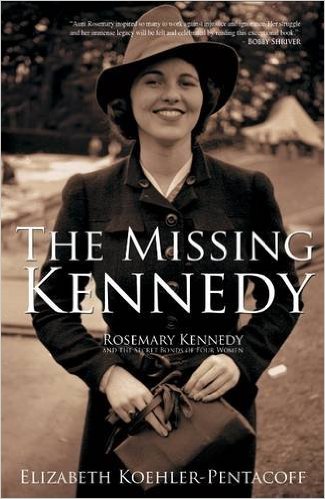
RosemarySuicides are on the rise, school shootings seem a regular event, insanity and violence not unexpected. Are we seeing the collapse of Western civilization? I often wonder. Then along comes a book like The Missing Kennedy, Rosemary Kennedy, by Elizabeth Koehler-Pentacoff (Bancroft Press, 2015).

This is an important and encouraging book. The author tells the story of Rosemary Kennedy (1918-2005) from a personal perspective. Elizabeth Koehler-Pentacoff’s aunt, a nun, cared for Rosemary at St. Coletta’s in Wisconsin, a Roman Catholic home for the mentally ill. The young Elizabeth visited Rosemary when she visited her aunt, Sister Paulus. In this remarkable account, the grace of God ripples through the pages.

Rosemary Kennedy, “Rosie,” was born a slow learner, and it is thought brain damage occurred during her birth, but she had no physical handicaps. The highest reading level she achieved was 3rd-4th grade. As she matured physically into a beautiful young woman, she became vulnerable and at times disruptive in her innocence, and her brothers did their best to protect her. Her father, Joseph Kennedy, learning of a method that might calm her and ease her life, allowed a lobotomy to be performed, a procedure that had been occasionally successful (at the time). But the operation made things far worse, partially paralyzing Rosie age twenty-three, and nearly destroying her ability to speak. She would need assistance in the basic functions of living for the rest of her life.

This was truly a tragedy for all concerned. Joseph Kennedy sent Rosie to St. Coletta’s. For twenty years she was isolated from her family, the doctor decreeing such visits would disturb her. Finally, in 1961, sister Eunice and mother Rose began regular visits. So did the author, Elizabeth Koehler-Pentacoff.

The author, a Roman Catholic, was clearly influenced by Rosie and Sister Paulus, and I could see the grace of God working through them all. Elizabeth’s dedicated aunt, full of love for the helpless, the abandoned, and the unwanted, touched the hearts of all in her circle through her example. I could see that the author was given a deeper sense of appreciation for the handicapped and what it means to love sacrificially as her aunt loved. The dignity of every living person shines through these pages.

As I read this book, Governor Brown signed the bill legalizing assisted dying in California; the U.K. was studying the option, avoiding the word euthanasia, preferring death with dignity. Earlier and ongoing, the investigation of Planned Parenthood’s selling of baby body parts littered the news, the horrendous videos a reminder of what our nation has become. And of course, for the last forty-two years the unborn who might be handicapped or unwanted have been “terminated” in the womb under the euphemism of choice. What do these word-shifts do to our language? What do these actions do to our hearts? Do we become desensitized, hardened, with these images, these verbal aberrations, and these stories?

And does a book like The Missing Kennedy do the opposite? Does the story of Sister Paulus and Rosie, of the Kennedy family, the author Elizabeth Koehler-Pentacoff, make us more sensitive, opening our hearts to loving as we are meant to love, without regard to handicap, without regard to degrees of perfection.

When the Kennedys finally reunited with Rosie, they were inspired to help the mentally ill, funding research programs, passing legislation, and founding Summer Camp Shriver which became the Special Olympics. All of these efforts were the result of Rosie and her tragedy. Rosie’s handicaps became blessings, making those around her better. She taught them how to love. She taught our culture how to care.

There seem to be two streams running through America, one of selfishness and one of selflessness. The great irony, the devil’s victory, is that the former leads to unhappiness, depression, and suicide. The self-centered life chases a greedy illusion of met needs and devours itself in its turning inward. The self-giving life, one seeking God’s path of sacrificial love, ends up discovering joy, meaning, and the actual fulfillment of the self.

We are tempted today to throw out the undesirable, the inconvenient, the unborn, the less than perfect, the aged. And if we give in to this temptation, which might at times seem deceptively attractive and even arguable, we shall be changed as a people. We shall become hardened and we shall shatter.

The Missing Kennedy is full of photos, many from the author’s private collection. The ones I particularly loved were the group photos. At first there is just Rosie and Sister Paulus, then others join, including the author, then more and more Kennedys gather around Rosie. She becomes, in the end, the center of the family. We are all better for her having lived, reminding us that the Rosies of our world have a place in the heart of our culture. We are better, too, for Ms. Koehler-Pentacoff’s heartwarming memoir of Rosemary Kennedy’s life.

The Human Search for Meaning

IMG_0044One of the many reasons I like going to church each Sunday is that I am reminded regularly of what it means to be fully human and to live life to the fullest, within a human community, a society.

For I do not live alone. What I do affects others. What others do affects me. With the creed of self, of rampant individualism birthed in the sixties and nurtured by the sexual revolution, one needs reminding regularly what it means to be human, that we are a human community.

And the community is not only a horizontal one in present time, but one which extends back in time and forward in the future. What I do today affects future generations. What my ancestors did, my parents, my grandparents did, has affected me.

So in church I come face to face with the fact that not only do I bear some degree of responsibility for others, that it’s “not all about me,” but that my life has real meaning.

Rabbi Jonathan Sacks in the Wall Street Journal writes of the vital role of religion in society:

“No society has survived for long without either a religion or a substitute for religion… Homo sapiens is the meaning-seeking animal. If there is one thing the great institutions of the modern world do not do, it is to provide meaning. Science tells us how but not why. Technology gives us power but cannot guide us as to how to use that power. The market gives us choices but leaves us uninstructed as to how to make those choices. The liberal democratic state gives us freedom to live as we choose but refuses, on principle, to guide us as to how to choose… the twenty-first century has left us with a maximum of choice and a minimum of meaning.”

We are creatures who  seek meaning. We are recognizing today that generations have been raised in a largely secular society that has sought to strip serious meaning from the public square, substituting causes, grievances and movements that gather around likes or dislikes. These politically correct “isms” do not tell me who I am, why I am here, how I should live, where I have been and where I am going. There may be meaning on some level in decrying global warming or GMO’s or political candidates but not meaningful enough to ward off depression and it’s offspring, despair.

And there is plenty of depression and despair that has filled the void. Pharmaceuticals and other feel-good drugs have followed suit, re-enforcing the divine monarchy of self and isolating us more and more from one another. The vicious spiral continues downward into darkness.

And so I go to Church where I am told that, as a matter of fact, it is not all about me. Mary Wakefield writes in The British Spectator, “In my twenties… full of self-pity…. I dropped in to see a priest… and poured out my woes. (He) listened quietly, then said: ‘The point of being a Christian is not to feel better, it is so God can use you to serve others.’ Others? It wasn’t all about me! I actually laughed with the relief of it.”

Yes, the relief. And we end up feeling better by serving others. Instead of contemplating my own needs, worship and service pulls me out of myself, towards God and my fellows, and life becomes deeply and beautifully meaningful. Depression and despair will ever be nearby, waiting to fill the void, so I make sure there is no void to fill. I make sure I am full to the brim with meaning, with God, by going to church regularly.

Our preacher today spoke of his heartrending experience as a social counselor to prisoners being released in California. He has come to see that their broken lives do not exist in a vacuum, but were influenced by earlier generations – their parents, grandparents, even great-grandparents. And so the “sins of the father” were indeed visited upon the children. He works to stop the cycle.

Our preacher said how science has given us proof of that legacy in the way drug use is biologically passed on to offspring, so that newborns must undergo a detoxing, shattering the air with their screams.

We are not alone in our actions. No man is an island, as the priest-poet John Donne said.  We are affected by those who have gone before us and we will in turn affect those who come after. We affect one another today.

Douglas Murray writes of the slippery slope of euthanasia, assisted suicide, a topic debated in Britain, passed into law in Holland and Oregon, and recently signed into law by the governor of  California. Mr. Murray traces the acceptance of this shift in our culture to the baby-boomer generation desiring the “full panoply of rights”:

“The right to education and welfare were followed by sexual liberation, which… came with the idea of having total rights over one’s own body, including the right to abort unwanted fetuses… the baby-boomers (are) awarding themselves one last right – the ‘right to die.’ “

The ownership of one’s body is a powerful idea. The fallacy lies in the fact that we are communal beings, with responsibilities to one another today and to the future. In terms of abortion, the fallacy also lies in the right to own another human being by virtue of that person residing within one’s body.

We fought slavery and won, but society will always know the anguish that we allowed it to happen at all. So too, as we kill our children because we own our bodies and claim ownership of the life growing within, we will grieve far into the future. We shall wake up and see the greatest genocide of all, generations of Americans lost, our own children, our own grandchildren, and now our own great-grandchildren, all fellow human beings on this good earth. We know already the grief of Rachel weeping for her children that were no more, the slaughter of the innocents. We are linked together in our humanity.

It has been observed that where euthanasia has become legal, palliative care has lessened. Those in favor of assisted suicide using the euphemism “death with dignity,” point out that I don’t have to choose death by injection. But others choosing assisted suicide may mean that my end-of-life care, my palliative care, will diminish in quality, availability, and affordability. A slippery slope. We are linked together.

There are ways to care for one another that reflect our Creator’s love for us. When we choose death instead of life, at either end of our numbered days, we withdraw from our common bonds, our humanity. Christianity and Judaism has taught for centuries to choose life over death. Doctors have sworn an oath to do so; what do they swear to uphold today? Can I trust my doctor?

I recently watched a good friend meet a good death. I pray, when my time comes, that I die as well as he did. He knew who he was, why he was here, and where he was going. He knew he was passing through a gateway into eternal life, eternal love, eternal joy. Shedding the corrupted body is not easy, but we have many means to palliate and soften the journey.

When I go to church I am reminded of these things, these “higher” things, the difference between truly living life to the fullest, as our Creator intends for each one of us to do (he should know) and slowly dying by degree, inch by inch, slipping into myself, into depression, despair, and eternal death, even while living.

And when I come home from church I come home full of meaning, full of God, nourished and ready to brave the six days until the next Sunday.

St. Francis of Assisi

Francis_of_Assisi_-_CimabueAs storms lash the Carolinas, we in dry California are reminded that the seasons are changing. The earth turns, moving toward shorter days and longer nights. The light rain that happily dampened the Bay Area this last week washed the air, baptizing the breeze, and last night temperatures dropped to what Californians might call chilly. Today, on the Feast of St. Francis of Assisi, the creation is full of the glory of God, the sun-drenched air sparkling, the leaves greener, the hills more golden.

They say this part of the country is not unlike Italy, and as I contemplate the gentle saint who walked those roads in Umbria and Tuscany in 1215, eight hundred years ago, I marvel again at his complex simplicity.

In my first novel, Pilgrimage, Madeleine and Jack Seymour journey from San Francisco (the city of St. Francis) to Italy. Madeleine’s priest has sent her on a pilgrimage to selected churches and sites; three were Franciscan: Assisi, Cortona, and La Verna. Madeleine reviews a short biography she has brought with her, and I must agree with Madeleine that Francis’s life is difficult to condense:

“Born in Assisi in 1181, the son of a prosperous cloth merchant, Francis Bernadone grew up hearing the tales of wandering troubadours. While fighting Perugia as a young soldier, he was captured. In prison, he had a vision of God; when released, he returned home a changed man.         “I am about to take a wife of surpassing fairness,” Francis announced, referring to “Lady Poverty.” He journeyed to Rome and gave his money to Saint Peter’s Basilica; he exchanged his clothes with a beggar.

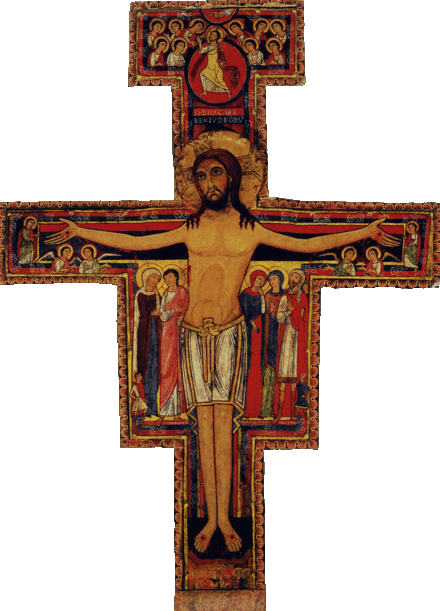
440px-Kruis_san_damianoReturning to Assisi, he prayed in the church of San Damiano, where God spoke from the altar crucifix: “Repair my house, which is falling into ruin!” Taking the message literally, Francis sold his father’s cloth and tried to give the proceeds to the priest who refused them. Furious, Francis’s father beat his son and locked him in the basement of their family home. Francis escaped and returned to San Damiano for sanctuary. 

Brought before the bishop, Francis stripped off his clothes. “Hitherto I have called you my father on earth,” he said to his father, “but henceforth I desire to say only ‘Our Father who art in heaven.’ “

He wandered the countryside, singing to God, calling himself a jongleur for God, a troubadour-juggler-fool. Highwaymen robbed him and threw him in the snow. In Gubbio, friends gave him a cloak, a rope, and a staff, the clothes of a begging pilgrim. In Assisi, he rebuilt San Damiano and restored two other chapels. He nursed lepers, searching for God’s will in his life.

In 1208, in the church of Santa Maria degli Angeli in the valley below Assisi, the Gospel reading commanded Christ’s disciples to give up all they owned, and preach repentance and the coming of the Kingdom of God. Francis renounced his few possessions and donned rough peasant sacking. Soon others followed, embracing poverty and preaching God’s love.

The Penitents of Assisi traveled to Rome for approval of their order. At first the pope refused their request, but after a dream where Francis propped up the collapsing Basilica of Saint John Lateran—the pope’s cathedral and symbol of the Church—he agreed to the new order.

Now called the Friars Minor, Francis and his followers lived in small huts in the valley below Assisi; in 1211, they were given the chapel of St. Mary of the Angels, the Porziuncola. They traveled the countryside, preaching and living humbly. The order grew.

Stories of Saint Francis spread throughout Italy. He healed lepers; he nursed the dying; he tamed a dangerous wolf; birds obeyed him. He created a live nativity scene in Greccio—an early crèche. He crusaded to Egypt to convert the Sultan. In 1224, on Monte Verna, east of Florence, he received the stigmata, the five wounds of Christ, from a seraphim angel: his hands and feet were pierced, his side was slashed, and he began a slow hemorrhage.

Two years later, at the age of forty-five, he lay dying. He asked to be buried with the criminals; but after his death his body was placed in the crypt of the Assisi basilica his followers built.”

  Pilgrimage (OakTara 2007)

It strikes me that Francis was not particularly interested in caring for the created order, but rather healing the people in it, and only after years of penitence and communion with God did he feel this desire. Francis’s renunciation of material goods, his poverty, somehow opened his body and soul to God, allowing God to enter and take up residence. We call this the sacramental life, for Francis became the matter that would become infused with God.

Christians experience this infusion in the bread and wine of the Eucharist, in the waters of Baptism, in the oils of Anointing the Sick. God enters his creation – the material world – and transforms it with himself. We call these transformations miracles.

Francis gave to God his spirit and his flesh, his life and his body, his “Brother Ass.” He became a penitent beggar. He suffered as any would suffer from cold and heat and fasting. At first he simply wandered the roads, singing to God. But as God entered him and united with him, within him, Francis began to care for the lepers and the lost. He gave no advice in regards to climate change or population control or environmental hazards, at least to my knowledge.

Francis, full of Christ, brought God to the villages and churches of Italy. He was the host, the means, through which God could touch his people. It was natural, that as God burned brighter and brighter within him, that he would desire to experience the love Christ felt for the world when he died. It was natural that he would pray in a cave on Mount La Verna to be given the stigmata, the five wounds of Christ. He would die two years later from those slowly bleeding wounds.

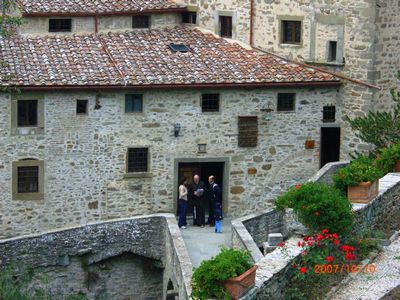
Le CelleWe once visited Le Celle outside Cortona. Home of Capuchin Friars, St. Francis’s cell can be seen – a cave-like room, hard bed, an image of the Virgin Mary, an altar. The convento, monastery, hangs on the side of the mountain, overlooking a gorge.

St. Francis's CelleWe too must be simple enough to open our hearts to God to allow him to dwell within, always aware that it might be more complicated than that, that the Creator will transform us when he enters into someone who will allow God to touch his people. He will lead us where we must go, not always where we want to go, turning our time into eternity, turning our earth toward him, bathing in his light.

Incarnations Among Us

Michelangelo CreationThe link between God and man has always been sacred. The glory of the Creator permeates his creation. His life pulses through us, from conception to death, and into eternity. God, our preacher reminded us yesterday, is incarnate within us.

Such incarnation – in the flesh – is the heart of Christianity. This mystery was revealed two thousand years ago, made perfect in God’s incarnation as Jesus the Christ, the Messiah. As St. John writes: 

In the beginning was the Word, and the Word was with God, and the Word was God… All things were made by him; and without him was not any thing made that was made. In him was life; and the life was the light of men. And the light shineth in darkness; and the darkness comprehended it not… And the Word was made flesh, and dwelt among us, (and we beheld his glory, the glory as of the only begotten of the Father,) full of grace and truth.” (KJV)

This moment in history revealed to a barbaric world the innate natural law to honor the dignity of all human beings, regardless of gender, race, handicap, age, born and unborn. To be sure, before Christ, God led his Chosen People to this moment by giving them laws and judgments that taught the same respect, belief, and charity for one another and set them apart from other communities. But when God the Son entered humanity to live among us, he gave us incarnational means, sacramental means, to take part in his divinity through God the Holy Spirit.

The Church through the centuries has worked to make incarnation understood and experienced. Doctrines and dogma explain in words. Sacraments provide incarnate ways for God to enter his creation again and again in human time, hourly, daily, weekly. We receive his body into our body. We pray and praise, and his Spirit weaves among us, entering our hearts and minds. We, the created, are called to converse with our Creator, and he descends upon us, within us, filling us with his life and love. This is incarnation. This God in our own flesh.

Recently, at a concert at St. Peter’s, Oakland, “Bach Vespers, Cantata 199, Mein Herze schwimmt im Blut” with soprano Juliana Snapper and organist Jonathan Dimmock of the San Francisco Symphony, I knew I was experiencing a kind of incarnation. For music c0mposed for the worship of God, as this was composed, is prayerful praise. It links us with God through our hearing and our singing. Johann Sebastian Bach (1685-1750), church organist, wrote this stunning cantata for a Lutheran Evening Prayer service (Vespers), weaving music through Scripture readings and prayers. The audience of varying beliefs sang hymns with the rest of us. The music danced around us, in, and through us.

I have often called for the return of the Judeo-Christian tradition to the public square, not as theocracy but to remind our culture of the roots of our historic belief in human dignity founded on the belief that God indwells in each of us. Here, in the nave of this Oakland church, the public square came to us, for it was a public concert reminding ordinary citizens of the roots of freedom, this God of revelation. It was a powerful moment.

And when I saw Pope Francis address Congress this weekend, the first pope to do so, I was encouraged to see that Christianity had entered the public square for a short hearing. The pope, to be sure, appeals to a broad spectrum. As Peggy Noonan writes, Pope Francis has two sides, a lovable one, preaching the dignity of human life, and a not-so-lovable one, preaching an economic theory long ago discredited as helping the poor, one that hurts the poor. He is a pope, she writes, who “endorses secular political agendas, who castigates capitalism in language that is both imprecise and heavily loaded… he doesn’t, actually, seem to know a lot about capitalism or markets, or even what economic freedom has given – and is giving – his own church.” Indeed, his own Argentina has fallen into poverty through socialist ideology. Hoover Institution economist Thomas Sowell weighed in this week: “The official poverty level in the United States is the upper middle class in Mexico. The much criticized market economy of the United States has done far more for the poor than the ideology of the left.”

But even with the two sides of this lovable Pope Francis, I rejoice in his presence, for he has brought the Church into America’s public square, and many are listening to his words spoken from a loving heart. He has reminded us of our Judeo-Christian roots simply by his white-robed incarnate presence among us, for he represents historic Christianity through the ages. His visit, in this sense, has been a sacramental journey, to America but in time as well, as all true pilgrimages are.

Saturday night, at my fiftieth high school reunion, I saw  schoolmates I had not seen since high school. I tried to match names and faces. I studied the class photos on the wall. And as we linked with one another, searching for recognition and trying to read name tags with our reading glasses, I thought how unique each one of us was, how we had all moved through our given time changed and yet unchanged. Each one of us, created in the image of our Creator, carried his life within, in varying degrees. We are neither God nor gods, but we carry God’s spark within us, and those who had fanned it into a flame with prayer and praise and Scripture and sacrament shone brighter than those who hadn’t. They lit the room with their quiet glow.

Incarnations of God are all around us, in every person we meet. We are born to love and praise God, and this is the good, the wondrous news of salvation. We need not despair, for he is with us if we desire him. But we must desire.

I look forward to more public square incarnations, to the fusing of our culture with the Judeo-Christian belief in a loving God who proclaims the dignity of each one of us, no matter what, no matter who.

Three Great Ladies

500px-Statue_of_Liberty_7

I, like many, have been intrigued with the Carly Fiorina candidacy for President of the United States. Many of us have eagerly waited to see if she was more than a CEO with controversial reviews. In the first debate she was clear, cogent, and compelling. In the second debate this last week she was even more so, with a powerful composure, an admirable knowledge of the world, and an iron will, not unlike our “Iron Lady,” Margaret Thatcher, in England. 

Ms. Fiorina has separated herself from other female candidates over the years, aided by Mr. Trump’s inappropriate comment, by making her presidential bid about merit not gender. Women sighed with relief nationwide. Did you hear it? That universal sigh? At last, we thought, someone who understands.

But what I hadn’t focused on, and probably why as a writer I have come to especially value her candidacy, is Ms. Fiorina’s use of language. She is a poet with an intuitive sense of the power of words, images, and symbols. She understands America’s need for the right phrases at the right times to draw our nation together, to heal our divisions.

Her closing statement, using the images of Lady Justice and Lady Liberty, spoke to Americans’ hopes and dreams, our very identity. It explains why waves of migrants are fleeing to the West with only the shirt on their backs, why thousands make great sacrifices for a glimpse of Lady Liberty in the New York harbor, why they count on Lady Justice for their future. It explains why America is indeed exceptional:

I think what this nation can be and must be can be symbolized by Lady Liberty and Lady Justice.

Lady Liberty stands tall and strong. She is clear eyed and resolute. She doesn’t shield her eyes from the realities of the world, but she faces outward into the world nevertheless as we always must, and she holds her torch high. Because she knows she is a beacon of hope in a very troubled world.

And Lady Justice. Lady Justice holds a sword by her side because she is a fighter, a warrior for the values and the principles that have made this nation great. She holds a scale in her other hand, and with that scale she says all of us are equal in the eyes of God. And so all of us must be equal in the eyes of the government, powerful and powerless alike. And she wears a blindfold. And with that blindfold she is saying to us us that it must be true, it can be true, that in this country in this century it doesn’t matter who you are, it doesn’t matter what you look like, it doesn’t matter how you start, and it doesn’t matter your circumstances. Here in this nation, every American’s life must be filled with the possibilities that come from their God-given gifts, one nation, under God, indivisible, with liberty and justice for all.

Such patriotism is scoffed by liberal academic elites. But after years of these elites governing, years of dangerous sophistication and overweening arrogance, years of enforced political correctness, Americans are disheartened and angry enough to look to someone brave and true. We bolt our doors and fear the dark. Our streets are not safe. Our police are attacked and prevented from enforcing the law, in communities where the law needs enforcing. And we wonder when terrorists, abroad or at home, will next attack.

I recalled Ms. Fiorina’s Lady Liberty when I recently read Rob Greene’s poetic description of the New York harbor statue (“The World is Still Yearning to Be Free,” Wall Street Journal). He writes of Emma Lazarus’s sonnet engraved on a plaque that was placed on the ground floor of the statue in 1893:

The New Colossus

Not like the brazen giant of Greek fame,/With conquering limbs astride from land to land; /Here at our sea-washed, sunset gates shall stand /A mighty woman with a torch, whose flame /Is the imprisoned lightning, and her name /Mother of Exiles. From her beacon-hand /Glows world-wide welcome; her mild eyes command /The air-bridged harbor that twin cities frame. /”Keep, ancient lands, your storied pomp!” cries she /With silent lips. “Give me your tired, your poor, /Your huddled masses yearning to breathe free, /The wretched refuse of your teeming shore. /Send these, the homeless, tempest-tost to me, /I lift my lamp beside the golden door!”

And to this day, we welcome legal immigrants to our shores, as long as they welcome us, as long as they embrace freedom and liberty, justice for all, speak our language, as long as they want to be Americans, unhyphenated, undivided.

The Statue of Liberty, made of copper, was designed by Frederic Auguste Bartholdi, built by Gustave Eiffel, and given to the U.S. by France. Somehow, I would venture to say, our “Eiffel tower” is more powerful (and beautiful) than Paris’s Eiffel Tower. Representing the Roman goddess of liberty, Lady Liberty holds a torch that lights the path to freedom and a tablet of law inscribed with the date of American Independence, July 4, 1776. A prisoner’s broken chain lies at her feet (Wikipedia).

Ms. Lazarus’s poem is titled “The New Colossus,” referring to the Greek Colossus, one of the “Seven Wonders of the Ancient World,” a statue erected on the island of Rhodes in 280 BC marking victory over Cyprus. Our Lady Liberty, the new Colossus, is quite a different creation, a “Mother of Exiles,” a “mighty woman.”

And so is Ms. Fiorina. The tablet that Lady Liberty holds is the law of Lady Justice, blind justice, equal-under-the-law justice. Many Americans have forgotten what that means, as it grows more rare with each day. Many Americans feel they have been exiled from their own country or one day will be.

And so I thank you, Ms. Fiorina, for reminding us of these two great ladies, Liberty and Justice, and for giving us renewed hope in America. I pray that you inform the substance and standards of future presidential debates and that having raised the bar, others must reach higher. I pray that those who belittle excellence, who crave clamor over conversation, that they take note that this is how we want debates to be, this is how we want our leaders to sound, this is how we want to be represented to one another and to the world.

For we Americans have become those masses who are so very tired and poor and huddling and yearning to breathe free. We are exiled, and we want to call America our home once again.

Waking the West

nine-eleven

This last week we recalled the September 11, 2001 attacks on American soil. As we mourned our dead and honored our heroes, waves of migrants fleeing oppression flooded into Western Europe. 800,000 men, women, and children are expected in Germany this year. It is a vast humanitarian crisis caused by Western benevolence.

America’s exceptional roots were planted by Christian Europeans, and the saplings, those thirteen colonies, grew strong, while the parent plant, Europe, declined. Europe has retained its own exceptional ideals of freedom, equality under the law, individual rights, and religious liberty. It even from time to time fought for those rights, that way of life Americans and Europeans have taken for granted.

Sometime after World War II, or perhaps earlier, Europe began to count on the protection of their American ally and ensure cradle-to-grave social programs for their citizens.

But America’s eviscerated military has left them (and us) exposed, leaving the Western way of life undefended. Now that we have become more like Europe in our national deficit, burgeoning state, and slashed military, who will protect us?

Bret Stephens writes in the Wall Street Journal how “We wanted a new liberal order – one with a lot of liberalism and not a lot of order. We wanted to be a generous civilization without doing the things required to be a prosperous one… the result is our metastasizing global disorder… openness is a virtue purchased through strength.” Every parent knows how painful yet necessary it is to practice “tough love.” Benevolence is not always good and often harmful.

Waves of desperate people are fleeing their homelands in the east. They are entering Hungary, Austria, and Germany; they are circling through Iceland and into Oslo. They are fleeing persecution, war, and poverty, looking for a better life. Peggy Noonan quotes the U.N. refugee agency when she says that they are coming from Syria, Afghanistan, Eritrea, Pakistan, Nigeria, Iraq, and Somalia. The majority are Muslim men.

Walter Russell Mead, professor at Bard College, writes in the WSJ of a “Crisis of Two Civilizations,” claiming that the Islamic worlds have tried and failed to create a workable society, so that the victims of the resulting tyrannies are fleeing into what they see as a prosperous and safe Western civilization. But the West no longer knows who it is or where it is going.

The Goths that crossed the Danube and conquered the Roman Empire didn’t find much resistance for the same reason. The Romans had become effete with a weak military. They didn’t know who they were or what to preserve and defend or why.

Professor Mead describes the crisis in Europe and the West:

Increasingly, the contemporary version of Enlightenment liberalism sees itself as fundamentally opposed to the religious, political, and economic foundations of Western society. Liberal values such as free expression, individual self-determination, and a broad array of human rights have become detached in the minds of many from the institutional and civilizational context that shaped them… Too many people in the West interpret pluralism and tolerance in ways that forbid or unrealistically constrain the active defense of these values against illiberal states like Russia or illiberal movements like radical Islam. (italics mine)

The Western world has a right to defend itself, its ideals and way of life, with military might. If nothing else, we must keep that defense at the ready, simply to assure the balance of power and peace in the world. American withdrawal from the mid-eastern theater in the last eight years has been a key factor in this current humanitarian crisis. We share the guilt with European governments who shy away from their own defense.

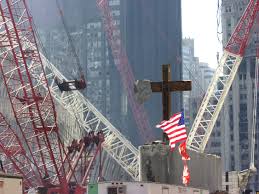
As we remember the Trade Center bombings, the Pentagon attack, and the plane crashing in the Pennsylvania field, those tragic attacks on American soil, we must face the unwelcome fact that the world has become less safe with all of our benevolence. It may be too late to teach our children the roots of freedom, so that they understand who they are and what they must defend, but we must renew our efforts. 

We must encourage policies that ensure prosperity, capitalistic policies that grow the economy, so that we can afford a strong military that will keep the peace with its presence. Some experts say it is too late for Europe to wake up from their dream and rally a defense. Is it too late for America? The answer lies in the next election.

nine-eleven cross

Fair and Free

justice statue

U.C. Berkeley recently unveiled a program to give greater preferment to African-Americans for admittance and for hiring of faculty, citing the Ferguson, Missouri unrest as a reason.

There is, to be sure, an innate human desire for fairness, treating everyone equal. We speak of being “equal under the law,” that regardless of race, religion, and gender we will be treated equally. Whether your hair is pink or blue, your skin is spotted or smooth, you are obese or anorexic, you are young or old, rich or poor, woman or man or something else, dwarf or giant, you will be treated equally (with the exception, of course, of the unborn).

We are wired to demand fairness, even if we are not always successful in our practice of fairness. From age seven, children say, “That’s not fair!” A sense of justice (often without mercy) flowers in childhood. We are born with the idea of fairness.

History is the story, in many ways, of peoples who believed they, or others, were unfairly treated, who demanded fairness through whatever means available – letters to the editor, peaceful protest, less peaceful protest, riots, revolutions. Always, there is the righteous belief that they are right and are seeking “justice.” God is on their side, and if they don’t believe in God, then a residue of Godly fairness inspires them.

After all, we have been made in our Maker’s image. We reflect his great love for us in our desire to love and be loved. We reflect his reason in our belief that we can reason things out, make sense. We reflect his justice with our own deeply held certainty that things should be fair. And lastly we reflect his mercy when we forgive our enemies, when we make amends, when we work to create justice for all, fair play for everyone, when we love one another.

But how do you right wrongs of the past? Christians do so by confessing and forgiving. “Forgive us our trespasses as we forgive those who trespass against us.” We are sorry, we say to our God, we will change, repent. Then we move on, guilt-free to soar as a bird, at peace with ourselves and our neighbors, and with our God.

But what happens with a secular society with historical wrongs like slavery, when we do not believe in a God who will forge a peace between us, who will absolve us? How and when is national guilt forgiven? How long must the culture pay, make amends, before it turns in upon itself? How many reparations, how many preferments in education and employment, how many times must Lady Justice excuse crimes she would not excuse for others? She should be blind, weighing only the evidence.

There comes a time when these affirmative actions become divisive and racist, undoing all they were meant to do, turning upon the majority, and increasing alienation. There comes a time when these actions actually hinder integration.

A nation cannot be absolved by a priest or God. It cannot be forgiven its trespasses as a person can. A nation is left at the mercy of the aggrieved, where and when that group sees the opportunity to extort payment for their grievance. And in the process other minorities watch the rioting and the looting and the burning of their town and country. They become the aggrieved, a recipe for revolution.

It is time to honor fairness to all, a time when the reparations of slavery have put paid to the debt owed. We would hope, as citizens, that our government would sense that time is now and stand strong. We would hope that our educational institutions would as well, that they would honor each student, each admissions or faculty applicant equally, not by race, religion or gender, but by merit.

I was not born with a silver spoon, or a silver anything. I was born into the modest home of a pastor relying on the income from his church and their kindnesses. I never felt aggrieved with my economic status. I worked my way through college and couldn’t afford grad school so got an office job to pay the rent. I’m not saying I wasn’t envious of those who had it easier, but came to see that life wasn’t always fair. I counted my blessings, for, as my mother often reminded me, I had ten fingers and ten toes, two arms and two legs, wasn’t deaf or blind, and was pretty good at jumping rope and reading. So I just needed to do my best and that was good enough.

Sometimes I hear people speak of betrayal or greed or mistreatment and they end with the comment, “It’s just so unfair.” I have known all these things, again and again, and it is indeed unfair. By God’s standard, by our own standards, it isn’t fair. But God is the judge, and I’m glad of that, for he will judge me too.

Ever since Eve ate that forbidden fruit, mankind has acted unfairly, often without mercy. And so God destroyed the Tower of Babel, sent a great flood, and finally, in his mercy, called Abraham out of Ur to be the father of a great nation that would number as the stars. He gave Moses specific commandments to obey. He chose a people who wrestled with him and his challenges, with his justice and his mercy. At last, after all this loving preparation, he send the promised messiah, the Christ, his Son, Emmanuel, God-with-us. This Jesus of Nazareth walked among us, showing by his life, death, and resurrection how we are to love one another, how we are to be just and merciful and fair. He gave us a way forward with his words, his life, and his death, to heal the brokenness, the unfairness, the mercilessness. He gave us a way forward to union with his Father – through his body, the Church.

A Western tradition blossomed from this creed. It struggled with how to be fair in an unfair world, among people who loved imperfectly. The tradition of Judeo-Christian fairness enshrined in common law and courts was formed under monarchies. It birthed democracies. It formed the Western Canon, the foundation of higher education, so that the next generation, our future rulers, our best and brightest, would understand fairness and its child, freedom.

And so today we try to protect this great legacy. Fairness and freedom are ideals, imperfect, but vitally important to our nation and the West. It aggrieves me to see government bow to the extortion of the aggrieved, often for political reasons. Thomas Sowell of Stanford’s Hoover Institution recently called it giving in to bullies:

“No small part of the internal degeneration of American society has been a result of supposedly responsible officials caving in to whatever group is currently in vogue, and allowing them to trample on everyone else’s rights… Politicians who exempt from the law certain groups who have been chosen as mascots undermine the basis for a decent society… The goal of ‘the rule of law and not of men’ has increasingly been abandoned in favor of government picking winners and losers… a path that demoralizes a society, and leads to either a war of each against all or to a backlash of repression and revenge.”

Life is not fair. We must support a “rule of law and not of men” (John Adams). In this election year, it is good to keep this in mind.

Heroes on a Train to Paris

flagAs news came of the heroic actions of three Americans aboard an Amsterdam-Paris train last week, many voiced admiration and relief that yes, heroes still exist in today’s world. Granted two of the men were off-duty military. Still, civilians also braved the danger, risking their lives. We are proud to be Americans once again, proud to do the right thing at the right time, proud to be heroic, risking all. We wonder if, after all, virtue does exist and might even be alive and breathing. Virtue might even be something we should teach our children. Are ideals making a comeback?

Perhaps the antihero of the last fifty years is not such a wise role model.

The antihero has formed today’s sensibilities through the arts, literature, and media. In real life he has banded together with other antiheroes to form collectives, grievance groups quick to take offense and to demand entitlements. In stories, these characters are often morose, turned inward, bored with life, and anti-authority on principle. They are narcissistic, nihilistic, without direction. They do not possess moral qualities once called “virtues.” These victims blame the system and society, never themselves. Publishers have promoted the antihero, finding readers desiring validation.

The intent to produce and market antiheroes is actually a noble one, ironically, even perhaps a heroic one, encouraging one to empathize with the least in our society – those hurt by race, crime, drugs, divorce, poverty. We want our children to care (and rightly),  but we give them dark novels with stories of rape, incest, and pederasty. In time, literature’s antiheroes, instead of becoming nobler and overcoming adversity, became darker, more ignoble. Novels must increase the terror and degradation, so that sexual sadism and violence towards women spans fifty shades of grey, with relative degrees of darkness, legitimizing the prurient experience.

Without ideals, standards of virtue, even right and wrong, the bar of civilized culture plummets. Civilization fragments and spills into a bestial world we call barbarism.

I was thinking about heroes and their welcome return to the public square when I came across Bret Stephens’ lovely column this week in the Wall Street Journal, “The Gifts of a Teacher.” In this tribute to Mrs. Amy Kass, his Literature professor at the University of Chicago, he describes how we have too many choices in our modern world. Mrs. Kass could see this and saw her vocation as one giving structure and direction to the chaos of those choices. In the past society supplemented law, adding morality, manners, and tradition. Today, we have no such rules, or few of them, so that students in those formative years of schooling that should move them from adolescence into adulthood often flail about undirected.

It was Mrs. Kass’s role to provide a framework of living through the great stories of an earlier time. As Mr. Stephens writes, “Jane Austen still offers the best advice on dating. Aristotle still has the last word on friendship.” The stories considered how to ennoble life, what and how to dream, how to grow a great heart and soul. Simply pondering how others answered, “What is the good life?”, a question I recall from my own two years of Western Civilization, is a start.

We need to train our children to be heroes in all walks of life, to be self-sacrificial rather than self-aggrandizing. We used to do this, assuming it was a necessary education for adulthood. Perhaps we should return to the old ways.

There is a morning prayer in our Anglican Book of Common Prayer that speaks of God’s service as “perfect freedom.” God gives us rules, a framework in which to live. He provides a recipe for happiness, rules for the road as it were. When we serve him we follow those rules, or try to. Once we learn the rules (like riding a bike perhaps) we have plenty of freedom, many choices within the frame of God’s law (we can ride all over the place). That is what we call free will: God… whose service is perfect freedom.

Just so, a culture (through government, schools, churches, temples), to survive, must provide a framework of ideals in which we can live our best lives, pursue our greatest happiness. Mr. Stephens describes the problem of choices without limit:

“We can satisfy our desires, but we have trouble recognizing our longings. We can do as we please but find it difficult to figure out what truly pleases us, or what we really ought to do. Limitless choice dissipates the possibility of fully realizing the choices we make, whether in our careers or communities or marriages. There’s always the chance that something (or someplace, or someone) better is lurking around the corner.”

The heroes on the train knew immediately what they needed to do and they did it. I pray that America’s teachers embrace the honorable and heroic role with which they are entrusted, just as Mrs. Kass did, giving students a framework for figuring out life, how to choose what’s right and what’s wrong, what to do and what not to do, when and where. Such an education will put our culture back on track.

Thank you, Mrs. Kass, and thank you, Mr. Stephens. Thank you, National Guard Specialist Alek Skarlatos, Airman First Class Spencer Stone, and Mr. Anthony Sadler. It is good to remember who we are and who we can become.