Category Archives: Uncategorized

Chateau de la Puisaye, France

Chateau de la Puisaye.compLast week, on the occasion of my niece’s wedding nearby, we stayed at Chateau de la Puisaye, a Napoleon III house set in a large park a mile outside of Verneuil-sur-Avre on the southern Normandy border. Diana and Bruno Costes (she British, he French) have turned the chateau into a country “bed-and-breakfast,” offering five traditionally furnished bedrooms in the main house, a guest cottage, and a studio over the old stables. Our son and his family (children aged nine and eleven) joined us.

One of our rooms on the second floor (Europeans say the first floor), looked out the back onto green grass, a box hedge, and a large kitchen garden, hence called the Chambre du Potager. Decorated in antiques, the light and airy room had a closed fireplace and three tall windows, high ceilings, and a large bath. White wainscoted panels were papered in pink and green floral with complimentary borders and matching draperies. The room is charming, recalling Jane Austen, with polished hardwood floors and oriental carpets. Two more bedrooms faced the front drive and park with tall windows as well, nicely appointed, and two more on the third floor.

Always intrigued by history and the mystery of time, I wondered who had lived here over the centuries. Diana said an elderly lady was the last owner. She mentioned that a tunnel, perhaps no longer evident, once hid Resistance fighters in World War II. Our articulate hostess was certain the house held many secrets and hidden passages, nooks and crannies yet to be discovered. The house had seen so much, both joy and sorrow, I thought, love and hate, birth and death. Foreign armies encamped, reigning terror upon the countryside.

For we were, after all, in Normandy, unhappy witness to centuries of war. Northwest, the landing beaches of World War II stretch alongside the English Channel,  where so many young soldiers were gunned down by the enemy on overlooking cliffs. Today they rest beneath rows of white crosses in a field of green, and I often thought of these young men and the world they protected with their lives, our world. How deceiving peacetime could be, especially in our lovely chateau surrounded by leafy park and night silence and sun and shadow, in rooms of genteel comfort and civilized conversation. How deceiving it all was, not wanting to believe we lived in a rare moment of peace that bridged the times of war. How long would it be before fighting revisited this lovely pastureland of chateaus and sheep and medieval stone?

Of course this area of southern Normandy has seen other wars over the centuries, for Normandy was British for many years, a coveted prize with its ports and pastures. Fortified villages surrounded by deep moats saw much bloodshed in the Hundred Years War that pitted English against French and raged intermittently from 1337 to 1453. Verneuil-sur-Avre was formed from three such villages, with streets that trace the old walls, each community clustering around its church and market.

Much to the delight of my grandchildren, chateau sheep grazed in a distant field, and the children were invited to help herd them to another pasture. Two elderly ponies, a horse, and a donkey grazed in another paddock. Three dogs meandered in and out of the chateau, nuzzling the children and other friendly hands, and two cats could be spotted if one watched carefully. There was a heated swimming pool, put in this last year, anchored at one end by a picturesque stone gatehouse.

The gravel drive curved up to the white façade of the chateau as if curtsying, and mature plane trees shaded broad lawns and white wrought-iron chairs and tables and wooden lounges. We had unseasonable rain and cool temps this last week, but in better weather guests could sip cocktails on the lawn before dinner. I for one enjoyed the drawing rooms.

The entry led to stairs spiraling up to the bedrooms. Guests met in the paneled drawing room to the right of the entry for an aperitif before dinner.  (My grandson played a little Beethoven on the grand piano.) Velvet upholstered chairs and a settee grouped around a working fireplace probably ablaze in winter. The adjoining library housed walls of books with another working fireplace.

In the dining room to the left of the entry, Diana served hot breakfasts with fresh breads and jams, and even dinner (with notice), featuring local foods and French country wines. She was most gracious in preparing several dinners for us over the week we stayed, all delicious.

I particularly appreciated (naturally) the many books that greeted us, and I left my own novels to add to the chateau’s collection. There were hundreds of books in English and French and other languages, out-of-print books, bestsellers, classics, history, crime, romance, art, cooking, landscape. Books were stacked on tables and mantels and overflowed from shelves. They lined the rooms with history, their own history and those stories living inside the leaves, reflecting centuries of writers and readers, but also reflecting a more sophisticated syntax and thought pattern.

I came across a young-adult story with black-and-white illustrations on shiny pages. The printing style reminded me of books I once borrowed and devoured from our local Orinda library when I was young. The title page stated the book was a war printing, using circumscribed ink and paper, for it was dated 1944, London. It appeared to be about a girl’s school with a simple and direct and sweet style. I thought how different today’s young adult novels are, with their dark and often violent themes, their sexually charged language, their despairing and anguished tones. What have we sowed in the hearts and minds of our children and what kind of a culture will we – and they – reap one day? Perhaps we already are reaping what we have sowed.

Tucked among old books on the landing upstairs I found an Anglican Book of Common Prayer with no publication date, but with a Christmas 1915 inscription from the owner’s grandfather. By Christmas 1915, Britain was in the First World War. London bombing commenced in May of that year. The leather-bound prayer book, its tissue pages well thumbed, was no more than two by three inches, and it contained not only Anglican prayers and liturgies, but hymns as well. It looked to be the old 1662 Prayer Book, similar to our 1928 BCP in America, with rites going back to the seventh century monastic offices and the medieval liturgies of Old Sarum.

Diana’s warmth charmed us, encouraging conversation. She treated us like family. As my nine-year-old granddaughter nodded off to sleep under white embroidered linen, she said with a happy smile and a sweet sigh, “Diana is so nice, I just want to move in and help her in the kitchen.” “I know,” I said, “me too,” and I gently turned out the light and kissed her on the forehead.

The skies are broad in this rolling countryside, and while the rain limited our explorations, the changing skies created dramatic canvases of blues and whites and grays. We walked out to the paddocks and followed the gravel paths and drove the lanes through fields of corn waiting for harvest.

Staying at Chateau de la Puisaye was far more than memorable and far more than restful. It was stepping into history and for a short time living there as though we shared the space with hundreds of ancestors. The two hundred years these rooms witnessed seem to have been more ordered times, in spite of candlelight and bedpans and cold rooms heated by fires in hearths. It was a time when social graces tamed our bestial natures and manners orchestrated our gatherings. Conversation linked minds and hearts, and shared meals wove generations together. Civility, that old art of living with one another, was valued over self-esteem, thoughtfulness over thoughtlessness, patience over impulse. Being dependent upon one another for day-to-day needs required selfless sacrifice. It required love.

One cannot turn back the clock, but it is good to be reminded of what we have lost, so that we might plant similar seeds before the the lost is forgotten completely. We flock to these quiet old houses seeking something we cannot name; we mourn a time of gentle, gentile, gentlemen and gentlewomen. Today transfixed by gadgets and toys and bright screens with buttons, we have nearly forgotten how to think, how to reflect (or even dream), how to link generations with words around a table.

Chateau de la Puisaye reminded me how to live gently. The old house said, do not forget. Thank you, Diana and Bruno Costes, for pulling this past into our present and with such grace.

http://www.chateaudelapuisaye.com/

A French Country Wedding

domaine_evis_idx2

We witnessed my niece’s wedding this weekend in the French countryside. 

The wedding was held outdoors at Domain des Evis, a fifteenth-century fortified farmhouse set in the rural landscape of the Perche region, not far from Verneuil-sur-Avre on the Normandy border. The few days before, unseasonable torrential rains poured upon the land, nearly flooding the narrow roads, but a Saturday sun worked its way mightily through dark billowing clouds.

We took our places on benches under the suddenly bright sun and watched the bridesmaids step up the aisle, followed by the bride, arm in arm between her father and her brother. It was a curious blend of old and new, and the secular ceremony, while never mentioning God, spoke of love and commitment and how-we-met. Poems were read and vows exchanged, hearts were touched, and eyes were moist with tears. The wedding reflected the beliefs of the bride and groom, as it surely should, for they are poised on the edge of a dying culture in a France tragically beautiful in its diminished faith.

Later, during the dinner, since they had asked me to speak as my niece’s godmother, I mentioned God who, while not invited to the wedding, was ever-present, loving them anyway:

As godmother I made my own vows for my niece at her baptism, and as her godmother I said a few extra prayers each evening, asking God to bless her. The prayers clearly worked, for she has found her prince charming who is now added to my list of intercessions each evening. And now two families have been united…

Weddings are rites of passage. The philosopher Roger Scruton notes that “rites of passage are the vows that bind generation to generation across the chasm of our appetites.” In this rite of passage we call marriage, family and friends of many generations witness the vows of love between a man and a woman. The vows are made in a public ceremony, before a community that gives assent and approval by their presence. When the bride walks up the aisle, alongside a member or members of her family, the journey through the gathered witnesses reflects her journey from one family into another, as well as the creation of a new family. This is the “giving away” of the bride and as archaic as it may sound in today’s world, it represents a giving over to the groom certain responsibilities, that of loving, protecting, and sheltering the future mother of his children.

The wedding ceremony in our Anglican Book of Common Prayer states that matrimony is a holy estate. Indeed, it is considered one of the seven sacraments, for it is sacred. Matrimony produces life, and all of life is holy, sacred. With marriage comes the blessing of children, and those children will step through their own rites of passage…

I thank my niece and her new husband for sharing this sacred day with us. Love and cherish one another, comfort one another, honor one another. Have and hold one another, for better or worse, richer or poorer, in sickness and health. Be true to one another…

It is curious, I now reflect, that as the Judeo-Christian roots of Western Civilization shrivel, folks cling to these shadowy memories of faith. They hold on to the symbols and ceremonies that speak truth even though they don’t believe in the author of those truths, he who designed our marvel-ous natures, he who created us to love. For without belief in the source of love, the symbols and ceremonies will wither and disappear. How many generations will it take for nihilism to eclipse Christianity? And how many generations will it take for the religions of death to fill the void left behind?

We are entering a new Dark Age, for we take for granted the inheritance bequeathed by Judaism and Christianity, the values that birthed our culture of freedom. It is this heritage of liberty protected by law, rights birthed by responsibility, marriage and family ordained by sacraments, governance authorized by democracy, that has defined the Western world and has given hope to peoples living in poverty and tyranny. It is this Judeo-Christian culture of the West, planted and watered for millennia, that is envied the world over by refugees, regardless of their own beliefs. Immigrants flood our borders for they understand what and who we are. We all know the Western world is not perfect, for it is shaped by humans, but it is our best and brightest hope for the future and for peace.

So on Saturday we heard good words in this elegant and sweetly beautiful marriage ceremony beneath stone towers and alongside dry moats of medieval stone. We saw love blossom, taking root in the garden of marriage whether the lovers believed in the sacrament or not. Their love was watered by the words and the vows and the faux-rituals. One day they will hopefully bear children so that another generation will water the roots of our culture, if they can remember this day and others like it. Perhaps, in the future, they shall recognize the God who loves them so, reflected in the leaves.

I’m glad I was able to attend the wedding of my sister’s daughter, who I held in my arms the first week of her life. I’m glad I was present to see our two families intertwined, one French and one American. My prayer list is longer, and I rejoice in this binding of generations.

With a Song

035“Once we came before God’s presence with a song; now we come before his absence with a sigh.” So writes Anglican philosopher Roger Scruton in his beautifully written memoir, Gentle Regrets. The first reference is, of course, to Psalm 100, O be joyful in the Lord, all ye lands: serve the Lord with gladness, and come before his presence with a song… Dr. Scruton’s second reference, that to sighing, is to the sadness that seems to permeate our culture of unbelief, the most prosperous and “advanced” culture in recorded history.

Psalm 100, also called the Jubilate Deo, is part of our Office of Morning Prayer, in the Book of Common Prayer prayed by Anglicans worldwide for centuries. I wondered, what happens to a person’s attitude toward life if he or she repeats this prayer psalm every morning upon rising? Is there a change in the way he sees the world, or even a gradual restructuring of the soul?

I’ve been thinking about this the last few days, having dipped deeply into Dr. Scruton’s words of wisdom. He rightly values the Prayer Book with its Elizabethan English, so suitable to worship God. We sing the words of these prayers, sometimes in melodies, sometimes in chants, sometimes in our hearts and minds, following the rhythm of the phrases like a dance.

I first crossed the threshold of an Anglican Church (then Episcopalian) in 1966, at the age of 19: St. Matthew’s, Burlingame, California. Raised Presbyterian, turned collegiate agnostic, I was unfamiliar with the ritual, the set prayers, the kneeling, the making of the Sign of the Cross, the processions, the candles, the incense. Yet I felt as though I had entered Heaven. I was sure I had; I was totally smitten. I sat in the back pew and drank in the liturgy like a traveler in the desert. I was thirsty and didn’t know how parched I really was until then, didn’t fully understand what I deeply longed for, but here it was, all around me, the sights, the sounds, the smells of Heaven.  It was as though I was being held in the palm of a loving God, one who had created me in great joy and was so glad I had come home.

I wasn’t instructed and Confirmed until the following year, but in the meantime I entered, knelt, imitated the others. Since many of the prayers were the same each week, and there were Prayer Books in all the pews, I learned the words quickly and was soon part of the miracle happening around me. I learned how to dance with the Church, a universal dance stretching back two thousand years and celebrated all over the world. Since then, I have come to understand the meaning behind the rituals and the prayers, the Scriptures that ordained the words, the actions, the steps in this dance of worship. I came to understand what happened in what was called the great Sacrifice of the Mass, when the wine became blood and the bread became body in the Real Presence of Christ. I understood how the Liturgy of the Word led to this pivotal moment of bell-ringing and happy holiness – the Collects, the Scriptures, the Creed, the Confession and Absolution, the Sermon. And since then, I have traveled deeper and deeper into the mystery of worship and into the heart of God.

So it was with great joy that I discovered this Anglican philosopher who is also in love with the Book of Common Prayer, who “gets it,” as is said today. And he is right when he profoundly observes that our culture, having trouble finding God, has become sad, “morose.” Many no longer sing to the Lord a joyful song with gladness for they have lost him in a kind of slippery sophistry. Instead, they look to one another, and to themselves, to create gods from their own kind, longing for but not finding true worship. The resulting attitude is one of un-thankfulness, of grievance and complaint, of never having enough, of striving, of racing, of consuming, all in hopes of finding. The old adage, “Count your blessings,” is just that, an old adage and rarely practiced. Today curses are counted rather than blessings.

And so it was that this morning when I entered our parish church I was especially thankful for the words of our Prayer Book, the poetry of the prayers and psalms and liturgy, and most of all for the belief that backs and binds it. I addressed some “proofs” for the historicity of the Resurrection in my recent novel, The Magdalene Mystery, arguments of the mind if not the heart. And in the end, if one can argue the Resurrection, the rest falls into place, at least for me. But here, this morning, in my parish church and recently in the words of my new philosopher mentor, I find argument for the heart and soul. Human beings long to sing to God because we know deep down he exists, that he loves us, and that he has provided a path on earth to Heaven, to one day, see him face to face, no longer through a glass darkly. We long to experience what we suspect is waiting for us, true joy.

And as we sang with the children in Sunday School “All Things Bright and Beautiful,” prayed an “Our Father” together, and led them up the central aisle to kneel at the altar rail for their blessing during the Mass, I knew we had taught them well this day. They had experienced the bright and the beautiful, to be sure, when they entered that hushed space, as they padded up the red carpet toward the tabernacle set amid the flaming candles, as the robed clerics drifted by. “God the Father, God the Son, and God the Holy Spirit be upon you, Natalie, this day and always” the priest said, touching her head lightly with blessing. We each made the Sign of the Cross, and with folded hands we processed out, back to the Sunday School, where we made more animals from paper plates.

It is good for us to pray, to develop an attitude of thankfulness for what we have been given, beginning with life itself, another day on this earth. I recommend an “Our Father” followed by the “Jubilate Deo” each morning, even if it’s in the rush of the early hours, driving to work, waiting for the bus, readying the children for school. Say it regularly and your life will be filled with joy, the jubilate of God, and far less sighing. I know mine has.

Hell’s Vestibule

Sayers.Hell.Dante2It seemed appropriate, since the Bay Area is currently gripped by a heat wave, to reread Dante’s The Divine Comedy beginning of course with Hell. I’m using Dorothy Sayers’ translation in verse, and finding it surprisingly readable. I especially appreciate her “Story” summary at the beginning of each Canto, and her “Images” at the end, all most helpful and clear.

It was also appropriate, in this heat wave, to arrive at our local parish church, St. Peter’s Oakland, surrounded by its courtyard demolition. The garden and patio will be lovely, to be sure, when finished, but in the meantime we are negotiating chicken wire fencing that guards churned earth and pavement slabs. We enter the church, not ceremonially up the steps to the open narthex, our normal route across the threshold, leaving the public space to enter the sacred, but through side doors, maneuvering through back hallways.

So between the heat pushing down upon us like a great closing lid and the courtyard disorder, Dante seemed quite at home in my little brain.

Then, to this turmoil was added the Epistle and Gospel for today, taken from the Sixth Sunday after Trinity in our poetic Anglican Book of Common Prayer. The readings seemed to be all about sin and death (St. Paul) and hell and judgment (Our Lord).

We don’t speak of sin, judgment, and hell these days (in polite society, or rather politically correct society), and try to avoid speaking of death. I had forgotten how these Scripture readings appear like sudden flames in high summer, hard words not content to be safely corralled in Advent or Lent later in the year. And these words are so out of fashion. Today’s culture claims there are always reasons for why we harm one another and ourselves, always explanations, always escape from judgment by changing words and banning others from discourse. It is interesting that Christ not only mentions judgment in this passage but Hell as well, and we are to be judged for the simple sin of disrespect, calling someone a fool. “Whosoever shall say to his brother, Thou fool, shall be in danger of hell-fire,” Christ warns in St. Matthew 5.

Such a delicate sin, it would seem, even a lighthearted sin, silly really, part of me secretly says, calling someone a fool whether in thought, word, or deed. Yet on second look, it seems more serious, something spawned by pride, an arrogance that slides subtly into our speech as it takes hold of our hearts, like a snake constricting our love.

For love is the opposite of pride. Love is the sacrifice of self for the other, not the uplifting of self over the other.

Words matter. Today especially. Sin is banished by embarrassment. Judgment deserted. Hell has long been hidden quaintly in fable and fantasy. Or has it? We pretend death does not await us… are we pretending about Hell?

I’m not too far into Dante, but the third Canto places us at the Vestibule of Hell, Hell’s Gateway. Spirits whirl about, distracted, following something here, then there, all the while groaning and shrieking and turning in anguish to keep up. Sound like our world? These are those who, when given the choice of Hell or Heaven, choose to not choose, to remain neutral. They are the undecided, those called by St. Paul “lukewarm,” who are neither for God nor against him. Even Hell spits them out. And so they spend eternity running after the latest thing, just as they did on earth. As Sayers points out, Christian eschatology allows us to choose Heaven or Hell. It would make sense that some choose not to choose. Dante could see our world; his world must have been similarly sophisticated.

I’ve known many people in this vestibule, or headed for it, inside the Church and outside. They slide along in a colorless and unfeeling world by banishing words that are uncomfortable or perhaps too true, too painful, to face. 

As a Christian I am glad to be reminded of hard words, thankful to be forced to face sin and Hell and judgment. The facing makes it far more joyous to be given the antidote to sin and Hell and judgment, an antidote in those same readings of today. And so, St. Paul explains, in one of the most profound and possibly difficult passages in his letters, that we are baptized unto death. He says that when we are baptized our sins die with the “old man,” the sinner in us. And as part of Christ’s body through this baptism, we follow Christ into his own death in this way, but we also follow him into his new resurrected life. He is the Way, the Truth, and the Life.

This is good news indeed, real gospel. These are strong happy joyous words of truth. I would rather know and face my enemy – sin – that old man within me – so that I can die a bit so that I can live a lot. I don’t want to chase the latest idea, blown about by the whirlwinds of pride and arrogance, screaming in anguish and doubt and indecision. I want to know the truth, face life as it is.

The Church helps with this by reminding us, again and again, what is real and what is not, what is true and what is false, through Scripture and Sacrament, through Council and Creed, using words carefully chosen and honed and perfected through two thousand years.

We cross the vestibule and enter, not Hell, but Heaven, every time we enter a Church that holds these words close to her heart.

On Shame and Shakedowns

Writing ImageI just counted the tabs that appear across the top of my computer screen, those websites that I check regularly, and I seem to have fourteen, not counting OakTara (my publisher), Amazon, and Goodreads. Seven are websites I maintain, adding new content on a regular basis, and seven are sites to which I occasionally submit. 

My latest addition is Liberty Island (www.LibertyIslandmag.com), a site supporting conservative fiction authors. I recently posted the first chapter of my novel-in-progress, The Fire Trail. Last night I read a short story that so closely mirrored my own family experience (my husband and I are way outnumbered by vocal leftists), I didn’t know whether to laugh or cry with relief: “Caravaggio’s Isaac” by Scott Steward Smith. The story therapeutically re-enacted some of my own life trauma.

Words matter. Ideas matter. Words and ideas drive and form culture.

I haven’t seen Dinesh D’Souza’s movies yet, but I am looking forward to them. Jay Nordlinger recently wrote about D’Souza in National Review (July 21, 2014), saying that D’Souza contends that “the shaming of America is related to the shakedown of America.” Many liberals, with the power of the media to pummel conservatives, accuse and judge America, exaggerating the dark side of our history and twisting the truth, not telling the full story. They say we steal, we commit genocide, we enslave, we conquer, we degrade. This is the one-sided “narrative” told again and again in our schools and our news outlets and our books and our movies. Many generations have been raised on this self-loathing. Many are ashamed to be Americans.

The dictionary defines “shakedown” as the act of taking or restructuring through threats or deception. Accuse Americans even falsely and they feel guilty, regardless of the injustice of the accusation. When they feel guilty, they open their wallets. They vote the ticket that absolves their guilt, regardless of unwise policy, regardless of harm to our country. Many wealthy find the shaming and shakedown of America agreeable. They feel guilty also, but it is the guilt of the rich, and their guilt is absolved. They use their play money to support those who tell the story they want to hear, regardless of what works to grow our country, protect our country, or advance world peace and prosperity.

So through this shaming, America is deceptively taken and restructured.

And in this restructuring, the creation of a culture without free speech, without the institutions of family and church, will, ironically, eventually silence even the press that now appears to support the shakedown. And they don’t seem to see it coming.

Words matter. Story matters. When an unborn baby is called a fetus it is easier to kill it. It is an it not a he or a her and has no rights greater than the mother’s convenience. Other words make it easier to submit. Her “convenience” becomes an issue of “health.” She is making a “choice.” One could also say a murderer makes a “choice.” But the right to choose resonates with our desire for freedom. It sounds good. Words matter. We feel for the woman with an unplanned pregnancy. It might limit her options in life. That’s one side. But the child might open new worlds to her. That’s the other side we don’t hear. We want to absolve her of her guilt, soon to be grief, by saying it is her “choice.” We are a caring people. The liberals accuse, “For shame, pro-lifers, you do not care enough. You are warring against women.” Warring? When a new life is created and protected? Sounds like pro-lifers are defending women. Shakedown. Threats and deception. Words matter.

We should not be ashamed of America. We aren’t perfect, no nation is, no person is. But we must acknowledge what is good about our country in order to preserve it and water and feed it, in order to survive even flourish in a world that could quite possibly destroy our freedom and our way of life. We must be respectful and honorable, law-abiding, law-giving, law-enforcing. We must practice courtesy, return manners to our discourse, whether personal or national. We must wait our turn, not cut in line, share from love and not coercion. We must care for one another, giving generously to charity. We must encourage creative enterprise, inspire the next generation to use the minds and hearts God has given them to make a better world. We must vote, armed with knowledge of the issues and the candidates. We must be responsible to our nation, to our communities, to our families. We must support religious institutions that provide the myriad of services we take for granted in a democracy, from hospitals to schools to soup kitchens.

And most importantly we must be unashamed to speak, to use words and tell stories while we can, tell the truth about our country, our people, the whole truth and nothing but the truth, so help us God.

Watering Seeds

flowersThe sunflowers that the children planted last Sunday, pressing the seeds into the loamy soil in miniature clay pots, sprouted during the week. This morning we gathered around the shiny yellow table and marveled at the green shoots. Natalie, age four, carried the teapot (our pitcher) to the bathroom next door. She stood on the step-stool and turned the faucet, then watched the water gush into the pot. With great attention and care she grasped it with both hands, balancing her walk back to the yellow table with its new life. Together we tilted the spout and watered some sprouts, then passed the chrome pot to Luisa, age two, to give it a try with another teacher’s helping hand.

Earlier we had tied bright colored balloons to our welcome sign outside. We filled a basket with animal crackers. Soon we would read the story of creation with its many hued watercolors of rainbows and rivers and flowers, yellows and blues and greens and reds, and all things bright and beautiful. I was looking forward to singing this hymn – “All Things Bright and Beautiful” – together. 

As I watched the children and the teachers in this precious hour in the back of our parish church I thought how this scene had become and would become a part of my history. I have been involved in teaching children in church for thirty-seven years now, and as I share with them the creation of the world, I know that even in this small way I am contributing a few drops to the great stream of Western civilization. For the children will grow up believing in a rational God who not only created order out of chaos, life and light out of death and darkness, but loved, and continues to love, his creation. This is marvel-ous news.

There has been much outcry in the last few years about the loss of Western Civilization courses in major universities. How will we understand who we are? How will we move forward, creating and inventing and ordering the chaos around us if we do not understand how we created in the past? As many have written recently, this creating and inventing and ordering – this steady progress, was the product of belief in a rational God. Without the Judeo-Christian civilizing stream none of this would have happened. Progress happens within a linear view of history, not cyclical. When Abraham left Ur, at the command of the One True God, he left the pagan cycles of fatalism and reincarnation. He gathered his people and stepped forward in time to a destination. One action built upon another. Prophecies encouraged the journey, angelic visitors explained the future. He and his tribe were a part of something far greater, even in his old age, something building and progressing, something sacred led by God. Abraham looked up to the stars and found a God who cared, and he looked forward to the path he would follow to his destination.

So as I watched the children, I considered how my own history, my country’s history, my culture’s history, that of the Western world – all the past that has brought me here – is vital to the next generation. And values of freedom, democracy, respect for one another, heroism and sacrifice, personal responsibility, the sacredness of life itself, must all be cultivated just like these Sunday School seeds in order to flower.

This last week I signed up as a contributing “Creator” to a newly launched website, LibertyIslandMag.com, founded by Adam Bellow. Here “conservative, libertarian, and contrarian” authors of fiction may post their pieces and excerpts, blogs and comments, adding to a growing national conversation. I know I’m conservative, probably libertarian to a degree, and most likely considered contrarian by major publishers (and some of my family) so I was glad to find this island of sanity. 

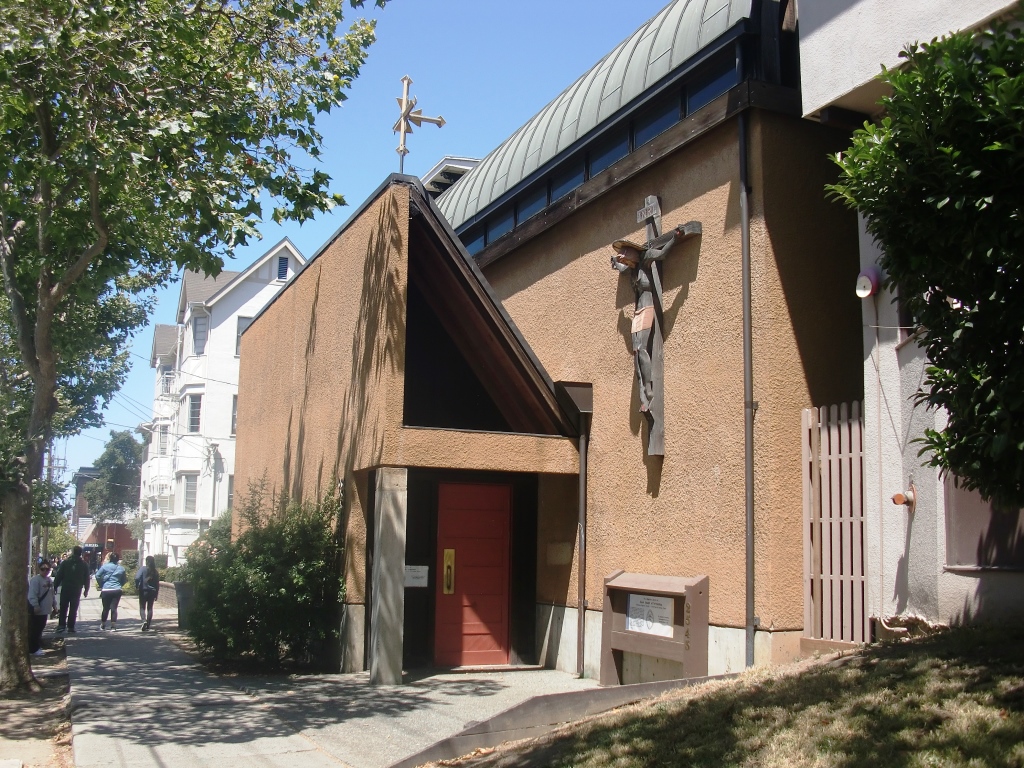
I’ve also recently had the privilege of being part of the first steps taken to establish in Berkeley a Center for Western Civilization – library, faculty residence, lecture hall – one block from the U. C. campus. The St. Joseph of Arimathea Foundation sees this as a means to plant more seeds in the fertile ground of this major university area, to teach founding principles of Western Civilization to this coming generation. Joseph of Arimathea was the trader who provided the tomb for Christ’s burial; he sailed to Glastonbury to plant the seeds of Christianity in Britain. It is said that he planted his staff and the staff flowered. This same thorn tree, replanted over the years, still flowers in winter.

Many folks across our land are cultivating Western ideals, planting seeds for the future generations. They need our support, both financial and spiritual, to rebuild our broken culture and reap a good harvest.

The Land of the Free

american-flag-2a2As I watched the children running through the grass, clutching strings tied to red and blue and white balloons, I was thankful once again to be an American, to live in this land of the free. The burgers were grilling, the buns waiting to be slathered with mustard and catsup. Folks mingled and chatted, then scooted onto wooden picnic benches. It was our annual church picnic, enjoyed this year on Fourth of July weekend.

And so far, the last I heard, we are still the land of the free. As I watched the children, I thought as I often do, how law protects us, allowing these children to run with such abandon and joy. I then recalled a few lines from the movie A Man for All Seasons, where Sir Thomas More challenges the thinking of his son-in-law Will Roper:

Roper:  So now you’d give the Devil benefit of law!

More:  Yes. What would you do? Cut a great road through the law to get after the Devil?

Roper:  I’d cut down every law in England to do that!

More:  Oh? And when the last law was down, and the Devil turned ’round on you, where would you hide, Roper, the laws all being flat? This country’s planted thick with laws from coast to coast– man’s laws, not God’s– and if you cut them down—and you’re just the man to do it—do you really think you could stand upright in the winds that would blow then? Yes, I’d give the Devil benefit of law, for my own safety’s sake.

Our national Independence Day is a time to reflect on who we are as Americans, the stuff we are made of, the values for which we fight, suffer, and die. And while freedom from tyranny comes to mind, considering how our fledgling family of thirteen colonies protested British taxation, I usually return to the principle of law and order, something we happily inherited from British common law.

We have inherited a great deal from Britain in spite of our young rebellion over two hundred years ago: language, literature, philosophy and religion; traditions, secular and sacred; the desire for monarchy as seen in our icons, political and cultural; freedom of speech, especially in the media, freedom of thought and belief; the rights of property and families and individuals.

On July 4, 1776, in the “unanimous Declaration of the thirteen united States of America” we held certain truths to be self-evident: that all men were created equal, that God has given them the right of life, liberty and the pursuit of happiness, and that governments derive their power from the people, from the consent of the governed. And so to guarantee these truths, to protect the great heritage we received from Britain, and to thus ensure a peaceful democracy, the young union of States constituted a body of law.

Our nation would have not survived, will not survive, without the rule of law. Without laws, we, like young Roper, would have no protection from tyranny in all its forms, in all areas of our national life.

But changing the law is a tedious process. Perhaps this is wise, helping to ensure good laws. But we are a nation of do-ers, and we become impatient. We march with banners and placards year after year before the White House or the Supreme Court or Capitol Hill to challenge a 1973 law considered immoral and deadly not only to the individual and the unborn, but to our cultural climate as well. Killing the innocent, some of us cry, begets more killing of the innocent. Please change this law, we say with our signs and heartfelt tears.

We look to government to lead us and to govern with our consent. We demand they too be law abiding, knowing that if our governors are corrupt, so will be their governing. We demand of them what the law demands of us.

Internationally we are the saviors of the world. Immigrants throng to and over our borders, determined to touch and taste America, scrabbling over fences, tunneling under boundaries. Confident in America’s salvation, they give away their children, hoping they will have will have a better life, a peaceful life, or simply life itself. They are desperate, for they see us and other Western nations, as we truly are, the bearers of law and order, the protectors of freedom, the guarantors of peace.

And yet, they too must realize somewhere deep within that to break the law is to break America. To loosen and lessen, bend and broaden without the consent of the people is to invite disorder. And disorder leads to anarchy which demands, even welcomes, the bully, the tyrant, the one who promises to restore order, at a price. In America, these immigrants know as do we, that cutting ahead in line is unfair, simply wrong. And Americans are fair; they desire to right the wrongs.

So this year, this Fourth of July, 2014, I am thankful our nation is still undivided and that we still form a more perfect union, even if imperfect. I am thankful that our separation of powers (Congress, Courts, Presidency) though threatened, may right itself in the future. I am thankful that outrage may still be penned, if penned respectfully (with due regard to libel and slander), that the press’s freedoms are not always misused, that debate and dissent still breathes (although barely) in our land. I am especially thankful for the courageous men and women who fight for us, for our freedoms.

I am glad that God is not dead as has been pronounced, and that respect for all beliefs is honored if not always practiced.

I’m glad, too, that I for one do not take America for granted. I see her as exceptional, enlightened, and great. The rest of the world sees her this way, as a shining light that will not go out, a beacon on a hill. She may not be perfect, but she values life, liberty, and the pursuit of happiness. She rules with the consent of her people, a nation of rules that protects dissent as well.

And now as I write, I see in my mind (and my heart) the children running freely through the grass, their colorful balloons flying high.

Happy Birthday, America.

All Things Bright and Beautiful

I have been finishing up a number of projects on my desk, always satisfying, and looking ahead to preparing materials for our Sunday Summers in the Church School at our local parish. This year the theme is “All Things Bright and Beautiful.” We’ll plant flowers (and water them too), sing the hymn, hear stories about God’s creation, and do simple crafts. My favorite is always the singing.

So just now I sent to the printer the final draft of Raymond Raynes’ Darkness No Darkness, a series of retreat meditations that our American Church Union is republishing this summer. Father Raynes, late Superior of the Community of the Resurrection in Mirfield, England has planted many seeds in many souls with his remarkable words. Now, his words fill my thoughts, banning the darkness, shining bright light into newly discovered rooms in my own heart:

I am to be the home of Christ; Christ is to be the life of my soul.  I am to be an agent because Christ dwells in me, and I am in his hands, I am to be an agent of eternal charity. The moment we realize this, the tension begins – the pressure on our conscience.

It is as though the many strands of our faith are woven together in these pages to make them more concrete, more visible, more… useful. I find when I understand the economy of heaven and earth, the will and plan of God, my life becomes more sane. In this case, to be the home of Christ and Christ to be my life (not just in my life) is an image and idea that has bordered my thoughts the last few days. On other pages in this short book Father Raynes speaks of our hearts uniting with Christ’s heart, so that the Christian burns with the fire of God, the fire of love.

And so this morning as we celebrated the Feast Days of St. Peter and St. Paul, I could see how Christ took over that big fisherman’s heart and moved right in. St. Peter must have felt that tension the moment he left his fishing nets behind, and the pressure grew, not making him perfect but pulling him toward perfection, to be an agent of eternal charity, a bold conduit for the love of God on earth. And St. Paul’s transformation on the way to Damascus was equally dramatic, turning this brilliant Pharisee into the world’s greatest theologian, one who would explain in stunningly poetic passages the charity of God, the movement of the holy into the earthly, Christ into us and we into him.

It’s a simple idea, really, being the home of Christ, to be always listening for the nudge of the Holy Spirit, to truly see those around us. It is a truth, a reality, that grows when watered by worship and prayer and sacraments. Slowly, the tension, the pressure on the conscience, is eased if not resolved, and we sense more and more that Christ is indeed dwelling within us and we in him. The light shines in the darkness. We see.

We surely can’t do this alone, but only through his Body on earth, the Church. This is good news, joyful news. For through the Church I can enjoy Christ’s movement toward me, his making his home in my heart with each prayer, each Eucharist, each confession and absolution. We need only say yes and the drama begins in each of us.

It is when the created creature, man, welcomes the Creator and their hearts become one that all makes sense. All things are bright and beautiful, wise and wonderful… It is when Love enters our world again and again on every altar and into every soul that life becomes true-ly de-light-full. For then we know, as the Psalmist wrote, darkness is no darkness:

Whither shall I go then from thy Spirit? or whither shall I go then from thy presence?
If I climb up into heaven, thou art there; if I go down to hell, thou art there also.
If I take the wings of the morning, and remain in the uttermost parts of the sea;
Even there also shall thy hand lead me, and thy right hand shall hold me.
If I say, Peradventure the darkness shall cover me; then shall my night be turned to day.
Yea, the darkness is no darkness with thee, but the night is as clear as the day; the darkness and light to thee are both alike.      (Psalm 139:6-12)
 

Indeed, time shall fly on the wings of the morning, but all the while God’s hand shall lead me; he shall hold me in his palm. For I am cradled, always, in the bright love of God.

Focusing on God

I’ve been sitting in my home office looking out the window, meditating on the sun glancing off olive tree leaves, considering what to focus on this afternoon in this space, this First Sunday after Trinity and this Octave of Corpus Christi. I’ve got multiple projects on my desk – pieces promised  (two posts, two reviews), the final draft of Father Raynes’s Darkness No Darkness (an ACU reprint), a booklet reprint for one of our parishes, copies of The Magdalene Mystery to be sent to the Filipino priests I met in Rome, and lastly, my novel-in-progress, The Fire Trail, which I have returned to, determined to give it a couple of hours each day, but alas, not succeeding. Oh, and did I mention the brochure the Bishop asked me to help write and the Facebook site we will be setting up for our seminary chapel, St. Joseph of Arimathea?

I could write in this space about any of these things that clutter my little brain, but which one or two or three? Suddenly, across the lawn loped a coyote, at least I think he was a coyote. He was slim, the size of a midsize dog. Long narrow snout. Darkish gray, like a deer. Clearly wild and headed across our front lawn and down the hill toward the base of Mount Diablo. Clearly focused.

I suddenly realized how important choices were. I thought of all the ideas roaming in my head and how this coyote banished them in an instant. He focused my attention on his swift run through the plowed golden grass of the hill. He focused my attention on focusing. I wanted to run swiftly, on target, like he ran.

We are bombarded with choices every day, ways to spend our time, ways to waste our time, ways to kill our time. With each choice, we move in a certain direction and are then bombarded with more choices. How does one choose?

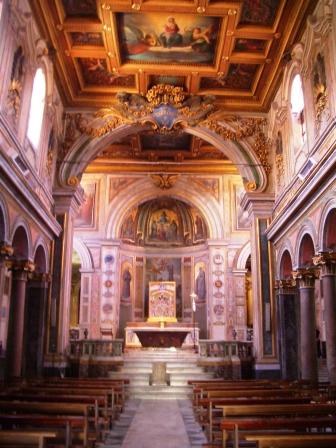
St. Joseph's 002compWe attended St. Joseph’s today, our seminary chapel in Berkeley a block from campus. It was easy in that domed and tiled space to become focused, to not waste any of the hour given. The organ thundered as we sang, Alleluia, Sing to Jesus. The acolytes and clergy processed in with flaming candles and crucifix held high. The stone altar was alight with six white wax pillars framing the tabernacle. Soon we were praying together the familiar words of the Anglican Mass, poetic language going back to the sixteenth century. We listened to Holy Scripture and the preacher preached on the Feast of Corpus Christi celebrated this last week, the feast of the Body and Blood of Christ, the Real Presence of Christ in the bread and the wine of our Eucharistic celebration.

We were focused in that hour. We had made choices this day, decisions not to go to the park, not to go shopping, not to have a late brunch or lunch, not to sit here and work on projects at my desk. We didn’t have to choose to get up early since the service was at 11:30, for which we were grateful. But we did have to choose to take a couple of hours out of our Sunday to worship God with his Body of Christ in Berkeley.

And that choice made all the difference. It will make all the difference in my life this week, and it made all the difference in my life last week. Our preacher said that there was a time in his life when he he didn’t choose church, he didn’t choose to have God in his life. He chose other things to do with his time given. But soon he felt a deep emptiness in his soul. Soon he was hungry for God and it was a hunger that he couldn’t fill with other choices. So he returned to church, and I am glad for that, for he is a powerful preacher, bringing the intimacy of God’s love to each one of us.

Choosing is like carving, with careful attention given to each shaving of the soul. We whittle away at our lives to create a sculpted image, the person that God intended and intends us to be. We need to be careful to carve in the right places, to choose no sometimes and to choose yes other times. So we need an educated soul, as well as a fully fed soul. We need God’s Word through Scripture and sermon, and we need God himself, through the mysterious miracle of the Real Presence in the Holy Eucharist.

The coyote was heading for food and water, I am sure. Our choices are more subtle and yet just that simple too. For choosing God, choosing to worship and be fed and watered by him each week, lightens our darkness, and makes all the other choosings easy.

I became, have become, focused, for life has come into focus, at least until my next encounter with God.

True Fatherhood

TRINITY.RUBLEVTrinity Sunday comes late this year, appropriately landing on Father’s Day and adding to the rich texture of June, a month that opens the door to a new season. So as we leave spring and slip into summer, we don the green of Trinitytide. The “extra-ordinary” time of Advent through Pentecost, celebrating the Son of God’s life on earth changes to “ordinary” time, a time of quiet growth and reflection on what that life means to each of us.

They say the Holy Trinity is a great mystery, how three persons can be one. And yet, as one grows in the faith, it seems natural. God the Father expresses himself as God the Son and later as God the Holy Spirit. It is said that love binds the three together, and no doubt this is true, but I would say that the three are all extraordinary expressions of love. Christ, the Son, is God’s loving incarnation, God’s healing and salvific sacrifice for us who brings us home to him. The Holy Spirit is God’s loving presence sent when the Son has ascended. God the Father provides for us, loves us, in all time, through all eternity. So we need never be lost. We need never be alone, afraid, unprotected.

Our culture celebrates Father’s Day to honor those who, on this earth, act to shelter us and love us in the same way our heavenly Father has done for his people since Adam and Eve. Our earthly fathers stumble, to be sure, for they are earthly, but their role as protectors and providers continues to be an ideal. We honor them for their hard work, their sacrifice of time and treasure, to provide for us. When they abandon us, we know they have wronged us. We know they are no longer fathers.  For true fathers, like our Heavenly Father, never leave us. They never stop loving us, never stop sacrificing.

Fathers, like our Father in Heaven, discipline us so that we may learn right from wrong. They teach standards of behavior in an effort to raise us up, transforming narcissistic children into responsible adults. It is no coincidence that crime rises when fathers abandon fathering. In American culture, since the rise of easy divorce and the artificial separation of sex and procreation, too many fathers have run away from their children. Too many mothers have been forced to be fathers as well, and somehow, mysteriously, they can never really be both. In this, American culture has been grievously wronged.

We call the great theologians of history, those men who formulated and protected the creeds and canons of Christianity, our Church Fathers. They too took care of their children, the faithful. They gave them, gave us, through interpretation of Scripture, the words to express the truth of God and his love for man. They protected us from untruth, lies, heresy. Like Saint Athanasius, who fought Arianism with the Nicene Creed, they explained the Trinity to us, the truth of the Father, the Son, and the Holy Spirit. The words of those Church Fathers, passed from generation to generation, continue to guide this Body of Christ, so that Christians have a great host of fathers to enlighten their dark and help them shoulder the perplexing dilemmas of living.

And, to be sure, the inheritors of those eminent Church Fathers, through Apostolic Succession, are the priestly fathers we know today. These men, through the Laying on of Hands, are consecrated to and with and by these creedal truths, vowing to unite God the Father with each of us through God the Son and by the power of God the Holy Spirit. These priestly fathers are, however, sons of Adam and earthly too, but they strive through grace and sanctification to give us a glimpse of heaven on earth.

The Epistle for Trinity Sunday for Anglicans is the fourth chapter of the Revelation of John. The passage recounts John’s vision of Heaven, and it is this vision that every Christian may glimpse from time to time. Hidden within moments of love, moments of sacrifice and suffering, we see God’s presence weave among us. We sense a glory close by, near enough to know. Angels hover about us, and if we can forget ourselves for a time, we can sense them. We need to be silent and listening, full of the words given to us by the Word, Christ, through Scripture, explained by the Church Fathers through the centuries. So we worship on Sunday, sing the Psalms and listen to the lessons. We hear our priestly father explain the great miraculous mysteries given to us. We meet God the Son at the altar and we sing God the Father’s praises as God the Holy Spirit moves among us.

This is the most Holy Trinity, the ultimate Fatherhood, when Love becomes one of us, dies for us, and gives us his Spirit to be with us always, even to the ends of the earth.