Category Archives: Uncategorized

Watering Seeds

flowersThe sunflowers that the children planted last Sunday, pressing the seeds into the loamy soil in miniature clay pots, sprouted during the week. This morning we gathered around the shiny yellow table and marveled at the green shoots. Natalie, age four, carried the teapot (our pitcher) to the bathroom next door. She stood on the step-stool and turned the faucet, then watched the water gush into the pot. With great attention and care she grasped it with both hands, balancing her walk back to the yellow table with its new life. Together we tilted the spout and watered some sprouts, then passed the chrome pot to Luisa, age two, to give it a try with another teacher’s helping hand.

Earlier we had tied bright colored balloons to our welcome sign outside. We filled a basket with animal crackers. Soon we would read the story of creation with its many hued watercolors of rainbows and rivers and flowers, yellows and blues and greens and reds, and all things bright and beautiful. I was looking forward to singing this hymn – “All Things Bright and Beautiful” – together. 

As I watched the children and the teachers in this precious hour in the back of our parish church I thought how this scene had become and would become a part of my history. I have been involved in teaching children in church for thirty-seven years now, and as I share with them the creation of the world, I know that even in this small way I am contributing a few drops to the great stream of Western civilization. For the children will grow up believing in a rational God who not only created order out of chaos, life and light out of death and darkness, but loved, and continues to love, his creation. This is marvel-ous news.

There has been much outcry in the last few years about the loss of Western Civilization courses in major universities. How will we understand who we are? How will we move forward, creating and inventing and ordering the chaos around us if we do not understand how we created in the past? As many have written recently, this creating and inventing and ordering – this steady progress, was the product of belief in a rational God. Without the Judeo-Christian civilizing stream none of this would have happened. Progress happens within a linear view of history, not cyclical. When Abraham left Ur, at the command of the One True God, he left the pagan cycles of fatalism and reincarnation. He gathered his people and stepped forward in time to a destination. One action built upon another. Prophecies encouraged the journey, angelic visitors explained the future. He and his tribe were a part of something far greater, even in his old age, something building and progressing, something sacred led by God. Abraham looked up to the stars and found a God who cared, and he looked forward to the path he would follow to his destination.

So as I watched the children, I considered how my own history, my country’s history, my culture’s history, that of the Western world – all the past that has brought me here – is vital to the next generation. And values of freedom, democracy, respect for one another, heroism and sacrifice, personal responsibility, the sacredness of life itself, must all be cultivated just like these Sunday School seeds in order to flower.

This last week I signed up as a contributing “Creator” to a newly launched website, LibertyIslandMag.com, founded by Adam Bellow. Here “conservative, libertarian, and contrarian” authors of fiction may post their pieces and excerpts, blogs and comments, adding to a growing national conversation. I know I’m conservative, probably libertarian to a degree, and most likely considered contrarian by major publishers (and some of my family) so I was glad to find this island of sanity. 

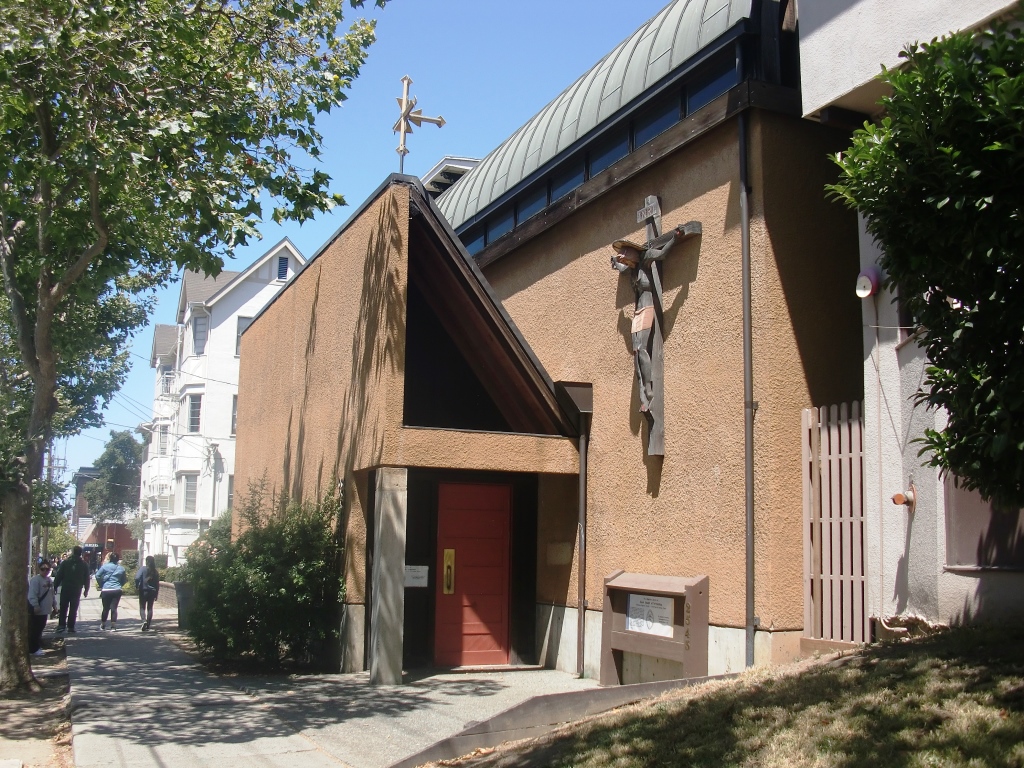
I’ve also recently had the privilege of being part of the first steps taken to establish in Berkeley a Center for Western Civilization – library, faculty residence, lecture hall – one block from the U. C. campus. The St. Joseph of Arimathea Foundation sees this as a means to plant more seeds in the fertile ground of this major university area, to teach founding principles of Western Civilization to this coming generation. Joseph of Arimathea was the trader who provided the tomb for Christ’s burial; he sailed to Glastonbury to plant the seeds of Christianity in Britain. It is said that he planted his staff and the staff flowered. This same thorn tree, replanted over the years, still flowers in winter.

Many folks across our land are cultivating Western ideals, planting seeds for the future generations. They need our support, both financial and spiritual, to rebuild our broken culture and reap a good harvest.

The Land of the Free

american-flag-2a2As I watched the children running through the grass, clutching strings tied to red and blue and white balloons, I was thankful once again to be an American, to live in this land of the free. The burgers were grilling, the buns waiting to be slathered with mustard and catsup. Folks mingled and chatted, then scooted onto wooden picnic benches. It was our annual church picnic, enjoyed this year on Fourth of July weekend.

And so far, the last I heard, we are still the land of the free. As I watched the children, I thought as I often do, how law protects us, allowing these children to run with such abandon and joy. I then recalled a few lines from the movie A Man for All Seasons, where Sir Thomas More challenges the thinking of his son-in-law Will Roper:

Roper:  So now you’d give the Devil benefit of law!

More:  Yes. What would you do? Cut a great road through the law to get after the Devil?

Roper:  I’d cut down every law in England to do that!

More:  Oh? And when the last law was down, and the Devil turned ’round on you, where would you hide, Roper, the laws all being flat? This country’s planted thick with laws from coast to coast– man’s laws, not God’s– and if you cut them down—and you’re just the man to do it—do you really think you could stand upright in the winds that would blow then? Yes, I’d give the Devil benefit of law, for my own safety’s sake.

Our national Independence Day is a time to reflect on who we are as Americans, the stuff we are made of, the values for which we fight, suffer, and die. And while freedom from tyranny comes to mind, considering how our fledgling family of thirteen colonies protested British taxation, I usually return to the principle of law and order, something we happily inherited from British common law.

We have inherited a great deal from Britain in spite of our young rebellion over two hundred years ago: language, literature, philosophy and religion; traditions, secular and sacred; the desire for monarchy as seen in our icons, political and cultural; freedom of speech, especially in the media, freedom of thought and belief; the rights of property and families and individuals.

On July 4, 1776, in the “unanimous Declaration of the thirteen united States of America” we held certain truths to be self-evident: that all men were created equal, that God has given them the right of life, liberty and the pursuit of happiness, and that governments derive their power from the people, from the consent of the governed. And so to guarantee these truths, to protect the great heritage we received from Britain, and to thus ensure a peaceful democracy, the young union of States constituted a body of law.

Our nation would have not survived, will not survive, without the rule of law. Without laws, we, like young Roper, would have no protection from tyranny in all its forms, in all areas of our national life.

But changing the law is a tedious process. Perhaps this is wise, helping to ensure good laws. But we are a nation of do-ers, and we become impatient. We march with banners and placards year after year before the White House or the Supreme Court or Capitol Hill to challenge a 1973 law considered immoral and deadly not only to the individual and the unborn, but to our cultural climate as well. Killing the innocent, some of us cry, begets more killing of the innocent. Please change this law, we say with our signs and heartfelt tears.

We look to government to lead us and to govern with our consent. We demand they too be law abiding, knowing that if our governors are corrupt, so will be their governing. We demand of them what the law demands of us.

Internationally we are the saviors of the world. Immigrants throng to and over our borders, determined to touch and taste America, scrabbling over fences, tunneling under boundaries. Confident in America’s salvation, they give away their children, hoping they will have will have a better life, a peaceful life, or simply life itself. They are desperate, for they see us and other Western nations, as we truly are, the bearers of law and order, the protectors of freedom, the guarantors of peace.

And yet, they too must realize somewhere deep within that to break the law is to break America. To loosen and lessen, bend and broaden without the consent of the people is to invite disorder. And disorder leads to anarchy which demands, even welcomes, the bully, the tyrant, the one who promises to restore order, at a price. In America, these immigrants know as do we, that cutting ahead in line is unfair, simply wrong. And Americans are fair; they desire to right the wrongs.

So this year, this Fourth of July, 2014, I am thankful our nation is still undivided and that we still form a more perfect union, even if imperfect. I am thankful that our separation of powers (Congress, Courts, Presidency) though threatened, may right itself in the future. I am thankful that outrage may still be penned, if penned respectfully (with due regard to libel and slander), that the press’s freedoms are not always misused, that debate and dissent still breathes (although barely) in our land. I am especially thankful for the courageous men and women who fight for us, for our freedoms.

I am glad that God is not dead as has been pronounced, and that respect for all beliefs is honored if not always practiced.

I’m glad, too, that I for one do not take America for granted. I see her as exceptional, enlightened, and great. The rest of the world sees her this way, as a shining light that will not go out, a beacon on a hill. She may not be perfect, but she values life, liberty, and the pursuit of happiness. She rules with the consent of her people, a nation of rules that protects dissent as well.

And now as I write, I see in my mind (and my heart) the children running freely through the grass, their colorful balloons flying high.

Happy Birthday, America.

All Things Bright and Beautiful

I have been finishing up a number of projects on my desk, always satisfying, and looking ahead to preparing materials for our Sunday Summers in the Church School at our local parish. This year the theme is “All Things Bright and Beautiful.” We’ll plant flowers (and water them too), sing the hymn, hear stories about God’s creation, and do simple crafts. My favorite is always the singing.

So just now I sent to the printer the final draft of Raymond Raynes’ Darkness No Darkness, a series of retreat meditations that our American Church Union is republishing this summer. Father Raynes, late Superior of the Community of the Resurrection in Mirfield, England has planted many seeds in many souls with his remarkable words. Now, his words fill my thoughts, banning the darkness, shining bright light into newly discovered rooms in my own heart:

I am to be the home of Christ; Christ is to be the life of my soul.  I am to be an agent because Christ dwells in me, and I am in his hands, I am to be an agent of eternal charity. The moment we realize this, the tension begins – the pressure on our conscience.

It is as though the many strands of our faith are woven together in these pages to make them more concrete, more visible, more… useful. I find when I understand the economy of heaven and earth, the will and plan of God, my life becomes more sane. In this case, to be the home of Christ and Christ to be my life (not just in my life) is an image and idea that has bordered my thoughts the last few days. On other pages in this short book Father Raynes speaks of our hearts uniting with Christ’s heart, so that the Christian burns with the fire of God, the fire of love.

And so this morning as we celebrated the Feast Days of St. Peter and St. Paul, I could see how Christ took over that big fisherman’s heart and moved right in. St. Peter must have felt that tension the moment he left his fishing nets behind, and the pressure grew, not making him perfect but pulling him toward perfection, to be an agent of eternal charity, a bold conduit for the love of God on earth. And St. Paul’s transformation on the way to Damascus was equally dramatic, turning this brilliant Pharisee into the world’s greatest theologian, one who would explain in stunningly poetic passages the charity of God, the movement of the holy into the earthly, Christ into us and we into him.

It’s a simple idea, really, being the home of Christ, to be always listening for the nudge of the Holy Spirit, to truly see those around us. It is a truth, a reality, that grows when watered by worship and prayer and sacraments. Slowly, the tension, the pressure on the conscience, is eased if not resolved, and we sense more and more that Christ is indeed dwelling within us and we in him. The light shines in the darkness. We see.

We surely can’t do this alone, but only through his Body on earth, the Church. This is good news, joyful news. For through the Church I can enjoy Christ’s movement toward me, his making his home in my heart with each prayer, each Eucharist, each confession and absolution. We need only say yes and the drama begins in each of us.

It is when the created creature, man, welcomes the Creator and their hearts become one that all makes sense. All things are bright and beautiful, wise and wonderful… It is when Love enters our world again and again on every altar and into every soul that life becomes true-ly de-light-full. For then we know, as the Psalmist wrote, darkness is no darkness:

Whither shall I go then from thy Spirit? or whither shall I go then from thy presence?
If I climb up into heaven, thou art there; if I go down to hell, thou art there also.
If I take the wings of the morning, and remain in the uttermost parts of the sea;
Even there also shall thy hand lead me, and thy right hand shall hold me.
If I say, Peradventure the darkness shall cover me; then shall my night be turned to day.
Yea, the darkness is no darkness with thee, but the night is as clear as the day; the darkness and light to thee are both alike.      (Psalm 139:6-12)
 

Indeed, time shall fly on the wings of the morning, but all the while God’s hand shall lead me; he shall hold me in his palm. For I am cradled, always, in the bright love of God.

Focusing on God

I’ve been sitting in my home office looking out the window, meditating on the sun glancing off olive tree leaves, considering what to focus on this afternoon in this space, this First Sunday after Trinity and this Octave of Corpus Christi. I’ve got multiple projects on my desk – pieces promised  (two posts, two reviews), the final draft of Father Raynes’s Darkness No Darkness (an ACU reprint), a booklet reprint for one of our parishes, copies of The Magdalene Mystery to be sent to the Filipino priests I met in Rome, and lastly, my novel-in-progress, The Fire Trail, which I have returned to, determined to give it a couple of hours each day, but alas, not succeeding. Oh, and did I mention the brochure the Bishop asked me to help write and the Facebook site we will be setting up for our seminary chapel, St. Joseph of Arimathea?

I could write in this space about any of these things that clutter my little brain, but which one or two or three? Suddenly, across the lawn loped a coyote, at least I think he was a coyote. He was slim, the size of a midsize dog. Long narrow snout. Darkish gray, like a deer. Clearly wild and headed across our front lawn and down the hill toward the base of Mount Diablo. Clearly focused.

I suddenly realized how important choices were. I thought of all the ideas roaming in my head and how this coyote banished them in an instant. He focused my attention on his swift run through the plowed golden grass of the hill. He focused my attention on focusing. I wanted to run swiftly, on target, like he ran.

We are bombarded with choices every day, ways to spend our time, ways to waste our time, ways to kill our time. With each choice, we move in a certain direction and are then bombarded with more choices. How does one choose?

St. Joseph's 002compWe attended St. Joseph’s today, our seminary chapel in Berkeley a block from campus. It was easy in that domed and tiled space to become focused, to not waste any of the hour given. The organ thundered as we sang, Alleluia, Sing to Jesus. The acolytes and clergy processed in with flaming candles and crucifix held high. The stone altar was alight with six white wax pillars framing the tabernacle. Soon we were praying together the familiar words of the Anglican Mass, poetic language going back to the sixteenth century. We listened to Holy Scripture and the preacher preached on the Feast of Corpus Christi celebrated this last week, the feast of the Body and Blood of Christ, the Real Presence of Christ in the bread and the wine of our Eucharistic celebration.

We were focused in that hour. We had made choices this day, decisions not to go to the park, not to go shopping, not to have a late brunch or lunch, not to sit here and work on projects at my desk. We didn’t have to choose to get up early since the service was at 11:30, for which we were grateful. But we did have to choose to take a couple of hours out of our Sunday to worship God with his Body of Christ in Berkeley.

And that choice made all the difference. It will make all the difference in my life this week, and it made all the difference in my life last week. Our preacher said that there was a time in his life when he he didn’t choose church, he didn’t choose to have God in his life. He chose other things to do with his time given. But soon he felt a deep emptiness in his soul. Soon he was hungry for God and it was a hunger that he couldn’t fill with other choices. So he returned to church, and I am glad for that, for he is a powerful preacher, bringing the intimacy of God’s love to each one of us.

Choosing is like carving, with careful attention given to each shaving of the soul. We whittle away at our lives to create a sculpted image, the person that God intended and intends us to be. We need to be careful to carve in the right places, to choose no sometimes and to choose yes other times. So we need an educated soul, as well as a fully fed soul. We need God’s Word through Scripture and sermon, and we need God himself, through the mysterious miracle of the Real Presence in the Holy Eucharist.

The coyote was heading for food and water, I am sure. Our choices are more subtle and yet just that simple too. For choosing God, choosing to worship and be fed and watered by him each week, lightens our darkness, and makes all the other choosings easy.

I became, have become, focused, for life has come into focus, at least until my next encounter with God.

True Fatherhood

TRINITY.RUBLEVTrinity Sunday comes late this year, appropriately landing on Father’s Day and adding to the rich texture of June, a month that opens the door to a new season. So as we leave spring and slip into summer, we don the green of Trinitytide. The “extra-ordinary” time of Advent through Pentecost, celebrating the Son of God’s life on earth changes to “ordinary” time, a time of quiet growth and reflection on what that life means to each of us.

They say the Holy Trinity is a great mystery, how three persons can be one. And yet, as one grows in the faith, it seems natural. God the Father expresses himself as God the Son and later as God the Holy Spirit. It is said that love binds the three together, and no doubt this is true, but I would say that the three are all extraordinary expressions of love. Christ, the Son, is God’s loving incarnation, God’s healing and salvific sacrifice for us who brings us home to him. The Holy Spirit is God’s loving presence sent when the Son has ascended. God the Father provides for us, loves us, in all time, through all eternity. So we need never be lost. We need never be alone, afraid, unprotected.

Our culture celebrates Father’s Day to honor those who, on this earth, act to shelter us and love us in the same way our heavenly Father has done for his people since Adam and Eve. Our earthly fathers stumble, to be sure, for they are earthly, but their role as protectors and providers continues to be an ideal. We honor them for their hard work, their sacrifice of time and treasure, to provide for us. When they abandon us, we know they have wronged us. We know they are no longer fathers.  For true fathers, like our Heavenly Father, never leave us. They never stop loving us, never stop sacrificing.

Fathers, like our Father in Heaven, discipline us so that we may learn right from wrong. They teach standards of behavior in an effort to raise us up, transforming narcissistic children into responsible adults. It is no coincidence that crime rises when fathers abandon fathering. In American culture, since the rise of easy divorce and the artificial separation of sex and procreation, too many fathers have run away from their children. Too many mothers have been forced to be fathers as well, and somehow, mysteriously, they can never really be both. In this, American culture has been grievously wronged.

We call the great theologians of history, those men who formulated and protected the creeds and canons of Christianity, our Church Fathers. They too took care of their children, the faithful. They gave them, gave us, through interpretation of Scripture, the words to express the truth of God and his love for man. They protected us from untruth, lies, heresy. Like Saint Athanasius, who fought Arianism with the Nicene Creed, they explained the Trinity to us, the truth of the Father, the Son, and the Holy Spirit. The words of those Church Fathers, passed from generation to generation, continue to guide this Body of Christ, so that Christians have a great host of fathers to enlighten their dark and help them shoulder the perplexing dilemmas of living.

And, to be sure, the inheritors of those eminent Church Fathers, through Apostolic Succession, are the priestly fathers we know today. These men, through the Laying on of Hands, are consecrated to and with and by these creedal truths, vowing to unite God the Father with each of us through God the Son and by the power of God the Holy Spirit. These priestly fathers are, however, sons of Adam and earthly too, but they strive through grace and sanctification to give us a glimpse of heaven on earth.

The Epistle for Trinity Sunday for Anglicans is the fourth chapter of the Revelation of John. The passage recounts John’s vision of Heaven, and it is this vision that every Christian may glimpse from time to time. Hidden within moments of love, moments of sacrifice and suffering, we see God’s presence weave among us. We sense a glory close by, near enough to know. Angels hover about us, and if we can forget ourselves for a time, we can sense them. We need to be silent and listening, full of the words given to us by the Word, Christ, through Scripture, explained by the Church Fathers through the centuries. So we worship on Sunday, sing the Psalms and listen to the lessons. We hear our priestly father explain the great miraculous mysteries given to us. We meet God the Son at the altar and we sing God the Father’s praises as God the Holy Spirit moves among us.

This is the most Holy Trinity, the ultimate Fatherhood, when Love becomes one of us, dies for us, and gives us his Spirit to be with us always, even to the ends of the earth.

Holy Spirit Joy

A friend of mine died this last week. She stepped into the next life, for she was and is a Christian. She knew the way to Heaven for she had spent a lifetime inside the warm ark of the Church. Through joy and sorrow, through health and sickness, she was surrounded by the guidance and love of the Body of Christ.

We were not close friends, but we were longtime friends. Somehow the years (thirty-seven) sharing a pew in our parish church, kneeling and praying and singing together, created a mysterious, miraculous bond. Our sons served together as acolytes, and oddly enough both boys ended up in Colorado a few hours away from one another, with their own families. When my friend began working in the small publishing office where I work too, it gave me great joy to see her more often. We compared our Rocky Mountain sons and counted the days until our next visits to see the grandchildren. We compared photos and shared Facebook postings. Now, as I write this, I see her smile and I hear her laughter.

Now she is gone, or rather, she has gone ahead of me.

It was not a surprise, for she had been dying slowly of cancer and the treatments were no longer working. Yet it was a surprise, a shock, and I still can’t really believe she is not on this earth, that she has moved on, to be with Our Lord in Heaven and sing with the angels and saints. There will be an emptiness in the office now.

I’m so glad we have the Holy Comforter, the one who strengthens us in times like this, the Holy Spirit of God given us at Pentecost. And in the many churches we visited in Italy last month, this strengthening sense of God was present. Italy is full of haunting, beautiful, intoxicating churches alive with God’s Spirit, sometimes dating to the fourth century and earlier. They teach me about Heaven and earth as I enter and cross the threshold into the sacred. I gaze up the central aisle, focusing on the high altar with its potent tabernacle. Everything in the church points to the Blessed Sacrament reserved in that tabernacle, the Holy of Holies, even the domes dance above, linking Heaven to earth through this church rooted in the ground, whether the church be small or large, humble or grandiose.

I find history fascinating, at least history that explains my present, helps me with the riddle of me, so the history of the Western world in particular is the underpinning, the foundation for our American life today. It is useful history, events and people that formed us as a culture molded our thought patterns, directed our assumptions. It explains, solves the mystery of life.

The Magdalene MysteryAnd so it is even more so with the history of Christianity, particularly visible in Italy’s churches. It was this fascination that led to my novel, The Magdalene Mystery, for the mystery of Mary Magdalene is the mystery of history, how we know what we know, or do we know anything? Is life meaningless, are we dumb beasts, and is all of life merely chaos spinning into a void? What did the Magdalene see that Easter morning two thousand years ago? Was it just the gardener after all? Were the early accounts of the resurrection of Christ true?

I cross the threshold of a church and I know I can know. I know I can find the answers if I want to. All of the imagery explains what happened and what it means to me today on my own journey. All of the faithful who have gone before have added to the great wealth of knowledge we have concerning exactly what happened in those first decades of the first millennium.

The churches speak to me, again and again. They speak of God’s love, what our lives mean, who we are meant to be, where we are going. Through the churches, God speaks to all of us. We need only listen.

Today is Pentecost Sunday, the festival of the Holy Spirit descending upon the disciples and baptizing them with fire. Thus today is the Birthday of the Church. It is a day to watch and listen, for as our preacher said, God’s Spirit weaves through us in spectacular ways. We simply need to pay attention.

I agree. In Rome, as I chatted with other Christians on fire with God I sensed the Holy Spirit weaving among us. Sister Emanuela at St. John Lateran was alight with God’s love as she recounted her experiences sharing the Christian art of Rome with English visitors (you might recognize her joy in The Magdalene Mystery). Father Paolo of La Maddalena, an exquisite golden Baroque church, included us in the celebration of the birthday of San Camillo, the founder of his Order of the Ministers to the Sick, the Camillians. We met Camilliani pilgrims from Great Britain, from the Philippines, from northern Italy, each alight with God’s love, each dedicating their lives to easing suffering and giving hope to the dying. Father Paolo blessed their hands, for their hands are healing hands.

Christians the world over carry the Holy Spirit within them, for they say yes, they are open to God working in them, weaving them together into a beautiful tapestry. The Holy Spirit bonding is greater than kinship, greater than friendship. It is a quiet bond, for we are linked by the still small voice of God. But it is strong and it is faithful, and it is intoxicating.

And one day, I shall join my friend and we shall share our stories and our lives. We shall sing alleluia with the angels and the saints, praising God for all he has done for us.

Tuesday in Venice


MeanderingWe have been meandering through Venice, following the tiny lines on the map to campos (squares), along calles (alleys), over ponti (bridges). The crowds are dense around Piazza San Marco, but lessen in the neighborhoods. 

So today we headed away from the shoving crowds toward one of my favorite churches in Venice, San Zaccaria. The walls are covered in dark masterpieces and many visit this church for the famous art. But I was  more interested in the bodies rather than the paintings, for here likes Zaccaria, father of John the Baptist. He was where I recalled, in the south aisle. His sarcophagus seemed to have been cleaned and restored, now with better lighting. And there above him, in his own tomb, lay a second great saint, the fourth century Doctor of the Church, Saint Athanasius of Alexandria.

S.Zacaria, S.AthanasiusThe close proximity of the two saints made me smile: the man of no words, struck dumb by the angel when he doubted Elizabeth’s pregnancy, lying near the man who whose words defended the Trinity against Arius’s heresy. Zaccaria was speechless; Athanasius spoke the truth that led to the formation of the Nicene Creed.

Briefly, the Arian heresy stated that God the Father and God the Son were not of the same substance, that the Father created the Son. Athanasius defended the One God in Three Persons, the Trinity, saying that Christ had always existed, was the Word himself from the beginning. Most Christian Churches espouse this Trinitarian doctrine, and the Nicene Creed, the statement compiled by the Council of Nicea in the fourth century, added certain phrases to the simpler Apostles’ Creed to specifically counter this Arian heresy. In essence, the Arian heresy is held by those today who claim Christ was a good man, a moral teacher, but not God. A big difference.

San ZaccariaSo I like to pay my respects and give thanks for St. Athanasius who, because of his great faith, was given the words to mold our beliefs into the shape of the Nicene Creed. And St. Zaccaria reminds me of the curse of doubt, reminds me that words are withheld when faith is weak. In the end, I must wait silently for the action of God in my life; I must trust each day that his spirit will not leave me, but will guide my thoughts, actions, and words. I must pray for this to happen. I must say yes to God.

There is a time for silence, for only in silence can we listen, can we hear the voice of God. So we retreated from the shoving crowds of San Marco’s piazza, the screams and the loudspeakers, the boat horns and the hawkers shoving goods at us, barring our path. We retreated to the alleys and waters and bridges of the old neighborhoods, getting lost of course, but finding our way back eventually.

Meandering 2It is easy to lose one’s way here in Venice. It is easy to take a wrong turn and then another wrong turn and end up at a dead end, all the while certain of the route. So, too, in life it is easy to lose one’s way, easy to be tripped and sidetracked by the hawkers of all kinds of wares. Without the lesson of Zaccaria and the words of Athanasius we would have less of a map to follow, if any. Others contributed to our map of faith, the path through life to heaven. The many saints, those who we meet in our daily lives and those who we honor with calendar feasts draw and have drawn the lines on our map. But it is the baptized faithful who form the Body of Christ, the Church, that makes sense of what God is telling us, prompting us. It is the Church that preserves and protects the truth, handing us the map.

S.Giovanni Battista in Bragora.compA few bridges away we visited St. John the Baptist’s church, probably built over an earlier chapel dedicated to this son of Zaccaria and Elizabeth. Antonio Vivaldi (1678-1741), the Baroque composer, was baptized here and was a member of the parish. I admired the colorful and balanced high altar painting of Christ’s baptism by John, but my thoughts kept returning to Vivaldi, particularly since his music played in the background. A north aisle chapel had artifacts dealing with Vivaldi’s baptism. A Catholic priest, he worked in an orphanage; many of his compositions were written for a female ensemble there. Although influential throughout Europe (Bach admired him), he died in poverty. The last century has witnessed a Vivaldi revival.

Vivaldi, Bust, S.M.BragoraVivaldi spoke with music just as Athanasius used words. And Zaccaria, after his time of silence, waiting for the birth of his son, spoke out the name John when asked what the child’s name would be. He had learned to wait and wonder and trust. Just so, we all must wait for the Holy Spirit to produce good within us, we must listen to the music of faith, following the Church’s teachings protected by the words of men like Athanasius.

In this way we shall map our route to heaven, and even, God willing, add a few signs along the way, composing for the world whatever God desires.


Sunday in Venice

Water Taxi to our HotelYesterday we disembarked from the train and rolled our luggage to a water taxi. Soon we were motoring up the Grand Canal, gaping at palaces that tilted into the waters. Venice is like a dowager queen, with lacy white stone and red tile roofs, the blues of the sea at her feet and the blues of the sky her crown. Everywhere the domes of her churches proclaim her Christian past and hopeful present, and on Ascension Sunday the bells ring with great glee. She is on the historic borderland of East and West, and she remains a lighthouse to Christendom, calling the faithful to remember, to repent, to come home, to return to God.

Ascension Regatta2Venice still celebrates her marriage to the sea on Ascension Day with a regatta of gondolas, a band, flags, all heading out to the Lido Island, where the mayor casts a wedding ring into the sea. This year they celebrated on Sunday and we watched from our attic window the flotilla of boats pass by.

But the true celebration was at the Basilica of Saint Mark, San Marco, to give thanks to God for the Ascension of Christ to Heaven. And this gilded Byzantine church, to my mind, is one of the most beautiful in the world.

Sanctus.Crucifix.Apse.compAs Madeleine says in my first novel, Pilgrimage, when she visits San Marco with her husband Jack on Ascension Day:

We entered Saint Mark’s through the north door. The service was beginning, and we found seats toward the front, then looked about, having fallen into a world of golden vaults.

They say Venice was founded on March 25, 491 AD, the Feast of the Annunciation, when the Goths drove the Venets offshore. By the eighth century, the settlement of marshy islands was taking shape, and Venice, protected by the sea, grew into a flourishing port, surviving attacks from both east and west. A crossroads of the Crusades, Venice collected treasure from eastern capitals: San Marco’s bronze horses came from Byzantium as well as icons, sculptures, and relics. In the thirteenth century the Venetian merchant Marco Polo, returning from China, opened trade routes of goods and ideas that placed Venice in the center of a new era of discovery. The city gloried in its wealth, stunning the world with art and music.

Venice’s original patron saint, the eastern martyr Theodorus, was replaced by the Western evangelist Saint Mark, who traveled with Paul and assisted Peter in Rome; his Gospel is thought to be based on Peter’s sermons. After Peter’s death, he became Bishop of Alexandria, where he was martyred.

San Marco, VeniceWhen Venice “rescued” Mark’s relics from Alexandria and entombed them in the doge’s chapel, the city adopted the saint’s lion symbol, the winged lion. The lion was derived from Mark’s identification as the first of “the four living creatures” in the Book of Revelation, Saint John’s vision of the Apocalypse. As John relates in this last book of the New Testament, an Angel of the Lord appeared to him on the island of Patmos off the coast of Turkey and showed him a lion, a calf, a man, and an eagle, images thought to represent the four Evangelists.

The doge’s chapel evolved into the Basilica di San Marco, its walls covered with precious stones from the East… San Marco fused the East with the West, the Byzantine with the Romanesque. Three naves formed the three arms of the Greek-cross plan, and the chancel and high altar, partially hidden by an iconostasis, became the fourth arm. Five domes vaulted the three naves, the chancel, and the transept midpoint, all glittering with golden mosaics…

S. Marco DomesThe mosaics covering the domes told the ancient stories of salvation, and here, in these glittering tiles, suffering was made beautiful. Poverty and hunger, trial, torture, and brutal death—physical defeats redeemed by God—were transfigured into grace and victory. Across one dome, Christ, in vivid robes, rode a white donkey; the saints glowed in jeweled tones.

We sat on canvas chairs over sinking paving stones, riding the Venetian waters in an ancient ark protecting centuries of the faithful, the Communion of Saints. We sang Alleluia and I prayed that I too could ascend into God’s glory, that I with my silly sufferings, my earthy darkness, my mysterious demons, I could emerge from the watery world of earth and sea and fly with the angels, that I could be forgiven my sins, trapped as I was in my prison of self…

from Pilgrimage (OakTara, 2007)

Today we entered San Marco and sat on canvas chairs and stared at the golden domes dancing over us. Once again I was struck by the church as an ark, particularly in Venice where the waters are indeed rising. But the ark of the Church sails on, touching heaven with its golden domes, carrying its precious cargo, the faithful, Christ’s body, kneeling before the tabernacle holding Christ’s body. Today, as the choir sang Alleluia from a chancel balcony and incense billowed over the high altar, I was grateful for this moment of exquisite beauty, looking beyond the suspended sanctus lamp to the crucifix with the crosses at the end of each arm, to the apsidal fresco of Christ the King. For we follow the light in the lamp for good reason. We follow it to the Cross of Christ Crucified, and through the Cross arrive at the foot of Christ the King of Glory.

Madonna of Nicopeia, San MarcoThe celebration of the Ascension of Our Lord announces the glorious certainty that we, as members of Christ’s body, ascend with him. Through humility and suffering, Almighty God has made this possible by becoming one of us, one with us. We make this possible by partaking of his sacraments, so that we become one with him. Ascension bridges Heaven and earth, God and man, completing the great arcing act of salvation begun when Noah rode the rising flood waters so long ago.

On the way out, we paused in a side chapel and said a short Angelus, Hail Mary…, contemplating the haunting medieval Madonna of Nicopeia and giving thanks that Mary said yes to God, allowing all this to happen.

Thursday in Florence

Climbing the Stations of the Cross to San Miniato BasilicaOne of my favorite places to take photos of this Renaissance city, parted by the River Arno and rejoined by the many picturesque bridges, is the Piazza Michelangelo and then higher up the hillside, the Piazza San Miniato al Monte. Both are walking distance from the Ponte Vecchio, although a bit of a hike.

It was Ascension Day and a good day to climb the hill by way of the Stations of the Cross, a broad staircase still used on occasion for Lenten liturgies, with giant wooden crosses placed at intervals. I was perhaps the only one in sight that paused at each cross and repeated a prayer, making the sign of the cross and genuflecting, for I have been trying to increase my public witness bit by bit (grace at restaurants, etc.). At the tenth station, we arrived at the Piazza Michelangelo, where a broad viewing terrace welcomes tour buses, wedding photographers, and wide-eyed visitors snapping photos.

Ponte Vecchio from P. MichelangeloFlorence spread before us, a 180 degree panorama. The domes rose from the red tile roofs, the city bordered by the green Tuscan hills of Mary’s May. The skies were blue for the moment, a celestial dome much more expansive than Brunelleschi’s, an opening between billowing clouds blown by the wind.

We continued up the stairs, completing the stations, to San Miniato, a medieval-Romanesque basilica honoring an early Christian martyr. We have in the past heard Dominicans chanting the noon office in the crypt where the relics of the saint lie under the high altar, but today we heard only the sounds of school children and their guides, moving from one aisle to another, their faces rapt, looking up in wonder.

San Minato InteriorIt is a colorful church, with frescoes and mosaics and a haunting sense of the past, of the holy, of stepping into sacred space. We rested in a pew in the nave and I thought of Madeleine and Jack in my novel Pilgrimage who visit San Miniato, where she experiences another step in her healing. The church calls one to simplify, to be quiet, to listen to the still small voice of God. It’s vastness and its beauty filter into the heart just as perfect harmonies capture the ear. And perhaps it is the balance, the proportions of such a place that delight the eye. Perhaps it is the sense of history. Perhaps it is the mysterious mystery of God reflected in both the movement of the arched and vaulted stone and the pastel figures peering from the walls, these saints telling the story of God and his great love walking among us. My own concerns seem small in such a place, as though outranked by the luminous, but also there is a sense that they have been absorbed by God through my prayers. All I need do is give them up, give up my everyday worries and little fears. All I need do is say yes to God. God gives us the means to be happy, he shows us how. We merely need to say yes, to listen, to obey, to repent.

The Duomo from San MiniatoSo I generally do that, again and again, repenting again and again, saying yes again and again, as I sit in a pew and gaze about me in such a holy place. Finally, emptied and full-filled, I leave through the bright doors onto the even brighter gravel terrace as though in a trance, changed. Florence lies before me, the same but different, more a background to life than life itself, not nearly as interesting and colorful as the mystery of the heartbeat of God, of his coming among us, dying, rising, and ascending to Heaven.

Ponte VecchioWe followed the stairs down the hill to the river and found a cafe for lunch. We said little, contented with the peace of San Miniato, not wanting to lose any of it, holding it close. Words returned slowly, and we took more photos of the river and the quaint old bridge. We shared a some Chianti and pasta. We sighed and were thankful. It was a good Ascension Day, full of resurrection and new life.

Wednesday in Florence

Gift Shop, Fraternities of Jerusalem, La Badia, Florence

Gift Shop, Fraternities of Jerusalem, La Badia, Florence

We found the Monastic Community of Jerusalem on the Via del Proconsolo, in residence at La Badia (the Abbey) Fiorentina. Via del Proconsolo runs between the Duomo (the apsidal end) and the River Arno. We had heard these Brothers and Sisters sing the noon office in Rome at Trinita dei Monti and looked forward to visiting them in Florence. We stopped in early to visit the gift shop, Monastica (only open 10-12:15, 3-6:15 p.m. Tues-Sat, Mon, 3-6).

There was singing coming from the shop. As I looked over the cards, icons, and books, blue-robed Sister Sara explained that the CD was a new recording of the chanting there at the abbey, “Vergine Madre, Figlia del tuo Figlio.” Happily the CD’s were for sale. I also found a book on the Benedictine abbey in English, with a detailed and colorful history, going back to its founding in the tenth century by the wealthy Marquise Willa of Tuscany.

I thanked the ingenuous sister, who glowed with happiness, for the presence of these Fraternities in the many cities of Europe (now twelve locations), with their unique charism, to “live in the heart of the city in the heart of God”:

“The monks and nuns of Jerusalem strive to put the prayer in the heart of the city and carry the city in the heart of their prayer. They want to create an oasis in this urban ‘desert’ of alienation and anxiety, loneliness, yearning or indifference by ‘giving life’ to a place of silence and prayer which would be also a pace of welcome and sharing.” (fr. their brochure)

These young people are city dwellers who rent their housing and work part-time, part of the Diocesan church, have  no walled cloister, but only the cloister of silence and prayer. They sing the morning, midday, and evening hours of prayer in four parts. They bear the name “Jerusalem” because this city is patron to all cities; it is was the city where Jesus Christ lived, died, and rose to new life; it is where the Church was founded and where the first Christian communities were born; it is a symbol of our hope in heaven.

I thought of my friends in Rome. Sister Emanuel and the Missionaries of Divine Revelation in Rome bring the the Church into the secular world through education, by teaching the truths of the faith; Father Paolo and the Camillians bring the Church’s healing to the sick, the dying, the suffering throughout the world. The Fraternities of Jerusalem live and work among those who live and work in the cities, bringing to them the life of prayer and peace and beauty, an oasis in the desert. I am so thankful for all of them and have been so blessed to witness their work.

When I introduced myself to Sister Sara in the shop I explained about my little book, and she seemed eager to receive a copy, that the language was not a problem. So we have a new friend in Florence now. When you visit say hello for me (and do the same in Rome with Father Paolo and Sister Emanuela).

Sta. Croce, Florence

Sta. Croce, Florence

Before returning for the 12:30 prayer office, we braved a windy alley leading to Santa Croce basilica and the broad square spread before this white Franciscan church. Leather factories and shops lined the piazza. A band played Italian songs before a group of young school children sitting crosslegged, entranced. Pigeons fluttered and tourists snapped photos of the massive facade. The day was coolish with billowing clouds streaking the skies, covering the sun, but the drama played in the skies was welcome.

Children, band, and basilica

The line for a ticket (6 Euro, about $10) was not long, and we soon were moving through the vast basilica, past glimmering  apses of stained glass, into the southern transept chapel where Renaissance masters depicted the last days of Christ. There are many famous paintings here, but I always recall my characters visiting in Pilgrimage, my first novel, about a journey of healing through cities and villages in Italy. Even so, they have used the ticket proceeds well, allowing access to many restored masterpieces, with English information panels, something I don’t recall from before and definitely worth the admission.

Badia Crucifix.Monstrance.croppedIt was time for our noon prayers and we headed back to the Badia to hear the Sisters and Brother and spend a quiet half hour praying for Florence, our families and friends, and the world. We tooks seats in the wooden pews and gazed about the old church with its vaults and frescoed apsidal ceiling. The space is larger than Trinita dei Monti in Rome and smaller than St. Gervais in Paris, with (it appeared) transepts, chancel, and nave of equal length, in a Greek cross plan. Before us, on the altar, a golden monstrance held the Host for adoration, and a number of faithful knelt before the Real Presence of Christ, spending a few precious and sacred minutes with God. Three Sisters knelt too, keeping watch.

Fraternities of Jerusalem.FlorenceSoon, more Sisters and Brothers entered and knelt. Their white robes fell to the floor, and it was as though they blended into the pale marble so that they would not distract us the focus of prayer. Icons, newly painted, stood to each side on massive pillars, and a painted crucifix hung high. A life size icon of Christ stood before the Holy Sacrament Chapel off the north transept. The Renaissance church had been gilded by these icons, and the eye was drawn to them for contemplation.

The grace and beauty of those thirty minutes restored my soul. We prayed with the figures in white, focusing on the vivid cross, and as the chanting of the psalms winged through the air, a quiet settled upon me. Gone was the rush of tourists and crowded sidewalks, the noise of traffic and sirens, the elbowing and push of tour groups eager to own Florence’s treasures. Here in this space, in this moment in time, in the middle of the desert, we listened to the singing as we prayed too.

Ponte Vecchio, FlorenceWe left silently, our hearts open to the world in a new way, open to God. We followed the road to the river where the gray and white skies hung low over the high waters, past the Ponte Vecchio, to lunch along the way back to our hotel.

A good first day in Florence.