Running the Race

Ash WednesdayToday is Septuagesima Sunday. I have read many confusing explanations for the term Septuagesima Sunday. The simplest one I have found comes from the classic work, The Oxford Dictionary of the Christian Church, Eds. F. L. Cross and E. A. Livingstone (Oxford: Oxford University Press: 1957, 1997):

“Septuagesima (Latin for ‘the seventieth [day before Easter]”). The third Sunday before Lent and hence the ninth before Easter. The name, which first occurs in the Gelasian Sacramentary [mid-8th century], seems not very appropriate, as the Sunday indicated is in fact only 64, and not 70, days before Easter; but perhaps it was coined by reckoning back the series ‘septuagesima’, ‘sexagesima’, ‘quinquagesima’, from Quinquagesima Sunday, which is exactly 50 days from Easter.”

Simple? One way or another, I find the three weeks preceding the beginning of Lent a fascinating tradition. I’m grateful that a few Anglicans still observe this little season, at least those that follow the traditional 1928 Book of Common Prayer, dating to 1662, which in turn translates missals dating to the eleventh-century Sarum (Salisbury) rite and even earlier monastic hours.

Often called Pre-Lent, these three weeks bridge Epiphanytide and Lent. They help us focus on what is coming, to consider how we might observe Lent in this year of 2015. And of course Lent prepares us for Easter. So we enter the deep heart of Christianity in these weeks. We travel from Christmas to Easter, from birth to death to resurrection, mirroring our own journeys of birth to death to resurrection.

I have been focusing intensely this last week on finishing up my early draft of The Fire Trail. And I did indeed finish it. I printed it and boxed it and put it in the mail to a local editor who will help me improve the story from many perspectives, using many writers’ tools. We will sculpt the manuscript, adding and deleting, journeying to final submission to my publisher. I have been running a race to the finish, ignoring phone calls and putting off the dentist (that one was easy).

The Epistle assigned to Septuagesima is St. Paul’s letter to the church in Corinth. Paul says to run a race to receive the price by striving for mastery of the body. Every athlete knows this prescription to be true, that the mind must train and direct the body to do its will, must educate the “muscle memory.” The Super Bowl athletes running down the field at this moment know this to be true. Concentration and subjection of the flesh lead to winning the crown.

Corinth was known for the Olympic games; Paul uses an apt metaphor. But he is speaking of Heaven of course, not so much a competition as a preparation for seeing God face-to-face. Will we be ready at the end of the course assigned to each of us? 

C. S. Lewis writes of the divide between Heaven and Hell in his brilliant fantasy-parable, The Great Divorce. He describes Heaven as being painfully real to the wraiths visiting from Hell on their tour bus. They have little substance to them. The blades of grass in Heaven cut into their ghostly feet. Most want to return to Hell. They do not choose to stay in Heaven.

At the end of our earthly race, we want to be so real that we can see in Heaven’s light, walk on the so-real grass, join in the joyous songs of praise. But how do we run this race? Septuagesima helps us, by calling us to train our minds to discipline our bodies, to order our wills. In such discipline lies freedom to do more, love more, to live the life that God intends each one of us to live.

I’m a little winded from my own race this week. But then The Fire Trail is about such discipline, about what defines our humanity as opposed to our bestiality, about the jungle versus the civilized, about the wild versus the tame. It is about the place for custom and tradition in a free society, and the vital role that history plays in the conscience of a nation. It is about the sexual revolution and its destruction of marriage and family. It is, in the end, about what makes a civilization civil, and how we choose to live with one another, charitably and safely, freely and respectfully.

The course to Easter is set before us. We begin to consider considering our own hearts and minds and bodies. What to add, what to take away. What to permit, what to deny. In this way one day we will become strong enough to walk on real grass in blinding light with glorious song. In this way we will learn how to love.

Damascus Light

The Conversion of St. Paul by Nicolas-Bernard Lepicie, 1767

The Conversion of St. Paul by Nicolas-Bernard Lepicie, 1767

January, although the days are short and, at least in California, winter chills the air, is a month of light and promise, a curious turn around time.

There is the promise of spring, of course. We are past the winter solstice and we know the days are lengthening and growing warmer.

January also brings us the New Year, and whether we make resolutions or not, there is a sense that we could if we chose to, we could change our ways if we desired to, we could repent and move in a new-year-direction. So January offers us hope that we and our world can be better.

And so does the Church Year, with January festivals that enlighten the already hopeful, promising month. Epiphany lives in these weeks and days, recalling wise men who follow a bright star to a child king born in a manger. We too can follow the star, we are told. We too can kneel before the Son of God born of woman, the God of all creation who took our flesh upon him. We can, if we choose.

Epiphanytide lasts two-to-six Sundays. It is a flexible season, moving with the date of Easter. When Easter is early, as it is this year (April 5) Epiphanytide shrinks. When Easter is late, it expands. So this year there are only three Epiphanytide Sundays, three celebrations of the manifestation of God’s love through his son to the world.

Epiphanytide’s Scriptures reflect great moments of change, moments of illumination, moments of vision that might effect our own change. They are meant to enlighten us, show us who the baby born in the manger was and is. We hear about Jesus as a boy in the Temple of Jerusalem, when he identifies himself as the Son of God. We hear the account of Jesus’ baptism when God identifies him as his beloved son. We hear about the changing of the water to wine in Cana, the first recorded miracle Jesus performs, identifying him as divine.

January moments, Epiphany moments, of light, of illumination. But sometimes light can be be blinding. How appropriate, I thought, that today we celebrated the Conversion of St. Paul as well, since January 25 lands on Epiphany 3.

The story of St. Paul’s conversion has entered our literature and lexicon, a powerful image in Christendom. We speak of a Damascus moment, or a Road to Damascus experience and understand we are talking about a blinding, sudden illumination, a 180-degree turn.

I hadn’t noticed before that this festival often lands in Epiphanytide. I’m sure it’s by design, for the Conversion of St. Paul is a perfect distillation, essence, of Epiphany, as though all of the manifestations we talk and read about are pulled into that sudden single blinding flash of light, light holding the voice of God.

Paul used to be Saul, of course, a righteous Jew who actively sought out the heretics who believed in this Jesus of Nazareth. He tracked them down. He arrested them and brought them in for trial and punishment. But that day – that Damascus day – changed him forever; that Damascus day changed the world forever. St. Luke recounts the event in Acts 22:3-5:

“And as he journeyed, he came near Damascus: and suddenly there shined round about him a light from heaven: And he fell to the earth, and heard a voice saying unto him, Saul, Saul, why persecutest thou me? And he said, Who art thou, Lord? And the Lord said, I am Jesus whom thou persecutest…”

The greatest witness of truth is action, a true about-face, a reversal in one’s calling and one’s life. Conversion. Saul is converted from persecutor to preacher, and in a highly public and dangerous forum. Saul knew this Jesus had been crucified. He was dead. He was buried. How could this Jesus now blind him with this light that appeared to be one with him? How could he be alive; how could he speak to Saul from the heavens? And to Saul of all people who was the least likely to believe the vision, knowing all too well the cost of such belief? And yet Saul does believe, he changes course, turns around. He even changes his name from Saul to Paul, and becomes in time the greatest theologian in the Christian world, melding Platonic ideas with Jewish and Christian theology. Paul explained the Gospel to the rest of us. He, like the wise men, manifested Christ to the world.

January too is Right-to-Life month, a time when our nation is called to repent and change. As I read about the many who marched through their cities and towns this weekend, I thought of that road to Damascus. I prayed that our culture would have such a blinding epiphany, a Damascus moment, that our nation would see that this is not who we are, that we are not a culture of death, that we do not kill our children. With each year, as another generation is lost to abortion, the protesting crowds grow in number. With each year, more help is offered to those with unplanned pregnancies, as networks of support crisscross our land.

I have found that the Christian life is dramatic and adventurous, a life of millions of epiphanies, moments of light. Sometimes the light of God shines on my own heart, revealing my sins, a painful illumination but a necessary one. Only in the blinding glare of such Damascus light can I truly see. So we are always repenting, changing, moving toward God, catching, reflecting, refracting light from him like facets of a shining jewel or brilliant star.

As January 2015 comes to an end, light lengthens and we see ourselves as we are. We travel the road to Damascus. We are ever repenting, turning around, yet ever sure of our destination. We travel into February, into penitence, into preparation for Lent’s lengthening and illuminating light. We look to the life of Easter, for we are on the road to resurrection.

Fragile Freedom

Sunday SchoolIt is a truth universally acknowledged that we don’t truly appreciate what we have until we lose it or we are threatened with its loss. Why does it take drastic events to urge us to cherish something or someone?

I was reminded of this truth in recent weeks with the increased threats to our way of life as I learned of the Paris massacres. Suddenly the freedoms we take for granted in the Western world seem so precious, so precarious, so fragile that the wisp of a breeze could blow them away, never to be known again.

I am often reminded of this truth as I age, as time disappears and my future shrinks. Suddenly days, hours, minutes are beautiful, treasured. No two days are alike, no two hours, no two minutes. All time is glorious and beautiful. All time is full of life, God’s life in us, every one of us, regardless of age, race, creed, handicap.

I was reminded of this truth when a friend died. I miss her. Did I appreciate her enough when she was living? And later in the year a young man passed into Heaven, a boy who gave us great joy in church. The texture of the present has changed and become something it wasn’t before; their absence is felt.

So I give thanks more often for time given, friends and family given to me. I give thanks for a great-granddaughter born last spring and for the babies born in our parish this past year.

Freedom of speech and of religion remain precious rights, although precarious ones, and we exercised those freedoms in our church this morning. As I sang with the children “Advent Tells Us Christ is Near,” “I Sing a Song of the Saints of God,” and “All Things Bright and Beautiful” (all verses!) I cherished the time. Natalie, age five, was eager and adept. She knew how to twirl and how to growl like a beast and how to flap her wings. My thanksgivings turned into true happiness as we embarked on “Jesus Loves Me.” We rounded out our concert with a boisterous “He’s Got the Whole World in His Hands.” By this time I was deep into abundant joy.

In a sense, the taking for granted of these freedoms is part of freedom itself, so that we create a way of life that slips by easily, one we don’t need to think about much. We assume we can elect our officials, choose our laws, select the patterns of life that will enhance our culture and encourage “peace on earth and goodwill among men.” And yet, suddenly, those assumptions are challenged by attacks on our Western world, its very culture of freedom. It appears we may have to fight for these rights if we want our children to grow up in a free society.

My college years landed in the sixties when patriotism was considered plebeian by the academic elite. Since then, civic education has nearly disappeared in our schools. But the beheadings last month, the Paris massacres, the many barbarian attacks on our civilization in the last few years, have prompted reconsideration of patriotism. There is another way to live with one another, a better way than this, we say, and perhaps we had better teach it to our children. Perhaps we had better fly the flag and make value judgments about our culture versus other cultures. Perhaps one purpose of public education is to create an educated electorate, a citizenry that understands how exceptional Western culture, a citizenry that speaks a common language and who flies a common flag, one that encourages uni-culturism over multi-culturism. Perhaps it is time to allow the peoples of our glorious nation to merge so that the melting pot forms a more perfect union.

So as we sang “He’s Got the Whole World in His Hands” I prayed for the world God holds in his hands. I prayed for our children and their time on this earth, that they would be ever free to clap, to sing, to speak, to dance. And I prayed that they would value that freedom enough to cherish it, to one day pass it on to the next generation in song and speech. For there will come a time when those of us who were shaken by the Paris killings, who mourned the Pakistani children massacred, who were horrified by the Nigerian kidnappings and the bombings, will one day travel home to God.

There will come a time when the children we are teaching in church and in school will need to remember just how fragile freedom really is, so that they can teach their children our heritage, our way of freedom and peace.

Barbarians at the Gates

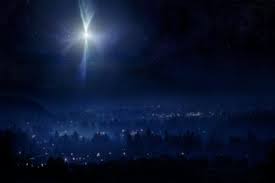
starWe headed for church this morning to celebrate the Epiphany, the coming of the Wise Men to worship the Christ Child, the following of the star to the manger. We drove through a thick fog, a bone-chilling fog. The damp fit my mood, as I reflected on the horrific massacres of this past week. For wildfires breached once again the fire trail of Western civilization. The barbarians entered the gates of Paris and the free world. Where was that Epiphany star?

The killers were attacking the West by trying to silence us. I, for one, prefer logical debate to satire, respect to ridicule. It troubles me when Christian images are ridiculed and defiled; I know how it feels. But we in the West discuss our differences in peaceful forums.

Peggy Noonan recently wrote in the Wall Street Journal:

“Without free speech no difference of opinion can be resolved, no progress made in the law or in politics, no truth found and held high, no scandal unearthed and stopped…We know on some level that this is how civilization keeps itself together.”

So the issue in the Paris massacre is not that the publisher should have been more restrained. The cartoonists were not “at fault” for their caricatures. The issue is how civil society deals with disagreement. We do not grab a rifle and shoot. We express our grievances through debate, speech, the courts.

Clearly terrorists who kill in the name of their god do not agree with our laws, or how we choose to redress insults. They are not interested in converting us to their beliefs through debate and apologetics. They are interested in forcing our submission, and submission is not peace. Submission is not freedom. We in the West honor freedom.

There are many trends in Western culture that I find disturbing, and so I wrote a novel about them called The Fire Trail (just finished the first draft). One of the themes is the need for individuals in our culture of freedom to practice self-discipline, to consider one another’s feelings. But without faith institutions to curtail excesses in word and image, we seem to be at a loss. We do not want to, nor should we, limit speech by legal means. It is far better, to be sure, to limit ourselves, to control our urge to ridicule.

In many universities some who see themselves offended have tried to limit free speech, by naming offensive speech “hate speech.” This is a dangerous road to travel. I would rather be offended than to criminalize offensive (hate) speech. Protection of free speech is far too important, far too intrinsic to who we are as a people. We need this First Amendment right in order to survive.

Perhaps it is simply easier to claim offense than to engage in debate. It is easier to ridicule than to reason. Perhaps both sides – the offender and the offended – act and react simplistically out of laziness, mental sloth. Perhaps they are used to easy and not trained in the difficult.

Much has been written about the need for the return of virtue to the public square. The West was built on Judeo-Christian virtues, blended with Greek virtues. As faith recedes, how do we return faith’s virtues to the public square? Without the authority of that Judeo-Christian God of Abraham, Isaac, and Jacob, how can we survive and still be free?

The Jewish legacy of the Ten Commandments gave us laws to honor God and one another. The Greeks spoke of the four cardinal virtues: prudence, justice, temperance, courage. Christianity added faith, hope, and charity, giving us seven virtues to battle the seven deadly sins: lust, gluttony, greed, sloth, wrath, envy, pride.

I have often thought that if we practiced these virtues, or confessed and repented the vices, the sins, we would have little need for legal restraints. But we are children of Adam and Eve. It is difficult to practice these all the time; we are constantly tempted. It is easy to envy and be angry, even easier to be gluttonous and greedy. It is easy to lust, encouraged by the soft porn all around us. And pride honors all sins and has no need for virtues, not admitting they exist. Pride lives in denial. It’s blinding.

How do we infuse the public square with the desire to be good? We cannot legislate goodness. We cannot legislate love, honor, respect for one another. This is the great question of the twenty-first century, how to revive the legacy of faith as faith dims, as churches close and their lights go out.

So my little novel is my small peaceful contribution to the debate, a quiet call to recognize that the barbarians are on our borders, to admit our pride and our denial. I fear such admission and recognition may be too late for Europe, as one commentator lamented, but America has hidden strengths and is used to changing course and doing battle. Never before has there been such a need for such a change of course.

As the great Anglican scholar, C. S. Lewis, wrote in Mere Christianity: 

“Progress means getting nearer to the place you want to be. And if you have taken a wrong turning, then to go forward does not get you any nearer. If you are on the wrong road, progress means doing an about-turn and walking back to the right road; and in that case the man who turns back soonest is the most progressive man.”

So as I gazed this morning in church upon the Christ Child in the manger, I knew it would all work out, in the end, for God’s glory. For there are still wise men who will bring their gifts to him and, in so doing, to our world. There are still shepherds who will bow before the Christ Child, who will care for the sheep who cannot care for themselves. There is still the love of Mary and Joseph, who show us how to practice virtue, how to say “yes” to God and how to hear his voice, in vision or dream or word or sacrament.

The great gift of Christmas, our preacher said this morning, is also the great gift of Easter. It is the gift of life itself, life on earth and life in eternity. And they are the same, he said, for eternity is now.

The great gift of Christmas is the gift of God to our world, the light shining in the darkness. It is the gift of love, and yes, the gift of Western Civilization, of civilized culture. For our culture – our freedom – has been built upon that gift, and that world is now threatened. We value life and love and freedom; others do not. The choice is clear. We must look to the star of Bethlehem, to the Shepherds, to the Wise Men, and to Abraham and Isaac.

We must return virtue to the public square and to the world.

Joy to the World


Parish church
From time to time news reports announce the closing of churches worldwide. Recently the Wall Street Journal reported that in the Netherlands two-thirds of the 1600 Roman Catholic churches will close in the next decade and in Holland 700 Protestant churches will close in the next four years. When I see these reminders of the state of Christian churches in the world I often reconsider the nature of these sacred buildings.

Many of these churches in Europe are sold and become condos, bars, restaurants, museums, libraries, and hotels. Entering these reclaimed spaces can be, for the Christian, a bit disconcerting. But, after all, the materials were simply that – matter, stone, wood, building blocks. Why should the Christian be troubled?

Catholic and Anglican churches are consecrated when used for holy worship, and when they are put on the market, they are deconsecrated. So, I say to myself, why be sentimental?

Why indeed?

But another voice whispers in my ear. There is the history of prayers here, it says, remember all the sacraments, all the baptisms, confirmations, weddings, communions, funerals. Remember all the celebrations and seasons, Advent, Christmas, Epiphany, Lent, Easter, Ascension, Pentecost.

So as I knelt at the altar to receive the Eucharist this morning in my parish church, I gazed upon our Christmas creche, set up a few feet away. There was the Lord of Lords in his bed of straw, surrounded by Mary and Joseph, the shepherds, the wise men, the animals. The outline of the figures followed the pitched lines of the stable roof, peaked like hands praying. A star hung from the central point.

The nativity scene was, I thought, a church in itself, a little church. The manger was the altar, the Son of God in the center, the Holy Spirit descending in the star and twinkling lights, Mary and Joseph like the clergy preparing and caring for God-with-us, the shepherds and wise men like the congregation, some herders of sheep and some herders of words. The crèche was a mini-church.

Then I looked beyond the stable to the pitched roof of our own sanctuary-stable, the altar with its tabernacle holding God-with-us, the Holy Spirit weaving through our prayers and incense and flaming starlight, the clergy offering God to us and us to God, and we kneeling in pews and at the altar rail in adoration as the shepherds and wise men once did, bringing the gifts of our hearts, minds, and bodies.

And of course, in the end, there is the church of our hearts. Like the inn of Bethlehem, there is not always room for God in our hearts. But some of us try to make room and offer a rough stable where he can live and breathe, where Eternity can take root and make us immortal. In this way each of us, if we so choose, is a crèche cradling God, just like the Christmas crèche and just like the church sanctuary.

It is good to have the crèche to express the story of salvation, and it is good to have the church to enact the sacrament of salvation, to help us enter the mystery itself, making us one with God. Other expressions of our deepest held beliefs live in the physical church – the architecture of domes and aisles and sacred space, the baptismal font, the stories in stained glass, the Lady Altar with its bank of flaming votives. Music, prayer, ritual all give us ways to express who we are as created beings, who we are meant to be, and how we become what we are meant to be in eternity.

Church comes from the word ekklesia, a body of believers called together by Christ. So of course the church is foremost the living church, Christ’s Body. But people need structure, need poetry, need symbol. The physical church provides these things, enables communal worship in a common space and time.

In Europe villages grew up around churches, so the town came to be identified with the parish church, and in many cases took the church’s name. Today, when these communities no longer have this unifying central building, they have indeed lost something valuable, something that brought them together. Hence there is an outcry in Europe today among nonbelievers as well as believers. But closing the church is merely a symptom of an earlier closing, a greater closing, the closing of hearts to God, and this loss of faith has been going on for the last century. The only cure for such a death is a re-opening of those hearts, a resurrection of spirit.

America is younger and her history is less village-focused. Her cultural landscape is seeded with many varieties of belief and building and ekklesia. But here too, churches are sold, parishes consolidated. What is a believer to do?

It is a time for believers to find one another, to share in worship. It is a time to keep candles aflame and incense billowing. It is a time to sing a joyful noise unto the Lord so that the singing bursts through the doors and weaves through our communities, relighting the world with the good news of Christ. It is a time to tell the wondrous story, that God sent his Son to become one of us, one with us, Emmanuel, in a crèche, the first ekklesia.

It is a time to sing together, Joy to the world, the Lord is come, let earth receive her king… so that the world may become a crèche too.

2014 in review

The WordPress.com stats helper monkeys prepared a 2014 annual report for this blog.

Here’s an excerpt:

A San Francisco cable car holds 60 people. This blog was viewed about 3,600 times in 2014. If it were a cable car, it would take about 60 trips to carry that many people.

Click here to see the complete report.

The Story of Christmas

Flight into Egypt, Giotto, 1311

Flight into Egypt, Giotto, 1311

Today, the fourth day of Christmas, is also the day we remember the Holy Innocents, the children slain by King Herod. 

The story of Christmas is a story of love, joy, and peace, but woven through it is also deep malice, murder, fear, and escape. In this sense it is a classic human story. It is a story that includes each of us, weaves us into its joy and pain. We experience Mary’s confusion when she learns she will be with child, without a husband in a culture that stoned women for this offense. We hear her faithful and mighty “be it unto me…”, her assent. We follow her to Elizabeth’s and know the joy of her holy child moving in her womb. Then we travel with Mary to Bethlehem for the tedious business of government taxation. We follow her, as she follows God. We hear the innkeeper send the holy family to a hillside cave, to give birth among the straw, among the animals, like an animal. 

The story of Christmas is our story, our human story of redemption, and each of us is woven into it through the miracle of time. A glorious king is born in a humble stable. Angels appear to shepherds and announce the birth in song. The shepherds listen and follow. Wise Men from the East follow a bright star to worship the Christ Child. They too, listen and follow.

But this is not fiction or fable. This is history, the real world of the first century in the Roman Empire, where passions burn, where bad things happen. Herod plots to kill the newborn king, a perceived threat to his own throne, and slays children under two years of age in Bethlehem. As Jeremiah prophesied, “there was a voice heard, lamentation, and weeping, and great  mourning, Rachel weeping for her children, and would not be comforted, because they are not.” And we weep too for these children. We weep for our own children lost each year.

And so we remembered them today, on a clear crisp day in a parish church in Oakland, California. We remember this violent loss of innocent life, these holy innocents. Even in this great event, the birth of the Son of God, human will is not circumvented but allowed its freedom. Herod may act, just as others have acted throughout history. What God offers his precious children is a way out. He sends angels to guide us, to point to the right path. We have the choice to listen and follow, or to turn away.

It is, of course, an angel who warns Joseph in a dream to flee to Egypt to escape Herod. And it is an angel who tells Joseph to return to Israel after the death of Herod. Joseph listens and he follows. “And he arose, and took the young child and his mother, and came into the land of Israel…and dwelt in a city called Nazareth.” (Matt. 2:21-23) And so another prophesy was fulfilled, that He would be called a Nazarene.

The drama of the Christmas story has been cloaked with sweetness and light, an iconic beauty that is not unfitting. Yet the world of the Holy Family was not so unlike our own today, as we watch young martyrs die in Iraq, and allow holy innocents to die in the womb.  Our story is the same story, one of choice, to listen and follow or to turn away. We can be part of God’s story or be part of chaos and death. We must choose, and these are the only choices. There is no middle way.

And in order to hear the angel’s voice, we must be part of Christ’s Body, the Church. We must follow the commandments given, to love one another, to worship God on Sundays. Only within this world, this baptismal font of life, can we hear God’s voice. And through sermon, Scripture, and Sacrament, in time we come to understand what we are hearing. We approach the vision of God. We enter the vision.

We are part of this Christmas story and we must tell it again and again. We gather our families on this holy day to tell the story. As my own family read, in turn, from Luke 2, each person taking a part, I was filled with a joyous peace. God was with us there in that small gathering of fifteen, from Aurelia, 9 months, to Rudy, eighty-four. The tree twinkled, and a grandson, age fourteen, began, “And it came to pass in those days, that there went out a decree from Caesar Augustus, that all the world should be taxed…” God smiled on us as we told the story of his birth in Bethlehem. The angels sang with us, “The First Noel, the angels did sing…”

This story of God’s love is a story that is being proved by science, more and more each year. Eric Metaxas, author of Miracles: What They Are, Why They Happen, and How They Can Change Your Life, recently wrote in the Wall Street Journal that science is now making the case for the existence of God, an Intelligent Designer. Mr. Metaxas writes that “the odds against life in the universe are simply astonishing.” And that includes our own good Earth. The predictions of Carl Sagan in the sixties that life might exist on other planets have been discredited by scientific numbers. What happened? Where did we come from?How does life exist? Atheists are reconsidering.

If we are wise men and women who seek the truth about our created world, we will look to Bethlehem. We will see ourselves there, caught in the drama of existence, the struggle between good and evil we know so well. We will listen to the angels and follow the star. For the story of the journey of Mary is the story of Christ in us, with us, as he was in and with her. It is the good news that the Intelligent Designer is this same God.

The baby born in Bethlehem on that starry night is God’s love letter, his Word incarnate, written on our hearts. “Be not afraid,” he says, “I love you… I am with you always, even unto the ends of the earth.”

Gloria in Excelsis Deo!

The Nativity of Our Lord

I was thinking about the weaknesses of the flesh, especially the aging flesh, as I realized I had driven off to church and the Christmas pageant, without my glasses. I turned around and retrieved them, so all was well, and I could read my lines and music, gold halo on head, white robe donned, even wings yearning to fly. After all I was an angel, a key role in the Heavenly Host.

But now, this afternoon, reflecting on this morning’s beautiful Fourth Sunday in Advent, it is fitting to consider our decaying bodies. It is fitting to tell the story of Christmas with every generation present, to tell the story of the glorious Incarnation. It is fitting to include the prequel of Adam and Eve and their tragic decision about that apple long ago. Our flesh, after all, is what incarnation is, a word meaning literally, in the flesh. The Incarnation itself, that moment in history two thousand years ago when God took on our mortal flesh to reverse that choice in the Garden of Eden, is an event we have come to know as Christmas, derived from the Old English Cristes moeses, “the Mass of the festival of Christ.” 

The Incarnation of God in human flesh, Christmas, while certainly overladen and hopefully not disguised with modern excess, still celebrates the kernel of this festival of love. Gift-giving is about love. Hospitality is about love. Christmas concerts celebrate love. The story of Saint Nicholas, fourth-century Bishop of Myrna known today as Santa Claus, is particularly about love. We delight in love when we light the fir tree to honor the Tree of Life, the Cross, for indeed, the tree that bore the tragic fruit becomes the wood that holds the loving sacrifice for mankind. Mary is the new Eve, Christ the new Adam and the bearer of the fruit of salvation, the giver of incarnate love.

So the other day, when the huge fir tree worked its way through the small backdoor of our home and the needles flooded our living room, making quite a mess, I embroidered the event into my tapestry of Christmas. When I climbed the ladder to string the lights and run the garlands glittering and dancing through the greens, I embroidered the moment into my tapestry. When I crouched under the lower branches and poured two jugs of water into the bowl (a thirsty tree) I wove this action, which has become over the years its own ritual, into my Christmas tapestry. These are the small ones, the blessed ones. There are so many other rituals and symbols, far more famous: the evergreen wreath with its symbols of life, the candles with their flames of light and hope, the glorious music (Handel, Bach, Vivaldi, to name a few) and the charming carols that retell the story again and again. So rich a season! So rich a tapestry! The beauty may be too great to bear.

But I shall wait for Christmas Eve for the ornaments, collected over the years, to be hung by one of our grandsons. And I shall wait for many more moments like this, this week of Christmas, and shall weave them into my life. 

All the rituals of Christmas, and they vary from family to family in details but not essentials, express this stupendous miracle, one we can’t find words for: love come down among us. C.S. Lewis said that there is a difference between believing in a god and believing in this God. This God, this specific God, makes it clear that there is nothing vague about Christian belief, and who this God is, what he is like, what he does for us. It is as though the sensory details of our physical world, our bodies, are part of this God, this Creator. He knows us; we reflect him in some mysterious way. He became one of us to know us better. And since that moment outside Bethlehem when eternity intersected time, the world has been changed. We saw love incarnate. We saw truth and we saw beauty and and we saw goodness. 

Christ, the Son of God, taught us how to be changed. He gave us ways to heal our corrupt flesh, our destructive selfishness, our hurtful pride. Love one another, he said, as I have loved you. 

But, many ask, how do we know this child in Bethlehem, this carpenter from Galilee, is the Son of God? Wasn’t this all made up by fanatics? 

We know this because of the resurrection stories that refused to die. Because Jesus the Christ (Greek for the anointed one, messiah in Hebrew) conquered death, and thus he was divine, outside mortal time, with power over mortal flesh. Because he did these things, and we trust the accounts, we listen to him. His words speak deeply to us about our lives, our world, and how to love one another. He perfects us through simple belief, repentance, and intention to follow him. He raises us with him through his own death and resurrection, for that wood of the Cross bridges Heaven and Earth, God and Man, Love and Un-love. But we must experience our own “little deaths” of self to find our true and beautiful and good selves. 

We know this carpenter was the Second Person of God because of the foolhardy yet loving behavior of his followers, the first Church. These were ordinary folk who changed dramatically, caring for the poor, protecting human life, irrespective of age, gender, race, born and unborn. He preached that the poor in spirit will inherit the Kingdom of Heaven, the mournful will be comforted, the meek will inherit the earth, those who hunger for righteousness will be filled, the merciful will be shown mercy, the pure-in-heart will see God, the peacemakers will be called the children of God. The two “Beatitudes” that follow are warnings to his followers about their future martyrdoms. And it is these martyrdoms, beginning with Nero in 67 A.D., that powerfully witness to this Galilean carpenter being the Son of God. These saints believed he was divine, and in this sense were in love with him, and they died painful deaths to witness to their belief, and to their love. They changed our world forever. 

And so, as I took my little place with the other angels and shepherds in the chancel of our parish church, and as I gazed upon Mary and Joseph and the baby (we had a real baby this year, three months old), I gave thanks. I gave thanks for another year of life, but more importantly, another year as a Christian. For my Christmas tapestry is growing, as I added another pageant to my weave. My fellow Christians dance among the threads, singing and praising God, Gloria, Gloria, Gloria in excelsis Deo, the heavenly angels’ song to the earthly shepherds that starry night, Glory to God in the highest and on earth peace, goodwill to men.

Deo gratias and Merry Christmas!

Gaudete Sunday

???????????????????????????????The heavens opened early Thursday morning, and rain poured upon our California soil, slaking the thirst of the earth but soon bursting gutters and filling low places with floodwaters. In drought-plagued California, we didn’t dare complain, but were thankful.

We live in the foothills of Mount Diablo, and while our house is on bedrock, our northern hillside falls steeply into a ravine. Friday morning we noticed part of the fence was missing, and it had taken some of the landscaping with it as it slid to the bottom of the hill. I thought, as I have thought many times, how suddenly nature makes short work of man’s efforts to tame her, shattering our pride.

The earth is drying out now, and this morning we headed for church, bundled up for temps are in the low fifties (cold for us). The skies had changed from threatening to sudden beauty, with white clouds scuttling against brilliant blue patches, the low sun clarifying the air as though trying to fit more light into shorter days.

And in this winter-scape we prepare for the light of the Incarnation, to me always a stunning event, one repeated in a different way on humble altars in glorious Eucharists. It is Advent, and we prepare for Christmas, the coming of the Christ Child, God becoming one of us, with us, Emanuele. We celebrate the love, sacrificial and humble, of a God who loves his creation so much that he would do such a thing, that he would be born in a manger-cave, among animals, to a poor, devout Jewish couple who believed in his angel messengers and obeyed them.

And so, stepping into the warm nave of our parish church, the symbols of the space textured this story of miraculous birth. The Virgin Mary and her holy Child stood to the left, Gospel side, a bank of votives flaming at her feet. Three of the four Advent candles in their bed of greens had been lit (two purples and one rose). The American flag stood proudly, a testimony to our freedom of worship. Against the red brick apsidal wall, the white marble altar was draped in purple, and six tall tapers burned on either side of the purple-tented tabernacle. A crèche set in greenery, to the far right, Epistle side, told the humble story of glory, this huge contradiction, one of many fascinating ones in our faith, of glorious humility. Somehow true glory can only be found, we are told, in true humility. Somehow true joy can only be found in true sacrifice. Somehow the Creator must become part of his creation to save it from itself.

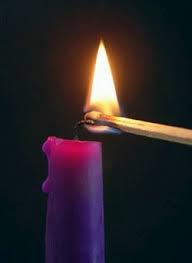
I love Advent III, called Rose Sunday, Gaudete Sunday. We light the rose candle along with the first two purple candles. Today is Gaudete Sunday because of the opening prayer, the Introit: Gaudete in Domino semper, or Rejoice in the Lord always… Rose Sunday is a break in the penitential purple of Advent, and this is the only Advent Sunday we have flowers on the altar. We emphasize the joy of anticipating Christmas rather than the penitence of preparing for Christmas.

In the daily readings of the Morning and Evening Prayer offices, the mood is definitely one of penitence and preparation. Most of the readings have been Old Testament prophecies, warnings, and judgments in Isaiah and the Psalms. We read the early chapters of the Gospel of Mark, of the beginnings of Christ’s ministry, but not the Christmas story, not yet. But most fascinating are the chapters in Revelation, or The Apocalypse, the great vision given to St. John on the Island of Patmos, detailing the end-times, the last days, the Second Coming of Christ.

We have been immersed in these daily prayers, not reflecting the coming of Christ to Bethlehem but reflecting the Second Coming of Christ in Judgment. We are “woken up” with these future realities, these warnings and visions, given a “heads up.” Are we ready for Christ to come? How will we fare when judged? Have we loved enough? Have we cleaned out our hearts to receive him? For he will not enter a cluttered heart fettered with sins, the detritus of selfishness and pride, envy and greed. There will be no room for him in such a heart. We need to make room for him.

So Advent, often called “Little Lent,” reminds us of the four great events, the adventures, to come to us: Death, Judgment, Heaven, Hell. How will we – our lives – be measured?

This morning I entered the nave of our warm parish church and knelt in a pew, giving thanks for the clergy, the people of the parish, and the freedom to worship. I asked God to clean out my little heart, to remove all the obstacles to his advent in my soul. My gaze fell on the purple-draped tabernacle and knew that this weekly ritual, this rite, would set me right with God. I knew that the habit of confession would serve me well in the time span of my life, would ensure that I have the time of my life, ride the waves of glory in this great adventure. I knew that, encouraged by the words of the liturgy – confession, absolution, the great action of the Mass, Holy Communion – I would unite once again with Christ, in bread and wine placed on my tongue. I knew that each Eucharist prepared my heart and soul, mind and body, for the great Feast of the Lamb that would await me in Heaven. And I wanted to be ready. I wanted as many Eucharistic feasts as I could manage before then, readying my heart and soul. I want to sing with the angels and the saints.

I also love Advent III because we usually practice (after Mass) for the Christmas Pageant. Young and old gather together to portray our story of redemption, beginning with the Fall of Adam and Eve and ending with the Nativity of Our Lord, the beginning of our salvation, the antidote to the Fall. Lessons are read and carols sung. We rehearsed today; next Sunday we don costumes and prayers and wings (I get to be an angel, and yes, even with wings…) We have a five-year old Mary and an eleven-year old Joseph.

The days are wintry and short. We prepare to celebrate Christmas, the year of our Lord, Anno Domini, A.D.  Some of this sense, this pairing of season with humble glory, has been captured by the poet Christina Rossetti:

In the bleak midwinter, frosty wind made moan,

Earth stood hard as iron, water like a stone;

Snow had fallen, snow on snow, snow on snow,

In the bleak midwinter, long ago.


Our God, Heaven cannot hold Him, nor earth sustain;

Heaven and earth shall flee away when He comes to reign.

In the bleak midwinter a stable place sufficed

The Lord God Almighty, Jesus Christ.


Enough for Him, whom cherubim, worship night and day,

Breastful of milk, and a mangerful of hay;

Enough for Him, whom angels fall before,

The ox and ass and camel which adore.


Angels and archangels may have gathered there,

Cherubim and seraphim thronged the air;

But His mother only, in her maiden bliss,

Worshipped the beloved with a kiss.


What can I give Him, poor as I am?

If I were a shepherd, I would bring a lamb;

If I were a Wise Man, I would do my part;

Yet what I can I give Him: give my heart.

 Christina Rossetti (1830-1895), “In the Bleak Midwinter”


 Yes, Advent is a time to give him our hearts: clean, ready, and open.

Thanksgiving for the Life of P. D. James

AVT_P-D-James_9961I was greatly saddened to hear of the death of P. D. James at the age of 94 in her home in Oxford. 

I discovered James’s detective novels many years ago in my quest to find literary mentors, authors who could teach me, mentor me, in the craft of writing. I read everything she wrote, some works several times, studying her phrasing, her metaphors.

I’m not a fan of simple sentences, but prefer sentences textured and layered with phrases, fearlessly long, unafraid to pull the reader alongside its subject in search of a predicate, looping and climbing and decorating and meandering. Reading P. D. James verified that one didn’t have to write in the “modern” way of Hemingway and all the deconstructionists who followed suit. One could indeed write like Henry James or Dickens or Bronte and not be pilloried for it. She wrote literary fiction that happened to be detective fiction, and I wish she had received greater acclaim for her talent.

Nevertheless she was wise to have written within the known and comforting structure of detective fiction, a decision that seemed to bar her from the big prizes but increased her audience. In the process she enriched the genre with layered syntax and language, and created characters with character and depth. Adam Dalgliesh was a modern hero, with all of the complexities of a truly good man. We cared about him and about those he gathered around him.

COVER COPY compressedIt wasn’t until fairly recently that I realized she was a fellow Anglican. My third novel, Inheritance (OakTara, 2009), was largely about the history of Christianity in England and thus predominantly the history of the Church of England (set in London, Oxfordshire, and Glastonbury), with many Book of Common Prayer scenes. So I tried to reach Baroness James to send her a copy as a small thank you for all she had done for me. I couldn’t find an address, email or surface mail.

002So on one of our visits to London (May, 2011), I dropped off a copy at her agent’s office, not far from Holland Park. I tapped a buzzer alongside a green door and traipsed up narrow stairs to the offices of Greene and Heaton, 37 Goldsmith Lane, where a receptionist welcomed me. Yes, she would be happy to forward the novel to Baroness James along with my letter. A few months later I received a lovely thank you note from Baroness James.

In the note she expressed concern over the changes happening in the Anglican world, with hopes things would somehow work out. She said she didn’t know when she would get to reading my novel, since she was deep into her novel-in-progress, and couldn’t seem to find enough time to write. This turned out to be Death in Pemberley, her salute to Jane Austen. For my part, I was simply delighted, as any fan would be, to have received her note.

I have been greatly in P. D. James’ debt for many reasons. Her writing style validated my own (or so I thought); she wrote long complicated sentences and so did I. She was Anglican and loved the Book of Common Prayer containing the poetic prayer-collects of Thomas Cranmer and the Psalter, read or sung mornings and evenings, in many Anglican churches throughout the world over the years.

P. D. James grew up attending weekly Evensong. I believe that it is the rhythm of the Psalms along with those poetic prayers of Cranmer she memorized in school, that have so defined the rhythm of James’ style as well as my own. Another writer-friend, raised on the Psalms, within the Psalms, writes this way too. We grew up with these rhythms, the meter and melody becoming part of us.

P. D. James, along with a handful of other scholars and writers I have come in contact with, appreciated the beauty and truth of these prayers. They created a moral universe where a just and loving God heard our prayers and answered them. And in her works she sought this ordered beauty and truth, by making order out of disorder. She said she was drawn to crime fiction for it created a moral universe that was disordered by murder, and it was necessary for the hero to return order by solving the murder, and providing, if not God’s justice, a “certain justice.”

Because of her own life’s challenges and sufferings early on, she was equipped to create vivid characters. She was also able to write of the grit and grime of murder, the horror and ugliness of violent death. She wrote with a realism new to detective fiction at the time, unlike Agatha Christie or Arthur Conan Doyle. And yet she provided redemption by returning order to the world.

One of the greatest gifts an artist can give to his or her culture is to civilize the barbaric places in the individual and in society. It is this civilization that the Book of Common Prayer has represented, and that P. D. James has reflected in her own way. How do we impose order upon disorder in our hearts and in our communities? Artists, to be sure, have a moral responsibility to civilize us, encourage us to be civil, to love, to light up the dark places. In my own novel-in-progress, The Fire Trail, I’m exploring some of the boundaries of darkness and light, borderlands where the barbaric has made alarming inroads in today’s culture.

Thank you Baroness James. You have ordered our disorder in so many ways, civilizing our hearts and minds.

Rest eternal grant unto her, O Lord, and may  light perpetual shine upon her.