Law and Order

If we can’t police ourselves, others will police us. History, that long forgotten study of cultural, social, and national memory, is a clear witness that this is so.

And so I weep when I see Baltimore burn with such division, so inflamed by looters who discredit and dishonor the peaceful protestors of their community. Then, to see the city government allow this to happen, as though sanctioning it. For when law is not ordered, enforced by the state, disorder is seen as lawful.

We live in a democracy, a glorious, messy mix of peoples of all races, classes, ages. We are an experiment, according to European observers, and I often think the experiment is on the brink of collapse at moments like Ferguson and Baltimore. We have grasped a delicate balance between state and individual, between no speech and free speech, between public and private spheres. We are a family of passionate beliefs and ideals, often opposing, thrown together in a whirlwind we call society.

How are we to we get along? How do we express our deeply held opinions and beliefs? How do we protect property and individual freedoms? Provide for our future as a free people? Ensure our defense and care for the poor and innocent, the least among us? We do all of these things through laws, good laws.

Without law, we become slaves, property owned by the strongest among us. Without law to protect us, we allow might to make right. We hide in fear waiting for the looters who will, in the end, rule us.

I am looking forward to reading Os Guinness’s book, The Global Public Square: Religious Freedom and the Making of a World Safe for Diversity. As Christianity is marginalized in our culture, so are the Judeo-Christian virtues of tolerance, self-restraint, and brotherly love, among many other values supporting democracy. To be sure, Christians and Jews do not always practice what they preach, but ideals must still be preached, they must still be heard and honored in the public square.

We can differ as Americans, but we can continue to converse. We can respect one another’s right to speak, to believe and live in peace, as long as we keep the peace. One group of color or creed need not dominate; but all must keep the peace.

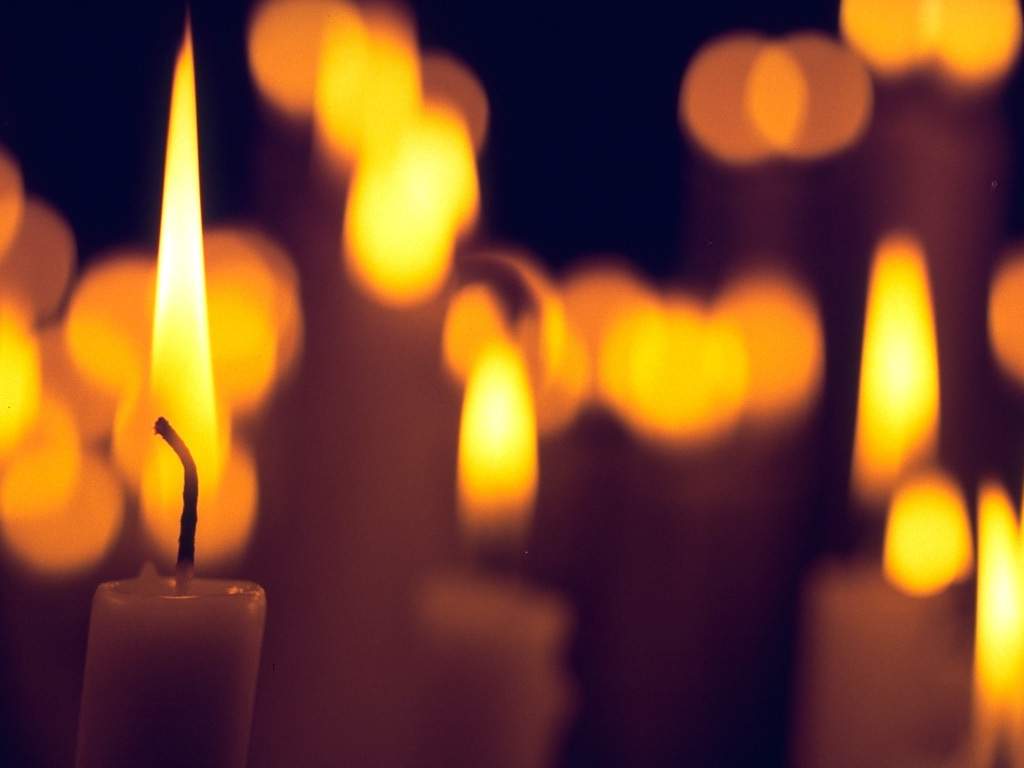
And so as the looters set fire to their own community in Baltimore, and as others smashed car windows in our neighboring Oakland, I thought back to our inaugural lecture on Sunday night taking place at our new Center for Western Civilization, near UC Berkeley. It was well attended by young and old, from many racial backgrounds, and we were told by one speaker that each of us had lit a candle with our presence, adding to the light of freedom. There were also many words of encouragement at the reception afterwards: “So glad you are doing this,” they said again and again as I recalled the Center’s mission:

“Ignorance is the greatest threat to our civilization. Departments of Liberal Arts are shrinking in our major universities. Courses in the Western Tradition, history, literature, art, poetry, philosophy, and ethics are no longer required. Few students have enough understanding of the origins and principles of Western Civilization to maintain or advance our democratic institutions. The absence of this critical knowledge threatens the future of our personal freedoms. It is our responsibility to support every effort to keep the lights of freedom burning before we descend into darkness.”

The lights of freedom – our flaming candles – must help us see where we have come from in order to know where we are going. Fire is good when tamed and used constructively by man. It warms us when we are cold. It cooks our food and burns our garbage. In even turns our flesh to ash to be buried when we die. It lights the dark of the past, the present, the future. Each of us present on Sunday night on Bancroft in Berkeley was lighting a candle in and for our world; each of us was eager to keep the flame burning if only for another lifetime, another year, another day.

And in the end, each of us is only that, a single voice in a sea of voices and one soul in an ocean of souls. I carry, like my neighbor who sat next to me on the hard folding chair in that YWCA hall, a hope within me that my single voice matters, and that my neighbor’s voice matters too. The Baltimore looters matter, each one of them. All of us form America, and we can all carry a flame – our voice – into the public square of our nation, and of our world.

But the flame must not burn others; it must light their way. It must not destroy; it must give life. But how do we keep our candles lit in this darkness?

We keep them lit by respecting law and order; by enforcing peace in our communities. We keep them lit by understanding who we are – where we have been and where we are going.

Truth and Lies and Shades of Gray

ft5I recently arrowed send and, instantly it seemed, my novel-in-progress flew from my desk in California to an editor on the East Coast. Before I clicked send, however, The Fire Trail had been rewritten with the help of a West Coast editor and other readers. Characters were developed more fully, I hope, scenes added and expanded, plot points remapped, histories made true. 

I am enraptured by what is true, a true truth-junkie. In all of my novels I have tracked and tried to capture truth, turning this elusive and challenging quality into characters who live and breathe, people who people my pages. For it is the artist’s solemn obligation to attempt this invaluable and possibly foolhardy feat, this re-presenting what is true about you and I, our world, our very existence. It is a big and scary subject, and some of us do not want to hear about it, for as T.S. Eliot wrote in Four Quartets, “Humankind cannot bear very much reality.”

We call these realities “hard truths,” and they are ones which make some folks squirm: the definition of marriage and why the state should be interested in its definition, the sacredness of life from conception to grave, the need for freedom linked to responsibility, liberty linked to law, democracy linked to educated voters. Yet all of these truths are necessary for American culture to survive, indeed, for free peoples of the world to survive.

Approaching the election season, we voters must understand these issues in order to decide them. It is good and glorious that we have these months to debate truth, from all points of view. It is good and glorious that as citizens we can learn what is at stake, can recognize when truth is elasticized and remolded, is shape-shifting. In this learning process, we can pull truth back into its proper shape, return it to its true character.

And so in my little novel that flew through cyberspace last week I tried to pull these elastic truths back into their real shapes through my characters. The characters themselves, for that matter, are icons of many people I have known. They speak with voices I have heard. They have been molded with words as an icon is painted with prayer, so that they will one day turn around to face readers and say, “I am… so pleased to meet you.” Thus, the dance together begins, a waltz or a minuet, a conversation between character and reader, slowly, picking up pace and tempo, as the music of language is sounded.

Art is a medium of truth. It is a way of expressing the inexpressible, explaining the unexplainable, touching familiar notes deep within our common heart, as though we were an orchestra playing a symphony. The artist reaches into clay or image or symbol, tempo or melody or chord, and re-molds it to show something true about each of us. The medium is only that, a medium, material used to tell us about ourselves, who we truly are.

Unfortunately with the rise of advertising over the last century, truth has become malleable, slanted, slippery. And with advertising we recognize this, we are forewarned, and we hesitate before believing that snake oil will cure blindness.

But in the process, journalists, publishers, and politicians have been tempted to also twist and stretch truth, so that honest elections are held hostage to news media, be it print, video, or electronic. Shades of gray stretch as far as the eye can see. Colors and definitions disappear in a wasteland of relativity. What are we voters to do? We can only be aware, beware, and be wary of the lie that there is no truth, no right way forward.

And so as we listen and read, as we consider what direction our nation should take, who should lead us through the wilderness of our world, I am glad I created characters who live within the debates. I will refine them with honest fire, hammering and shaping their golds into revelations, beautiful and good and true.

For in the end, this is what we all desire, to know in truth where we have come from, where we are, and where we are going.

Easter Flowers

IMG_0485 (2).3The glories of Easter and Eastertide lift me into familiar joy, one that I expect each year. And yet this joy surprises me with its nuances, colors, and music: the lilies on the altar, the flaming candles, the removal of the purple coverings, the triumphant hymns and processions.

Easter often signals the arrival of spring, and the natural world reflects the supernatural with sunshine. This Easter in the Bay Area a long desired rain descended from the heavens, splattering our dry California soil. It was a too-short rain that came and went quickly, but it peaked Easter morning. Still we were dry inside the ark of the church.

After the Scripture lessons and Creed, and before the sermon, the children flowered the thick white Easter Cross placed at the foot of the altar steps. They shoved bright blossoms into the deep holes, and watched the wood of the cross come alive. Just so, I thought, Mary Magdalene came to the empty tomb and found the living Lord walking in the garden.

The Gospel appointed for Easter Day, the highest holiest day of the Christian Year, details Mary Magdalene’s visit to the empty tomb in a manner found in histories, not myths or legends. These specific details had been passed from one generation to another orally in the early Church, and were recorded decades after the event. So it is not surprising that the accounts vary a bit, but in the essence they are the same: Jesus, their Lord, had risen from the dead.  

The accounts agree on another key fact, that the women, not the men, made the discovery. Had these resurrection stories been invented, those who found the empty tomb would have been men not women. And yet, remarkably, the apostles did not find the tomb first; they didn’t even believe the women when they ran back to their hiding place and told them. It is Mary Magdalene who makes the discovery, and at first she doesn’t understand what has happened either, thinking the body has been stolen, a detail that could not have been invented. 

In John’s account, Peter and John return with her to the tomb and see the linen cloths lying to the side. John understands: he remembers the scripture foretelling his rising from the dead. Peter does not understand and they return home, leaving Mary Magdalene to encounter the “gardener.” 

Picture 089Unique to John’s account is this moving conversation between Jesus and Mary Magdalene: 

But Mary stood without at the sepulchre weeping: and as she wept, she stooped down, and looked into the sepulchre, and seeth two angels in white sitting, the one at the head, and the other at the feet, where the body of Jesus had lain.

         And they say unto her, “Woman, why weepest thou?”

She saith unto them, “Because they have taken away my Lord, and I know not where they have laid him.” And when she had thus said, she turned herself back, and saw Jesus standing, and knew not that it was Jesus.

         Jesus saith unto her, “Woman, why weepest thou? whom seekest thou?”

She, supposing him to be the gardener, saith unto him, “Sir, if thou have borne him hence, tell me where thou hast laid him, and I will take him away.”

Jesus saith unto her, “Mary.”

She turned herself, and saith unto him, “Rabboni.” (Master)

Jesus saith unto her, “Touch me not; for I am not yet ascended to my Father: but go to my brethren, and say unto them, I ascend unto my Father, and your Father; and to my God, and your God.”

Mary Magdalene came and told the disciples that she had seen the Lord, and that he had spoken these things unto her.        (John 11-18, KJV)

The risen Christ makes numerous appearances on earth before his ascension to Heaven, but even with these accounts, many today do not believe in the resurrection of the Son of God. Some of us need help, it seems. I was one of those. 

I was converted by reason, arguments I read when I was twenty, made by C.S. Lewis in Mere Christianity. I made that first step of faith (I didn’t feel I was leaping) and found an Anglican church (Lewis was Anglican) to find out more. Experiencing my first Anglican liturgy in the spring of 1967, I was entranced, overwhelmed by beauty. I began the dance of a lifetime, weaving Heaven into my earthy world. 

I am still dancing, learning new movements and new steps, and enjoying the many other dancers in the Body of Christ, the Church, who dance with me and alongside me, helping and teaching me. 

And so, each Easter as the dead wood of the white cross comes alive with reds and blues, greens and yellows, pinks and purples, flowered by the children of our parish, I am thankful. I am thankful for Mary Magdalene and her faith and her witness to the glorious Resurrection of Christ; I am thankful that I could tell her story in my novel, The Magdalene Mystery, and in the telling understand how truly historical those resurrection accounts really are, deepening the belief I found forty-seven years ago, strengthening Lewis’s reasonable reasoning.

But most of all I am thankful for the Son of God among us, having risen on Easter morning, having walked the earth to appear to many, and with us today in the Eucharistic gifts of bread and wine. I rejoice in God’s great love: to be born among us, to live, die, and rise again, to take us with him into eternity in this world and the next.

Waving Our Palms

palmsundayWe sat in the front pew, the children and the teachers, waiting and watching. The purple-draped altar, the purple-draped candlesticks, the purple-draped medieval crucifix all stood solid and royal and richly beautiful.

We have been waiting throughout Lent, waiting for this momentous week, considering our hearts and our lives and our habits of love or un-love. Yet Palm Sunday is the day we end our waiting and begin our acting. As Christ entered the gates of Jerusalem on Palm Sunday, so we enter Jerusalem too, as we take part in the stupendous drama of the Son of God’s last week before his crucifixion, the week that Christians, all over the world, call Holy Week. 

Holy Week marks the days leading to Easter. The last three days, the Tridium, begin with Maundy (commandment) Thursday when we remember the Last Supper and Christ’s commandment to “love one another” as he gave himself to us in the Holy Eucharist. That same evening we strip the altar and turn out the lights, reflecting Christ’s arrest and abandonment in the Garden of Gethsemane. We even create a garden of flaming candles to honor the reserved Sacrament that has been removed, and some of us will “keep the watch” all Thursday night, undoing that desertion in Gethsemane.

On Good Friday, remembering God’s good death that saves us from ourselves, we watch as eternity intersects time and the earth quakes. The Son of God is crucified; the tree of Eden becomes the tree of Calvary, reversing Eden.

Some of us keep the Holy Saturday vigil, entering a darkened church and lighting it with flaming candles as the new day of Easter approaches. Some of us, like Mary Magdalene, will rise on Easter morning to find the tomb empty and to celebrate the risen Christ – and our own resurrections – with colorful flowers on a white cross and lots of happy singing.

But today, Palm Sunday, we waited and we watched in our pew, for soon, soon, we knew we would be given our blessed palms. As the Gospel was read, describing what we were soon going to act out, I entered into the liturgy, this moment of meaning created by time and tradition and creedal belief over two thousand years. I entered the story and walked alongside that colt carrying Our Lord through the gates of Jerusalem. 

So this morning, the children and the teachers stepped to the altar rail and received their palms, then stepped back to their pew. Soon all those in the rows behind us received theirs too. “We’ll follow the cross,” I whispered to the children, and we waited for the clergy and acolytes to step into the nave and begin the procession. The choir sang joyfully the resonant hymn, “All Glory Laud and Honor…” and we followed the cross, leading the congregation, waving our palms and singing too. 

Ritual is an art-form, and art is mankind’s way of expressing the great truths of his existence. Liturgy uses many art-forms: poetry and prose, music and drama, songs and prayers, symbols and settings richly textured with meaning. Ritual is a deeply satisfying way to express who we are, why we are here, where we have been and where we are going. It expresses what God, in his immense love for his creation, has done for us, and continues to do for us. 

The dramas of Holy Week and Easter are part of the greater drama of the entire Church Year found in Roman Catholic, Anglican, Lutheran, and Orthodox traditions, and to a lesser degree in other Christian bodies. But Easter is the culmination of that year. Since Advent and our waiting for Christmas, we have been preparing for Easter’s Resurrection. Christmas means nothing without Easter, for it is the Resurrection that marks Christ as the Son of God. It is Easter that makes us sit up and take notice and ask, “If he did rise from the dead, then who did he claim to be, and what did he command? What does he command today? Who exactly is he? Does he really love us that much to die for us?” 

As someone once said, Christianity is all about the Resurrection. If you believe in the resurrection of Christ from the dead – and there is ample historical evidence to support such belief – then the rest follows easily. And the rest is, oh my, a glorious journey, full of color, meaning, certainty, and the love of God singing to you at night. 

But I am ahead of the story and the week opening before us – we are still at the gates of Jerusalem. The children and the teachers followed the cross around the church, and the congregation followed us. Today being a fine sunny morning, we followed the cross outside into the neighborhood and around the front and back to the narthex doors. Our priest pounded on these gates: Jerusalem, oh Jerusalem! The doors opened and we entered the heart of the ark of the church, stepping up the red carpet toward our front pew. 

And so now we step into Holy Week, prayerfully, awe-fully, watching, waiting, and acting out this grand drama of the love of God, as once again, eternity intersects time.

Time Turning and Returning

PassiontideThe altar was draped this morning in purple – purple covered everything, it seemed – the tabernacle, the giant candlesticks, the huge medieval crucifix, the Lady Altar, the lecterns. We were drowning in purple. And so I considered my purple, penitent past, one which I revisited recently. 

I returned to a place I had not visited in thirty years, a city in which I had lived in the 1970’s, for the funeral of an old friend gone to Heaven. He was a devout Christian; he knew where he was going and he knew the way. He was eight-two, my son’s godfather. We had been in touch by phone and through Christmas cards, but not much else. 

So my son (42) and I (67) flew north to Vancouver, Canada. And as we flew above the clouds, I traveled back in time to a younger version of myself. The younger version, a girl in her twenties, peered over my shoulder that day of the funeral as though watching and taking stock of who she would become one day. 

I considered from time to time, as we prayed the prayers over the ashes in the Anglican Church, sitting with old friends in the pews, the unique journeys we each had made to this place and this day in this year 2015. I learned more about journeys, those stories, later over coffee and sandwiches. My friends had suffered death, illness, and loss. But we were joyful in spite of it. Children had grown to be parents, just like my son, and I marveled at these children now in their forties who once played together and flew kites on the green lawns of Stanley Park. Our children had grown up. And of course I noticed other graduations: retirement, gray hair, silvery beards. 

IMG_0437 (2)My son’s godfather, Frits Jacobsen, whose ashes we placed reverently in the square space in the cemetery grass, was a rare creature, a Christian bohemian. Born in 1933, he emigrated from Holland to Toronto with his young family after the war. Many years later he resettled in Vancouver and made a humble living as a book illustrator. He devoted countless hours to his church, his community, and the poor. He was self-supporting with his pen-and-ink drawings. He might have been confused with the hippies, a generation later, but he was far nobler. He lived in a garret in Shanghai Alley, Chinatown, in old Vancouver. Today the building is adjacent to the newly redeveloped Olympics and World’s Fair district, but back in the 1970’s it was a poor, albeit quaint, neighborhood, with soup kitchens and lines of homeless. 

IMG_0425My son, with the help of his miraculous IPhone, found the address. I recognized the door, with the 522 painted over it. We took photos from all angles. It was when we headed back to the car, time telling us it was time to leave for the funeral, that a lovely young lady came through 522. We asked what floor she lived on. The top, she said, curious. Could we come up? we asked. My son explained our connection with the former inhabitant (Frits had moved with the area’s redevelopment). When she learned that an artist had lived there, she was delighted to invite us in. And once again, as I climbed the familiar stairs to Frits’ studio and smelled the same musty stairway smells, that other girl I was, so many years ago, smiled from behind my shoulder. I pinched myself as I watched my grown son climb the stairs ahead of me, for I could see the four-year-old blond towhead clambering up behind him to visit his Uncle Frits. 

Frits, opining in his heavy Dutch accent, with his beret and his trim beard, was both gregariously joyful and astutely serious. He brooked no compromise with his Christian beliefs and would follow those who pledged the same. He was sure the Apocalypse was imminent. He judged his culture and he judged rightly, I believe, although he was a bit too harsh, to my way of thinking, on other denominations within the Body of Christ. Frits had his opinions and wasn’t shy about voicing them. And we loved him for it. He was a breath of fresh air. 

After the graveside service last week we gathered again to recall Frits and how he would love our gathering. We looked at his artwork, shared plates of fruit and salad. We laughed a good deal, and we knew Frits would have liked that. We remembered how we had found one another at church, our glorious Anglo-Catholic St. James, and how we had formed friendships including singles, couples, and young families. We didn’t have much, but we liked to talk about faith, about Lewis and Tolkien, about books, about theology, and we would gather together over wine and cheese and pineapple upside-down-cake. We picnicked at Stanley Park and dreamed where our lives would take us. For we were young then, and our future spread before us. We were fearless, undaunted. We embraced living. 

And so as I revisited my earlier life, more battle weary but also more wise, I guessed my friends felt the same. We looked different and yet the same, and we wove together the years we were apart in our conversations, asking, remembering, wondering why this and how that and where was so and so and what happened then. Each of us carried a universe within us; we had lived most of the universe already, and the stories, like planets, revolved around one another once again. 

I realize now as I write this, how rich we all are to have lived so long, to have so many stories texturing us and coloring our lives. Some are painful tales to be sure, but some are joyful. The threads of the weaving are both dark and light, drab and colorful. 

And also, as I now think back on this morning, Passion Sunday, when we enter the heart of Christ’s story – who he was, who he is, how he saved us from death to be with him – I understand a bit more than I did last year at this time. For my own passio – my story of moving through time, suffering the wounds of life and celebrating the healings – is fuller than it was even then, one year ago. For each of us, as Christians, are not only a part of God’s great creative project for his creation, but are also part of God’s great creative project for each of us individually, if we say yes, if we say, “be it unto me according to thy word.”

And so as we enter Passiontide, we look to Palm Sunday and Holy Week. We consider what it all means, our lives and the lives of those we love, weaving them together in our prayers and offering our new coat of many colors to God. We look to Palm Sunday and Our Lord’s entrance through the gates of Jerusalem. As the children waved the palms, just so we wave our lives woven by each minute, hour, day. We lay down this fabric of our lives before the Son of God who rides on a donkey through the holy gates. We lay them down alongside the children’s palms.

And we look forward to the glories of Easter.

The Light of Lent

Advent St. JWe are deep into Lent, entering the heart of understanding of who we are, who we are meant to be. We have traveled beyond the ashen cross on our foreheads that marked us as Christ’s own. We have moved into disciplines of reading, prayer, abstinence, and charity. Now, having celebrated the Third Sunday in Lent, we pause and take stock. We judge our hearts and our lives. We re-commend, re-commit, re-create ourselves to travel even deeper into the heart of God.

Being marked with the cross helps us follow the path to Easter and resurrection. We do indeed need this sacramental help. We need to immerse ourselves in the daily office, in the appointed psalms and epistles and gospels read for over two thousand years. We join Christians around the world as they too follow this Lenten path, they too read, mark, and inwardly digest the Word of God as they write it upon their hearts.

We sacrifice our time (our precious hours allotted, our numbered days) to keep our rules as best we can, which is to say, at least for me, not very well. But God knows our hearts, both the good and the bad, the beautiful and the ugly. He knows, and like a good father, leads us along, taking our hand in his, tenderly aware of our frailty.

The Gospel appointed for the Third Sunday in Lent is about Jesus casting out a demon, one that made the man dumb, unable to speak. We too live with this demon inside us, devouring our thoughts (making us truly dumb) and silencing our voices. We see our culture move away from God, yet we do not change our ways. We are mute, we want peace, we want to include everyone, and never offend.

St. Mark in Sunday’s Gospel records Christ saying, “He that is not with me is against me: and he that gathereth not with me scattereth.” How true today as it was then, for demons scatter, confuse, and derange. Our culture is scattered, confused, and in many places deranged.

St. Paul in Sunday’s Epistle gathers and lists precepts to form a way of living, defining a moral code as he lists temptations of body and soul. “For ye were sometimes darkness, but now are ye light in the Lord: walk as children of light: for the fruit of the Spirit is in all goodness and righteousness and truth; proving what is acceptable to the Lord.” Yes, the path is clear, it is one that gathers righteousness and, in the gathering up, must choose.

All choice requires judgment, but our choices and judgments are inevitably influenced by the culture we breathe. God in Christ steps into that culture, in history and today, offering his own sculpting of our souls. He was, after all, the modeler of the clay that formed us, giving us life as he breathed upon us so long ago in Eden. He loves us, his own creation, his treasured created beings who were modeled in his image to reason and create just as he did and does. He wants us to come back to him, to come home. So in his time on earth in that eastern Roman province he showed us our way home, how to choose, how to judge amid the myriad of choices. He showed us what is good and what is bad, what fruits we should eat and what fruits we should not eat, if we want to become who we are meant to be in all eternity.

All creation is about judgment, including and excluding. When I write a sentence I am actively choosing, including, excluding, judging words and tone and sound and syntax, even beauty. Some might disagree with my choices. This is their choice. I might not make the choices that others make, but I must allow them to choose, to create their own lives and grow their own souls. It is this allowance, this respect for others’ choices that the revolutionary and unique Judeo-Christian tradition upholds. This is the freedom God has revealed to each one of us; this is love.

The creation of a poem or painting or symphony have been, in the Judeo-Christian tradition, a reflection of the beauty, truth, and goodness of God revealed to us. As belief in our God of Abraham receded in the last century, so too has the beauty, truth, and goodness of our culture faded. As Anglican philosopher Roger Scruton writes, today’s culture is one of “repudiation.” The atonality of music repudiates tonality, creating noisy chaos; deconstructionism in literature repudiates literary forms; artist-signed urinals and soup cans displayed as art repudiate the classic requirements of sculpture; paint thrown on a canvas repudiates the learned skills of figure drawing and observation of nature. Indeed, all these modern forms repudiate the boundaries of the disciplined art form, and in this sense join the cultural repudiation of all authority seen in other areas of society.

In Culture Counts Mr. Scruton writes, “the new curriculum in the humanities, which is relativist in favor of transgression and absolutist against authority… presents an obstacle to cultural renewal… there is such a thing as the critical study of works of art and literature… that transits a legacy of moral knowledge.”

We must judge where we want to go, as individuals, as a nation, as a world. We cannot be all inclusive, for total inclusivity means chaos and anarchy, inviting totalitarian rulers. We must follow the path that has made the Anglosphere great and free. We must applaud those who have made this choice in arts and letters, and not those who choose repudiation and chaos. Particularly those in power, those with influence, and those with talent and intelligence in academia – the elites of our culture – have a grave responsibility to protect us all by supporting that which supports freedom.

In this way we will imbue our culture with Lenten discipline. We will mark an ashen cross upon every work and every endeavor, whether belief is there or not. We will support the ideals of love that Christ and his Church gives us year after year as we wave our palms at the gates of Jerusalem on Palm Sunday, partake of the first Eucharist in the upper room on Maundy Thursday, watch and wait at the foot of the cross on Good Friday, and rise with him on Easter morning. These are choices we must make, we want to make, we choose to make to ensure a world that is good, beautiful, and true.

Civilization and other Challenges

703683I’ve had the privilege to help out with the beginnings of a new Center for Western Civilization, located in Berkeley, one block south of the University of California, on the corner of Durant and Bowditch. We hope to enrich the university curriculum with lectures reflecting the traditions of the West, those of ordered liberty, privileged and responsible freedom, elected government, open markets, habeas corpus, rule of law, jury trials. These ideals are our rightful inheritance, principles that reflect John Adams’ “government of laws, and not of men.” Laws protect; men dictate. 

These are principles not always found in required university curricula. It is also true that freedom of speech and religion is not respected on many college campuses, with the most egregious intolerance found in the cloistered halls of the Ivy League and in the lofty liberalism of our public universities, namely U. C. Berkeley.

There is a correlation between this rise of intolerance, with its enforcement by campus bullies, and our increasingly empty churches, according to Mary Eberstadt. In “From Campus Bullies to Empty Churches” (Intercollegiate Review, Spring 2015), she describes the peer and faculty pressure on students to deny their Christian faith, to consider such belief a fairy tale. Christianity is not acceptable in quad or classroom, and students want to fit in. Christians and their beliefs are ridiculed. Parents, beware of paying outrageous sums for such an education! Students, beware of going into debt for a lopsided program, to put it kindly. 

And so it has been of some concern to many of us that the pillars of our society are crumbling and those who might rebuild the foundations – the best and brightest of the next generation – are being stripped of their heritage, our legacy to the young. Today a counter-revolution composed of brave warriors who are unafraid of the bullies, unafraid of the speech police, is challenging faculty and tenure tracks, armed with support networks. These conservative groups, folks that want to conserve our ideals enshrined in the constitution and Bill of Rights, grow stronger each day. They need our support. 

Our Center for Western Civilization hopes to do just that. In these early days, we have connected with the Intercollegiate Studies Institute (ISI), founded by Frank Chodorov in 1953 who saw the need for a fifty-year project to “revive the American ideals of individual freedom and personal responsibility… by implanting these ideals in the minds of the coming generations.” A young William F. Buckley Jr. was ISI’s first president. Since then they have held seminars and summer programs based on six major principles: limited government, individual liberty, personal responsibility, the rule of law, a free-market economy, and traditional values (i.e. Judeo-Christian). 

This past year ISI established a U. C. Berkeley group, the Burke Society, and we hope to work with them as well. We will also network with others on campus concerned about these vital issues. 

God seems to be writing with our crooked lines, hopefully straightening them. While every effort we have made has been fraught with difficulties and impossibilities, doors keep opening. We boldly walk through them, wondering what is on the other side.

In April we will sponsor our first lecture. David Theroux, Founder and President of the C. S. Lewis Society of California, will speak on “C S Lewis on Mere Liberty and the Evils of Statism.” Lewis was keenly aware of the threat of totalitarianism, having lived through two world wars and witnessed the rise of Hitler and Stalin. Our event has outgrown the planned venue and we are moving it to a larger one. 

All the while my little novel-in-progress, The Fire Trail, considers these issues as well: the borders between wilderness and civilization, the effects of the sexual revolution on American culture, the dangers caused by a culture of narcissism and grievance, and the inclusivity that allows barbarians through our gates. It considers what defines us, who we are, for if we don’t know who we are, we don’t know where we are going. Our own history – that of America and the Western world – answers these questions, and it is to our founding fathers and mothers that we must turn. We cannot afford to look away, denying that the pillars are crumbling.

Some take exception to the label, Western civilization. Are we being ethnocentric? Daniel Hannan, a member of the European Parliament representing South East England, calls Western civilization the “Anglosphere,” and this is a useful name, for it avoids the charge that we are speaking only of America and Western Europe. The Anglosphere – the free English-speaking peoples worldwide – has an important story to tell, and tell again and again, for as Hannan says, “the Anglosphere is why Bermuda is not Haiti. It’s why Singapore is not Indonesia. It’s why Hong Kong is not China (for now)… the individual is lifted above the collective. The citizen is exalted over the state; the state is seen as his servant, not his master.” (Intercollegiate Review)

Much has been written denigrating the history of the West. Corruption, crimes, misogyny, slavery, conquest, and many other dark moments are brought to light, judged, and sentenced, both secular and religious. But this has been true of every era; there will always be the good and the bad in human society. And so we make judgments about what is good and worth conserving. We choose the good and reject the bad.

The existence of these dark events and those who perpetrated them does not warrant rejecting the foundations of our culture. And so, for example, we look to Michelangelo, Dante, Shakespeare in the Renaissance. We want to recapture their “mimetic content” as Joseph A. Mazzeo writes, to pass it on to the next generation, and to enrich and fortify our own. Likewise we want to disregard the Medicis, Strozzis, della Roveres, and other dark Renaissance figures. We judge what makes our people great, good and free, and eventually we realize that the artists and writers and statesmen of the “Western Canon” (so abandoned in our schools) looked to their own history, to the Christ story for mimetic content, for they lived in a living tradition. In the story of Christ we find the origin of our ideals, our unique Western worldview. We find the sacredness of each individual regardless of class, gender, race, and religion, a revolutionary concept. And of course Christ lived and breathed within the Jewish tradition of law and faith.

We must not take our Anglosphere inheritance for granted. It is unique, precious, and under attack from within and without. The first battle that must be fought is on our university campuses. The second is in Washington D. C.

Family Deficit

marriage and family

The future of humanity passes through marriage and the family. So proclaimed Pope John Paul II. When traditional marriage and family is threatened, damaged, and destroyed, so is humanity’s future. Many have written recently about the severe decline in birth rates that will soon cause a global crisis.

Today the Baby Boomer generation is moving into their senior years. Born in the post WWII boom, they comprise a significant percentage of the U.S. population. They will require massive care as they age. Where will that care come from? And with increased longevity, they will require such care farther into the future.

Since the second world war, we have lauded individual autonomy. In our pursuit of happiness we find we may have taken a wrong turn, have embraced self and mocked the authority of tradition, faith, and family to our peril. We have redefined and weakened traditional marriage through no-fault divorce, as we no longer recognize producing and nurturing the next generation as the primary goal of marriage. Birth control began the winnowing, and abortion killed the others who were unwanted. Children, as well as the elderly, have become inconvenient in their demand sacrifice of time and money. As we have sought our own way and individual happiness, we have been inevitably destroying the family and thus the future of humanity.

The world is soon to face a critical shortage of workers. It is ironic or perhaps an obvious result, that my generation of Boomers who failed to provide a substantial next generation, will now have fewer to care for them as they age. In addition, we have not produced the next work force that will manufacture goods, the next police force that will ensure the peace, the next military force that will defend our borders. For a sneak preview, read P. D. James’ dystopian novel, The Children of Men.

I’ve counted at least five trends that will probably coalesce in the next few decades: a worldwide (and massive) graying population, the destruction of the extended family that cares for the aged, the absence of a younger generation that will care for the aged (due to population decline), the increased longevity of the aged, and the culture of self over a culture of  self-sacrifice.

As Nicholas Eberstadt writes in the Wall Street Journal,

“Our world-wide flight from family constitutes a significant international victory for self-actualization over self-sacrifice, and might even be said to mark a new chapter in humanity’s conscious pursuit of happiness. But these voluntary changes have unintended consequences… by some cruel cosmic irony, family structures and family members will be less capable, and perhaps also less willing to provide… care and support than ever before… (which) promises to frame an overarching social problem…throughout the world. It is far from clear that humanity is prepared to cope with the consequences of its impending family deficit, with increasing independence for those traditionally most dependent on others – i.e. the young and old.”

We’ve been warned about the population deficit, that we will not have the numbers to support our economy or defend our borders. But it may come home sooner than that, as we age and become abandoned by our own society.

Some of us have family. Some do not. Digging into the deeper and better part of our human nature, we want to care for both groups.

It is no surprise that with a national health care system that is economically unviable, assisted suicide is encouraged. What committee will decide who lives and who dies? What pressures will be felt by seniors to end their lives for the convenience of their loved ones? What happens to the mind (and heart and soul) of the physician who has journeyed down that path… one that no longer supports life. And should those in the medical industry who support life be forced to defend themselves?

In the end, I suppose, we do reap (as a world, a nation, a family, an individual) what we sow.

If John Paul II is right, and the future of humanity is indeed passed on through the family, we are in trouble. As marriage and the family dies, so does humanity.

And as the family weakens, the wisdom and culture of the past is not passed on. We are left bankrupt not only in terms of matters of defense at home and abroad, matters of health care. We are left without the moral compass of over two thousand years of Judeo-Christian ethos.

Let us renew life. Let us fight for every unborn child. Let us revere and care for our aged as long as we can. Ancient societies understood this and so should we if it is not too late.

Let us support marriage and family life whenever and wherever we can.

Ash Wednesday

Ash WednesdayMy computer crashed during the week so I’m climbing the mountain called Steep Learning Curve. I’ve been introduced to Windows 8.1 and need say no more.

It was time for a new laptop anyway I told myself as I listened to the young man explain all the wonderful features on the one he was recommending, features that I would surely need and want. I tried to sort out what was true, exaggerated, and simply unnecessary. I prayed my angels were helping me along and I think they did and I’m so very grateful.

How did the crash happen, some have asked, their eyes wide. (Could it happen to them?) I was foolish, I said. As I was reading an online magazine article (John Yoo, National Review,  highly recommended), industriously researching a project for my bishop, I succumbed to a pop-up that insisted, in a seemingly sane manner, that I needed what they were offering in order to view the page I was reading. A few minutes after I downloaded it, I sensed something wasn’t right and exited. It wasn’t until the following morning when I turned on my computer that I realized what had happened. A blank blue Windows screen greeted me.

I’ll find out later if my files are salvageable, and a lovely lady at church this morning who knows something about all these mysteries said they usually are. We’ll see tomorrow. Fortunately, I had saved key files onto discs. But it’s all a distraction and hugely time consuming.

The deception of the hacker and the resulting theft of my time reminded me of the darkness of the human heart. Timely, I considered this Quinquagesima Sunday morning, to be so reminded as we near Ash Wednesday and the beginning of Lent. For Lent is a time when we look into our own hearts and consider our own dark corners, where we have grown inward and not outward, where we have not loved enough, been self-less enough. For self-ishness prevents God entering.

Christianity, and Judaism as well, tell us to be good. They give us ideals and laws, churches and synagogues, to help us and say it is better to fail at trying to be good than not to try, not to have the ideals. But that makes us hypocrites, some say, so let’s not have ideals at all. We’ll be honest and throw them out. There is nothing worse than hypocrisy, they judge. Christians reply that in addition to the ideals,  we offer a way forward, an escape from the ashen heap of failure (and hypocrisy charges) and a way toward redemption. Christianity offers confession and repentance, ongoing change, again and again, turning toward the light, banishing the dark.

Sacramental Christianity, liturgical Christianity, offers certain seasons when these cleansings are highlighted in case we forget to confess and repent again and again, in case we think we are just fine as we are and draw into our selves away from love. So as we approach Lent we consider what we should be sorry for, measuring our lives against the Ten Commandments, the Cardinal Sins and Virtues, the many gentle promptings of our consciences.

Christianity, the child of Judaism, is radically different than other religions in this sense. For God is teaching us to love one another by loving us enough to walk among us two thousand years ago. To be sure, there were times when Christians failed to live up to the ideals God revealed in Christ, but there is no comparison between these times (i.e., the Crusades, the Inquisition) and Islamic terrorism, as President Obama stunningly stated at the recent National Prayer Breakfast. There is no comparison either, it should be added, between these dark “hypocritical” times and the secular horrors of Hitler, Stalin, and Mao. A secular world without Judaic-Christian foundations, without Western ideals of tolerance and liberty and law, is just as dangerous as a world of terrorism.

Michael J. Ortiz writes recently in the Wall Street Journal:

“While we celebrate our freedoms, such freedoms also give us rampant abortion, commercialized eroticism and laws that make marriage anything one wishes it to mean. If we want the Muslim world to emulate our institutions of democracy, perhaps we should give them reasons for believing that democracy doesn’t automatically have to jettison publicly held moralities that actually ensure those freedoms in the first place.” (emphasis mine)

Indeed. Publicly held moralities. One such ideal we recently celebrated, the romantic love of Saint Valentine’s Day. Amidst the carnage of marriage, deep within, we know we can be better, can love better, that ideals are important even if we can’t attain them. We yearn to truly love and be truly loved so we look to Saint Valentine, a third-century Christian martyr.

Saint Valentine was a bishop. Fifth-century accounts as well as a history compiled by the Diocese of Terni, Italy claim that Bishop Valentine was born in Interamna (today Terni) and imprisoned and tortured in Rome on February 14, 273, beheaded for refusing to deny Christ. He was buried on the Via Flaminia. Over time February 14 became associated with romantic love as well (early spring pairings in nature) and colored the original history.

True love, sacrificial love, is one of the many Christian contributions to the West. Such ideals ensure our freedoms. We must not forget these pillars, and it is good to recall them as a hard-drive becomes corrupted and crashes. I do not want to become corrupted, for I do not want to crash. Just so, I do not want my country to be corrupted, for it will surely crash.

It is good to remember we are creatures of Adam, that we are but dust, and it is good to have an ashen cross drawn upon our foreheads this coming Wednesday. It is good to say, I’m sorry, I repent. I will try and be better. I will repent and be forgiven. For only then will my dust one day rise from the ashes, from death to life eternal.

A Woods of Words, a Forest of Phrases

FT YelpMy novel-in-progress, The Fire Trail, has left home for a few weeks. I finished up the first draft and sent it out into the great wide world to see how it would fare. But I miss the characters. Zachary left his music and poetry with me, so I have that. I go to Anna’s exercise class on a regular basis and often think of her. Jessica introduced me to the history of Berkeley, coloring my weekly visit to my Berkeley office. And Father Nate left me his old prayer book to thumb through.

The Fire Trail first flew away to my local editor. Another copy has nested with the Sisters of the Presentation in San Francisco, and a third manuscript found a home with my bishop who understands people and thus character. Later, when the manuscripts come home, I shall incorporate their suggestions and shall send it out once again, a final draft, to visit proofreaders familiar with Berkeley and the University of California.

It is a miraculous thing, how a story can grow like a living creature.

I read recently that our brains are always changing, constantly being remolded by experience and use. Tissue is repaired, damaged cells healed. I marveled at this vision of life itself, the changing nature of our cells, our bodies, our minds, as we age and interact with our world. Nothing stays the same. We are ever-moving, ever-growing, ever-dying, amorphous.

And so I considered the power of choice, of free will, of my own ability to govern that moving, growing, and dying so that instead of drunkenly swerving down the road of life, my span of time might take on a certain shape, might follow a rational, reasonable course. As I pass each crossroads, I must choose. I can stop, turn around, and go back. I can turn; I can go forward, crossing the road. I can repent; I can deny there is a choice. I must choose, again and again, for there are many, many crossroads.

But all of these choices are informed by knowledge. I must know where I am going, and perhaps more importantly, where I have come from. The ability to choose wisely assumes also that I live in a culture of freedom, either in the West or in a place imbued with Western ideals of freedom and democracy. Choosing the right road  assumes I was raised to choose and cherish liberty and justice. It assumes I have been taught self-control and responsibility, the pillars of freedom. It assumes I have been taught the history of Western culture, from Abraham to Greece to Europe to America and the West’s many flowerings worldwide.

I was fortunate to receive my public school education in the fifties and early sixties, just in time. I don’t recall feeling unsafe. There were no bullies or knives or guns. Teachers were allowed to discipline, for self-esteem was achieved through hard work. America-bashing was not yet fashionable, but would be soon. The flag flew high and proud. It was neither worn as clothing, nor burned in hatred. I was taught symbols matter, language matters, and all lives matter, not just some. Our political leaders spoke of America as precious and exceptional, necessary to world peace. I was also blessed with growing up in the beating heart of the Church, so that where I came from and where I was going was clear and comforting and inspiring, all three. I strayed for a time, but, to paraphrase Waugh and Chesterton, God pulled me back with a “twitch upon the thread” and help from C. S. Lewis. The twitch would have been more difficult without the thread already in place. It appeared God had pulled Lewis back in a similar way.

And so as I witness the foundations of Western culture crumble, that is, the education of the next generation through social ideals as well as classroom texts, I take some comfort in my little novel of ideals and text, The Fire Trail. I pray that I make the right choices in the next few months with regard to the novel’s sculpting and firing, so that the pages glow like amber embers. My attempt may be too little too late, but I’m glad, as I traveled my my own trail, that I chose to write these words, to breathe life into Jessica and Zachary, Anna and Nate, so that they could turn their own pages, make their own choices as they journey on the trail through my woods of words, my forest of phrases.